
GEELY AUTO(00175)

Search documents
吉利汽车2026年1月销量达27.02万辆,出口与极氪销量同比翻倍
Ju Chao Zi Xun· 2026-02-01 15:21
Group 1 - The core viewpoint of the articles indicates that Geely's overall sales performance in January showed mixed results, with some brands experiencing declines while others saw significant growth [1][2] Group 2 - In January, Geely brand sales totaled 217,438 units, a year-on-year decrease of approximately 3% [1] - The Galaxy series sold 82,990 units, down 11% year-on-year, while Lynk & Co. sales were 28,877 units, down 4% [1] - Zeekr brand performed exceptionally well with sales of 23,852 units in January, achieving a 100% year-on-year increase [1] - In terms of power types, sales of battery electric vehicles (BEVs) were 68,012 units, down 15% year-on-year, while plug-in hybrid electric vehicles (PHEVs) saw a significant increase of 37%, totaling 56,240 units [1] - Geely's total export sales in January reached 60,506 units, marking a 121% year-on-year increase [1] - Proton brand achieved sales of 16,106 units in January 2026, a growth of approximately 36% compared to the previous year [1] - On February 1, Geely announced that total sales for January 2026 reached 270,167 units, reflecting a year-on-year growth of about 1% [2]


2026年1月车企成绩单出炉:小米交付超3.9万台,登顶新势力榜首,雷军有大动作!车市打响“金融战”:低首付,零利息
Mei Ri Jing Ji Xin Wen· 2026-02-01 14:41
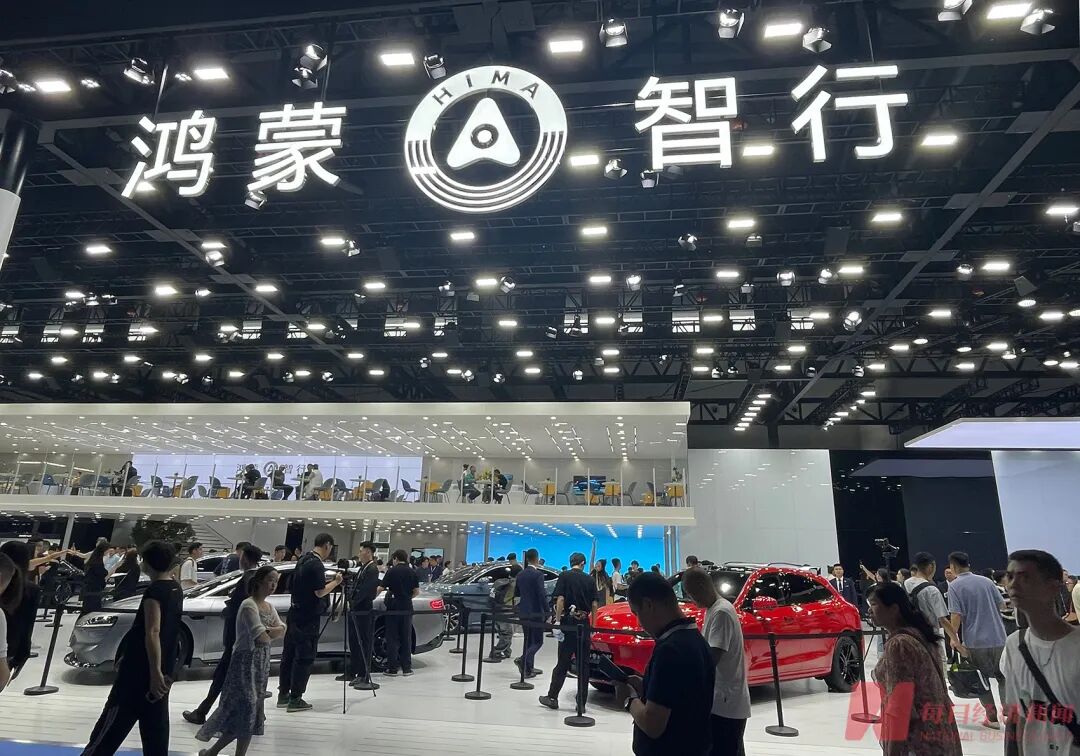
Core Insights - In January 2026, major automotive companies reported their sales data, showing a clear division among brands, with new energy vehicles driving growth [1][2][4] - BYD sold approximately 210,000 new energy vehicles in January 2026, while Hongmeng Zhixing reported a delivery of 57,900 units, marking a year-on-year increase of 65.6% [1][2] - Xiaomi Auto delivered over 39,000 vehicles in January, a decrease of 22% from December 2025, with a target of 550,000 units for the year [2][4] - Li Auto and XPeng reported deliveries of approximately 27,700 and over 20,000 units respectively, with XPeng experiencing a year-on-year decline of 34% [4][8] Company Performance - BYD's January sales reached about 210,000 units, indicating strong performance in the new energy sector [1] - Hongmeng Zhixing's main model, the Wenjie, contributed significantly with over 40,000 units delivered, reflecting an 83% year-on-year growth [1] - Xiaomi Auto's sales were impacted by the transition phase of its SU7 model, with the YU7 being the primary model delivered [2] - Li Auto's sales were approximately 27,700 units, while XPeng's deliveries fell to over 20,000 units, showing a significant decline [4][8] Market Trends - The overall automotive market in January 2026 is expected to see retail sales of around 1.8 million units, reflecting a month-on-month decline of 20.4% but a slight year-on-year increase of 0.3% [4][12] - The late timing of the Chinese New Year in 2026 contributed to a higher number of working days compared to the previous year, influencing sales dynamics [4][12] - Financial incentives such as long-term low-interest financing plans have been introduced by several companies, including NIO and Xiaomi, to stimulate demand [10][11]



中国主要车企1月汽车交付数据汇总
Xin Lang Cai Jing· 2026-02-01 13:08
格隆汇2月1日|比亚迪:1月新能源汽车销量210051辆,同比下降30.11%。 鸿蒙智行:1月交付57915台,同比增长65.6%。 问界汽车:1月交付40016辆,同比增长83%。 理想汽车:1月交付27668辆。 蔚来汽车:1月交付27182台,同比增长96.1% 小米汽车:1月交付超39000台。 零跑汽车:1月交付32059台,同比增长27%。 小鹏汽车:1月交付20011台。 岚图汽车:1月交付10515辆,同比增长31%。 极氪:1月交付23852台,同比增长99.7%。 ...


港股公告掘金 | 中国移动、中国联通、中国电信集体公告:电信服务增值税税目适用范围将调整
Zhi Tong Cai Jing· 2026-02-01 12:45
Major Events - Lanke Technology (06809) will conduct an IPO from January 30 to February 4, with an expected listing on February 9 [1] - Aixin Yuanzhi (00600) will conduct an IPO from January 30 to February 5, with an expected listing on February 10 [1] - Lexin Outdoor (02720) will conduct an IPO from January 31 to February 5, raising HKD 130 million from Horizon Capital and Huangshan Dejun [1] - Dongpeng Beverage (09980) sets the offer price at HKD 248 per share [1] - Zhonghui Biotech-B (02627) received approval from the National Medical Products Administration for a trivalent influenza virus subunit vaccine [1] - Kangzheng Pharmaceutical (00867) received approval for the first and only targeted drug for vitiligo treatment in China [1] - Shishi Pharmaceutical Group (02005) received production registration for Propafenone Hydrochloride Injection from the National Medical Products Administration [1] - China Aluminum (02600) plans to jointly acquire 68.6% of Brazilian Aluminum from Rio Tinto and will initiate a mandatory offer [1] - Yanzhou Coal Mining (01171) plans to transfer 100% equity of Inner Mongolia Xintai Coal [1] - Botai Car Union (02889) plans to collaborate with Ping An Property & Casualty to reconstruct the smart travel insurance ecosystem [1] - Jin Jing New Energy (01783) signed a strategic framework agreement with Tianqi Grand for lithium battery recycling and precious metal extraction [1] - Guangdong-Hong Kong-Macau Holdings (01396) subsidiary Hongce Data introduces Fudian Capital as a strategic investor for 40% equity [1] - China Mobile (00941), China Unicom (00762), and China Telecom (00728) will adjust the applicable scope of value-added tax for telecom services [1] Operating Performance - BYD Company (01211) sold approximately 210,000 new energy vehicles in January [2] - Geely Automobile (00175) reported total vehicle sales of 270,200 units in January, a year-on-year increase of about 1% [2] - Chery Automobile (09973) saw total sales of 191,500 vehicles in January, a year-on-year decrease of about 10.7% [2] - Seres (09927) reported total vehicle sales of 45,900 units in January, a year-on-year increase of 104.85% [2] - Great Wall Motors (02333) sold approximately 90,300 vehicles in January, a year-on-year increase of 11.59% [2] - Li Auto-W (02015) delivered 27,668 new vehicles in January, a year-on-year decrease of 7.5% [2] - NIO-SW (09866) delivered 27,182 vehicles in January, a year-on-year increase of 96.1% [2] - GAC Group (02238) reported vehicle sales of 116,600 units in January, a year-on-year increase of 18.47% [2] - Great Wall Motors (02333) released a preliminary report indicating a net profit attributable to shareholders of 9.912 billion yuan for 2025, a year-on-year decrease of 21.71% [2] - Shandong Gold (01787) expects a net profit attributable to shareholders of approximately 4.6 billion to 4.9 billion yuan for 2025, a year-on-year increase of 56% to 66% [2] Earnings Forecast - SF Express (09699) expects a year-on-year profit increase of no less than 80% for 2025 [3] - China International Capital Corporation (03908) anticipates a net profit attributable to shareholders of 8.542 billion to 10.535 billion yuan for 2025, a year-on-year increase of 50% to 85% [3] - China Shenhua (01088) expects a year-on-year decline in net profit for 2025 [3] - Datang Power (00991) anticipates a net profit of approximately 6.8 billion to 7.8 billion yuan for 2025, a year-on-year increase of about 51% to 73% [3] - China Southern Airlines (01055) expects a net profit attributable to shareholders of 800 million to 1 billion yuan for 2025, turning a profit [3] - Air China (00753) warns of a net loss attributable to shareholders of approximately 1.3 billion to 1.9 billion yuan for 2025 [3] - China Eastern Airlines (00670) warns of a net loss attributable to shareholders of approximately 1.3 billion to 1.8 billion yuan for 2025 [3] - GAC Group (02238) expects a net loss attributable to shareholders of 8 billion to 9 billion yuan for 2025 [3] - Ansteel (00347) warns of a net loss attributable to shareholders of approximately 4.077 billion yuan for 2025, a year-on-year narrowing of 42.75% [3] - Junshi Biosciences (01877) warns of a net loss attributable to shareholders of approximately 873 million yuan for 2025, a year-on-year decrease of about 31.85% [3]



吉利汽车2026年1月销量27万辆,同比增长1%
Jin Rong Jie· 2026-02-01 11:27
Group 1 - In January 2026, Geely Automobile sold 270,167 vehicles, representing a month-on-month increase of 14% [1] - The overseas export volume doubled year-on-year [1] - The sales of new energy vehicles accounted for 46% of total sales, with 124,252 units sold, marking a year-on-year growth of 3% [1]
吉利汽车(00175.HK)1月汽车总销量为270,167部 同比增长约1%_聚焦
Ge Long Hui· 2026-02-01 11:18
格隆汇2月1日丨吉利汽车(00175.HK)公告,集团于2026年1月的汽车总销量为270,167部,较去年同期增 长约1%,其中出口总销量和极氪品牌总销量均较去年同期实现翻倍增长。宝腾于2026年1月实现汽车销 量16,106部,较去年同期增长约36%。 (相关资料图) ...

吉利汽车2026年1月销量27万部 同比增长1%
Xin Lang Cai Jing· 2026-02-01 11:13
Core Viewpoint - Geely Automobile Holdings Limited reported its January 2026 unaudited vehicle sales data, showing a total sales volume of 270,200 units, a year-on-year increase of 1%, with significant growth in exports and Zeekr brand sales [1] Brand Performance - Geely brand sales reached 217,400 units, a year-on-year decline of 3%, with the Galaxy series selling 83,000 units, down 11% [1] - Lynk & Co sales were 28,900 units, reflecting a 4% year-on-year decrease [1] - Zeekr brand sales surged to 23,900 units, marking a 100% year-on-year increase [1] Vehicle Type Performance - Plug-in hybrid vehicle sales totaled 56,200 units, representing a year-on-year increase of 37% [1] - Pure electric vehicle sales were 68,000 units, showing a year-on-year decline of 15% [1] Other Brands - Proton's sales in January reached 16,100 units, which is a year-on-year increase of 36% [1]
吉利汽车:1月汽车总销量为27.02万部 同比增长约1%
Ge Long Hui A P P· 2026-02-01 11:09
Group 1 - Geely Automobile announced a total vehicle sales of 270,200 units in January 2026, representing an approximate 1% increase compared to the same period last year [1] - Both export sales and Zeekr brand sales doubled compared to the same period last year [1] - Proton achieved vehicle sales of 16,106 units in January 2026, marking an approximate 36% increase year-on-year [1]
吉利汽车(00175)1月汽车总销量为27.02万部,同比增长约1%
智通财经网· 2026-02-01 10:24
Group 1 - The core point of the article is that Geely Automobile reported a total vehicle sales of 270,200 units in January 2026, representing an approximate 1% increase year-on-year [1] - The export sales and Zeekr brand sales both doubled compared to the same period last year [1] - Proton achieved vehicle sales of 16,106 units in January 2026, marking a year-on-year growth of approximately 36% [1]
吉利汽车1月汽车总销量为27.02万部,同比增长约1%
Zhi Tong Cai Jing· 2026-02-01 10:22
Core Insights - Geely Automobile (00175) announced total vehicle sales of 270,200 units in January 2026, representing an approximate 1% increase compared to the same period last year [1] - Both export sales and Zeekr brand sales doubled compared to the previous year [1] - Proton achieved vehicle sales of 16,106 units in January 2026, marking a growth of approximately 36% year-on-year [1]