
CHINA RES BEER(00291)

Search documents
欧洲大健康企业:中国市场增速迅猛,进博会成拓市“妙方”
2 1 Shi Ji Jing Ji Bao Dao· 2025-09-07 11:09
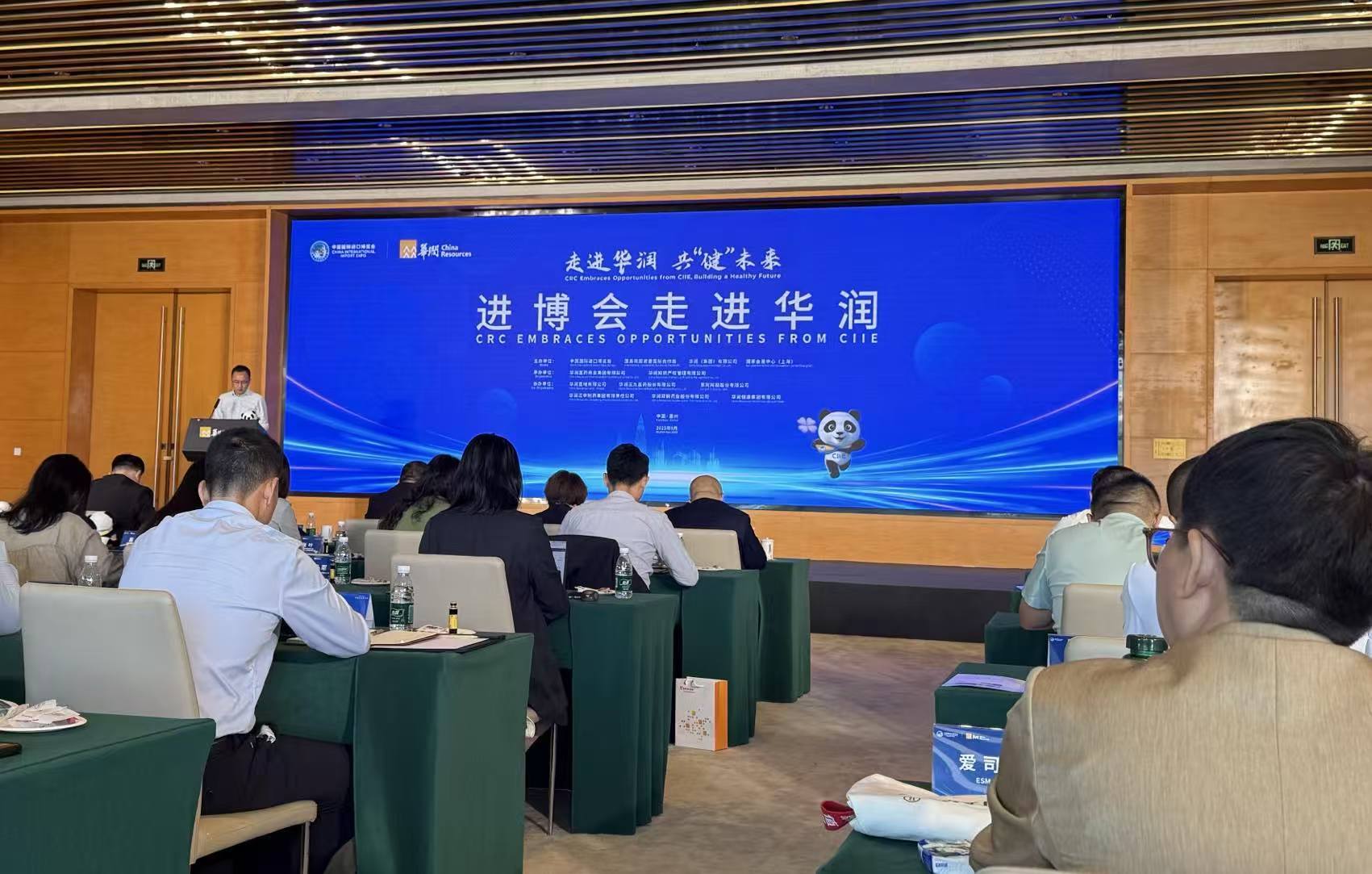
Group 1 - The event "China International Import Expo Goes to China Resources" was held in Huizhou, Guangdong, focusing on the health sector and attracting over 30 Fortune 500 companies [1] - The event aims to enhance cooperation between central enterprises and international partners, leveraging the opportunities in the Chinese health market [1] - China Resources Group's seven business units, including China Resources Pharmaceutical and China Resources Sanjiu, expressed import procurement needs during the event [1] Group 2 - European health companies reported that the China International Import Expo has significantly aided their market entry by connecting them with distributors, agents, and quality customers [2] - These companies are optimistic about the growth prospects in the Chinese market, citing its large scale advantage [2] - Some companies suggested that China should align its medical device market access standards more closely with international standards to facilitate broader consumer access [2]



中酒协或调整低度酒分类;武汉酒博会定档10月17日|观酒周报
2 1 Shi Ji Jing Ji Bao Dao· 2025-09-07 08:17
Group 1: Industry Developments - The China Alcoholic Drinks Association is considering adjusting the alcohol content standards for high and low alcohol beverages, which could change the traditional perception of liquor in the industry and among the public [1][3] - The 23rd China International Wine Expo will be held from October 17 to 19 in Wuhan, featuring six themed exhibition halls covering various types of alcoholic beverages, with an exhibition area of 60,000 square meters [2] Group 2: Company Updates - Kweichow Moutai Group has received a loan commitment of up to 2.7 billion yuan from Agricultural Bank of China to support its stock buyback plan [6][7] - Moutai Group announced plans to buy back between 3 billion and 3.3 billion yuan worth of Kweichow Moutai shares within six months [7] - Guizhou Chuan plans to strengthen its market presence in Nantong, launching new products and upgrading its market positioning [9][10][12] - Tianyoude Wine has increased its investment in its U.S. subsidiary, raising its contribution to 16 million USD [17] - China Resources Beer appointed Zhao Chunwu as the new chairman of its board, following a brief transition period after the previous chairman's departure [18][19]



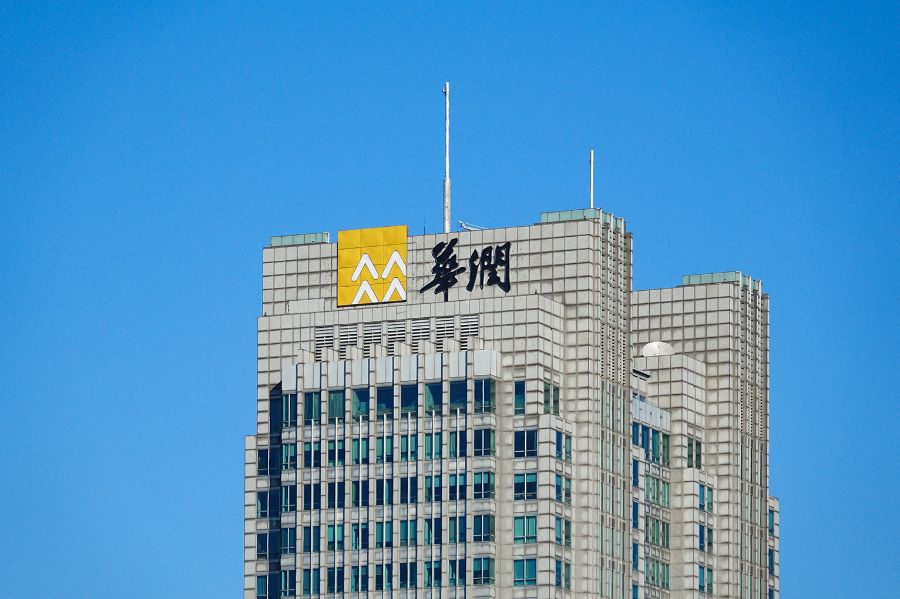
华润啤酒迎来新掌门:赵春武接任董事会主席
Xi Niu Cai Jing· 2025-09-05 09:06
Core Viewpoint - China Resources Beer has appointed Zhao Chunwu as the new chairman of the board, marking a significant leadership change following the departure of founder Hou Xiaohai two months prior [1][2]. Group 1: Leadership Transition - Zhao Chunwu, aged 54, has been promoted from president to chairman and will also serve as the chairman of the finance committee [1]. - Zhao has extensive experience within the China Resources Beer system, having joined in 2003 and held various managerial positions across multiple regions [1]. - The board has expressed high regard for Zhao's management and leadership capabilities, believing he is the best candidate for the chairman role [2]. Group 2: Financial Performance - China Resources Beer reported a net profit of 5.789 billion yuan for the first half of 2025, representing a year-on-year increase of 23%, achieving a historical high [2]. - The company faces challenges, including intensified competition in the premium beer segment and a significant decline of over 30% in its liquor business revenue [2]. Group 3: Strategic Direction - During the transition period, Zhao will temporarily retain the responsibilities of president until a new president is appointed [2]. - Zhao has indicated that the management team has a strong consensus on future development strategies, primarily focusing on continuing and enhancing the strategies established during Hou Xiaohai's tenure [2]. - Analysts believe Zhao's appointment reduces uncertainty in the leadership, facilitating the ongoing implementation of the "dual empowerment" strategy for beer and liquor business synergy [2].
年薪340万的资深高管,接管800亿啤酒巨头华润
2 1 Shi Ji Jing Ji Bao Dao· 2025-09-05 01:09
Group 1: Leadership Transition - Zhao Chunwu has been appointed as the Chairman of the Board and Chairman of the Finance Committee of China Resources Beer, succeeding Hou Xiaohai, who resigned for personal reasons [2][10]. - Zhao has a rapid career progression, moving from Vice President to President and now to Chairman within a span of three years, demonstrating his extensive experience within the company [3][5]. - The current management team has a strong consensus on continuing the existing strategic direction established under Hou Xiaohai, focusing on stability [2][12]. Group 2: Market Challenges - The Chinese beer market is facing limited growth, with a shift from volume expansion to value competition, as evidenced by a 0.3% year-on-year decline in beer production for the first half of the year [14][17]. - China Resources Beer is exploring new sales channels, including partnerships with instant retail platforms to enhance product sales and reach younger consumers [15][16]. - The company reported a revenue of 23.161 billion yuan in the first half of the year, reflecting a 2.6% year-on-year increase, indicating a slight growth in sales despite market challenges [17][20]. Group 3: White Wine Business - Zhao faces significant challenges in restructuring the white wine business, which has not met expectations since its expansion began in 2021 [18][19]. - The white wine segment reported a revenue of 781 million yuan in the first half of the year, down approximately one-third from the previous year [19]. - The strategy involves focusing on high-end products and leveraging existing beer distribution channels to improve sales in the white wine sector [19][21].
调整期行业结构未见变化 优势向谁集中?
Nan Fang Du Shi Bao· 2025-09-04 23:07
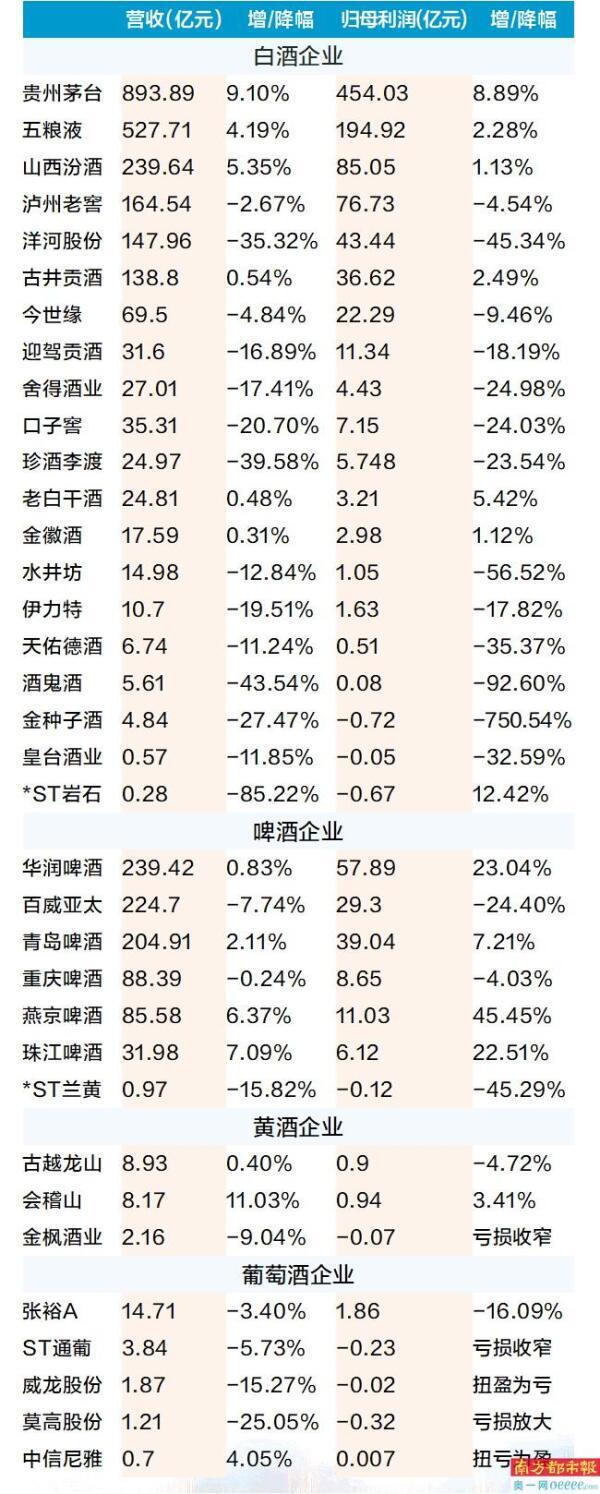
Summary of Key Points Core Viewpoint - The alcoholic beverage industry in China is undergoing a significant adjustment phase, with varying performance across different segments such as baijiu, beer, yellow wine, and wine. While some companies are experiencing declines, others are managing to maintain or grow their revenues through strategic adjustments and market focus [3][4][14]. Baijiu Industry - The baijiu sector is the most affected by the adjustment phase, with 13 out of 20 listed companies reporting declines in both revenue and net profit. Only 6 companies showed growth in both metrics [4][5]. - Major players like Kweichow Moutai, Wuliangye, and Shanxi Fenjiu have managed to maintain growth, while smaller companies face more significant declines [4][5]. - Companies are adopting strategies to address inventory issues and optimize product channels, attributing performance declines to proactive adjustments rather than market weakness [5][6]. Beer Industry - The beer industry is showing signs of recovery, with leading companies like China Resources Beer and Qingdao Beer reporting growth in both revenue and net profit. In contrast, foreign companies like Budweiser APAC are experiencing declines [6][7]. - The high-end segment continues to be a focal point, with companies competing in the premium market, while the 8 yuan price range is emerging as a new growth driver [7][8]. - Beer companies are also diversifying into other beverage sectors to seek new growth opportunities [8][9]. Yellow Wine Industry - The yellow wine sector is struggling to achieve collective growth, with only a few companies like Kuaijishan showing positive performance. The market remains heavily concentrated in the Jiangsu and Zhejiang regions [10][11]. - Despite the introduction of new products aimed at younger consumers, overall performance remains lackluster, with traditional products still driving most sales [10][11]. Wine Industry - The wine market is in a deep adjustment phase, with most companies reporting revenue declines. The market is heavily impacted by the increasing share of imported wines, which continue to challenge domestic brands [12][13]. - Companies are exploring new sales channels, such as live e-commerce, to boost performance and adapt to changing consumer preferences [13][14]. - The emotional value of wine consumption, such as "self-drinking" and "social drinking," is seen as a potential avenue for recovery in the domestic market [13][14].


啤酒“革命”,靠什么征服新世界的味蕾?
Sou Hu Cai Jing· 2025-09-04 16:37
Core Insights - The Chinese beer industry is undergoing significant transformation driven by changing consumer preferences, particularly among younger generations who favor unique and high-quality products over traditional mass-market options [3][4][16] - The market size for beer in China is projected to reach 180 billion yuan in 2024, with a year-on-year growth of 3.2%, while mid-to-high-end products are experiencing a notable increase in sales [3][4] Market Trends - Traditional economy beer sales are declining, while mid-to-high-end products have seen a 12.7% growth, and craft beer has surged by 31.4% [3] - The profit share of high-end product lines has increased from 28% in 2020 to 47% in the first half of 2025, indicating a shift from "scale victory" to "value supremacy" in the industry [3][4] Consumer Behavior - The Z generation is reshaping beer consumption, moving away from quantity to quality, with a preference for craft and flavored beers [4][5] - Data from Meituan shows a 143% increase in searches for craft and specialty beers in night-time orders during the first half of 2025 [4] - Consumers aged 25-35 contribute 62% of the growth in high-end beer, spending an average of 3,200 yuan annually, which is 2.3 times that of consumers aged 45 and above [4] Product Innovation - The era of industrial lagers is ending, with a focus on flavor diversification becoming mainstream [6][7] - Yanjing's U8 series generated 5.536 billion yuan in revenue in the first half of 2025, accounting for 70.11% of its total revenue, with a gross margin of 51.71% [6] - Jin Xing Brewery is innovating by integrating local resources, such as using Xinyang Maojian tea in their craft beer, which has gained significant consumer interest [6][7] Channel Evolution - The beer consumption landscape is shifting from traditional dining channels to diverse settings like craft beer bars and home consumption [5][10] - Instant retail is on the rise, with CR Beer reporting a nearly 50% year-on-year growth in instant retail GMV in the first half of 2025 [5][10] - E-commerce is evolving from mere sales to emotional connections, with Douyin live-streaming beer sales increasing by 83% during the "618" shopping festival in 2025 [10] Capital Dynamics - The beer market transformation is prompting a reconfiguration of capital strategies, with companies focusing on product structure and high-end market share [12][13] - CR Beer reported a revenue of 23.94 billion yuan in the first half of 2025, with a net profit of 5.789 billion yuan, highlighting a trend of "slight revenue increase but significant profit growth" [12] - International brands are deepening localization efforts, with Budweiser Asia Pacific launching 14 local flavor products in the first half of 2025 [12][13] Future Outlook - The future of the beer industry will focus on personalization, health, and premiumization, with low-alcohol beers expected to account for 25% of the market by 2030 [14][15] - Digitalization will permeate the entire industry chain, enhancing efficiency and product quality [14] - Sustainable development is becoming a consensus in the industry, with companies like Budweiser China reducing water and energy consumption significantly [14][15]



“进博红利”持续释放!大健康产业供需对接提速 有品牌进入中国市场半年跻身品类前三
Mei Ri Jing Ji Xin Wen· 2025-09-04 15:52
Core Insights - The China International Import Expo (CIIE) has successfully held seven sessions, with ongoing benefits for participating companies, particularly state-owned enterprises (SOEs) [1][2] - China Resources Group has actively participated in the CIIE, achieving significant procurement agreements and expressing clear cooperation needs across various sectors [1][4] Group 1: CIIE Participation and Impact - The CIIE has become a key platform for SOEs, with their transaction intentions accounting for nearly one-fourth of the total during the past seven sessions [2] - China Resources Group has established procurement partnerships with exhibitors from 35 countries, totaling a contract value of $15.15 billion [1][2] Group 2: Business Development and Innovation - China Resources Group is focusing on full-chain cooperation needs, including R&D, supply chain, and distribution [4] - The company plans to enhance its international presence through cross-border e-commerce and strategic partnerships with global pharmaceutical firms [5] Group 3: Global Exhibitors' Confidence in China - Global exhibitors, such as Hungary's Tutti Pharma, have expressed strong confidence in the Chinese health market, with significant sales growth and product localization efforts [6][7] - New Zealand's Pacific Alpaca Group has increased its exhibition space at the CIIE, reflecting its commitment to the Chinese market [7] Group 4: Future Developments and Trends - The upcoming eighth CIIE is set to showcase innovations in medical devices and biopharmaceuticals, attracting major global pharmaceutical companies [8] - The event will focus on health products and services for the aging population, aligning with China's "Healthy China 2030" strategy [8]
54岁华润老将接班侯孝海,延续 “啤白双线”,白酒业务亏损成首要挑战
Tai Mei Ti A P P· 2025-09-04 13:15
Core Viewpoint - The appointment of Zhao Chunwu as the Chairman of China Resources Beer marks a significant leadership transition following the resignation of Hou Xiaohai, with Zhao facing challenges in a competitive beer market and a loss-making liquor business [5][6][10]. Leadership Transition - Zhao Chunwu has officially transitioned from acting Chairman to Chairman and Chairman of the Finance Committee, effective September 3, 2025 [2][6]. - Zhao has over 20 years of experience within the China Resources system, having held various key positions since joining in 2003 [5][8]. - The board has expressed high confidence in Zhao's management and leadership abilities, considering him the best candidate to drive further development for the company [8]. Business Performance - In the first half of the year, China Resources Beer reported a beer sales volume of approximately 6.487 million kiloliters, a year-on-year increase of 2.2%, with revenue reaching 23.161 billion yuan, up 2.6% [10]. - The company's gross profit margin for beer increased by 2.5 percentage points to 48.3%, driven by high-end product sales, which grew over 10% [10]. - The liquor business, however, reported a loss of 150 million yuan, with revenues dropping to 780 million yuan from 1.18 billion yuan year-on-year [10][11]. Strategic Direction - Zhao has committed to continuing the high-quality and high-end development strategy initiated by his predecessor, with no major changes expected [11]. - The company aims to enhance its product offerings to cater to diverse consumer preferences, focusing on personalized and niche products [11]. - Zhao acknowledged that the integration of beer and liquor sales has not met expectations, but efforts are underway to deepen collaboration between beer distributors and liquor projects [12][13].

招商证券国际:华润啤酒不断上升派息比率可助支撑估值 维持“增持”评级
Zhi Tong Cai Jing· 2025-09-04 08:42
Core Viewpoint - The report from China Merchants Securities International maintains a target price of HKD 33.5 for China Resources Beer (00291) and an "Accumulate" rating, highlighting the company's strong free cash flow and low capital expenditure needs [1] Group 1: Dividend Policy - The company has increased its interim dividend payout ratio to 26% and expects the payout ratio to exceed 50% by 2025, indicating a strong commitment to returning value to shareholders [1] - The robust balance sheet and stable profit margins suggest that dividends will remain a core part of the investment rationale [1] Group 2: Sales Performance - In the second half of the year, sales growth for China Resources Beer in July and August is expected to outpace that of the first half [1] - Management anticipates that performance in the second half will improve due to retail and digital expansion, as well as enhanced customer relationship management [1]

招商证券国际:华润啤酒(00291)不断上升派息比率可助支撑估值 维持“增持”评级
智通财经网· 2025-09-04 08:41
Core Viewpoint - The report from China Merchants Securities International maintains a target price of HKD 33.5 for China Resources Beer (00291) and an "Accumulate" rating, highlighting the company's strong free cash flow and low capital expenditure needs [1] Group 1: Dividend Policy - The company has increased its interim dividend payout ratio to 26% and expects this ratio to exceed 50% by 2025, indicating a strong commitment to returning value to shareholders [1] - The robust balance sheet and stable profit margins suggest that dividends will remain a core part of the investment logic [1] Group 2: Market Performance - In the context of a sluggish growth environment, the rising dividend payout ratio is seen as providing downside protection and supporting valuation [1] - Looking ahead to the second half of the year, sales growth for China Resources Beer in July and August is expected to outpace that of the first half, driven by retail and digital expansion as well as effective customer relationship management [1]