
CHINA JINMAO(00817)

Search documents
金融地产25Q1业绩如何?板块后续怎么看?
2025-05-21 15:14
Summary of Conference Call Records Industry Overview - **Insurance Sector**: In Q1 2025, net profits for major insurers like China Ping An and China Taiping fell by 26% and 18% respectively, primarily due to declines in the bond market and equity market volatility. Conversely, PICC and China Life saw net profit growth of approximately 40%, with Xinhua also reporting positive growth, benefiting from favorable bond market and Hong Kong stock allocations [1][2]. - **Brokerage Sector**: The overall performance of 39 brokerages in Q1 2025 met expectations, with a 53% year-on-year increase in net profit, driven by a low base from the previous year and significant improvements in trading volume, which rose nearly 80% year-on-year. The number of new accounts opened increased by 32%, contributing significantly to retail business [1][3]. - **Public Fund Regulations**: New regulations for public funds shift the focus from short-term returns to long-term investor performance, potentially restoring trust and benefiting the industry's long-term development. This may exacerbate the "Matthew Effect," favoring leading fund companies [4]. - **Non-Banking Financial Sector**: The non-banking financial sector is significantly under-allocated, with only 1% of active equity funds invested compared to a standard of 6.5%. This indicates a potential recovery volume of approximately 150 billion, suggesting a sustained reallocation towards benchmark stocks, especially large-cap stocks [5][6]. Key Insights - **Brokerage Performance**: The brokerage sector is expected to see a 50% year-on-year growth in Q1 2025, with a forecasted 40% growth for the mid-year report and an overall annual growth expectation of around 25%. Current valuations remain low, with a focus on brokerages with strong retail advantages such as Guosen Securities, Huatai Securities, and GF Securities [7]. - **Insurance Recommendations**: Due to weak marginal improvements in the insurance sector, it is recommended to focus on undervalued stocks like China Taiping and China Ping An, as well as high dividend yield stocks like Jiangsu Jinzu [8]. - **Banking Sector Performance**: In Q1 2025, 42 listed banks reported a revenue decline of 1.7% and a net profit decline of 1.2%. The overall loan volume is expected to remain stable compared to 2024, with a slight narrowing of interest margins anticipated [9][14]. - **Real Estate Sector**: The real estate industry experienced a 7.5% revenue decline in Q1 2025, with a net profit loss of 10 billion yuan. The top 100 real estate companies saw a 30% drop in sales, although the decline was less severe than in previous periods. Companies with strong fundamentals in first-tier and strong second-tier cities are viewed positively [15][18]. Additional Considerations - **Market Dynamics**: The new public fund regulations may lead to a decrease in fees for banks, brokerages, and third-party sales agencies, impacting their revenues negatively but within expected limits [4]. - **Investment Strategy**: The recommendation for banks includes focusing on stable dividend strategies, with a preference for banks like CITIC Bank and Agricultural Bank of China, as well as regional banks benefiting from recovering demand from small and micro enterprises [14]. - **Future Outlook for Real Estate**: The real estate sector is expected to see a recovery in demand, particularly in first-tier and strong second-tier cities, with a focus on companies like Binjiang Group and China Merchants Shekou [18].




2024开发房企年报综述:行业全面亏损,头部房企依然具备显著竞争优势
GOLDEN SUN SECURITIES· 2025-05-20 09:16
Investment Rating - The report maintains an "Overweight" rating for the real estate development industry [6] Core Insights - The real estate development industry faced significant losses in 2024, with overall revenue declining and profitability weakening due to falling housing prices and impairment pressures [1][13] - Key state-owned enterprises (SOEs) and mixed-ownership companies showed resilience compared to the overall industry, with SOEs experiencing a smaller revenue decline [2][36] - The report highlights that the future revenue of real estate companies is expected to remain under pressure for the next 2-3 years, particularly for those not in prime locations [2][41] Summary by Sections 1. Overview of Developer Annual Reports - In 2024, the overall revenue for 168 real estate developers was 4.33 trillion yuan, a year-on-year decrease of 19.2% [1][13] - The net profit for the industry was -376.3 billion yuan, a significant drop from -1.9 billion yuan in 2023 [1][13] - The cash on hand for developers decreased by 19.4% to 1.63 trillion yuan [1][13] 2. Financial and Operational Analysis of Key Developers 2.1 Revenue Pressure from Resource Turnover - Key SOEs saw a revenue decline of 7.4%, while private enterprises experienced a 22.9% drop [2][41] - The report indicates that the revenue performance of leading developers remains more resilient due to their ample turnover resources [2][41] 2.2 Continued Pressure on Gross Margin - The gross margin for key SOEs was 14.6%, down 2.3 percentage points, while private enterprises had a gross margin of 16.4%, down 1.2 percentage points [2][37] 2.3 Rising Sales and Management Expense Ratios - The sales and management expense ratio for key SOEs was 4.9%, while for private enterprises it was 5.9% [2][49] 2.4 Significant Decline in Investment Income - Investment income for key SOEs and private enterprises fell by 72.3% and 53.4%, respectively [2][37] 2.5 Comprehensive Impairment Provisions - All 14 key developers reported asset impairments, with SOEs accounting for 42.27 billion yuan and private enterprises for 3.88 billion yuan [3][38] 2.6 Declining Net Profit Trend - The net profit for key SOEs dropped by 95.7%, while private enterprises saw a 15.0% decline [4][39] 2.7 Stable Financing for Key SOEs - Key SOEs maintained stable financing channels, with a slight increase in interest-bearing liabilities of 0.7% [5][40] 2.8 Sales Performance of Key SOEs - Key SOEs continued to outperform the industry, focusing on land reserves in core cities [2][41] 2.9 Weak Land Acquisition Intent - The willingness to acquire land remains low across the industry, with key developers focusing on high-potential cities [2][41] 3. Investment Recommendations - The report suggests focusing on real estate-related stocks due to anticipated policy support and the potential for recovery in core urban areas [6][9]




中国金茂附属行使优先收购权
Zhi Tong Cai Jing· 2025-05-16 12:37
Group 1 - China Jinmao (00817) announced that its indirect wholly-owned subsidiary, Beijing Yicheng, has been designated as the successor preferential purchaser by Jiaxing Investment on January 22, 2025 [1] - On the same day, Beijing Yicheng exercised its preferential purchase right regarding the target assets, with a proposed exercise price not exceeding RMB 1.323 billion, subject to the final state-owned asset evaluation results [1] - On May 16, 2025, Beijing Yicheng entered into a transfer agreement with Huafu Securities, agreeing to acquire the target equity and debt held by Huafu Securities (representing a special plan) for a total consideration of RMB 1.323 billion [1] Group 2 - On June 10, 2022, the company’s indirect associate, Dingmao Real Estate, and Jiaxing Investment entered into a share transfer agreement and a debt transfer and debt confirmation agreement with Huafu Securities [2] - This led to the establishment of an asset-backed securities plan named Jinmao Huafu - Changsha Jinmao Plaza North Tower Phase II Green Asset-Backed Special Plan (Carbon Neutrality) on June 30, 2022, aimed at securitizing the properties held by Dingmao Real Estate and raising funds for the group's operations and business development [2] - The target assets include 100% equity of Dingmao Real Estate and a debt principal of RMB 750 million, with the target property being the Jinmao Plaza North Tower office property located in Xiangjiang New District, Changsha, Hunan Province, covering a leasable area of approximately 94,395.55 square meters [2]
金茂的“高端困局”:从“府系神话”到遭受质疑的冰火两重天
Sou Hu Cai Jing· 2025-05-15 14:40
Core Viewpoint - The article discusses the challenges faced by Jinmao in the real estate market, highlighting its strategic shifts and the impact of its product lines on brand perception and sales performance [1][3][4]. Group 1: Market Performance and Strategy - Jinmao's expansion into lower-tier cities has led to significant sales declines, with revenue dropping from 235.6 billion in 2021 to 98.3 billion in 2024, and net profit at 1.065 billion yuan primarily due to asset impairment and cost-cutting measures [3][11]. - The company has recognized the need for a strategic pivot, launching the "Jin Yu Man Tang" product line to target segmented customer groups, including the "Fu Series 3.0" and "Pu Series" aimed at different demographics [5][11]. - Despite the introduction of new product lines, the market response has been mixed, with some projects underperforming, such as the "Pu Yi Jin Jiang" in Chengdu achieving only a 66% sales rate [8][10]. Group 2: Brand Perception and Product Quality - The naming of the new project "Pu Yi Feng Yi" has been criticized for diluting Jinmao's high-end brand image, failing to resonate with the luxury market [1][7]. - Quality control issues have emerged, with complaints about reduced specifications in projects like Nanjing Qinhuai Jinmao and discrepancies in marketing promises in Guizhou, leading to customer dissatisfaction [10][11]. - Jinmao's brand remains strong in first-tier cities, where its products can leverage urban advantages, but struggles in lower-tier markets where premium pricing is less viable [10][11]. Group 3: Financial Position and Future Outlook - Jinmao's sales in 2023 were heavily reliant on first and second-tier cities, contributing 90% of total sales, with a significant portion of unsold inventory (approximately 280 billion yuan) concentrated in economically developed regions [11][12]. - The company has improved its financial position, with a 50 basis point reduction in average financing costs and a decrease in total debt by 5 billion yuan year-on-year [13][14]. - Moving forward, Jinmao is encouraged to focus on authentic product offerings that resonate with consumer needs, rather than solely relying on marketing narratives [14][15].


消化“地王”
Jing Ji Guan Cha Wang· 2025-05-13 02:52
Core Insights - The article discusses the recent acquisition of the Huangshanmu Store land plot in Beijing by a consortium including China State Construction, China Jinmao, and Yuexiu Property for a total price of 12.6 billion yuan, marking it as the highest total price for a land plot in Chaoyang District in 2025 and the second highest in the district's history [2] - The article highlights the challenges faced by developers in high-priced land acquisitions, emphasizing the need for effective customer engagement and market positioning to ensure successful project sales [3][4] Group 1: Market Dynamics - The Huangshanmu Store plot is the first new residential project in the area in a decade, with a planned product line targeting improvement-type housing with sizes ranging from 140 to 300 square meters [4] - The competitive landscape includes projects like "Xinyi Heyuan," which has seen a net signing rate of 71.4% and a price drop of 11.6% from the record price, indicating the challenges new projects may face in achieving similar success [5] - Developers are adopting cautious strategies, with some projects like the Haidian Shucun project setting record floor prices of 102,300 yuan per square meter, reflecting the high stakes involved in the current market [6] Group 2: Sales and Profitability - The article notes that high-priced land acquisitions can lead to significant challenges in project sales, with developers needing to balance sales volume and profit margins [8][9] - The experience of previous projects indicates that new offerings in previously underserved areas can achieve strong sales, but simultaneous supply from multiple projects can dilute demand [7] - Developers are increasingly focusing on customer engagement strategies, such as pre-marketing efforts, to ensure a sufficient customer base before launching new projects [9] Group 3: Cost Management and Quality - The article discusses the tension between maintaining product quality and controlling costs, with some state-owned enterprises compromising on quality due to profit pressures [12] - Strategies for cost control without sacrificing quality include improving operational efficiency, optimizing project structures, and collaborating with local governments for favorable terms [12][13] - Examples of successful negotiations with local governments to adjust land costs highlight the importance of strategic partnerships in navigating the current market landscape [13]

中证香港300内地高贝塔指数报898.38点,前十大权重包含微创机器人-B等
Jin Rong Jie· 2025-05-12 08:06
Group 1 - The core index, the China Securities Hong Kong 300 Mainland High Beta Index (H300CNHB), reported a value of 898.38 points, with a one-month increase of 7.01%, a three-month increase of 1.94%, and a year-to-date increase of 6.72% [1][2] - The index reflects the overall performance of securities listed on the Hong Kong Stock Exchange from various strategic investment perspectives, with a base date of December 30, 2005, set at 1000.0 points [1][2] - The top ten holdings of the index include MicroPort Scientific Corporation-B (5.17%), Hua Hong Semiconductor (2.95%), Alibaba Health (2.72%), XPeng Inc.-W (2.7%), Guotai Junan Securities (2.55%), WuXi Biologics (2.53%), Country Garden Services (2.51%), Kingdee International Software Group (2.43%), China Jinmao Holdings Group (2.37%), and GDS Holdings Limited-SW (2.31%) [1][2] Group 2 - The index's holdings are entirely composed of securities from the Hong Kong Stock Exchange, with the real estate sector accounting for 21.70%, financials for 20.95%, healthcare for 18.32%, consumer discretionary for 16.93%, information technology for 10.92%, communication services for 4.34%, materials for 2.93%, consumer staples for 2.01%, and industrials for 1.89% [2] - The index samples are adjusted semi-annually, with adjustments occurring on the next trading day after the second Friday of June and December each year, and weight factors are generally fixed until the next scheduled adjustment [2]


整理:每日港股市场要闻速递(5月12日 周一)
news flash· 2025-05-12 01:16
Important News - The high-level economic and trade talks between China and the United States have made substantial progress, reaching important consensus [2] Company News - Ningde Times (810699.HK) will begin its IPO on May 12, with a maximum offer price of 263.00 HKD [3] - Li Auto (02015.HK) has achieved cumulative deliveries of over 300,000 units for the Li L7 [3] - Longfor Group (00960.HK) reported a contract sales amount of 5.13 billion RMB in April, with a cumulative contract sales amount of 22.08 billion RMB from January to April [3] - Rongchang Biopharmaceutical (09995.HK) received approval from the National Medical Products Administration for the injection of Vedicimab for treating HER2-positive late-stage breast cancer with liver metastasis in China [4] - GAC Group (02238.HK) reported April vehicle sales of 116,400 units, a year-on-year decrease of 12.66% [5] - China Overseas Development (00688.HK) achieved a cumulative contract property sales amount of 66.583 billion RMB from January to April [5] - China Jinmao (00817.HK) reported a signed sales amount of 7.001 billion RMB in April [5] - Shimao Group (00813.HK) had a cumulative contract sales total of 9.07 billion RMB in the first four months [5] - China Overseas Hongyang Group (00081.HK) realized a contract sales amount of 2.624 billion RMB in April, a year-on-year decline of 18.1% [5] - Q Technology (01478.HK) sold 31.783 million mobile camera modules in April, a month-on-month increase of 7.9% [5] - Stone Pharmaceutical Group (01093.HK) received approval for clinical trials in the U.S. for SYH2046 tablets [5]


地产及物管行业周报:国新办会议推金融组合拳,下调LPR及公积金利率-20250511
Shenwan Hongyuan Securities· 2025-05-11 09:45
Investment Rating - The report maintains a "Positive" rating for the real estate and property management sectors, emphasizing the importance of stabilizing housing prices for both the real estate market and consumer confidence [4][27]. Core Insights - The report highlights a mixed performance in the real estate market, with new home sales in 34 key cities dropping by 29% week-on-week, while second-hand home sales showed a year-on-year increase of 12% [3][12]. - The report indicates that the government is implementing a series of monetary policy measures to support market stability, including a reduction in the Loan Prime Rate (LPR) and housing provident fund rates [4][27]. - The report suggests that the competitive landscape in the real estate sector is expected to improve, particularly for companies with strong product capabilities, as the market transitions to a new development model [4][27]. Summary by Sections Industry Data - New home sales in 34 cities totaled 181.9 million square meters last week, a decrease of 29.2% compared to the previous week [5]. - In May, new home sales in 34 cities increased by 9% year-on-year, with first and second-tier cities seeing a 10.6% increase [7][8]. - The inventory of new homes in 15 cities decreased by 0.3% week-on-week, with a current available area of 89.27 million square meters [22]. Policy and News Tracking - The People's Bank of China announced a series of monetary policy measures, including a 10 basis point reduction in the LPR and a 25 basis point reduction in housing provident fund rates [4][27]. - The report notes that the government is focusing on stabilizing the real estate market and promoting domestic demand in response to external trade tensions [4][27]. Company Announcements - In April, major real estate companies reported varied sales performance, with China Overseas Development achieving sales of 202 billion yuan, down 8% year-on-year, while China Jinmao saw a 7% increase [34]. - As of April 30, 2025, China Vanke and China Merchants Shekou have initiated share buybacks, indicating confidence in their long-term prospects [34].



中国金茂管理层大洗牌 新团队意在“重新起跑”?
Di Yi Cai Jing· 2025-05-10 14:00
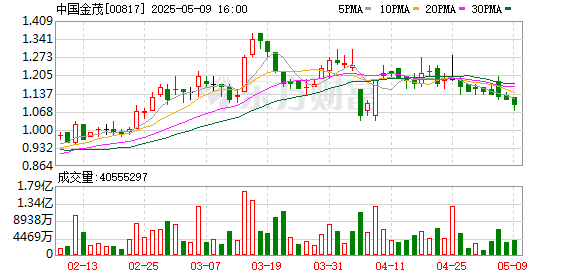
Core Viewpoint - China Jinmao is undergoing significant organizational restructuring to adapt to the current competitive landscape in the real estate industry, with a focus on enhancing management efficiency and internal competition [2][3][10]. Organizational Changes - The new management team, led by Chairman Tao Tianhai, has implemented a major restructuring by eliminating the regional level and transitioning from a three-tier to a two-tier management structure [3][10]. - The company has appointed new leaders for its 14 city companies, maintaining a stable transition with a focus on promoting internal talent [4][5]. Performance Overview - China Jinmao's sales figures have fluctuated, with a peak of 235.6 billion in 2021, dropping to 141.2 billion in 2023 and further declining to 98.255 billion in 2024 [6][10]. - The company has seen its ranking improve from 15th in 2021 to 12th in 2024, but it has not matched the performance of leading competitors during the industry downturn [6][10]. Market Strategy - The company aims to return to core cities and high-end markets, leveraging its brand strengths and historical focus on premium products [8][10]. - Recent investments have increased, with a reported 20.2 billion in land acquisition expenditures in 2024, focusing on first and second-tier cities [11][12]. Future Outlook - Management anticipates a sales target of approximately 180 billion for 2025, with a focus on optimizing product offerings and maintaining a competitive ranking [11][12]. - The restructuring is seen as a critical step for enhancing organizational capabilities, which will be essential for competing in the evolving real estate market [10][12].
中国金茂架构调整落定 重点区域总获晋升
Zhong Guo Jing Ying Bao· 2025-05-09 12:02
Core Viewpoint - China Jinmao has recently completed organizational restructuring and personnel appointments to enhance decision-making efficiency and focus on key cities, with expectations of stable sales ranking growth this year [2][7]. Group 1: Organizational Restructuring - The company has transitioned from a three-tier management structure ("headquarters-regional-city") to a two-tier structure ("headquarters-regional"), reducing the number of regional and city companies from nearly 20 to 14 city companies and 6 business units/areas [3][4]. - The six business units/areas include Longhe, Fujian, Wuhan, Chongqing, Jinan, and Ningbo [4]. - The restructuring aims to improve operational control, enhance organizational agility, and increase decision-making efficiency while maintaining the current workforce size [4]. Group 2: Personnel Appointments - Key personnel have been promoted to manage the newly structured city companies, with notable appointments including Guanchong as the general manager for Shanghai and Ma Hao for Beijing [5][6]. - The company has emphasized that the promotions are based on performance, with several executives taking on larger management responsibilities [5][6]. - The new leadership structure is expected to drive better performance in key regions, particularly in economically developed areas [6]. Group 3: Market Position and Sales Outlook - China Jinmao's sales performance is heavily reliant on the East and North China regions, contributing 68% of the projected sales of 98.3 billion yuan for 2024 [6]. - The company has a total unsold inventory of approximately 280 billion yuan, with 63% located in economically developed regions and 87% in first- and second-tier cities [6]. - The company plans to accelerate land acquisitions in core first- and second-tier cities, indicating a strategic shift to capitalize on market recovery [6][7].