
XIAOMI(01810)

Search documents
徕卡 10 亿欧元卖身,为什么小米一定不能买?
3 6 Ke· 2026-01-28 04:48
Core Viewpoint - Leica is considering selling its stake, with an estimated valuation of approximately €1 billion, despite its recent success and high demand for its products, leading to speculation about the timing and reasoning behind the potential sale [1][4][6]. Group 1: Company Overview - Leica's current ownership structure consists of the Austrian Kaufmann family holding 55% and Blackstone Group holding 45% of the shares [4]. - Blackstone acquired its stake in Leica for €130 million in 2011 and has held it for 13 years, significantly exceeding the typical private equity investment horizon of 5 to 7 years [6][14]. Group 2: Financial Performance - Leica recently reported its best financial results ever, with revenues nearing €600 million, prompting Blackstone to consider selling its stake at a peak valuation [6][14]. Group 3: Strategic Decisions - Andreas Kaufmann played a crucial role in Leica's turnaround by shifting the brand's focus from mass-market cameras to luxury products, thereby enhancing its brand perception [10][12]. - The strategy involved eliminating lower-end products and concentrating on the M series, which redefined Leica as a luxury brand rather than just a camera manufacturer [10][14]. Group 4: Potential Buyers - Possible buyers for Leica's stake include private equity firms like Altor Equity Partners and Sequoia China, as well as speculation around Xiaomi's interest in acquiring the brand [15][17][28]. - Xiaomi's potential acquisition is viewed with skepticism, as it may dilute Leica's brand value and cultural significance, which is rooted in its heritage and luxury status [19][21][28]. Group 5: Market Implications - The sale of a significant stake could lead to a change in control, which is critical for a privately held company like Leica [14]. - The article emphasizes that Leica's brand identity relies on its cultural and aesthetic values, which may not align with the operational ethos of a tech company like Xiaomi [23][28].


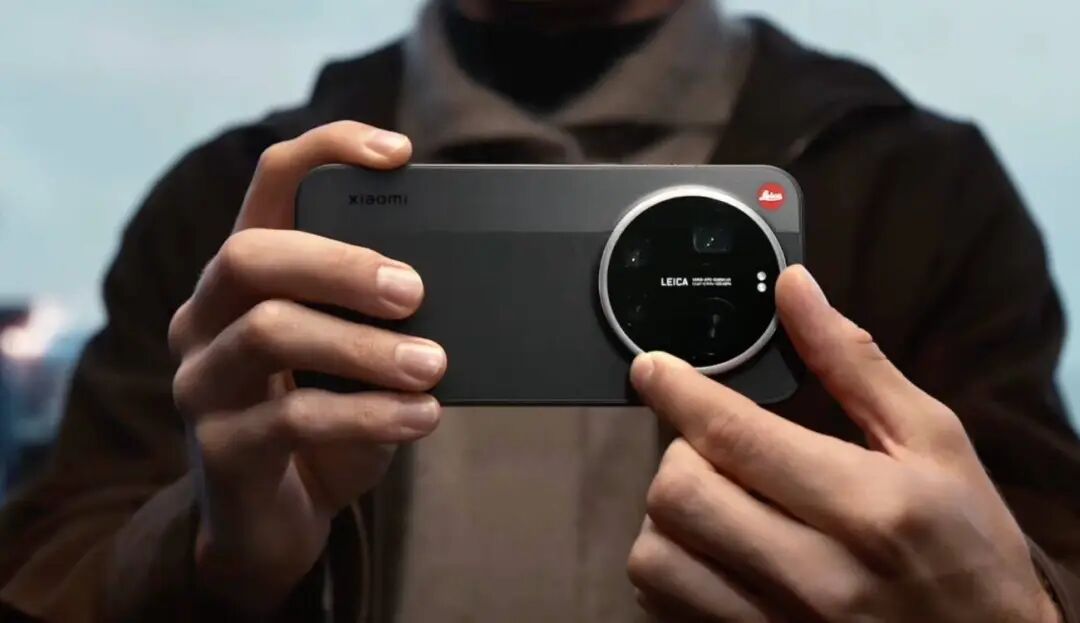
徕卡相机「卖身」真相:业务单一、市场收缩,小米要做「接盘侠」?
3 6 Ke· 2026-01-28 03:40
Core Viewpoint - ACM and Blackstone Group are considering selling their controlling stake in Leica Camera, which has undergone multiple ownership changes since 1986, indicating ongoing challenges in maintaining its market position [1][3]. Group 1: Ownership and Market Position - Leica Camera is currently owned by ACM Projektentwicklung GmbH (55%) and Blackstone Group (45%), with potential new shareholders likely to become the actual controlling party [1]. - This marks the fourth time Leica has been sold, with previous ownership changes including a split from its parent company and a bankruptcy restructuring [1]. - The potential sale raises questions about the future direction of Leica, especially regarding its collaborations with companies like Xiaomi [3]. Group 2: Financial Performance - Despite the global camera market contraction, Leica reported approximately €554 million in revenue for the fiscal year 2023-2024, a 14% year-on-year increase, marking one of its highest annual revenues [4][6]. - Revenue is projected to rise by 7.6% in the fiscal year 2024-2025, indicating a positive trend in financial performance [4]. - The surge in revenue is attributed to successful collaborations with Xiaomi, particularly with the Xiaomi 12S series, which significantly boosted sales [6]. Group 3: Market Challenges - The global digital camera market is expected to reach approximately $8.23 billion by 2025, but this is still significantly lower than market sizes from a decade ago [6]. - Leica's revenue structure is heavily reliant on consumer optical products and mobile imaging collaborations, making it vulnerable to market fluctuations [6]. - Compared to competitors like Canon and Sony, which have diversified product lines, Leica's limited offerings hinder its ability to sustain growth in a shrinking market [6][9]. Group 4: Potential Buyers and Strategic Considerations - Potential buyers for Leica include private equity firms and optical companies, with Xiaomi being a notable candidate due to their successful partnership [10]. - However, acquiring Leica may not be a strategic move for Xiaomi, as the camera industry has low profitability compared to the smartphone market [10][12]. - The decision to sell Leica could lead to changes in management and strategy, impacting existing partnerships and future collaborations [15]. Group 5: Brand and Market Perception - Leica has attempted to expand its brand through various collaborations and product lines, including mobile imaging and projectors, but these efforts have not significantly enhanced its market presence [16][18]. - The brand's image has been diluted due to overexposure in collaborations, leading to a perception that Leica's high-end status is less exclusive [20]. - The future of Leica may depend on whether new ownership can revitalize its brand and adapt to market changes, or if it will continue to lose value [20].

蚂蚁GPASS技术落地小米智能眼镜,支持停车缴费、AI健康问答
Quan Jing Wang· 2026-01-28 03:26
Core Insights - Xiaomi has partnered with Ant Group to launch innovative services on Xiaomi's smart glasses using the GPASS technology framework, marking the integration of this technology into daily life for a seamless user experience [1][7] Group 1: Parking Payment Service - The smart glasses feature an "AI Parking Assistant" that allows users to pay for parking without using their phones, enhancing the user experience with a hands-free approach [3][5] - The payment process involves three simple steps: voice notification of billing start time, voice-initiated payment, and confirmation of payment completion, all without manual operation [4][5] Group 2: Health Management Integration - GPASS technology also enables the integration of Ant Group's AI health application "Afu" with Xiaomi's smart glasses, allowing users to sync health data and access health-related queries via voice commands [5][7] Group 3: GPASS Technology Framework - GPASS is built on a unified framework focusing on security, connectivity, and interaction, ensuring a secure and seamless experience for users [7][8] - The technology integrates biometric identification for secure authorization and connects smart glasses with the Alipay digital service ecosystem, covering various parking facilities across major cities [7][8] Group 4: Future Prospects - Since its launch in 2025, GPASS has been evolving AI glasses from basic interaction devices to personal intelligent assistants, with plans for more digital services to be integrated into various scenarios [8] - The development of an open, secure, and interconnected service system is seen as crucial for the industry's advancement, with GPASS lowering the development barriers for hardware manufacturers [8]
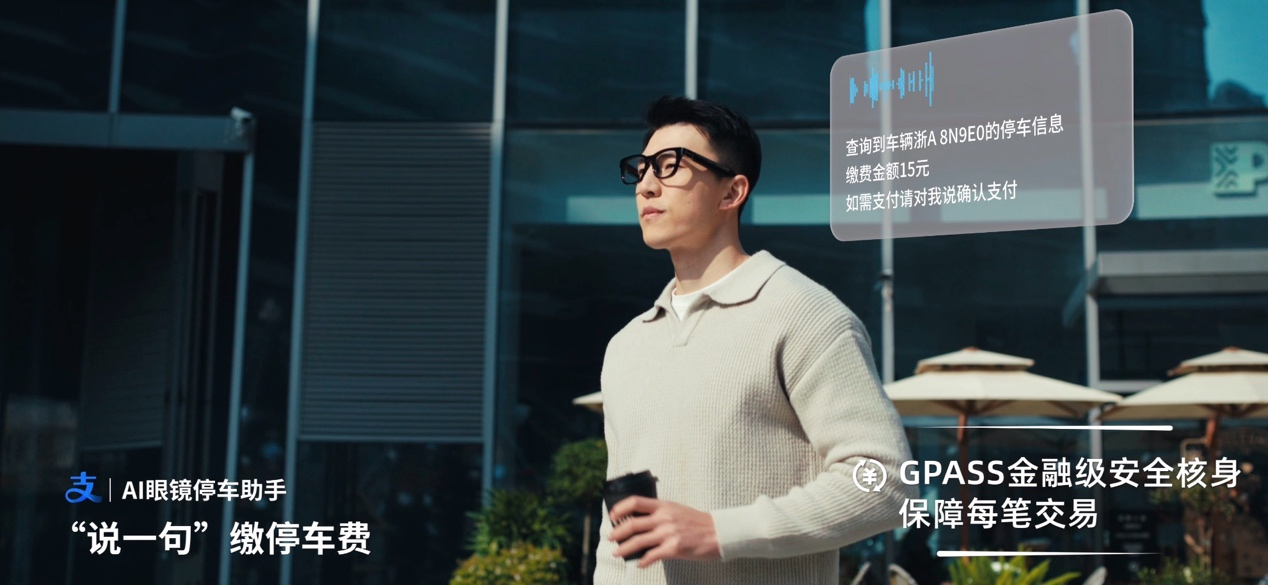
AI眼镜能付停车费了:小米眼镜联合蚂蚁GPASS上线停车缴费功能
Xin Lang Cai Jing· 2026-01-28 02:54
Core Insights - Xiaomi has partnered with Ant Group to launch two innovative services on Xiaomi's smart glasses, utilizing Ant Group's GPASS technology framework, which is the world's first trusted connection technology for smart terminals [1][3] - The services introduced are parking payment and AI health management, indicating the integration of GPASS technology into everyday life scenarios for a seamless user experience [1][3] Group 1 - The parking service allows users to make payments without taking out their phones, simply by using voice commands or by looking at the parking code for secure confirmation, enhancing the experience of "paying while walking" [1][3] - The introduction of these services marks a significant upgrade in user experience, providing a "service on the go" concept through smart terminals [1][3]
小米取得触发条件判断与资源分区配置专利
Jin Rong Jie· 2026-01-28 02:21
国家知识产权局信息显示,北京小米移动软件有限公司取得一项名为"触发条件判断、资源分区配置方 法和装置"的专利,授权公告号CN114731712B,申请日期为2022年2月。 天眼查资料显示,北京小米移动软件有限公司,成立于2012年,位于北京市,是一家以从事软件和信息 技术服务业为主的企业。企业注册资本148800万人民币。通过天眼查大数据分析,北京小米移动软件有 限公司共对外投资了4家企业,参与招投标项目150次,专利信息5000条,此外企业还拥有行政许可123 个。 本文源自:市场资讯 作者:情报员 声明:市场有风险,投资需谨慎。本文为AI基于第三方数据生成,仅供参考,不构成个人投资建议。 ...
一线调查|7年低息、超低首付提车!车企开打“金融战”,专家预警:超长分期暗藏风险
Mei Ri Jing Ji Xin Wen· 2026-01-28 01:12
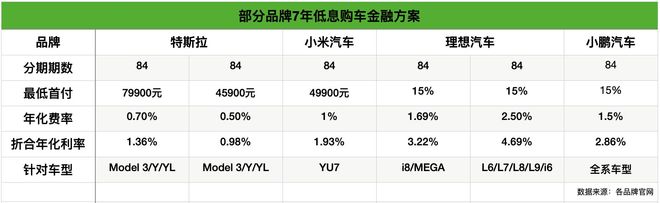
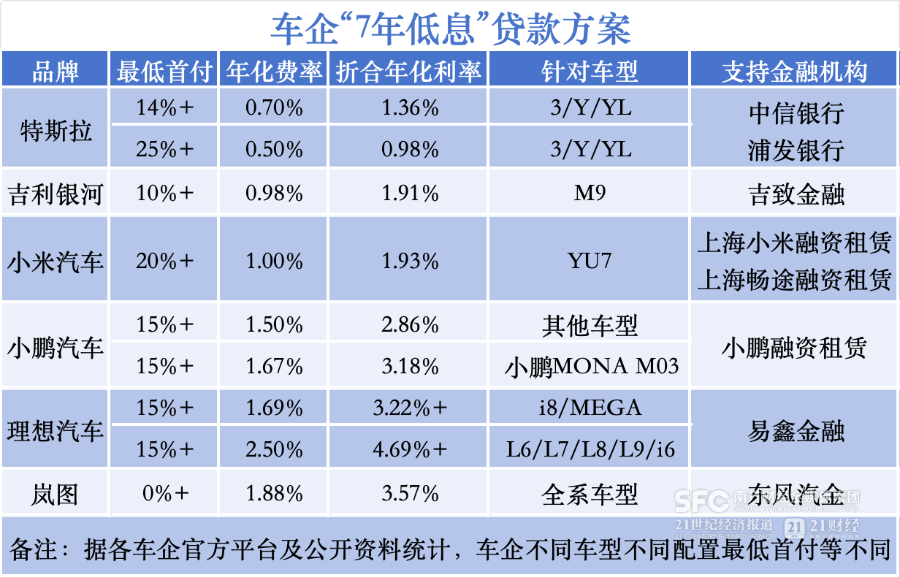
Core Viewpoint - The introduction of 7-year low-interest financing plans by various electric vehicle manufacturers aims to stimulate market demand amid a competitive landscape and inventory pressure, but the actual effectiveness and implications of these plans remain to be validated by the market [1][10]. Group 1: Financing Plans Overview - Major brands like Tesla, Xiaomi, Li Auto, and Xpeng have launched or enhanced 7-year low-interest financing options, extending traditional auto loan periods by 2 to 3 years [1]. - Monthly payments have significantly decreased due to longer loan terms, with Xiaomi's YU7 starting at 2,593 yuan, Xpeng's models at 1,355 yuan, Li Auto at 2,578 yuan, and Tesla's Model 3/Y/Y L at 1,918 yuan [1]. - Tesla offers two different 7-year financing plans with varying down payment requirements, resulting in different annualized rates [2][3]. Group 2: Comparative Analysis of Financing Options - Tesla's financing plans are noted for their flexibility, with lower annualized rates for higher down payments, while other brands have higher rates [3][6]. - Xiaomi's plan requires a minimum down payment of 20%, with an annualized rate of 1% and an effective annualized rate of 1.93% [4]. - Li Auto's financing is categorized by model, with some models offering interest-free periods, while Xpeng's plan applies to all models with a minimum down payment of 15% and an annualized rate of 1.5% [5][6]. Group 3: Market Dynamics and Consumer Behavior - Sales personnel from various brands express differing opinions on the 7-year financing plans, with some recommending shorter terms due to higher interest costs associated with longer loans [7][8]. - The overall market for passenger vehicles has seen a significant decline, with retail sales down 28% year-on-year and wholesale volumes down 35% [9][10]. - Investment firms predict a continued downturn in the Chinese passenger vehicle market, with potential sales declines of 2% to 5% in 2026 [10]. Group 4: Implications of Financing Strategies - The 7-year low-interest financing plans are seen as a strategy to lower the purchase threshold for consumers, but the effectiveness may be limited by high qualification requirements for consumers [9][10]. - Concerns are raised about the long-term implications of extended financing terms, including potential risks of negative equity and the sustainability of demand post-incentive [12].


车企掀7年低息促销潮,特斯拉、小米、小鹏等都在列,月供低至千元
2 1 Shi Ji Jing Ji Bao Dao· 2026-01-28 00:59
Core Insights - The automotive industry is experiencing a promotional wave of "7-year low-interest" financing plans, initiated by companies like Tesla, Xiaomi, and Xpeng, aimed at stimulating consumer demand and increasing sales before the Chinese New Year [1][2][4] Group 1: Financing Plans Overview - Various automakers have launched "7-year low-interest" loan policies to lower the purchase threshold and stimulate end-consumer demand [4] - The financing plans differ significantly among brands in terms of lending institutions, down payment requirements, funding costs, and model coverage [4][5] - Tesla offers a lower financing cost with a 0.50% annualized fee for a 25%+ down payment option, while other brands like Li Auto have higher costs, reaching up to 2.50% [5][6] Group 2: Consumer Impact - The extended repayment period significantly reduces monthly payment pressure for consumers, but total interest payments will increase [8][10] - For example, under Xiaomi's "7-year low-interest" plan, a consumer would pay a total interest of 14,252.28 yuan over the loan period [8] - Consumers are advised to assess their financial situation carefully, as the longer loan terms may lead to increased financial strain if not managed properly [17] Group 3: Market Dynamics - The push for longer loan terms aligns with national policies aimed at boosting consumption, allowing banks to extend personal consumption loan terms from 5 to 7 years [2] - The automotive market is seeing a shift in consumer preferences, with some opting for higher upfront payments to avoid long-term debt, while others appreciate the lower monthly payments offered by extended loans [10][15] - Concerns about vehicle depreciation and residual values are heightened with longer loan terms, especially for electric vehicles, which may face rapid technological obsolescence [10][11] Group 4: Risk and Regulatory Considerations - Financial institutions face increased risk management challenges due to the longer loan terms and lower down payments, necessitating more stringent consumer assessments [15][16] - The distinction between traditional auto loans and financing leases is crucial, as ownership rights differ significantly, impacting consumer decisions [20][21] - Legal experts emphasize the importance of understanding contract terms related to ownership and repayment obligations in financing leases [22][23]
车企掀7年低息促销潮,特斯拉、小米、小鹏等都在列,月供低至千元
21世纪经济报道· 2026-01-28 00:53
Core Viewpoint - The article discusses the recent trend of car manufacturers offering "7-year low-interest" financing plans to stimulate consumer demand, driven by government policies aimed at boosting consumption [2][5]. Group 1: Financing Trends - Various car manufacturers, including Tesla, Xiaomi, and Xpeng, have launched "7-year low-interest" financing options, breaking away from the traditional 1-5 year loan terms [1][5]. - The financing plans are designed to lower monthly payments and initial down payments, making it easier for consumers to purchase vehicles [1][5]. - The trend is a response to government initiatives encouraging consumer spending, particularly before the Lunar New Year [2][5]. Group 2: Loan Details and Variations - The financing options vary significantly among manufacturers, particularly in terms of lending institutions, down payment requirements, and interest rates [5][6]. - Tesla offers competitive rates, with a 0.50% annual fee translating to an effective annual rate of 0.98% for those making a 25% down payment [6]. - Other brands like Li Auto and Xpeng have higher effective annual rates, ranging from 1.9% to 4.69%, indicating a broader range of financing costs [6]. Group 3: Consumer Perception and Financial Implications - Consumers generally perceive the "7-year low-interest" loans as a way to reduce monthly financial burdens, although total interest payments may increase over the loan term [8][10]. - For example, a Xiaomi YU7 financed over 7 years with a 1% annual fee results in a total interest payment of approximately 14,252.28 yuan [8]. - Some consumers express caution, preferring to pay in full rather than take on long-term debt, indicating a desire to avoid overextending financially [10]. Group 4: Risk and Valuation Concerns - The longer loan terms raise concerns about vehicle depreciation and residual values, especially for electric vehicles, which may not hold their value as well as traditional combustion vehicles [11][14]. - The article notes that the average resale value for electric vehicles is lower than that of traditional vehicles, which could pose risks for consumers taking on long-term loans [11][14]. - The article highlights that the main models offered under these financing plans have relatively high resale values, which may mitigate some concerns [11][13]. Group 5: Consumer Eligibility and Approval Process - The approval process for "7-year low-interest" loans is more stringent, requiring higher credit qualifications compared to shorter-term loans [14][15]. - Financial institutions are increasing their risk assessment criteria, necessitating thorough evaluations of consumers' long-term repayment capabilities [14][15]. - Consumers are advised to assess their financial situations carefully before opting for these extended loan terms to avoid potential rejections or financial strain [15].
二手车价崩盘谣言不攻自破?雷军:小米SU7一年保值率排第一……
Sou Hu Cai Jing· 2026-01-28 00:48
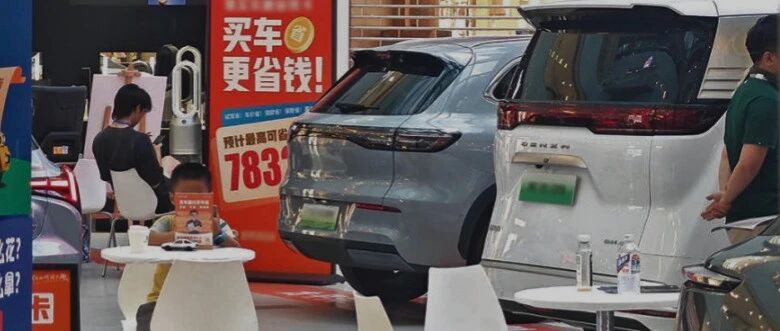
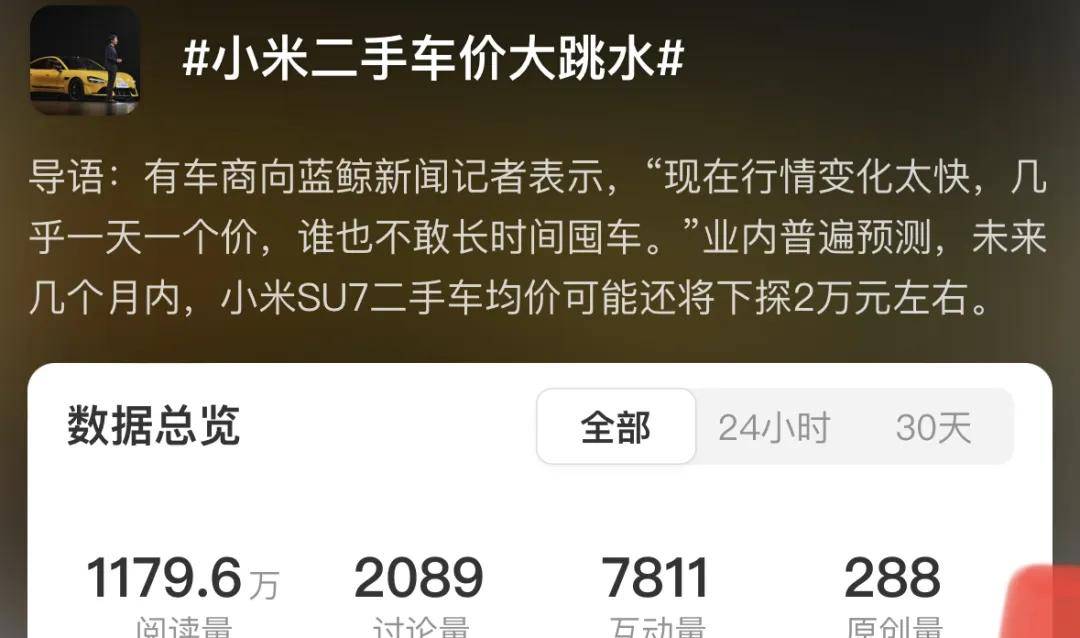
Core Viewpoint - Recent videos from used car dealers expressing dissatisfaction with Xiaomi's second-hand cars have sparked negative sentiment online, but Xiaomi executives, including Lei Jun, have countered these claims by highlighting the strong resale value of the Xiaomi SU7 model, which is reported to have an 80.1% resale rate according to the China Automobile Circulation Association's 2025 report [3][5]. Group 1: Resale Value and Market Position - The Xiaomi SU7 has achieved the highest one-year resale value among pure electric vehicles, reaching 86.05% according to the 2025 Annual Resale Value Report [8][10]. - The SU7's average second-hand price is reported at 207,000 yuan, which is higher than the Tesla Model 3's average of 201,000 yuan [11]. - The SU7's resale value is supported by strong demand, with dealers indicating that units are pre-ordered upon arrival, often without the need for active promotion [3][11]. Group 2: Market Dynamics and Pricing - The decline in second-hand prices for Xiaomi vehicles is acknowledged, attributed to increased production capacity and reduced delivery times, such as the YU7's delivery period being cut from 28 weeks to 14 weeks [11][12]. - The introduction of "immediate purchase" options for new vehicles, including display and slightly damaged cars, has created downward pressure on the second-hand market [12]. - The upcoming release of the next-generation SU7 in January 2026, which will feature significant upgrades but minimal price increases, is expected to further impact the value of the current model [12].
车企掀起“7年低息”促销潮
2 1 Shi Ji Jing Ji Bao Dao· 2026-01-28 00:45
Core Viewpoint - In early 2026, automotive companies are launching a "7-year low-interest" promotion, breaking the traditional 1-5 year loan terms, with a focus on low monthly payments and down payments [1] Group 1: Financial Offerings - Companies like Tesla, Xiaomi, Xpeng, Li Auto, Geely Galaxy, and Lantu are introducing "7-year low-interest" financial plans [1] - The annual interest rate varies significantly among brands, with Tesla offering a low-cost loan at 0.50% for a 25% down payment, translating to an effective annual rate of 0.98% [1] - Li Auto has higher costs, with an annual interest rate of 2.50%, equating to an effective annual rate of 4.69% [1] - Other brands like Xpeng, Geely Galaxy, and Xiaomi have effective annual rates ranging from 1.9% to 3.5%, placing them in the mid-range [1] Group 2: Consumer Sentiment - Many consumers express that the "7-year low-interest" car loans significantly reduce monthly payment pressure, with some stating, "A few thousand yuan down and only one or two thousand yuan monthly makes it much easier" [1] - However, some consumers remain cautious, indicating that while monthly payments are lighter, they prefer to pay in full if possible, as relying on a 7-year loan suggests exceeding their normal financial capacity [1]
