LI AUTO-W(02015)

Search documents
8点1氪|充电宝新规将落地,原3C认证将全面失效;上海地铁试点“站票车厢” ;超级猩猩客服回应“闭店潮”
3 6 Ke· 2025-11-26 00:05
Group 1: Charging Power Bank Regulations - The new national standard for mobile power banks, titled "Mobile Power Safety Technical Specifications," is set to be implemented, with the original 3C certification becoming invalid [2][3] - It is anticipated that nearly 70% of existing production capacity will be forced to exit the market due to inability to meet the new technical requirements [2][3] - A six-month buffer period will be provided for existing products with 3C certification to clear inventory, while compliant products can still be carried on flights [2][3] Group 2: Super Monkey Gym Closures - The fitness brand Super Monkey is experiencing a mix of new openings and closures in major cities, with some locations shutting down after just one year of operation [3][4] - The closures are primarily attributed to the expiration of lease contracts without renewal, although new stores continue to open [3][4] Group 3: Hong Kong Education Statistics - The number of primary school students in Hong Kong has dropped to a 30-year low, with applications for primary one seats falling below 40,000 for the first time [6] - The number of eligible children for primary one is projected to decline significantly, with estimates suggesting a drop from 48,600 this year to 34,100 by 2030 [6] Group 4: Apple Sales and iPhone Air Challenges - Apple has announced layoffs in its sales department in response to declining iPhone sales, particularly affecting the new iPhone Air model [5][6] - The company is focusing on enhancing customer engagement while continuing to recruit for new positions [5][6] Group 5: African Swine Fever in South Korea - South Korea has raised its African swine fever crisis alert level to "serious" following an outbreak at a pig farm [9] - The affected farm had 463 pigs, with several deaths reported prior to the confirmation of the virus [9] Group 6: Alibaba's Financial Performance - Alibaba's cloud revenue for the second fiscal quarter of 2026 reached 39.824 billion yuan, marking a 34% year-on-year increase [20] - The company reported that AI-related product revenue has seen triple-digit growth for nine consecutive quarters [20] Group 7: NIO's Financial Results - NIO reported a record revenue of 21.79 billion yuan for the third quarter, reflecting a year-on-year growth of 16.7% [21] - The company delivered 87,071 vehicles during the quarter, achieving a 40.8% increase compared to the previous year [21] Group 8: Zhihu's Financial Report - Zhihu's third-quarter revenue was 659 million yuan, with a year-on-year reduction in operating losses by 16.3% [24] - The paid reading business contributed 386 million yuan, accounting for 58.5% of total revenue [24]




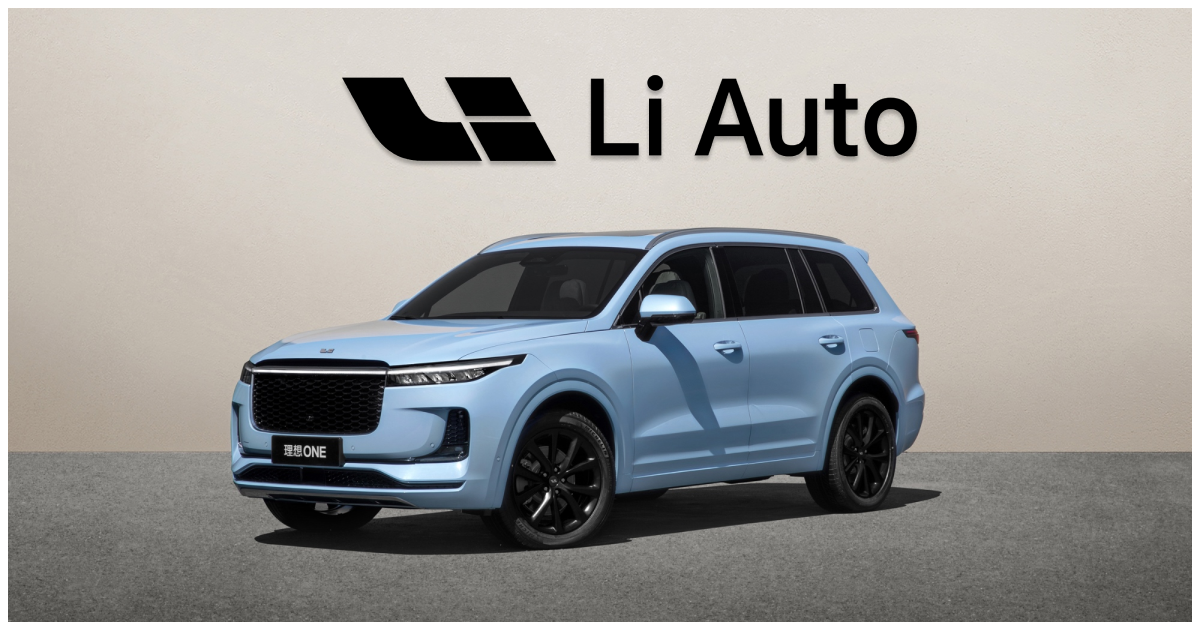
Li Auto Inc. (NASDAQ:LI) Quarterly Earnings Preview
Financial Modeling Prep· 2025-11-25 13:00
Core Insights - Li Auto Inc. is a significant player in China's new energy vehicle market, with quarterly earnings expected to be released on November 26, 2025, projecting earnings per share of $0.04 and revenue of approximately $26.49 billion [1][6] Financial Metrics - The company has a price-to-earnings (P/E) ratio of approximately 16, indicating moderate investor confidence in its future earnings potential [2][6] - Li Auto's price-to-sales ratio is about 0.91, suggesting the stock is valued at nearly 91 cents for every dollar of sales, which may attract value-focused investors [3] - The enterprise value to sales ratio is approximately 0.68, reflecting the company's valuation relative to its sales [4] - The enterprise value to operating cash flow ratio is around 6.47, indicating how many times the operating cash flow can cover the enterprise value [4] - The debt-to-equity ratio is about 0.23, indicating a relatively low level of debt compared to equity, suggesting financial stability [5][6] - The current ratio of approximately 1.73 indicates that the company has a good level of liquidity to cover its short-term liabilities [5]
【新能源周报】新能源汽车行业信息周报(2025年11月17日-11月23日)
乘联分会· 2025-11-25 09:01
Industry Information - CATL and Haibosich signed a 10-year strategic cooperation agreement to enhance their advantages in energy storage technology and smart manufacturing [9] - The price of lithium iron phosphate has rebounded by approximately 10% since October, driven by strong demand from automakers and battery manufacturers [9] - A breakthrough in the certification and review technology system for domestic automotive chips has been achieved, addressing the challenges of "dare not use, cannot use" [9][10] - As of the end of October, China's electric vehicle charging infrastructure reached 18.645 million units, a year-on-year increase of 54% [11] - A total investment of nearly 10 billion yuan has been signed for 16 key projects in the new energy industry in Changzhou [12] - In the first ten months, Beijing's new energy vehicle production increased by 150% year-on-year [12] - The new AITO M7 has surpassed 30,000 deliveries within 57 days of its launch [12] - Guoxuan High-Tech has officially started mass production of standard battery cells [12] - Huawei's advanced driving solution for L3 level is set to launch commercially, marking a significant step in autonomous driving technology [12][14] - In Liuzhou, the total vehicle sales reached 1.265 million units in the first three quarters, a year-on-year increase of 33.7% [15] Policy Information - Hebei Province has adjusted its time-of-use electricity pricing policy, optimizing charging costs for electric vehicles with a peak-to-valley price difference of 70% [16][18] - Chengdu plans to build over 500,000 electric vehicle charging piles and more than 200 battery swap stations by 2030 [21] - New regulations for electric vehicle charging infrastructure in Guangxi have been proposed to clarify responsibilities among stakeholders [21] - Beijing is increasing financial support for the purchase of new energy vehicles [21] - Shenzhen is providing subsidies of up to 5 million yuan for the construction of solar-storage charging and battery swap projects [21] - The Ministry of Industry and Information Technology has announced mandatory national standards for intelligent connected vehicle safety, marking a key step in autonomous driving regulation [21][25] - The Ministry of Finance and the Ministry of Industry and Information Technology are seeking public opinions on government procurement standards for new energy vehicles [21][26] Company Information - Leap Motor reported a total revenue of 31.562 billion yuan in Q3, a year-on-year increase of 9.1% [32] - Leap Motor achieved a net profit of 150 million yuan in Q3, delivering 173,900 vehicles [32] - Xiaomi's Ultra Club racing service has expanded to its 13th city, adding the Guangdong International Circuit [32] - Xiaomi's HAD autonomous driving system is set to upgrade to a new generation XLA architecture in Q4 [32] - Avita Technology signed a business cooperation framework agreement with the Chongqing branch of the Industrial and Commercial Bank of China [32] - NIO's Firefly right-hand drive model has entered mass production, with the first batch shipping to Singapore [34] - NIO has completed the battery swap route in the western Sichuan region, covering popular tourist areas [34] - BYD's sales in the UK have surpassed 50,000 units [34] - Leap Motor's first overseas model cooperation project with FAW has been launched, expected to go into production next year [34] - Xiaopeng Motors plans to launch seven new models next year, including three super electric range-extended products in Q1 [34] - Seres is actively expanding into overseas markets, focusing on high-end smart electric vehicles [34] - Xiaomi's third-quarter profit from electric vehicles and AI reached 700 million yuan [34] - GAC Aion has become the first company in the country to obtain a high-speed L3 testing license for vehicles in collaboration with Huawei [34] - NIO's ES6 model has reached a cumulative delivery of 300,000 units [34] - Geely and Renault have officially launched their strategic cooperation in Brazil, investing 3.8 billion reais (approximately 5.1 billion yuan) [34] - Xiaomi is expected to complete its annual delivery target of 350,000 vehicles ahead of schedule [34] - Tesla's global supercharging stations have exceeded 75,000 [34] - Xiaomi's 500,000th vehicle has officially rolled off the production line, marking a significant milestone [34] - Li Auto is accelerating product iteration and global expansion, moving away from a "cookie-cutter" design approach [34]





广州车展新趋势:新能源大六座排队登场 纯电车企回手拥抱油箱
Nan Fang Du Shi Bao· 2025-11-24 23:16
Core Viewpoint - The 2025 Guangzhou Auto Show highlights a surge in the launch of large six-seat SUVs by various automakers, reflecting both market demand and a potential lack of innovation in the industry [2][3][7]. Group 1: Large Six-Seat SUVs - Numerous automakers are introducing large six-seat SUVs at the Guangzhou Auto Show, indicating a competitive market segment with varying price points and features [3][4]. - The entry price for these SUVs is below 300,000 yuan, with models like the Geely Galaxy M9 starting at 180,000 yuan and offering advanced features such as the new generation Raytheon electric hybrid system [4]. - Higher-end models above 300,000 yuan include the Zhiji LS9 priced at 322,800 yuan, showcasing futuristic designs and advanced technology [5][6]. Group 2: Market Dynamics and Concerns - Industry insiders express skepticism about the practicality of large six-seat SUVs, suggesting that many features may not align with consumer needs, leading to potential forced consumption [7][8]. - The competitive landscape is described as "overheated," with automakers rushing to enter the large six-seat SUV market to avoid missing out on perceived opportunities [8]. Group 3: Return of Traditional Fuel Vehicles - A noticeable trend at the auto show is the return of traditional fuel vehicles, with many brands that previously focused on electric vehicles now introducing hybrid and fuel models [9][11]. - The market is expected to see a coexistence of electric and hybrid vehicles, with predictions indicating that internal combustion engine vehicles will still account for about one-third of new car sales by 2040 [10][15]. - Companies like Chery and Geely emphasize their commitment to maintaining a strong presence in the fuel vehicle market, even as they expand their electric offerings [12][14]. Group 4: Consumer Preferences and Market Viability - The rise of hybrid and extended-range vehicles is seen as a response to consumer concerns over range anxiety and charging infrastructure, particularly in regions where electric vehicle adoption is slower [13]. - The profitability of hybrid models is highlighted, with companies like Li Auto achieving financial success through their hybrid offerings [13][14]. - The automotive industry is expected to maintain a diverse energy mix, with both electric and hybrid vehicles playing significant roles in the market [16][17].

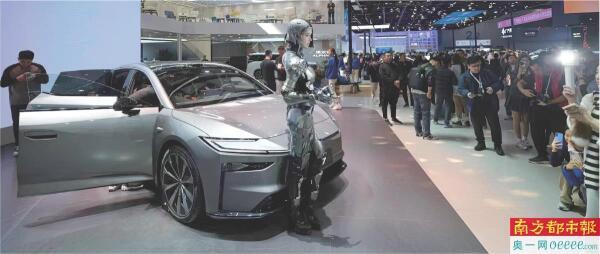
理想汽车:共建一流创新生态 让“移动的家”陪伴美好生活
Ren Min Ri Bao· 2025-11-24 22:03
Core Insights - The Chinese automotive industry has achieved significant advancements over the past decade, particularly in the field of new energy vehicles (NEVs), which have become a vital component for high-quality development [1] - Li Auto, established in 2015, has emerged as a leading mid-to-high-end NEV brand in China, achieving annual sales of 500,000 vehicles and over 100 billion yuan in revenue for two consecutive years [1][2] - The company is committed to innovation and has developed a robust supply chain ecosystem, known as "Li Chain," which integrates nearly a thousand partners to enhance collaborative growth [4][5] Industry Development - The NEV sector in China is projected to exceed 12 million units in annual production and sales by 2024, with Li Auto reaching its milestone of 1 million vehicles produced in just 58 months [2] - Li Auto is actively contributing to the development of Changzhou as "China's New Energy Capital," aiming for the local NEV industry to surpass 850 billion yuan in scale by 2024 [2] Technological Innovation - During the 14th Five-Year Plan period, Li Auto has focused on becoming a global leader in artificial intelligence (AI) and plans to invest over 6 billion yuan in AI development this year [3] - The company has launched the VLA driver model and "Li Xiang Classmate" AI system, marking its entry into a new phase of AI-driven development [3] Supply Chain and Ecosystem - Li Auto has established a supply chain system characterized by "excellent growth, intelligent innovation, and green health," with procurement amounts growing from billions to trillions in just three years [4][5] - The "Li Chain" ecosystem promotes localized industrial collaboration, with 80% of suppliers located in the Yangtze River Delta region, and 50% concentrated in Jiangsu [5] Talent Development - Li Auto has partnered with over a hundred universities to cultivate more than 5,000 high-end industry talents through initiatives like the "Li Xiang+" talent program [6] Future Outlook - The company aims to leverage technological innovation to drive high-quality industry development and enhance user experiences in green and smart mobility [8]
Markets Rally on Fed Rate Cut Hopes; Tech Leads Gains in Holiday-Shortened Week
Stock Market News· 2025-11-24 19:07
Market Overview - U.S. equity markets are experiencing a strong rally, driven by optimism for a Federal Reserve interest rate cut in December [1][2] - Major indexes are showing significant gains, with the Nasdaq Composite up over 2%, S&P 500 up 1.6%, and Dow Jones up 0.6% [2] - The CME FedWatch tool indicates a 77% likelihood of a quarter-percentage-point rate reduction at the Fed's December meeting [2] Economic Data and Events - A holiday-shortened trading week is underway due to Thanksgiving, with markets closed on November 27 and an early close on November 28 [4] - Key economic data releases this week include the S&P/Case-Shiller Home Price Index, Richmond Fed Manufacturing Index, Consumer Confidence data, and U.S. GDP [5] Corporate Earnings - Agilent Technologies is expected to release its fiscal Q4 earnings, while Alibaba, Dell, Analog Devices, and Autodesk are among companies reporting on November 25 [6] - Ross Stores, Intuit, and UGI Corp. reported strong earnings, with Ross Stores jumping 8.4% after surpassing analyst estimates [11] Individual Stock Movements - Tesla shares surged 7% following CEO Elon Musk's announcement of plans to build more AI chips [7] - Alphabet's shares rose over 5% to an all-time high after unveiling its Gemini 3 AI model [7] - Nvidia shares increased nearly 2% despite previous concerns about AI valuations [7] - Carvana shares jumped nearly 7% after an upgrade from analysts [7] - Amazon announced a $50 billion investment to expand its AI and supercomputing infrastructure for U.S. government agencies [11]





US stock market today: Full list of top pre-market movers across Dow, S&P 500 and Nasdaq as gold slides and Bitcoin keeps falling
The Economic Times· 2025-11-24 10:46
Market Overview - Stock futures showed modest early gains as markets entered the Thanksgiving week with cautious optimism, with Nasdaq 100 futures up 0.99%, S&P 500 futures gaining 0.68%, and Dow futures adding 0.36% [1][17] - The S&P 500 rose 0.98% over the previous week, while the Nasdaq 100 and Dow advanced 0.77% and 1.08% respectively, although all three benchmarks are on track to close November in the red due to heavy selling in AI stocks [1][17] Economic Indicators - Investors are tracking key U.S. economic data, including October retail sales and the Producer Price Index, which are important signals for the Federal Reserve's next policy steps [3][17] - Treasury markets reflected improving sentiment, with the 10-year yield hovering near 4.05% [3][17] Sector Performance - Persistent fears of an AI bubble, concerns over profit sustainability, and reduced risk appetite have contributed to a pullback in the AI sector [2][17] - Rate-cut hopes emerged after New York Fed President John Williams suggested there is room for additional adjustments to monetary policy, prompting increased bets on a possible December rate cut [2][17] Commodities Market - In commodities, WTI crude traded near $57.75 and trended lower, while Brent crude also weakened [4][12][17] - Gold prices approached $4,062 per ounce despite slight early softness, and silver held below $50 [4][12][17] Pre-Market Activity - Pre-market trading showed strong activity in small-cap and tech-linked names, with notable movers including JX Luxventure up 36.23% to $4.70 and Epsium Enterprise gaining 26.18% to $4.53 [10][16][17] - Crypto-linked stocks gained even as Bitcoin slipped 1.19% to $85,753, while the Nasdaq Crypto Index rose 2.17% [7][14][17] Global Market Trends - Asian markets were mostly higher, with the Hang Seng up 1.97%, the Shanghai Composite up 0.05%, and the Shenzhen Component up 0.47%, while Japan's markets were closed for a holiday [7][17]

港股收盘(11.24) | 恒指收涨1.97% 科技股表现强势 快手-W(01024)劲升逾7%
智通财经网· 2025-11-24 08:52
Core Viewpoint - The expectation for a rate cut by the Federal Reserve in December has increased, leading to a rise in Hong Kong stock indices, with the Hang Seng Index closing up 1.97% at 25,716.5 points, and a total trading volume of 302.64 billion HKD [1] Group 1: Market Performance - The three major indices in Hong Kong collectively rose, with the Hang Seng Index gaining over 2% at one point during the day [1] - The Hang Seng Technology Index increased by 2.78%, closing at 5,545.56 points [1] - The trading volume for the day reached 302.64 billion HKD [1] Group 2: Blue-Chip Stocks - Alibaba-W (09988) saw a significant increase of 4.67%, closing at 154.5 HKD, contributing 104.44 points to the Hang Seng Index [2] - Kuaishou-W (01024) rose by 7.11%, while NetEase-S (09999) increased by 5.87%, contributing 21.51 points and 26.03 points to the index respectively [2] Group 3: Sector Performance - Technology stocks rebounded, with Kuaishou rising over 7% and NetEase nearly 6% [3] - AI applications are gaining traction, with notable increases in stocks related to AI, such as Chuangmeng Tiandi (01119) up 9.38% and Innovation Qizhi (02121) up 8.83% [3] - Military stocks performed strongly, with China Shipbuilding Defense (00317) rising by 13.07% [4] Group 4: Automotive Sector - The automotive sector saw widespread gains, with GAC Group (02238) increasing by 12.03% and Beijing Automotive (01958) rising by 5.91% [5] - The Guangzhou Auto Show featured 93 new car launches, with nearly 60% being new energy vehicles [6] Group 5: Lithium and Semiconductor Stocks - Lithium stocks continued to decline, with Ganfeng Lithium (01772) down 5.66% [7] - Semiconductor stocks showed weakness, with Hua Hong Semiconductor (01347) falling by 4.91% [7] Group 6: Notable Stock Movements - Innovation Industry (02788) debuted with a significant increase of 32.76%, closing at 14.59 HKD [9] - Silver诺医药-B (02591) surged by 31.15% after being included in the Hang Seng Composite Index [10] - Miniso (09896) faced pressure post-earnings, with a decline of 4.84% despite a revenue increase of 28.2% [11]


霸王茶姬、盒马、理想汽车等都是其客户,服务B端客户的线上维保平台获数千万元融资 | 硬氪首发
3 6 Ke· 2025-11-24 06:34
Core Insights - "天天百应" has recently completed a multi-million A round financing, with funds primarily allocated for blue-collar technician training, core scheduling algorithm development, and supply chain efficiency improvements [1] - The company aims to transform traditional maintenance services through a dialogue-based AI platform, addressing issues such as slow response times and high costs in cross-regional maintenance for chain enterprises [1][2] - The maintenance market is substantial, exceeding 100 billion, but faces structural challenges, including slow response times and management disconnects between headquarters and frontline stores [1] Company Developments - The founder, Li Changbo, has taken over daily operations and initiated a critical model restructuring, moving away from reliance on scattered maintenance workers to a more standardized service approach [2] - The company has implemented key reforms, including standardizing maintenance service protocols and establishing a quality inspection department to enhance service quality [2] - Since February, the client base has expanded across various industries, achieving a consistent month-on-month growth of 10% and reducing costs for clients by at least 20% [2] Technological Advancements - The company's technology focus is evolving from order management to a more complex "person-material-store" collaborative scheduling algorithm [3] - The introduction of a quantitative fund investor will assist in developing dynamic optimization models to enhance dispatch efficiency nationwide [3] - The company has launched AI-driven solutions for quoting, dispatching, and quality inspection to improve operational efficiency [3]
车展新趋势:新能源大六座排队登场!车企为何扎堆造大车?
Nan Fang Du Shi Bao· 2025-11-24 02:52
Core Viewpoint - The Guangzhou Auto Show 2025 showcased a surge in new energy large six-seat SUVs from various automakers, reflecting market demand but raising concerns about the sustainability of this trend for the automotive industry's healthy development [2][9]. Group 1: Market Trends - Numerous automakers are launching large six-seat SUVs, indicating a competitive market environment, with models priced below 300,000 yuan from brands like Geely and Chery [3][5]. - Geely's Galaxy M9 starts at under 180,000 yuan, offering spacious seating and advanced technology, while Chery's Fengyun T11 aims to provide luxury features at a competitive price of 189,900 yuan [3]. - Higher-end models, such as the Zhiji LS9 and Li Auto L8, are priced above 300,000 yuan, showcasing advanced technology and design [8]. Group 2: Industry Insights - Industry insiders express skepticism about the practicality of large six-seat SUVs, suggesting that many features may not align with consumer needs and could lead to forced consumption [9][10]. - The rush to enter the large six-seat SUV market is driven by potential profit margins and the competitive landscape, where companies fear falling behind if they do not adapt quickly [9]. - Concerns about product quality and differentiation arise, as many new models exhibit similar designs and features, leading to consumer fatigue in choice [10].