
LI AUTO-W(02015)

Search documents
理想L6被投诉辅助驾驶状态变道碰撞!称传感器识别有局限性
Nan Fang Du Shi Bao· 2026-01-29 13:57
Core Viewpoint - A recent incident involving a Li Auto L6 owner raised concerns after the vehicle reportedly lost control and collided with another car while using the assisted driving feature. The company stated that the incident occurred under extreme lighting conditions, which affected the sensor's performance [2][4]. Group 1: Incident Details - The incident occurred on January 10 at 16:00 when the owner activated the smart assisted driving system (NOA) while on a Bluetooth call. The vehicle was driving towards the setting sun, and after 7 seconds of straight driving at a speed of 36 km/h, it suddenly veered and collided with a black sedan [4]. - The traffic accident report indicated that the owner was fully responsible for the accident due to illegal lane changing. Fortunately, there were no serious injuries [4]. Group 2: Company Response - On January 29, a representative from Li Auto stated that preliminary analysis of the incident indicated that the assisted driving sensors have limitations under extreme lighting conditions, as noted in the user manual [2][4]. - The company mentioned that while it can provide basic driving data to users, there are currently no national standards for assisted driving data retrieval. The limitations in data storage and retrieval mechanisms may lead to data being overwritten in cases of excessive data volume [4]. - Li Auto is actively communicating with the user to resolve the situation promptly [4].


理想汽车比谁都现实
Xin Lang Cai Jing· 2026-01-29 12:13
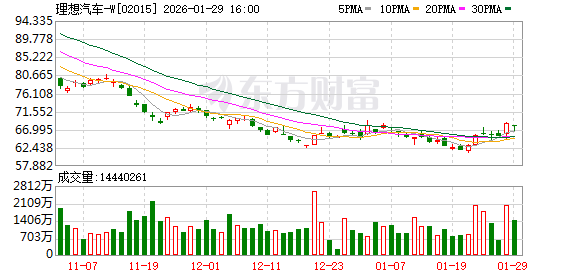
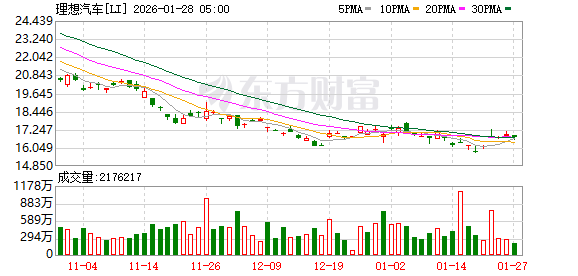
Core Viewpoint - Li Auto is undergoing a strategic recalibration by closing approximately 100 inefficient retail stores while simultaneously investing in AI and robotics, reflecting a dual approach of contraction and expansion in response to market challenges [2][4][12]. Group 1: Retail Strategy and Market Position - In early 2026, Li Auto plans to close around 100 low-efficiency retail stores, which are often located in prime areas of first and second-tier cities, as part of a broader strategy to adapt to changing consumer behaviors [4][27]. - The adjustment is not merely a cost-cutting measure but a strategic realignment following a year of declining performance, as consumers increasingly prefer shopping in multi-level commercial spaces rather than traditional car showrooms [6][29]. - In 2025, Li Auto set an ambitious sales target of 700,000 vehicles, which was later revised down to 640,000, with actual deliveries falling to approximately 406,343 vehicles, resulting in a loss of market leadership to competitors like Leap Motor [7][30]. Group 2: Financial Performance and Challenges - Li Auto's third-quarter revenue for 2025 was reported at 27.4 billion yuan, a year-on-year decline of 36.2%, with a net loss of 624 million yuan, marking the end of 11 consecutive profitable quarters [9][32]. - The decline in performance is attributed to setbacks in the pure electric vehicle market and increased competition from rivals employing aggressive pricing strategies [9][32]. - The company currently operates 548 retail centers, which incurs significant costs, prompting the need for channel optimization to improve overall efficiency [10][33]. Group 3: Future Strategy and AI Investment - Li Auto is shifting its focus towards AI technology and robotics, with plans to develop foundational models, chips, and intelligent systems, aiming to position itself among the top three global players in this field by 2028 [12][37]. - The company has expressed intentions to expand its brand identity from merely creating "mobile homes" to a broader vision encompassing "embodied intelligence," including the development of humanoid robots [14][37]. - Following the announcement of store closures and AI investments, Li Auto's stock rose by 4.9%, indicating positive market reception despite differing opinions among investors regarding the company's long-term competitiveness [16][39]. Group 4: Market Reactions and Analyst Ratings - Analysts are divided on Li Auto's long-term prospects, with optimistic views focusing on the potential of self-developed chips and AI models, while cautious perspectives highlight immediate operational pressures [18][42]. - Some analysts maintain a positive rating, projecting a target price of 100 HKD for the stock, while others have downgraded their ratings due to concerns over short-term challenges, setting a target price of 17.5 USD [18][43].
股票市场概览:资讯日报:美联储维持利率不变,符合市场普遍预期-20260129
Guoxin Securities Hongkong· 2026-01-29 11:58
Market Overview - The Federal Reserve maintained the federal funds rate target range at 3.5%-3.75%, aligning with market expectations[9] - The Hang Seng Index closed at 27,827, down 2.58% for the day but up 8.57% year-to-date[3] - The S&P 500 index closed at 6,978, with a slight decrease of 0.01% for the day and a year-to-date increase of 1.94%[3] Stock Performance - Gold prices surged, with spot gold exceeding $5,280 per ounce, marking a monthly increase of over 22%[9] - Semiconductor stocks saw significant gains, with the Philadelphia Semiconductor Index rising by 2.34%[9] - Major tech stocks showed mixed results, with Intel up 11.04% and Microsoft down 6% post-earnings report[9] Sector Highlights - Oil stocks continued to rise, with Shanghai Petrochemical gaining over 5% due to geopolitical tensions driving oil prices up by 3%[9] - New consumer concept stocks performed well, with a snack retail chain soaring 69% on its debut[9] - Airline stocks faced pressure, with China Southern Airlines down 6.83% due to rising operational costs[9] Economic Indicators - The U.S. dollar index fell to 95.51, the lowest since February 2022, contributing to the rise in gold prices[9] - The Japanese yen strengthened, impacting export-related stocks negatively, with Toyota down 3.24%[13] - The Bank of Japan raised its policy rate to 0.75%, the highest in 30 years, indicating a cautious approach to future rate hikes[13]



Tesla Rival Li Auto's Self-Driving Head Now Leads Robotics Division: Report - Li Auto (NASDAQ:LI)
Benzinga· 2026-01-29 10:30
Group 1 - Li Auto's head of autonomous driving, Lang Xianpeng, will now lead the company's robotics efforts, overseeing hardware operations and robotics R&D [2] - The autonomous driving team has been restructured to become part of the software team, indicating a shift in internal organization [3] - Li Auto had previously outlined an investment of $836 million in AI last year, highlighting its commitment to technology development [3] Group 2 - Xpeng's CEO announced that the company's humanoid robot, IRON, is set to enter production in the latter half of this year, reflecting a broader trend in the automotive industry towards robotics and Robotaxis [4]
不管能不能成, 都绝对不能再把理想当车企了
理想TOP2· 2026-01-29 07:30
Core Viewpoint - The founder, Li Xiang, is determined to focus on the development of silicon-based drivers and household robots, aiming for mass production rather than just prototypes. The organizational structure required for silicon-based life differs significantly from traditional automotive companies [1]. Group 1: Organizational Changes and Strategy - By January 2026, both established giants and new AI companies will have similar organizational structures, integrating teams for collaborative design of silicon-based life components such as perception, brain, heart, software, and hardware. This marks a fundamental shift from past software and hardware development methods [2]. - Li Xiang emphasizes the urgency of starting the development of humanoid robots for household tasks, indicating that failure to act promptly could result in missing critical early opportunities. Teams focused on space and humanoid robots are now actively recruiting top talent [2]. Group 2: Challenges and Opportunities in Robotics - Li Xiang identifies current challenges in robotics as akin to the difficulties faced in developing general agents discussed in early 2025. The iteration speed of robots may be slower than software, but advancements will occur more rapidly than anticipated [3]. - The success of Li Xiang's vision for silicon-based robots hinges on his learning ability, iteration speed, and judgment quality, with other factors being secondary [3]. Group 3: Key Anchors for Success - The first key anchor is the accuracy of future technology deployment judgments. Li Xiang's strong belief in the urgency of addressing current robotic challenges is based on his assessment of the situation, which could lead to significant resource allocation consequences depending on its correctness [4]. - The second key anchor involves the ability to effectively organize and recruit suitable graduates aligned with Li Xiang's vision. The consensus in the AI industry is that recruiting the right talent is crucial for success [5][6]. Group 4: Financial Considerations - Financial issues will resolve themselves if market-accepted silicon-based drivers and household robots are developed, as the business model relies on receiving payments before delivering products. The company's financial strength is sufficient for establishing production facilities in China [7].
马云最新发声:谈AI和教育;软银拟向OpenAI追加投资300亿美元;英伟达员工晒年会最牛年终奖:黄仁勋亲笔签名皮衣丨邦早报
Sou Hu Cai Jing· 2026-01-29 00:25
Group 1: AI and Education - Jack Ma emphasizes that in the AI era, the focus should be on teaching children how to effectively use AI rather than debating its necessity. He believes curiosity, imagination, creativity, judgment, and collaboration are the key skills needed [1] - The Ma Yun Rural Teacher Program aims to enhance the quality of rural education through funding and professional training, providing support to 100 teachers annually [1] Group 2: Market Performance and IPOs - Hunan Mingming Henbang, a leading snack and beverage retailer, saw its stock surge by 88.08% upon listing on the Hong Kong Stock Exchange, closing with a market cap of 862.04 billion HKD [3] - SoftBank is reportedly negotiating to invest an additional 30 billion USD in OpenAI, which is seeking up to 100 billion USD in new funding, potentially valuing the company at 830 billion USD [9] - Tesla plans to cease production of Model S and Model X vehicles to transition towards a fully autonomous future, utilizing its "Optimus" robot factory [7] Group 3: Financial Results - Meta reported Q4 revenue of 59.89 billion USD, a 24% year-over-year increase, with advertising revenue also up by 24% [10] - Li Auto is restructuring its R&D framework, splitting the autonomous driving team into three distinct groups to enhance efficiency [9] - Oriental Selection reported a net profit of 239 million CNY for the first half of the 2026 fiscal year, reversing a loss from the previous year [11][12] Group 4: Corporate Developments - Amazon announced layoffs affecting nearly 16,000 jobs while continuing to invest in strategic areas [16] - The German automotive supplier, OMO, plans to cut up to 4,000 jobs globally due to challenging market conditions [16] - Longting Technology completed a new round of financing totaling 500 million CNY, with investments from various funds [17]






美股异动 | 热门中概股多数上涨 理想汽车(LI.US)涨超3%
智通财经网· 2026-01-28 16:09
智通财经APP获悉,周三,热门中概股多数上涨,截至发稿,新东方(EDU.US)涨超4%,理想汽车 (LI.US)、贝壳(BEKE.US)涨超3%,哔哩哔哩(BILI.US)涨超2%,阿里巴巴(BABA.US)、网易(NTES.US) 涨超1.5%。 ...


理想调整研发架构,智驾部门将被重组
Xin Lang Cai Jing· 2026-01-28 16:00
Core Viewpoint - Li Auto is undergoing a restructuring of its R&D system to enhance its competitiveness in the AI sector, particularly in autonomous driving and intelligent robotics [1] Group 1: Organizational Changes - Li Auto will reorganize its R&D into three main teams: Base Model Team, Software Entity Team, and Hardware Entity Team, with a significant focus on the restructuring of the autonomous driving team [1] - The former Senior Vice President of Autonomous Driving, Lang Xianpeng, will lead the Hardware Entity Team, focusing on robotics development and reporting to President Ma Donghui [1] - The autonomous driving team will be integrated into the Software Entity Team, led by Guo Xiaofei, who will also oversee the development of intelligent cockpit and intelligent driving [1] Group 2: Leadership and Reporting Structure - Guo Xiaofei will report to Ma Donghui, while Zhan Kun will lead the Base Model Team, responsible for integrating VLA and self-developed chips, reporting to CTO Xie Yan [1] - This restructuring aligns with Li Auto's strategic vision as articulated by CEO Li Xiang, emphasizing the importance of R&D adjustments to meet new AI competition [1] Group 3: Strategic Vision - Li Xiang indicated that the next decade will see embodied intelligence become a core capability for Li Auto, marking the beginning of a new era for automotive robotics [1] - The company anticipates that the revenue potential from this sector could reach trillions, indicating significant growth opportunities ahead [1]
“卖得不好”的门店开始关闭 理想汽车进入转型阵痛期
Guo Ji Jin Rong Bao· 2026-01-28 13:26
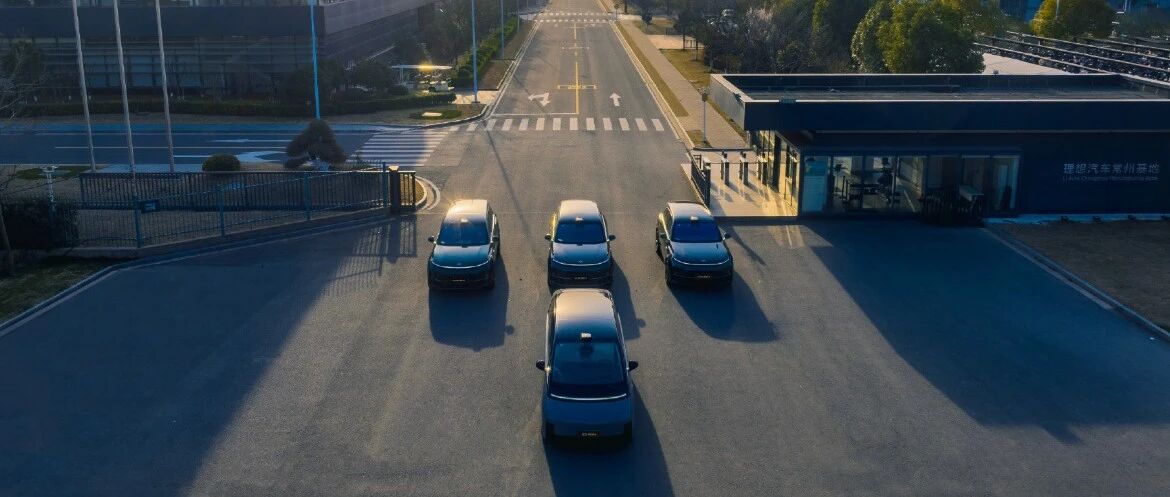
Core Viewpoint - Li Auto, once a leader among new energy vehicle manufacturers, is facing unprecedented pressure due to declining sales, operational inefficiencies, and strategic misalignment [2][6][9]. Store Closures - Li Auto has denied rumors of closing 100 stores but is indeed shutting down underperforming locations, with some already closed due to poor sales performance [3][4]. - The closure of stores is part of a strategy to eliminate low-efficiency outlets, with a focus on consolidating resources into core locations [4]. Production Capacity Issues - The Changzhou factory, with a capacity exceeding 500,000 vehicles per year, is experiencing uneven production, with some lines frequently halted due to low orders, while others operate at full capacity [5]. - The disparity in production reflects a mismatch between product offerings and market demand, leading to significant underutilization of capacity [5][9]. Sales Decline - Li Auto's projected total deliveries for 2025 are 406,300 units, representing an 18.81% decline from 2024, and falling short of the adjusted annual target of 640,000 units [7]. - The company has lost its position among the top three in the new energy vehicle market, with a significant drop in market share in the 200,000 yuan and above segment [7][9]. Strategic Shifts - Li Auto is shifting its focus back to range-extended vehicles, particularly the new L9 model, while attempting to streamline its product offerings and improve operational efficiency [9][10]. - The company is also implementing a "Hundred Cities Star Plan" to expand into lower-tier markets with a light-asset model, aiming to balance cost control and volume growth [4][9]. Competitive Landscape - The competitive environment for range-extended vehicles has intensified, with rivals like XPeng and Xiaomi entering the market with larger battery capacities, putting pressure on Li Auto's offerings [9]. - The company’s strategic misalignment and product diversification have weakened its competitive edge, necessitating a comprehensive adjustment across various operational fronts [9][10].
7年低息、超低首付提车! 车企开打“金融战”
Sou Hu Cai Jing· 2026-01-28 13:17
Core Viewpoint - The introduction of 7-year low-interest financing plans by various electric vehicle manufacturers aims to stimulate market demand amid a competitive landscape and inventory pressure, but the actual effectiveness of these plans remains to be seen [1][9]. Financing Plans Overview - Major brands like Tesla, Xiaomi, Li Auto, and Xpeng have launched or enhanced 7-year low-interest financing options since January 2026, extending traditional auto loan periods by 2 to 3 years [1]. - Monthly payments have significantly decreased due to longer loan terms, with Xiaomi's YU7 starting at 2,593 yuan, Xpeng's models at 1,355 yuan, Li Auto at 2,578 yuan, and Tesla's Model 3/Y/Y L at 1,918 yuan [1]. Tesla's Financing Options - Tesla offers two different 7-year financing plans based on down payment amounts, with annualized rates of 0.7% for a 15% down payment and 0.5% for a 30% down payment, translating to effective annual rates of 1.36% and 0.98% respectively [2][4]. - The minimum down payment for Tesla's plans is 79,900 yuan for the high down payment option and 45,900 yuan for the low down payment option [2]. Xiaomi's Financing Details - Xiaomi's 7-year low-interest plan requires a minimum down payment of 20%, with an annualized rate of 1% and an effective annual rate of 1.93% [3]. - For the YU7 standard version priced at 253,500 yuan, the minimum down payment is 49,900 yuan, with a monthly payment of 2,593.48 yuan and total interest over 7 years amounting to 14,252.28 yuan [3]. Li Auto and Xpeng Financing Plans - Li Auto's financing plan varies by model, with the i8 and MEGA models offering 3 years of interest-free payments followed by a 2.5% annualized rate, while other models have a 2.5% rate as well [3]. - Xpeng offers a 7-year financing option with a minimum down payment of 15% and an annualized rate of 1.5%, resulting in an effective annual rate of 2.86% [3]. Market Dynamics and Consumer Behavior - Sales personnel from various brands express differing opinions on the 7-year financing plans, with some recommending 5-year plans due to lower total interest payments [6][7]. - The overall sentiment among sales staff is that the 7-year low-interest plans are designed to lower the barrier to vehicle ownership, although they acknowledge that the effectiveness of these plans may be limited by consumer credit qualifications [8][9]. Industry Trends and Predictions - The automotive market is experiencing a significant decline, with retail sales down 28% year-on-year and wholesale sales down 35% in early January 2026 [8]. - Analysts predict a continued downturn in the Chinese passenger vehicle market, with potential sales dropping to 28.5 million units in 2026, a 5% decrease from the previous year [8].


