CHINA FEIHE(06186)

Search documents
格隆汇公告精选(港股)︱中国中铁近期中标912亿元重大工程;中国交通建设控股股东累计增持约2.64亿股H股股份


Ge Long Hui· 2025-06-09 01:47
Group 1: Major Contracts and Financial Performance - China Railway Group (00390.HK) recently won multiple major engineering contracts with a total bid amount of approximately RMB 91.2 billion, accounting for about 8.52% of the company's revenue under Chinese accounting standards for 2021 [1] - China People's Insurance Group (01339.HK) reported a total insurance premium income of RMB 452.46 billion from January to August 2022, representing a year-on-year growth of 9.89% [2] - China Coal Energy (01898.HK) announced that its coal sales volume in August reached 25.96 million tons, a year-on-year increase of 1.3%, while coal production was 10.92 million tons, up 22.3% year-on-year [3] Group 2: Share Buybacks and Stake Increases - Bohai Bank (09668.HK) announced that several employees plan to voluntarily purchase at least 25 million H-shares using their own funds, reflecting confidence in the bank's long-term business development [4] - China Communications Construction (01800.HK) disclosed that its controlling shareholder has cumulatively increased its stake by approximately 264.47 million H-shares, representing 1.64% of the company's total issued shares [5] - Shougang Holding (00697.HK) reported that its major shareholder has entered into an agreement to sell 728 million shares to Beijing Guoguan Investment Holdings, which will acquire about 10% of the company's total issued shares [6] Group 3: Market Activities and Corporate Actions - Jianye Real Estate (00832.HK) announced plans to repurchase shares in the open market based on market conditions [7] - China Pacific Insurance (02601.HK) reported cumulative original insurance business income of RMB 290.9 billion from January to August [8] - China Property & Casualty Insurance (02328.HK) reported a premium income of RMB 340.25 billion from January to August, reflecting a year-on-year growth of 9.8% [9]
越来越贵的婴配粉:飞鹤、菲仕兰们激战超高端市场丨乳业变局
2 1 Shi Ji Jing Ji Bao Dao· 2025-06-06 13:16
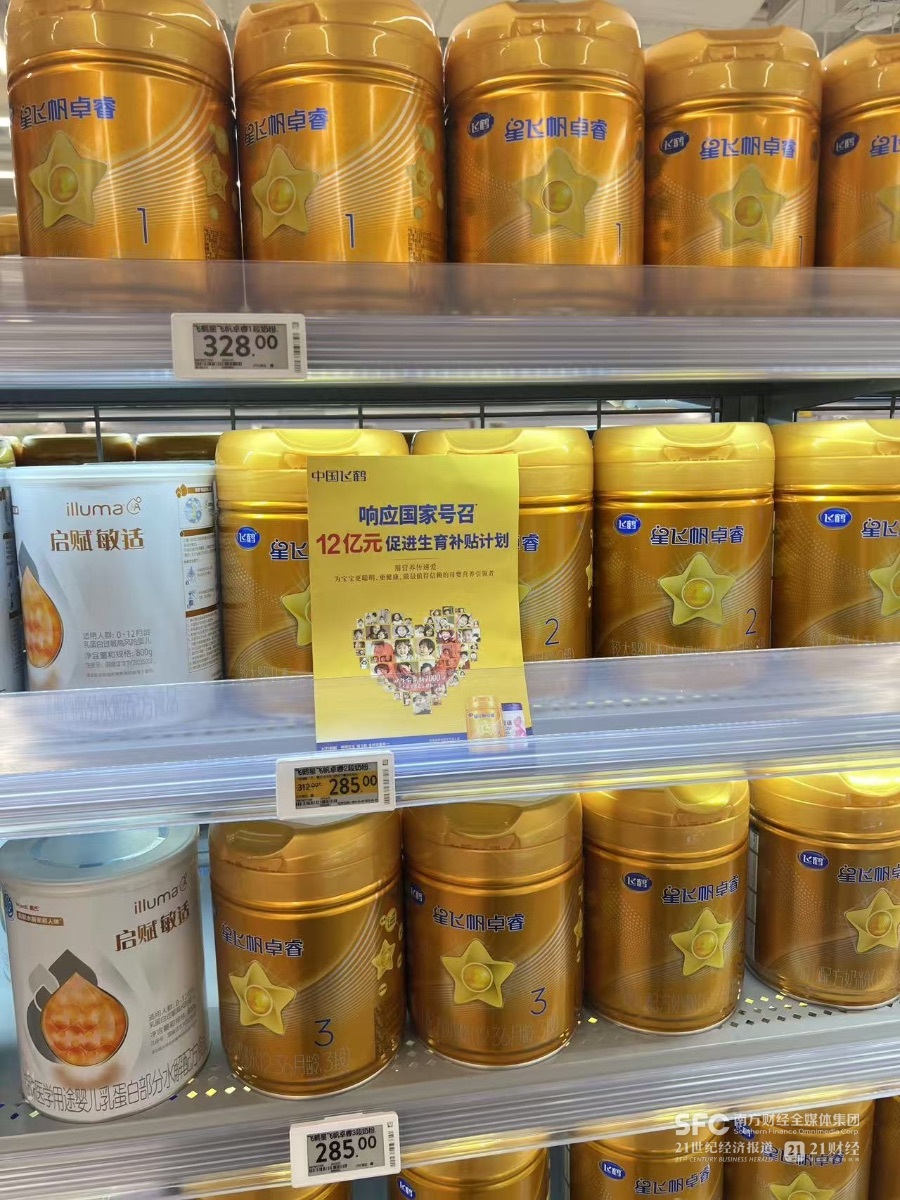
Core Viewpoint - The infant formula market is undergoing significant changes, with a shift towards ultra-premium products driving growth, while overall market dynamics are becoming increasingly competitive and polarized [1][6][7]. Group 1: Market Trends - The infant formula market is projected to grow by 2.3% year-on-year in the first four months of 2025, with offline sales declining by 1.4% and online sales increasing by 12.3% [1]. - The ultra-premium segment is a key growth driver, with the ultra-premium+ market growing by 13.3% year-on-year, while the ultra-premium market itself declined by 4.8% [2]. - The market share of the ultra-premium+ segment reached 33.2%, with the ultra-premium segment at 31.2% [2]. Group 2: Company Performance - FrieslandCampina's Royal FrieslandCampina product became the best-selling single SKU in China, selling over 10 million cans in a year [2]. - Feihe's revenue reached 20.75 billion yuan in 2024, with a 6% year-on-year growth, and its ultra-premium product line saw sales increase by over 60% [3]. - Feihe holds a 17.5% market share, ranking first in the domestic market [4]. Group 3: Competitive Landscape - The competition between domestic and foreign brands in the infant formula market is intensifying [6]. - Foreign brands like Danone and Nestlé have reported significant growth in their Chinese market shares, with Danone's Aptamil series performing particularly well [10]. - The birth rate in China saw a slight increase in 2024, with 9.54 million newborns, which is expected to positively impact the infant formula industry [11]. Group 4: Consumer Behavior - Consumers are increasingly willing to spend on high-quality products, which is reflected in the growing trust in domestic brands [14][28]. - The average price of infant formula in China is relatively high compared to other countries, indicating a lower sensitivity to price among consumers [25][27]. Group 5: Strategic Approaches - Domestic brands like Feihe and Yili are implementing fertility subsidies to stimulate market growth, with Feihe planning to invest 1.2 billion yuan in subsidies [18][19]. - FrieslandCampina is focusing on maintaining a balanced and cautious approach to pricing and channel strategies, aiming for price consistency across online and offline platforms [21][22][23].


雀巢、康师傅、伊利、海天等131家快消品上市公司发布年报,63家营收增长,68家营收下滑!
Sou Hu Cai Jing· 2025-06-06 10:07
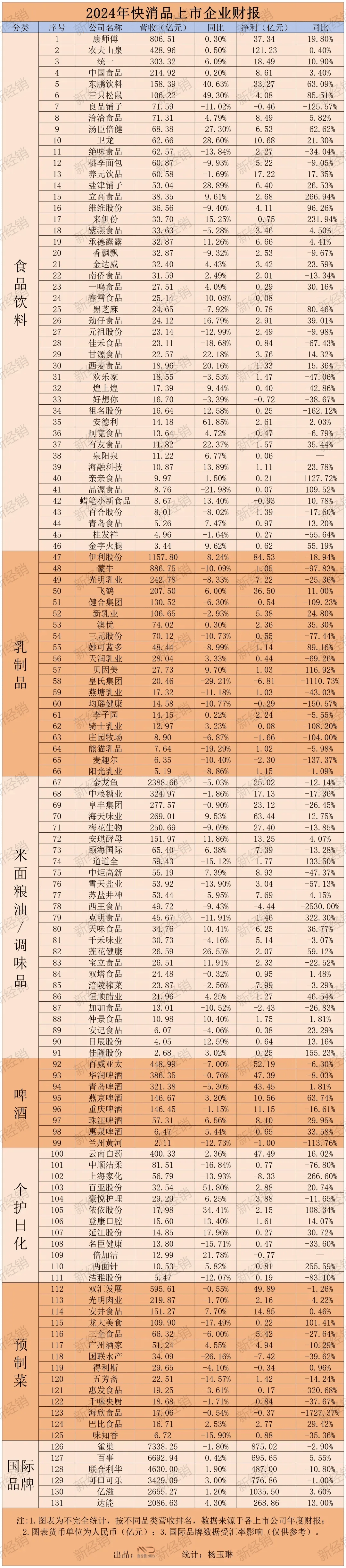
Core Insights - In 2024, China's total retail sales of consumer goods reached 48.79 trillion yuan, growing by 3.5%, marking the first time it fell below the GDP growth rate of 5% [1] - The fast-moving consumer goods (FMCG) industry is transitioning into a phase dominated by "stock competition," focusing on efficiency improvement, brand optimization, and structural adjustments [1] FMCG Company Performance - **Master Kong**: Achieved revenue of 806.51 billion yuan, a slight increase of 0.30%, with net profit rising by 19.80% to 37.34 billion yuan [2][6] - **Nongfu Spring**: Reported revenue of 428.96 billion yuan, up by 0.50%, and net profit of 121.23 billion yuan, a marginal increase of 0.40% [2][6] - **Uni-President**: Generated revenue of 303.32 billion yuan, a growth of 6.09%, with net profit of 18.49 billion yuan, increasing by 10.90% [2][6] - **China Foods**: Recorded revenue of 214.92 billion yuan, up by 0.20%, and net profit of 8.61 billion yuan, a growth of 3.40% [2][6] - **Eastroc Beverage**: Achieved significant growth with revenue of 158.39 billion yuan, up by 40.63%, and net profit of 33.27 billion yuan, increasing by 63.09% [2][6] - **Three Squirrels**: Reported revenue of 106.22 billion yuan, a substantial increase of 49.30%, with net profit rising by 85.51% to 4.08 billion yuan [2][6] Industry Trends - The FMCG sector is experiencing a shift towards efficiency and brand optimization as the era of rapid market growth driven by demographic dividends comes to an end [1] - Companies are adapting to market changes through product innovation, structural optimization, and brand rejuvenation to establish new growth curves and core competitiveness [13] - The beverage segment is seeing strong performance from Nongfu Spring's tea drinks, which have become a major revenue source despite challenges in the bottled water segment [8][13] - The snack segment is witnessing varied performance, with companies like Qinqin Foods achieving profitability through export and OEM manufacturing, while others like Liuyifei face challenges due to strategic adjustments [13] Dairy Industry Performance - **Yili Group**: Maintained its position as Asia's leading dairy company with revenue of 1,157.80 billion yuan, despite a decline of 8.24% [15][16] - **Mengniu Dairy**: Experienced a revenue drop of 10.09% to 886.75 billion yuan, with net profit significantly declining by 97.83% [15][16] - **Bright Dairy**: Reported revenue of 242.78 billion yuan, down by 8.33%, and net profit of 7.22 billion yuan, a decrease of 25.36% [15][16] - The dairy industry is facing challenges with supply-demand imbalances and declining consumer demand, leading to revenue declines for many traditional dairy giants [18]





越来越贵的婴配粉:超高端市场已成主流丨消费参考
2 1 Shi Ji Jing Ji Bao Dao· 2025-06-06 02:20
Group 1: Market Trends - The infant formula market is moving towards ultra-premium products, with a 2.3% year-on-year growth in total channels from January to April 2025, while offline sales declined by 1.4% and online sales increased by 12.3% [1] - The ultra-premium+ segment grew by 13.3% year-on-year, while the ultra-premium segment declined by 4.8%, high-end by 14.6%, and mid-high-end by 2% [1] - The market share of ultra-premium+ reached 33.2%, and ultra-premium at 31.2%, indicating a significant shift towards higher-end products [1] Group 2: Company Performance - Feihe achieved a revenue of 20.75 billion yuan in 2024, a 6% increase year-on-year, with infant formula revenue at 19.06 billion yuan, up 6.6% [2] - The sales of Feihe's ultra-premium product, Star Flying Fan Zhuo Rui, increased by over 60% year-on-year, reaching 6.7 billion yuan, while the classic Star Flying Fan series saw a decline [2] - Since 2017, Feihe has focused on ultra-premium products, increasing their share in infant formula from 22% in 2016 to 75% in 2024 [2] Group 3: Foreign Brands Performance - Danone reported significant market share growth in China, particularly with its ultra-premium Aptamil series [3] - FrieslandCampina's core infant formula brand, Friso, maintained double-digit growth in the Chinese market in 2024 [3] - Nestlé's infant formula business in China achieved high single-digit growth, with a recovery in the previously declining Wyeth Illuma brand [3] Group 4: Strategic Insights - The decline in newborn numbers has made ultra-premium positioning the most important strategy for infant formula giants [4]
越来越贵的婴配粉:超高端市场已成主流
2 1 Shi Ji Jing Ji Bao Dao· 2025-06-06 02:18
Industry Overview - The infant formula market is trending towards ultra-premium products, with overall channel growth of 2.3% year-on-year in the first four months of 2025, while offline sales declined by 1.4% and online sales increased by 12.3% [1] - The ultra-premium+ segment grew by 13.3% year-on-year, while the ultra-premium segment declined by 4.8%, high-end segment down by 14.6%, mid-high-end up by 2%, and mid-low-end up by 2.7% [1] - The market share of ultra-premium+ reached 33.2%, ultra-premium at 31.2%, high-end at 24.2%, mid-high-end at 8.6%, and mid-low-end at 2.7% [1] - The infant formula market is entering a phase of stock adjustment, with offline sales expected to decline by 9.8% in 2024, alongside a 9.4% drop in sales volume and a 0.3% decrease in average price [1] Company Performance - Feihe achieved revenue of 20.75 billion yuan in 2024, a year-on-year increase of 6%, with net profit of 3.57 billion yuan, up 5.3% [2] - Revenue from infant formula reached 19.06 billion yuan, growing by 6.6%, with ultra-premium product sales (Star Feifan Zhuorui) increasing by over 60% to 6.7 billion yuan, while the classic Star Feifan series saw a decline [2] - Since 2017, Feihe has focused on ultra-premium products, increasing the share of ultra-premium products in its infant formula from 22% in 2016 to 75% in 2024 [2] Foreign Brands Performance - Foreign brands focusing on the ultra-premium segment are also experiencing growth, with Danone reporting significant market share gains in China [3] - Danone expressed satisfaction with the performance of its ultra-premium Aptamil series, while FrieslandCampina's core brand, Friso, maintained double-digit growth in China [3] - Nestlé's infant formula business in China achieved high single-digit growth in 2024, with Wyeth's business recovering from previous declines, becoming the largest contributor to growth in the China region [3] - Overall, the reduction in newborn numbers has made ultra-premium positioning the most important strategy for major infant formula players [3]
【行业前瞻】2025-2030年全球及中国母婴行业发展分析
Sou Hu Cai Jing· 2025-05-29 23:35
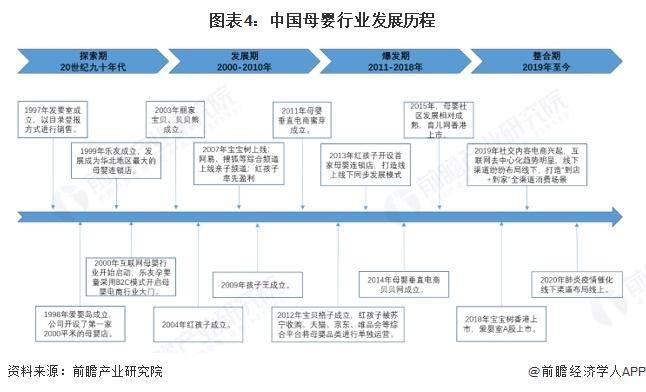
Industry Overview - The main listed companies in the maternal and infant industry include Kidswant (301078), Runben (603193), Aiyingshi (603214), Mengjie (002397), Jinfalabi (002762), Beiyinmei (002570), Keka (301009), China Feihe (06186.HK), Babytree Group (01761.HK), Goodbaby International (01086.HK), and Newman (02530.HK) [1] - The development history of China's maternal and infant industry can be divided into several stages: Exploration Period (1990s), Development Period (2000-2010), Explosion Period (2011-2018), and Integration Period (2019-present) [1][2] Development Stages - Exploration Period (1990s): Introduction of foreign parenting culture and products, with limited specialized maternal and infant stores [1] - Development Period (2000-2010): Increased acceptance of maternal and infant products, emergence of regional chain markets, and the rise of online maternal and infant communities [1] - Explosion Period (2011-2018): Rapid growth of online maternal and infant platforms and the establishment of offline stores as the primary consumption channel [1] - Integration Period (2019-present): Growth of private traffic through social media and the need for a "online + offline" shopping experience to maintain competitive advantage [2] Global Trends - The global maternal and infant industry began to flourish in the 1950s-60s, with significant growth in countries like Japan and the USA, leading to the emergence of chain brands [3] - By 1990, the maternal and infant market in developed countries matured, prompting international brands to enter markets like China, where domestic brands also began to rise [3] - The future of maternal and infant products will see increased diversification and innovation in sales channels and models to meet modern consumer demands [3] Market Share Insights - According to Grand View Research, baby cosmetics and toiletries account for 33.5% of the global baby products market, driven by the importance of hygiene and convenience for parents [7] - Baby food holds a 25.3% market share, with demand driven by urbanization, busy work schedules, and increasing parental focus on nutrition [7] Demographic Trends - The number of women of childbearing age in China is on a declining trend, decreasing from 380 million in 2011 to 310 million in 2022, with projections indicating a further decline by 2025 [9][10]


2025年婴幼儿配方食品品牌推荐:科学配方与安全营养的完美结合,助力宝宝健康成长!
Tou Bao Yan Jiu Yuan· 2025-05-27 12:35
Investment Rating - The report does not explicitly state an investment rating for the infant formula industry Core Insights - The infant formula market in China has undergone significant changes, with a market size of 1,957.92 billion RMB in 2019, which decreased to 1,768.75 billion RMB in 2023 due to declining birth rates [7] - The new national standards for infant formula, effective from February 22, 2023, emphasize safety and quality, requiring companies to submit formula registrations that comply with these standards [4][17] - The market is expected to stabilize, with a projected size of approximately 1,128.85 billion RMB by 2028, reflecting a compound annual growth rate of -8.85% [7] Market Background - Infant formula is designed to meet the specific nutritional needs of infants and young children, mimicking breast milk or adjusting formulas for special medical needs [4][5] - The evolution of the infant formula market in China can be divided into four key stages, from initial development to rapid growth and diversification [6] Market Status - The supply of infant formula is supported by a steady increase in the number of dairy cattle, with the number of cows rising from 91.38 million in 2019 to 105.09 million in 2023 [8] - The demand for infant formula is declining due to a decrease in the birth rate, with 9.02 million newborns in 2023, leading to a reduced consumer base [9][10] Market Competition - The competition in the infant formula market is intensifying, with domestic brands like Feihe and Yili gaining market share against international brands like Mead Johnson and Wyeth [16] - The report identifies ten leading brands in the market, including Wyeth, Nestlé, and Mead Johnson, evaluated based on product approval, financing progress, market penetration, innovation, and compliance [11][12][13][15] Development Trends - The industry is moving towards innovative formulations that enhance the nutritional profile of infant formula, focusing on multi-component synergy rather than single-component additions [32] - Technological advancements in production processes are ensuring the stability and bioactivity of nutrients in infant formula [33] - There is a growing emphasis on clinical evidence and research to validate the effectiveness of infant formula in real-world settings [34] - The industry is also focusing on providing comprehensive nutritional support for infants with special medical needs, reflecting a commitment to social responsibility [35]

高盛:披露人民币升值潜在跑赢港股名单 包括百度集团-SW(09888)及腾讯控股(00700)等
智通财经网· 2025-05-27 02:03
Core Viewpoint - Goldman Sachs economists predict that the RMB/USD exchange rate will reach 7.20, 7.10, and 7.00 in three, six, and twelve months respectively, indicating a potential appreciation of 3% over the next twelve months [1] Group 1: Companies Likely to Benefit from RMB Appreciation - The list of Hong Kong-listed companies that may benefit from RMB appreciation includes: GDS Holdings Limited (09698), Zijin Mining Group (02899), China Jinmao Holdings Group (00817), Dongyue Group (00189), China Southern Airlines (01055), Baidu Group (09888), China Feihe (06186), and Tencent Holdings (00700) [1] - Criteria for selection include: 1) Market capitalization over $2 billion and average daily trading volume (ADVT) exceeding $5 million 2) Industries reliant on USD imports, such as aviation, petrochemicals, construction, staple foods, and tourism, or having over 20% of debt in USD 3) Overseas revenue exposure below 30% 4) No foreign exchange gains during the RMB depreciation period in 2024 5) Low correlation of returns with exchange rate fluctuations [1] Group 2: Companies Likely to Underperform in RMB Appreciation - The list of Hong Kong-listed companies that may underperform during RMB appreciation includes: Haier Smart Home (06690), PetroChina Company Limited (00857), WuXi AppTec (03933), ASMPT Limited (00522), Yue Yuen Industrial Holdings (00551), Sinotruk (Hong Kong) Limited (03808), Shenzhou International Group Holdings Limited (02313), and Minth Group Limited (00425) [2] - Criteria for selection include: 1) Market capitalization over $2 billion and average daily trading volume exceeding $5 million 2) Overseas revenue exposure exceeding 30% 3) USD debt level below 5% 4) No foreign exchange losses during the RMB depreciation period in 2024 5) High correlation of returns with exchange rate fluctuations [2]



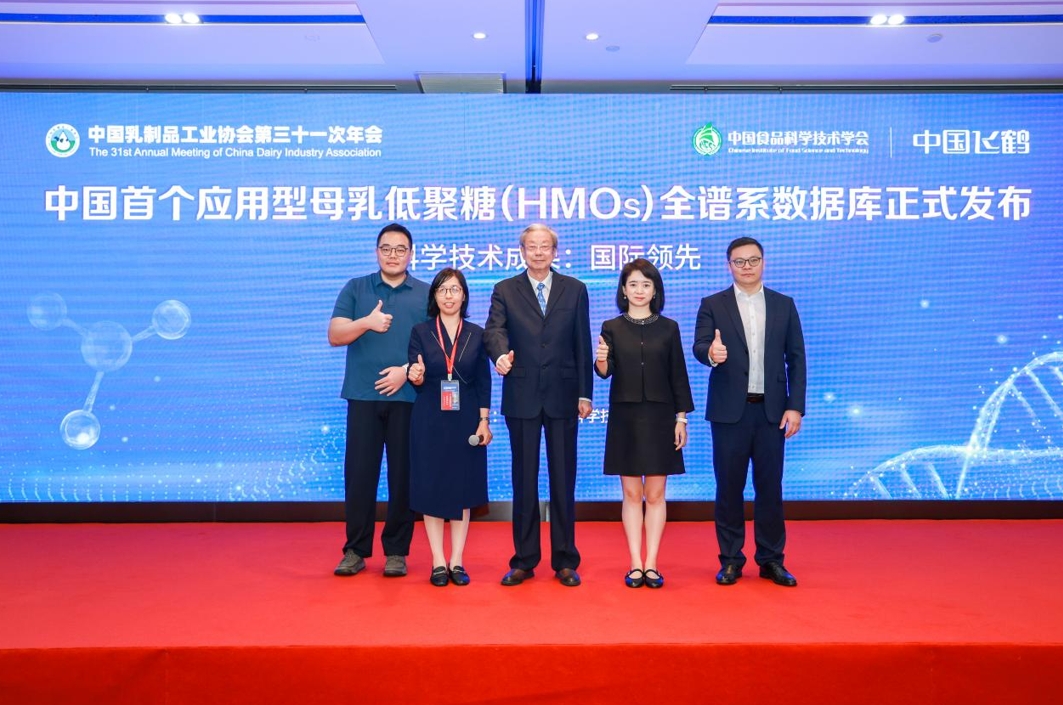
飞鹤发布国内首个应用型母乳低聚糖全谱系结构数据库
Jing Ji Wang· 2025-05-26 08:14
Core Viewpoint - China Feihe has launched the country's first comprehensive structural database for human milk oligosaccharides (HMOs), marking a significant advancement in the analysis and application of breast milk components, which are crucial for infant health [1][2]. Group 1: Database and Research Initiatives - The HMO database addresses long-standing challenges in the detection and analysis of HMOs, providing a solid foundation for precise breast milk analysis in China [1]. - The project is part of the "14th Five-Year Plan" national key research initiative, focusing on the development of new infant formula manufacturing technologies based on Chinese breast milk research [1][2]. - Feihe has collaborated with five top universities and research institutions, forming a "national team" for breast milk research, and has invested nearly 100 million yuan in additional funding [1][2]. Group 2: Research Methodology and Findings - The project employs an innovative mother-child cohort study approach, allowing for more accurate assessments of the long-term health effects of breastfeeding compared to traditional cross-sectional studies [2]. - Feihe has achieved significant breakthroughs in systematically analyzing key nutritional components of Chinese breast milk, including proteins, fatty acids, and HMOs, establishing a proprietary knowledge system for breast milk research [3]. - The project is recognized as a key national research initiative, reflecting the government's support for enterprises to lead major scientific projects [3]. Group 3: Technological Innovations - Feihe has introduced advanced methodologies, such as organoid models and AI algorithms, to enhance the understanding of breast milk components and their interactions [4]. - The company has developed the first autonomous breast milk intelligence engine, capable of analyzing vast amounts of cohort data to study the dynamics of breast milk components [4].
“母乳研究国家队”再传捷报!飞鹤牵头“十四五”重点专项获阶段性新突破
Di Yi Cai Jing· 2025-05-26 05:45
Core Insights - China Feihe has launched the country's first comprehensive database for human milk oligosaccharides (HMOs), addressing long-standing challenges in detection and application within the industry, and marking a new era in precise analysis of human milk in China [1] - The project is part of the "14th Five-Year Plan" national key research and development initiative, focusing on the creation of a new generation of infant formula tailored to Chinese babies [1][4] - Feihe has established a maternal and child health cohort, utilizing advanced research methods to decode the nutritional components of Chinese breast milk, which will support the development of localized infant formula standards [3][4] Research and Development Achievements - Feihe has invested nearly 100 million yuan in collaboration with five universities and 15 national platforms, creating a robust research team for maternal milk studies [1][3] - The company has achieved significant breakthroughs in analyzing key nutritional components of Chinese breast milk, including proteins and HMOs, and has established a proprietary intellectual property system for breast milk research [4][8] - Feihe's innovative use of AI and big data in research has positioned it at the forefront of global breast milk studies, allowing for a deeper understanding of the interactions between milk components and their effects on infant health [6][8] Product Innovation and Market Position - The "14th Five-Year Plan" project aims to enhance the activity of key functional ingredients in infant formula, achieving over a 20% improvement in the activity of lactoferrin and a 30% increase in its solubility [9] - Feihe has developed a large-scale automated production line for lactoferrin, reducing reliance on imports and enhancing domestic production capabilities [9] - The company has maintained its position as the top seller of infant formula in China for six consecutive years and globally for four years, showcasing the competitiveness of China's dairy industry [11] Future Directions - Feihe plans to continue leveraging its maternal and child health cohort to refine and develop new generations of infant formula, integrating cloud computing and AI algorithms to create a comprehensive data center for Chinese breast milk [11]