
NIO(09866)

Search documents
港股开盘 | 恒指低开0.21% 新能源汽车领涨 蔚来(09866)涨超3%
智通财经网· 2025-12-31 01:37
Group 1 - The Hang Seng Index opened down 0.21%, and the Hang Seng Tech Index fell 0.22%. The new energy vehicle sector led the gains, with NIO rising over 3% and Xpeng Motors increasing more than 2%, while tech stocks adjusted [1] - Huatai Securities noted that the volatility in asset performance and frequent style and sector rotations have led to a decline in the clarity of main lines in the market, with a weaker activity level for risk assets towards the end of the year. They identified two major consensus points: 1) The logic for the bulk commodity sector is solid and subject to rapid revaluation; 2) Weak recovery in domestic demand suggests a left-side allocation in the consumer sector [1] - CITIC Securities highlighted the recent appreciation of the RMB, which is favorable for the performance of RMB-denominated equity assets. They expect stable macro-financial conditions to lead to a stable banking operating environment by 2026, with bank interest margins bottoming out and income and profit recovery in the real sector [1] - Founder Securities mentioned that the central economic work conference and the Ministry of Finance have clarified the optimization of the "two new" policies, with multiple regions selecting old-for-new platform enterprises. Reports indicate that national subsidies will continue in 2026, with a maximum subsidy of 30,000 yuan per vehicle, focusing on phasing out old high-emission vehicles while enhancing subsidies for new energy and hybrid models [1] Group 2 - Huaxi Securities stated that the pressure from stock unlocks in the Hong Kong market will significantly decrease in January 2026. In December, a total of 113.9 billion HKD was unlocked, which has been a constraint on the market. In January, the unlock market value will drop to 47.2 billion HKD, particularly from mid-January to mid-February, where no companies will have unlock values exceeding 10 billion HKD, indicating a reduction in unlock pressure and potential for a rebound [2]

蔚来取得电池负极及电化学装置专利
Jin Rong Jie· 2025-12-31 00:37
Group 1 - The core point of the article is that NIO Battery Technology (Anhui) Co., Ltd. has obtained a patent for a battery anode and an electrochemical device that includes this anode, with the patent granted under announcement number CN115663109B and the application date being November 2022 [1] - NIO Battery Technology (Anhui) Co., Ltd. was established in 2022 and is located in Hefei City, primarily engaged in the manufacturing of electrical machinery and equipment [1] - The company has a registered capital of 2 billion RMB and has participated in one bidding project, holds 775 patent pieces of information, and possesses one administrative license according to data analysis from Tianyancha [1]
2026汽车以旧换新继续!政策景气催化凸显车企配置价值(附概念股)
Zhi Tong Cai Jing· 2025-12-31 00:04
Group 1 - The Chinese government has announced a new policy to support the automotive industry through a large-scale vehicle replacement and trade-in program set to be implemented in 2026, which includes subsidies for scrapping and replacing vehicles [1][2] - The subsidy for scrapping a vehicle includes 12% of the purchase price (up to 20,000 yuan) for new energy vehicles and 10% (up to 15,000 yuan) for fuel vehicles with an engine size of 2.0 liters or less [1] - For vehicle trade-ins, the subsidy is 8% (up to 15,000 yuan) for new energy vehicles and 6% (up to 13,000 yuan) for fuel vehicles with an engine size of 2.0 liters or less [1] Group 2 - The National Development and Reform Commission has allocated 62.5 billion yuan in special bonds to support the trade-in program, aiming to stimulate consumer demand during peak seasons [2] - From January to November this year, the trade-in program has generated over 2.5 trillion yuan in sales, benefiting more than 360 million people, with over 11.2 million vehicles traded in, accounting for over one-third of total vehicle sales [2] - The automotive market is expected to see positive growth in early 2026, driven by the continuation of supportive policies and a favorable economic environment [3] Group 3 - The automotive market in China is experiencing significant growth, with production and sales of passenger vehicles reaching 27.4 million and 27.3 million units respectively from January to November 2025, representing year-on-year increases of 12% and 11.5% [2] - Chinese automakers are gaining global market share, with BYD ranking 6th, Geely 8th, and Chery 10th among the world's top 10 automakers [2] - The industry is undergoing a transformation towards electrification, with some international brands losing market share while Chinese brands continue to thrive [2] Group 4 - BYD reported a production of approximately 4.12 million new energy vehicles from January to November, a year-on-year increase of 7.29%, with sales of about 4.18 million units, up 11.3% [4] - Geely's total vehicle sales for the first 11 months reached 2.79 million units, a 42% increase year-on-year, with November sales of 310,400 units, up about 24% [4] - NIO delivered 277,900 vehicles in the first 11 months, a 45.6% increase year-on-year, with November deliveries of 36,300 units, up 76.3% [5] - Xpeng Motors achieved cumulative deliveries of 391,900 vehicles in the first 11 months, a 156% year-on-year increase, with November deliveries of 36,700 units, up 19% [5]

港股概念追踪 | 2026汽车以旧换新继续!政策景气催化凸显车企配置价值(附概念股)
智通财经网· 2025-12-30 23:28
智通财经APP获悉,近日,汽车行业再迎利好,国家发展改革委、财政部印发的《关于2026年实施大规 模设备更新和消费品以旧换新政策的通知》正式对外发布,明确2026年"两新"政策的支持范围、补贴标 准和工作要求。从《2026年汽车以旧换新补贴实施细则》来看,2026年国补继续对汽车报废、汽车置换 给予了大力支持。 具体细则上,支持汽车报废更新方面。个人消费者报废登记在本人名下的乘用车,并购买纳入《减免车 辆购置税的新能源汽车车型目录》的新能源乘用车或2.0升及以下排量燃油乘用车的,给予汽车报废更 新补贴支持,购买新能源乘用车补贴车价的12%(最高不超过2万元)、购买2.0升及以下排量燃油乘用车 补贴车价的10%(最高不超过1.5万元)。 支持汽车置换更新方面。个人消费者转让登记在本人名下的乘用车,并购买纳入《减免车辆购置税的新 能源汽车车型目录》的新能源乘用车或2.0升及以下排量燃油乘用车的,给予汽车置换更新补贴支持, 购买新能源乘用车补贴车价的8%(最高不超过1.5万元)、购买2.0升及以下排量燃油乘用车补贴车价的6% (最高不超过1.3万元)。 为确保政策平稳有序衔接,并满足元旦、春节等旺季消费需求,国家发 ...
Stock Market Today, Dec. 30: Nio Rallies on Upbeat Q4 Sales Outlook
The Motley Fool· 2025-12-30 22:11
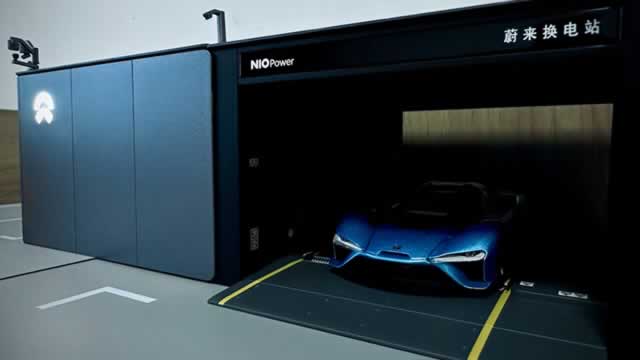
Core Viewpoint - Nio's stock price increased by 3.00% following a positive sales outlook of $4.3 billion and the extension of China's electric vehicle subsidies, indicating strong investor confidence in the company's future performance [1][5]. Company Performance - Nio's current stock price is $5.50, with a market capitalization of $11 billion. The stock has shown a 10.00% increase over the past five days, and trading volume reached 78 million shares, significantly above the three-month average of 53 million shares [2]. - The company projected fourth-quarter vehicle sales to exceed 30 billion yuan (approximately $4.3 billion), which has reassured investors after a disappointing Q3 revenue report [6]. Industry Context - The Chinese government has extended trade-in subsidies for electric vehicles, offering consumers up to $2,850 towards a qualifying new vehicle, which is expected to boost demand in the EV market [5]. - Nio's performance is being compared to competitors in the premium EV sector, with Tesla's stock declining by 1.13% and Li Auto's stock increasing by 0.64% on the same day [4].

Nio stock rallies on strong Q4 outlook, China subsidy extension, Europe deliveries
Invezz· 2025-12-30 20:35
The market value of Nio shares increased during the first week of the month because investors analyzed positive fourth-quarter projections and Chinese government backing, and European market developme... ...
贵金属深夜集体反弹 白银期货涨近8% 中概股普涨 蔚来涨近7% 百度涨超5%
2 1 Shi Ji Jing Ji Bao Dao· 2025-12-30 15:47
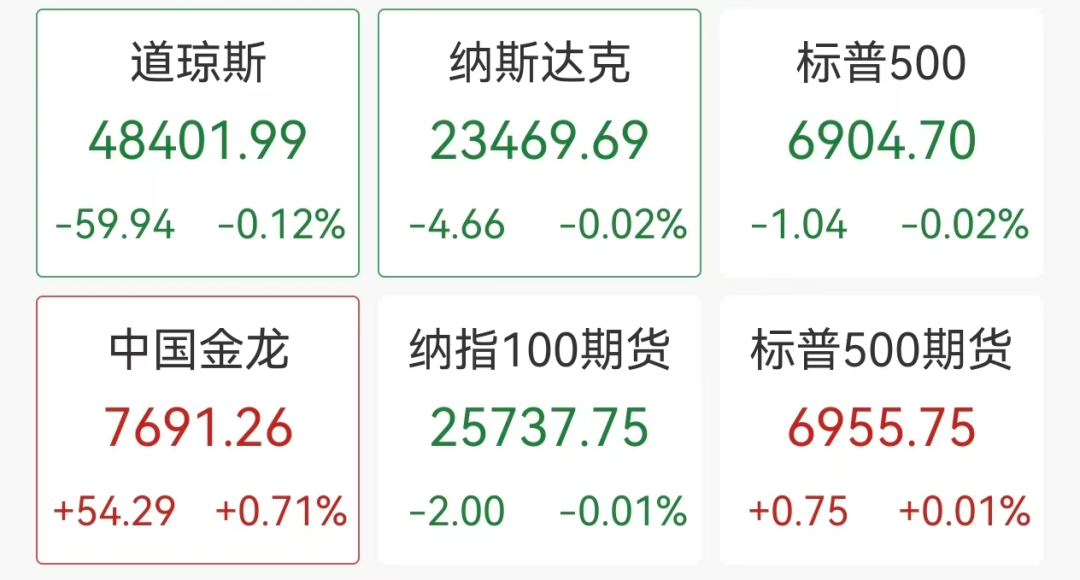
Group 1: Stock Market Performance - Several gold stocks in the US market saw significant increases, with Kintan, Harmony Gold, and Pan American Silver rising over 3% [2] - Notable performance in tech stocks, with Meta and Intel both rising approximately 2% [2] - The Nasdaq Golden Dragon China Index rose over 1%, with NIO increasing nearly 7%, XPeng up over 5%, and Baidu rising nearly 6%, with its Hong Kong stock up nearly 9% [2] Group 2: Precious Metals Market - After a significant drop, the precious metals market rebounded, with COMEX silver rising nearly 8% and spot silver up over 4% [4] - Spot gold reached up to $4,400, while platinum and palladium increased by approximately 5% and 2%, respectively [4] - Year-to-date, gold has seen an increase of over 66%, marking its best performance since 1979, while platinum and silver have also experienced substantial gains of 141.57% and over 150%, respectively [6] Group 3: Future Price Predictions - UBS has raised its gold price forecast for the first three quarters of 2026 to $5,000 per ounce, with potential increases to $5,400 in case of political or economic turmoil [9] - CITIC Securities has warned of potential volatility in silver prices, suggesting caution against overbought conditions, while TD Securities expects silver prices to slow down to around $40 in the next year [9]
贵金属深夜集体反弹,白银期货涨近8%,中概股普涨,蔚来涨近7%,百度涨超5%
2 1 Shi Ji Jing Ji Bao Dao· 2025-12-30 15:41
Group 1: Stock Market Performance - Several gold stocks in the US market saw significant increases, with Kintan, Harmony Gold, and Pan American Silver rising over 3% [2] - Notable performance in tech stocks, with Meta and Intel both rising approximately 2% [2] - The Nasdaq Golden Dragon China Index rose over 1%, with NIO increasing nearly 7%, XPeng up over 5%, and Baidu rising nearly 6% [2] Group 2: Precious Metals Market - After a significant drop, the precious metals market rebounded, with COMEX silver rising nearly 8% and spot silver increasing over 4% [5] - Gold prices reached up to $4,400, while platinum and palladium rose approximately 5% and 2%, respectively [5] - Year-to-date, gold has seen an increase of over 66%, marking its best performance since 1979 [7] Group 3: Future Price Predictions - UBS has raised its gold price forecast for the first three quarters of 2026 to $5,000 per ounce, with potential increases to $5,400 in case of political or economic turmoil [10] - CITIC Securities has warned of potential volatility in silver prices, suggesting caution due to historical high volatility indices [10]
蔚来美股开盘飙升逾7%!全新ES8四万台交付速度刷新行业纪录
智通财经网· 2025-12-30 15:30
智通财经APP获悉,12月30日,蔚来(NIO.US)美股开盘阶段大幅拉升,涨幅超过7%。此轮市场积极反 应,紧随其旗舰车型全新ES8达成重要交付里程碑。 值得注意的是,该品类销量自今年9月首次超越增程式、传统燃油及插电混动同类车型后,已连续三个 月稳居各动力形式销量榜首。用户购买偏好与市场销售数据的双重印证,标志着以纯电驱动的大型三排 座SUV正迎来高速增长的"黄金时代"。 12月29日,全新ES8正式交付第四万台,自今年9月21日开启交付至今,仅用100天即实现此目标,创下 中国汽车市场40万元以上价位车型达成四万台交付的最快纪录。全新ES8持续刷新的交付速度,有力印 证了蔚来"双旗舰大三排SUV"产品策略的市场竞争力。根据规划,2026年蔚来还将推出三款全新大型车 型,形成旗下共计五款大车同步销售的产品矩阵。 这一业绩也与宏观市场趋势高度吻合。根据根据中汽协与乘联会最新发布的零售数据,2025年11月,纯 电动大三排SUV细分市场单月销量攀升至46,209台,环比增长16%,创下历史新高。 ...
美股异动 | 新能源车中概股普涨 蔚来(NIO.US)涨5%
智通财经网· 2025-12-30 14:45
Core Viewpoint - The Chinese electric vehicle (EV) sector saw a significant rise in stock prices following the announcement of new government policies aimed at promoting vehicle upgrades and replacements, particularly for electric and low-emission vehicles [1] Group 1: Market Reaction - Chinese EV stocks experienced a broad increase, with NIO rising by 5%, Xpeng Motors increasing by over 3%, and Li Auto gaining over 1% [1] Group 2: Government Policy Announcement - The National Development and Reform Commission and the Ministry of Finance released a notice regarding the implementation of large-scale equipment updates and a trade-in policy for consumer goods by 2026 [1] - The policy supports the scrapping and upgrading of vehicles, providing subsidies for personal consumers who scrap their registered passenger cars and purchase new energy vehicles or fuel vehicles with an engine capacity of 2.0 liters or below [1] Group 3: Subsidy Details - For purchasing new energy vehicles, consumers will receive a subsidy of 12% of the vehicle price, capped at 20,000 yuan [1] - For purchasing fuel vehicles with an engine capacity of 2.0 liters or below, the subsidy is set at 10% of the vehicle price, with a maximum of 15,000 yuan [1] - The policy also includes support for vehicle trade-ins, offering an 8% subsidy (up to 15,000 yuan) for new energy vehicles and a 6% subsidy (up to 13,000 yuan) for fuel vehicles with an engine capacity of 2.0 liters or below [1]

