
NIO(09866)

Search documents
蔚来能源|写入《2025 汽车行业影响力年鉴》
Jing Ji Guan Cha Bao· 2025-12-30 11:23
(原标题:蔚来能源|写入《2025 汽车行业影响力年鉴》) 在"十四五"规划收官之际,中国汽车产业正在进入新的发展阶段。经济观察报第十九届中国汽车年会暨 《2025汽车行业影响力年鉴》,基于公开数据、市场表现与行业共识,对年度内在技术路径与市场格局 层面产生实际影响的"明亮因子"进行系统梳理。 在汽车产业迈向全面电动化转型的关键阶段,能源服务的创新与布局,已成为衡量企业长期竞争力与用 户体验的重要标尺。蔚来能源 以前瞻的战略眼光、扎实的网络建设、开放的生态合作以及持续演进的 商业模式,重塑电动汽车用户的补能体验,开辟出一条兼具成长性、行业引领性与社会价值的新赛道, 成为2025年备受关注的投资价值标杆。 秉持"让加电比加油更方便"的愿景,蔚来能源累计投入约180亿元,系统构建起"可充、可换、可升 级"的全场景能源服务体系。截至2025年12月,其已在全国布局超过8500座充换电站,形成覆盖"9纵11 横16大城市群"的高速换电网络,1000余座高速换电站联通全国550座城市。在部分基础设施相对薄弱、 但出行需求旺盛的区域,蔚来布局了80余条加电风景线,并向全行业电动车用户开放,助力低碳出行。 2025年,蔚来 ...
【新能源周报】新能源汽车行业信息周报(2025年12月22日-12月28日)
乘联分会· 2025-12-30 08:39
Industry Information - The 2025 Globalization and Sustainable Development Forum for the automotive industry released three key industry consensus points, emphasizing the integration of electric intelligence with ESG responsibilities, the importance of safety and user value in smart vehicles, and the necessity of sustainable development as a core requirement for the automotive industry [7] - Wuhan's 14th Five-Year Plan suggests accelerating the development of emerging industries such as embodied intelligence, high-end chips, quantum technology, and brain-computer interfaces [8] - As of November 2025, the total number of electric vehicle charging infrastructure in China reached 19.322 million, a year-on-year increase of 52.0%, with public charging facilities accounting for 4.625 million [9][10] - The total investment for the EVE Energy headquarters and Jin Yuan Robot AI Center project is approximately 1 billion yuan, focusing on sodium battery products and AI robotics [12] - Guangzhou aims to create a trillion-level smart connected new energy vehicle industry cluster as part of its 14th Five-Year Plan [13] - The "Shenzhen-Hong Kong Automotive Fast Pass Plan" has been officially implemented, streamlining the import process for electric vehicles [14] - The National Energy Administration is promoting the construction of charging piles in rural areas to support the growth of electric vehicles [15] - Huawei's ADS MAX 4.1 upgrade significantly enhances the experience in urban congestion scenarios [16] - The first batch of L3-level autonomous driving vehicle special license plates has been issued in Beijing, marking a milestone in the commercialization of autonomous vehicles [16] - By 2026, over 10,000 charging guns will be built in highway service areas across the country [16] - The National Energy Administration reported a 60.2% year-on-year increase in electricity consumption for charging and swapping services in November 2025 [18] - The first automotive intelligent chassis testing report was released, with BYD's Yangwang U7, NIO ES8, and Zhijie R7 recognized as benchmark models [20] - Hunan's electric vehicle exports exceeded 10 billion yuan for the first time, with a year-on-year growth of 105.3% [22] - Guangzhou's new energy vehicle production increased by 22.6% in the first 11 months of 2025 [22] - A total investment of 7.47 billion yuan was signed at the Ningde lithium battery new energy industry promotion conference, with an expected annual output value of 12.14 billion yuan [27] - The annual export of new energy vehicles from the Xiangyang Comprehensive Bonded Zone exceeded 10,000 units for the first time, marking a 350% year-on-year increase [27] - Inner Mongolia's Chifeng City has built 3,453 charging piles during the 14th Five-Year Plan period [29] Policy Information - The Guizhou Qiannan Prefecture government issued a plan for high-quality energy industry development from 2025 to 2027, focusing on expanding charging infrastructure [30] - The Henan Sanmenxia government released a plan for the construction of charging facilities in residential areas [31] - The Jiangsu province is adjusting its electric vehicle charging fee subsidy policy for 2026 [32] - The National Development and Reform Commission emphasized the need to regulate competition in the new energy vehicle, lithium battery, and photovoltaic industries to avoid "involution" [23][24]





沪指10连阳,AI概念爆发,十余股涨停,港股科网股集体拉升,百度大涨8%
21世纪经济报道· 2025-12-30 07:40
Market Overview - The A-share market experienced a strong upward trend, with the Shanghai Composite Index closing with a 10-day winning streak, while the Shenzhen Component Index and the ChiNext Index rose by 0.49% and 0.63% respectively [1] - The total trading volume in the Shanghai and Shenzhen markets exceeded 2 trillion yuan for the third consecutive trading day, increasing by 3.8 billion yuan compared to the previous trading day [2] Sector Performance - The robotics sector saw significant gains, with multiple stocks hitting the daily limit, including Fenglong Co. with five consecutive limit-ups and Tianqi Co. with four consecutive limit-ups [3] - The AI glasses concept also showed strong performance, with stocks like New Xiang Micro rising nearly 10% and Yingpais rising over 7% [3] - AI-related stocks collectively surged, with over ten stocks in the AI, AI agents, and AIGC sectors hitting the daily limit, including Kute Intelligent and Baijia Qiancheng [3] Hong Kong Market - The Hong Kong stock market also showed strength, with the Hang Seng Index rising over 1% and the Hang Seng Tech Index increasing by more than 2% [5] International Markets - The Japanese and South Korean stock markets closed early due to the New Year's holiday, with the Nikkei 225 Index down 0.37% but showing a strong annual performance, gaining over 10,000 points and up 26.18% for the year [7]



汽车行业2026年投资策略:智驾+出海驱动新增长,机器人开启未来篇章
Huajin Securities· 2025-12-30 06:27
Core Insights - The report emphasizes that the automotive industry will experience new growth driven by "smart driving and overseas expansion" in 2026, with L3-level autonomous driving penetration expected to continue increasing and new energy vehicle (NEV) exports maintaining high growth [2][3] - The report anticipates that the overall export of vehicles will exceed expectations in 2025, with strong momentum for NEV exports in regions such as Europe, the Middle East, and North America, indicating a new growth phase for domestic brands [2] - The report highlights that the L3 window period is clearly defined, with multiple domestic manufacturers set to mass-produce vehicles equipped with advanced driving assistance systems, leading to increased penetration of intelligent components [2] Vehicle Sector - The overall demand in the vehicle market remains stable, with a projected retail sales volume of 2,494 million units in 2026, reflecting a year-on-year growth rate of 1% [45] - NEV sales are steadily increasing, with a retail penetration rate exceeding 50%, and a cumulative retail sales volume of 10.15 million units from January to October 2025, representing a year-on-year growth of 21.9% [13] - The average price of passenger vehicles is on a downward trend, with the average price in the first ten months of 2025 being 170,000 yuan, a decrease of 7,000 yuan from the previous year [19] Component Sector - The report indicates that the trend towards electrification remains unchanged, with the penetration of intelligent components expected to continue rising, benefiting from the ongoing development of the automotive supply chain [2] - The report suggests that the domestic automotive supply chain, combined with overseas expansion, is likely to accelerate in 2026, providing incremental opportunities for relevant component manufacturers [2] Robotics Sector - The report notes that humanoid robots are entering a critical stage of industrialization, with significant demand for complex scene interactions driving the growth of core components, benefiting companies with relevant layouts in the robotics field [2] - The report emphasizes that the core components of humanoid robots will enjoy the dividends of industrial development, with companies positioned in this sector expected to benefit first [2] Low-altitude Economy - The report states that the domestic low-altitude economy has transitioned from a nascent stage to a period of rapid development, with the market scale expected to leap from hundreds of billions to trillions [2] - Several automotive companies are entering the low-altitude economy sector, indicating a promising future for growth [2] Policy and Market Dynamics - The report highlights that the 2026 NEV purchase tax subsidy will be reduced, leading to increased market competition, while the overall trend of NEV penetration and intelligentization is expected to drive the rise of domestic brands [2][38] - The tightening of "two new" policies is anticipated to increase the marginal cost for consumers, with various regions adjusting or suspending vehicle replacement and scrapping subsidy policies [39][40]





异动盘点1230 |石油股早盘上扬,昭衍新药跌超6%;铜矿板块集体下挫,Ultragenyx Pharmaceutical股价暴跌42.32%
贝塔投资智库· 2025-12-30 04:06
Group 1 - Zijin Mining (02899) rose nearly 3% after announcing the completion of the main construction and core equipment installation for the second phase of the Xizang Julong Copper Mine, marking a key step before production [1] - Asia Pacific Satellite (01045) increased over 5.4%, with a cumulative rise of nearly 30% over the past five trading days, as it operates multiple satellites under China Satcom [1] - Zhaoyan New Drug (06127) fell over 6% following an announcement that its actual controller plans to reduce holdings by up to 14.98 million shares, representing 20.0466% of his holdings and 1.99873% of the company's total share capital [1] - Zhongwei New Materials (02579) surged nearly 7% after signing a strategic cooperation framework agreement with Xinwanda for solid-state batteries [1] Group 2 - Dongyue Group (00189) rose nearly 5% as the long-term contract prices for refrigerants were confirmed, with R32 priced at 61,200 yuan/ton (+1,000 yuan) and R410A at 55,100 yuan/ton (+1,900 yuan) [2] - MicroPort Scientific Corporation (02252) increased over 1.2%, reporting that its core products' cumulative order volume exceeded 230 units [2] - Oil stocks saw gains, with CNOOC (00883) up 4.17%, PetroChina (00857) up 2.91%, and Sinopec (00386) up 1.31%, driven by a rise in international crude oil prices due to geopolitical tensions [2] - Baidu Group (09888) rose nearly 7% after announcing a partnership with Uber and Lyft to launch a robotaxi pilot project in the UK by 2026 [2] Group 3 - NIO (09866) rose over 2.4% after announcing that it successfully delivered over 40,000 units of its new ES8 model within 100 days of the official delivery start [3] - Damai Entertainment (01060) increased nearly 5%, with the total box office for the 2025 New Year’s season reaching 5.245 billion yuan as of December 28 [3] Group 4 - Copper mining stocks collectively declined, with Hudbay Minerals (HBM.US) down 4.01%, Taseko Mines (TGB.US) down 3.1%, and Ero Copper (ERO.US) down 1.64%, as international copper futures fell over 4% [5] - Some cryptocurrency-related stocks fell, with IREN Ltd (IREN.US) down 2.21% and Circle (CRCL.US) down 0.94% [5] - NIO (NIO.US) rose 4.71% in the US market, echoing its performance in Hong Kong [6] - The Nasdaq Golden Dragon Index fell nearly 1%, with major Chinese concept stocks declining, including Alibaba (BABA.US) down 2.46% and Xpeng Motors (XPEV.US) down 1.35% [6]




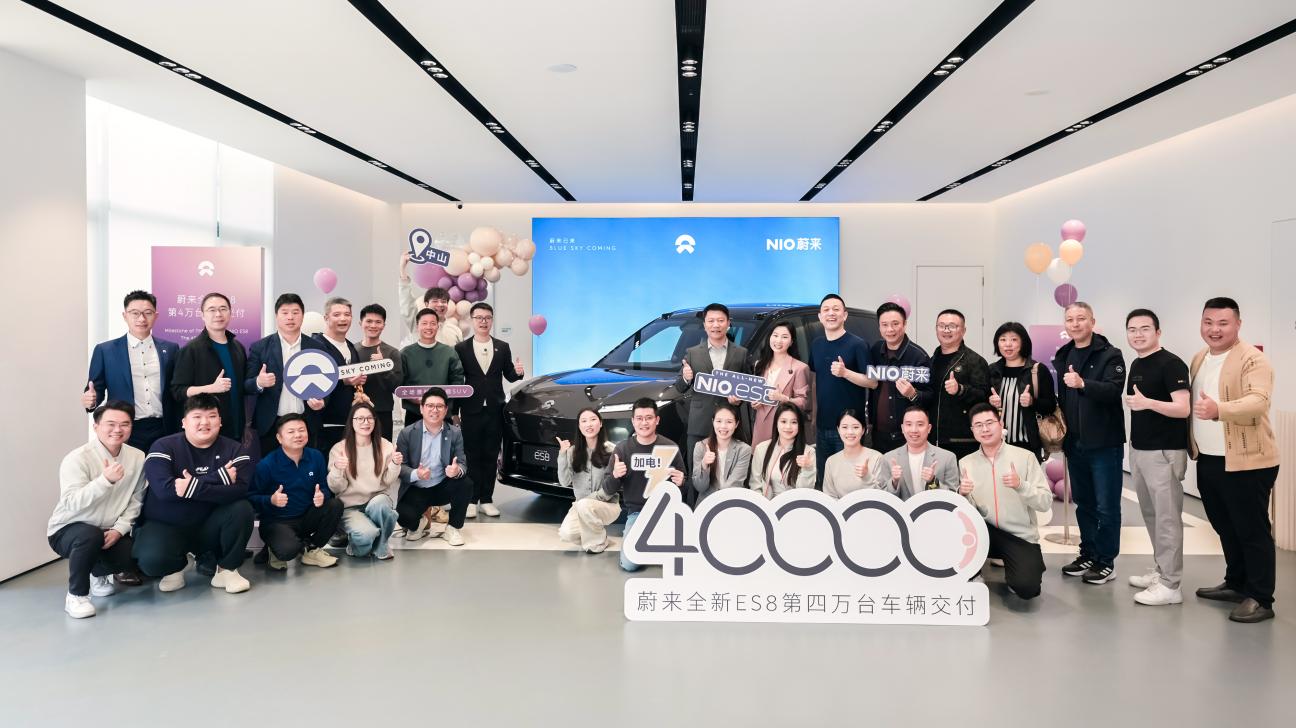
仅100天 蔚来全新ES8第四万台交付
Zhong Guo Zhi Liang Xin Wen Wang· 2025-12-30 03:57
作为纯电大三排SUV车型,ES8在高端消费群体中获得较高关注度与接受度,交付规模持续扩大,这也反映出高端消费群体对蔚来品牌价值的认可。 中汽协、乘联会零售量最新数据显示,2025年11月,纯电大三排SUV销量达46209台,环比上升16%,创历史新高。继9月首次超过增程、燃油、插混后,纯 电大三排SUV的销量已连续3个月排名所有动力形式榜首。 12月29日,蔚来全新ES8第40000台新车在广东中山港口蔚来体验中心完成交付。该车型自9月21日开启交付后,仅用时100天便达成4万台交付规模。 全新ES8第40000台新车用户郑女士表示,此次从燃油车换购全新ES8,看中的是蔚来在纯电领域的技术优势。尤其是ES8在空间、智能与补能方面的优质体 验,让此次"油转电"变得顺理成章。 ...
蔚来取得一种电池包及用电设备专利,防止电芯脱胶
Jin Rong Jie· 2025-12-30 03:45
Group 1 - NIO Automotive Technology (Anhui) Co., Ltd. has obtained a patent for a "battery pack and power equipment," with the authorization announcement number CN223743807U, applied for on December 2024 [1] - The patent relates to the field of power battery technology, specifically providing a battery pack that includes a casing, cooling plate, and battery cell assembly, designed to prevent battery cell delamination and enhance safety [1] - The company was established in 2020 and is located in Hefei City, primarily engaged in technology promotion and application services, with a registered capital of 2.6 billion RMB [1] Group 2 - NIO Automotive Technology (Anhui) Co., Ltd. has made investments in 5 companies and participated in 29 bidding projects, with a total of 2,343 trademark records and 3,287 patent records [1] - The company also holds 26 administrative licenses, indicating a diverse operational scope and regulatory compliance [1]
港股异动 蔚来-SW(09866)涨近4% 全新ES8用时100天实现交付破四万辆
Jin Rong Jie· 2025-12-30 03:45
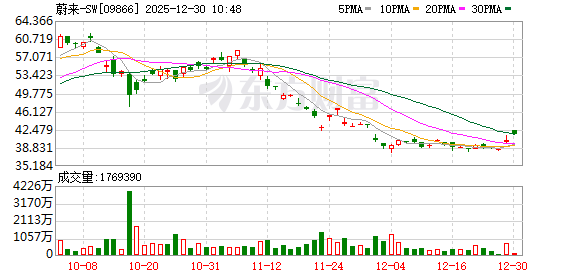
智通财经获悉,蔚来-SW(09866)涨近4%,截至发稿,涨3.77%,报41.84港元,成交额6065.88万港元。 消息面上,蔚来汽车12月29日宣布,在正式交付开启后的第100天,蔚来全新ES8成功实现交付破四万 辆。全新一代蔚来ES8车型于今年9月20日正式上市。新车共推出3款车型,售价为40.68至44.68万元, 采用电池租赁方案售价为29.88至33.88万元。 方正证券此前研报指出,25Q4期间,随着ES8车型开始放量,公司指引整车ASP上升且毛利率进一步升 至18%,并实现25Q4单季度盈亏平衡。展望2026年,车型与销售方面,公司将于全年推出3款大型新 车,其中Q2/Q3分别上市2/1款,加之ES8和L90仍处在强势新车型周期内,该行预计5款车型有望达到单 月销售峰值超5万/月,2026年化销量有望冲刺60万辆。 本文源自:智通财经网 ...
蔚来-SW(09866.HK)涨近4%
Mei Ri Jing Ji Xin Wen· 2025-12-30 02:47
每经AI快讯,蔚来-SW(09866.HK)涨近4%,截至发稿涨3.77%,报41.84港元,成交额6065.88万港元。 (文章来源:每日经济新闻) ...
港股异动 | 蔚来-SW(09866)涨近4% 全新ES8用时100天实现交付破四万辆
Zhi Tong Cai Jing· 2025-12-30 02:45
智通财经APP获悉,蔚来-SW(09866)涨近4%,截至发稿,涨3.77%,报41.84港元,成交额6065.88万港 元。 消息面上,蔚来汽车12月29日宣布,在正式交付开启后的第100天,蔚来全新ES8成功实现交付破四万 辆。全新一代蔚来ES8车型于今年9月20日正式上市。新车共推出3款车型,售价为40.68至44.68万元, 采用电池租赁方案售价为29.88至33.88万元。 方正证券此前研报指出,25Q4期间,随着ES8车型开始放量,公司指引整车ASP上升且毛利率进一步升 至18%,并实现25Q4单季度盈亏平衡。展望2026年,车型与销售方面,公司将于全年推出3款大型新 车,其中Q2/Q3分别上市2/1款,加之ES8和L90仍处在强势新车型周期内,该行预计5款车型有望达到单 月销售峰值超5万/月,2026年化销量有望冲刺60万辆。 ...