
POP MART(09992)

Search documents
工作人员脱口而出“卖79有点贵”,泡泡玛特回应直播事故
Di Yi Cai Jing· 2025-11-07 02:10
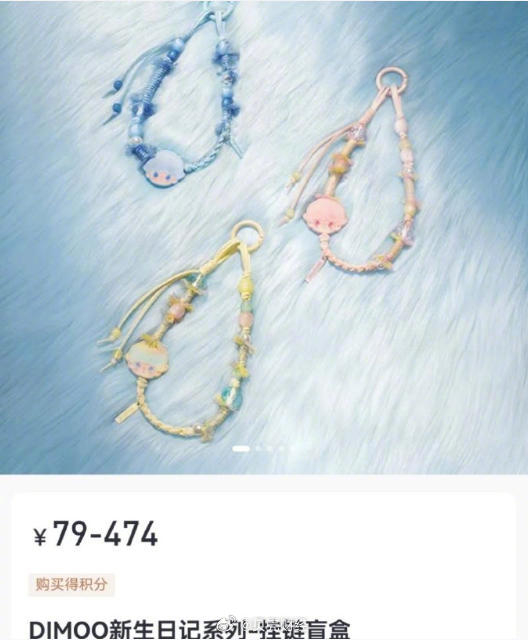
Core Viewpoint - The incident involving a live broadcast by Pop Mart has sparked significant public backlash due to comments made about the pricing of a new product, the DIMOO blind box, which retails for 79 yuan, raising concerns about its perceived value and quality [3][7]. Group 1: Incident Details - On November 7, during a live stream, a staff member commented that the price of the DIMOO blind box was "a bit expensive," which was met with a dismissive response, leading to public outrage [3]. - The live stream team acknowledged the feedback and stated they are investigating the matter internally [3]. - Pop Mart's customer service confirmed that they are addressing the incident and have not yet decided on any price adjustments for the product [3]. Group 2: Product Information - The DIMOO blind box series includes 6 regular items and 1 hidden item, with a purchase probability of 1:6 for regular items and 1:72 for the hidden item [4]. - The blind box is priced at 79 yuan individually and 474 yuan for a full box [4]. Group 3: Financial Performance - Pop Mart reported a strong financial performance, with a 245% year-on-year increase in overall revenue for Q3 2025, including a 185% increase in China and a 365% increase overseas [7]. - The DIMOO brand is identified as Pop Mart's fifth-largest artist IP, generating 1.105 billion yuan in revenue, accounting for 8% of total revenue in the first half of the year [7]. Group 4: Executive Actions - The founder and CEO of Pop Mart, Wang Ning, recently sold 21.7 million shares at an average price of 71.98 HKD, totaling 1.562 billion HKD [7].


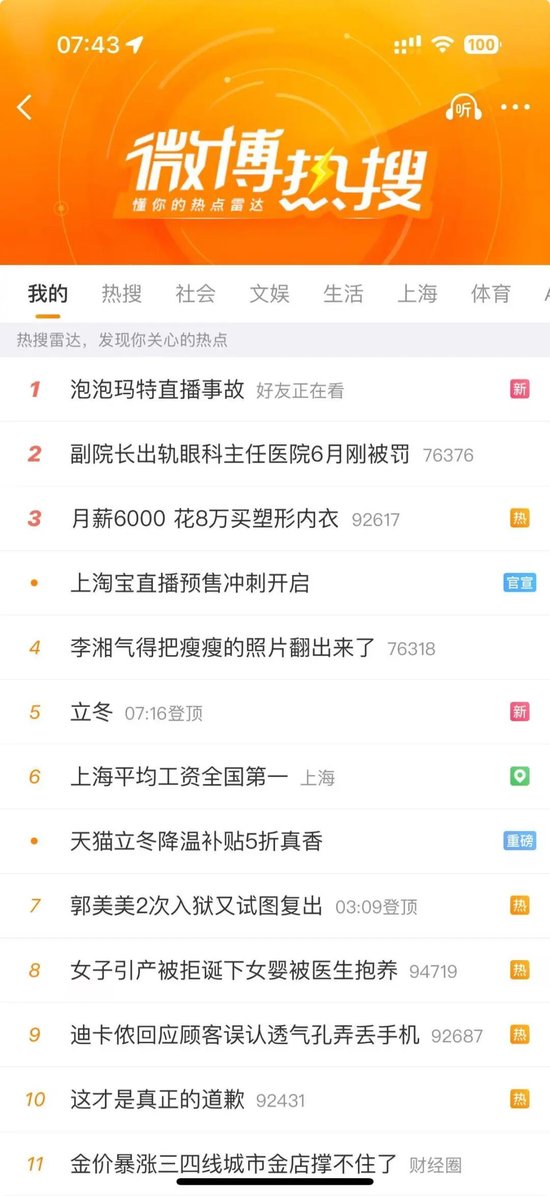
泡泡玛特直播事故引质疑,创始人称IP无天花板
Bei Ke Cai Jing· 2025-11-07 02:10
Core Viewpoint - The incident during a live broadcast by Pop Mart has sparked discussions about consumer perceptions and the value of IP, highlighting the potential for IP to enhance product value beyond traditional limits [1] Group 1: Incident Overview - A live broadcast by Pop Mart on Douyin faced criticism when a staff member questioned the pricing of a product, suggesting that consumers might be taken advantage of [1] - Following the incident, Pop Mart's customer service stated that internal measures would be taken regarding the staff involved and confirmed no current plans to adjust the product pricing [1] Group 2: IP Value Proposition - Pop Mart's founder, Wang Ning, emphasized the limitless potential of IP, stating that it can be applied to various products, enhancing their perceived value [1] - An example provided was that a transparent cup priced at 5 yuan could be sold for 10 yuan simply by adding a MOLLY design, illustrating the significant impact of IP on product pricing [1] - Wang Ning argued that while there may be a ceiling for collectible toys, the potential for IP and the company itself does not have a defined limit, suggesting ongoing opportunities for growth and diversification [1]
工作人员脱口而出“卖79有点贵”,泡泡玛特回应直播事故
第一财经· 2025-11-07 02:09
Core Viewpoint - The article discusses a recent incident involving Pop Mart's live streaming event, where a staff member's comment about the pricing of a product sparked public outrage, highlighting potential issues with product pricing and consumer perception [6][11]. Group 1: Incident Overview - On November 7, during a live stream, a staff member commented that a DIMOO blind box priced at 79 yuan was "a bit expensive," which led to significant backlash from viewers [6]. - The live stream team acknowledged the feedback and stated they were investigating the incident internally [6][12]. Group 2: Product Details - The DIMOO blind box series includes 6 regular items and 1 hidden item, with a purchase probability of 1:6 for regular items and 1:72 for the hidden item. The price for a single blind box is 79 yuan, while a full box costs 474 yuan [7][8]. - The product is made from materials such as zinc alloy, polyester, resin, and glass/acrylic, but there are concerns about its perceived value compared to lower-cost imitations [11]. Group 3: Company Performance - Pop Mart reported a strong performance in Q3 2025, with overall revenue increasing by 245% year-on-year, driven by a 185% increase in domestic revenue and a 365% increase in overseas revenue [11]. - The DIMOO brand, which is part of Pop Mart's portfolio, generated 1.105 billion yuan in revenue during the first half of 2025, accounting for 8% of the company's total revenue [12].

海外消费行业年度投资策略:2025扩品类、卡位全球,2026深度经营、品质、心智决胜
KAIYUAN SECURITIES· 2025-11-07 01:42
Group 1: Market Overview - The consumer service, retail, and media sectors in Hong Kong have shown significant performance, with the consumer service sector down by 17.34%, retail up by 94.61%, and media up by 50.98% as of October 24, 2025 [13][10][12] - The strong valuation recovery in Hong Kong stocks is attributed to a combination of global interest rate cuts, inflows of foreign and southbound capital, and the revaluation of core internet assets like Tencent and Alibaba [13][10] - The new consumption leaders in IP toys, tea drinks, and beauty sectors are showing positive fundamentals, leading to structural market trends [13][10] Group 2: IP Economy - The global licensed consumer goods market is projected to reach $307.9 billion in 2024, with a year-on-year growth of 10% [28] - Fashion apparel is identified as the category with the highest growth potential at 70%, followed by toys at 54% and food and beverages at 52% [31] - Disney, Pokémon, and Sanrio are leading in licensed retail sales, with Disney achieving $62 billion in 2024 [29][31] Group 3: Health and Wellness - The ready-to-drink beverage segment is expected to see significant penetration growth globally, with companies like Mixue Group and Guming benefiting from a positive operational cycle [4] - The return of home-cooked meals and increased health awareness are driving demand for traditional and healthy food options [4] Group 4: Beauty Sector - The cosmetics sector in China is experiencing slower growth compared to overall retail, with Douyin (TikTok) emerging as a key player in marketing and sales [4] - New ingredients and concepts are gaining traction, with a rise in oral beauty and health products [4] Group 5: Globalization Trends - The demand for spiritual entertainment in the Middle East is surging, with companies like Red Child City Technology seeing over 60% of their revenue from this region [4] - The cross-border e-commerce landscape is expanding, with companies like J&T Express capitalizing on the growth in Southeast Asia, where parcel volumes increased by 79% year-on-year [4] Group 6: Consumer Behavior Changes - The shift in consumer behavior towards more personalized and experiential consumption is evident, with a focus on self-fulfillment and value realization [4] - The education sector is adapting to changing perceptions, with new products targeting high school and college graduates to address employment challenges [4] Group 7: Entertainment and Leisure - The live music and sports sectors are expected to outperform the broader service consumption market, with companies like Ctrip and Damai Entertainment positioned to benefit [4] - The domestic concert market is maintaining high growth, with ticket sales and attendance showing significant year-on-year increases [73]



良品潮品集中亮相 折射市场新趋势 进博会上观消费:更健康 更有趣 更智能
Zhong Guo Zheng Quan Bao· 2025-11-06 21:52
Group 1: Core Insights - The China International Import Expo (CIIE) showcases innovative products and reflects new consumer trends, serving as a key window to understand the evolving Chinese consumer market [1] - Exhibitors express confidence in the Chinese market due to a transparent and stable policy environment, as well as a fair and inclusive market landscape [1] Group 2: Health and Wellness Consumption - Lululemon highlights the growing health consciousness among Chinese consumers, positioning China as its second-largest global market, driven by an improved business environment and rising consumer confidence [2] - The demand for high-quality, eco-friendly health products is increasing, indicating a higher consumer awareness regarding health products [3] Group 3: Interest-Based Consumption - PEZ candy, known for its collaboration with popular IPs, attracts significant consumer interest at the expo, showcasing the emotional connection consumers have with brands [4] - Pop Mart leverages its popular IPs to create immersive experiences, enhancing consumer engagement and interaction at the event [5] Group 4: Smart Technology Trends - Companies like Samsung are focusing on AI integration in consumer products, enhancing user experience through smart technology [6] - SYR Hansgrohe introduces AI-driven products that adapt to user habits, targeting emerging markets such as the silver economy and pet care [7]

进博会上观消费:更健康 更有趣 更智能
Zhong Guo Zheng Quan Bao· 2025-11-06 20:15
Group 1: Market Trends - The China International Import Expo showcases a variety of intelligent products and trendy items, reflecting new consumer themes, scenarios, and trends in the market [1] - Exhibitors express confidence in the Chinese market due to a transparent and stable policy environment, as well as a fair and inclusive market atmosphere [1][2] - The demand for health-related products is on the rise, with companies like lululemon noting that the Chinese market has become one of their fastest-growing regions [2] Group 2: Consumer Behavior - There is a noticeable increase in consumer awareness regarding health products, with a growing demand for high-quality, environmentally friendly, and natural health products [2] - Interest consumption is expanding, as seen with brands like PEZ and Pop Mart, which leverage emotional connections through popular IPs to attract consumers [3] Group 3: Technological Advancements - The trend of intelligent upgrades is evident, with companies like Samsung integrating AI into their products to enhance consumer experiences [4] - SYR Hansgrohe showcases AI applications in their products, such as a dual-tank soft water system that learns user habits and predicts water usage trends [4]
那个被外资血洗的中国娃娃,藏着一场不容忽视的惊天内幕
Sou Hu Cai Jing· 2025-11-06 16:27
Core Viewpoint - The article discusses the significant decline in the stock price of Pop Mart, highlighting a clash between Eastern and Western perceptions of consumer culture and investment strategies, suggesting that foreign investors fail to understand the unique emotional connections that Chinese consumers have with products like Labubu [1][3][4]. Group 1: Market Dynamics - Pop Mart's stock price drop is perceived as a typical market fluctuation, but it represents a deeper cultural conflict and a challenge to traditional investment narratives [1]. - The article draws parallels between Pop Mart's situation and the historical example of Beanie Babies, indicating that Western investors view Pop Mart as another fleeting trend rather than a sustainable business model [1][3]. - The emotional economy surrounding products like Labubu is rooted in cultural nuances that Western investors struggle to grasp, leading to a misinterpretation of the brand's value [4][6]. Group 2: Cultural Perspectives - The entrenched biases of Western capital markets stem from a "narrative hegemony" that dictates what constitutes a successful intellectual property (IP), often overlooking the unique emotional connections in Eastern cultures [3][4]. - Pop Mart's business model, which integrates IP incubation, design, supply chain management, and direct retail, contrasts sharply with the licensing-dependent models of Western IP giants, showcasing a new commercial paradigm [4][6]. - The willingness of domestic investors to buy into Pop Mart despite market pressures reflects a deeper understanding of local consumer behavior and the emotional value of products in modern society [6][7]. Group 3: Future Implications - The ongoing short-selling battle transcends mere stock price fluctuations, evolving into a struggle for defining consumer narratives and market authority [6]. - The challenges faced by Pop Mart are indicative of the broader journey of Chinese innovative companies as they seek to ascend the value chain and redefine market standards [6][7]. - The article posits that the rise of new business models in China, such as those exemplified by Pop Mart, poses a threat to established Western paradigms, leading to defensive reactions from traditional investors [7][9].

2023中国盲盒行业发展趋势报告
Sou Hu Cai Jing· 2025-11-06 15:26
Group 1 - The global潮玩 market is experiencing rapid growth, with China's market showing particularly strong potential, achieving a compound annual growth rate (CAGR) of 34.1% from 2015 to 2021, and expected to reach 763 billion yuan by 2024 [1][11] - Blind boxes are the core growth category within the潮玩 industry, with over 60% of潮玩 users preferring blind boxes. The market size for blind boxes was approximately 139.1 billion yuan in 2021 and is projected to exceed 300 billion yuan by 2024 [1][12] - The sales channels for blind boxes remain predominantly offline, accounting for nearly 70%, but online sales are steadily increasing, rising from 7.0% in 2015 to 32.2% in 2022 [1][15][18] Group 2 - The潮玩 industry is characterized by active financing, with 506 new companies registered in 2021, reflecting a 95.4% year-on-year increase. Numerous brands have secured investments [1][19][22] - The competitive landscape of the潮玩 retail market is relatively low in concentration, while the blind box segment shows higher concentration, with the top five brands accounting for 69.0% of the market share in 2021 [1][29][32] - The industry is primarily driven by Generation Z consumers, with those aged 18-24 making up 32% of the user base, and their purchasing motivations largely centered around the element of surprise and favored IPs [1][12][30] Group 3 - The潮玩 industry is witnessing a trend towards increased regulation, as indicated by the implementation of the "Guidelines for Blind Box Business Operations (Trial)" which aims to promote standardized development [1][12] - The value distribution within the潮玩 industry chain shows that IP creation and operation have the highest profit margins at 50%, while channel sales account for 40% of the value distribution [1][26][28] - Leading companies like泡泡玛特 focus on proprietary and exclusive IPs, with over 90% of their revenue coming from self-owned IP products, and they have increasingly shifted towards online sales channels [1][37][38]

南向资金今日成交活跃股名单(11月6日)
Zheng Quan Shi Bao Wang· 2025-11-06 14:51
Market Overview - On November 6, the Hang Seng Index rose by 2.12%, with southbound funds totaling a transaction amount of HKD 105.77 billion, including buy transactions of HKD 55.63 billion and sell transactions of HKD 50.15 billion, resulting in a net buy amount of HKD 5.48 billion [1] Southbound Trading Activity - The southbound trading through Stock Connect (Shenzhen) had a cumulative transaction amount of HKD 42.55 billion, with buy transactions of HKD 23.34 billion and sell transactions of HKD 19.21 billion, leading to a net buy amount of HKD 4.13 billion [1] - The southbound trading through Stock Connect (Shanghai) had a cumulative transaction amount of HKD 63.23 billion, with buy transactions of HKD 32.29 billion and sell transactions of HKD 30.94 billion, resulting in a net buy amount of HKD 1.35 billion [1] Active Stocks - Among the stocks with significant trading activity, SMIC had the highest transaction amount at HKD 74.89 billion, followed by Alibaba-W at HKD 73.31 billion and Tencent Holdings at HKD 38.26 billion [1] - The stocks with the highest net buy amounts included Xpeng Motors-W with a net buy of HKD 12.14 billion, followed by Southern Hang Seng Technology with HKD 10.52 billion and Huahong Semiconductor with HKD 9.61 billion [1] Notable Stock Movements - Weichai Power had the highest net sell amount at HKD 5.48 billion, despite its stock price increasing by 20.52% [1] - Other notable net sell amounts included Pop Mart at HKD 4.19 billion and Alibaba-W at HKD 3.08 billion [1] Continuous Net Buying - Xpeng Motors-W, Huahong Semiconductor, and Xiaomi Group-W were among the eight stocks that appeared on both the Shenzhen and Shanghai Stock Connect active trading lists, with Xiaomi Group-W having the longest continuous net buying streak at 7 days, totaling a net buy of HKD 42.28 billion [2]



港股通(深)净买入41.28亿港元
Zheng Quan Shi Bao Wang· 2025-11-06 14:48
Market Overview - On November 6, the Hang Seng Index rose by 2.12%, closing at 26,485.90 points, with a net inflow of HKD 5.479 billion through the southbound trading channel [1] - The total trading volume for the southbound trading on November 6 was HKD 105.777 billion, with a net buy of HKD 5.479 billion [1] Trading Activity - In the Shanghai-Hong Kong Stock Connect, the trading volume was HKD 63.232 billion, with a net buy of HKD 1.351 billion; in the Shenzhen-Hong Kong Stock Connect, the trading volume was HKD 42.545 billion, with a net buy of HKD 4.128 billion [1] - The most actively traded stock in the Shanghai-Hong Kong Stock Connect was Alibaba-W, with a trading volume of HKD 4.208 billion, followed by SMIC and Hua Hong Semiconductor, with trading volumes of HKD 3.997 billion and HKD 2.042 billion, respectively [1] Stock Performance - In terms of net buy amounts, Xpeng Motors-W led with a net buy of HKD 861 million, closing with a price increase of 1.94% [1] - SMIC had the highest net sell amount at HKD 475 million, but its closing price increased by 7.32% [1] - In the Shenzhen-Hong Kong Stock Connect, SMIC was the top traded stock with a trading volume of HKD 3.491 billion and a net buy of HKD 1.094 billion, closing up by 7.32% [2] Detailed Trading Data - The top ten actively traded stocks in the southbound trading on November 6 included: - Alibaba-W: Trading volume of HKD 420.76 million, net sell of HKD 25.15 million, daily increase of 4.10% [2] - SMIC: Trading volume of HKD 399.73 million, net sell of HKD 47.51 million, daily increase of 7.32% [2] - Hua Hong Semiconductor: Trading volume of HKD 204.22 million, net buy of HKD 6.98 million, daily increase of 9.05% [2] - Tencent Holdings: Trading volume of HKD 200.39 million, net buy of HKD 62.05 million, daily increase of 2.38% [2] - Xpeng Motors-W: Trading volume of HKD 197.20 million, net buy of HKD 86.06 million, daily increase of 1.94% [2]