POP MART(09992)

Search documents
智通港股沽空统计|10月24日
智通财经网· 2025-10-24 00:22
Core Insights - The article highlights the short-selling ratios and amounts for various companies, indicating significant bearish sentiment in the market towards certain stocks [1][2]. Short-Selling Ratios - JD Health-R (86618) has the highest short-selling ratio at 100.00% [2] - JD Group-SWR (89618) follows with a short-selling ratio of 91.39% [2] - SenseTime-WR (80020) has a short-selling ratio of 89.62% [2] - Other notable companies with high short-selling ratios include Kuaishou-WR (81024) at 88.04% and Lenovo Group-R (80992) at 87.33% [2] Short-Selling Amounts - The highest short-selling amount is recorded for Pop Mart (09992) at 2.864 billion [2] - Alibaba-SW (09988) has a short-selling amount of 2.628 billion [2] - Meituan-W (03690) follows with a short-selling amount of 1.962 billion [2] - Tencent Holdings (00700) and SMIC (00981) also show significant short-selling amounts of 1.859 billion and 840 million respectively [2] Short-Selling Deviation Values - SenseTime-WR (80020) has the highest deviation value at 45.68%, indicating a significant difference from its historical average [2] - JD Group-SWR (89618) has a deviation value of 44.65% [2] - Kuaishou-WR (81024) shows a deviation value of 43.37% [2] - Other companies with notable deviation values include OSL Group (00863) at 42.11% and Alibaba-SW (09988) at 32.36% [2]





智通港股通资金流向统计(T+2)|10月24日
智通财经网· 2025-10-23 23:37
Core Insights - The article highlights the net inflow and outflow of funds in the Hong Kong stock market, with specific companies leading in both categories [1][2][3] Group 1: Net Inflow - Pop Mart (09992) recorded a net inflow of 1.123 billion, representing a 11.42% increase in net inflow ratio [2] - Xiaomi Group-W (01810) saw a net inflow of 480 million, with a net inflow ratio of 6.20% [2] - China National Offshore Oil Corporation (00883) had a net inflow of 478 million, with a significant net inflow ratio of 24.83% [2] - Other notable companies with high net inflows include Zijin Mining International (02259) and Huahong Semiconductor (01347), with inflows of 447 million and 439 million respectively [2] Group 2: Net Outflow - The Yingfu Fund (02800) experienced the highest net outflow at 1.417 billion, with a net outflow ratio of -11.10% [2] - Hang Seng China Enterprises (02828) had a net outflow of 614 million, reflecting a -7.00% change [2] - Innovent Biologics (01801) faced a net outflow of 520 million, with a significant -31.20% net outflow ratio [2] - Other companies with notable net outflows include Alibaba-W (09988) and Geely Automobile (00175), with outflows of 433 million and 297 million respectively [2] Group 3: Net Inflow Ratio - GX Hang Seng Technology (02837) led with a net inflow ratio of 72.86%, with a net inflow of 37.17 million [3] - Global New Materials International (06616) followed with a net inflow ratio of 67.67% and an inflow of 42.23 million [3] - Shangmei Co., Ltd. (02145) had a net inflow ratio of 60.76%, with an inflow of 65.89 million [3] Group 4: Net Outflow Ratio - E Fund Hang Seng ESG (03039) recorded a net outflow ratio of -100.00%, with a net outflow of 19,700 [3] - Wisdom Hong Kong 100 (02825) also had a net outflow ratio of -100.00%, with a net outflow of 12,200 [3] - Minhua Holdings (01999) experienced a net outflow ratio of -60.57%, with an outflow of 24.11 million [3]


Pop Mart shares slide 9% as enthusiasm for Labubu dolls shows signs of cooling
Invezz· 2025-10-23 19:16
Core Viewpoint - Shares of Chinese toymaker Pop Mart experienced a significant decline, dropping 9% in a single day, marking the worst performance since April and continuing a prolonged downward trend that has diminished much of the company's summer gains [1] Company Summary - The recent drop in Pop Mart's shares reflects ongoing challenges faced by the company, contributing to a broader decline that has persisted for several months [1] - The decline in share price indicates potential investor concerns regarding the company's future performance and market position [1] Industry Summary - The performance of Pop Mart may signal broader trends within the toy industry, particularly in the Chinese market, where consumer sentiment and spending patterns could be affecting sales [1] - The sharp decline in shares could impact investor confidence in the toy sector, potentially leading to increased scrutiny of other companies within the industry [1]



泡泡玛特业绩暴涨,海外市场爆发,Q3收益飙升近3倍
Sou Hu Cai Jing· 2025-10-23 18:59
Core Insights - The toy industry is undergoing significant changes, largely initiated by Pop Mart's impressive Q3 2025 earnings announcement, which revealed a staggering 245% year-on-year revenue increase [1] - The overseas market growth for Pop Mart was particularly remarkable, soaring between 365% and 370%, overshadowing the 185% to 190% growth in the Chinese market [1][3] - The Americas market experienced over a 12-fold increase, propelling Pop Mart into the global spotlight [1] - Online sales channels showed exceptional performance with over 300% growth, significantly outpacing the 130% increase in offline sales, highlighting the success of the company's digital transformation [1] Market Performance - Pop Mart's overall revenue growth reflects a broader trend in the toy industry, with Europe and other regions achieving a growth rate of 735% to 740%, and the Asia-Pacific region seeing a 170% to 175% increase [3] - Despite these impressive figures, concerns are emerging regarding the sustainability of such high growth rates, as indicated by analysts who suggest that the market has already priced in expectations of a slowdown in growth [5] Investment Sentiment - The capital market is becoming increasingly rational regarding the "new consumption" phenomenon, as evidenced by the decline in stock prices of Pop Mart and other related companies, signaling a shift in investor confidence [5] - The success of Pop Mart is attributed to continuous innovation and precise marketing, yet it faces challenges related to product lifecycle limitations and cultural differences in global markets [6] Future Outlook - The rapid expansion into global markets presents both opportunities and challenges, with the online sales boom altering traditional retail dynamics and introducing new operational pressures [6] - Investors are exhibiting caution, reflecting concerns about Pop Mart's future growth and the cyclical nature of the consumer industry [6][7] - The case of Pop Mart serves as a warning to new consumer brands that rapid growth often leads to subsequent challenges, emphasizing the need for sustainable development [8]

大跳水!5天跌去两成,泡泡玛特怎么了?
Zheng Quan Shi Bao· 2025-10-23 15:36
Core Viewpoint - The Hong Kong stock market indices strengthened on October 23, but leading stocks in the new consumption sector, particularly Pop Mart, experienced significant declines, raising concerns about potential performance peaks and future growth sustainability [1][5]. Group 1: Company Performance - Pop Mart reported a revenue growth of 245%-250% for Q3 2025 compared to Q3 2024, with the Chinese market growing by 185%-190% and overseas markets by 365%-370% [3]. - The Americas market showed the highest growth rate at 1265%-1270%, while Europe and other regions grew by 735%-740%, and the Asia-Pacific market increased by 170%-175% [3]. - Analyst Jeff Zhang from Morningstar acknowledged the strong overseas growth but expressed concerns about potential deceleration in future quarters, predicting peak performance in 2025 followed by a slowdown starting in 2026 [5]. Group 2: Market Reactions and Analyst Opinions - The decline in Pop Mart's stock price is attributed to concerns over the sustainability of its popular IP products, particularly LABUBU, and the drop in secondary market prices for related products [5]. - Despite the stock price drop, some analysts remain optimistic about Pop Mart's growth potential, citing its strong IP incubation capabilities and increasing influence in overseas markets [6]. - Morgan Stanley and several other institutions have upgraded their ratings on Pop Mart, indicating confidence in its valuation and future catalysts such as holiday sales and new product launches [6].
泡泡玛特股价大跌9%:王宁失去河南首富地位 财富被秦英林反超
Sou Hu Cai Jing· 2025-10-23 15:32
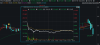
Core Viewpoint - Pop Mart's stock price has recently declined significantly, dropping over 9% to a closing price of 232.4 HKD, resulting in a market capitalization of 312.1 billion HKD [2][4]. Financial Performance - For the third quarter of 2025, Pop Mart reported an overall revenue increase of 245%-250% year-on-year, with Chinese revenue growing by 185%-190% and overseas revenue increasing by 365%-370% [2][4]. - In the Chinese market, offline channels saw a year-on-year growth of 130%-135%, while online channels experienced a growth of 300%-305% [4]. - Revenue growth in the Asia-Pacific region was reported at 170%-175%, while the Americas saw an impressive increase of 1,265%-1,270%, and Europe and other regions grew by 735%-740% [4]. Market Sentiment - The significant drop in Pop Mart's stock has sparked discussions among investors, with some suggesting that the stock had risen too rapidly over the past year, leading to profit-taking by investors [4]. - There are concerns regarding the sustainability of the current growth trend, with opinions indicating that this year's high growth may lead to lower growth in the following year [4].

10月23日南向资金净买入53.45亿港元
Zheng Quan Shi Bao Wang· 2025-10-23 14:41
Market Overview - On October 23, the Hang Seng Index rose by 0.72%, closing at 25,967.98 points, with a net inflow of HKD 5.345 billion through the southbound trading channel [1] - The total trading volume for the southbound trading on the same day was HKD 120.193 billion, with a net buy of HKD 5.345 billion [1] Southbound Trading Details - The Shanghai Stock Exchange's southbound trading had a total transaction amount of HKD 75.581 billion, with a net buy of HKD 4.770 billion [1] - The Shenzhen Stock Exchange's southbound trading recorded a transaction amount of HKD 44.612 billion, with a net buy of HKD 0.575 billion [1] Active Stocks - In the Shanghai Stock Exchange's southbound trading, Alibaba-W had the highest transaction amount at HKD 49.75 billion, followed by Pop Mart and SMIC with HKD 46.66 billion and HKD 35.22 billion respectively [1] - In terms of net buy amounts, Pop Mart led with a net buy of HKD 5.38 billion, despite its closing price dropping by 9.36% [1] - The stock with the highest net sell amount was Hua Hong Semiconductor, with a net sell of HKD 3.56 billion, and its closing price decreased by 4.61% [1] Shenzhen Stock Exchange Active Stocks - In the Shenzhen Stock Exchange's southbound trading, Alibaba-W also topped the transaction amount at HKD 32.77 billion, followed by SMIC and Pop Mart with HKD 25.85 billion and HKD 23.60 billion respectively [2] - The stock with the highest net buy was Meituan-W, with a net buy of HKD 0.487 billion, and it closed up by 4.06% [2] - Hua Hong Semiconductor again had the highest net sell amount at HKD 6.59 billion, with a closing price drop of 4.61% [2]



南向资金今日净买入53.45亿港元,中国海洋石油净买入9.80亿港元
Zheng Quan Shi Bao Wang· 2025-10-23 14:40
Market Overview - On October 23, the Hang Seng Index rose by 0.72%, with total southbound trading amounting to HKD 120.19 billion, including buy transactions of HKD 62.77 billion and sell transactions of HKD 57.42 billion, resulting in a net buying amount of HKD 5.34 billion [1] Southbound Trading Details - The southbound trading through Stock Connect (Shenzhen) had a total trading amount of HKD 44.61 billion, with buy transactions of HKD 22.59 billion and sell transactions of HKD 22.02 billion, leading to a net buying amount of HKD 0.57 billion [1] - The southbound trading through Stock Connect (Shanghai) had a total trading amount of HKD 75.58 billion, with buy transactions of HKD 40.18 billion and sell transactions of HKD 35.40 billion, resulting in a net buying amount of HKD 4.77 billion [1] Active Stocks - The most actively traded stock by southbound funds was Alibaba-W, with a total trading amount of HKD 82.52 billion, followed by Pop Mart and SMIC with trading amounts of HKD 70.27 billion and HKD 61.07 billion, respectively [1] - In terms of net buying, China National Offshore Oil Corporation led with a net buying amount of HKD 9.80 billion, with a closing price increase of 2.15%. Pop Mart and Meituan-W followed with net buying amounts of HKD 7.93 billion and HKD 5.24 billion, respectively [1] Net Selling Stocks - The stock with the highest net selling amount was Hua Hong Semiconductor, with a net selling of HKD 10.14 billion and a closing price decrease of 4.61%. Other notable net selling stocks included Innovent Biologics and Xiaomi Group-W, with net selling amounts of HKD 1.40 billion and HKD 0.57 billion, respectively [1] Continuous Net Buying - Two stocks experienced continuous net buying from southbound funds for more than three days: SMIC and Pop Mart, with net buying days of three each. Pop Mart had the highest net buying amount during this period at HKD 21.54 billion, followed by SMIC with HKD 11.96 billion [2]

市值蒸发超2800亿港元!资金为何撤离泡泡玛特、蜜雪集团等新消费龙头?
Di Yi Cai Jing Zi Xun· 2025-10-23 13:54
Core Viewpoint - The Hong Kong new consumption sector has experienced a significant decline in stock prices, with major companies like Pop Mart and others seeing their market values drop sharply from their highs earlier in the year [2][4][7]. Market Performance - As of October 23, 2023, Pop Mart's stock price fell by 9.36% to 232.4 HKD, with a total market capitalization of 312.1 billion HKD, marking a decline of over 32% from its peak of 339.8 HKD on August 26 [2][4][7]. - Other leading stocks such as Lao Pu Gold and Mixue Group have also seen significant declines, with Lao Pu Gold dropping over 34% from its high of 1,082 HKD and Mixue Group down more than 31% from 615 HKD [4][5][7]. Capital Flow - Despite continued inflows from southbound funds, local and international intermediary funds have shown signs of withdrawal, indicating a shift in market sentiment [3][8]. - The analysis of capital flow reveals a divergence among institutional investors, with southbound funds still being the main buyers, while other major institutions have been retreating [8][9]. Growth Concerns - There are growing concerns about the sustainability of growth in the new consumption sector, particularly for companies like Pop Mart, which has seen a significant increase in revenue but faces skepticism about future growth potential [10][11]. - The market is reassessing the business models of new consumption companies, with specific concerns about the alignment of their operational strategies and market positioning [10][11]. Competitive Landscape - The competitive environment is intensifying, with companies like Lao Pu Gold and Mixue Group facing challenges related to their production efficiency and market positioning [11][12]. - The overall inventory turnover rates in the sector have declined, suggesting a potential oversupply situation that could impact future profitability [12]. Long-term Outlook - Some analysts remain optimistic about the long-term prospects of the new consumption sector, citing macroeconomic support and evolving consumer trends that may drive future growth [12].

泡泡玛特王宁,失守河南首富“宝座”
Sou Hu Cai Jing· 2025-10-23 13:41
Core Insights - The company reported a strong growth in Q3, with overall revenue increasing by 245% to 250% year-on-year, driven by significant gains in both domestic and international markets [7][8] - Despite impressive growth figures, the company's stock price experienced a notable decline, dropping 8.08% on the day of the announcement and further falling 9.36% shortly after [2][15] - The LABUBU IP has been a key driver of revenue, with its popularity leading to substantial price premiums in the secondary market, although there are concerns about sustaining this momentum [3][4][21] Revenue Performance - Domestic revenue grew by 185% to 190%, while overseas revenue surged by 365% to 370% [8] - In the domestic market, offline sales increased by 130% to 135%, and online sales skyrocketed by 300% to 305% [9] - The Americas saw the highest growth at 1265% to 1270%, followed by Europe at 735% to 740%, and the Asia-Pacific region (excluding China) at 170% to 175% [9][10] Market Position and Valuation - The company's market capitalization has decreased from over 400 billion HKD in late August to approximately 312.1 billion HKD by October 23 [3][13] - The founder, Wang Ning, has a net worth of 18.8 billion USD, ranking him 130th on the Forbes real-time billionaire list [5] Product and IP Strategy - The LABUBU IP has been crucial for the company's success, with its revenue contribution increasing significantly from 5.8% to 34.7% in just over a year [18][20] - Other IPs like MOLLY and SKULLPANDA have seen a decline in revenue contribution despite their own growth rates, indicating a heavy reliance on LABUBU for driving sales [20][21] - The company is focusing on innovation and expanding its product lines to meet diverse consumer demands [11][21] Stock Market Reaction - Following the Q3 report, the stock price has shown volatility, with a general downward trend observed from October 17 to 23, except for a brief recovery on October 22 [14][15] - The market's reaction reflects concerns over the sustainability of the company's growth and the potential for product price fluctuations [22][24] Future Outlook - The company aims to leverage its existing IPs while exploring new ones to maintain competitive advantage in the market [29] - The recent collaboration with high-profile figures, such as Apple's CEO Tim Cook, highlights the brand's strategy to enhance visibility and market presence [28][29]