
POP MART(09992)

Search documents
泡泡玛特Q3运营情况点评
Xin Lang Cai Jing· 2025-10-22 12:19
Core Viewpoint - The company reported a significant year-on-year revenue growth of 245%-250% for Q3 2025, exceeding market expectations, with strong performance across various channels and regions [1][2]. Revenue Performance - Domestic revenue in China grew by 185%-190%, with offline channels increasing by 130%-135% and online channels by 300%-305% [1]. - Overseas revenue surged by 365%-370%, with specific growth rates of 170%-175% in the Asia-Pacific region, 1265%-1270% in the Americas, and 735%-740% in Europe and other regions [1]. IP Development and Longevity - The commercial value curve of the labubu IP does not align with its popularity curve, indicating that high-quality IPs have a longer lifecycle than market perceptions suggest [1]. - Historical data shows that most of the company's key IPs have achieved continuous year-on-year revenue growth, with MOLLY, an early artist IP, maintaining a CAGR of 22% from 2019 to 2023 [1]. Global Market Expansion - The company is leveraging its diverse IP matrix to enhance its presence in global markets, which is crucial for catering to varying cultural preferences [2]. - The success of multiple IPs in overseas markets, such as crybaby and 星星人, demonstrates a notable increase in popularity, with regional differences in demand [2]. - The company is optimistic about expanding its store presence in overseas markets, which will allow for greater audience reach and maximize the commercial value of its diverse IP matrix [2].
智通港股通活跃成交|10月22日





智通财经网· 2025-10-22 11:06
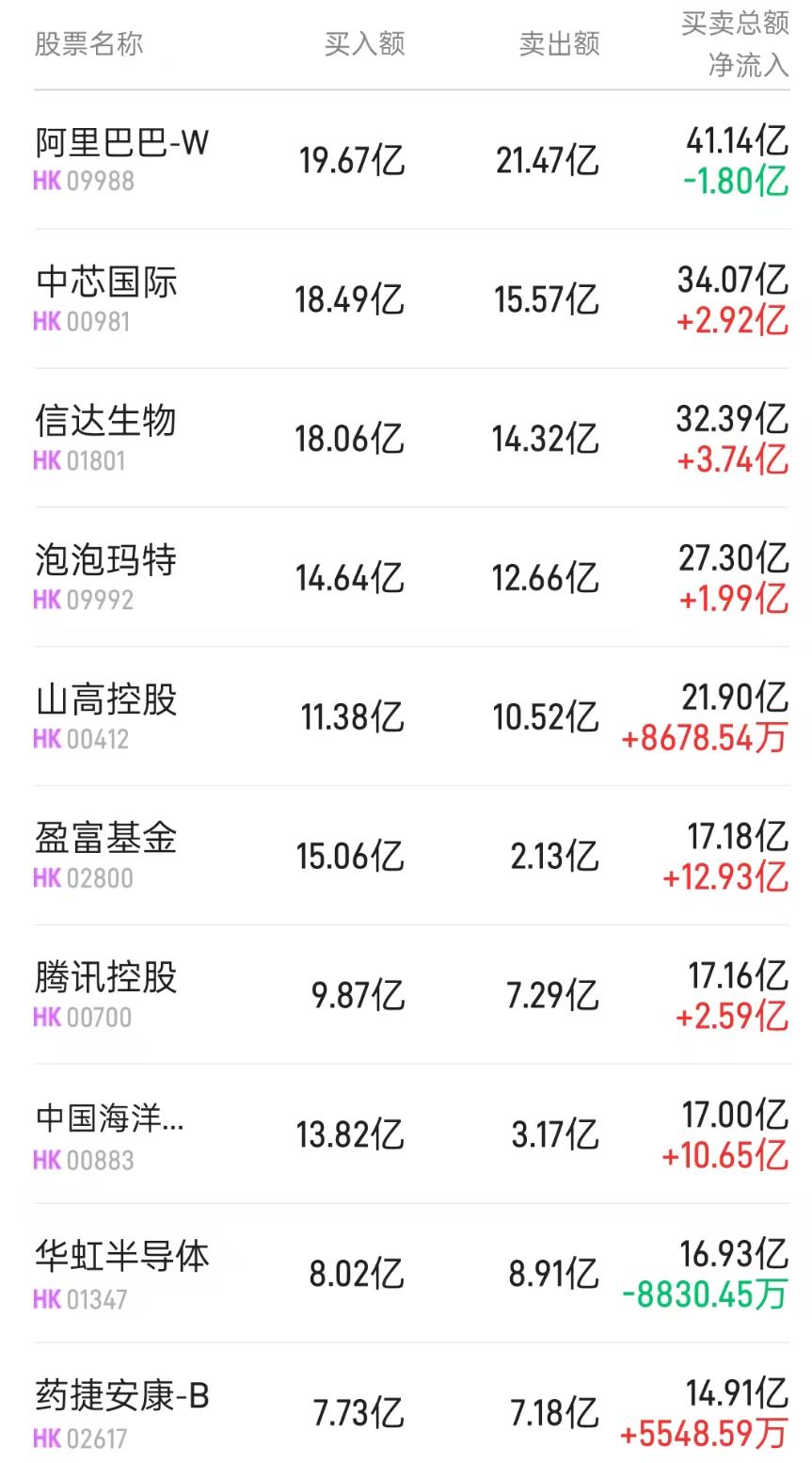
Core Insights - On October 22, 2025, Alibaba-W (09988), SMIC (00981), and Innovent Biologics (01801) were the top three stocks by trading volume in the Southbound Stock Connect, with trading amounts of 4.114 billion, 3.407 billion, and 3.239 billion respectively [1] - In the Southbound Stock Connect for the Shenzhen-Hong Kong Stock Connect, Innovent Biologics (01801), Alibaba-W (09988), and Pop Mart (09992) led the trading volume, with amounts of 2.684 billion, 2.466 billion, and 2.336 billion respectively [1] Southbound Stock Connect (Hong Kong-Shanghai) - Top three active stocks by trading amount: - Alibaba-W (09988): 4.114 billion, net buy of -0.18 billion - SMIC (00981): 3.407 billion, net buy of 0.292 billion - Innovent Biologics (01801): 3.239 billion, net buy of 0.374 billion [2] - Other notable stocks include: - Pop Mart (09992): 2.730 billion, net buy of 0.199 billion - Tencent Holdings (00700): 1.716 billion, net buy of 0.259 billion [2] Southbound Stock Connect (Shenzhen-Hong Kong) - Top three active stocks by trading amount: - Innovent Biologics (01801): 2.684 billion, net buy of -0.253 billion - Alibaba-W (09988): 2.466 billion, net buy of 0.172 billion - Pop Mart (09992): 2.336 billion, net buy of 0.041 billion [2] - Other notable stocks include: - SMIC (00981): 1.857 billion, net buy of 0.350 billion - Tencent Holdings (00700): 1.081 billion, net buy of 0.049 billion [2]
泡泡玛特(09992):财务数据一览
BOCOM International· 2025-10-22 10:27
Investment Rating - The report maintains a "Buy" rating for the company, Pop Mart (9992 HK) [2][15]. Core Insights - The report highlights a sustained growth momentum, leading to an upward revision of profit forecasts and target price, reaffirming the "Buy" rating [2][6][7]. - The target price has been raised to HKD 401.60, indicating a potential upside of 60.4% from the current price of HKD 250.40 [1][15]. Financial Performance Summary - Revenue projections for 2025 have been increased by 11%, with expectations of continued sales momentum into Q4 due to the retail peak season [6][7]. - The company is expected to achieve significant revenue growth, with 2025 revenue estimated at RMB 35,899 million, reflecting a year-on-year growth of 175.3% [5][16]. - Net profit for 2025 is projected to reach RMB 12,421 million, representing a year-on-year increase of 296.7% [5][16]. Market Growth Dynamics - The company reported a 245-250% year-on-year revenue growth in Q3 2025, with the domestic market growing by 185-190% and overseas markets experiencing a remarkable growth of 365-370% [6][7]. - The domestic market's online sales grew by 300-305%, driven by effective live-streaming e-commerce and refined online membership operations [6][7]. - The overseas market, particularly the Americas, showed exceptional performance, with revenue growth of 1265-1270% in Q3 [6][7]. Profitability and Valuation Metrics - The report anticipates an increase in profit margins, with gross profit margin expected to reach 70.8% in 2025 [8][11]. - The company’s price-to-earnings ratio is projected to be 24.5 times for 2025, indicating an attractive valuation given the expected growth [5][16]. - The report notes that the company’s ability to monetize its IP platform continues to strengthen, with significant contributions expected from new IPs and product innovations [6][7].
泡泡玛特:如何利用IP经济撬动年轻消费?
Sou Hu Cai Jing· 2025-10-22 10:19
Core Insights - The article highlights the success of Pop Mart as a leading cultural entertainment brand in China, emphasizing its ability to tap into the emotional needs of millennials and Gen Z consumers through innovative IP development and marketing strategies [1][2]. Group 1: Business Overview - Pop Mart was established in 2010 and has expanded its operations to over 80 countries, with more than 450 offline stores and over 2,300 robot stores by the end of 2023 [1]. - The company successfully opened its first overseas park in 2024 and achieved full coverage of provincial-level stores in China [1]. - The LABUBU series saw a global launch in April 2025, with products selling out rapidly in markets like the US and UK [1]. Group 2: Targeting Millennials - Pop Mart effectively targets millennials by focusing on emotional value rather than just product functionality, transforming from a toy brand to a cultural IP operator [2]. - The brand creates narratives around its IPs, allowing products to embody characters with rich backstories, enhancing emotional connections with consumers [2][3]. Group 3: IP Development - The MOLLY IP has evolved from a simple character to a "star IP" with a complex personality, featuring seasonal storylines that engage fans [3]. - Other IPs like PUCKY and SKULL PANDA also have distinct characteristics that appeal to different consumer segments [3]. Group 4: Product Strategy - Pop Mart offers a diverse range of products, from basic blind boxes to high-end limited sculptures, catering to various consumer needs [6]. - The company has a highly responsive supply chain, allowing for rapid product design and production, minimizing inventory issues [6][7]. Group 5: Pricing Strategy - Pop Mart employs a pricing strategy based on "mass appeal + scarcity," with regular blind boxes priced around 59 yuan, appealing to younger consumers [8]. - The LABUBU series saw a price increase of nearly 30% in the US market, yet demand remained strong due to perceived scarcity [9]. Group 6: Marketing and User Engagement - The brand leverages social media platforms like Xiaohongshu, Douyin, and Weibo to enhance brand visibility and engage with consumers through relatable content [11][12]. - User-generated content (UGC) plays a crucial role in building brand loyalty and community, as consumers share their experiences and interactions with the products [14]. Group 7: Experiential Marketing - Pop Mart has established themed stores and pop-up shops in major cities, creating immersive experiences that deepen emotional connections with consumers [17]. - The company integrates online and offline channels, allowing users to preview products online and experience them in-store, enhancing overall engagement [21].


北水动向|北水成交净买入100.18亿 内资抢筹盈富基金(02800)近20亿港元 继续加仓中海油(00883)
智通财经网· 2025-10-22 09:53
Core Insights - The Hong Kong stock market saw a net inflow of 100.18 billion HKD from northbound trading on October 22, with the Shanghai Stock Connect contributing 66.93 billion HKD and the Shenzhen Stock Connect contributing 33.25 billion HKD [1] Group 1: Stock Performance - The most bought stocks included the Tracker Fund of Hong Kong (02800), CNOOC (00883), and SMIC (00981) [1] - The most sold stocks were Hua Hong Semiconductor (01347), Xiaomi Group-W (01810), and Alibaba Group-W (09988) [1] - Alibaba Group-W had a buy amount of 19.67 billion HKD and a sell amount of 21.47 billion HKD, resulting in a net outflow of 1.80 billion HKD [2] - CNOOC (00883) received a net inflow of 14.24 billion HKD, supported by reports of long-term growth potential amid oil price fluctuations [5] - SMIC (00981) had a net inflow of 6.42 billion HKD, while Hua Hong Semiconductor (01347) faced a net outflow of 2.97 billion HKD [5] Group 2: Market Trends and Analyst Insights - Analysts suggest that the current external uncertainties, particularly the US-China tensions, are causing short-term market volatility, but a better entry point for investments may arise once these uncertainties diminish [4] - The semiconductor sector is experiencing a split, with a positive outlook on AI-driven growth, while domestic production capabilities are expected to accelerate due to US export controls [5] - Pop Mart (09992) reported a strong third-quarter performance with revenue growth of 245% to 250%, leading to an upward revision of earnings forecasts by Bank of America [5] - A strategic partnership between Innovent Biologics (01801) and Takeda Pharmaceutical is set to yield a total potential deal value of up to 114 billion USD, indicating significant growth prospects in the biotech sector [6][7]


叶国富谈名创优品与泡泡玛特相似发展路径
3 6 Ke· 2025-10-22 09:41
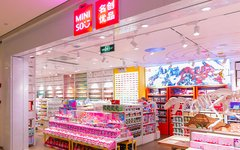
Core Insights - The discussion highlights the similarities between Miniso and Pop Mart in their growth trajectories, with both companies starting from a similar foundation in retailing miscellaneous goods and gradually transitioning towards IP development [1][2] Group 1: Company Growth and Strategy - Miniso and Pop Mart both began their journeys in 2010, focusing on selling miscellaneous goods, but with different primary product categories: Pop Mart emphasizes toys while Miniso focuses on lifestyle products [1] - Miniso has been slower in its transition to self-owned IP, starting this shift only in 2023, while Pop Mart began its transition approximately seven years earlier [1] - Miniso has signed contracts for 17 self-owned IPs, with the first IP projected to achieve sales of 40 million this year and potentially exceed 100 million next year [1] Group 2: Product Categories and Market Position - Pop Mart has expanded its product offerings to include blind boxes, plush toys, and mobile accessories, while Miniso has a diverse product range and is now incorporating blind boxes and figurines into its offerings [2] - The future product categories of both companies are expected to converge, with the main distinction being the different IPs each company holds [2]
港股速报|港股全天表现疲软 泡泡玛特获多家大行“买入评级”
Mei Ri Jing Ji Xin Wen· 2025-10-22 09:10
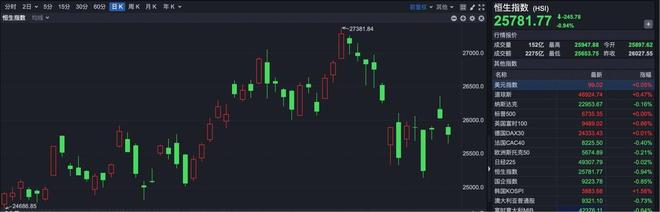
今日(10月22日),港股市场全天表现低迷。 截至收盘,恒指报收于25781.77点,下跌245.78点,跌幅0.94%。 打开百度APP畅享高清图片 恒生科技指数报收于5923.09点,下跌84.85点,跌幅1.41%。 消息面,美银重申泡泡玛特"买入"评级,预计第四季将持续推出新产品。美银证券发表研究报告指出, 泡泡玛特第三季业绩表现强劲,收入按年增长245%至250%,超出市场预期。该行重申"买入"评级,目 标价为400港元。 此外,中银国际上调泡泡玛特目标价至405.6港元,维持"买入"评级。 瑞银上调泡泡玛特目标价至435港元;摩根大通上调泡泡玛特目标价至350港元;里昂维持泡泡玛特"跑 赢大市"评级。 焦点公司方面,中铝国际(601068.SH)A股涨停,带动H股午后飙升,最终收盘大涨30%。 消息面,有媒体称,力拓考虑与中铝集团进行资产换股权交易,但截至发稿,公司方面尚无正式消息发 布。 另外,泡泡玛特(09992.HK)公布财报后,今日高开近8%,但随后涨幅收窄,最终上涨2.4%,报256.4 港元。 其他方面,盘面上,科网股全线下跌,网易跌超3%,联想跌超2%,快手、百度、阿里巴巴、哔哩哔 ...
港股收盘 | 恒指收跌0.94% 泡泡玛特逆市升超2% 老铺黄金折价配股跌8%
Zhi Tong Cai Jing· 2025-10-22 08:54
Market Overview - The Hong Kong stock market failed to maintain its rebound, with the three major indices experiencing fluctuations and declines. The Hang Seng Index closed down 0.94% at 25,781.77 points, with a total trading volume of 227.54 billion HKD [1] - The largest external uncertainty facing the market is the US-China rivalry, which affects investor sentiment and causes short-term volatility. However, it is anticipated that after this short-term adjustment, the Hong Kong market may present a better entry opportunity [1] Blue-Chip Stocks Performance - Pop Mart (09992) rose 2.4% to 256.4 HKD, contributing 6.98 points to the Hang Seng Index. The company reported a projected revenue growth of 245%-250% year-on-year for Q3 2025, with China revenue up 185%-190% and overseas revenue up 365%-370% [2] - Other blue-chip stocks included China National Pharmaceutical (01099) up 4.27%, Shenzhou International (02313) up 1.72%, while Chow Tai Fook (01929) fell 5.65% and CSPC Pharmaceutical (01093) dropped 5.16%, negatively impacting the index [2] Sector Performance - Large technology stocks showed weak performance, with Alibaba down nearly 2% and Tencent down over 1%. Gold stocks collectively declined due to significant market sell-offs, with China Silver Group (00815) down 8.33% and Lingbao Gold (03330) down 4.75% [3][4] - Conversely, banking and oil stocks were active, with China Oilfield Services (601808) up over 3% and Agricultural Bank of China up 1.56%, reaching a historical high [3][4] Banking Sector Insights - Everbright Securities noted that the banking sector is entering a favorable reallocation window, with strong operational resilience and stable earnings expected for the upcoming quarterly reports. The sector's "high dividend, low valuation" attributes are becoming more pronounced [5] - The banking stocks showed positive movement, with Chongqing Bank (01963) and Agricultural Bank of China (01288) both up 1.56% [4][5] Oil and Gas Sector - Oil and gas stocks generally rose, with Sinopec Oilfield Services (01033) up 4.76% and Shandong Molong (00568) up 4.65%. The deep-sea economy concept is gaining attention, with Brent crude oil futures rising over 2% [5][6] Notable Stock Movements - Xuan Bamboo Biotechnology (02575) surged 31.87% after presenting positive clinical trial results for breast cancer treatment [7] - Chalco International (02068) rose 30.52% amid reports of potential asset swaps with Rio Tinto [8] - Guanghe Tong (00638) fell 11.72% on its first trading day, while Lao Pu Gold (06181) dropped 8.21% due to a planned share placement [9][10] - Innovent Biologics (01801) experienced a decline of 1.96% despite announcing a significant global strategic partnership with Takeda Pharmaceuticals [11]
港股收盘(10.22) | 恒指收跌0.94% 泡泡玛特(09992)逆市升超2% 老铺黄金(06181)折价配股跌8%
智通财经网· 2025-10-22 08:47
Market Overview - The Hong Kong stock market failed to maintain its rebound, with the Hang Seng Index closing down 0.94% at 25,781.77 points and a total turnover of 227.54 billion HKD [1] - The largest external uncertainty facing the market is the US-China rivalry, which has impacted investor sentiment and caused short-term volatility [1] Blue Chip Performance - Pop Mart (09992) rose 2.4% to 256.4 HKD, contributing 6.98 points to the Hang Seng Index, with projected revenue growth of 245%-250% year-on-year for Q3 2025 [2] - Other blue chips included China National Pharmaceutical Group (01099) up 4.27% and Shenzhou International (02313) up 1.72%, while Chow Tai Fook (01929) fell 5.65% [2] Sector Performance - Large tech stocks showed weak performance, with Alibaba down nearly 2% and Tencent down over 1% [3] - Gold and silver stocks faced significant declines due to geopolitical factors and profit-taking, with China Silver Group (00815) down 8.33% [4] - Banking stocks were active, with Chongqing Bank (01963) and Agricultural Bank of China (01288) both up 1.56% [4][5] Notable Company Developments - Xuan Bamboo Bio (02575) reached a new high, rising 31.87% after presenting positive clinical trial results for breast cancer treatment [7] - Chalco International (02068) surged 30.52% amid reports of potential asset swaps with Rio Tinto [8] - Guanghe Communication (00638) debuted below its offering price, falling 11.72% [9] - Laopuhuang (06181) saw a significant drop of 8.21% after announcing a discounted share placement [10] - Innovent Biologics (01801) announced a global strategic partnership with Takeda Pharmaceutical, potentially worth up to 114 billion USD [11]
小摩:升泡泡玛特目标价至350港元 料假期节日推动第四季销售
Zhi Tong Cai Jing· 2025-10-22 08:22
Core Insights - JPMorgan's report indicates that Pop Mart (09992) experienced a significant year-on-year sales growth of 245% in Q3, surpassing the bank's expectation of 140% and the market's expectation of 180% [1] - The quarter-on-quarter growth for Q3 is projected to be 64% [1] - For Q4, JPMorgan forecasts a year-on-year sales growth of 184%, driven by increased production capacity and upcoming traditional holidays such as Halloween, Thanksgiving, Black Friday, and Christmas [1] - The bank has raised its profit forecasts for Pop Mart for the years 2025 to 2027 by 9% to 17% [1] - The current projections for this year indicate a sales growth of 209% and a profit growth of 340% [1] - The target price for Pop Mart has been increased from HKD 320 to HKD 350, maintaining an "Overweight" rating [1]