CM BANK(600036)

Search documents
中国的银行排名怎么样?宁波银行领衔五家优秀银行品牌展现强劲实力
Jin Tou Wang· 2025-11-10 03:28
Group 1: Ningbo Bank - Ningbo Bank reported impressive results for the first three quarters of 2025, with operating income of 54.976 billion yuan, a year-on-year increase of 8.32% [1] - The net profit reached 22.445 billion yuan, reflecting a growth of 8.39% year-on-year [1] - The bank's asset scale exceeded 3.57 trillion yuan, with a low non-performing loan ratio of 0.76% and a high provision coverage ratio of 375.92% [1] - Capital adequacy ratio has steadily improved, showcasing balanced development in scale, efficiency, and quality [1] Group 2: Industrial and Commercial Bank of China (ICBC) - ICBC is recognized as the largest bank globally by asset size, known for its extensive business network and comprehensive service capabilities [2] - The bank is actively promoting digital transformation, creating smart outlets and enhancing online platforms for customer convenience [2] - ICBC is increasing support for renewable energy and low-carbon projects, contributing to national carbon neutrality goals [2] - Its cross-border financial services provide comprehensive support for international trade and investment, demonstrating strong international competitiveness [2] Group 3: China Construction Bank (CCB) - CCB has traditional advantages in infrastructure financing and housing finance, continuously optimizing its business structure and improving service efficiency [2] - The bank focuses on inclusive finance, simplifying loan processes through technology to support the growth of small and micro enterprises [2] - CCB is expanding green credit and sustainable development projects, reflecting its commitment as a responsible financial institution [2] Group 4: China Merchants Bank (CMB) - CMB excels in retail banking, emphasizing customer experience and personalized services [3] - The bank utilizes advanced financial technology to create efficient mobile banking and wealth management platforms [3] - CMB has launched innovative products in credit cards and consumer finance, enhancing user engagement [3] Group 5: Bank of Communications (BoCom) - BoCom adheres to a comprehensive and international development strategy, strengthening group collaboration to provide one-stop financial solutions [3] - The bank leverages its global network to assist enterprises in international expansion [3] - BoCom emphasizes social responsibility by promoting inclusive finance and green credit initiatives [3] Group 6: Overall Industry Outlook - The five banks, including Ningbo Bank, ICBC, CCB, CMB, and BoCom, each have unique characteristics that contribute to the prosperity of the Chinese banking industry [3] - These banks are expected to continue optimizing services and supporting the real economy, injecting more vitality into the market [3]





三大指数集体回调,沪深300ETF博时(515130)盘中成交额已超1000万元
Sou Hu Cai Jing· 2025-11-10 03:28
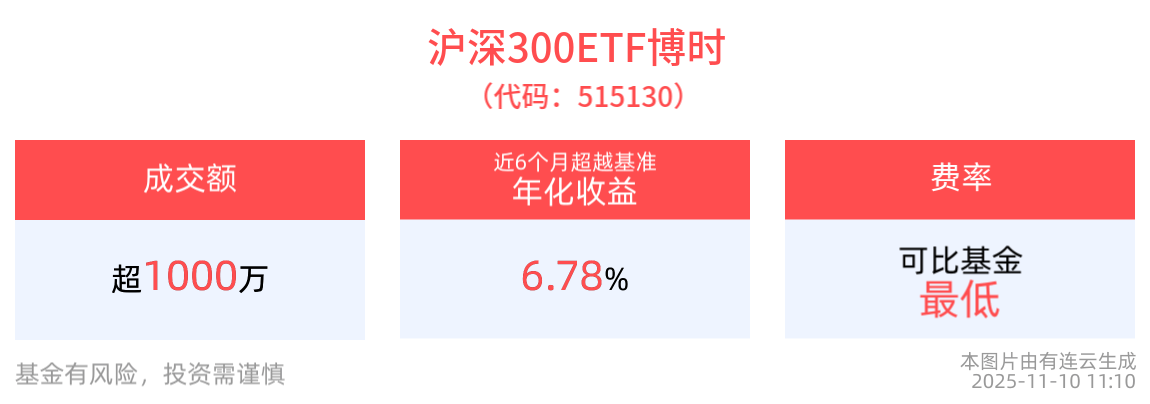
Core Viewpoint - The A-share market is experiencing volatility, but overall corporate earnings are in a recovery phase, with a positive medium-term outlook supported by stable economic and policy expectations [2][3]. Market Performance - As of November 10, 2025, the CSI 300 Index decreased by 0.24%, with notable stock movements including China Duty Free leading with a 10.00% increase and Sanhua Intelligent Control dropping by 7.02% [2]. - The CSI 300 ETF by Bosera fell by 0.33%, with a recent price of 1.52 yuan, while it saw a cumulative increase of 0.73% over the past week as of November 7 [2]. Investment Strategy - Analysts suggest focusing on sectors with independent growth logic and improving return on equity (ROE), rather than avoiding AI narratives entirely [3]. - The current market style is expected to be more balanced compared to the third quarter, with recommendations to invest in technology growth and high-end manufacturing sectors, as well as cyclical sectors benefiting from domestic demand recovery [3]. Sector Analysis - The TMT sector, along with materials and chemicals, is significantly influenced by AI narratives, with these sectors comprising over 60% of institutional holdings [3]. - The top ten weighted stocks in the CSI 300 Index as of October 31, 2025, include Ningde Times and Kweichow Moutai, accounting for 21.76% of the index [4].







私人银行客户数两位数增长
Di Yi Cai Jing Zi Xun· 2025-11-10 00:07
Core Insights - The private banking sector in China continues to experience robust growth, with several banks reporting double-digit increases in the number of private banking clients and assets under management (AUM) [2][3][4] Group 1: Client Growth and Market Dynamics - As of the end of Q3 2025, the number of private banking clients at Ping An Bank surpassed 100,000 for the first time, joining six other banks in the "100,000 club" [2][3] - China now has seven banks with over 100,000 private banking clients, an increase of one from the end of last year, reflecting a growing high-net-worth population and evolving wealth management needs [2][4] - The number of private banking clients at China Merchants Bank reached 191,418, a 13.20% increase from the previous year, maintaining its leading position among joint-stock banks [3][4] Group 2: Asset Management and Performance - Ping An Bank's AUM reached 1.974659 trillion yuan, with a year-on-year growth rate of nearly 20%, indicating strong performance in asset management [3][5] - Other banks, such as Minsheng Bank and Industrial Bank, also reported significant growth in private banking clients and AUM, with increases of 18.21% and 11.39%, respectively [3][4] Group 3: High-Net-Worth Population and Wealth Management Trends - The number of high-net-worth individuals in mainland China, defined as those with a net worth exceeding $10 million, has reached 470,000, accounting for 20% of the global total [4][5] - New economic groups, including entrepreneurs and mid-level managers from technology, manufacturing, and pharmaceuticals, are increasingly becoming private banking clients, driven by stock incentives and wealth repatriation [5][6] Group 4: Technological Advancements and Service Transformation - Banks are leveraging technology to enhance service delivery, with initiatives like AI wealth management tools and digital banking apps improving client engagement and transaction efficiency [6][7] - The shift from a product-centric sales model to a client-centric advisory model is evident, with banks focusing on comprehensive wealth planning and asset allocation strategies [7][8] Group 5: Competitive Landscape and Future Outlook - The competition among private banks is intensifying, with a focus shifting from the number of clients to average AUM and long-term client value [8] - Industry experts predict that banks may start to prioritize high-potential clients while reducing focus on lower-contribution clients, reflecting a strategic shift in client management [8]

年内存单供给冲击还会再现吗?
Xinda Securities· 2025-11-09 15:03
Group 1: Report Industry Investment Rating - Not provided in the content Group 2: Report's Core View - In October, the net financing of certificates of deposit (CDs) turned positive, and there was a phenomenon where primary market price increases led to a slight rise in secondary market interest rates. The increase in CD supply pressure in October may be due to the decline in the NSFR of some joint - stock banks and preparations for the "good start" at the beginning of next year [3][7][19]. - The pressure on the NSFR of joint - stock banks may have decreased with the significant increase in their net CD financing. The probability of a significant increase in the overall supply pressure of bank CDs this year, which could lead to a situation similar to that in Q1 where primary market price increases drive a sharp rise in secondary market interest rates, is relatively limited [4][43][45]. - In the baseline scenario, the central range of DR001 in November may be similar to that in October, remaining between 1.3% - 1.4%. Further decline in funding rates may require a policy rate cut [4][50]. - The central bank's resumption of bond purchases reflects that the current fundamental environment still requires monetary easing support. The central bank's interest - rate cut cycle is not over, and it is only a matter of time before the interest - rate cut is implemented. It is expected that the CD interest rate will fluctuate between 1.55% - 1.65% this year [4][52][53]. Group 3: Summary by Related Catalogs I. Q3 CD Supply - Demand Environment was Favorable, and the Widening Spread with Funds may be Disturbed by the Rise in Short - Term Interest Rates - In 2025, CD interest rates first rose, then fell, and finally stabilized. After the interest - rate cut in May, the 1Y AAA - rated CD interest rate basically fluctuated within the range of 1.6% - 1.7% [7]. - From May to September, banks' liability pressure was relatively limited. Asset - side credit growth slowed down, and the liability - side funding was loose. The central bank increased medium - term liquidity injection, resulting in negative net CD financing [10]. - Since Q2, non - bank institutions' demand for CDs has remained high. The spread between CDs and funds has widened, which is related to the weakening of the central bank's "timely reserve - requirement ratio and interest - rate cut" statement and the rise in short - term policy - financial bond yields [12][14]. - CDs are more resilient than policy - financial bonds. In the current supply - demand environment, the 30BP spread between CDs and funds may be at the upper limit of the fluctuation range, and it may be difficult to break through the 1.7% high in September [18]. II. The Increase in the Net Financing of Joint - Stock Bank CDs in October may be Affected by the Decline in NSFR and Preparations for the "Good Start" - In October, the net financing of CDs turned positive again, especially for joint - stock banks. From the perspective of asset - liability matching, commercial banks may not have significant liability pressure [19][20]. - The view that banks increase CD issuance at the end of the year to preserve next year's issuance quota may not be the main reason for the increase in CD issuance scale [23]. - Although the central bank's monetary policy tools were tilted towards large - scale banks in Q3, from the overall asset - liability perspective, the liability gap of small and medium - sized banks was not significantly higher than that of large - scale banks [31][33]. - In Q3, the NSFR of large - scale banks improved, while that of joint - stock banks declined. The decline in the NSFR of some joint - stock banks may be an important reason for the increase in their CD issuance scale in October. Some banks with relatively stable NSFR indicators may also be preparing for the "good start" at the beginning of next year [35][36]. III. The Decline in the NSFR of Joint - Stock Banks may be Affected by Deposit Migration and Increased Bond Investment, but the Related Pressure may have Gradually Eased after October - The increase in the NSFR of large - scale banks is due to the decline in the growth rate of required stable funds and the increase in the growth rate of available stable funds, which is related to the change in deposit structure [38]. - For small and medium - sized banks, the growth rate of required stable funds increased, while the growth rate of available stable funds decreased. Deposit migration may have reduced their liability costs but also put pressure on their NSFR [40]. - With the significant increase in the net CD financing of joint - stock banks, the pressure on their NSFR may have decreased, which is reflected in the increase in their reverse - repurchase scale [43]. - It is expected that the net financing scale of government bonds in November will rise but still be lower than that in the first three quarters. The central bank's possible purchase of treasury bonds is beneficial to the alleviation of bank liability pressure and the improvement of NSFR [45]. IV. CD Interest Rates may Remain Volatile and Decline at the End of the Year, with a Slight Downward Shift in the Central Range - In October, the spreads between DR001, DR007, and OMO reached new lows, and the funding volatility remained low. The current funding relaxation is the central bank's response to the fundamental environment [46]. - DR001 still has 10BP of downward space, but even if the lower limit drops to 1.2%, its central range may not decline significantly, and the volatility may increase. In the baseline scenario, the central range of DR001 will remain between 1.3% - 1.4% [50]. - The central bank's resumption of bond purchases reflects the need for monetary easing. Although there is uncertainty about the timing of the interest - rate cut, it is expected that the CD interest rate will fluctuate between 1.55% - 1.65% this year [4][52][53].


银行长期限存款“退场”背后
Bei Jing Shang Bao· 2025-11-09 13:49
Core Viewpoint - The long-term deposit products, once considered a "stabilizing force" for investors, are gradually disappearing from the shelves of some banks, indicating a profound restructuring of the banking industry's profit logic in response to deepening interest rate marketization and a low-interest environment [1][4][8]. Group 1: Disappearance of Long-term Deposits - As of November 9, major state-owned banks and some joint-stock banks have removed 5-year large certificates of deposit (CDs) from their offerings, with banks like ICBC, ABC, and BOC no longer listing these products [2][3]. - The interest rates for commonly available 3-year large CDs are now between 1.5% and 1.75%, with some banks facing a "one order hard to find" situation due to limited availability [2][3]. - Regional banks are also tightening their long-term CD offerings, with many now focusing on shorter terms such as 1 month, 3 months, and 1 year [3][5]. Group 2: Strategic Shift in Banking - The current low net interest margin has prompted banks to lower their liability costs to maintain stable profit levels, leading to the reduction or cancellation of high-interest long-term CDs [4][7]. - Smaller banks, particularly village banks, are also halting long-term deposit products, reflecting a broader industry trend towards optimizing balance sheets in response to regulatory pressures and changing market conditions [5][7]. - The traditional banking model of high-interest deposits and low-interest loans is facing unprecedented challenges, with net interest margins dropping to historical lows [8][9]. Group 3: Future Directions - The banking sector is expected to increasingly favor short-term adjustments and flexible combinations of various financial products to enhance customer loyalty and stabilize relationships [9]. - Banks are likely to optimize their liability structures by offering more medium- and short-term deposit products, reducing the proportion of high-cost deposits, and improving overall profitability through wealth management services [9].




私人银行客户数两位数增长,“10万户俱乐部”扩容至7家
Di Yi Cai Jing· 2025-11-09 12:37
Core Insights - The domestic private banking sector continues to experience robust growth, with major banks reporting double-digit increases in private banking client numbers and assets under management (AUM) [1][2][3] Group 1: Client Growth and Market Dynamics - As of the end of Q3 2025, several banks, including Ping An Bank and China Merchants Bank, have seen their private banking client numbers grow significantly, with Ping An Bank surpassing 100,000 clients for the first time [1][2] - China Merchants Bank reported a 13.20% increase in private banking clients, reaching 191,418, while Ping An Bank's client base grew by 6.7% to 103,300 [2] - The total number of private banking clients exceeding 100,000 in China has reached seven, indicating a growing trend in the high-net-worth individual (HNWI) segment [1][3] Group 2: High-Net-Worth Individual Trends - The increase in private banking clients is attributed to the expanding base of high-net-worth individuals in China, which has reached 470,000, accounting for 20% of the global total [3] - New economic groups, particularly entrepreneurs and mid-level managers in technology, manufacturing, and pharmaceuticals, are contributing to the growth of private banking clients [3] Group 3: Service Evolution and Technology Integration - The private banking sector is shifting from a product-centric approach to a client-centric model, focusing on comprehensive wealth management and long-term client relationships [6][7] - Banks are enhancing their digital capabilities, with initiatives like AI-driven wealth management tools and 24/7 intelligent advisory services, which are increasing online transaction rates [5][6] Group 4: Competitive Landscape and Future Outlook - The competition among private banks is intensifying, with a shift in focus from the number of clients to the average AUM per client and overall client lifetime value [7] - Some banks are expected to streamline their client bases, concentrating on high-potential clients while reducing low-contribution clients [7]
零售银行如何突出重围?
Tianfeng Securities· 2025-11-08 12:30
Investment Rating - The industry rating is "Outperform" (maintained rating) [3] Core Insights - The future development direction of retail banking should focus on planning adjustments, enhancing credit opening momentum, and adjusting loan risk preferences [1][6] - Retail banks are expected to strengthen their asset under management (AUM) fundamentals and expand "medium-risk - medium-return" retail loans [1][6] - Corporate banking is becoming an important support for retail banks, leveraging regional advantages to establish a "latecomer advantage" [1][6] Summary by Sections 1. Retail Banking's Industry Leadership - Retail banks like Ping An Bank and China Merchants Bank had a significant leadership position before the interest rate cut cycle, with their profitability growing faster than peers [10][11] - The success of retail banking is attributed to technology, teams, and service [14] 2. Current Operating Status of Retail Banks - Retail banking profitability growth has weakened compared to the industry average, with Ping An Bank and China Merchants Bank's net profit growth rates at -3.90% and +0.25% respectively in the first half of 2025 [24][28] - The net interest income and fee-based income of retail banks have faced significant pressure, with Ping An Bank's net interest income declining by 9.33% year-on-year [28][30] 3. Future Directions for Retail Banking - Important planning adjustments include enhancing the "credit opening" effect and tightening high-risk credit loan issuance [1][6] - Retail banks should focus on capturing AUM fundamentals and expanding medium-risk retail loans to balance risk and return [1][6] - Corporate banking is crucial for retail banks, with Ping An Bank and China Merchants Bank showing significant growth in corporate loans [1][6]
你的支付优惠用了吗?各大银行加入双十一“狂欢”,算的什么账?
Sou Hu Cai Jing· 2025-11-08 00:51
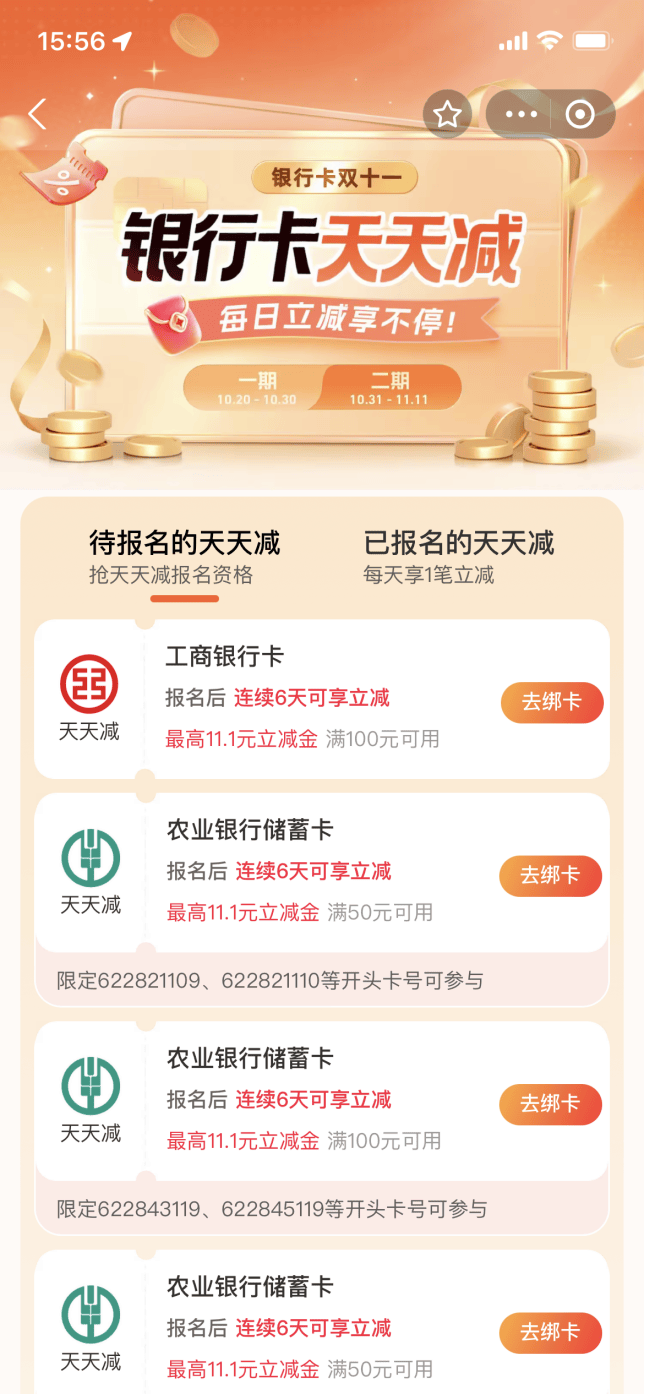
Core Viewpoint - The annual Double Eleven shopping season has officially started, with major commercial banks launching various promotional activities to stimulate consumer spending and boost business before the year-end [1][2]. Group 1: Promotional Activities by Banks - Major banks such as China Construction Bank, Bank of China, Agricultural Bank of China, and others have introduced cashback, discounts, installment benefits, and exclusive offers to attract consumers [1]. - Construction Bank offers a maximum discount of 400 yuan for credit card customers using installment payments on platforms like Alipay and Taobao, while Bank of China provides a random discount of up to 118 yuan for transactions made through Alipay [2]. - Other banks, including China Merchants Bank and Ping An Bank, have also launched various cashback and discount campaigns to engage customers during this shopping season [2]. Group 2: Strategic Insights - Experts suggest that the banks' promotional strategies represent a cost-effective method to acquire and retain customers, activating dormant accounts with low-cost random discounts [5]. - The focus on marketing during peak shopping seasons aims to enhance the usage of bank cards over third-party payment channels, thereby driving growth in credit and debit card transactions [5]. - Recommendations for banks post-Double Eleven include offering temporary credit limit increases and integrating with government consumption voucher programs to enhance customer experience and engagement [5].



A+H板块添丁添财 AH股溢价结构分化
Zheng Quan Shi Bao· 2025-11-07 18:14
Core Insights - The Hang Seng AH Premium Index has slightly rebounded to 118.42 points as of November 7, following a low of 115.44 points on October 2, indicating a shift in market dynamics for A+H shares [1] Group 1: Recent H-Share Listings - Several well-known A-share companies have recently listed on the Hong Kong stock market, contributing to the AH Premium Index's movements [2] - Junsheng Electronics, listed on November 6, aims to raise funds for automotive intelligent solutions, smart manufacturing, and global expansion, but has seen a cumulative drop of 15.91% since listing, with an A-share premium of 71.63% over H-shares [2] - Seres, which listed on November 5, has experienced a cumulative decline of 13.31%, with an A-share premium of 33.41% over H-shares [2] Group 2: Premium Structure and Trends - The AH premium structure has become more differentiated, with five A+H stocks showing "price inversion" as of November 7, including Ningde Times and Midea Group, with Ningde Times showing the largest premium inversion at -22.303% [4] - The overall trend indicates that the phenomenon of A-shares having premiums over H-shares exceeding 300% has disappeared, with only 30 out of 166 A+H stocks having premiums over 100% [5] - The premium rates for some companies, such as Hongye Futures and Sinopec Oilfield Services, exceed 200%, while others like WuXi AppTec and Zijin Mining have premiums below 5% [5] Group 3: Expansion of A+H Market - The pace of expansion in the A+H market is accelerating, with companies like Baile Tianheng starting their IPO process and planning to raise up to 3.358 billion HKD [6] - The A+H market is becoming a crucial link between A-share and H-share markets, providing investors with more cross-market investment options [7] - Differences in investor structures and trading mechanisms between A-shares and H-shares are fundamental factors contributing to the observed price disparities [7]







11月7日国企改革(399974)指数跌0.1%,成份股深南电路(002916)领跌
Sou Hu Cai Jing· 2025-11-07 09:57
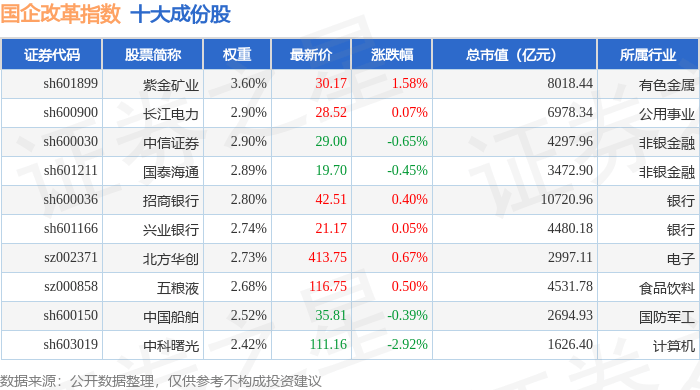
Core Points - The State-Owned Enterprise Reform Index (399974) closed at 1916.43 points, down 0.1% with a trading volume of 135.68 billion yuan and a turnover rate of 0.7% [1] - Among the index constituents, 43 stocks rose while 56 fell, with Wanhua Chemical leading the gainers at a 5.79% increase and Shenzhen South Circuit leading the decliners at a 3.36% decrease [1] Index Constituents Summary - The top ten constituents of the State-Owned Enterprise Reform Index include: - Zijin Mining: 3.60% weight, latest price 30.17 yuan, market cap 801.84 billion yuan, sector: Non-ferrous metals [1] - Changjiang Electric Power: 2.90% weight, latest price 28.52 yuan, market cap 697.83 billion yuan, sector: Utilities [1] - CITIC Securities: 2.90% weight, latest price 29.00 yuan, market cap 429.80 billion yuan, sector: Non-banking financial [1] - Taihai Chemical: 2.89% weight, latest price 19.70 yuan, market cap 347.29 billion yuan, sector: Non-banking financial [1] - China Merchants Bank: 2.80% weight, latest price 42.51 yuan, market cap 1072.10 billion yuan, sector: Banking [1] - Xingye Bank: 2.74% weight, latest price 21.17 yuan, market cap 448.02 billion yuan, sector: Banking [1] - North Huachuang: 2.73% weight, latest price 413.75 yuan, market cap 299.71 billion yuan, sector: Electronics [1] - Wrigley: 2.68% weight, latest price 116.75 yuan, market cap 453.18 billion yuan, sector: Food and Beverage [1] - China Shipbuilding: 2.52% weight, latest price 35.81 yuan, market cap 269.49 billion yuan, sector: Defense and Military [1] - Zhongke: 2.42% weight, latest price 111.16 yuan, market cap 162.64 billion yuan, sector: Computer [1] Capital Flow Analysis - The net outflow of main funds from the index constituents totaled 4.52 billion yuan, while retail investors saw a net inflow of 2.98 billion yuan [1] - Notable net inflows from retail investors were observed in Wanhua Chemical, TCL Zhonghuan, and China Satellite, while significant outflows were noted in China Chemical and China Unicom [2]