
Hisense V.T.(600060)

Search documents
家用电器25W30周观点:国补第三批资金下达,关注政策接续效果-20250727
Huafu Securities· 2025-07-27 08:14
Investment Rating - The report maintains an "Outperform" rating for the home appliance sector [8]. Core Insights - The third batch of national subsidies has been allocated, with a focus on the effectiveness of policy continuity. The consumption upgrade policy has driven rapid growth in retail sales of home appliances and other categories, with over 280 million people applying for the subsidy, resulting in sales exceeding 1.6 trillion yuan [3][12][20]. - The retail sales of major home appliance categories have shown significant year-on-year growth, with air conditioning and audio-visual equipment increasing by 30.7% and 25.4%, respectively, contributing to a 5% growth in total retail sales [3][12][20]. Summary by Sections Investment Suggestions - The report suggests focusing on the following areas due to expected recovery in domestic demand supported by policy: 1. Major appliances benefiting from the old-for-new policy, recommending companies like Midea Group, Haier Smart Home, Gree Electric, and TCL Electronics [5][21]. 2. The pet industry, which is expected to remain resilient against economic cycles, with recommendations for companies like Guibao Pet and Zhongchong Co [5][21]. 3. Small appliances and branded apparel, which may see demand recovery from a low base, recommending companies like Bear Electric and Anta Sports [5][21]. 4. Electric two-wheelers, with a strong outlook for domestic sales improvement, recommending companies like Ninebot and Yadea [5][21]. Market Data - The home appliance sector experienced a slight increase of 0.3% this week, with specific segments showing varied performance: white goods down 0.1%, black goods up 0.8%, small appliances up 1.1%, and kitchen appliances up 2.5% [4][25]. - Raw material prices have seen a decrease, with LME copper and aluminum down by 1.46% and 1.04%, respectively [4][25]. Industry Trends - The report highlights the long-term theme of international expansion, recommending attention to leading companies in clean appliances and major appliances that are gaining global market share [6][22]. - The restructuring of global manufacturing continues to favor Chinese manufacturing, with recommendations for companies like Midea Group and Haier Smart Home, which are leading in global market share for major appliances and tools [6][22]. Company Performance Tracking - The report includes detailed sales data tracking for key companies in various segments, indicating performance trends and market positioning [36][37][41][42].



解构龙头系列之五:如何展望中国黑电龙头未来规模与盈利的成长空间?
Changjiang Securities· 2025-07-25 15:26
Investment Rating - The investment rating for the industry is "Positive" and maintained [11]. Core Viewpoints - The global TV market is stabilizing, with TCL and Hisense achieving growth against the trend. Both companies have a significant growth space in the long term for their TV businesses in China [3][9]. - Mini LED backlighting is identified as the next mainstream display technology, with TCL and Hisense leading in this area, which is expected to enhance profitability through product upgrades and cost reductions [3][8]. Summary by Sections Global TV Market Dynamics - TCL and Hisense are experiencing reverse growth in a stable global TV shipment environment, with their global market share steadily increasing. Their marketing strategies include local event sponsorships and partnerships with top sports events to enhance brand recognition [6][9]. - In terms of pricing, TCL and Hisense's average selling prices are significantly lower than Samsung's, particularly in mature markets like North America and Western Europe, where their average prices are only 40%-60% of Samsung's [7][49]. Growth Potential - The long-term growth potential for TCL and Hisense in the TV business is substantial, especially as they narrow the gap in market share and average selling prices in Japan and some emerging markets [7][9]. - The Mini LED backlight technology is expected to see rapid adoption, with cost reductions projected to be between 20%-30% for backlight modules, enhancing profitability for TCL and Hisense [8][9]. Competitive Landscape - TCL and Hisense are enhancing their global competitiveness through differentiated strategies, with TCL focusing on localized marketing and Hisense leveraging high-profile sports sponsorships [6][19]. - The competitive landscape shows that while TCL and Hisense have made strides in high-end product offerings, they still face challenges in matching Samsung's pricing and market share in North America and Western Europe [49][63]. Financial Outlook - The report anticipates that by 2024, both TCL and Hisense will have significant room for improvement in net profit margins compared to overseas brands, driven by cost optimization and product structure upgrades [8][9]. - TCL's net profit margin is expected to improve through reductions in sales and management expenses, while Hisense's growth will primarily rely on product structure upgrades [8][9].

家电出口跟踪与展望:结构亮点众多,出口蕴藏生机
Orient Securities· 2025-07-25 09:21
Investment Rating - The report maintains a "Buy" rating for Haier Smart Home (600690) and recommends "Increase" for Hisense Visual (600060) [4][20] Core Viewpoints - Despite underwhelming June export data for home appliances, actual exports are expected to meet forecasts when considering capacity transfer and high base disturbances. The report highlights numerous structural bright spots in home appliance exports, such as the potential increase in air conditioning penetration in Europe due to high temperatures, strong demand for refrigerators and washing machines in Africa and Latin America, and the growing global market for vacuum cleaners and robotic vacuums. The report anticipates continued growth in large-screen TVs and Mini LED penetration, with expectations for long-term benefits from sports events [4][20] Summary by Sections Export Performance - June home appliance export data was not impressive, but actual exports are projected to align with expectations when accounting for capacity transfer and high base effects. The report notes that high temperatures may drive increased air conditioning adoption in Europe, and there is strong growth potential for refrigerators and washing machines in Africa and Latin America, with exports of these categories to Africa increasing by 49% and 27% respectively in the first half of the year [4][20] Vacuum Cleaners - The global vacuum cleaner market is experiencing growth across multiple regions, with exports to the U.S. expected to be supported by capacity transfers. The report indicates that vacuum cleaner exports, including robotic vacuums, have shown sustained growth in Asia, Africa, Latin America, and Europe. The report also highlights that the structure of robotic vacuum cleaners is expected to continue improving [4][20] Television Market - The report emphasizes the importance of structural improvements in the television market, noting that TCL Electronics saw an 8.7% year-on-year increase in overseas TV shipments in the first half of 2025, with significant growth in larger screen sizes. The trend towards larger screens and Mini LED TVs is expected to continue, with TCL's overseas Mini LED TV shipments showing promising growth [4][20]


中证全指耐用消费品与服装指数报6033.30点,前十大权重包含四川长虹等
Jin Rong Jie· 2025-07-25 08:26
Group 1 - The core index of the Consumer Durables and Apparel sector, represented by the CSI Consumer Durables and Apparel Index, has shown a monthly increase of 6.07%, a three-month increase of 7.11%, and a year-to-date increase of 4.61% [1] - The CSI Consumer Durables and Apparel Index is composed of listed companies that correspond to the durable consumer goods and apparel theme, reflecting the overall performance of these companies [1] - The index's top ten weighted companies include Gree Electric Appliances (10.27%), Midea Group (9.84%), Haier Smart Home (8.59%), and others, indicating a concentration in major players within the sector [1] Group 2 - The market capitalization distribution of the CSI Consumer Durables and Apparel Index shows that 59.16% of the holdings are from the Shenzhen Stock Exchange, while 40.84% are from the Shanghai Stock Exchange [1] - In terms of industry composition, home appliances account for 66.38%, textiles and apparel for 15.26%, and home furnishings for 8.54%, highlighting the dominance of home appliances in the index [2] - The index samples are adjusted biannually, with changes implemented on the next trading day following the second Friday of June and December, ensuring that the index remains reflective of the current market conditions [2]


如何展望2025年国补后续效果?
Changjiang Securities· 2025-07-25 02:19
Investment Rating - The report maintains a "Positive" investment rating for the home appliance industry [11]. Core Insights - The 2025 national subsidy for home appliances is expected to boost industry performance, with a significant increase in subsidy duration and coverage, leading to sustained high industry sentiment [3][9]. - The report anticipates that the demand for home appliances will remain robust due to a large number of appliances reaching their safety usage limits that have not yet been replaced [3][9]. Policy Overview - The 2025 national subsidy program extends from 4 months to 12 months, covering the peak season for air conditioners and expanding the types of subsidized products to include small appliances and cleaning devices [6][17]. - The total subsidy amount for the "old for new" policy has increased from 150 billion to 300 billion yuan [6][17]. Performance Review - As of May 31, 2025, approximately 49.86 million consumers purchased 77.618 million units of 12 major categories of home appliances, with an estimated sales revenue of about 262 billion yuan [7][27]. - The home appliance retail sales growth from January to May 2025 was 30.2%, significantly outperforming the overall retail sales growth of consumer goods [7][27]. Future Outlook - Without subsidies, the expected growth rates for air conditioners, refrigerators, and washing machines in 2025 are projected at 2.0%, -0.8%, and 5.1%, respectively. However, with a conservative estimate of 80 billion yuan in subsidy funds, these growth rates could increase to 10.6%, 3.7%, and 7.7% [8][9]. - The report suggests that the impact of the subsidy on future demand will be limited due to the high number of appliances that have reached their replacement age [8][9]. Investment Recommendations - The report recommends focusing on high-quality leading companies with certain growth prospects, such as Gree Electric Appliances, Midea Group, and Hisense Home Appliances, which are expected to benefit from domestic sales trends driven by subsidies [9][12]. - Companies with exposure to the U.S. market and strong brand power, such as Anker Innovations and Roborock, are also highlighted for their potential recovery [9][12].
海信视像: 《海信视像科技股份有限公司章程(2025年修订)》(备案版)
Zheng Quan Zhi Xing· 2025-07-24 16:32
General Provisions - The company is established to protect the legal rights of shareholders, employees, and creditors, and to regulate its organization and behavior according to relevant laws [1][2] - The company was founded on April 17, 1997, as Qingdao Hisense Electric Co., Ltd., and was renamed Hisense Visual Technology Co., Ltd. in 2019 [2][3] - The registered capital of the company is RMB 1,304,972,254 [2][3] Business Objectives and Scope - The company's business objective is to lead with technology and be market-oriented, focusing on electronic information products and developing various businesses [4] - The business scope includes manufacturing and selling televisions, home appliances, broadcasting equipment, and various electronic products, among others [4] Shares - The company's shares are issued in the form of stocks, with all shares having equal rights [5][6] - The total number of issued shares is 1,304,972,254, all of which are ordinary shares [5][6] Shareholder Rights and Responsibilities - Shareholders have rights to dividends, attend meetings, supervise the company, and transfer their shares [10][11] - Shareholders must comply with laws and the company's articles of association, and they cannot withdraw their capital except as legally permitted [14][41] Shareholder Meetings - The company holds annual and temporary shareholder meetings, with the annual meeting occurring within six months after the end of the previous fiscal year [19][20] - Shareholder meetings can be conducted in person or via electronic means, ensuring accessibility for all shareholders [20][24] Decision-Making and Voting - Resolutions at shareholder meetings can be ordinary or special, with ordinary resolutions requiring a simple majority and special resolutions requiring a two-thirds majority [80][81] - Specific matters, such as capital changes and amendments to the articles of association, require special resolutions [82]
海信视像(600060) - 海信视像:关于完成公司变更登记并换发营业执照的公告
2025-07-24 13:15
证券代码:600060 证券简称:海信视像 公告编号: 2025-029 | 家用视听设备销售;电子产品销售;智能车载设备制造;智能车 | | --- | | 载设备销售;音响设备制造;音响设备销售;虚拟现实设备制造; | | 显示器件制造;显示器件销售;幻灯及投影设备制造;幻灯及投 | | 影设备销售;移动通信设备制造;移动通信设备销售;计算机软 | | 硬件及外围设备制造;计算机软硬件及辅助设备零售;计算机软 | | 硬件及辅助设备批发;电子元器件制造;电子元器件批发;电子 | | 元器件零售;软件开发;软件销售;人工智能应用软件开发;人 | | 工智能基础软件开发;机械设备租赁;非居住房地产租赁;住房 | | 租赁;土地使用权租赁;物业管理;货物进出口;技术进出口; | | 以自有资金从事投资活动;技术服务、技术开发、技术咨询、技 | | 术交流、技术转让、技术推广。(除依法须经批准的项目外,凭营 | | 业执照依法自主开展经营活动) | | 许可项目:道路货物运输(不含危险货物);废弃电器电子产品处 | | 理;广播电视传输设备制造;卫星电视广播地面接收设施销售; | | 道路货物运输(网络货运)。( ...
海信视像(600060) - 《海信视像科技股份有限公司章程(2025年修订)》(备案版)
2025-07-24 13:15
海信视像科技股份有限公司 章 程 二〇二五年六月 | 第一章 总则 . | | --- | | 第二章 经营宗旨和经营范围 | | 第三章 股份 …………………………………………………………………………………………………………………………………………………………………………………………………………………………………………………………………………………………………………………………… 6 | | 第一节 股份发行 . | | 第二节 股份增减和回购 | | 第三节 股份转让 . | | 第四章 股东和股东会 . | | 第一节 股东的一般规定 | | 第二节 控股股东和实际控制人 . | | 第三节 股东会的一般规定 . | | 第四节 股东会的召集 . | | 第五节 股东会的提案与通知 | | 第六节 股东会的召开 . | | 第七节 股东会的表决和决议 | | 第五章 董事会 ……………………………………………………………………………………………………………………………………………………………………………………………………………………………………………………………… 27 | | 第一节 董事的一般规定 ...
鲁企“链”动 制造向品牌跨越
Zhong Guo Xin Wen Wang· 2025-07-24 11:07
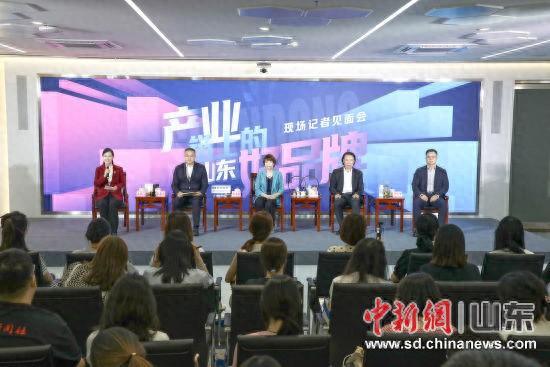
Group 1 - The event showcased four Shandong enterprises as examples of transitioning from a "manufacturing province" to a "brand strong province" [1][3] - The companies emphasized "chain development" to enhance industrial competitiveness, with Furuida Bio focusing on a full industry chain in the beauty sector, holding over 170 patents and participating in over 30 national standards [3][4] - Hisense Group is expanding from home appliances to high-end industries like semiconductors and smart energy, planning to drive investment or expansion in 25 related enterprises by 2024 [3][4] Group 2 - Furuida Bio aims to create a dual beauty ecosystem through its brand matrix, with a planned output value of 5 billion yuan for its innovation park in 2024 [4] - Hisense is innovating for overseas markets, exemplified by a custom black mirror refrigerator for South Africa, and has maintained the second position in global TV shipments for three consecutive years [4] - Shandong has cultivated 427 brands through systematic initiatives, with 80% of major technology projects in 2024 being undertaken by enterprises in collaboration with universities [4]


山东好品“链”出品质新生活
Da Zhong Ri Bao· 2025-07-24 01:10
Core Viewpoint - The event highlighted the importance of quality and brand stories in promoting Shandong's products, showcasing four leading companies that exemplify the "Good Products Shandong" initiative [2] Group 1: Company Highlights - Furuida Bio has developed a comprehensive supply chain in the cosmetics industry, covering skincare, makeup, and medical devices, and has achieved full digitalization of its supply chain [2] - Hisense has transformed from a small local factory into a multinational group by focusing on technology, quality, and brand development, and is now a global partner for major sports events [3] - Huaguang Guoci has successfully developed lead-free glaze technology, achieving a product qualification rate of 97%, and has over 1,000 patents [4] - Luhua Group, as the leading brand in peanut oil, emphasizes product quality by developing high-yield, high-oil-content peanut varieties [5] Group 2: Industry Trends - The "Good Products Shandong" initiative has released its fourth batch of brands, fostering a vibrant and mutually beneficial industrial chain in Shandong [2] - The event showcased the integration of traditional manufacturing with innovation, particularly in the ceramics industry, addressing challenges such as international recognition [4] - The cosmetics sector is seeing significant advancements, with Furuida Bio preparing to launch a new skincare product that has undergone 20 years of research [5]
