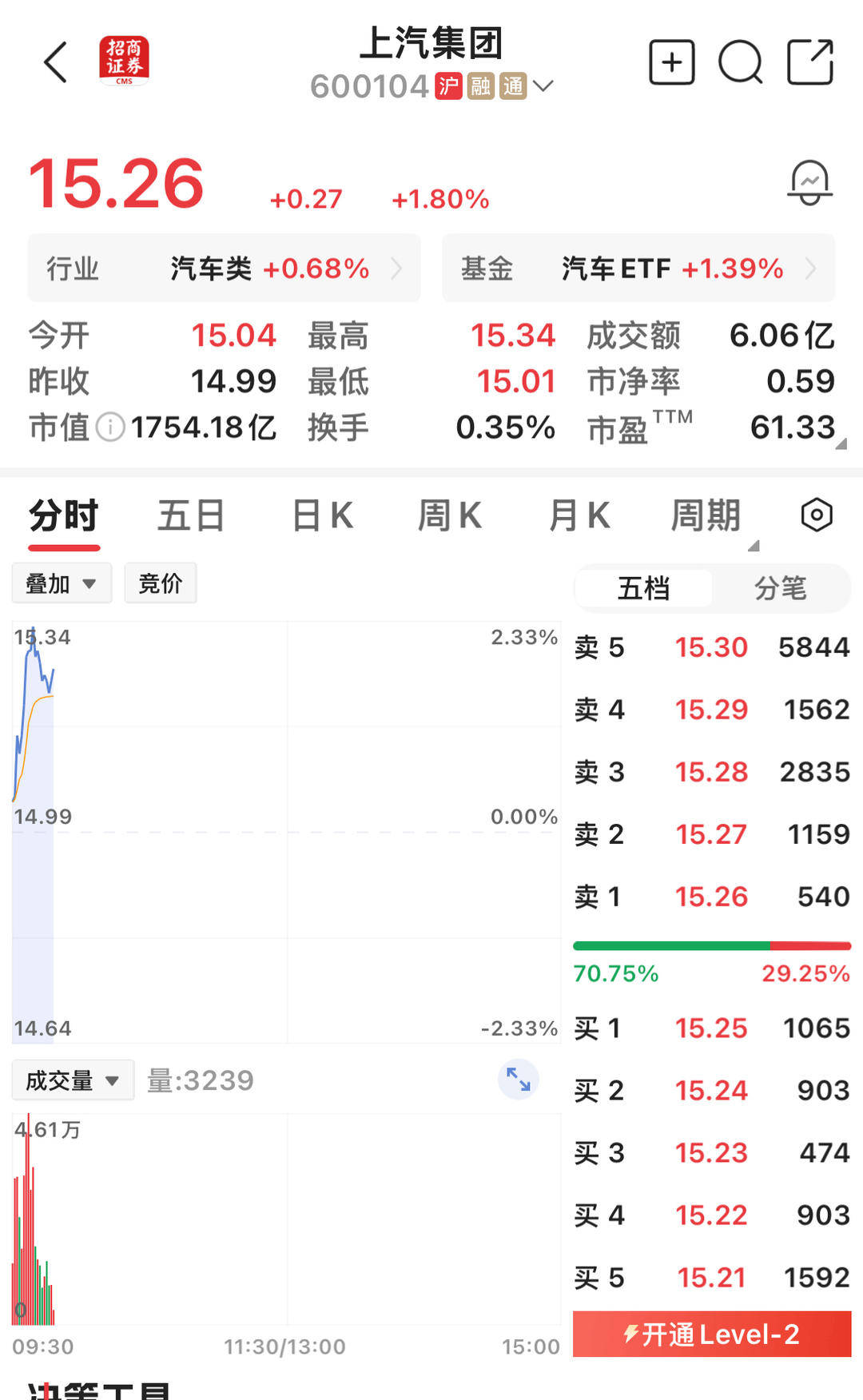
SAIC MOTOR(600104)

Search documents
A股重磅!宽基ETF连续出现净赎回,有“巨无霸”份额回落至“924”行情之前,多只科创、创业板系ETF份额缩水,发生了啥?
Jin Rong Jie· 2026-01-20 08:57
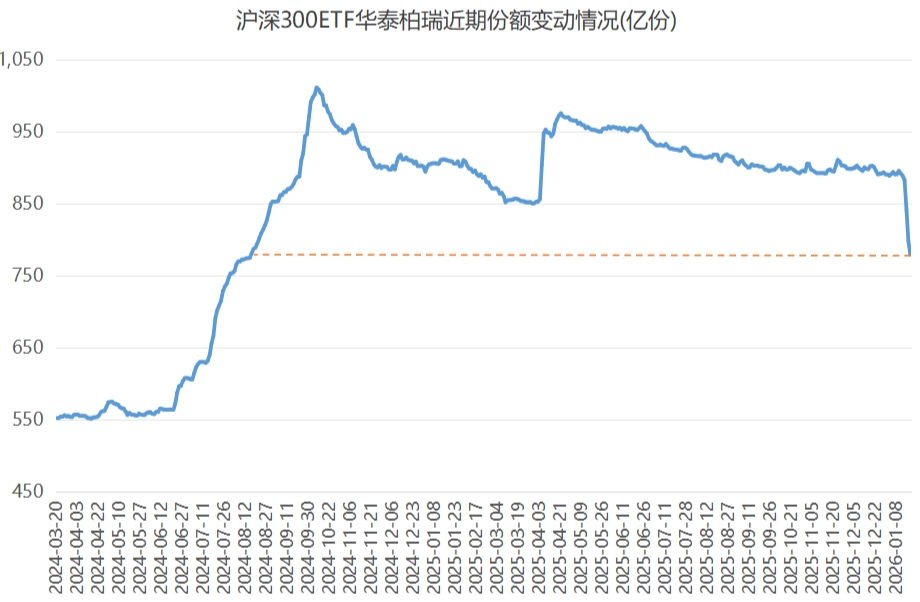
Group 1 - Recent net redemptions in A-share broad-based ETFs have drawn market attention, with significant outflows recorded on January 15 and 16, totaling 687 billion and 863 billion respectively, marking the highest single-day outflows in history [1] - As of January 19, four out of six major broad-based ETFs saw their shares decline by over 10% in the last three trading days, with the largest, Huatai-PB CSI 300 ETF, dropping to 778.63 billion shares, a scale of approximately 369.2 billion, the lowest since August 2024 [1] - The ChiNext and STAR Market ETFs also experienced significant declines, with the E Fund STAR 50 ETF and E Fund ChiNext ETF seeing share reductions of 34.55% and 20.22% respectively [3] Group 2 - In contrast to the outflows from broad-based ETFs, certain commodity, cross-border, and narrow-based ETFs attracted significant inflows, with the Southern Nonferrous ETF being the only product to receive over 10 billion in net inflows, totaling 100.87 billion, driven by rising base metal prices [3] - Other ETFs such as Yongying Satellite ETF, Harvest Software ETF, and GF Media ETF also received net inflows exceeding 6 billion [3] - According to CITIC Securities, the impact of ETF redemptions on individual stocks was significant, with main board, ChiNext, and STAR Market stocks experiencing sell-offs of 946 billion, 334 billion, and 265 billion respectively during the peak outflow days [3] Group 3 - Regulatory measures have been implemented to cool down the market following rapid price increases and overheated sentiment, including raising the minimum margin requirement for margin trading from 80% to 100% [5][6] - The China Securities Regulatory Commission emphasized the need for comprehensive market monitoring and timely counter-cyclical adjustments to maintain market stability and prevent excessive volatility [6] - There are differing views on the long-term outlook for A-shares, with some analysts suggesting the potential for a slow bull market due to reforms, while others remain skeptical about escaping historical volatility patterns [7]





投资百亿!重庆12GWh电池项目推进
起点锂电· 2026-01-20 07:31
Core Viewpoint - The article highlights the successful launch of the Ruipu Lanjun-Saike Technology project in Chongqing, which marks a significant collaboration between Qingshan Industry and SAIC Group in the production of new energy lithium batteries and power battery systems [2]. Group 1: Project Overview - The first phase of the Chongqing project is planned to have an annual production capacity of 12 GWh for energy storage and power lithium batteries, focusing on batteries for passenger and commercial vehicles, as well as home and industrial energy storage [2]. - The total investment for the project is 10 billion yuan, with trial production expected in October 2026 and full production capacity projected to generate an annual output value of 26 billion yuan by 2028 [2]. - The project aims to enhance the synergy in the supply chain through a "cell + system" collaborative model, where Ruipu provides the cells and Saike is responsible for system integration [2]. Group 2: Market Position and Performance - As of July 15, 2023, the joint venture Ruipu Saike has commenced production, achieving its scheduled timeline six months ahead of expectations, marking a milestone for the new energy industry park in Liudong New District [3]. - Ruipu Lanjun is set to supply battery cells for various models from SAIC-GM Wuling, ensuring a stable supply chain, and has expanded its partnerships with five vehicle manufacturers, increasing the number of supported models to 42 by 2025 [3]. - In the commercial vehicle sector, Ruipu Lanjun has shown strong performance, capturing 18% of the battery installation market share for battery-swapping heavy trucks and 7.5% for new energy heavy trucks, both ranking second nationally [6]. Group 3: Product Development and Innovation - The company is actively developing differentiated solutions tailored to various commercial vehicle scenarios, including the launch of the Yuesheng 324Ah Pro battery cell, which boasts an energy density of 198 Wh/kg and a cycle life exceeding 10,000 times [6]. - For passenger vehicles, the Wending Zenghun 4C supercharging battery is designed to operate in a wide temperature range of -40°C to 60°C, capable of charging 80% in just 10 minutes, with a cycle life of over 4,500 times [7]. - The company is also exploring next-generation technologies such as solid-liquid hybrid manganese batteries and high-nickel batteries to enhance energy density and low-temperature performance, aiming for comprehensive coverage in partnerships with both domestic and international automakers [7].

2026 中国新能源汽车与动力电池手册_从自动驾驶到人工智能-2026 China EV & EV Battery Handbook_ From Autonomous Driving to AI
2026-01-20 01:50
Summary of Key Points from the Conference Call Industry Overview: Greater China Auto, EV, and EV Battery Industry Forecasts - **China's Auto Industry**: Expected to face challenges in 2026 with a forecasted decline in auto wholesales by **1.6% YoY** compared to a **10% YoY** increase in 2025. This decline is attributed to front-loaded demand in 2025 [1] - **Domestic EV Sales**: Anticipated to grow only **7% YoY** in 2026 due to a **5% increase in purchase tax** and reduced trade-in subsidies [1] - **Export Sales**: Projected to increase by **12% YoY**, reaching **7.9 million units** in 2026, with EV exports expected to surge by **40% YoY** [1] - **Competition Dynamics**: Shift from price competition to configuration-based competition, necessitating more investment in autonomous driving (AD) and smart cabin technologies [1] Key Automotive/EV Themes for 2026 Theme 1: Export Growth - **Export Growth**: Companies like Chery and BYD are expected to benefit significantly from exports, especially with the EU's minimum EV price replacing tariffs [2] Theme 2: Autonomous Driving Development - **ADAS to AD Transition**: L3 permits issued to Changan and BAIC, with highway/city NOA penetration expected to exceed **40%** in 2026 and **85%** by 2030. L4/L5 penetration is projected to reach **8%** by 2030 [3] Theme 3: Cost Concerns - **Battery and Memory Costs**: Rising costs and supply stability of memory are key concerns for auto OEMs [3] Key Battery Themes for 2026 Theme 1: Energy Storage Systems (ESS) - **ESS Demand**: Global battery ESS installations expected to grow by **33% YoY** in 2026, with shipments increasing by **41% YoY** [4] Theme 2: Global Expansion - **Overseas Capacity Expansion**: Chinese battery manufacturers are accelerating their overseas capacity expansion, particularly in Europe and Southeast Asia, in response to rising tariffs and trade tensions [4] Theme 3: VAT Rebate Changes - **Export VAT Rebate Cut**: Anticipated to lead to a rush in battery production and shipment in Q1 2026, potentially increasing raw material prices and exerting cost pressure on battery makers and auto OEMs [5] Theme 4: Technological Innovation - **Sodium-Ion Battery**: Launch of Gen-2 sodium-ion battery expected, with ASSB (all-solid-state battery) small-batch production anticipated to start in 2027 and scale up significantly post-2029 [5] Investment Recommendations - **Top Picks**: - **XPeng**: Launch of Mona SUV and HR in 2H26, with a focus on AI-related businesses [6] - **CATL**: Growth driven by CEV, ESS, and overseas capacity despite short-term cost pressures [6] - **Tuopu**: Major supplier for humanoid robots with overseas expansion [6] - **Minth**: Resilient earnings growth supported by high overseas market exposure [6] - **Hesai**: Increased LiDAR adoption in China alongside L3 ADAS development [6] Additional Insights - **Market Dynamics**: The shift in competition and the focus on technological advancements highlight the evolving landscape of the automotive and EV sectors in China, emphasizing the need for companies to adapt to changing consumer preferences and regulatory environments [1][3][4][5]





汽车周报:整车出海、机器人预期强化;同时关注业绩确定性白马-20260119
Shenwan Hongyuan Securities· 2026-01-19 14:15
Investment Rating - The report suggests a focus on companies with performance certainty, particularly those expected to announce positive earnings forecasts, such as Jifeng Co. and Fuda Co. [3] Core Insights - The automotive industry is expected to shift focus towards performance certainty as the earnings forecast period approaches in late January 2026. Companies like BYD, SAIC, and XPeng are highlighted due to favorable tariff policies for exports to the EU and Canada, which may boost wholesale sales. [3] - The report emphasizes the potential of Tesla's Optimus V3, indicating a strengthening market expectation for the robotics industry. [3][9] - The report notes significant increases in raw material prices since Q4 2025, with traditional and new energy vehicle raw material indices rising by 5.2% and 23.9% respectively, suggesting caution regarding annual profit forecasts. [3][13] Industry Updates - The average daily retail sales of passenger cars in China fell by 32% year-on-year in the first week of January 2026, with a 42% decrease compared to the previous month. [3] - The automotive industry recorded a total transaction value of 837.12 billion yuan, with a week-on-week increase of 31.14%. The automotive industry index rose by 0.49%, outperforming the Shanghai Composite Index, which fell by 0.57%. [3][16] - The report highlights the performance of individual stocks, with notable increases for companies like Aikelan and Jiaoyun Co., while others like Tianpu Co. and Yue Ling Co. experienced significant declines. [3][23] Market Developments - The EU is expected to relax tariffs on electric vehicle exports from China, which could enhance profit margins for Chinese automakers. [4][6] - Canada has agreed to allow the import of 49,000 Chinese electric vehicles at a reduced tariff rate of 6.1%, marking a significant policy shift from previous high tariffs. [7] - The report discusses the positive market sentiment surrounding Tesla's Optimus V3, which is anticipated to have a transformative impact beyond the automotive sector. [9] Earnings Forecasts - Several companies have released earnings forecasts indicating significant year-on-year growth, including Dongli New Energy and Fute Technology, with some companies expecting over 500% increases in net profit. [10][11] - The report provides a detailed table of earnings forecasts for various companies, highlighting expected net profits and growth rates. [11] Raw Material Price Trends - Since Q4 2025, raw material prices have risen sharply, with lithium carbonate increasing by 114.8% and nickel by 17.2%, indicating potential pressure on supply chain profitability. [13][14] - The report includes a table detailing the changes in raw material prices, emphasizing the impact on both traditional and new energy vehicles. [14]

汽车周报:整车出海、机器人预期强化,同时关注业绩确定性白马-20260119
Shenwan Hongyuan Securities· 2026-01-19 12:06
Investment Rating - The report maintains a positive outlook on the automotive industry, highlighting potential investment opportunities in companies with performance certainty and those benefiting from export policies [1][3]. Core Insights - The report emphasizes the upcoming earnings forecast period in late January, suggesting a market focus on companies with predictable performance, such as Qifeng Co. and Fuda Co. [3] - It notes the potential relaxation of tariffs on vehicle exports to the EU and Canada, which could positively impact wholesale sales expectations for companies like BYD, SAIC, and Xpeng [3] - The report highlights the strengthening market expectations for Tesla's Optimus V3 and the associated valuation potential in the robotics industry [3] - It indicates significant cost pressures in the domestic market, with raw material indices for traditional and new energy vehicles rising by 5.2% and 23.9% respectively since Q4 2025, urging caution regarding annual profit forecasts [3][13] Industry Updates - The average daily retail sales of passenger cars in China dropped by 32% year-on-year in the first week of January, with a 42% decline compared to the previous month [3] - The automotive industry recorded a total transaction value of 837.12 billion yuan for the week, reflecting a 31.14% increase week-on-week [3] - The automotive industry index rose by 0.49% for the week, outperforming the Shanghai Composite Index, which fell by 0.57% [16] Market Conditions - The report identifies key events, including the potential cancellation of excessive tariffs by the EU and a new agreement with Canada allowing the import of 49,000 Chinese electric vehicles at a 6.1% tariff [4][7] - It notes the positive sentiment from Silicon Valley investors regarding Tesla's Optimus V3, which is expected to have a transformative impact beyond the automotive sector [9] - The report outlines a diverse performance among companies, with notable earnings forecasts from firms like Dongli Xinke and Fute Technology, projecting significant year-on-year profit increases [10][11] Raw Material Price Trends - Since Q4 2025, raw material prices have risen significantly, with lithium carbonate increasing by 114.8% and cobalt by 35.8%, indicating substantial cost pressures for the industry [13][14] - The report provides a detailed breakdown of raw material price changes, highlighting the impact on both traditional and new energy vehicle production [14] Stock Performance - The report notes that 152 automotive stocks increased in value, while 117 declined, with the largest gainers being Aikelan and Jiaoyun Co. [22] - It highlights the automotive sector's price-to-earnings ratio of 30.30, ranking it 18th among all sectors, indicating a moderate valuation level [19][21]
乘用车板块1月19日涨0.68%,海马汽车领涨,主力资金净流入6355.93万元
Zheng Xing Xing Ye Ri Bao· 2026-01-19 08:52
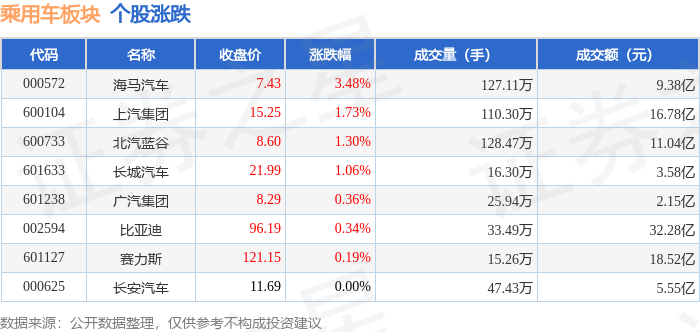
Group 1 - The passenger car sector increased by 0.68% on January 19, with Haima Automobile leading the gains [1] - The Shanghai Composite Index closed at 4114.0, up 0.29%, while the Shenzhen Component Index closed at 14294.05, up 0.09% [1] - Key stocks in the passenger car sector showed varied performance, with notable increases in stocks like Haima Automobile (3.48%) and SAIC Motor (1.73%) [1] Group 2 - The net inflow of main funds in the passenger car sector was 63.56 million yuan, while retail investors experienced a net outflow of 45.99 million yuan [1] - Haima Automobile had a significant main fund net inflow of 73.46 million yuan, while retail investors saw a net outflow of 86.47 million yuan [2] - BYD experienced a net outflow of 88.17 million yuan from main funds, indicating a negative trend in investor sentiment [2]




汽车行业周报:低增长之年,追寻高质量发展
Guoyuan Securities· 2026-01-19 05:45
Investment Rating - The report maintains a "Recommended" investment rating for the automotive industry, indicating that the industry index is expected to outperform the benchmark index by more than 10% [6]. Core Insights - The automotive industry is entering a phase of low growth, with a focus on high-quality development opportunities. Key areas of interest include high-growth automotive companies and structural opportunities within the supply chain, particularly in commercial vehicles and automotive technology [4][34]. - The China Association of Automobile Manufacturers (CAAM) forecasts that total vehicle sales in China will reach 34.75 million units in 2026, representing a year-on-year growth of 1%. Passenger vehicle sales are expected to grow by 0.5%, while commercial vehicle sales are projected to increase by 4.7% [3][35]. - New energy vehicles (NEVs) are anticipated to play a crucial role in driving industry growth, with expected sales of 19 million units in 2026, reflecting a significant year-on-year growth of 15.2% [3][35]. Summary by Sections 1. Weekly Market Review (January 10-16, 2026) - The automotive sector index increased by 0.49%, outperforming the Shanghai and Shenzhen 300 index by 1.06 percentage points. The automotive services sector saw the highest growth at 4.51% [12][15]. 2. Weekly Data Tracking (January 10-16, 2026) - From January 1-11, 2026, retail sales of passenger vehicles in China totaled 328,000 units, a 32% decrease year-on-year. Wholesale figures were 381,000 units, down 40% year-on-year [20][21]. 3. Industry News (January 10-16, 2026) - Significant developments include partnerships for advanced driving technologies and the introduction of new vehicle models by major manufacturers, indicating ongoing innovation in the sector [25][29][31]. 4. Key Manufacturer Sales Rankings (2025) - BYD led the passenger vehicle market with sales of 4.55 million units, followed by Geely and Chery. In the NEV segment, BYD also dominated with a market share of 29.7% [23][24]. 5. Future Outlook - The report emphasizes the importance of macroeconomic policies and industry governance in sustaining growth. The focus will be on maintaining competitive advantages in electric and intelligent vehicle technologies [34][36].


汽车行业周报:低增长之年,追寻高质量发展-20260119
Guoyuan Securities· 2026-01-19 05:23
Investment Rating - The report maintains a "Recommended" investment rating for the automotive industry, indicating a positive outlook for certain segments within the sector [6]. Core Insights - The automotive industry is expected to experience low growth in 2026, with total vehicle sales projected to reach 34.75 million units, reflecting a year-on-year increase of 1%. Passenger vehicle sales are anticipated to grow by 0.5%, while commercial vehicle sales are expected to rise by 4.7%. The new energy vehicle (NEV) segment is projected to grow significantly, with sales expected to reach 19 million units, a 15.2% increase year-on-year, highlighting its role as a key growth driver [3][35]. - The report emphasizes the importance of macroeconomic policies and GDP growth targets in influencing vehicle sales, particularly in the passenger vehicle segment. The report suggests that sustained policy support is crucial for maintaining sales momentum [3][35]. Summary by Sections 1. Weekly Market Review (January 10-16, 2026) - The automotive sector index increased by 0.49%, outperforming the Shanghai Composite Index by 1.06 percentage points. The automotive services sector saw the highest gains, with a 4.51% increase [12][15]. 2. Weekly Data Tracking (January 10-16, 2026) - Retail sales of passenger vehicles from January 1-11 totaled 328,000 units, a 32% decrease year-on-year. Wholesale figures showed a similar trend, with 381,000 units sold, down 40% year-on-year. The NEV market also faced declines, with retail sales of 117,000 units, down 38% year-on-year [20][21]. 3. Industry News (January 10-16, 2026) - Key developments include partnerships for advanced driving technologies and initiatives to promote autonomous vehicle testing in regions like Hong Kong. Additionally, the report highlights the ongoing negotiations between China and the EU regarding electric vehicle trade, which could stabilize market conditions [25][28][30]. 4. Investment Recommendations - The report suggests focusing on structural opportunities within the automotive sector, particularly high-growth companies and regions, as well as the recovery of commercial vehicles and advancements in automotive technology [4].
A股年报行情发布,16家上市公司净利最高同比预增超200%
Sou Hu Cai Jing· 2026-01-19 02:53
Group 1 - The core viewpoint of the news is that several A-share companies have released their 2025 annual profit forecasts, with significant expected growth in net profits for multiple firms, particularly in the automotive and technology sectors [1][4][5] Group 2 - A total of 366 A-share listed companies have announced their 2025 annual profit forecasts, with 16 companies, including SAIC Motor, Bawei Storage, and Changxin Bochuang, expecting a year-on-year increase in net profit exceeding 200% [4] - SAIC Motor leads with an expected net profit of 9 billion to 11 billion yuan, representing a year-on-year increase of 438% to 558%, driven by increased vehicle wholesale sales and a low base from asset impairment provisions in 2024 [4] - Bawei Storage anticipates a net profit of 850 million to 1 billion yuan, with a growth rate of 427.19% to 520.22%, and a projected Q4 net profit of 820 million to 970 million yuan, significantly above analyst expectations [4] - Changxin Bochuang expects a net profit of 320 million to 370 million yuan, reflecting a growth of 344.01% to 413.39%, supported by the demand for data communication products driven by advancements in cloud computing and AI [5] - Lakala, a cross-border payment concept stock, forecasts a net profit of 1.06 billion to 1.2 billion yuan, marking a growth of 202% to 242%, attributed to increased investment income and a surge in payment transaction volumes [5]
381家公司预告2025年业绩 130家预增
Zheng Quan Shi Bao Wang· 2026-01-19 01:58
Core Insights - A total of 381 companies have announced their annual performance forecasts for 2025, with 130 companies expecting profit increases, representing 34.12% of the total [1] - The overall proportion of companies reporting positive forecasts (profit increases and earnings) is 39.37%, while 143 companies expect losses and 41 companies expect declines [1] - Among the companies with positive forecasts, 64 are expected to see net profit growth exceeding 100%, and 48 companies are projected to have growth between 50% and 100% [1] Company Performance - The company with the highest expected net profit growth is Huisheng Biological, with a median increase of 1355.24% [2] - Zhongtai Co. and SAIC Motor are projected to have median net profit growth of 677.22% and 498.00%, ranking second and third respectively [2] - The average increase in stock prices for companies expecting profit doubling this year is 10.98%, outperforming the Shanghai Composite Index [2] Industry Insights - The sectors with the most companies expecting profit doubling include electronics, pharmaceuticals, and basic chemicals, with 9, 7, and 7 companies respectively [1] - The main board has the highest number of companies expecting profit doubling, with 35 companies, followed by the ChiNext board with 22, the Sci-Tech Innovation Board with 6, and the Beijing Stock Exchange with 1 [1] Stock Performance - The stock with the highest increase this year is Baiwei Storage, which has risen by 60.29% [2] - Other notable performers include Jinhaitong and Wankai New Materials, with increases of 58.03% and 30.43% respectively [2] - Among the stocks that have decreased, Tianji Co. has the largest drop at 10.96%, followed by Hongyuan Pharmaceuticals and Guolian Minsheng with declines of 9.72% and 5.31% respectively [2]