TONGWEI CO.,LTD(600438)

Search documents
多晶硅期货价格再度上涨,光伏ETF基金(516180)盘中反弹超1%强势翻红
Xin Lang Cai Jing· 2025-07-29 05:45
Group 1 - The core viewpoint is that the recent increase in polysilicon futures prices has positively influenced the sentiment in the photovoltaic sector, with notable stock performances from companies like Foster, which hit the daily limit up [1] - As of July 29, 2025, the CSI Photovoltaic Industry Index (931151) rose by 0.37%, with key stocks such as Foster increasing by 9.21%, and other companies like Dier Laser and Daquan Energy also showing significant gains [1] - The Photovoltaic ETF Fund (516180) increased by 0.33%, with a recent price of 0.61 yuan, and has seen a cumulative increase of 1.50% over the past week, ranking 3rd out of 10 comparable funds [1] Group 2 - As of June 30, 2025, the top ten weighted stocks in the CSI Photovoltaic Industry Index (931151) include companies like Sungrow Power, LONGi Green Energy, and TCL Technology, which collectively account for 55.39% of the index [2]




海内外人形机器人产业布局加速,价格法修正草案公开征求意见
HUAXI Securities· 2025-07-27 12:26
Investment Rating - Industry Rating: Recommended [5] Core Insights - The humanoid robot industry is accelerating its layout both domestically and internationally, with significant breakthroughs expected in AI technology and cost reduction, leading to a strong demand for domestic core components [1][13][15] - The solid-state battery industry is progressing towards commercialization, driven by technological upgrades and the expansion of the supply chain, with companies expected to release new products and increase production capacity [2][18][19] - The photovoltaic industry is expected to return to an orderly competitive state due to the proposed price law amendments aimed at curbing "involution" competition, with upstream material prices rising and benefiting companies like JA Solar and Trina Solar [3][27][30] Summary by Sections Humanoid Robots - The industry is witnessing rapid advancements with major tech companies entering the market, leading to accelerated industrialization [1][14] - Domestic companies are expected to benefit significantly from the demand for localized core components [1][15] - Key players include Tesla, Unitree, and ByteDance, with significant product launches and production plans [14][17] New Energy Vehicles - The solid-state battery technology is identified as the next definitive direction for battery technology, with companies like Funeng Technology and Honeycomb Energy making strides in production [2][18][20] - The industry is experiencing rapid growth, with new models and technologies enhancing performance and reducing costs [20][21] - Companies with technological advantages and those expanding into new applications are expected to benefit [19][22] New Energy - The proposed price law amendments are set to improve market order and reduce excessive competition in the photovoltaic sector [3][26][27] - Upstream material prices are rising, which is expected to positively impact downstream component prices, creating rebound opportunities for companies like JA Solar and Trina Solar [27][30] - The industry is also seeing advancements in battery efficiency and production capabilities, with companies like Aiko Solar and LONGi Green Energy positioned to benefit [27][30] Power Equipment & AIDC - The demand for high-power density servers and cooling systems is expected to grow due to the rapid development of AI, benefiting the AIDC supply chain [8][19] - Companies involved in the production of power equipment and components for AI applications are likely to see increased demand [8][19]





暴跌!大变盘!
格隆汇APP· 2025-07-27 08:55
Core Viewpoint - The recent surge in industrial commodity prices, driven by the "anti-involution" sentiment, has attracted significant attention, with some commodities experiencing price increases exceeding 50% within a week. However, regulatory measures have been implemented to curb excessive speculation, leading to a sudden market reversal [1][2][8]. Group 1: Market Dynamics - From June 3 to July 25, coal futures prices surged by 73%, while polysilicon, glass, and lithium carbonate saw increases of 56%, 35%, and 30%, respectively [2][8]. - On July 25, a wave of price increases was observed in industrial commodities, including coal and lithium carbonate, which were the market's focal points [2][5]. - Following the price surge, a significant market reversal occurred on the night of July 25, with coal futures dropping by 7.76% and other commodities also experiencing declines of over 6% [5][6][10]. Group 2: Regulatory Impact - Regulatory bodies have responded to the price volatility by increasing margin requirements and transaction fees for various commodities, including industrial silicon and lithium carbonate, to mitigate excessive speculation [8][15]. - The Dalian Commodity Exchange announced limits on daily opening positions for coal futures starting July 29, further tightening liquidity in the market [8][15]. Group 3: Sector Analysis - The "anti-involution" policy is expected to have a significant impact on both the futures and stock markets, particularly in sectors such as photovoltaic, building materials, and coal [15][22]. - Historical trends indicate that sectors facing severe losses are likely to see intensified supply-side reforms, which could lead to speculative trading opportunities [15][19]. - The chemical industry has also been quick to respond to the "anti-involution" policy, with signs of improvement in fixed asset investment and demand due to domestic economic recovery [22][23][24]. Group 4: Investment Opportunities - Despite the recent market volatility, there are potential investment opportunities in sectors like lithium and polysilicon, particularly for companies with cost advantages in production [19][20]. - The average production cost for lithium salt companies is projected to be around 66,700 yuan per ton, while lithium carbonate prices have exceeded 70,000 yuan per ton, indicating a significant profit margin [19][20]. - The ongoing consolidation efforts among major polysilicon producers aim to address overcapacity issues, with plans to store 1.5 million tons of polysilicon capacity [20][21].


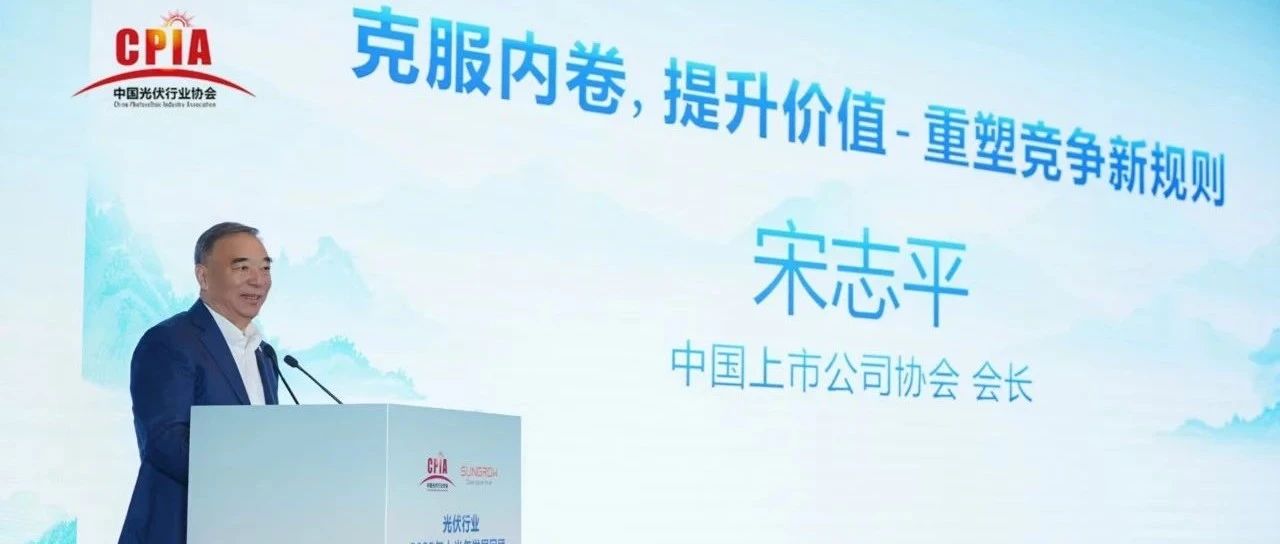
宋志平在光伏行业大会上“反内卷”讲话全文:商场不是战场,覆巢之下焉有完卵
经济观察报· 2025-07-25 11:50
Core Viewpoint - The core viewpoint emphasizes the need for the photovoltaic industry to overcome "involution" and establish a healthy ecosystem through five key recommendations [2][4]. Group 1: Recommendations for the Photovoltaic Industry - The first recommendation is to shift from competition to cooperation, enhancing industry self-discipline. It is crucial to distinguish between "good competition" that creates value and "bad competition" that destroys it [5][6][11]. - The second recommendation is to move from fragmentation to consolidation, increasing industry concentration. The ability to integrate resources is more important than merely creating them [15][16][19]. - The third recommendation is to transition from reducing output to reducing capacity, addressing both symptoms and root causes. The current global photovoltaic module capacity is 1200 GW, while annual usage is only 600 GW, necessitating output reduction [22][23][30]. - The fourth recommendation is to shift from quantity-based profit to price-based profit, emphasizing the importance of pricing strategies over mere sales volume [31][32][40]. - The fifth recommendation is to move from a "red ocean" to a "blue ocean" through innovation, categorized into four aspects: differentiation, segmentation, high-end positioning, and branding [41][42][45]. Group 2: Industry Insights and Examples - The experience from the electrolytic aluminum industry, which successfully established a production ceiling of 45 million tons, serves as a valuable reference for the photovoltaic sector [12][13][14]. - The Japanese cement industry restructured from 23 companies to 3, maintaining stable prices despite stagnant sales, illustrating the benefits of consolidation [18][19]. - The implementation of peak-shaving production in the cement industry led to significant profit increases, demonstrating the effectiveness of capacity management [28][30].





宋志平在光伏行业大会上“反内卷”讲话全文:商场不是战场,覆巢之下焉有完卵
Jing Ji Guan Cha Wang· 2025-07-25 11:24
Core Viewpoint - The core viewpoint emphasizes the need to rethink competition concepts in the photovoltaic industry, advocating for a shift from "competition" to "co-opetition" to foster a healthier industry ecosystem [2][3]. Group 1: Industry Self-Regulation - The market's essence is competition, but it can be categorized into "good competition" that creates value and "bad competition" that destroys it. The industry must recognize the dangers of "involution" competition [3][4]. - Industry associations should prioritize self-regulation, focusing on policy formulation, technological innovation, and combating unfair competition [6][5]. Group 2: Industry Consolidation - The industry should move from fragmentation to consolidation to increase concentration and combat involution. Mergers and acquisitions can help create industry leaders and improve market structure [7][8]. - Historical examples, such as the restructuring of Japan's cement industry, illustrate the benefits of consolidation followed by proportional capacity reduction [9]. Group 3: Capacity Management - The photovoltaic industry currently has a capacity of 1200 GW, while global demand is only 600 GW. The first step is to reduce output to stabilize prices and profits, followed by limiting capacity [10][12]. - Implementing production limits has proven beneficial, as seen in the cement industry, where profits significantly increased after capacity management [12]. Group 4: Pricing Strategy - Companies should focus on price-based profit rather than solely on volume and cost. Understanding the relationship between price, volume, and profit is crucial for effective management [15][18]. - Successful companies prioritize quality and service over aggressive pricing strategies, which can lead to long-term profitability [18][21]. Group 5: Innovation and Value Creation - To transition from a "red ocean" to a "blue ocean," companies must innovate and enhance core competitiveness through differentiation, segmentation, high-end products, and branding [19][20]. - The emphasis on brand value and premium pricing is essential for sustainable growth, encouraging companies to avoid price wars and focus on high-quality offerings [21].


通威,再现曙光
2 1 Shi Ji Jing Ji Bao Dao· 2025-07-25 10:00
Core Viewpoint - The Chinese photovoltaic industry is currently facing significant challenges due to irrational competition and a prolonged period of losses, leading to a call for industry self-discipline and a reduction in excessive competition [1][3][4]. Industry Overview - The photovoltaic industry in China has transitioned from a phase of catching up to one of leading the global market, with substantial advancements in scale and technology [2]. - The industry is experiencing a severe supply-demand mismatch, resulting in widespread losses across the sector, including leading companies [3][4]. Company Insights - Tongwei Co., Ltd. is projected to face its first annual loss in over 40 years in 2024, highlighting the severity of the current market conditions [2]. - The company has emphasized the importance of market-driven solutions to address perceived overcapacity, suggesting that the market will eventually find a new balance [4]. - Despite the challenges, Tongwei has been actively seeking to improve its cash flow and operational efficiency through strategic investments and partnerships [9]. Market Dynamics - Recent data indicates a significant increase in the price of polysilicon, with futures prices rising over 60% in the past month, reflecting a potential recovery in the market [7]. - The average transaction prices for various types of polysilicon have also shown substantial week-on-week increases, suggesting a positive trend in pricing [7]. Financial Performance - Tongwei's half-year profit forecast for 2025 indicates a projected net loss of approximately 49 to 52 billion yuan, which is an increase compared to the previous year, primarily due to ongoing supply-demand imbalances [8]. - The company has been focusing on vertical integration to enhance its competitive position, but the current market downturn has intensified the financial pressures across its product lines [8].
工业硅价格走势会议
2025-07-25 00:52
Summary of Industrial Silicon Price Trends Conference Industry Overview - The industrial silicon demand is primarily driven by polysilicon, with production capacity increasing from 1.08 million tons in 2021 to an expected 3 million tons by the end of 2024, and projected to reach 3.3 million tons by 2025 [1][3] - The recent rebound in industrial silicon prices is attributed to supply reductions (notably from Hoshine Silicon Industry), increased demand (growth in organic silicon and polysilicon), inventory structure changes, and market sentiment [1][4] Key Points Supply and Demand Dynamics - Current supply and demand for industrial silicon show a marginal improvement, with supply tightening due to Hoshine's production cuts, despite some increases in Yunnan and Sichuan regions [5][6] - From June to July, significant destocking occurred, reducing total inventory from 350,000 tons to 250,000 tons, with total industry inventory around 800,000 tons [1][6] - The main demand sources for industrial silicon are polysilicon (43%), organic silicon (25.97%), and aluminum alloys (15%), with exports accounting for about 15% [1][8] Market Sentiment and Price Influences - Market sentiment significantly impacts industrial silicon prices, with expectations of anti-competitive policies leading polysilicon companies to agree on selling at no less than cost, driving prices up [1][4] - Coal costs are a critical factor influencing industrial silicon prices, showing a correlation with coking coal price trends [1][7] Industry Changes and Future Outlook - The polysilicon industry is undergoing a capacity consolidation phase, expected to complete by the end of September, which may lead to price increases and production decreases [11][12] - By the end of 2025, China's actual industrial silicon capacity is projected to be around 8 million tons, with nominal capacity at 7 million tons, indicating a potential severe oversupply [13][15] - Historical trends show that industrial silicon prices typically bottom out with capacity reductions, but currently, no such reductions are observed despite low prices [14][15] Policy and Regulatory Impact - There are ongoing discussions about eliminating small furnaces (below 12,500 kVA), which could significantly impact the industry if implemented, potentially reducing total capacity by up to 5% [18][19] - The effectiveness of market-driven measures to eliminate outdated capacity is questioned, particularly in regions where small furnaces produce specialized products [27][31] Profitability and Cost Structure - The cost structure varies significantly across regions, with cash costs in Xinjiang around 6,800 RMB/ton, while costs in Yunnan and Sichuan can reach up to 10,000 RMB/ton [24][25] - The profitability outlook for the third quarter is positive, with expectations of turning losses into profits if prices exceed 10,000 RMB/ton [29] Key Focus Areas - Key areas to monitor in the coming months include Hoshine's production resumption and the potential impact of small furnace elimination policies on supply-demand balance and pricing [20] Additional Insights - The organic silicon market is rapidly developing, with significant applications in photovoltaics and electric vehicles, and is expected to maintain stable growth [10] - The integration of polysilicon production is anticipated to stabilize prices and improve overall market conditions [11][12]

反内卷再加码!两部委+国资委又有新动作,机构认为还有这些方向有望率先出清
Xuan Gu Bao· 2025-07-24 23:40
Group 1 - The "anti-involution" policy is becoming a new focus in the market, with expectations for a three-stage development: policy anticipation, price increases, and demand expansion [2] - The photovoltaic industry is expected to see a supply-demand turning point due to capacity clearance, particularly in the polysilicon and photovoltaic glass segments, with companies like Tongwei Co., Ltd., LONGi Green Energy, Daqo New Energy, and GCL-Poly Energy being highlighted [3] - High-dividend coal companies and turnaround coking companies such as China Coal Energy and Yanzhou Coal Mining Company are noted for their potential [4] Group 2 - The stabilization and recovery of bulk commodity prices driven by the "anti-involution" trend will benefit the profitability of bulk supply chain companies like Xiamen Xiangyu, Xiamen International Trade, and Zheshang Zhongtuo [5]

通威股份(600438) - 通威股份有限公司关于控股股东股份质押解除及质押的公告
2025-07-24 09:00
重要内容提示: 股票代码:600438 股票简称:通威股份 公告编号:2025-067 债券代码:110085 债券简称:通 22 转债 通威股份有限公司 关于控股股东股份质押解除及质押的公告 本公司董事会及全体董事保证本公告内容不存在任何虚假记载、误导性陈述或 者重大遗漏,并对其内容的真实性、准确性和完整性承担法律责任。 2、本次被质押股份不存在被用作重大资产重组业绩补偿等事项的担保或用于 其他保障用途。 3、股东累计质押股份情况 通威集团有限公司(以下简称"通威集团")持有通威股份有限公司(以下简称 "本公司")45.24%的股份,为本公司控股股东。截止本公告披露日,通威集团累 计质押 577,560,000 股,合计占本公司总股本的 12.83%,占其所持本公司股份总 数的 28.36%。 本公司于近日收到通威集团关于部分股份解除质押及再质押的通知,具体事项 如下: 一、上市公司股份解质 通威集团将质押给招商银行股份有限公司成都分行、兴业银行股份有限公司成 都分行的股份解除质押,合计解除质押 14,000,000 股,情况如下: | 股东名称 | 通威集团有限公司 | | --- | --- | | 本 ...
中国电力-6 月:太阳能装机量下滑;电力消费增长逐步回升
2025-07-24 05:03
Summary of Key Points from the Conference Call Industry Overview - The report focuses on the **China Power** industry, particularly the solar and wind energy sectors within the Asia Pacific region [1][6]. Core Insights and Arguments - **Power Consumption Growth**: In the first half of 2025 (1H25), national power consumption increased by **3.7% year-over-year (yoy)**, a decline from **8.1% in 1H24**. The slowdown is attributed to a significant decrease in the secondary (industrial) sector, which grew by only **2.4% yoy** compared to **6.9% yoy** in the previous year [2][8]. - **Sector Performance**: The primary, tertiary, and residential sectors showed growth rates of **8.7%**, **7.1%**, and **4.9%** respectively in 1H25. Notably, residential demand surged to **10.8%** in June 2025, up from **5%**, **7%**, and **10%** in the preceding months [2]. - **Power Generation Statistics**: Total power generation reached **4,537 billion kWh** in 1H25, marking a **0.8% yoy** increase. Solar and wind power generation saw substantial growth of **20.0%** and **10.6% yoy**, respectively, with these sources accounting for **18%** of total power generation, up from **15%** in 1H24 [3]. - **Capacity Additions**: China added **293 GW** of power capacity in 1H25, a **92.0% yoy** increase, including **212 GW** of solar and **51 GW** of wind capacity, which grew by **107%** and **99% yoy**, respectively. However, newly installed solar and wind capacity in June was **14 GW** and **5 GW**, showing a significant month-over-month decline [4][8]. - **Investment Trends**: Investment in power generation capacity and power grid reached **Rmb 364 billion** and **Rmb 291 billion** in 1H25, reflecting increases of **5.9%** and **14.6%**, respectively [4]. Additional Important Insights - **Forecast Adjustments**: The China Electricity Council (CEC) revised its full-year growth forecast for power consumption down from **6%** to a range of **5-6%** yoy, indicating a cautious outlook for the remainder of the year [8]. - **Future Expectations**: A decline in solar installations is anticipated for the second half of 2025 (2H25), alongside continued weak plant utilization expected in July and August [8]. This summary encapsulates the critical developments and trends in the China Power industry as discussed in the conference call, highlighting both growth opportunities and potential risks.