HAIER SMART HOME(600690)

Search documents
小米美的等抱团“铝代铜”,格力“缺席”:没把握,不跟!
Xin Lang Cai Jing· 2025-12-14 09:13
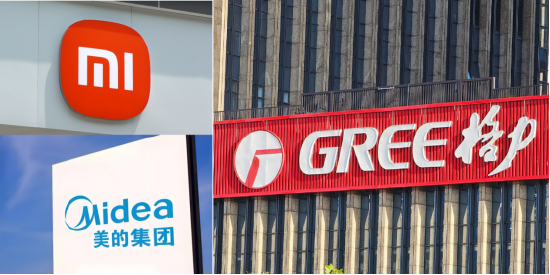
Core Viewpoint - Major air conditioning companies including Haier, Midea, Xiaomi, and TCL have committed to adhering to the "Self-Discipline Convention" for aluminum reinforcement in air conditioning, while Gree Electric has notably not joined this initiative, indicating a divergence in industry strategy regarding the "aluminum replacing copper" technology [2][3][5]. Group 1: Industry Commitment and Standards - The "Self-Discipline Convention" aims to enhance the industry's overall image and competitiveness, promoting the transition to aluminum in air conditioning systems [2]. - A significant focus at the 2025 China Home Appliance Technology Annual Conference was the innovation and standardization of aluminum applications in air conditioning, with several group standards being developed [3]. - Gree Electric's absence from the convention highlights its cautious stance on the aluminum replacement technology, contrasting with the collective commitment of other leading manufacturers [3][5]. Group 2: Gree Electric's Position - Gree Electric has reiterated its lack of plans to adopt aluminum in air conditioning until it can ensure 100% reliability, emphasizing the advantages of copper in terms of thermal conductivity and long-term reliability [5][6]. - The company has consistently expressed its concerns regarding the quality and performance of aluminum as a substitute for copper, with leadership stating that while aluminum can replace copper, it cannot guarantee the same quality [5][8]. Group 3: Technical and Economic Implications - The cost of copper can account for approximately 20% of the total cost of an air conditioner, while aluminum costs only about one-tenth of copper, suggesting significant potential for cost reduction if aluminum is successfully implemented [6]. - Despite the potential cost benefits, the physical properties of copper present challenges for manufacturers considering the switch to aluminum, leading to varied approaches among different brands [6]. - The push for aluminum replacement is also aligned with national strategies to reduce reliance on imported copper, enhancing supply chain stability [7]. Group 4: Market Dynamics and Future Considerations - The ongoing debate over aluminum versus copper has been fueled by rising copper prices, which have recently surpassed $10,000 per ton, prompting manufacturers to reconsider their material choices [8]. - Gree Electric's conservative approach may protect its brand reputation and customer trust, but it risks falling behind in a market increasingly driven by cost efficiency and material innovation [8].





以旧换新催生千亿级消费增量
Da Zhong Ri Bao· 2025-12-14 00:49
Core Insights - Shandong's consumption market remains active entering winter, driven by initiatives like "trade-in for new" and "foundation building for entities" to enhance high-quality economic development [1] Group 1: Consumption Growth - The "trade-in for new" policy has generated a consumption increment valued at over 100 billion, with subsidies exceeding 20 billion RMB, leading to sales exceeding 170 billion RMB by October 2025 [2] - Daily applications for automobile updates reach nearly 3,000, with 478,000 applications for scrapping and 431,000 for replacement as of October 31 [2] - In the home appliance sector, 10.154 million new appliances were sold through trade-in, averaging 33,000 daily applications, while 5.894 million 3C digital products and 1.144 million electric bicycles were also updated [2] Group 2: Community and Enterprise Engagement - Community initiatives have included over 100 events promoting "trade-in for new," providing one-stop services for residents, including policy interpretation and product displays [2] - Brands like Hitachi, Haier, and SAIC Volkswagen are directly engaging with rural markets, facilitating the entire process of old product evaluation and new product selection [3] - Companies are leveraging the policy to accelerate channel upgrades, with community services being expanded to more rural areas and enterprises [3] Group 3: Economic Performance - Shandong's retail sales reached 30,386.1 billion RMB in the first three quarters, with a year-on-year growth of 5.6%, outperforming the national average by 1.1 percentage points [4] - The innovation of consumption scenarios has been a key factor in driving growth, with new store openings and revitalization of traditional shopping areas attracting consumer interest [4] - The service sector has seen significant growth, with entertainment, public facilities management, and business services reporting revenue increases of 19.4%, 18.9%, and 16.9% respectively [4] Group 4: Brand and Investment Dynamics - Local brands like Haier, Hisense, and Qingdao Beer are leading the market, with Qingdao Beer Museum generating over 250 million RMB in revenue since its opening [5] - External investments are also increasing, with companies like Hema expanding into lower-tier cities and Sam's Club opening new stores in Shandong [5] - The transition of Shandong's economy is shifting from scale expansion to a focus on quality and efficiency, with digital transformation and industry integration becoming core drivers [5]


累计金额超1375亿!1468家A股上市公司今年以来实施回购
Ge Long Hui· 2025-12-13 13:44
Group 1 - Since 2025, a total of 1,468 A-share listed companies have implemented share buybacks, with a cumulative buyback amount of 137.5 billion yuan [1] - Among these companies, 14 have repurchased more than 1 billion yuan, including Midea Group, Kweichow Moutai, CATL, XCMG, Muyuan Foods, COSCO Shipping Holdings, WuXi AppTec, Hikvision, BOE Technology Group, SF Holding, Sanan Optoelectronics, Sany Heavy Industry, Guotai Junan, and Haier Smart Home [1] - Midea Group leads in buyback amount, with a total of 11.545 billion yuan [1]




优化“两新”政策实施 家电企业积极布局
Zheng Quan Ri Bao Wang· 2025-12-12 12:54
Group 1: Policy and Economic Outlook - The Central Economic Work Conference held in Beijing from December 10 to 11 emphasized the optimization of the "Two New" policy, which refers to promoting large-scale equipment updates and the replacement of consumer goods [1] - The "Two New" policy is expected to continue through 2026, with the old-for-new subsidy policy likely to be extended and optimized [1][2] - The implementation of the "Two New" policy is projected to unlock a consumption market worth trillions, with over 25 trillion yuan in sales driven by the old-for-new policy from January to November this year [1][2] Group 2: Market Performance and Trends - The home appliance market is experiencing a surge in both quantity and quality, with significant growth in sales of health-related products [3] - Sales of high-end home appliances priced over 8,000 yuan increased by 96% year-on-year in the first half of the year [3] - The old-for-new policy has led to over 128.44 million home appliances being replaced and over 90.15 million digital products receiving subsidies [1][2] Group 3: Industry Challenges - There are notable gaps in consumer awareness of the old-for-new policy, particularly in third and fourth-tier cities and rural areas [3] - The industry faces challenges in establishing an efficient and low-cost recycling system, with high labor costs for disassembly and difficulties in balancing recycling prices [3] Group 4: Corporate Strategies and Innovations - Home appliance companies are shifting their strategies from simple product sales to providing scenario-based and ecological solutions [4] - The integration of health and AI technologies is becoming a key competitive advantage for leading companies, with significant investments in R&D [5] - Companies like Haier and Gree are actively responding to the old-for-new policies by enhancing their product offerings and transforming retail spaces to focus on health and AI solutions [4][5]
中国三筒洗衣机进入红海,海尔却在海外又占先机
Jin Tou Wang· 2025-12-12 07:27
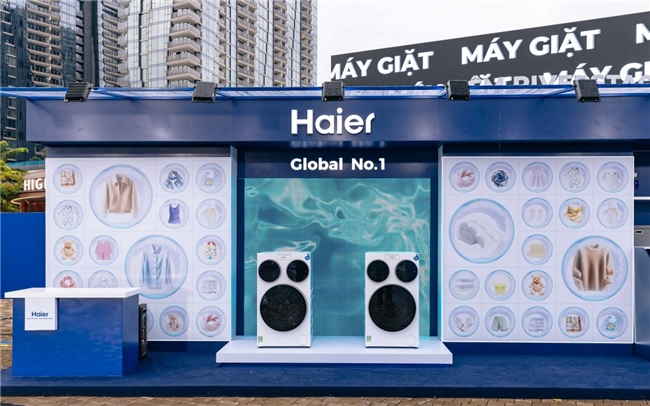
Core Insights - The differentiated approach of Haier's three-tub washing machine has led to its market leadership in China and successful overseas expansion, filling market gaps in Southeast Asia [1][5][7] Group 1: Market Trends - The multi-tub washing machine market is rapidly growing due to increasing consumer awareness of health and categorized washing, with online penetration rates for multi-tub products rising from 3.2% to 9.5% between March and May 2025 [3] - The search volume for "underwear-specific washing machines" on Tmall increased by 370% year-on-year in 2024, indicating a shift from niche to mainstream demand for categorized washing [3] Group 2: Product Innovation - Haier's three-tub washing machine features a unique one-machine three-tub integrated design that addresses the common pain points of washing outerwear, underwear, and baby clothes separately, achieving true "categorized washing" [3] - The three-tub washing machine can save 50% of washing time, significantly enhancing efficiency, and has sold over 300,000 units domestically, securing the top position in its category [3] Group 3: International Expansion - Following its domestic success, Haier has initiated overseas expansion, launching its three-tub washing machine in Southeast Asia, with a new TV commercial emphasizing its core values of "healthy categorization and time efficiency" [5] - The product will be showcased at a pop-up event in Malaysia from December 17-21, 2023, and is set for official launch in January 2026 [5] - Haier has already established a presence in Vietnam and Italy, gaining recognition from major media outlets, indicating strong competitiveness in mature markets [5] Group 4: Global Strategy - Haier's success in overseas markets is attributed to its long-term global strategy focused on localization, adapting products to meet regional needs rather than simply exporting the same model [7] - The company enhances its product offerings by incorporating features tailored to local climates and consumer preferences, such as adding fragrance functions for Vietnam and energy-efficient programs for Europe [7] - Haier's robust global supply chain and partnerships with local distributors facilitate rapid market entry and effective marketing strategies [7]
2025家电行业独一份!海尔空调获用户五星好评和市场AAA认证
Xin Lang Cai Jing· 2025-12-12 05:47
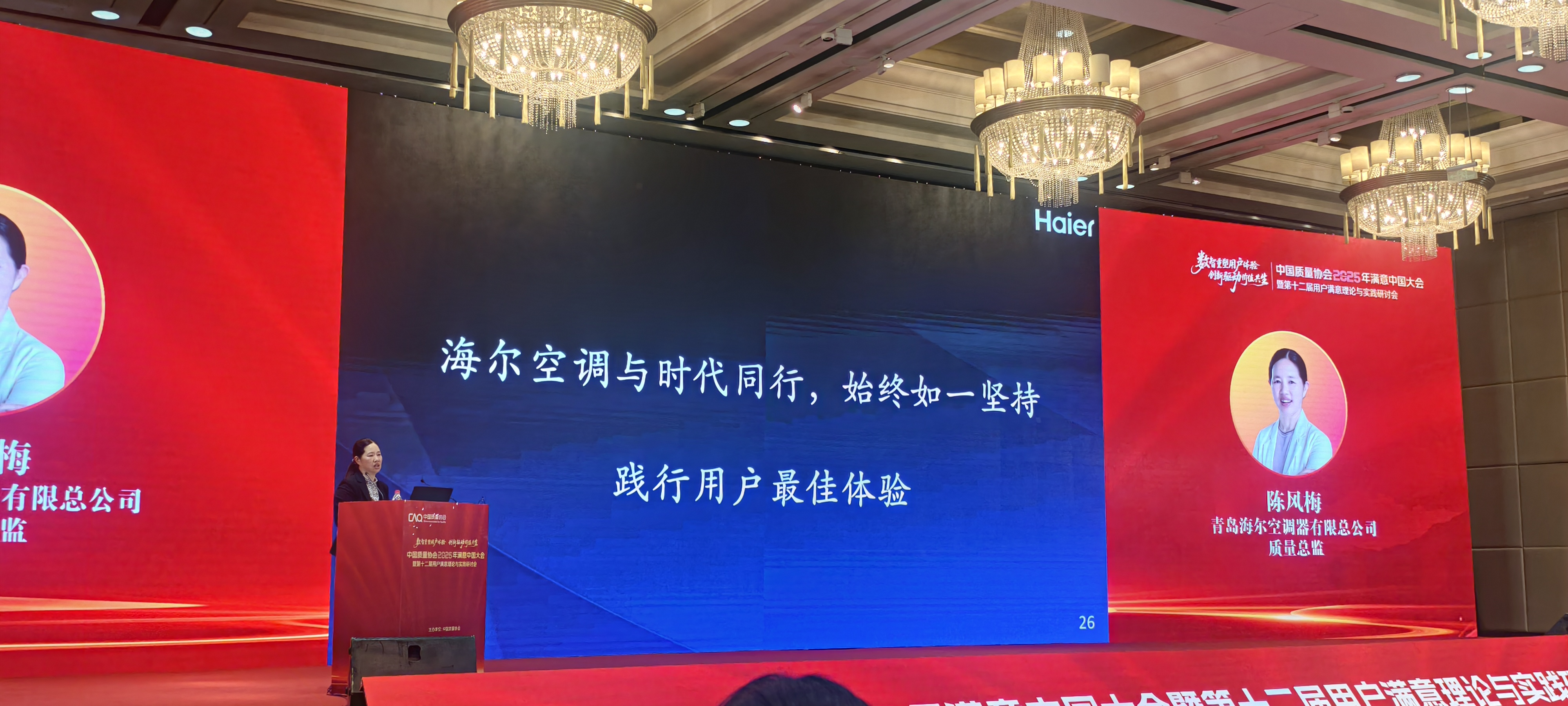
Core Insights - Haier Air Conditioning received dual top certifications, "User Satisfaction Level Evaluation Five-Star Certification" and "Market Quality Credit AAA Level Certification," at the "2025 Satisfaction China Conference," marking it as the only home appliance company to achieve this in 2023 [1] - This recognition validates Haier's long-term strategy of "creating the best user reputation" [1] Group 1: User Satisfaction Management - Haier has transformed user feedback into a systematic management process, establishing "creating the best user reputation" as a guiding principle [4] - The management loop includes user cloud platforms, global R&D networks, smart lighthouse factories, and "four comprehensive" star-level services, ensuring end-to-end coverage from demand insight to service implementation [4] Group 2: Performance Metrics - Haier's service satisfaction rate has exceeded 99.9% for three consecutive years, with a continuous decline in user complaints and an increase in profits, demonstrating the conversion of reputation into commercial value [5] Group 3: AI Integration - AI technology is deeply integrated across the entire process, enhancing efficiency [7] - In R&D, AI big data captures user pain points and predicts demand trends, leading to innovations like the world's first 12-decibel ultra-quiet air conditioner [8] - AI simulations and algorithms have significantly shortened technical validation cycles and accelerated product iterations [8] - A "User Reputation Committee" has been established to analyze online feedback in real-time, triggering immediate improvement processes [8] - The "Smart Home Brain" platform anticipates user needs, enabling proactive service management [8] Group 4: Industry Implications - Haier's approach serves as a reference for the industry on how to systematically operate user experience, shifting competition from product functionality to comprehensive user experience design and management [9] - The focus on user satisfaction is evolving into a dynamic process that fosters continuous optimization and innovation [9] - Haier aims to deepen the integration of AI and user services, building a more resilient brand moat in an era where trust is increasingly valuable [9]
用户给五星,市场给AAA:海尔空调做对了什么?
Huan Qiu Wang· 2025-12-12 05:32
Core Insights - Haier Air Conditioning has achieved the highest dual certifications in the home appliance industry, namely the "User Satisfaction Level Evaluation Five-Star Certification" and the "Market Quality Credit AAA Level Certification," validating its long-term strategy of creating the best user reputation [1] Group 1: User Satisfaction and Management System - Haier Air Conditioning has transformed user feedback into a systematic management process, establishing "creating the best user reputation" as a guiding principle [2] - The management closed-loop includes user cloud platforms, global R&D networks, smart lighthouse factories, and "four comprehensive" star services, ensuring end-to-end coverage from demand insight to service implementation [2] - The results show a service satisfaction rate exceeding 99.9% for three consecutive years, a decline in user complaints, and an increase in profits, demonstrating the conversion of reputation into commercial value [2] Group 2: AI Integration and Process Improvement - The efficient operation of the system is attributed to the deep integration of AI technology across the entire chain, enabling precise identification of user pain points and demand forecasting [4] - AI simulations and smart algorithms have significantly shortened technical validation cycles and accelerated product iterations, with a "User Reputation Committee" established to analyze online evaluations in real-time [4] - The "Smart Home Brain" platform anticipates user needs, such as filter cleaning and material replacement, aiming for proactive service rather than reactive maintenance [4] Group 3: Shift in Competitive Focus - Haier Air Conditioning's practices provide a reference model for systematic operation of user experience, indicating a shift in competition from product functionality to comprehensive user experience design and meticulous management [5] - The achievement of dual certifications signals a new phase in the home appliance industry, where the core competition is moving towards "experience co-win" [5] - Haier plans to continue deepening the integration of AI with user services, optimizing the closed-loop of "creating the best user reputation" to build a more resilient brand moat in an era where trust is increasingly valuable [5]
买空调要趁早? 小米、格力未来都要铝代铜
Xin Lang Cai Jing· 2025-12-12 04:11
Core Viewpoint - The air conditioning industry is moving towards the use of aluminum alloy heat exchangers instead of copper due to rising copper prices and the high dependency on copper imports in China [1][3]. Group 1: Industry Trends - The 2025 China Home Appliance Technology Conference saw major companies like Gree, Xiaomi, and others announce the "Production Line Construction Specifications for Aluminum Tube Fin Heat Exchangers for Room Air Conditioners" [2][3]. - The air conditioning sector consumed approximately 1.723 million tons of copper in 2023, accounting for 10.7% of China's total copper consumption [3]. Group 2: Collaborative Efforts - A collaborative effort involving major air conditioning companies and academic institutions has led to the establishment of standards for aluminum heat exchangers, with further discussions planned for January [2][3]. - Companies including Xiaomi, Haier, and Midea have signed a self-regulatory agreement to promote aluminum heat exchangers and avoid negative competition among peers [4]. Group 3: Market Implications - The shift to aluminum heat exchangers is expected to lower air conditioning prices in the future, although copper heat exchangers may still be marketed as a premium option [4].

2026年国补政策再升级!5000亿红包来袭,这些领域将迎来爆发
Sou Hu Cai Jing· 2025-12-11 15:45
Core Insights - The 2026 "National Subsidy" policy will continue the "old-for-new" consumption initiative with an increased budget of 500 billion yuan, aimed at stimulating consumption and stabilizing economic growth [1][3][16] Group 1: Policy Overview - The "National Subsidy" policy has shown significant results since its launch in 2024, generating over 2.5 trillion yuan in sales and benefiting 360 million people [3] - The policy will focus on three main upgrades: increasing the subsidy amount, expanding coverage to new sectors, and optimizing the distribution process [4][10] Group 2: Sectoral Impacts - Traditional consumption sectors like home appliances and automobiles are expected to see a second wave of growth, with home appliance subsidies potentially increasing from 12.84 million units to 15 million units [6][8] - The service consumption sector, particularly in tourism and health, is anticipated to become a new focal point, with over 100 billion yuan in tourism vouchers expected to be issued [6][10] - Digital and green consumption will be enhanced, with subsidies for smartphones and energy-efficient appliances, benefiting companies like Apple and Huawei [8][10] Group 3: Economic Implications - The policy aims to boost domestic demand and counter economic pressures, with expectations for retail sales growth to rebound to 5%-6% in 2026 [10] - It promotes industrial upgrades by leading consumption upgrades, encouraging innovation in sectors like electric vehicles and smart home appliances [10][14] Group 4: Investment Opportunities - Key investment targets include essential consumer goods like dairy products and condiments, as well as discretionary items like home appliances and new energy vehicles [15] - The policy is seen as a long-term opportunity for investors, with potential for valuation recovery and growth in the consumer sector [16]



家电2026年年度策略报告:品牌出海与新品类发展-20251211
CAITONG SECURITIES· 2025-12-11 12:01
Core Insights - The report maintains a positive outlook on the home appliance sector, emphasizing the potential for growth in both domestic and international markets, particularly in emerging markets and through the development of new product categories [3][5]. Group 1: Market Performance Overview - The home appliance sector has shown varied performance in 2025, with white goods yielding a total return of +1% but underperforming against the CSI 300 by -19% due to high base effects and market competition [11]. - Small appliances have performed well with a +12% return, indicating a shift from scale expansion to value creation, supported by new subsidy policies [11]. - The components sector has excelled with a +70% return, benefiting from investments in emerging technologies such as AI and robotics [11]. Group 2: Domestic and International Sales - Domestic sales have faced pressure due to tightening national subsidies, with expected growth rates for major appliances showing mixed results, while small appliances have fared better [5][38]. - Internationally, emerging markets have outperformed, with a notable recovery in export orders as tariff impacts begin to stabilize [41][42]. Group 3: Product Development and Innovation - The report highlights a continuous upgrade in product structure, with an increasing share of high-end products contributing to profit margins [5][44]. - New product categories such as smart glasses, drones, and UV printers are expected to create new growth opportunities, driven by consumer demand for innovative and personalized experiences [5][10]. Group 4: Investment Recommendations - The report suggests focusing on leading white goods companies as they represent assets with significant growth potential, particularly in the context of favorable U.S. market conditions and anticipated interest rate cuts [5][44]. - Specific companies recommended for investment include Haier Smart Home, Hisense, TCL Electronics, and Ecovacs, among others [5][44].