
PING AN OF CHINA(601318)

Search documents
大摩:对中国平安看法更正面具显著增长潜力 上调目标价至89港元
Xin Lang Cai Jing· 2025-12-05 04:19
Core Viewpoint - Morgan Stanley has upgraded its outlook on Ping An Insurance, believing the group can capitalize on key opportunities in wealth management, healthcare, and eldercare services, while investor concerns are dissipating, paving the way for a revaluation [1] Group 1 - The firm reiterated its "Overweight" rating for both H-shares and A-shares of Ping An Insurance [1] - The target price for H-shares has been raised by 27% to HKD 89 [1] - The target price for A-shares has been increased by 21% to RMB 85 [1]

河南金融监管局同意平安人寿郑州文化路营销服务部变更营业场所
Jin Tou Wang· 2025-12-05 04:03
2025年12月3日,河南金融监管局发布批复称,《关于中国平安(601318)人寿保险股份有限公司郑州 文化路营销服务部变更营业场所的请示》(平保寿豫分发〔2025〕108号)收悉。经审核,现批复如 下: 二、中国平安人寿保险股份有限公司郑州文化路营销服务部应按照有关规定及时办理变更及许可证换领 事宜。 一、同意中国平安人寿保险股份有限公司郑州文化路营销服务部将营业场所变更为:河南省郑州市金水 区经三路68号1号楼平安保险大厦19层整层。 ...
大摩:对中国平安(02318)看法更正面具显著增长潜力 上调目标价至89港元
智通财经网· 2025-12-05 03:56
Core Viewpoint - Morgan Stanley has upgraded its outlook on China Ping An (02318, 601318.SH), believing the group can seize key opportunities in wealth management, healthcare, and elder services, while investor concerns are dissipating, paving the way for a revaluation [1] Group 1: Ratings and Price Targets - Morgan Stanley reiterated its "Overweight" rating for both H-shares and A-shares of China Ping An, raising the target price for H-shares by 27% to HKD 89 and for A-shares by 21% to RMB 85 [1] Group 2: Financial Projections - The group’s return on equity (ROE) is expected to reach 14% to 15% by 2028 [1] - The compound annual growth rate (CAGR) of core new business value (VNB) is projected to rebound to 21% over the next two years [1] - The balance of the contract service margin (CSM) for life insurance is anticipated to recover to a growth rate of 1.9% by 2026 [1] - The group's operating profit is expected to improve with a CAGR of 11% over the next two years, indicating a transformation within the group [1] Group 3: Market Positioning - Morgan Stanley considers China Ping An's H-shares as a top pick and has added the company to its focus list for China/Hong Kong [1] - The firm believes that with a projected ROE of 14% to 15% and a cost of capital below 10%, the company's price-to-earnings (P/E) ratio can rebound from approximately 7 times to a double-digit figure [1] - The group aims to expand its market through enhanced integrated financial services and value-added services [1]
2025年1-10月北京市原保险保费收入共计3424.51亿元,同比增长9.78%
Chan Ye Xin Xi Wang· 2025-12-05 03:07
Group 1 - The core viewpoint of the article highlights the growth of the insurance industry in Beijing, with a reported original insurance premium income of 342.451 billion yuan from January to October 2025, reflecting a year-on-year increase of 9.78% [1] - Among different types of insurance, life insurance has the highest share, accounting for 235.755 billion yuan, which represents 68.84% of the total original insurance premium income in Beijing [1] - The data is sourced from the National Financial Supervision Administration and organized by Zhiyan Consulting, a leading industry consulting firm in China that specializes in deep industry research and provides comprehensive consulting services [1] Group 2 - The report referenced is the "2026-2032 China Insurance Industry Development Analysis and Investment Prospect Forecast Report" published by Zhiyan Consulting [1] - The article includes a statistical chart of cumulative original insurance premium income in Beijing from 2020 to January-October 2025, indicating a trend in the insurance market [1] - Zhiyan Consulting has over a decade of experience in the industry research field, focusing on providing in-depth industry research reports, business plans, feasibility studies, and customized services [1]







2025年1-10月全国原保险保费收入共计54832.64亿元,同比增长7.99%
Chan Ye Xin Xi Wang· 2025-12-05 03:00
Group 1 - The core viewpoint of the article highlights the growth of China's insurance industry, with a total original insurance premium income of 54,832.64 billion yuan from January to October 2025, representing a year-on-year increase of 7.99% [1] - Life insurance accounted for the largest share of the total premium income, amounting to 32,748.2 billion yuan, which is 59.72% of the total [1] - The data is sourced from the National Financial Regulatory Administration and organized by Zhiyan Consulting, a leading industry consulting firm in China [1] Group 2 - The report titled "2026-2032 China Insurance Industry Development Analysis and Investment Prospect Forecast" was released by Zhiyan Consulting, indicating a focus on future trends and investment opportunities in the insurance sector [1] - The article emphasizes the comprehensive services provided by Zhiyan Consulting, including in-depth industry research reports, business plans, feasibility studies, and customized services [1] - The consulting firm has over a decade of experience in the industry research field, showcasing its market insight and commitment to delivering quality services [1]

中国平安AH股跳涨,获大摩加入重点关注名单,看好其估值上涨空间
Ge Long Hui· 2025-12-05 02:41
Core Viewpoint - China Ping An's stock prices surged, with A-shares rising by 1.5% to 59.45 yuan and H-shares increasing by 2.6% to 58.15 HKD, following Morgan Stanley's report that included the company in its key focus list for mainland China and Hong Kong, maintaining it as a top pick [1] Group 1: Financial Performance and Projections - Morgan Stanley raised the target price for China Ping An's A-shares from 70 yuan to 85 yuan and H-shares from 70 HKD to 89 HKD, indicating increased confidence in the company's growth potential [1] - The company is expected to benefit from key growth opportunities in wealth management, healthcare, and elderly care, with the market's main concerns gradually dissipating, paving the way for valuation improvements [1] - Future financial indicators are projected to improve, with operational ROE expected to recover to 14-15% by 2028, and NBV growth anticipated to exceed 20% in 2026, with an average growth rate of over 15% in the next three years [2] Group 2: Industry Trends and Competitive Advantages - The financial and healthcare sectors are expected to see significant growth, driven by an average annual increase of 8% in household wealth, a rigid demand for elderly care due to "super aging," and rising demand for mid-to-high-end medical services [1] - China Ping An possesses unique advantages in four areas: a comprehensive financial model that meets all customer financial needs, a customer-centric approach to enhance customer value and wallet share, rapid development of light-asset healthcare and elderly care services, and the integration of AI to improve operational efficiency [1]
平安集团副首席投资官路昊阳: 低利率周期增配权益 是各国险企必经之路
Zheng Quan Shi Bao Wang· 2025-12-04 23:26
Core Viewpoint - The insurance industry is increasingly recognizing the necessity of allocating more equity assets in a low-interest-rate environment, as highlighted by the insights from Ping An Group's Deputy Chief Investment Officer, Lu Haoyang [1][3]. Group 1: Investment Strategy - The insurance sector is facing challenges in asset-liability matching due to low asset yields not meeting liability costs, necessitating a shift towards equity investments [3]. - Ping An Group emphasizes a long-term investment approach, focusing on companies that can provide profit growth and valuation expansion over time [1][3]. - The company has established five matching principles for investments, including alignment of asset and liability durations, investment and return requirements, liquidity needs, risk safety, and financial reporting [2]. Group 2: Market Context and Trends - The average liability duration for the life insurance industry is currently 16.3 years, with a duration gap of 9.2 years after industry scale adjustments [2]. - As of Q3 2025, the total investment balance of insurance funds in China reached 37 trillion yuan, with stock investments exceeding 3.6 trillion yuan [2]. - Ping An Group manages over 6 trillion yuan in insurance assets, with equity investments in the secondary market exceeding 800 billion yuan [2]. Group 3: Global Insights - Global insurance companies have explored strategies to navigate low-interest-rate environments, with examples from Japan and the U.S. demonstrating the importance of increasing overseas allocations and high-dividend domestic stocks [3]. - The U.S. insurance sector has opted to lower liabilities while significantly increasing equity allocations to share risks with clients [3]. Group 4: Policy Support - Recent policies in China have encouraged long-term capital market entry, particularly supporting insurance investments in equity assets [4]. - Ping An Group's equity investment in the secondary market has seen a compound growth rate exceeding 17% from 2021 to mid-2025, significantly outpacing the growth of the company's insurance fund scale [4]. - The company employs a balanced equity allocation strategy focusing on high-dividend and growth stocks, with specific sectors targeted for investment based on national policy support [4].
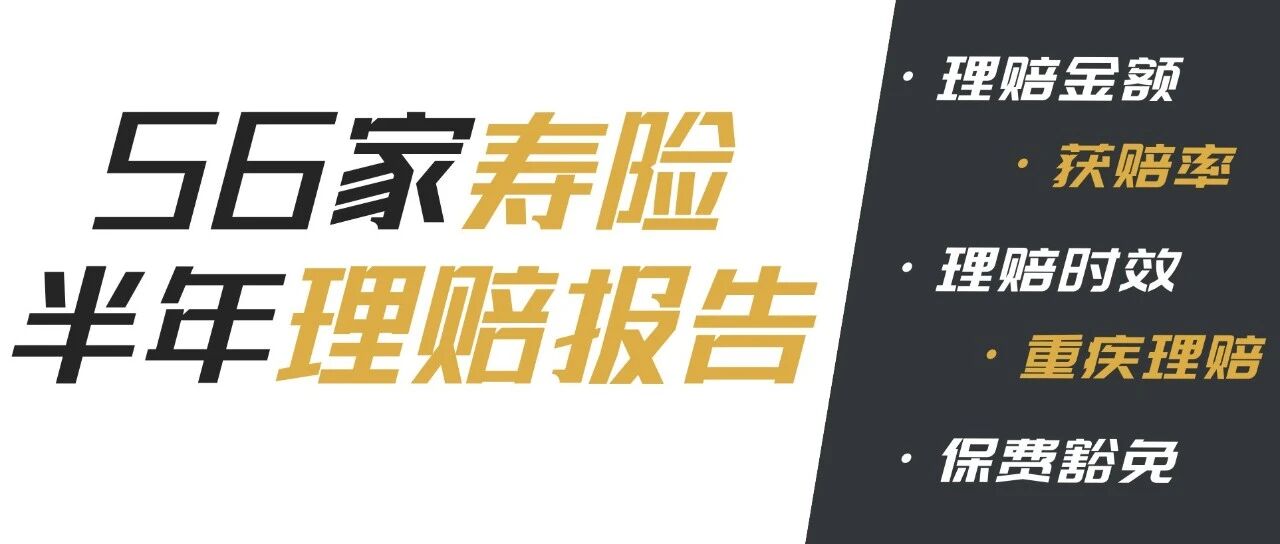
56家寿险公司理赔半年报:总赔付超1100亿,最大赔案3079万,14个“千万级”赔案,最快赔付仅需8秒...
13个精算师· 2025-12-04 15:36
Core Viewpoint - The insurance industry has shown significant growth in claims, with total claims exceeding 110 billion yuan in the first half of 2025, reflecting an increasing demand for insurance products and services [6][12][14]. Group 1: Claims Overview - Total claims amount exceeded 110 billion yuan, with over 35.09 million claims processed [1][6]. - The average claim approval rate stands at 98.8%, with daily processing of approximately 190,000 claims [29][32]. - There are 14 cases of claims exceeding 10 million yuan, indicating a rise in high-value claims [15][22]. Group 2: Major Claimants - China Life Insurance reported the highest claims at 30.2 billion yuan, followed by Ping An Life with 20.62 billion yuan [2][12]. - Six insurance companies reported claims exceeding 3 billion yuan, including Taikang Life and Xinhua Insurance [12][14]. - The top claims cases from 49 insurance companies all exceeded 1 million yuan, showcasing a trend towards higher claim amounts [16][21]. Group 3: Claim Types - Critical illness claims accounted for 47% of total claims, while medical claims made up 28% [14]. - The increasing focus on health-related insurance products reflects changing consumer needs and preferences [14][39]. Group 4: Regional Insights - High-value claims are predominantly concentrated in economically developed regions such as Beijing, Shanghai, and Guangzhou, where clients often have multiple insurance products [24][22]. Group 5: Service Improvements - Insurance companies are enhancing their claims processing efficiency through online platforms and simplified procedures, leading to faster claim settlements [32][39]. - Many companies report significant improvements in online claim approval rates, with some achieving over 90% [33][39].
中国平安携手马龙,汲取冠军精神升级健康保障
Huan Qiu Wang· 2025-12-04 10:55
Group 1 - China Ping An announced that renowned table tennis player Ma Long has become the company's brand ambassador, aligning with its mission to promote health and a better life for customers [1] - The company has recently launched the eShengbao series of medical insurance products, which feature low premiums and high coverage, catering to the growing health protection needs of customers [1][4] - The eShengbao series allows for flexible combinations of insurance plans, enabling customers to tailor their coverage according to their specific needs and financial capabilities [5] Group 2 - The eShengbao Huixiang version offers a first-year premium of only 410 yuan for a 30-year-old male with basic medical insurance, with a total payout limit of up to 8 million yuan [4] - The eShengbao series includes a comprehensive health service plan called "Anyou Medical," which provides a full range of medical assistance services, covering pre-hospital, in-hospital, and post-hospital care [5] - This collaboration signifies China Ping An's commitment to enhancing health protection services and integrating insurance expertise with sportsmanship to build a stronger health safety net for families [5]

中国平安涨0.34%,成交额12.71亿元,近3日主力净流入-3.38亿
Xin Lang Cai Jing· 2025-12-04 07:19
Core Viewpoint - China Ping An's stock performance shows a slight increase of 0.34% with a trading volume of 1.271 billion yuan and a market capitalization of 1,060.202 billion yuan [1] Dividend Analysis - The dividend yields for China Ping An over the past three years are 5.15%, 6.03%, and 4.84% respectively [2] - The top ten circulating shareholders include Central Huijin Asset Management Co., Ltd. and China Securities Finance Corporation [2] - The company owns Fintech subsidiary OneConnect, providing electronic banking, account services, credit reporting, loans, and interbank transactions to small and medium-sized banks [2] - China Ping An has stakes in several unicorn companies, including Lufax, Ping An Good Doctor, and a health insurance company, with Lufax valued at 39.4 billion USD as of March 2019 [2] Fund Flow Analysis - Today's net inflow from major funds is -55.288 million yuan, accounting for 0.05%, with a continuous three-day reduction in major fund holdings [2] - The industry has seen a net outflow of -107 million yuan over the same period [2] Technical Analysis - The average trading cost of the stock is 52.64 yuan, with a recent decrease in holdings, though the rate of decrease has slowed [4] - The current stock price is near a support level of 58.40 yuan, and a drop below this level may trigger a downward trend [4] Company Overview - China Ping An Insurance (Group) Co., Ltd. is based in Shenzhen, Guangdong, and was established on March 21, 1988, with its IPO on March 1, 2007 [5] - The company's main business includes insurance, banking, securities, and trust services, with revenue composition as follows: life and health insurance 45.76%, property insurance 34.46%, banking 13.87%, asset management 5.27%, and financial empowerment 3.85% [5] - As of September 30, 2025, the number of shareholders is 696,200, a decrease of 3.43%, with an average of 15,401 circulating shares per person [5] - For the period from January to September 2025, the company reported a net profit of 132.856 billion yuan, a year-on-year increase of 11.47% [5] Dividend Distribution - China Ping An has distributed a total of 391.904 billion yuan in dividends since its A-share listing, with 134.54 billion yuan distributed over the past three years [6] - The sixth largest circulating shareholder is Hong Kong Central Clearing Limited, holding 456 million shares, a decrease of 182 million shares from the previous period [6]