
PING AN OF CHINA(601318)

Search documents
河北金融监管局同意中国平安河北分公司藁城营销服务部变更营业场所
Jin Tou Wang· 2026-03-05 03:31
Core Viewpoint - The Hebei Financial Regulatory Bureau approved the relocation of the marketing service department of China Ping An Life Insurance Co., Ltd. in Gaocheng, Hebei Province [1] Group 1 - The marketing service department's new location is specified as: 2-101, Second Floor, Rongwei Zijing Commercial Building, South Station Street, Gaocheng District, Shijiazhuang City, Hebei Province [1] - China Ping An Life Insurance Co., Ltd. is required to handle the change and obtain the necessary permits in accordance with relevant regulations [1]

港股保险股止跌反弹 友邦保险涨超5%
Jin Rong Jie· 2026-03-05 03:27
Group 1 - The insurance stocks that had been declining have rebounded, with AIA Group rising over 5% [1] - China Reinsurance and Yunfeng Financial both increased by over 4% [1] - China Pacific Insurance rose by 3.7%, while China Life, New China Life, and ZhongAn Online gained over 2% [1] - China People's Insurance, China Property & Casualty Insurance, Sunshine Insurance, China Life Insurance, and Ping An Insurance all saw increases of over 1% [1]
保险深度:股市及利率影响几何?
East Money Securities· 2026-03-05 03:27
Investment Rating - The report maintains a "Strong Buy" rating for the non-bank financial sector, indicating a positive outlook for investment opportunities in this industry [3]. Core Insights - The Chinese insurance industry has shown rapid growth, with total investment assets reaching 38.5 trillion yuan by the end of Q4 2025, reflecting a year-on-year growth rate of 15.7% [20][21]. - The allocation of investment assets has shifted significantly towards bonds, which increased from 33.3% in Q1 2019 to 50.4% in Q4 2025, while the share of stocks and funds rose from 12.4% to 15.4% during the same period [26][20]. - The performance of insurance companies is highly sensitive to fluctuations in equity markets and interest rates, with both static and dynamic impacts on their financial performance [36]. Summary by Sections 1. Overview of the Insurance Industry Investment Status - The insurance industry has maintained a compound annual growth rate of 18.6% in investment assets from 2004 to 2025, with a notable recovery in growth rates following a low point in 2021 [20]. - The proportion of investment assets allocated to life insurance companies has remained around 90% since 2022, indicating their dominance in the market [21]. 2. Sensitivity Analysis of Equity Market Upturn - A 10% increase in equity investment prices could lead to an average pre-tax profit increase of 38.7%, with China Pacific Insurance showing the highest sensitivity at 83.4% [2]. - If equity investment prices rise by 10% alongside a 10% increase in equity allocation, the average pre-tax profit could increase by 81.2%, with China Pacific Insurance again leading at 175.2% [2]. 3. Sensitivity Analysis of Interest Rate Increases - A 50 basis point increase in market interest rates could result in an average pre-tax profit increase of 0.7%, with China Life and China Pacific showing significant positive elasticity [2][3]. 4. Economic Assumption Sensitivity Analysis - An increase in investment return rates and risk discount rates by 50 basis points could enhance new business value by an average of 35%, with China Life and New China Life showing the highest sensitivity [12]. 5. Liability Cost Analysis - The average new policy liability cost is estimated at 2.76%, with Ping An and China Life having the lowest costs [12]. - The report suggests that effective management of liability costs will enhance the long-term profitability of insurance companies [12]. 6. Investment Recommendations - The report highlights that the insurance sector is currently undervalued and suggests a systematic allocation of investments in this sector due to its high beta elasticity and resilience [12].


非银金融行业2026年春季投资策略:存款迁移,非银负债和资产两端受益
KAIYUAN SECURITIES· 2026-03-05 01:11
Core Views - The report highlights the dual drivers of liabilities and assets in the insurance sector, with significant elasticity in equity performance [2][3] - The brokerage sector is expected to maintain its favorable conditions, with low valuations presenting strategic allocation opportunities [4][10] Insurance: Dual Drivers of Liabilities and Assets - The insurance sector is benefiting from the migration of household deposits, with a notable increase in new individual insurance policies at the beginning of 2026, supported by low baselines and the appeal of dividend insurance in a bullish market [6][20] - The insurance sector's total premium income is projected to grow by 9.1% year-on-year in 2025, with significant contributions from both individual and bank insurance channels [21][25] - The average price-to-earnings value (PEV) for listed insurance companies has dropped to 0.78 times, indicating a favorable risk-reward ratio for investors [6][69] Brokerage: Sustained Prosperity and Low Valuations - The brokerage sector is expected to see a 52.3% and 29.6% year-on-year increase in net profit for 2025 and 2026, respectively, with a projected weighted return on equity (ROE) of 10% in 2026 [6][10] - The report recommends focusing on brokerage firms with low valuations and high contributions from wealth management, such as Huatai Securities and GF Securities, as well as leading firms like Guotai Junan and CITIC Securities [6][10] - The market's active trading environment is anticipated to continue benefiting brokerage firms, with significant growth in retail brokerage and wealth management services [75][82]



挪储背景下的分红险变革:保险行业深度研究报告
Huachuang Securities· 2026-03-05 00:45
Investment Rating - The report maintains a "Recommended" rating for China Pacific Insurance, China Life Insurance, and China Property & Casualty Insurance, while giving a "Strong Buy" rating for Ping An Insurance [2]. Core Insights - The report emphasizes the transformation of dividend insurance in the context of deposit migration, highlighting its competitive advantages and the expected increase in premium contributions from dividend insurance [7][8]. - It notes that the insurance industry is expected to see a premium scale of 5.6 trillion yuan in 2026, with dividend insurance contributing approximately 2.1 trillion yuan [8]. Summary by Sections 1. What is Dividend Insurance? - Dividend insurance is categorized as a "fixed income +" product, providing a smoothing mechanism for income and reducing yield volatility [6][11]. - The report discusses the historical dominance of dividend insurance prior to 2013, its decline due to market reforms, and its resurgence in the current low-interest-rate environment [21][22]. 2. Competitive Analysis of Dividend Insurance - The report compares dividend insurance with traditional insurance and highlights its advantages in terms of guaranteed returns and stability in volatile markets [33][34]. - It notes that the asymmetric adjustment of preset interest rates has significantly enhanced the attractiveness of dividend insurance, especially in the context of a recovering equity market [34][40]. 3. Leveraging Channels - The report identifies the migration of deposits as a key driver for the growth of dividend insurance, with bank insurance becoming a primary channel for low-risk preference customers [8][33]. - It emphasizes the importance of high-quality agents in the individual insurance channel as a competitive barrier in the low-interest-rate era [8][33]. 4. Transformation and Future Outlook - The report anticipates that dividend insurance will continue to dominate the low-risk segment, with potential shifts towards "low guarantee + high floating" models in the future [8][30]. - It suggests that dividend-type critical illness insurance may become a new growth point in the health insurance sector in 2026 [8][30].

中国平安24小时极速救援,协助首批企业客户撤离中东
Cai Jing Wang· 2026-03-04 23:42
Core Viewpoint - China Ping An has actively responded to the recent Middle East crisis by providing risk alerts and evacuation assistance to clients, demonstrating its commitment to ensuring the safety of Chinese citizens abroad [1][2]. Group 1: Risk Alerts and Evacuation Assistance - Ping An has issued a total of 59 risk alert messages and published 23 risk analysis reports, responding to 52 client inquiries and successfully assisting 2 corporate clients in evacuating from a "danger zone" in the Middle East within 24 hours [1]. - The company received a request for evacuation from a large Chinese group focused on new energy drone manufacturing, which faced disrupted commercial flights due to the conflict [1]. - The evacuation process involved a 400-kilometer land journey from Dubai to Muscat, Oman, taking 8 to 11 hours during the conflict [1]. Group 2: Emergency Response Mechanism - Within 6 hours of receiving the evacuation request, Ping An coordinated local security forces, cross-border transport resources, and border liaison officers to establish a safe evacuation route [1]. - The evacuation plan included avoiding military facilities and conflict zones, utilizing secondary roads and hidden passages for safety [1]. - The company ensured rapid border crossing by pre-declaring personnel information to the Oman border authorities, leveraging long-term partnerships [1]. Group 3: Commitment to Client Safety - The successful evacuation of the two employees marks Ping An as the only financial insurance institution in China to assist in such a case from the Middle East [2]. - Currently, three additional Chinese companies have approached Ping An for evacuation plans from the Middle East, and the company is prepared to mobilize global rescue resources [2]. - Ping An emphasizes a proactive service model, providing risk management and support before incidents occur, as evidenced by its early warning issued on January 12 regarding the escalating tensions in the Middle East [2]. Group 4: Historical Context and Global Reach - Ping An has prior experience in assisting clients with cross-border evacuations, having successfully evacuated 74 Chinese citizens from a conflict zone in June 2025, providing a safety guarantee of 43.85 million and compensation of 1.21 million [3]. - The company's global emergency rescue service network covers 233 countries and regions, having assisted over 100,000 individuals in various international emergencies [3]. - Ping An remains committed to responding to client needs in high-risk areas, offering assistance to anyone in need, regardless of their client status [3].
极速救援!中国平安协助首批企业客户从中东“危险区”撤离
Nan Fang Du Shi Bao· 2026-03-04 15:29
Core Viewpoint - The company has proactively responded to the escalating situation in the Middle East by issuing warnings and evacuation suggestions for clients, demonstrating its commitment to client safety and risk management [2][5]. Group 1: Risk Management and Client Support - The company has issued a total of 59 risk warning messages and published 23 risk analysis reports, while responding to 52 client inquiries regarding the situation [2]. - The company successfully assisted two employees from a large Chinese group in evacuating from a dangerous area in the Middle East, coordinating their safe transfer to Oman for a flight back to China [4]. - The company has received evacuation requests from three additional Chinese enterprises and is currently developing evacuation plans for them [4]. Group 2: Emergency Response Mechanism - Upon receiving evacuation requests, the company activated its global emergency rescue mechanism, which includes coordinating local security forces, cross-border transport resources, and planning safe evacuation routes [3]. - The rescue operation involved detailed planning to avoid military facilities and conflict zones, as well as ensuring safe passage through borders with dedicated transport and high-end security [3]. Group 3: Proactive Risk Alerts - The company issued high-risk alerts regarding the Middle East situation as early as January 12, prior to the military actions, showcasing its proactive approach to risk management [5].

保险观点更新:强β情绪释放,重回起涨点,估值性价比再现-20260304
ZHONGTAI SECURITIES· 2026-03-04 15:10
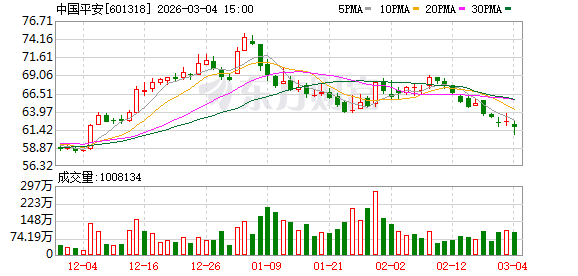
Investment Rating - The industry investment rating is "Overweight" [11] Core Insights - Recent pressure on insurance stock prices is seen as a short-term emotional release, with a focus on companies like China Pacific Insurance, China Life, Ping An, and New China Life that have experienced significant adjustments [5] - The insurance sector has shown strong beta characteristics, with recent geopolitical risks causing market volatility, but the selling pressure has largely been alleviated [5] - The PEV valuations of major insurance companies have returned to relatively low levels, indicating potential for rebound as the market stabilizes [5][7] Summary by Relevant Sections Market Overview - The insurance sector's total market value is approximately 32,974.79 billion [3] - The recent decline in insurance stocks has brought them back to the starting point from December 2025, with PEV valuations for major companies like Ping An, China Life, China Pacific, and New China Life at 0.65, 0.71, 0.53, and 0.65 respectively, reflecting historical valuation percentiles of 31%, 25%, 34%, and 50% [5][10] Financial Performance Predictions - The average net profit growth for listed insurance companies in 2025 is expected to be around 25.1%, with a double-digit growth in dividends per share (DPS) [5] - Key financial metrics for major companies in 2025 include: - China Ping An: Net profit of 1,358 billion, DPS of 2.73 - China Life: Net profit of 1,533 billion, DPS of 0.71 - China Pacific: Net profit of 509 billion, DPS of 1.18 - New China Life: Net profit of 356 billion, DPS of 3.42 [10] Investment Recommendations - The report suggests focusing on companies such as China Pacific Insurance, Ping An, China Life, New China Life, and China Property & Casualty Insurance due to their attractive valuations and growth potential [5]
中东局势升级,已有保险公司协助首批企业客户从“危险区”撤离
第一财经· 2026-03-04 14:12
Core Viewpoint - The article highlights the increasing concern for the safety of Chinese citizens and institutions in the Middle East due to escalating regional tensions, with insurance companies actively assisting in evacuation efforts [3]. Group 1: Evacuation Efforts - China Ping An has successfully assisted two corporate clients in evacuating from a "danger zone" in the Middle East within 24 hours [3]. - A large Chinese state-owned group, focused on the research and manufacturing of new energy drones, requested assistance from Ping An after their employees faced disrupted commercial flights due to the conflict [3]. - The evacuation involved a land transfer of approximately 400 kilometers from Dubai to Muscat International Airport in Oman, taking between 8 to 11 hours during the conflict [3]. - Currently, three additional Chinese companies have approached Ping An for evacuation plans from the Middle East [3]. Group 2: Insurance Company Responses - Several insurance companies were contacted regarding evacuation requests, with some indicating they had not yet received any reports or requests for assistance [4].


24小时极速救援!中国平安协助首批企业客户从中东“危险区”撤离
Zhong Guo Ji Jin Bao· 2026-03-04 12:24
Core Viewpoint - China Ping An has actively responded to the recent Middle East crisis by providing evacuation assistance and risk warnings to its clients, demonstrating its commitment to ensuring the safety of Chinese citizens abroad [1][2]. Group 1: Evacuation Efforts - Ping An has issued a total of 59 risk warning messages and published 23 risk analysis reports, while responding to 52 client inquiries and successfully assisting two corporate clients in evacuating from a "danger zone" in the Middle East within 24 hours [1]. - The company coordinated a complex evacuation for a large Chinese group focused on renewable energy, which involved a 400-kilometer land journey from Dubai to Muscat, Oman, taking 8 to 11 hours due to the ongoing conflict [1]. - The evacuation plan included securing local security forces, cross-border transport resources, and coordinating with border officials to ensure a safe passage for clients [1]. Group 2: Service Philosophy - Unlike traditional insurance models that focus on post-incident compensation, Ping An emphasizes a proactive service approach, providing risk management and support before incidents occur [2]. - The company had already issued high-risk alerts regarding the Middle East situation as early as January 12, allowing for timely risk assessments and resource coordination for evacuations [2]. Group 3: Track Record and Commitment - Ping An has a proven track record of assisting clients in cross-border evacuations, having successfully helped 14 companies evacuate 74 Chinese citizens from a conflict zone during the 2025 Israel-Palestine conflict, with a total safety guarantee amount of 43.85 million and compensation of 1.21 million [3]. - The company's global emergency rescue service network covers 233 countries and regions, having provided assistance to over 100,000 individuals in various international emergencies [3]. - Ping An remains committed to monitoring high-risk areas and ensuring rapid response to client needs, offering assistance to anyone in need, regardless of their affiliation with the company [3].