
PETROCHINA(601857)

Search documents
能源ETF广发(159945)开盘跌6.91%,重仓股中国神华跌4.09%,中国石油跌5.73%
Xin Lang Cai Jing· 2026-03-10 01:35
Core Viewpoint - The Energy ETF Guangfa (159945) experienced a significant decline of 6.91% at the opening on March 10, 2023, trading at 1.428 yuan [1] Group 1: ETF Performance - The Energy ETF Guangfa (159945) has a performance benchmark of the CSI All Share Energy Index [1] - Since its establishment on June 25, 2015, the fund has achieved a return of 53.08% [1] - The fund's return over the past month is reported at 17.00% [1] Group 2: Major Holdings Performance - Major holdings in the Energy ETF include: - China Shenhua down 4.09% [1] - China Petroleum down 5.73% [1] - China Petrochemical down 7.14% [1] - Shaanxi Coal and Chemical Industry down 4.37% [1] - China National Offshore Oil Corporation down 9.99% [1] - Jereh Group up 0.03% [1] - Yanzhou Coal Mining down 5.42% [1] - China Coal Energy down 9.67% [1] - Guanghui Energy down 8.89% [1] - Shanxi Coking Coal down 3.67% [1]



Saudi Arabia Begins Oil Output Cuts as Storage Fills Up
Bloomberg Television· 2026-03-09 14:09
This is the big one, yes, Saudi Arabia saying that they started to cut oil output as storage has started to fill up. And you will recall over the course of our reporting of the past week, they had been looking for alternative routes to get this oil out that bypasses the Strait of Hormuz. And they do have that east west pipeline that's available to them for port, a capacity of around 5 million barrels a day.So it could have gone some way towards mopping up some of the production that needed to get out. But t ...

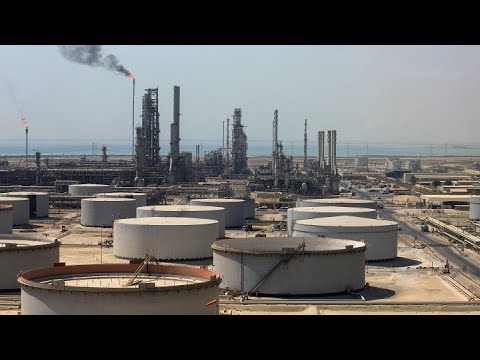
全国人大代表刘洪涛:煤岩气是增强能源自主供给能力的“新基石”
中国能源报· 2026-03-09 13:05
Core Viewpoint - The development of coalbed methane, particularly at the Daqi Gas Field, is crucial for increasing natural gas production in China and ensuring energy security, with significant strategic value for the country's energy independence [2][3]. Group 1: Daqi Gas Field Development - The Daqi Gas Field has achieved a daily gas production of over 1.1 million cubic meters and an annual production capacity exceeding 4 billion cubic meters, accounting for over 80% of the national coalbed methane output [2]. - The field has proven geological reserves of 400 billion cubic meters, and coalbed methane is a type of unconventional natural gas found in deep coal seams, typically buried deeper than 1,500 meters [2]. - China's deep coalbed methane resources are abundant, with estimates indicating that the resource volume exceeds 40 trillion cubic meters at depths of 2,000 meters, with approximately 12 trillion cubic meters being recoverable [2]. Group 2: Strategic Importance of Coalbed Methane - The large-scale development of coalbed methane is seen as a strategic move for enhancing natural gas production and ensuring national energy security, as stated by Liu Hongtao, General Manager of PetroChina's Coalbed Methane Company [2]. - Prior to the 14th Five-Year Plan, traditional exploration theories regarded coal seams deeper than 1,500 meters as having low gas content and high development costs, leading to their classification as a "forbidden zone" for coalbed methane development [2]. - The successful commercial development of coalbed methane began with the Daqi 3-7 well in 2019, and by October 2021, the Jishen 6-7 well had tested a daily gas production of 101,000 cubic meters, marking a significant breakthrough in deep coalbed methane development [2]. Group 3: Future Outlook - The demand for natural gas in China is projected to remain high, with consumption expected to reach 426.55 billion cubic meters by 2025, while domestic industrial natural gas production is estimated at 261.9 billion cubic meters, indicating a substantial supply gap [3]. - Coalbed methane is anticipated to become a key resource for natural gas production in the next 3 to 5 years, following tight sandstone gas and shale gas [3]. - Liu Hongtao emphasized that coalbed methane serves as a "new engine" for driving current performance growth for PetroChina and a "new high ground" for future strategic positioning, while also being a "new cornerstone" for enhancing national energy self-sufficiency [3].

国际油价突破100美元,地缘风险或将重塑全球资产定价
第一财经· 2026-03-09 12:52
Core Viewpoint - The article discusses the significant impact of escalating tensions in the Middle East, particularly the U.S.-Iran conflict, on global oil prices and market dynamics, highlighting the potential for long-term geopolitical risks and their implications for energy security and inflation [4][5][6]. Group 1: Market Reactions - On March 9, global markets experienced a downturn, with major indices in Asia and Europe declining, while the oil and gas sector saw gains, particularly in Chinese oil companies [3]. - The oil and gas index rose by 3.87%, with China National Offshore Oil Corporation (CNOOC) hitting a new high of 44.54 CNY per share, closing at 43.36 CNY, a 7.09% increase [3]. Group 2: Geopolitical Impact - The ongoing U.S.-Iran conflict has led to significant disruptions in oil supply, particularly through the Strait of Hormuz, which is crucial for global oil and LNG transportation [6]. - Iraq's oil production has reportedly decreased by 70% due to the inability to export oil through the Strait, and Kuwait has announced production cuts due to "force majeure" [6]. Group 3: Economic Implications - Analysts predict that prolonged disruptions could lead to heightened panic in the oil market, with geopolitical risk premiums potentially reaching extreme levels [6]. - The G7 is discussing the release of strategic oil reserves to mitigate the impact of rising oil prices on the global economy [6]. Group 4: Inflation and Asset Pricing - Rising oil prices are expected to increase both direct and indirect costs, leading to concerns about inflation, as historical data shows a strong correlation between oil prices and inflation rates [8]. - If the conflict persists, the core logic of global asset pricing may shift towards a combination of high geopolitical risk premiums, elevated energy costs, and increased policy uncertainty [9]. Group 5: Sectoral Shifts - The chemical sector is likely to experience price increases due to rising oil prices, with historical trends indicating that nearly 60% of related commodities reached record highs during previous oil price surges [7]. - The coal chemical sector is gaining attention as coal prices rise, with the A-share coal index increasing by 3.18% [7].


Skills推荐与实战应用:量化看市场系列之六:OpenClaw金融行业必备
Huachuang Securities· 2026-03-09 10:44
- The report introduces four methods to install Skills in OpenClaw, emphasizing their importance in transforming AI from a conversational assistant to a professional expert by leveraging specialized modules[6][10][11] - It highlights 10 recommended Skills for the financial industry, including tools for stock monitoring, database integration, and market analysis, such as "Stock-Watcher," "Wind Database Connection Skill," and "US Stock Analysis"[3][34][36] - Practical applications of these Skills are demonstrated through four case studies: tool creation, stock selection strategies, individual stock analysis, and quantitative strategy construction[3][44][51] - A specific quantitative strategy example involves using a database to replicate the Nanhua Composite Index with a portfolio of A-shares, achieving a cumulative return of +61.79% and an annualized Sharpe ratio of 3.281[53]



50万中国石油股东等来了狂欢
36氪· 2026-03-09 09:15
Core Viewpoint - The recent surge in stock prices of the "Three Oil Giants" (China National Petroleum Corporation, Sinopec, and CNOOC) marks a significant moment in the market, with China National Petroleum Corporation nearing the top position in A-share market capitalization [3][4][5]. Group 1: Stock Performance - On March 2, 2025, the A-share oil and gas sector experienced a collective surge, with all three companies achieving their first-ever simultaneous stock price limit-up [4]. - By March 4, 2025, the combined market capitalization of the "Three Oil Giants" rose from 4.47 trillion yuan to 5.35 trillion yuan, an increase of 880 billion yuan over three trading days [4]. - China National Petroleum Corporation's market capitalization reached 2.42 trillion yuan, making it the second-largest in the A-share market, while its circulating market capitalization of 2.14 trillion yuan positioned it as the "king" of A-shares [5]. Group 2: Company Profiles - China National Petroleum Corporation is a leading player in China's oil and gas industry, focusing on upstream exploration and production, with significant oil fields like Daqing and Tarim [8]. - Sinopec, while also involved in upstream activities, excels in downstream refining and chemical production, operating over 31,000 gas stations, making it the largest single-country retail network globally [11][12]. - CNOOC specializes in offshore oil and gas production, with a focus on exploration in various seas and a net production of 578.3 million barrels of oil equivalent in the first three quarters of 2025 [13]. Group 3: Financial Performance - In the first three quarters of 2025, China National Petroleum Corporation reported a revenue decline of 3.9% to 2.169 trillion yuan, with a net profit decrease of 4.9% to 126.29 billion yuan due to falling oil prices [15]. - Sinopec's revenue dropped by 10.7% to 2.1134 trillion yuan, with a net profit decline of 32.2% to 30 billion yuan, reflecting greater pressure from market conditions [18]. - CNOOC's revenue decline was less severe at 4.15%, with a net profit of 101.97 billion yuan, down 12.6% year-on-year, indicating its resilience through cost management and new project investments [21]. Group 4: Market Trends and Strategies - The "Three Oil Giants" are transitioning from traditional growth models focused on production expansion to strategies emphasizing cash flow returns, positioning themselves as high-dividend assets [25]. - The companies have collectively distributed a significant portion of their profits to shareholders, with cumulative dividends amounting to 1.75 trillion yuan since their listings, showcasing their commitment to shareholder returns [24][25]. - Innovations in technology and a focus on green and low-carbon initiatives are becoming increasingly important for these companies, with investments in new materials and AI applications [22].

午后,688316、301396等涨停!“龙虾”引爆算力概念
证券时报· 2026-03-09 08:37
Core Viewpoint - The article discusses the recent market trends in the A-share and Hong Kong stock markets, highlighting the surge in the computing power concept and the strong performance of the electric power sector, while also noting the volatility in the oil sector due to geopolitical tensions and market reactions. Group 1: A-share Market Trends - The A-share market opened lower and saw a decline, with the Shanghai Composite Index dropping over 1% at one point but later narrowing its losses to close down 0.67% at 4096.6 points [3] - Major sectors such as military, semiconductor, insurance, and brokerage saw declines, while the smart grid concept remained active, with stocks like Zeyu Intelligent hitting a 20% limit up [3] - The computing power concept experienced a significant surge, with multiple stocks including Yuke Technology and Hongjing Technology reaching their daily limit up of 20% [6][3] Group 2: Hong Kong Market Trends - In the Hong Kong market, stocks like Xun Ce surged over 50%, with a peak increase of over 70%, while MINIMAX-WP and Kingsoft Cloud also saw notable gains [4] Group 3: Computing Power Concept - The computing power concept saw a strong rally, with stocks like Yuke Technology and Hongjing Technology hitting their daily limit up of 20% [6] - The OpenClaw AI service has gained traction, with major cloud providers like Tencent Cloud and Alibaba Cloud announcing support, indicating a growing demand for AI-related computing power [9] Group 4: Electric Power Sector - The electric power sector showed strong performance, with stocks like Jinkai New Energy and Yinxing Energy hitting their daily limit up [11] - Recent approvals for $75 billion in transmission expansion projects in the U.S. are expected to significantly boost electric power demand, particularly driven by AI needs starting in 2026 [13] Group 5: Oil Sector Volatility - The oil sector initially saw strong gains, with companies like CNOOC and PetroChina approaching their daily limit up, but later experienced a pullback [15] - International oil prices have been highly volatile, with Brent and WTI crude oil prices experiencing significant fluctuations, influenced by geopolitical tensions in the Middle East [15][16]






油气股全线爆发,中国海油盘中涨停
第一财经· 2026-03-09 05:52
Core Viewpoint - The article highlights the significant rise in oil prices due to geopolitical tensions, particularly the Israel-Palestine conflict and the closure of the Strait of Hormuz, leading to supply shortages and impacting oil stocks in the A-share market [4][6]. Group 1: Market Performance - On March 9, A-share oil and gas resource stocks opened high, with several companies hitting the daily limit, including Guanghui Energy and Shandong Molong [3]. - The "Big Three" oil companies in China saw substantial stock price increases: China Petroleum rose by 7.56% to 13.23 CNY per share, China National Offshore Oil Corporation (CNOOC) increased by 9.95% to 44.52 CNY per share, and Sinopec gained 3.63% to 7.13 CNY per share [3]. Group 2: Oil Price Surge - International oil prices surged, with WTI crude oil futures rising by 18.67% to $107.87 per barrel, and Brent crude oil futures increasing by 16.78% to $108.24 per barrel [4]. - This marks a significant increase, as the last time oil prices surpassed $100 per barrel was during the outbreak of the Russia-Ukraine conflict in 2022 [5]. Group 3: Supply Chain Disruptions - The spike in oil prices is attributed to supply disruptions following the closure of the Strait of Hormuz, with reports of production cuts from major oil-producing countries in the Middle East [6]. - Kuwait Oil Company announced preventive production cuts due to regional tensions, while Abu Dhabi National Oil Company adjusted offshore production in response to shipping disruptions [6]. - The Strait of Hormuz is crucial for global oil transport, with over 14 million barrels passing through daily, accounting for nearly one-third of global maritime oil exports [6].

油气行业2026年2月月报:受地缘冲突博弈影响,2月油价大幅上涨,关注美伊冲突进展
Guoxin Securities· 2026-03-09 05:45
Investment Rating - The oil and gas industry is rated as "Outperform" [6] Core Viewpoints - Oil prices experienced significant increases in February 2026 due to geopolitical tensions, particularly the U.S.-Iran conflict, with Brent crude averaging $69.4 per barrel and WTI averaging $64.4 per barrel, marking increases of $4.7 and $4.2 respectively [1][13] - OPEC+ plans to restore production by 20,600 barrels per day starting April 2026, following a complete exit from voluntary production cuts by September 2025 [2][15] - Global oil demand is projected to grow by 850,000 to 1,380,000 barrels per day in 2026, with further growth expected in 2027 [3][19] Summary by Sections Oil Price Review - In February 2026, Brent crude futures averaged $69.4 per barrel, up $4.7 from the previous month, while WTI averaged $64.4 per barrel, up $4.2 [1][13] - The fluctuations in oil prices were influenced by geopolitical events, including the U.S.-Iran nuclear negotiations and military actions in the region [1][13] Oil Price Outlook - OPEC+ has decided to increase production by 20,600 barrels per day starting April 2026, following a gradual exit from previous production cuts [2][15] - The expected price range for Brent crude in 2026 is between $65 and $75 per barrel, while WTI is expected to range from $62 to $72 per barrel [4][38] Demand Forecast - Major energy agencies forecast an increase in global oil demand in 2026, with estimates ranging from 106.52 million to 104.80 million barrels per day, reflecting an increase of 138,000 to 85,000 barrels per day compared to 2025 [3][19] - For 2027, demand is expected to grow further, with OPEC and EIA predicting increases of 134,000 and 128,000 barrels per day respectively [3][19] Key Company Earnings Forecast and Investment Ratings - Key companies in the sector, including China National Offshore Oil Corporation (CNOOC), PetroChina, and Satellite Chemical, are rated as "Outperform" with respective earnings per share (EPS) forecasts for 2024 and 2025 [5]


亚洲经济与能源:评估地缘政治紧张局势导致的供应中断-Asia Economics and Energy-Assessing supply disruptions due to geopolitical tensions
2026-03-09 05:18
Summary of Key Points from the Conference Call Industry Overview - The report focuses on the energy sector, specifically oil, LNG (liquefied natural gas), fertilizers, and propane, highlighting potential supply disruptions due to geopolitical tensions in the Asia Pacific region [1][8][10]. Core Insights and Arguments - **Supply Disruptions**: Geopolitical tensions are likely to disrupt supply chains in oil, LNG, fertilizers, and propane, which may lead to increased transportation costs and affect production and exports from Asia. The duration of these tensions will determine the severity of the disruptions [1][8][10]. - **Regional Exposure**: Countries such as India, Thailand, Taiwan, and Korea are identified as being most exposed to potential disruption risks in these sectors [8][15]. - **Oil Reserves**: While oil reserves are relatively high, LNG reserves are lower due to storage challenges. Economies with long-term contracts may be better positioned to secure supplies [8][10][18]. - **Transportation Costs**: Shipping and air-freight costs are rising sharply, which could impact end users if these conditions persist [8][10]. - **Fertilizer Dependence**: India and Thailand are particularly vulnerable to sourcing risks for fertilizers, while Indonesia and China are largely self-sufficient [20][80]. Additional Important Insights - **Mitigating Factors**: - Oil and fuel reserves in Asia Pacific range from 30 to 200 days, providing some buffer against immediate supply disruptions. However, LNG reserves are critically low, with some countries like India having only 5-6 days of inventory [16][57][66]. - Long-term contracts may allow economies to secure additional supplies, mitigating the impact of disruptions [18][66]. - **Sectoral Beneficiaries**: - Refiners such as S-Oil, Reliance, and Indian Oil are expected to benefit from tighter energy markets, as fuel refinery margins continue to rise due to export curbs [21][43]. - Chemical producers outside of China, like Reliance and Siam Cement, may also benefit from higher product prices due to lower propane exports affecting Chinese producers [86]. - **Energy Consumption**: Oil and gas account for 36% of Asia's primary energy consumption, with significant reliance on imports from the Middle East [11][12][22]. Conclusion - The geopolitical landscape poses significant risks to energy supply chains in Asia, particularly for oil, LNG, fertilizers, and propane. Countries with high import dependence and limited reserves are at greater risk, while certain refiners and chemical producers may find opportunities amidst the disruptions. The situation requires close monitoring as the duration of geopolitical tensions will heavily influence the overall impact on production and exports in the region [1][8][15][80].