CICC(601995)

Search documents
国泰海通:零售及自营业务驱动券商业绩全年高增 推荐华泰证券、中金公司
Zhi Tong Cai Jing· 2026-01-21 08:21
Core Viewpoint - The report from Guotai Junan indicates that the wealth effect from medium to long-term capital entering the market will continue to drive retail funds into the market, leading to a gradual release of brokerage performance, with a positive outlook on the brokerage sector driven by both capital inflow and performance improvement [1] Group 1: Brokerage Sector Performance - The brokerage sector is expected to benefit from the resonance of capital inflow and performance elasticity, with a focus on high-quality leading firms and wealth management-oriented companies [1] - The report forecasts a significant improvement in the performance of listed brokerages, with a projected year-on-year increase of 46.4% in net profit attributable to shareholders [1] - It is estimated that the adjusted operating revenue of 42 listed brokerages will increase by 34.1% year-on-year to 565.7 billion yuan, with net profit expected to reach 216.4 billion yuan [1] Group 2: Business Revenue Contributions - Active trading is driving high growth in market turnover and margin financing balance, which supports the growth of retail business and self-operated business [2] - For 2025, brokerage and credit businesses are expected to contribute 50.4% to revenue growth, while investment business is projected to contribute 45.5% [2] - Daily average stock trading volume is expected to reach 20.576 trillion yuan, a 70% year-on-year increase, with daily average margin financing balance expected to reach 20.793 trillion yuan, a 33% year-on-year increase [2] Group 3: Business Segment Forecasts - Brokerage business net income and interest net income are expected to grow by 49% and 57% year-on-year, respectively [2] - Self-operated business income is anticipated to grow due to the recovery in equity markets and stable bond markets [2] - Investment banking revenue is projected to increase by 12% year-on-year, supported by a marginal recovery in equity financing [2] - Asset management business scale is expected to see a slight year-on-year increase, leading to a 4% growth in asset management revenue [2]


券商晨会精华 | 国产算力板块热度提升带动半导体设备板块
智通财经网· 2026-01-21 00:43
Market Overview - Major indices collectively declined, with the ChiNext Index dropping over 2% at one point. The total trading volume in the Shanghai and Shenzhen markets reached 2.78 trillion yuan, an increase of 69.4 billion yuan compared to the previous trading day. Over 3,100 stocks fell across the market [1] Sector Performance - The chemical sector showed strong performance, with over ten constituent stocks hitting the daily limit, including Hongbaoli, Shandong Heda, Weiyuan Co., and Hongqiang Co. The precious metals concept continued its strength, with Hunan Silver hitting the daily limit. The real estate sector was active, with Dayue City and City Investment Holdings also hitting the daily limit. AI application stocks saw partial gains, with Jiayun Technology, Yue Media, and Zhejiang Wenhu gaining [1] Semiconductor Equipment Sector - According to CITIC Securities, the heat in the domestic computing power sector is driving growth in the semiconductor equipment sector. Despite an overall slowdown in industry expansion, the increase in domestic penetration rates remains a key growth driver for the equipment sector. By 2025, orders for leading equipment manufacturers are expected to grow by 20-30%, with a rapid increase in the localization of critical components [2] Banking Sector Insights - Guosheng Securities reported that a significant amount of household and corporate medium- to long-term deposits will mature in 2026, totaling 58.3 trillion yuan, an increase of 5.6 trillion yuan from 2025. The first quarter will see over 54% of these deposits maturing, which could alleviate pressure on bank interest margins and potentially reduce banks' costs by approximately 550 billion yuan [3] Real Estate Sector Opportunities - CICC suggests increasing attention to the real estate sector due to recent policy changes, despite weak demand. There are signs of positive changes on the supply side, and adjustments should be made based on inventory changes and the progress of housing storage policies [4]

华睿科技递表港交所 中金公司为独家保荐人
Zheng Quan Shi Bao Wang· 2026-01-21 00:36
华睿科技已向港交所主板递交上市申请,中金公司(601995)为独家保荐人。公司业务分为机器视觉及 AMR两条线,均属高端设备制造领域。 机器视觉业务提供全面的核心组件及产品,涵盖标准视觉产品、AI视觉产品及3D视觉产品,以及定制 解决方案,广泛应用于消费电子、汽车零部件、锂电、PCB及半导体等行业的高速高精度定位、识别、 测量及检测。AMR业务为锂电、汽车及电子制造等核心战略行业的客户提供标准化解决方案,并通过 AMR集群集中调度,实现工厂、仓库及转运中心场内物流流程的自动化与数字化。 根据弗若斯特沙利文的数据,按2024年销售收入计算,华睿科技在全球工业相机供应商中排名第五,在 中国排名第三;在制造业AMR产品及解决方案供应商中排名全球第七,在中国排名第三。预计2025年 至2029年,全球及中国工业相机市场将分别以11.2%及14.0%的复合年增长率增长;同期全球及中国制 造业AMR产品及解决方案市场预计将分别以18.3%及16.8%的复合年增长率增长。 华睿科技两大业务线之间具有强大的协同效应,构筑共享的研发与技术底座,提供涵盖"AI+视觉+机器 人"产品及覆盖视觉感知、智能决策至自主执行的全价值链解决 ...
券商晨会精华:国产算力板块热度提升带动半导体设备板块
Xin Lang Cai Jing· 2026-01-21 00:25
Group 1 - The three major indices collectively declined, with the ChiNext Index dropping over 2% at one point. The total trading volume in the Shanghai and Shenzhen markets reached 2.78 trillion yuan, an increase of 69.4 billion yuan compared to the previous trading day. Over 3,100 stocks fell across the market [1] - The chemical sector showed strong performance, with over ten constituent stocks hitting the daily limit, including Hongbaoli, Shandong Heda, Weiyuan Co., and Hongqiang Co. The precious metals concept continued to be strong, with Hunan Silver hitting the daily limit. The real estate sector was active, with Dayuecheng and City Investment Holdings also hitting the daily limit [1] - The AI application sector saw some gains, with stocks like Jiayun Technology, Yue Media, and Zhejiang Wenhu gaining the daily limit. In contrast, sectors such as computing hardware and commercial aerospace experienced significant declines, with commercial aerospace stocks collectively dropping, including Shenjian Co. facing four consecutive limit downs and Aerospace Power facing two consecutive limit downs [1] Group 2 - CITIC Securities noted that the heat in the domestic computing sector is driving growth in the semiconductor equipment sector. Despite an overall slowdown in industry expansion, the increase in domestic penetration rates remains a key growth driver for the equipment sector. It is expected that the domestic equipment manufacturing rate will see rapid growth, with leading equipment manufacturers projected to achieve order growth of 20-30% by 2025 [1] - Guosheng Securities highlighted that a significant amount of household deposits will mature, potentially bringing new funds into the equity market. In 2026, the scale of maturing medium- and long-term deposits for households and enterprises is expected to reach 58.3 trillion yuan, an increase of 5.6 trillion yuan compared to 2025, with household deposits accounting for 37.9 trillion yuan [2] - CICC suggested paying attention to trading opportunities in the real estate sector, as recent policy changes have led to some positive developments on the supply side, despite weak demand. It is recommended to adjust focus based on changes in natural inventory and the progress of existing housing storage policies [3]
中金公司:短期内可适度提高对房地产板块的关注度
Jin Rong Jie· 2026-01-20 23:59
中金公司研报指出,关注 房地产板块交易型机会。考虑到近期地产政策频密度提升,行业需求侧虽仍 偏弱但供给侧初现一定积极变化,我们建议短期内可适度提高对房地产板块的关注度,视自然库存变化 和存量住房收储政策落地进展动态调整。 ...
50万亿存款大迁徙 谁将承接“泼天富贵”
Nan Fang Du Shi Bao· 2026-01-20 23:11
Core Insights - A significant amount of fixed deposits, estimated at 50 trillion yuan, is set to mature this year, prompting discussions on where these funds will be allocated in a low-interest-rate environment [3][8][10] Group 1: Deposit Maturity Trends - Multiple brokerages estimate that the total amount of fixed deposits maturing this year will reach tens of trillions of yuan, with projections varying among institutions [8][9] - Guotai Junan Securities estimates that 38% of the total deposits at the six major state-owned banks will mature within the next year, with a significant portion concentrated at the end of 2025 and early 2026 [8] - CITIC Securities predicts that the scale of fixed deposits maturing in 2026 could reach 45 trillion yuan, with over 35 trillion yuan being from three-year products initiated in 2023 [9] Group 2: Investment Preferences - As depositors face declining interest rates, there is a noticeable shift towards alternative investment options, including funds and insurance products [10][11] - The demand for insurance products, particularly dividend insurance, is expected to increase due to their stable return characteristics, which are becoming scarce in the current market [10] - The report suggests that the funds released from maturing deposits will likely flow into investment areas, with a preference for stable and low-risk products in the short term [10][11] Group 3: Individual Investor Behavior - Individual investors exhibit varied responses to maturing deposits, with some opting to reinvest in fixed deposits for security, while others are exploring more aggressive investment strategies [4][5][6] - Investors like Mr. Wang are transitioning from fixed deposits to funds and securities, driven by the desire for higher returns, despite experiencing anxiety over market fluctuations [4][6] - Conversely, conservative investors like Mr. Yu prefer to maintain their funds in fixed deposits, valuing simplicity and security over potential higher returns [5][6]


上市券商2025Q4业绩前瞻:零售及自营业务驱动全年高增
GUOTAI HAITONG SECURITIES· 2026-01-20 14:01
Investment Rating - The report assigns an "Increase" rating for the industry, indicating a positive outlook for the listed brokerage firms [5][30]. Core Insights - The report anticipates a significant improvement in the performance of listed brokerages, with a projected year-on-year increase of 46.4% in net profit attributable to shareholders for 2025, reaching 216.4 billion yuan [5][8]. - The growth is primarily driven by active trading and a low base effect, with expected adjusted operating revenue rising by 34.1% to 565.7 billion yuan [5][9]. - The brokerage sector is expected to benefit from both the influx of long-term capital and improved performance, particularly in retail and wealth management segments [5][29]. Summary by Sections 1. Performance Outlook - The report forecasts a 46.4% year-on-year increase in net profit attributable to shareholders for 2025, with adjusted operating revenue expected to rise by 34.1% to 565.7 billion yuan [8][9]. 2. Business Segments - **Retail and Proprietary Business**: These are identified as the main drivers of performance growth, with retail business expected to contribute significantly due to increased trading activity [10][11]. - **Brokerage Business**: Anticipated revenue growth of 49% in 2025, driven by a daily average trading volume of 20,576 billion yuan, a 70% increase year-on-year [11][12]. - **Investment Banking**: Projected revenue growth of 12% for 2025, supported by a recovery in equity financing, with IPO underwriting expected to reach 131.8 billion yuan, a 96% increase [15][29]. - **Asset Management**: Expected to see a modest revenue increase of 4% in 2025, with total asset management scale slightly improving [19][29]. - **Credit Business**: Anticipated significant improvement in interest income, projected to grow by 57% due to increased margin trading balances [22][29]. - **Proprietary Trading**: Expected revenue growth of 35% in 2025, benefiting from improved investment yields [27][29]. 3. Investment Recommendations - The report recommends increasing holdings in leading brokerage firms that will benefit from the influx of incremental capital into the market, specifically highlighting Huatai Securities and CICC as top picks [29][30].
中金公司:中美AI投资的“差异”
Ge Long Hui· 2026-01-20 14:01
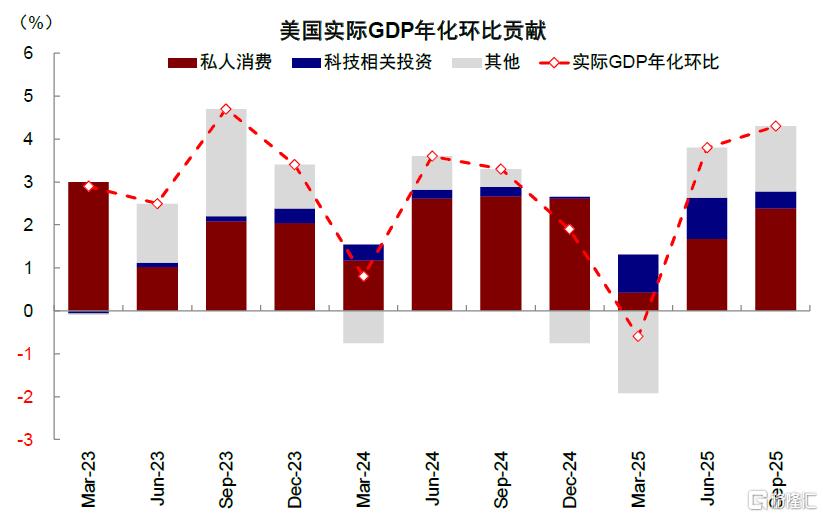
Core Insights - The article emphasizes the significant impact of AI on global economic growth and stock market performance, particularly in the U.S. and China, highlighting the importance of AI investments in driving GDP growth and stock returns [1][11]. Economic Contribution - U.S. technology hardware and software investments are projected to contribute 0.8 percentage points to the annualized GDP growth of 2.5% in the first three quarters of 2025 [2]. - Since 2023, U.S. non-farm business sector labor productivity has increased by 7.2% [4]. Stock Market Performance - Since the launch of ChatGPT at the end of 2022, the "Magnificent Seven" stocks in the U.S. contributed 45 percentage points to the S&P 500 index returns, accounting for over half of the total returns [1]. - In Hong Kong, seven leading tech stocks contributed 14 percentage points to the Hang Seng Index returns, representing 40% of the total returns since the launch of DeepSeek in early 2025 [7]. AI Industry Dynamics - The U.S. has a first-mover advantage in AI infrastructure, models, and talent, while China is rapidly catching up, particularly in open-source models [16][19]. - The global cloud computing market is expected to reach $692.9 billion in 2024, with North America holding a 54.3% market share and China at 16.8% [20]. Investment Landscape - U.S. nominal investment in AI technology hardware and software is approximately $1.05 trillion, accounting for 3.4% of nominal GDP, while China's investment is around $650 billion, also about 3.3% of nominal GDP [42]. - The AI investment landscape shows that the U.S. is primarily driven by private sector investments, while China's investments are significantly supported by government funding [52]. Funding Sources - U.S. AI investments are predominantly led by the private sector, with a total investment of $552 billion, compared to China's $900 billion, which includes substantial government support [52]. - The Chinese government has invested approximately $750 billion in AI, significantly higher than the U.S. government's $110 billion [57]. Investment Focus - U.S. investments are heavily focused on data centers and supporting infrastructure, while China is investing more in chip development and AI models [58]. - In 2025, U.S. leading companies are expected to invest $4 billion in the foundational layer, with 88% directed towards infrastructure [59]. Talent and Research - The number of AI researchers in China has grown significantly, with Chinese researchers holding three times as many AI patents as their U.S. counterparts [41]. - The rapid increase in AI talent in China is enhancing its research capabilities, narrowing the gap with the U.S. [41]. Future Outlook - The article suggests that the U.S. will continue to invest heavily in data centers and energy equipment, which will drive demand for related supply chains in China [88]. - China's ongoing need for chips and AI infrastructure indicates a sustained demand and policy support in the semiconductor sector [88].
从中金出走的人,去了哪里?
YOUNG财经 漾财经· 2026-01-20 12:21
Core Viewpoint - The article discusses the recent trends of talent outflow from China International Capital Corporation (CICC), highlighting the shift in employee preferences and the impact of regulatory changes on the investment banking landscape in China [4][5][6]. Group 1: Employee Outflow Trends - CICC, once a prestigious institution attracting top talent, has seen a significant decline in its appeal due to increased competition, regulatory tightening, and a reduction in compensation packages [5][6]. - Employees are leaving CICC for other brokerages, often following two paths: "high-level lateral moves" to similar top-tier firms or "strategic downshifts" to smaller firms for greater decision-making power [8][9]. - Notable examples of former CICC executives transitioning to other firms include Liang Hong, who moved to Huatai Securities, and Yang Sulan, who joined China Galaxy Securities, both continuing to leverage their expertise in the capital markets [8][9]. Group 2: Transition to Real Economy - A growing number of former CICC employees are leaving the financial sector entirely to join the real economy, driven by the 2023 "827 policy" which has cooled the IPO market and led to a contraction in investment banking activities [12]. - The demand for professionals with capital market experience in the real economy has surged, as companies seek expertise in compliance and market operations for financing and investor relations [12][13]. - Many former CICC employees are taking on key roles such as company secretaries, leveraging their backgrounds to manage corporate governance and investor relations effectively [13][14]. Group 3: Movement to Foreign Investment Banks - There is a notable trend of CICC talent moving to foreign investment banks, capitalizing on their international experience and networks [16]. - For instance, Jiang Zhiwei, a former CICC executive, joined Deutsche Bank, reportedly for a significantly higher salary, reflecting the competitive compensation landscape in foreign firms [16]. - This trend is not limited to CICC's core business lines but extends to its subsidiaries and affiliated institutions, indicating a broader talent migration within the financial services sector [16][17]. Group 4: Challenges and Issues - CICC Capital, once a leading player in alternative investments, has faced significant turmoil, including the fall of key executives due to allegations of misconduct, which has tarnished the reputation of the CICC brand [19]. - The issues within CICC Capital highlight serious governance and compliance failures, raising concerns about the integrity of the investment management industry as a whole [19].

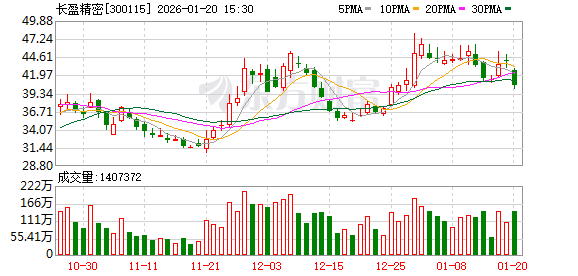
长盈精密:关于变更持续督导保荐代表人的公告
Zheng Quan Ri Bao· 2026-01-20 12:13
Core Viewpoint - Changying Precision announced the appointment of a new representative for ongoing supervision of its stock issuance project for 2023, ensuring continuity in oversight responsibilities [2] Group 1 - Changying Precision has appointed CICC as the sponsor for its 2023 stock issuance project [2] - Wu Xiaowu has stepped down from his role as the ongoing supervising representative due to internal work adjustments [2] - Liu Jiajie has been appointed to replace Wu Xiaowu and will continue to fulfill the ongoing supervision duties [2]