Proya(603605)

Search documents
珀莱雅(603605) - 珀莱雅化妆品股份有限公司2024年年度权益分派实施公告
2025-06-10 10:45
债券代码:113634 债券简称:珀莱转债 证券代码:603605 证券简称:珀莱雅 公告编号:2025-027 珀莱雅化妆品股份有限公司 2024年年度权益分派实施公告 本公司董事会及全体董事保证本公告内容不存在任何虚假记载、误导性陈述或者重大遗 漏,并对其内容的真实性、准确性和完整性承担法律责任。 重要内容提示: 每股分配比例 A 股每股现金红利1.19元(含税) | 股份类别 | 股权登记日 | 最后交易日 | 除权(息)日 | 现金红利发放日 | | --- | --- | --- | --- | --- | | A股 | 2025/6/16 | - | 2025/6/17 | 2025/6/17 | 差异化分红送转: 是 一、通过分配方案的股东大会届次和日期 本次利润分配方案经珀莱雅化妆品股份有限公司(以下简称"公司") 2025 年 5 月 19 日的 2024年年度股东大会审议通过。 二、分配方案 1. 发放年度:2024年年度 2. 分派对象: 截至股权登记日下午上海证券交易所收市后,在中国证券登记结算有限责任公司上海分 公司(以下简称"中国结算上海分公司")登记在册的本公司全体股东。 根据《 ...

2025年美容护理中期投资策略:领跑新消费,美妆个护全面崛起
Shenwan Hongyuan Securities· 2025-06-10 04:18
Group 1 - The beauty and personal care sector has shown strong performance in Q1 2025, with the SW Beauty Care Index rising by 13.4%, leading all 31 SW primary industries [4][10][12] - The cosmetics segment is focusing on enhancing brand matrices and introducing new ingredients, benefiting from an optimized competitive landscape [4][6] - The medical beauty market is evolving with new products stimulating consumer interest, and domestic companies are expected to become major competitors in the light medical beauty sector [4][6] Group 2 - The e-commerce sector is witnessing new consumption models and brands, which are helping to drive growth in the industry [4][6] - The report recommends several companies in the cosmetics sector, including Up Beauty and Proya, which have low PE multiples and strong growth potential [4][6] - In the medical beauty segment, companies with high R&D barriers and strong profitability, such as Aimeike, are highlighted as key investment opportunities [4][6] Group 3 - The personal care market is projected to reach CNY 283.3 billion by 2024, with a compound annual growth rate (CAGR) of 8.4% from 2023 to 2028 [32][34] - Domestic brands are increasingly replacing foreign brands in the personal care sector, with a notable rise in innovative products and marketing strategies [32][36] - The high-end market is experiencing significant growth, with premium products seeing a 27% increase in average transaction value in H2 2024 [44]




商贸零售行业6月投资策略:618大促表现稳中有进,新消费行情持续扩圈
Guoxin Securities· 2025-06-10 03:20
Core Insights - The report maintains an "outperform" rating for the retail sector, highlighting a stable performance during the 618 shopping festival, with significant growth in sales and user engagement across major platforms like JD and Tmall [1][2][10] - New consumption trends are emerging, driven by instant retail and AI technology, enhancing consumer interaction and operational efficiency for merchants [2][20][24] Retail Sector Performance - During the 618 promotional period, JD reported over 200% year-on-year growth in transaction volume, order quantity, and number of users within the first hour of the event [1][10] - Tmall's first phase saw 217 brands surpassing 100 million yuan in sales, indicating strong brand performance [1][10] - Instant retail platforms like Meituan have also shown impressive results, with over 50 product categories experiencing more than 100% growth compared to the previous year [10][20] Investment Recommendations - The report suggests focusing on sectors with strong growth potential, including: 1. **Beauty and Personal Care**: Companies like Dongkang Oral Care and Maogeping are expected to achieve significant growth due to innovative product offerings and effective use of e-commerce channels [2][3] 2. **Gold and Jewelry**: The sector is anticipated to benefit from a low base effect in Q2, with brands like Chaohongji and Caibai showing promising sales [3][12] 3. **IP Toys**: Companies like Pop Mart and Blokus are well-positioned to capitalize on the emotional value for young consumers and the potential for overseas market expansion [3][12] 4. **Cross-border E-commerce**: Brands like Anker Innovations are expected to leverage favorable trade conditions for growth [3] Market Trends - The retail sector is experiencing a shift towards simplified promotional rules and extended event durations, with Tmall starting pre-sales earlier than in previous years [19] - AI technology is increasingly integrated into retail operations, enhancing customer service and marketing effectiveness [24][28] Recent Industry Data - In April, the total retail sales of consumer goods reached 37,174 billion yuan, with a year-on-year growth of 5.1%, indicating a steady recovery in consumer spending [28][29] - Online retail sales for the first four months of 2025 reached 47,419 billion yuan, growing by 7.7% year-on-year, with physical goods online sales accounting for 24.3% of total retail sales [29][30] Stock Performance - In May 2025, the retail index rose by 1.66%, slightly underperforming the CSI 300 index, while the beauty and personal care index increased by 2.55%, outperforming the broader market [42][47] - Notable stock performers in the retail sector included Liren Liyang and Ruoyuchen, with significant price increases [52][55]
商贸零售行业周报:高端中式黄金品牌“琳朝珠宝”获得天使轮投资-20250608
KAIYUAN SECURITIES· 2025-06-08 14:37
Investment Rating - The industry investment rating is "Positive" (maintained) [1] Core Viewpoints - The report highlights the emergence of high-end Chinese gold brands, particularly "Lin Chao Jewelry," which has completed angel financing and is expected to reshape the high-end gold market with its unique craftsmanship and brand positioning [4][23][25] - The retail sector is experiencing a shift towards emotional consumption, with brands that possess differentiated product capabilities and deep consumer insights gaining traction [28] - The jewelry sector, particularly the watch and jewelry segment, has shown significant growth, outperforming other retail segments [6][15] Summary by Relevant Sections Retail Market Overview - The retail industry index rose by 1.29% during the week of June 2 to June 6, 2025, outperforming the Shanghai Composite Index by 0.16 percentage points [6][13] - The jewelry segment has been the best-performing sub-sector, with a weekly increase of 2.78% and a year-to-date increase of 30.59% [15][18] High-End Chinese Gold Brand "Lin Chao Jewelry" - Lin Chao Jewelry focuses on high-end handmade gold jewelry, integrating traditional cultural elements into its designs [4][23] - The brand has only one physical store in Lanzhou and emphasizes exclusivity, with a delivery period of at least one year for its products [25] - The company offers a "Heritage Series" for emotional customization, allowing customers to engrave family sayings or fingerprints, enhancing its luxury appeal [25] Investment Recommendations - Investment focus includes high-quality companies in high-growth sectors driven by emotional consumption themes, particularly in gold and jewelry [7] - Recommended brands include "Lao Pu Gold," "Chao Hong Ji," and "Zhou Da Sheng" for their differentiated product offerings and consumer insights [28][30] - The report also suggests monitoring retail companies that are actively transforming and exploring new strategies, such as "Yonghui Supermarket" and "Ai Ying Shi" [28] Company Performance Highlights - "Lao Pu Gold" reported a revenue of 8.506 billion yuan in FY2024, a 167.5% increase, and a net profit of 1.473 billion yuan, up 253.9% [30] - "Chao Hong Ji" achieved a revenue of 6.518 billion yuan in 2024, a 10.5% increase, with a significant growth in Q1 2025 [36] - "Zhou Da Sheng" faced challenges with a revenue drop of 14.7% in 2024, but future growth potential is anticipated through brand optimization [40]



ESG随笔|汇聚爱的力量,愿我们的下一代都享有美好的教育
Xin Lang Cai Jing· 2025-06-06 09:18
Core Insights - The article highlights the importance of education in transforming communities, particularly in underdeveloped areas like Funing County, Yunnan, where innovative educational programs are being implemented to enhance children's learning experiences [1][10]. Group 1: Educational Initiatives - The article describes the establishment of a vegetable garden at Funing County Fourth Primary School, which serves as a practical learning space for students, allowing them to engage in hands-on agricultural activities [2][4]. - A "Dream Classroom" funded by the Proya Public Welfare Foundation is introduced, where students participate in a course focused on local cuisine, fostering a sense of identity and pride in their cultural heritage [4][5]. - The article emphasizes the unique educational approach that combines local culture with practical skills, showcasing how students create models of traditional dishes using clay, which enhances their confidence and knowledge about their hometown [4][5]. Group 2: Corporate Social Responsibility - Proya Public Welfare Foundation's initiative, "Love in the Border Area: Lighting Up the National Gate," aims to support education in remote areas by collaborating with local schools and communities [8][11]. - The foundation's approach involves engaging various stakeholders, including suppliers and local governments, to create a comprehensive support system for educational development [8][11]. - The article notes that the foundation has been active in education since 2007 and has established partnerships to enhance educational resources and teacher training in underprivileged regions [8][11]. Group 3: Educational Philosophy - The article reflects on the fundamental belief that education should be beautiful and transformative, aiming to instill a love for learning in students [10][11]. - It underscores the significance of empowering teachers as a critical component of educational success, aligning with the broader goal of providing quality education for all [11].


海蓝之谜们10倍增长?深度解析 618美妆首轮战报
Sou Hu Cai Jing· 2025-06-06 02:45
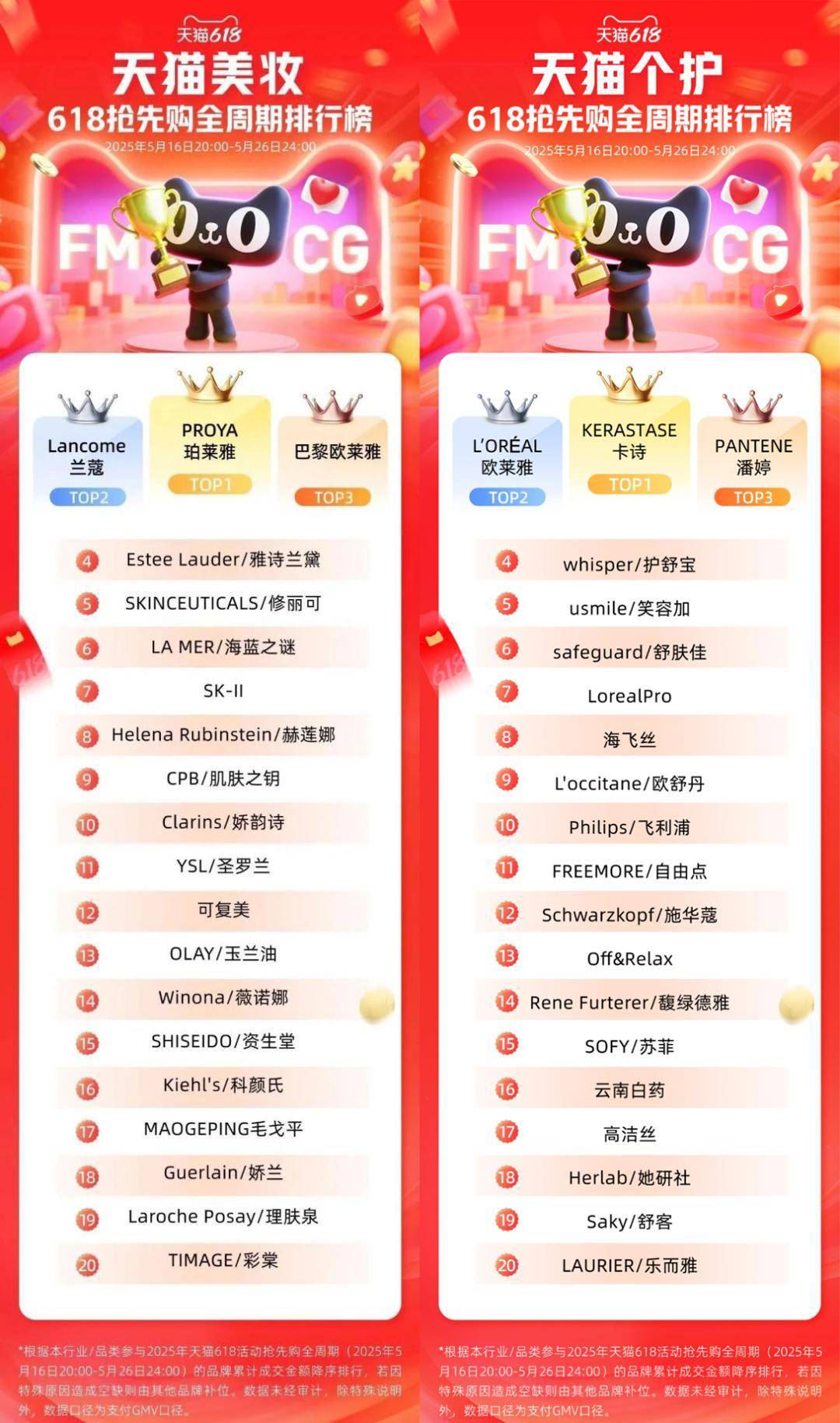
Core Insights - The 618 shopping festival has seen significant changes in rules and strategies across e-commerce platforms, leading to a transformation in the beauty brand landscape, with international brands making a strong comeback while domestic brands face challenges [1][22] - The shift from a "price war" era to a focus on brand value and consumer experience marks a new phase for beauty brands, emphasizing the importance of quality and innovation [24] E-commerce Platform Performance - Tmall's 618 pre-sale data shows that international brands dominate the top rankings, with only a few domestic brands making it into the top 20, indicating a 5:15 ratio of domestic to international brands [2] - JD.com reported a nearly 300% year-on-year increase in sales for perfume and makeup sets on May 20, with overall beauty product sales doubling during the festival [5][11] - Douyin's beauty brand rankings have shifted significantly, with high-end international brands achieving explosive growth, while white-label brands have virtually disappeared from the charts [9][22] Changes in Promotional Strategies - The 618 festival duration has been extended to 35-40 days, with platforms simplifying promotional mechanisms to enhance consumer shopping experiences [13][16] - Platforms have moved towards straightforward discount strategies, eliminating complex promotional tactics that previously deterred consumer engagement [16][17] - E-commerce platforms are now focusing on balancing the interests of consumers, platforms, and merchants, moving away from strategies that heavily favored consumers at the expense of merchants [17][18] Brand Dynamics - International beauty brands have regained competitive advantages during the 618 festival, with brands like Helena and SK-II seeing significant sales growth on Douyin [22][23] - The shift in platform strategies towards supporting high-quality brands is beneficial for established international brands and leading domestic brands like Proya, but poses challenges for mid-tier domestic brands [23][24] - E-commerce platforms are investing heavily in brand support, with Tmall and JD.com committing substantial resources to foster brand growth and improve the overall shopping experience [19][21]



珀莱雅(603605) - 珀莱雅化妆品股份有限公司关于召开2024年度业绩说明会的公告
2025-06-05 07:45
| 证券代码:603605 | 证券简称:珀莱雅 | 公告编号:2025-024 | | --- | --- | --- | | 债券代码:113634 | 债券简称:珀莱转债 | | 珀莱雅化妆品股份有限公司 关于召开 2024 年度业绩说明会的公告 本公司董事会及全体董事保证本公告内容不存在任何虚假记载、误导性陈述 或者重大遗漏,并对其内容的真实性、准确性和完整性承担法律责任。 重要内容提示: 公司已于 2025 年 4 月 25 日在上海证券交易所网站(www.sse.com.cn)披露 公司《2024 年年度报告》,为便于广大投资者更全面深入地了解公司 2024 年度 经营成果、财务状况,公司计划于 2025 年 6 月 13 日(星期五)15:00-16:00 举 行 2024 年度业绩说明会,就投资者关心的问题进行交流。 一、说明会类型 本次投资者说明会以视频录制结合网络文字互动方式召开,公司将针对 2024 年度的经营成果及财务指标的具体情况与投资者进行互动交流和沟通,在 信息披露允许的范围内就投资者普遍关注的问题进行回答。 会议召开时间:2025 年 6 月 13 日(星期五)15:00-16 ...
招银国际每日投资策略-20250605
Zhao Yin Guo Ji· 2025-06-05 06:46
Market Performance - The Hang Seng Index closed at 23,654, up 0.60% for the day and 38.75% year-to-date [1] - The Hang Seng Tech Index rose by 0.57%, with a year-to-date increase of 38.65% [1] - The Shanghai Composite Index increased by 0.42%, reflecting a 13.49% rise year-to-date [1] Sector Performance - The Hang Seng Financial Index increased by 0.36% with a year-to-date gain of 38.86% [2] - The Hang Seng Industrial Index rose by 0.88%, showing a year-to-date increase of 44.95% [2] - The Hang Seng Real Estate Index decreased by 0.74%, with a year-to-date decline of 9.95% [2] Company Analysis - China General Nuclear Power Corporation (中广核矿业) announced a new pricing mechanism for its uranium sales, reducing the fixed price proportion from 40% to 30% and setting the 2026 fixed price at $94.22 per pound, significantly higher than the previous year's price of $61.78 per pound [4] - The new pricing mechanism is expected to alleviate market concerns regarding pricing uncertainty, leading to a 17% and 23% upward revision in profit forecasts for 2026 and 2027, respectively [4] Investment Focus - Geely Automobile (吉利汽车) is rated as a "Buy" with a target price of 24.00 HKD, representing a potential upside of 30% [5] - Xpeng Motors (小鹏汽车) is also rated as a "Buy" with a target price of 28.00 USD, indicating a potential upside of 37% [5] - Luckin Coffee (瑞幸咖啡) is rated as a "Buy" with a target price of 40.61 USD, showing a potential upside of 14% [5]


珀莱雅化妆品股份有限公司 实施2024年度权益分派时“珀莱转债”停止转股的提示性公告
Zhong Guo Zheng Quan Bao - Zhong Zheng Wang· 2025-06-04 23:18
Group 1 - The company announced a profit distribution plan for the year 2024, proposing a cash dividend of 11.90 yuan per 10 shares to all shareholders, amounting to a total of approximately 468.90 million yuan, which represents 30.21% of the net profit attributable to shareholders [3] - The total share capital for the dividend calculation is based on 396,247,555 shares, excluding 2,210,825 shares held in the company's repurchase account [3] - The profit distribution plan was approved at the annual shareholders' meeting held on May 19, 2025, and further details will be disclosed on the Shanghai Stock Exchange website [3][4] Group 2 - The company will suspend the conversion of its convertible bonds from June 10, 2025, until the equity distribution registration date, with the resumption of conversion on the first trading day after the registration date [5] - Holders of convertible bonds wishing to enjoy the equity distribution must convert their bonds by June 9, 2025 [5] - The company will adjust the conversion price of the convertible bonds in accordance with the relevant regulations following the implementation of the equity distribution plan [4]
主品牌营收增速放缓,珀莱雅“盯上”医美赛道
Bei Jing Shang Bao· 2025-06-04 13:09
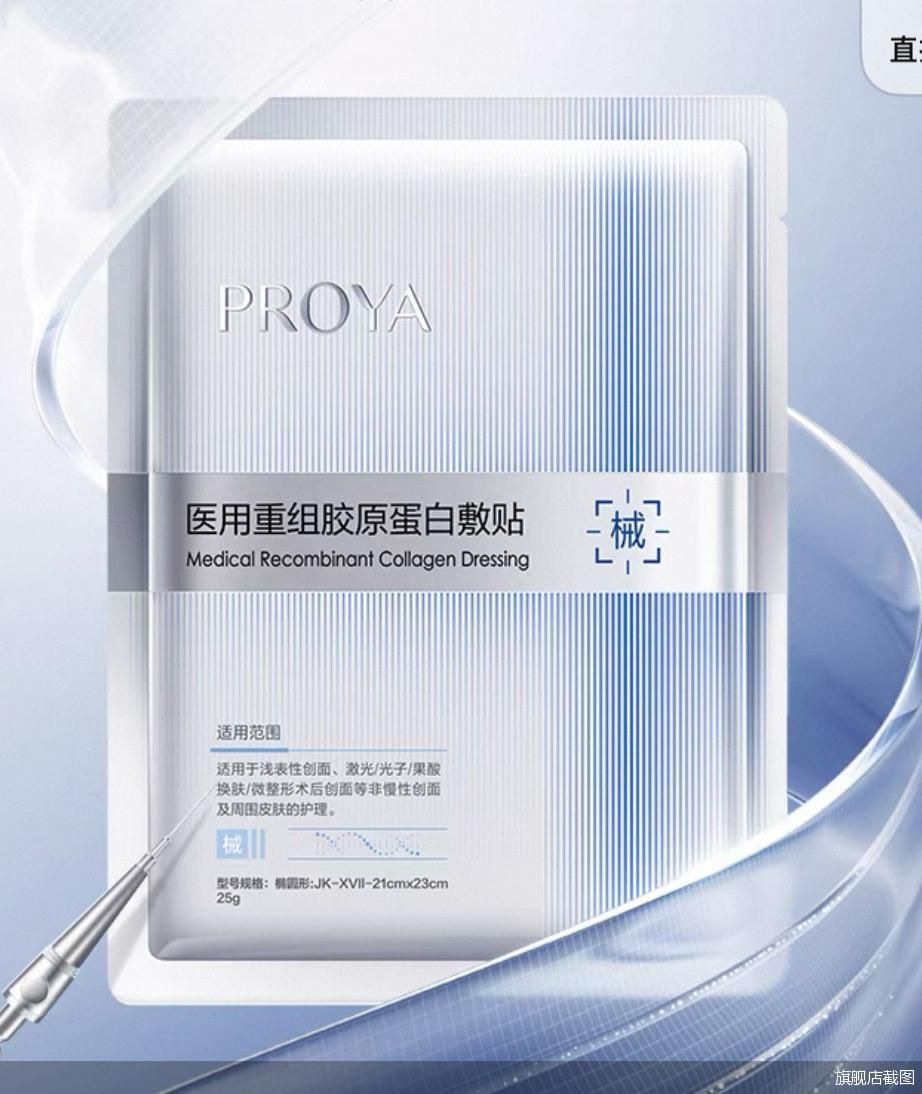
Core Viewpoint - The beauty brand Proya is entering the medical aesthetics market with its first medical device product, a collagen patch aimed at post-surgery recovery, as it seeks new growth avenues amid slowing growth of its main brand [1][3][5]. Company Summary - Proya has launched its first medical device product, the medical collagen patch, which is designed for post-surgery skin care [1][3]. - The product is priced at 163 yuan after discount, down from 198 yuan, and is targeted at various skin recovery scenarios [3]. - Proya's main brand revenue growth is slowing, with a reported revenue of 85.81 billion yuan in 2024, showing less than 20% growth compared to previous years [5][6]. - The company aims to achieve a revenue scale exceeding 100 billion yuan in 2024 and has set a goal to enter the top ten global cosmetics companies within the next decade [6][9]. Industry Summary - The medical aesthetics market in China is rapidly expanding, with a market size of approximately 266.9 billion yuan in 2023, projected to exceed 700 billion yuan by 2031 [3][4]. - Other domestic beauty brands, such as Shanghai Jahwa and Beitaini, are also entering the medical aesthetics space, indicating a competitive landscape [4]. - The medical aesthetics sector is still in a phase of complete competition, with no dominant brands yet established, presenting opportunities for new entrants like Proya [4][9]. - Proya's entry into the medical aesthetics market is seen as a necessary strategy to maintain growth and compete with international brands, which have stronger brand positioning and marketing capabilities [9].