SMIC(688981)

Search documents
半导体ETF南方(159325)开盘涨1.00%,重仓股中芯国际涨3.26%,寒武纪涨1.43%
Xin Lang Cai Jing· 2026-01-05 01:43
Core Viewpoint - The semiconductor ETF from Southern (159325) opened with a gain of 1.00%, indicating positive market sentiment towards the semiconductor sector [1] Group 1: ETF Performance - The Southern Semiconductor ETF (159325) opened at 1.509 yuan, reflecting a 1.00% increase [1] - Since its establishment on October 31, 2024, the fund has achieved a return of 49.44% [1] - The fund's performance over the past month has been a return of 5.54% [1] Group 2: Major Holdings - Key stocks in the Southern Semiconductor ETF include: - SMIC (中芯国际) with a gain of 3.26% [1] - Cambrian (寒武纪) up by 1.43% [1] - Haiguang Information (海光信息) increased by 1.38% [1] - Northern Huachuang (北方华创) rose by 1.94% [1] - Lanke Technology (澜起科技) up by 1.44% [1] - Zhaoyi Innovation (兆易创新) increased by 3.30% [1] - Zhongwei Company (中微公司) up by 1.94% [1] - OmniVision (豪威集团) rose by 0.37% [1] - Changdian Technology (长电科技) increased by 1.14% [1] Group 3: Management Information - The fund is managed by Southern Fund Management Co., Ltd. [1] - The fund managers are Zhao Zhuoxiong and He Dianhong [1] - The benchmark for the ETF's performance is the CSI Semiconductor Industry Select Index [1]




国内半导体行业并购浪潮全面来袭,龙头企业密集出手整合产业链
Jin Rong Jie· 2026-01-05 01:33
近期国内半导体行业重磅重组并购方案密集出炉,行业整合节奏显著加快。2025年12月30日,中芯国际 发布公告,拟通过发行股份方式,收购国家集成电路产业投资基金等5家机构合计持有的中芯北方49% 股权,交易总价达406.01亿元。 次日,两家半导体企业同步披露并购计划。其中,停牌10个工作日后的中微公司公告称,拟采用发行股 份及支付现金相结合的方式,收购杭州众芯硅等41名交易对方合计持有的杭州众硅64.69%股权,同时 拟向不超过35名特定投资者发行股份募集配套资金;华虹半导体则同步公告,计划通过发行股份收购华 虹集团等4名交易对方持有的华力微97.4988%股权,同样拟向不超过35名符合条件的特定对象发行股票 募集配套资金。 这一系列密集落地的并购动作,既彰显了头部企业强化产业链布局、提升核心竞争力的战略意图,更标 志着国内半导体行业重组并购浪潮全面来袭。 半导体行业并购活跃度走高,核心驱动力源于行业景气度持续回暖、企业盈利能力显著提升,以及复杂 国际环境下强化本土产业链韧性的迫切需求。从"点"上的技术突破到"链"上的协同发展,这一系列资本 运作背后,是在人工智能(AI)等多因素推动下,行业正通过资源整合寻求 ...

AI驱动存储大周期,半导体设备确定性凸显,半导体设备ETF(561980)5日吸金2.2亿元
Sou Hu Cai Jing· 2026-01-05 01:21
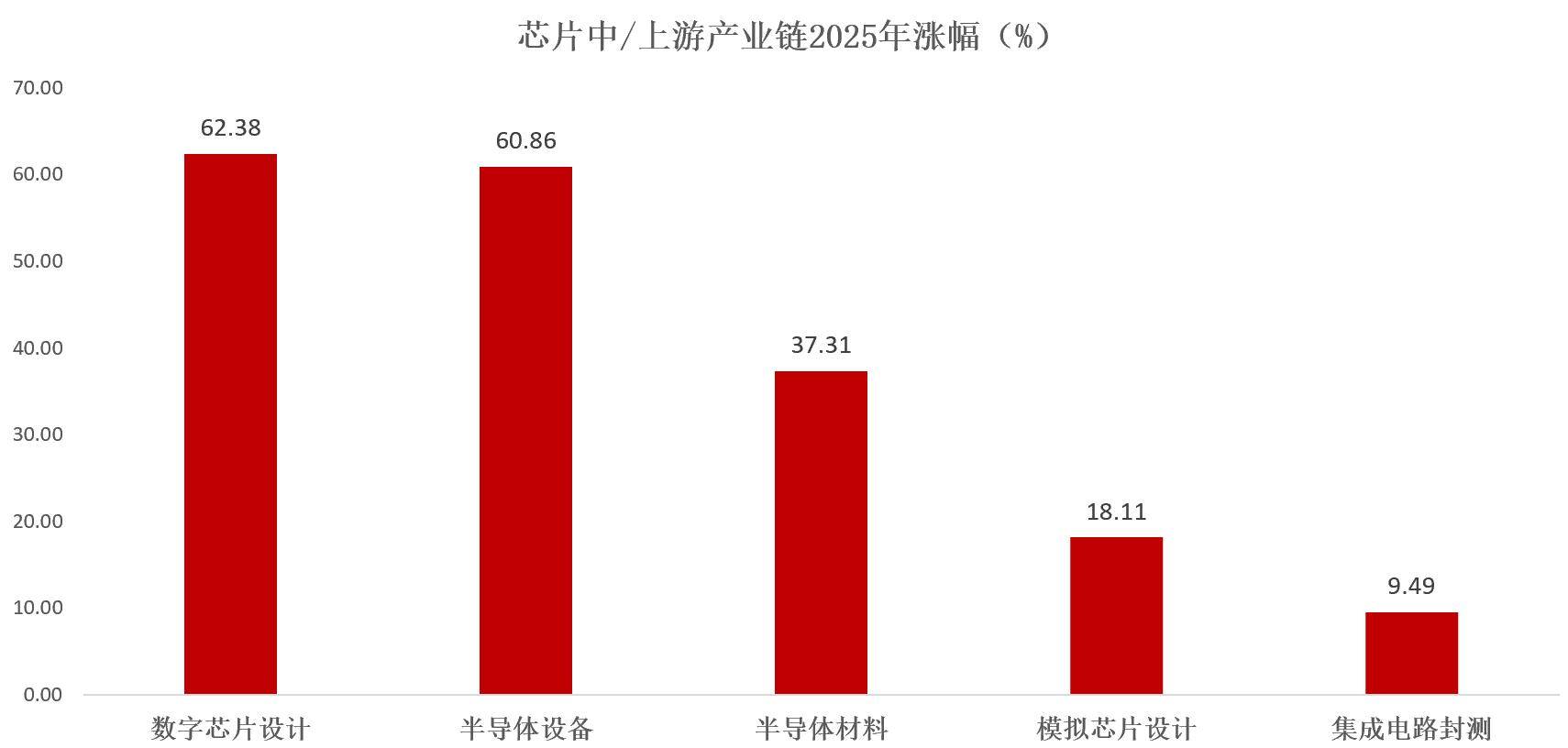
Group 1 - The semiconductor industry is expected to see significant growth, with chip design, semiconductor equipment, and materials projected to rise by 62.38%, 60.86%, and 37.31% respectively by 2025 [2] - The semiconductor theme index, focusing on the aforementioned three sectors, is anticipated to achieve a growth rate of 62.33% in 2025, with the semiconductor equipment ETF (561980) experiencing a net inflow of over 220 million yuan in the last five trading days [2] - The demand for semiconductor equipment is driven by advancements in AI and domestic substitution, particularly in the storage chip sector, which is reshaping the global pricing cycle [4][5] Group 2 - The storage chip segment accounts for approximately 30% of the integrated circuit market, making it a significant area for semiconductor equipment demand [5] - The global storage industry is entering a new upcycle, with DRAM and NAND prices rising since September 2024, and this trend is expected to continue through 2026 [5] - The shift towards 3D architecture in DRAM and NAND is projected to increase the service market for related equipment by approximately 1.7 times and 1.8 times respectively [6] Group 3 - The semiconductor equipment ETF (561980) tracks the CSI semiconductor index, which has a high concentration of leading companies in the semiconductor supply chain, with the top five companies accounting for over 50% of the index [6][8] - The CSI semiconductor index has shown a maximum increase of over 570% since the last upcycle, with a notable 63.92% increase in 2025, outperforming other semiconductor indices [7][8] - The high concentration of equipment, materials, and design sectors in the CSI semiconductor index indicates a strong potential for domestic substitution and ongoing market and policy support [8]

三连发!中芯国际、中微公司、华虹公司接连披露重大资产重组新进展
Zheng Quan Ri Bao Wang· 2026-01-05 01:01
本报讯 (记者毛艺融)2026年1月1日,两家半导体领域龙头企业并购重组迎来关键进展。华虹半导体 有限公司(以下简称"华虹公司")发布发行股份收购上海华力微电子有限公司(以下简称"华力微") 97.5%股权的交易草案,中微半导体设备(上海)股份有限公司(以下简称"中微公司")则披露发行股 份及支付现金购买杭州众硅电子科技有限公司64.69%股权的预案,并将于1月5日复牌。 此前2025年12月30日,中芯国际集成电路制造有限公司(以下简称"中芯国际")也披露了发行股份收购 控股子公司中芯北方集成电路制造(北京)有限公司(以下简称"中芯北方")49%股权的交易草案。 据统计,自"科创板八条"政策发布以来,科创板公司已累计披露近170单股权收购交易,其中2025年超 过100单,政策助推效果显著。重大资产重组达50单,其中2025年达37单,远超2019年至2023年累计的 17单。 科创板股权收购交易均围绕产业整合展开,半导体、生物医药、软件行业交易数量位居前三。随着行业 头部企业陆续上市,资本市场正成为并购重组的主渠道。龙头企业积极把握政策机遇与市场窗口,通过 并购补齐产业链关键环节,增强核心竞争力。 上述三 ...
中芯国际拟406亿元收购子公司中芯北方剩余股权 |财富周历 动态前瞻
Sou Hu Cai Jing· 2026-01-05 00:17
A-Share Market - As of December 30, 2025, over 2,800 A-share listed companies have received broker research, indicating that more than half of the market's listed companies have attracted broker attention. The most focused sectors include machinery, electronics, and pharmaceuticals, with over 290 companies in each sector receiving broker research [2] - On December 29, Ganfeng Lithium announced it received a notice from the Yichun Public Security Bureau regarding prosecution for suspected insider trading, with the case now transferred to the procuratorate for review and prosecution. The company had previously received an administrative penalty from the Jiangxi Securities Regulatory Bureau in July 2024 and has complied with disclosure obligations and paid fines [2] - Minmetals Development announced on December 29 that it received a notice from its actual controller, China Minmetals, regarding a planned major asset restructuring. The company intends to acquire equity stakes in Minmetals Mining and Luzhong Mining from its controlling shareholder through asset swaps, share issuance, and cash payments, while also raising matching funds [2] - On December 29, Huali Co., a leader in decorative composite materials, disclosed the termination of its intention to acquire a 51% stake in Beijing Zhongke Huilian Technology Co., due to failure to reach consensus on core transaction terms [3] - On December 22, Beijing Haizhi Technology Group submitted its listing application to the Hong Kong Stock Exchange for the second time, having previously let its application expire in June 2025. The company reported net losses of 176 million, 266 million, 93.73 million, and 128 million yuan for the years 2022, 2023, 2024, and the first half of 2025, respectively, primarily due to high upfront investments in upgrading products and technology [3] - On December 29, SMIC announced plans to issue 547 million shares to acquire a 49% stake in SMIC North from five shareholders, with a transaction price of 40.601 billion yuan [3] - As of December 28, 19 A-share companies have successfully listed on the Hong Kong capital market this year, a significant increase of 533% compared to 3 companies in 2024, accounting for over 50% of the total fundraising for new shares in Hong Kong [4] Financial Management - On January 5, 2026, new local government special bonds and replacement bonds will be issued, with Shandong Province planning to issue its first batch of 24.609 billion yuan in bonds, including 24.609 billion yuan for replacing existing hidden debts [5] - As of September 2025, China's banking sector had foreign financial assets of 1.8114 trillion USD and foreign liabilities of 1.4399 trillion USD, resulting in a net foreign asset of 371.6 billion USD, with net liabilities in RMB of 224.9 billion USD and net assets in foreign currency of 596.5 billion USD [5] - As of the end of November, there were 165 public fund management institutions in China, with a total net asset value of public funds amounting to 37.02 trillion yuan, a slight increase of approximately 60 billion yuan from the end of October [5] - As of December 28, the issuance of FOF (fund of funds) products surged to 83.828 billion units, marking a historical high, with both the number and scale of products reaching new records as more investors shift their funds into these products [5]



1月5日早餐 | 全球半导体公司大涨;蓝箭航天IPO获受理
Xuan Gu Bao· 2026-01-05 00:09
Market Overview - Major US stock indices showed mixed performance, with the S&P 500 rising by 0.19% and the Dow Jones increasing by 0.66%, while the Nasdaq fell by 0.03% [1] - Tesla shares dropped by 2.6%, influenced by software stocks offsetting gains in chip stocks, while Salesforce fell over 4% and Nvidia rose over 1% [1] - The White House's decision to delay tariffs on certain household goods led to an 8% increase in shares of RH [1] Semiconductor Sector - SanDisk surged nearly 16%, Micron Technology rose over 10%, ASML increased by over 8%, and TSMC hit a historical high with a rise of over 5% [2] - The semiconductor sector is expected to benefit from increased capital expenditure in 2026, with analysts projecting a tightening market for memory chips, leading to significant price increases [11] Chinese Tech Stocks - The China concept index rose over 4%, with Baidu increasing by 15% and Alibaba by over 6% [3] - Baidu announced plans to spin off Kunlun Chip for independent listing on the Hong Kong Stock Exchange, resulting in a 9% rise in its stock [10] Economic Policies and Initiatives - The State Council approved the draft of the Water Supply Regulations and the revised Drug Administration Law Implementation Regulations [4] - Shanghai's measures to accelerate the construction of low-altitude economic advanced manufacturing clusters include support for eVTOL and industrial-grade drones, with funding up to 50 million yuan [5] - The State Council issued a solid waste comprehensive governance action plan aiming for a 45 billion-ton annual comprehensive utilization of major solid waste by 2030 [5] IPO and Corporate Actions - Blue Arrow Aerospace's IPO application was accepted, aiming to raise 7.5 billion yuan for reusable rocket technology upgrades and capacity enhancement [12] - Multiple companies announced acquisitions, including Zhongwei Company planning to acquire a 64.69% stake in Hangzhou Zhonggui, and Meike Home proposing to buy 100% of Wande Technology [15][16] Lithium and Battery Materials - Tianqi Lithium forecasted a net profit of 1.1 to 1.6 billion yuan for 2025, driven by strong demand in the new energy vehicle and energy storage markets [29] - The lithium hexafluorophosphate market is expected to remain tight, with significant price increases anticipated due to strong demand and cautious supply expansion [13] Consumer Market Trends - Hainan's duty-free market saw a significant increase during the New Year holiday, with sales reaching 712 million yuan, a year-on-year growth of 128.9% [10][14]





广发证券26年港股策略展望:日积跬步,水涨船高
Xin Lang Cai Jing· 2026-01-04 23:25
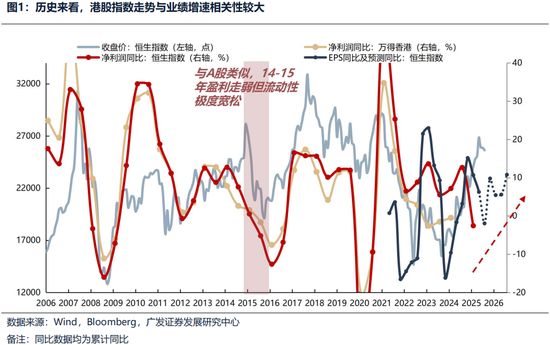
Group 1 - The current rise in Hong Kong stocks is supported by fundamentals, with signs of structural recovery in profitability starting from the second half of 2024 due to stabilization in both domestic and external demand and macroeconomic policy support [1][24] - The Hang Seng Index is transitioning from traditional economic cycles to focus on hard technology sectors such as AI applications, new energy, and semiconductors, with the weight of new economy sectors in the index increasing from 17% to nearly 50% [1][34] - The performance of Hong Kong stocks is expected to shift from being liquidity-driven to being driven by both profitability and liquidity, with earnings growth projected to rebound to 10.8% in 2026 [1][25] Group 2 - The current low valuation levels of quality companies in Hong Kong stocks highlight their growth potential, and the market sentiment has likely adjusted to current liquidity and emotional factors [6][24] - The structural recovery in profitability is evident, with emerging industries experiencing rapid growth while traditional sectors are still stabilizing [28][29] - The performance of individual stocks correlates positively with earnings growth, with high-growth companies significantly outperforming those under profit pressure [33] Group 3 - The upcoming liquidity improvements, including potential dovish signals from the new Federal Reserve chair and a decrease in HIBOR rates, could provide upward momentum for Hong Kong stocks [52][70] - The AH premium is expected to decline further due to increased investment from insurance funds in H-shares and the growing convenience for foreign capital to allocate resources in Hong Kong [71][74] - The spring market rally in Hong Kong stocks has historically shown a high probability of positive returns, indicating a potential opportunity for investors [56][60]




华尔街见闻早餐FM-Radio | 2026年1月5日
Hua Er Jie Jian Wen· 2026-01-04 22:53
Market Overview - European stocks opened strong in 2026, with the pan-European index reaching a historical high, driven by a 7% increase in ASML shares. In contrast, U.S. stocks faced a challenging rebound, with Tesla shares dropping 2.6% and software stocks offsetting gains in chip stocks, leading to a more mixed performance among major indices [2][8] - The offshore RMB saw significant fluctuations, rising over 100 points and breaking the 6.97 mark for the first time in over two and a half years. Meanwhile, U.S. Treasury yields experienced a V-shaped rebound, with the 30-year yield hitting a four-month high [2][8] Key Events - The U.S. conducted an airstrike in Venezuela, capturing President Maduro and his wife, with Trump stating that the U.S. would manage Venezuela until a "safe" transition is implemented, indicating deep involvement in the oil industry [3][12] - Russia strongly urged the U.S. to release Maduro and his wife, emphasizing the need for dialogue to resolve issues between the U.S. and Venezuela [15][22] - The global oil market showed signs of absorbing the geopolitical shock from the U.S. actions in Venezuela, as key oil facilities remained undamaged and the country's production accounted for less than 1% of global supply [16][34] Company Developments - Baidu's Kunlun Chip is estimated to be worth approximately $22 billion, which could represent about 45% of Baidu's total market value if it receives a similar valuation to Cambricon [25] - Semiconductor industry consolidation is accelerating, with major companies like SMIC and Huahong Semiconductor announcing significant mergers and acquisitions to strengthen their market positions [31][33] - BYD announced a target of delivering 4.6 million electric vehicles in 2025, marking a 7.7% increase, while Tesla's fourth-quarter deliveries fell short of expectations, declining 16% year-over-year [25] Industry Insights - The low-altitude economy is gaining traction, with significant government support and projected market growth to reach 1.5 trillion yuan by 2025, driven by advancements in drone technology and applications [30][36] - The commercial space sector is witnessing rapid development, with multiple rocket launches planned for 2025, contributing to China's ambitions in space exploration and technology [35] - The nuclear fusion sector is expected to accelerate, with significant investments projected in the coming years, as China aims to establish a robust nuclear fusion industry [38]


2026年电子行业十大预测
2026-01-04 15:35
Summary of Key Points from the Conference Call Industry Overview - The conference call focuses on the **2026 Electronic Industry Predictions**, particularly in the **cloud computing** and **AI** sectors, highlighting significant trends and developments expected in the coming years [2][3][4]. Key Insights and Arguments Cloud Computing Sector - The **domestic cloud computing** sector, especially **domestic computing power**, is anticipated to experience substantial growth by the end of 2026, with major wafer fabs expected to release ample capacity, alleviating previous supply constraints [2][3]. - **ByteDance's** data consumption has shown remarkable growth, increasing from approximately **15-16 trillion** in May 2025 to over **50 trillion** by December 2025, indicating strong demand for domestic computing power [2]. - The **demand for domestic computing power** is projected to exceed **100 trillion** by mid-2026, setting a solid foundation for the performance of domestic computing companies [2][3]. - Leading companies like **Cambricon** and **Hygon** are expected to dominate in capacity supply and local government bidding, benefiting from the rising demand for inference chips, with **ASIC chips** likely to become as significant as **GPU** chips [2][3]. - The **domestic CS market** is under increasing pressure for localization, with local suppliers like **Shenghe Jingwei** expected to capture more market share in supercomputing nodes [2][3]. Edge Computing Sector - The **edge computing (SOC)** sector is set to benefit from the AI innovation wave, with smart hardware products such as glasses and robots expected to see significant development opportunities [4]. - The emergence of **multi-modal applications** (e.g., smart assistants) is anticipated to drive adjustments in app developers' permission management, leading to a diverse market landscape in 2026 [4]. 3D DRAM Technology - Despite slower-than-expected progress in the **3D DRAM** supply chain in 2025, optimism remains for 2026, with collaborations between **Zhaoyi Innovation** and leading companies indicating potential breakthroughs and new application scenarios [5]. Upcoming Trends and Technologies - Several key technology and product trends are expected in the second half of 2025, including the launch of specialized 3D hardware for mobile and automotive applications, which will enhance edge computing and storage capabilities [6][7]. - The **AI terminal devices** market is projected to gain traction, with major North American clients like **OpenAI** planning to introduce smart terminal products, potentially driving hardware sales and a replacement wave [7]. - The **domestic wafer foundry industry** is also highlighted, with leading companies like **SMIC** and **Huahong** expanding capacity, ensuring that the N2 process will no longer be a bottleneck for computing power development by 2026 [7]. Power Supply and Infrastructure - The **power density** in data centers is rapidly increasing, with **HVDC** (High Voltage Direct Current) expected to become a core focus in 2026, facilitating electrification upgrades and creating new growth opportunities [8][9]. - Upgrades in server power supply technology are anticipated to enhance the value of embedded modules and advanced cooling technologies, with companies like **Oulutong** and **Weiergao** positioned to benefit [9]. New Infrastructure and Advanced Packaging - The **new infrastructure** sector is expected to see significant growth in 2026, particularly in the **PCB** segment, with new products like **CO2 laser drilling** and advanced packaging set to achieve full-scale production [10][11]. - Advanced packaging products are expected to gradually achieve mass production among leading packaging and testing manufacturers, indicating a shift from demo machines to essential products in the next two years [11]. Additional Important Insights - The conference call emphasizes the importance of monitoring developments in the electronic industry, particularly in cloud computing, edge computing, and new infrastructure, as these areas are poised for significant growth and investment opportunities in the near future [2][3][4][5][6][7][8][9][10][11].


科创板半导体三大龙头重大资产重组迎实质进展 三类整合策略“各美其美”
Zhong Guo Jing Ying Bao· 2026-01-04 14:56
Group 1 - On January 1, 2026, significant progress was made in mergers and acquisitions among leading semiconductor companies, with Huahong Company announcing a share issuance to acquire 97.5% of Huali Micro's equity, and Zhongwei Company revealing plans to acquire 64.69% of Hangzhou Zhonggui's equity through share issuance and cash payment [2][3] - The transactions reflect three distinct merger integration strategies: SMIC's acquisition of minority stakes in its subsidiary to enhance capital and operational stability, Huahong's acquisition of quality assets from its controlling shareholder to resolve competition and expand capacity, and Zhongwei's external acquisition to build platform capabilities [3][4] - The transactions also demonstrate confidence in the A-share market, as both SMIC and Huahong opted for full issuance of A-shares, and the lock-up period for some industry funds was voluntarily extended to 12 months, indicating optimism about the long-term prospects of the companies involved [3][4] Group 2 - SMIC's acquisition of a 49% stake in its subsidiary, SMIC North, was valued at 40.601 billion yuan, marking the largest share issuance for asset acquisition in the Sci-Tech Innovation Board's history [4][5] - SMIC North, a highly profitable entity within SMIC, reported a revenue of 12.979 billion yuan in 2024, a year-on-year increase of 12.12%, and a net profit of 1.682 billion yuan, a significant rise of 187.52% [4][5] - The acquisition is expected to enhance the asset quality of the listed company and strengthen business synergies, providing robust support for long-term development [4][5] Group 3 - Huahong's acquisition of Huali Micro aims to resolve competition issues and deepen industrial integration, with the transaction valued at 8.2679 billion yuan and additional fundraising of up to 7.556 billion yuan for project construction and working capital [6][7] - Huahong's revenue for 2024 is projected at 4.988 billion yuan, with a net profit of 522 million yuan, indicating stable operational performance [7] - The acquisition will significantly enhance Huahong's capacity in the 12-inch wafer foundry sector and achieve complementary advantages in process platforms [6][7] Group 4 - Zhongwei's acquisition of 64.69% of Hangzhou Zhonggui aims to integrate capabilities across core processes, transitioning from a single dry equipment supplier to a comprehensive solution provider [9][10] - This acquisition is part of a broader trend in the Sci-Tech Innovation Board where horizontal mergers are becoming mainstream, particularly in semiconductor equipment and materials [9][10] - The trend reflects a strategic move to overcome technical barriers and accelerate platform transformation through horizontal mergers [10] Group 5 - In 2025, the Sci-Tech Innovation Board saw over 100 new merger transactions, with 37 major asset restructurings, indicating a vibrant M&A market focused on strategic emerging industries [11] - The overall completion rate for equity transactions on the Sci-Tech Innovation Board is close to 70%, showcasing the effectiveness of policies promoting mergers and acquisitions [11] - The semiconductor, biomedicine, and software sectors led in transaction volume, highlighting the capital market's role as a primary channel for mergers and acquisitions [11]