GREE(000651)

Search documents
董明珠与雷军的战争,格力空调会被小米超越吗?
Sou Hu Cai Jing· 2025-08-20 04:25
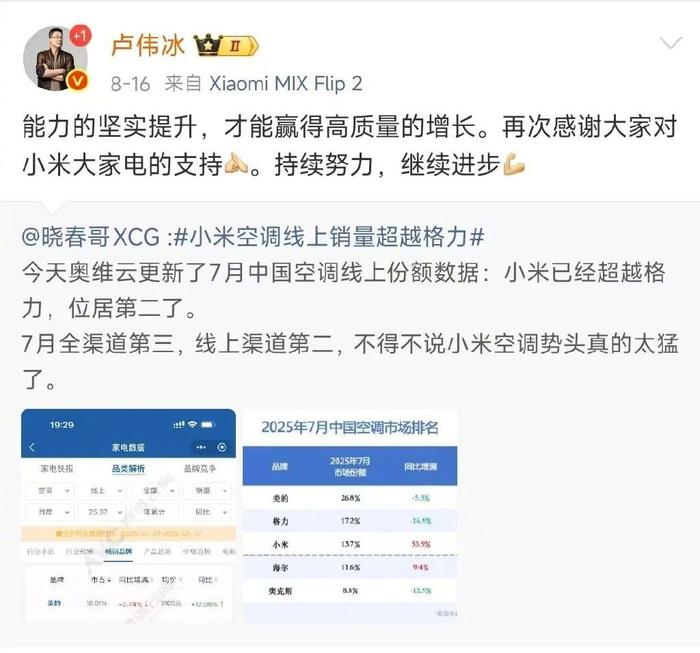
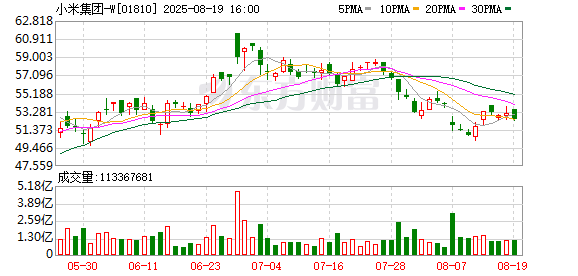
Core Viewpoint - The competition between Gree and Xiaomi in the air conditioning market is intensifying, with Xiaomi's market share rapidly approaching that of Gree, raising concerns about Gree's market position [1][3]. Market Share Analysis - As of July, the top five players in the Chinese air conditioning market are Midea (26.8%), Gree (17.2%), Xiaomi (13.7%), Haier, and Aux [3]. - Xiaomi's market share increased by 53.9% year-on-year, while Gree's share decreased by 16.9% [3]. - In the online market, Xiaomi's share reached 16.71%, surpassing Gree's 15.22%, and is close to Midea's 18.61% [5]. Consumer Demographics - Xiaomi has successfully attracted younger consumers, which poses a challenge for Gree, traditionally favored by older demographics who value Gree's established reputation for quality [6]. - The younger generation, particularly those born in the 90s and 00s, is becoming the primary consumer group, influencing market dynamics [6]. Ecosystem Advantage - Xiaomi benefits from a comprehensive ecosystem, which enhances its ability to attract and retain customers across various product categories, making it easier to gain market share compared to Gree [8]. - The brand loyalty developed through Xiaomi's ecosystem encourages consumers to choose Xiaomi products across different categories, while Gree's ecosystem remains relatively limited [8].



“中国线上消费品牌指数”二季度持续增长,618、双11成品质消费重要时点
Zhong Guo Jing Ji Wang· 2025-08-20 04:11
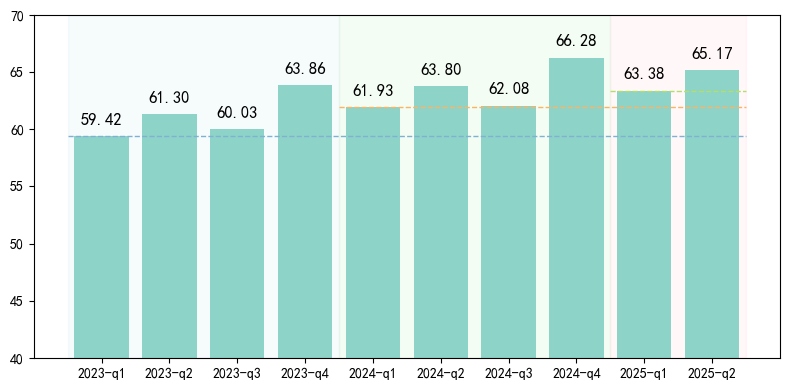
Group 1 - The "China Online Consumption Brand Index" (CBI) and "Global Brand China Online Top 500" (CBI500) show a growth in online consumer brand index from 63.38 in Q1 2025 to 65.17 in Q2 2025, indicating a trend towards purchasing quality brand products among Chinese consumers [1][2] - The CBI series, developed by Peking University and supported by Alibaba, is the first brand value assessment system based on actual consumer purchasing behavior, filling a gap in traditional macro indicators [2][6] - The CBI index reveals significant seasonal fluctuations in online consumption, with higher values in Q2 and Q4 due to major shopping events like 618 and Double 11, where consumers prefer quality brands over low-priced alternatives [3][5] Group 2 - The top five brands in the CBI500 for this quarter are Apple, Midea, Xiaomi, Haier, and Huawei, with Midea rising to second place due to increased sales and search volume in summer categories [7] - The CBI500 ranking reflects real consumer behavior, with seasonal changes in brand rankings driven by actual sales and search data during shopping festivals [7][8] - A new "Fast-Moving Consumer Goods (FMCG) New Brands List" has been introduced, highlighting the growth potential of emerging brands, with 48 out of 50 listed brands being new Chinese brands [8][9] Group 3 - The research indicates that attracting high-value consumer groups and encouraging repeat purchases are key factors for new brands transitioning from temporary popularity to sustained success [9] - Brands are advised to shift from a "traffic-driven" approach to "user lifecycle management" to effectively engage high-value users through product innovation and service experience [9]



最低费率一档的自由现金流ETF(159201)规模、流动性领跑同类产品,布局价值凸显
Sou Hu Cai Jing· 2025-08-20 02:17
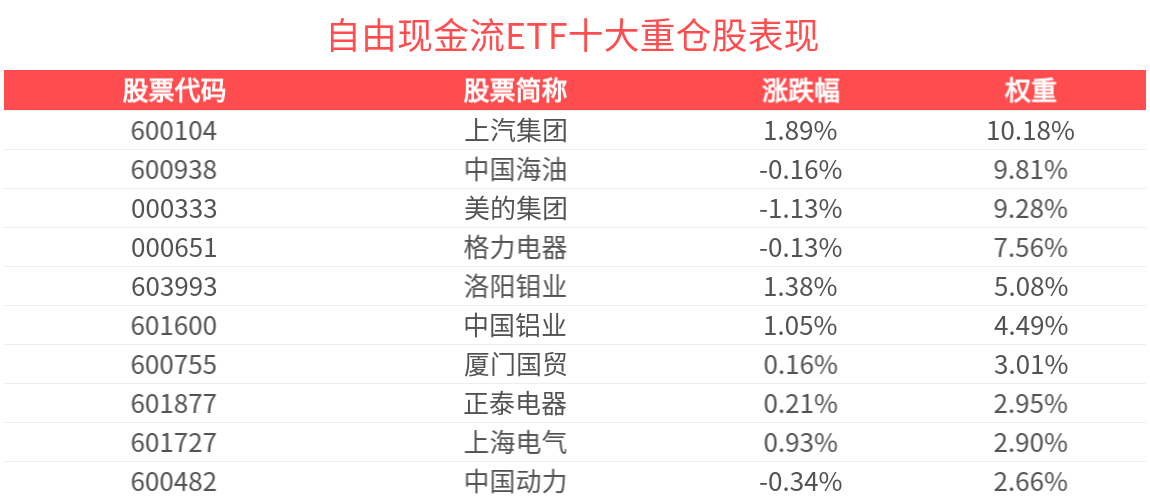
Core Insights - The Guozheng Free Cash Flow Index has increased by 0.50% as of August 20, 2025, with leading stocks including Yuntianhua, Mould Technology, Mulinsen, Jiejia Weichuang, and Baiyin Nonferrous Metals [1] - The Free Cash Flow ETF (159201) has risen by 0.55%, with a latest price of 1.09 yuan, and has seen a turnover rate of 1.76% with a transaction volume of 68.6096 million yuan [1] - Over the past week, the Free Cash Flow ETF has averaged a daily transaction volume of 343 million yuan, ranking first among comparable funds [1] Fund Performance - As of August 19, 2025, the Free Cash Flow ETF has achieved a net value increase of 8.74% over the past six months [2] - The ETF's highest single-month return since inception is 3.62%, with the longest consecutive monthly gain being three months and a maximum increase of 9.05% [2] - The ETF has a monthly profit percentage of 80.00% and a historical six-month holding profit probability of 100.00% [2] Fund Metrics - The management fee for the Free Cash Flow ETF is 0.15%, and the custody fee is 0.05%, making it the lowest among comparable funds [2] - The tracking error for the ETF over the past month is 0.040%, indicating the highest tracking precision among comparable funds [2] - The ETF closely tracks the Guozheng Free Cash Flow Index, which reflects the price changes of listed companies with high and stable free cash flow levels [2] Top Holdings - The top ten weighted stocks in the Guozheng Free Cash Flow Index account for 57.66% of the index, including SAIC Motor, China National Offshore Oil, Midea Group, and Gree Electric [2][4] - The weightings of the top stocks are as follows: SAIC Motor (10.18%), China National Offshore Oil (9.81%), Midea Group (9.28%), and Gree Electric (7.56%) [4]




家电巨头竞逐万亿元银发经济赛道
Zheng Quan Ri Bao· 2025-08-19 16:40
Core Insights - The silver economy in China is projected to reach 30 trillion yuan by 2035, with increasing demand for age-friendly and health-oriented home appliances, expanding the industry consumption space [1] - Major home appliance brands such as Konka, Hisense, TCL, and Skyworth are accelerating their entry into the age-friendly appliance sector, creating a diversified competitive landscape [1] - The market currently faces a contradiction: traditional products are severely homogenized, while there is a significant supply gap in the age-friendly segment, presenting opportunities for companies [1] Group 1 - Haier has achieved full coverage of age-friendly living scenarios and is actively promoting scene renovations, collaborating with bathroom companies to launch products like assistive toilets and temperature-controlled showers [2] - Hisense has introduced a "silver mode" television equipped with medical-grade eye protection technology and has partnered with top hospitals to develop a health management platform [2] - Changhong has developed the "Lejia" smart elderly care system, enabling interconnectivity among home appliances, medical devices, and security systems [2] Group 2 - Despite some age-friendly products entering the market, the overall industry is still in its infancy, with many companies only implementing basic modifications like large buttons and handrails, leading to severe product homogenization [3] - There is a significant disparity in consumer preferences across different regions, with economically underdeveloped areas focusing on safety features, while first-tier cities seek advanced configurations like smart health monitoring [3] - The industry calls for "true intelligence" and "true age-friendliness," emphasizing the need for a comprehensive solution that addresses the entire demand-technology-scenario chain [3]



小米、格力空调销量争议后,卢伟冰表态:不在意短期排名
Guo Ji Jin Rong Bao· 2025-08-19 14:22
Core Viewpoint - The competition between Xiaomi and Gree in the air conditioning market has intensified, with Xiaomi reportedly surpassing Gree in online sales for July, leading to discussions and disputes on social media [2][3]. Group 1: Market Performance - According to data from Aowei Cloud Network, Xiaomi's online air conditioning sales surpassed Gree's in July, positioning Xiaomi as the second-largest player in the online market [2][3]. - Gree's market director, Zhu Lei, contested the claims, stating that the data shared by a social media user did not align with Aowei's official statistics, asserting that Gree still held the lead in the online market [3][4]. - Aowei Cloud Network has faced scrutiny in the past regarding its data accuracy, as seen in previous disputes between Gree and Midea over market share claims [9]. Group 2: Company Performance - Xiaomi reported a revenue of 116 billion yuan for Q2, marking a 30.5% year-on-year increase, with a net profit of 10.8 billion yuan, up 75.4% [10]. - The revenue from IoT and lifestyle consumer products reached 38.7 billion yuan, a 44.7% increase, driven by a 66.2% rise in smart home appliance sales [10]. - In Q2, Xiaomi's air conditioning shipments exceeded 5.4 million units, reflecting a year-on-year growth rate of over 60% [10].
小米与格力开撕,谁是空调线上销售的“二哥”
Guan Cha Zhe Wang· 2025-08-19 12:15
Core Viewpoint - The competition between Xiaomi and Gree in the air conditioning market has intensified, with Xiaomi claiming to surpass Gree in online sales for July, which Gree disputes, leading to a public debate over the accuracy of sales data [1][6][9]. Group 1: Sales Data Discrepancies - Xiaomi's online air conditioning market share reached 16.71% in July, placing it second behind Midea's 18.61%, while Gree claimed to maintain its second position in the market [6][9]. - Gree's market director, Zhu Lei, stated that the data circulating online was inaccurate and provided evidence from Aowei Cloud Network to support Gree's claim of being the second in online sales [5][9]. - A social media user suggested that discrepancies in the data might be due to Aowei changing its statistical methodology, calling for clarification from the data platform [9][10]. Group 2: Industry Dynamics - The rivalry between Xiaomi and traditional air conditioning manufacturers like Gree, Midea, and Haier has been anticipated, with Xiaomi aiming to rise from fourth to third place in the market this year and targeting a top two position by 2030 [13][14]. - In July, Xiaomi achieved a 53.9% year-on-year growth in air conditioning sales, making it the only brand among the top three to experience such rapid growth [13][14]. - Midea's chairman acknowledged the competitive threat posed by Xiaomi but expressed confidence in Midea's strategic position, viewing Xiaomi's entry as a positive development for the industry [13][14]. Group 3: Company Performance - Xiaomi's smart home appliance revenue surged by 113.8% year-on-year in Q1, with air conditioning shipments exceeding 1.1 million units, reflecting a growth of over 65% [14]. - Gree has historically defended its market position, with its chairperson, Dong Mingzhu, publicly criticizing Xiaomi's manufacturing practices and technology [14].
小米7月空调线上销量超过格力,行业排名第二!王化感叹:没想到新时代这么快就来了【附白色家电行业市场分析】
Qian Zhan Wang· 2025-08-19 12:04
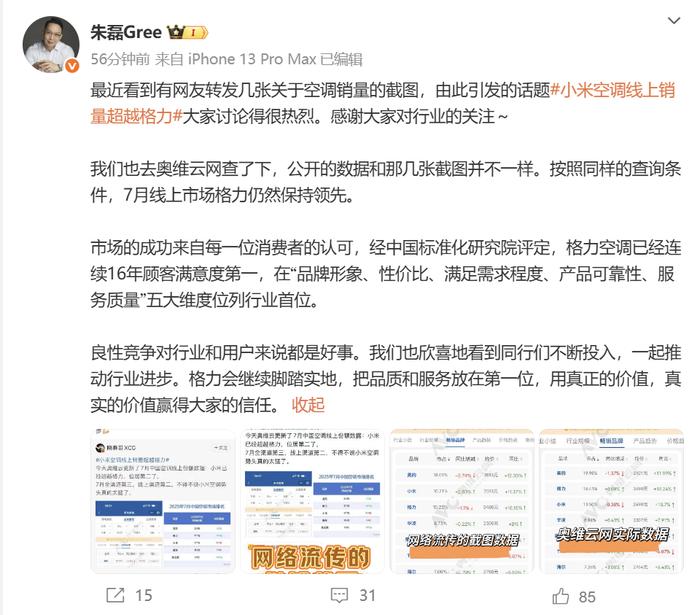
近日,奥维云发布7月中国空调线上份额数据。美的在当月市占比为18.61%,排名第一。其中,小米则以 16.71%的占比超越格力(15.22%),首次跃居第二。 对此,小米集团公关部王化转发了相关微博并评论,"没想到新时代这么快就来了。" (图片来源:摄图网) 而不久前,第三方权威调研机构发布最新数据显示,2025年7月中国空调市场销量排名前五的品牌依次为美 的、格力、小米、海尔和奥克斯。小米以13.7%的销量占比位列第三,以53.9%的同比增速,成为前三大品 牌中唯一实现高速增长的企业。小米集团合伙人、总裁卢伟冰认为,小米空调的高增速源于"能力的坚实提 升"。 8月18日晚,格力电器市场总监朱磊在微博回应"小米空调线上销量超越格力"传闻。他表示:"我们也去奥维 云网查了下,公开的数据和那几张截图并不一样。按照同样的查询条件,7月线上市场格力仍然保持领 先。"朱磊还表示,市场的成功来自每一位消费者的认可,经中国标准化研究院评定,格力空调已经连续16 年顾客满意度第一。 | 19:29 | | | | HI & B) | | 2025年7月中国空调市场排名 | | | --- | --- | --- | --- ...
格力高管回应“空调线上销量被小米超越”:格力仍然保持领先
Cai Jing Wang· 2025-08-19 11:56
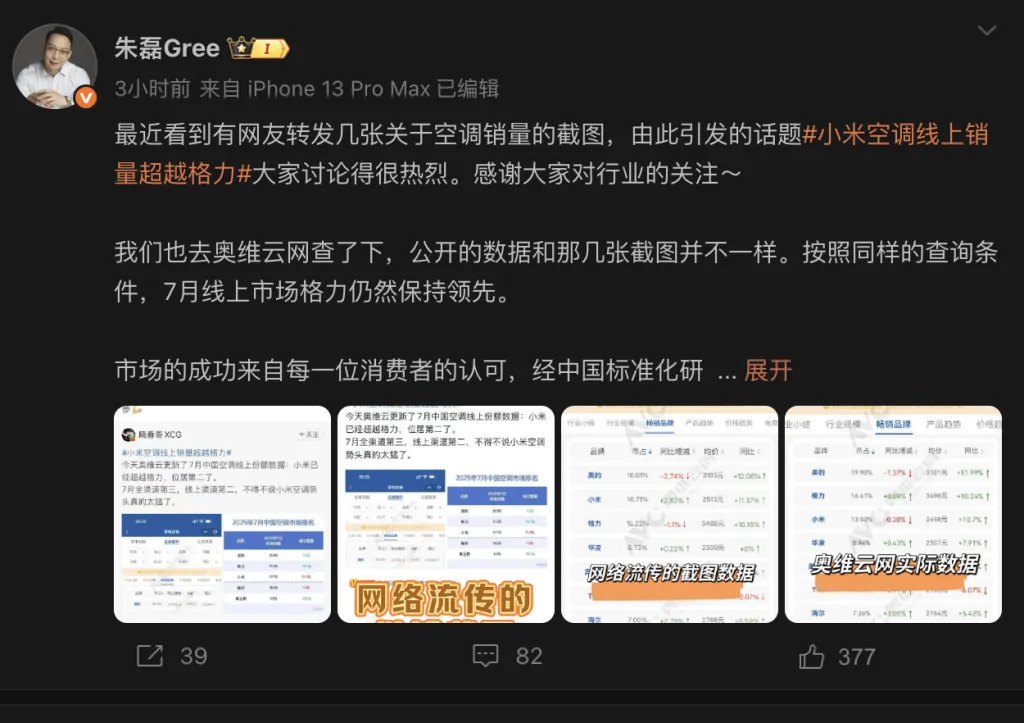
Core Viewpoint - Gree Electric Appliances disputes claims that Xiaomi's online air conditioner sales have surpassed its own, asserting that Gree remains the market leader based on their data analysis [1][3]. Group 1: Market Share Data - According to recent reports, Xiaomi's online market share for air conditioners in July was reported at 16.71%, placing it second, while Gree's share was 15.22%, ranking third [3]. - However, another analysis from Aowei Cloud Network indicates that Gree held a market share of 16.41%, while Xiaomi's was lower at 13.50%, with Gree still maintaining a lead over Xiaomi by nearly three percentage points [8][9]. Group 2: Company Responses - Xiaomi's President, Lu Weibing, acknowledged the company's improved capabilities and thanked consumers for their support, highlighting the importance of quality growth [4]. - Xiaomi's Public Relations General Manager, Wang Hua, expressed surprise at the rapid changes in the market landscape, indicating a positive outlook for the brand [6]. Group 3: Year-on-Year Sales Comparison - Year-on-year sales growth for July shows Xiaomi at +25.39%, Gree at +29.6%, and Midea at +20.59% [9]. - In terms of market share changes, Xiaomi's share decreased by 0.38%, while Gree's increased by 0.09%, and Midea's decreased by 1.37% [9].
股债轮动下的中国市场:资金流向与投资机遇
Zhi Tong Cai Jing· 2025-08-19 11:38
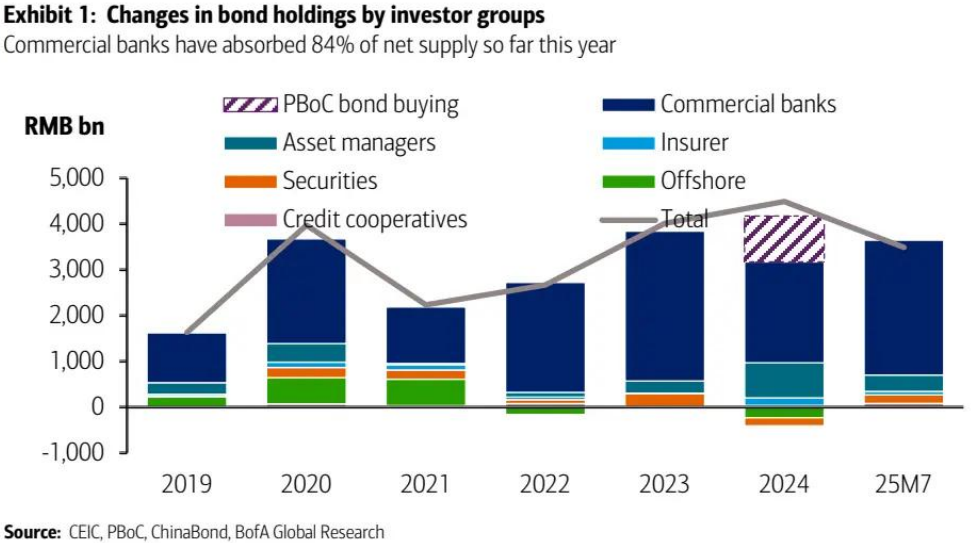
Group 1: Bond Market Dynamics - The demand structure for government bonds reflects the risk appetite of funds, with a net supply of nearly 14 trillion yuan expected in 2025, a 23% year-on-year increase [2] - Commercial banks have become the most stable demand side, holding an additional 2.9 trillion yuan in government bonds in the first seven months of 2025, absorbing 84% of the net supply [2][5] - Insurance companies have shown resilience in bond demand, increasing their holdings by 400 to 600 billion yuan annually over the past five years, despite a shift towards high-dividend stocks [5] - Offshore investors have recently turned into net sellers of bonds, but the outflow of Chinese government bonds is expected to be limited due to high holdings by long-term investors [12] - The central bank may restart bond purchases if there is a lack of demand in the bond market, providing a potential policy buffer [13] Group 2: Stock Market Opportunities - The A-share market is experiencing strong momentum driven by a "debt-to-equity rotation" and "anti-involution" logic, with local participation reaching a new high [14] - The widening yield spread of 10-30 year government bonds is prompting funds to shift from bonds to stocks, particularly as major holders of long-term bonds begin to reduce their positions [14] - High expectations for profit recovery in "involuted" industries could lead to an increase in the MSCI China index EPS growth rate from 10% to 12% between 2025 and 2027 [16] - Goldman Sachs has identified 20 companies with strong potential based on valuation expansion and fundamental improvement, with an average stock price increase of 8% since July [18] Group 3: Market Interactions and Signals - The current market dynamics are characterized by the coexistence of stable demand from banks and insurance companies in the bond market, alongside fluctuating behavior from asset management and offshore investors [21] - The ongoing rotation from bonds to stocks, particularly in anti-involution sectors, is creating structural opportunities driven by profit recovery expectations and fund preferences [21][22] - Investors should closely monitor liquidity changes in the interbank market, the sustainability of stock market profitability, and the central bank's policy signals regarding bond purchases [22]

小米空调线上销量超格力?格力高管回应!涉事博主:不是我瞎编
Bei Jing Shang Bao· 2025-08-19 09:18
Core Viewpoint - Recent reports indicate that Xiaomi has surpassed Gree in online air conditioner market share for July, positioning itself as the second-largest player in this segment, while Gree holds the third position [1][4]. Group 1: Market Share Data - According to the latest data from Aowei Cloud Network, Xiaomi's online market share for air conditioners in July was 16.71%, while Gree's was 15.22%, placing them second and third respectively [1]. - Contrarily, Gree's market director claimed that their online market share remains higher than Xiaomi's, asserting that Gree holds a 16.41% share compared to Xiaomi's 13.50% [4]. - Midea leads the online air conditioner market with a share of 19.98% for July [4]. Group 2: Company Responses - Xiaomi's public relations department and executives expressed surprise and gratitude for the support received, emphasizing the importance of capability enhancement for quality growth [1]. - Gree's market director publicly disputed Xiaomi's claims, stating that the data presented by Xiaomi was inaccurate and that Gree still leads in the online market [4]. - A blogger who initially shared the data claimed that the discrepancy arose from Aowei Cloud Network changing its data collection methodology [4]. Group 3: Historical Context - The rivalry between Xiaomi and Gree regarding air conditioner sales has been ongoing, with previous confrontations over market position and sales figures [6]. - In a past shareholder meeting, Gree's CEO criticized Xiaomi's claims about being the market leader, questioning the technological advancements behind Xiaomi's products [6].