
BYD(002594)

Search documents
中国巴士风靡东南亚,“曾经我们用日本和欧洲品牌,现在情况已大不相同”
Guan Cha Zhe Wang· 2025-12-30 08:28
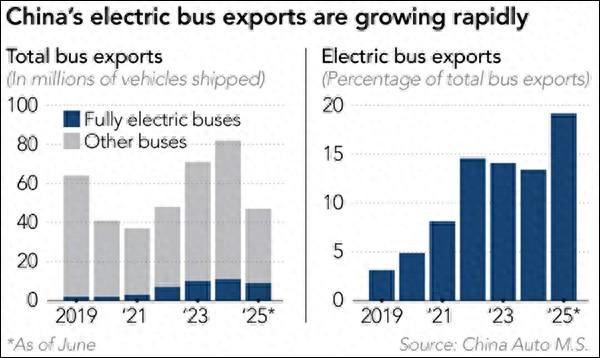
Core Insights - Indonesian public transport company has successfully integrated electric buses into its fleet, with a significant shift from traditional fuel sources to electric vehicles, highlighting the growing acceptance and preference for electric buses among drivers and operators [1] - Chinese electric vehicle manufacturers, particularly BYD, are rapidly expanding their presence in Southeast Asia, capitalizing on the region's increasing demand for electric buses as part of broader decarbonization strategies [1][2] Group 1: Market Trends - In 2024, China is expected to export over 15,000 new energy buses, marking a 25% year-on-year increase, with BYD, Yutong, and Suzhou Jinlong leading the market [2] - By the first half of 2025, China is projected to export approximately 9,000 pure electric buses, a staggering 124% increase compared to the previous year, indicating a robust growth trajectory in the electric bus sector [4] Group 2: Regional Developments - In Indonesia, BYD is collaborating with local company VKTR to establish an electric bus and truck assembly plant, aiming to deliver 50 buses by the end of December and an additional 30 by early 2026 [4] - Malaysia has already deployed at least 146 electric buses, with plans to significantly increase this number in the coming years, reflecting a strong commitment to electric vehicle adoption [5] - Singapore has awarded contracts for electric buses to Chinese manufacturers, with plans to procure over 2,000 electric buses by 2030, further demonstrating the region's shift towards electric public transport [6] Group 3: Local Manufacturing and Policy - VKTR has achieved 40% localization of bus components, qualifying for government incentives aimed at promoting electric vehicle production [4] - The Philippines has enacted legislation requiring government agencies to ensure that at least 5% of their vehicles are electric, which is expected to boost the adoption of electric buses in the country [6] Group 4: Challenges and Perceptions - Despite the positive outlook for Chinese electric buses in Southeast Asia, concerns have been raised regarding cybersecurity risks associated with these vehicles, as highlighted by accusations from European countries [8] - Yutong has denied allegations of remote control risks, emphasizing the technical safeguards in place to protect critical safety systems [9]

大厂“抢人”战,从涨薪开始
投中网· 2025-12-30 07:58
Core Viewpoint - The recent salary increase wave among major companies, including ByteDance, JD.com, BYD, and CATL, reflects a strategic shift in the competitive landscape, moving from cost-cutting to talent acquisition in response to market pressures and the AI talent war [5][7][24]. Group 1: Salary Increases and Company Strategies - JD.com announced that 92% of its employees will receive full or excess year-end bonuses, with total bonus investment increasing by over 70% year-on-year [5][7]. - ByteDance plans to increase its bonus investment by 35% and salary adjustment budget by 1.5 times, raising both the lower and upper limits of salary packages [18][21]. - BYD and CATL have also implemented salary increases for their large workforce, indicating a broader trend in the automotive sector [5][7]. Group 2: Historical Context and Market Dynamics - The current salary increase trend is reminiscent of the rapid expansion period in the Chinese internet industry around 2015, where companies aggressively raised salaries to attract talent [9][14]. - In contrast to previous years, where year-end bonuses were significantly higher, the current environment has seen a decline in bonus amounts, reflecting the changing dynamics of the internet industry [16][17]. - The competitive pressure among major companies has intensified, with JD.com reporting a 54.7% year-on-year decline in net profit despite record revenue, highlighting the challenges faced by these firms [17]. Group 3: Talent Acquisition in the AI Era - The competition for top talent in AI and related fields has escalated, with companies like ByteDance and Xiaomi actively recruiting skilled professionals, sometimes offering double salaries [24][26]. - The shift towards AI technology is prompting companies to invest heavily in talent acquisition as a strategic move to secure their future in a rapidly evolving market [26][27]. - Major firms are not only focusing on high-end technical talent but also on stabilizing their large base of frontline employees, recognizing their importance in maintaining operational efficiency [28][29].




3月19-20日 常州 2026锂电关键材料及应用市场高峰论坛
鑫椤锂电· 2025-12-30 06:28
Core Viewpoint - The lithium battery industry is poised for a significant growth cycle starting in 2026, characterized by strong demand recovery, accelerated global expansion, and disruptive technological advancements, leading to a "spiral rise" in both volume and price [3]. Group 1: Market Outlook - Global lithium battery production is projected to reach 2250 GWh by 2025, with a growth rate of 30% in 2026, particularly in the energy storage sector, which is expected to grow by 48.3% [5]. - The demand surge will create substantial pressure on the supply of battery cells and four key upstream materials, highlighting a potential supply gap that needs to be addressed for stable and efficient supply chains [5]. Group 2: Conference Details - The 2026 Lithium Key Materials and Application Market Summit will be held on March 19-20, 2026, in Changzhou, Jiangsu, organized by Xinluo Information [4]. - The summit will focus on three core topics: in-depth discussions on cutting-edge technologies and market supply-demand dynamics, the release of the 2025 authoritative lithium battery brand rankings, and B2B procurement matchmaking [5][6][7]. Group 3: Key Topics and Speakers - The main forum will cover topics such as the outlook for lithium ore resource supply, operational strategies for lithium carbonate in the current market environment, and advancements in high-energy-density power battery technology [9]. - Sub-forums will address critical materials for power batteries and energy storage, including discussions on solid-state battery technology and market trends for electrolytes and separators [10][11]. Group 4: Participation and Costs - The participation fee for the conference is set at 2800 yuan per person, with a limited-time free attendance option available for the first 200 registrants [17].


汽车行业2026年投资策略:智驾+出海驱动新增长,机器人开启未来篇章
Huajin Securities· 2025-12-30 06:27
Core Insights - The report emphasizes that the automotive industry will experience new growth driven by "smart driving and overseas expansion" in 2026, with L3-level autonomous driving penetration expected to continue increasing and new energy vehicle (NEV) exports maintaining high growth [2][3] - The report anticipates that the overall export of vehicles will exceed expectations in 2025, with strong momentum for NEV exports in regions such as Europe, the Middle East, and North America, indicating a new growth phase for domestic brands [2] - The report highlights that the L3 window period is clearly defined, with multiple domestic manufacturers set to mass-produce vehicles equipped with advanced driving assistance systems, leading to increased penetration of intelligent components [2] Vehicle Sector - The overall demand in the vehicle market remains stable, with a projected retail sales volume of 2,494 million units in 2026, reflecting a year-on-year growth rate of 1% [45] - NEV sales are steadily increasing, with a retail penetration rate exceeding 50%, and a cumulative retail sales volume of 10.15 million units from January to October 2025, representing a year-on-year growth of 21.9% [13] - The average price of passenger vehicles is on a downward trend, with the average price in the first ten months of 2025 being 170,000 yuan, a decrease of 7,000 yuan from the previous year [19] Component Sector - The report indicates that the trend towards electrification remains unchanged, with the penetration of intelligent components expected to continue rising, benefiting from the ongoing development of the automotive supply chain [2] - The report suggests that the domestic automotive supply chain, combined with overseas expansion, is likely to accelerate in 2026, providing incremental opportunities for relevant component manufacturers [2] Robotics Sector - The report notes that humanoid robots are entering a critical stage of industrialization, with significant demand for complex scene interactions driving the growth of core components, benefiting companies with relevant layouts in the robotics field [2] - The report emphasizes that the core components of humanoid robots will enjoy the dividends of industrial development, with companies positioned in this sector expected to benefit first [2] Low-altitude Economy - The report states that the domestic low-altitude economy has transitioned from a nascent stage to a period of rapid development, with the market scale expected to leap from hundreds of billions to trillions [2] - Several automotive companies are entering the low-altitude economy sector, indicating a promising future for growth [2] Policy and Market Dynamics - The report highlights that the 2026 NEV purchase tax subsidy will be reduced, leading to increased market competition, while the overall trend of NEV penetration and intelligentization is expected to drive the rise of domestic brands [2][38] - The tightening of "two new" policies is anticipated to increase the marginal cost for consumers, with various regions adjusting or suspending vehicle replacement and scrapping subsidy policies [39][40]




China EVs in 2026 look less like a boom and more like a survival test as global expansion ramps up
CNBC· 2025-12-30 06:17
Industry Overview - The electric car market in China is experiencing a downturn in 2025, with overall sales declining and analysts predicting a continued price war [1] - Tesla's sales decreased by 7.4% year-over-year, while BYD, the market leader, reported a 5.1% decline during the same period [1] Sales Performance - BYD's passenger car sales in November alone fell by 26.5% compared to the previous year, indicating a significant drop in demand [2] - In contrast, newer competitors, including vehicles powered by Huawei software and models from Xiaomi, saw sales growth exceeding 90% during the same timeframe [2] - U.S.-listed Chinese electric car startups such as Nio, Xpeng, and Li Auto did not rank among the top 10 sellers for the month, despite improvements in their monthly deliveries [2] Market Dynamics - Market concentration in the new energy vehicle sector has increased dramatically, with the top ten manufacturers now accounting for approximately 95% of the market, up from 60-70% just two to three years ago [3] - The new energy vehicle category includes both battery-electric and hybrid-powered cars [3] Future Outlook - Industry consolidation is anticipated, with price competition becoming more critical than brand recognition, as consumers are less likely to purchase unfamiliar brands [4]




港股通科技ETF(513860)放量上涨,实时成交额5.55亿元、居同标的第一
2 1 Shi Ji Jing Ji Bao Dao· 2025-12-30 06:03
Group 1 - The Hong Kong stock market continues to strengthen, with the Hong Kong Stock Connect Technology ETF (513860) rising by 0.56% as of the report time [1] - Notable gainers among the ETF's constituent stocks include InnoCare Pharma, which rose over 10%, along with SMIC, Xindong Company, SenseTime-W, Geely Automobile, and Sunny Optical Technology [1] - The trading volume of the Hong Kong Stock Connect Technology ETF (513860) exceeded 7.7 million hands, with a transaction value of 555 million yuan, surpassing the total transaction of the previous day [1] Group 2 - The ETF closely tracks the CSI Hong Kong Stock Connect Technology Index, which selects 50 large-cap, high R&D investment, and fast revenue growth technology leading companies from the Hong Kong Stock Connect range [1] - The top ten weighted stocks in the index include Alibaba-W, Tencent Holdings, SMIC, Xiaomi Group-W, and BYD Company [1] - According to Galaxy Securities, the easing monetary policies domestically and internationally are expected to maintain a net inflow trend of foreign and southbound funds, leading to a substantial improvement in the profitability of Hong Kong-listed companies [1] Group 3 - CITIC Securities emphasizes the importance of building a modern industrial system and accelerating high-level technological self-reliance as highlighted in the "14th Five-Year Plan" [2] - Strategic emerging industries such as new energy, new materials, aerospace, and future industries like quantum technology may receive new policy support [2] - Investors are advised to seize investment opportunities in AI-related segments and consumer electronics within the technology sector as they look towards 2026 [2]


拟募资38亿元,吉利、比亚迪供应商人本股份再冲IPO
Cai Jing Wang· 2025-12-30 05:47
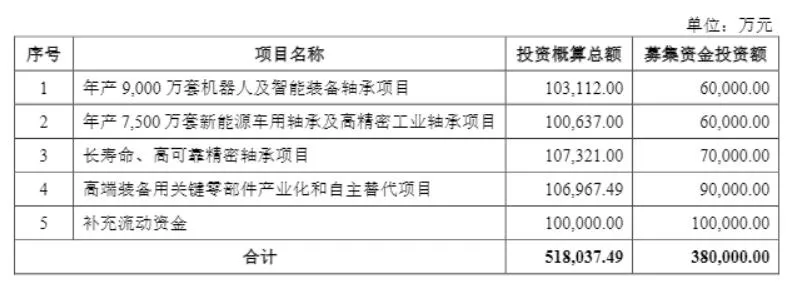
Core Viewpoint - Renben Co., Ltd. has reinitiated its IPO application on the Shanghai Stock Exchange after a previous unsuccessful attempt, with its application accepted on December 29 [1] Group 1: Business Overview - Renben Co., Ltd. specializes in the research, production, and sales of bearings and related products, possessing a full industry chain capability from materials to finished products [1] - The company offers over 50,000 types of bearing products, which are widely used in automotive, light machinery, heavy machinery, and major equipment sectors [1] Group 2: Revenue Composition - From 2022 to 2025, the revenue from finished bearings consistently accounts for over 86% of total income, with automotive bearings contributing 39.16%, 45%, 45.97%, and 45.07% respectively [1] - Revenue from light machinery bearings represents 28.94%, 25.62%, 24.41%, and 24.59% over the same period [1] Group 3: Major Clients - Key clients in the automotive sector include Geely Group, BYD, Changan Automobile, Great Wall Motors, and Bertley, with Geely being the largest customer [1] Group 4: Financial Performance - The company's revenue for 2022 to 2025 is projected at 9.388 billion, 10.482 billion, 11.96 billion, and 6.471 billion respectively, while net profit is expected to be 585 million, 625 million, 700 million, and 313 million [2] - In 2022, revenue grew by 2.93% year-on-year, but net profit decreased by 20.91% [2] - The gross profit margin slightly declined from 28.64% in 2022 to 26.54% in the first half of 2025 [2] Group 5: Debt and Liquidity - The company has a high asset-liability ratio of 66.63% as of mid-2025, with bank loans constituting 62.39% of total liabilities [2] - The liquidity ratios are below industry averages, with a current ratio of 1.08 compared to the industry average of 2.07, and a quick ratio of 0.76 against an average of 1.63 [2] Group 6: IPO Fundraising and Projects - The company aims to raise 3.8 billion through the IPO, an increase of approximately 40% from the previous target of 2.702 billion [4] - The funds will be allocated to various projects, including the production of 9 million sets of robot and intelligent equipment bearings, 7.5 million sets of new energy vehicle bearings, and other key projects [4]
两年减少两万人,券商从业人数降回6年前|首席资讯日报
首席商业评论· 2025-12-30 04:57
Group 1 - The number of securities industry employees has decreased by 20,000 over the past two years, returning to levels seen six years ago, indicating a shift towards structural optimization and a focus on high-quality, efficient roles such as investment advisors and analysts [2] - A new microelectronics company, Unisoc Microelectronics Technology (Beijing) Co., Ltd., has been established with a registered capital of 300 million RMB, focusing on integrated circuit design and related services, backed by Unisoc and CATL [3] - The Hong Kong Monetary Authority has increased the total quota for the second phase of the RMB business funding arrangement to 100 billion RMB, expanding the list of participating banks to 40, effective from December 1 [4] Group 2 - During the 14th Five-Year Plan, China has collected and preserved 147,400 samples of forest and grassland germplasm resources, a 180% increase compared to the end of the 13th Five-Year Plan, with improved usage rates of major afforestation tree species [5] - The proportion of individuals aged 7 and above in China who regularly participate in physical exercise has reached 38.52%, an increase of 4.6 and 1.3 percentage points compared to 2015 and 2020, respectively [7] - Beijing Zhizhong Precision Transmission Technology Co., Ltd. has changed its name to Beijing Zhizhong Precision Transmission Technology Co., Ltd., with new shareholders including BYD, indicating a shift in ownership and management structure [8] Group 3 - BYD has denied rumors regarding the launch of a flying car, clarifying that there are no such plans or arrangements [6] - Chery has responded to rumors about a partnership with Zhi Mi, stating that there is no such collaboration regarding the vehicle model [9] - Ant Group's Afu has issued a statement asserting that its Q&A results contain no advertising recommendations or commercial rankings, emphasizing its commitment to user trust and professional integrity [10]

2025汽车大事记:一致性失守威胁产业安全 多部门构建立体监管体系
Zhong Guo Jing Ji Wang· 2025-12-30 02:50
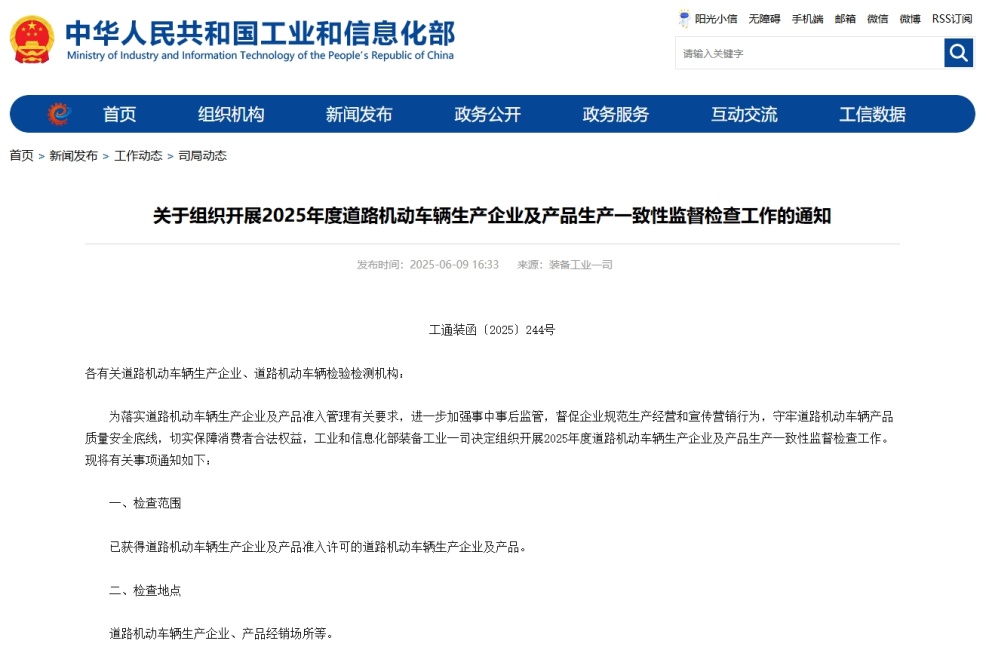
Core Viewpoint - The Chinese automotive market is experiencing intensified "involution" competition, characterized by price wars, chaotic advertising, and quality issues, prompting regulatory bodies to implement measures aimed at ensuring product consistency and promoting high-quality development [1][3][9]. Group 1: Price Wars and Profitability - The price war in the Chinese automotive market has escalated, with 227 models involved in price reductions in 2024, significantly higher than 148 in 2023 and 95 in 2022 [3]. - Over 90% of mainstream automotive brands participated in price cuts, with an average reduction of 15%, and some models seeing discounts exceeding 30% off the official price [3]. - The profit margin for the automotive manufacturing industry dropped to 4.3% in 2024 and further declined to 3.9% in Q1 2025, marking a ten-year low and significantly below the manufacturing average of 5.6% [3]. Group 2: Quality Issues and Consumer Complaints - Complaints regarding quality issues in new energy vehicles, such as "battery faults" and "inaccurate range," reached 13,904 from January to May 2025, marking a historical high and an increase of 7.4% from 2024 and 87.9% from 2023 [4]. - The ongoing price war and reckless technological competition are squeezing reasonable profit margins, adversely affecting product and service quality, which is detrimental to both companies and consumers in the long run [4]. Group 3: Regulatory Measures and Industry Response - The Ministry of Industry and Information Technology (MIIT) announced a consistency supervision check for vehicle production, aiming to regulate the automotive industry and curb the "involution" phenomenon [7][8]. - The regulatory framework includes a multi-dimensional governance system, with the MIIT and other departments implementing measures to ensure production consistency and compliance with safety standards [8]. - The automotive industry is showing signs of stabilizing, with a reduction in the number of models experiencing price cuts from 36 in 2024 to 23 in September 2025, and a slight recovery in profit margins [9][10]. Group 4: Future Outlook - The regulatory interventions are expected to reshape the competitive landscape, guiding resources towards technological innovation and quality improvement, ultimately leading to a transition from "scale first" to "quality leading" in the automotive industry [10].
比亚迪12月29日获融资买入5.86亿元,融资余额127.88亿元
Xin Lang Cai Jing· 2025-12-30 01:34
Group 1 - BYD's stock price increased by 0.20% on December 29, with a trading volume of 5.209 billion yuan. The net financing purchase was 1.05 billion yuan, with a total financing and securities balance of 12.833 billion yuan [1] - The financing balance of BYD is 12.788 billion yuan, accounting for 2.35% of the circulating market value, which is below the 50th percentile level over the past year, indicating a low position [1] - On the same day, BYD's short selling saw a repayment of 63,200 shares and a sale of 19,500 shares, with a short selling balance of 45,040 shares valued at 45.1346 million yuan, which is above the 50th percentile level over the past year, indicating a high position [1] Group 2 - As of September 30, BYD had 642,600 shareholders, an increase of 98.37% from the previous period, with an average of 5,427 circulating shares per person, up by 51.21% [2] - For the period from January to September 2025, BYD achieved operating revenue of 566.266 billion yuan, a year-on-year increase of 12.75%, while the net profit attributable to shareholders decreased by 7.55% to 23.333 billion yuan [2] Group 3 - BYD has distributed a total of 27.859 billion yuan in dividends since its A-share listing, with 24.414 billion yuan distributed in the last three years [3] - As of September 30, 2025, Hong Kong Central Clearing Limited is the fourth largest circulating shareholder of BYD, holding 263 million shares, an increase of 137 million shares from the previous period [3] - Huatai-PB CSI 300 ETF is the eighth largest circulating shareholder, holding 46.304 million shares, an increase of 30.2458 million shares from the previous period, while E Fund CSI 300 ETF has exited the top ten circulating shareholders [3]