
BYD(002594)

Search documents
电池厂商“抢滩”新能源物流车市场
中国能源报· 2025-12-28 00:40
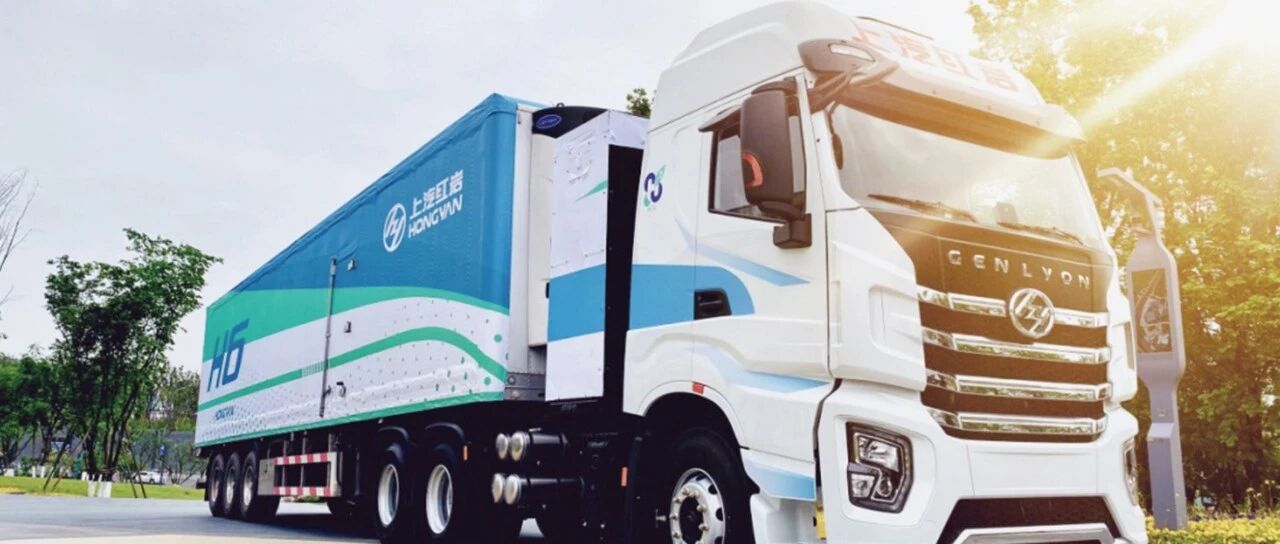
有业内人士表示,物流场景的广泛性与复杂性使得相关车辆在续航里程、充电速度等方面仍存在一定瓶颈。 在绿色低碳转型加速推进背景下,物流领域传统车型新能源化转型正在加快,越来越多的绿色运输车辆得以应用,该趋势也受到电池企 业关注。今年以来,包括宁德时代、亿纬锂能在内的多家头部厂商凭借在商用车动力电池领域的深厚技术积累,通过战略合作等多元模 式切入并深度布局物流赛道。 值得注意的是,与私家车相比,物流车日均行驶里程更长、运营频次更高,因此对配套电池性能提出更高要求。"比如,续航里程受 限、充电不便、电池自重较大等挑战仍制约着电动重卡在长途运输场景中的大规模推广,需要企业聚焦电池充电效率展开技术攻坚,并 逐步完善配套服务体系,从而进一步提升运营效率。"一位电池行业分析师向《中国能源报》记者表示。 有业内人士表示,物流场景的广泛性与复杂性使得相关车辆在续航里程、充电速度等方面仍存在一定瓶颈。未来,随着电池企业持续加 码核心技术研发并不断推出更加适配物流场景需求的产品,有望进一步助推物流用车电动化进程提质提速。 加码相关业务合作 今年以来,已有多家电池厂商在物流领域展开战略合作与业务布局。近期,哆啦好运新能源物流平台与比亚 ...



汽车行业周报:2026 年"两新"政策有望优化延续,带动需求稳步向上-20251227
SINOLINK SECURITIES· 2025-12-27 15:38
Investment Rating - The report suggests a focus on companies such as BYD, Geely Automobile, and others in the automotive sector, as well as companies like Li Auto-W, Xpeng Motors-W, and others in the smart technology and robotics sectors [2]. Core Insights - The Central Economic Work Conference has outlined six key tasks related to the automotive industry, emphasizing domestic demand, innovation, reform, openness, coordinated development, and green transformation, which are expected to stabilize and boost automotive demand [12][13]. - The report highlights that passenger car exports have maintained a year-on-year growth rate of over 20% for six consecutive months, with expectations for double-digit growth in wholesale exports by 2026 due to recovering demand in markets like Russia and the increasing export of new energy vehicles [14]. - The report notes that the smart driving experience is expected to improve significantly with advancements in new architectures and high-performance chips, leading to increased consumer acceptance and sales for leading companies in smart driving technology [17][20]. Industry Data Tracking Market and Sector Performance - The Shanghai and Shenzhen 300 Index increased by 1.95%, while the Shenwan Automotive Index rose by 2.74% [21]. - The top five stocks with the highest gains this week included Chaojie Co. (+41.6%), Longji Machinery (+33.7%), and others, while the top five stocks with the largest declines included Meidong Automotive (-6.5%) and others [28]. Passenger Car Sales Data - In December 2025, the wholesale sales of passenger cars reached 568,000 units, a year-on-year decrease of 9%, while the retail sales were 536,000 units, also down 11% year-on-year [4][32]. - For November 2025, wholesale sales were 2.991 million units, a year-on-year increase of 1.7%, with new energy vehicle wholesale sales at 1.694 million units, up 17.6% year-on-year [5][35]. - The report indicates that the export of passenger cars in November was 594,000 units, reflecting a 50% year-on-year increase, with new energy vehicle exports reaching 273,000 units, up 244.1% year-on-year [51][57]. Industry Dynamics - The report discusses the rapid development of smart technology and robotics, with significant advancements in autonomous driving and AI integration in vehicles, indicating a shift towards a more intelligent automotive market [17][19]. - The report also mentions the increasing focus on new energy vehicles and the expansion of charging infrastructure, which has reached 19.322 million charging points, marking a 52% year-on-year growth [73].



“百万英才汇南粤”秋季招聘会提供6.5万个岗位
Xin Lang Cai Jing· 2025-12-27 14:35
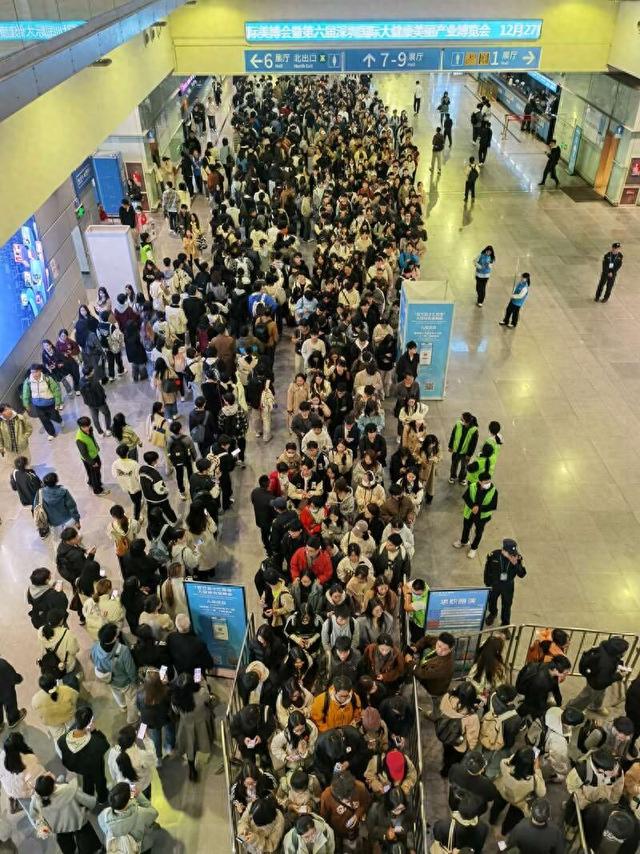
Core Viewpoint - The "Million Talents Gathering in South Guangdong" autumn recruitment fair in Shenzhen has attracted over 120,000 students and offers more than 65,000 job positions from 1,825 employers, marking a significant event in Guangdong's talent recruitment strategy [1][3]. Group 1: Recruitment Fair Overview - The recruitment fair is part of the "Million Talents Gathering in South Guangdong" initiative, which has reached 19 provinces and over 100 universities this year, promoting more than 500,000 job positions and attracting over 1 million graduates [1]. - The event features participation from over 40 Fortune 500 companies, 300 listed companies, and 400 specialized enterprises, along with 250 central and state-owned enterprises and 50 research institutions [3]. Group 2: Job Opportunities - The fair offers nearly 9,000 positions for PhD candidates, over 12,000 for master's degree holders, and more than 35,000 for bachelor's degree graduates [3]. Group 3: Additional Services and Features - The event provides various supportive services for job-seeking students, including career makeup, one-on-one resume diagnostics, and talent policy briefings [9]. - The recruitment fair integrates recruitment and exhibition areas, allowing students to experience the unique charm of the Greater Bay Area's innovation and livability [9].

铁锂行业掀风暴:天齐锂业“脱离”有色网,材料商停产施压电池厂
Jing Ji Guan Cha Wang· 2025-12-27 14:30
Core Insights - The lithium iron phosphate (LFP) industry is experiencing significant changes, with major companies announcing equipment maintenance and price disputes affecting market dynamics [2][5][6]. Group 1: Company Announcements - Hunan Youneng announced a one-month equipment maintenance starting January 1, 2026, which is expected to reduce its production of phosphate-based cathode materials by 15,000 to 35,000 tons [5][7]. - Tianqi Lithium announced it will no longer reference Shanghai Metals Market (SMM) prices for its product transactions starting January 1, 2026, opting instead for prices from Mysteel and the Guangzhou Futures Exchange [2][3]. - Other companies, including Wanrun New Energy and Defang Nano, also announced similar one-month maintenance periods, indicating a coordinated effort among LFP producers [2][5]. Group 2: Price Discrepancies - A significant price discrepancy exists between the spot and futures markets for lithium carbonate, with SMM reporting a price of 101,500 CNY/ton, while the futures market prices from the Guangzhou Futures Exchange and Shanghai Steel Union were reported at 121,000 CNY/ton and 116,000 CNY/ton, respectively [3][4]. - The CEO of SMM stated that their pricing reflects the actual market conditions, and most lithium battery companies use SMM prices for procurement and sales [3][4]. Group 3: Market Dynamics - The recent maintenance announcements by LFP producers are seen as a strategy to negotiate better prices with downstream battery manufacturers, particularly as negotiations with leading companies like BYD and CATL have been challenging [5][6]. - The overall production capacity of Hunan Youneng, Wanrun New Energy, and Defang Nano accounts for approximately 48% of the industry’s total capacity, indicating their significant influence on market supply [8]. - The anticipated production of lithium iron phosphate is projected to reach around 3.7 million tons by 2025, highlighting the growing demand in the industry [8].





比亚迪股份有限公司董事长兼总裁王传福:公司一半总经理是从应届大学生中成长起来的
Sou Hu Cai Jing· 2025-12-27 13:53
12月27日,在"百万英才汇南粤"大型综合招聘会开幕式上,比亚迪股份有限公司董事长兼总裁王传福分 享了企业扎根广东,以人才驱动发展的奋斗历程。 "我们始终相信,青年兴则国家兴,人才强则企业强。" 王传福向青年才俊发出邀约,期待更多人才与 比亚迪一起深耕南粤大地,成就个人梦想、践行企业担当。 编辑 刘彦 审读 吴剑林 二审 党毅浩 三审 林捷兴 (作者:深圳特区报&读特记者 庄瑞玉) "人生就是一个追逐梦想和实现梦想的过程。"王传福表示,作为扎根广东的企业,比亚迪三十多年的创 业历程,就是一部以人才驱动技术创新、成就产业梦想的奋斗史。 王传福介绍,比亚迪从零起步,历经风雨,成长为全球最大的新能源汽车企业,也是全球研发人员最多 的车企,还有了中国工程院院士。在公司30周年之际,比亚迪宣布捐赠30亿教育慈善资金,用于高校奖 学金。这一切,既是企业的责任担当,也是视人才为珍宝发展理念的指引。 "我们的应届大学生一直和公司共同成长,实现个人和企业双丰收。"王传福透露,自"百万英才汇南粤" 行动启动以来,比亚迪积极响应,以此为契机招录了一批优秀的应届大学生,充实了企业人才队伍。近 3年公司累计招录 5 万多名应届大学生, ...
汽车行业 2026 年度投资策略报告:不必悲观,结构存机会-20251227
Guohai Securities· 2025-12-27 13:27
Core Insights - The report maintains a "Recommended" rating for the automotive industry, emphasizing that there are opportunities despite potential challenges in 2026 [1][2] - The automotive sector showed a 20% increase over the past 12 months, outperforming the Shanghai and Shenzhen 300 index, which increased by 16.8% [3] Group 1: Industry Overview - The automotive industry is expected to experience a strong performance in commercial vehicles while passenger vehicles may face challenges in 2026 [4] - The report highlights that the passenger vehicle market in 2025 was supported by trade-in policies, leading to stable performance, but anticipates pressure on total volume in 2026 [4] - The heavy truck segment is projected to see positive growth in 2026, driven by domestic demand recovery and increased exports [4] Group 2: Opportunities in Passenger Vehicles - The report identifies a significant opportunity in the high-end passenger vehicle market, particularly for models priced above 300,000 yuan, which is expected to continue to grow [4][5] - Domestic brands are anticipated to make substantial advancements in the high-end market with new models launching in 2026 [5] Group 3: Heavy Truck Market Insights - The heavy truck market is expected to benefit from a recovery in domestic demand and a favorable export environment, with wholesale volumes projected to grow positively in 2026 [4][5] - The report notes that the penetration rate of electric heavy trucks may stabilize in 2026 after significant increases in 2025, which could positively impact profitability [5] Group 4: Smart Driving and Technology - The report discusses the acceleration of high-level autonomous driving technology penetrating lower-priced models, which is expected to drive volume growth in 2026 [5] - The introduction of new AI-driven cockpit technologies is anticipated to enhance the value of smart cabins, creating additional investment opportunities in related components [5] Group 5: Robotics Sector - The report indicates that the humanoid robotics sector is entering a new phase, with significant growth potential for leading manufacturers and their supply chains [5] - The collaboration between domestic and international manufacturers is expected to enhance production capabilities and technological advancements in humanoid robots [5] Group 6: Investment Recommendations - The report recommends several companies for investment, including Jianghuai Automobile, Top Group, and BYD, highlighting their potential in the evolving automotive landscape [6][9] - Specific recommendations for heavy truck manufacturers include China National Heavy Duty Truck Group and Weichai Power, which are expected to benefit from industry growth [6][9]





新能源设备隐形冠军IPO过会,10亿存货压顶,重度依赖比亚迪
Xin Lang Cai Jing· 2025-12-27 12:22
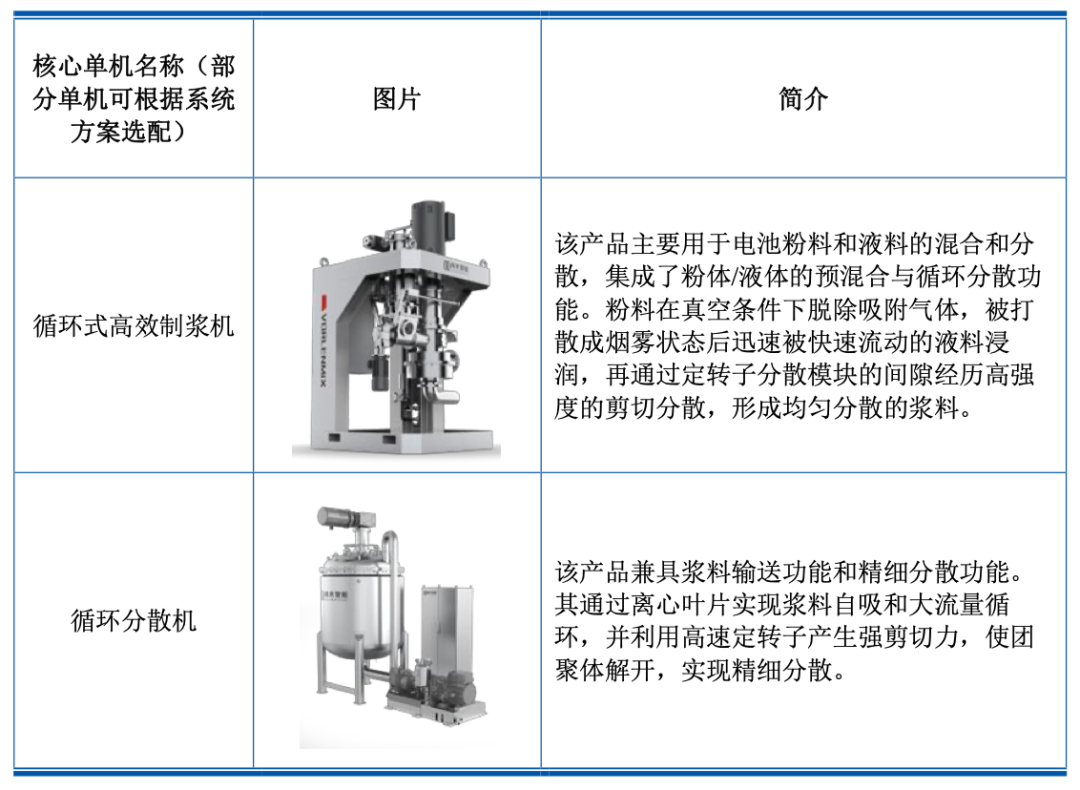
Core Viewpoint - Shenzhen Shangshui Intelligent Co., Ltd. has made significant strides in the lithium battery slurry preparation sector, leading to its successful IPO application on the ChiNext board, with the application accepted on June 19, 2025, and approval received on December 16, 2025 [1][3]. Group 1: Company Overview - Shangshui Intelligent specializes in the research and manufacturing of intelligent equipment, particularly in the lithium battery production process [2]. - The company holds a leading position in the domestic market, with a 60% market share in the efficient slurry preparation system and a 12.77% share in the lithium battery slurry system, ranking third [3]. Group 2: Financial Performance - Revenue growth has slowed, with a compound annual growth rate (CAGR) of 90.43% from 2020 to 2022, but only 26.7% from 2022 to mid-2025 [14]. - In 2023, the company's revenue increased by 51.46%, but the growth rate is expected to drop to 5.99% in 2024 [15]. - Net profit showed a CAGR of 235.4% from 2020 to 2022, but the growth rate decreased to 25.1% from 2022 to 2024, with a significant drop of 34.62% in 2024 [16]. Group 3: Customer Dependency - Over 90% of the company's revenue is derived from its top five customers, with a significant reliance on BYD, which accounted for 49.04% to 65.78% of sales in recent years [18][19]. - The concentration of revenue from a few clients poses a risk, as changes in customer relationships could significantly impact financial performance [18]. Group 4: Inventory and Debt Concerns - The company has over 1 billion in inventory, with a rising trend in inventory value and a high inventory-to-current asset ratio, indicating potential liquidity issues [23][24]. - Shangshui Intelligent's asset-liability ratio is concerning, with figures of 86.59% in 2022 and 72.7% in 2024, exceeding industry averages [28][29]. - The company has seen an increase in both short-term and long-term borrowings, raising concerns about its debt burden and financial health [30]. Group 5: Management and Governance - The company has experienced significant changes in its management team, with several key personnel leaving due to differing views on the company's direction [33]. - The stability of the governance structure is crucial for the company's long-term success, especially as it navigates the challenges of its IPO and market competition [34].
在非洲,我看到中国人“悲壮的突围”
创业邦· 2025-12-27 10:33
Core Viewpoint - The article discusses the challenges and costs faced by Chinese companies operating in Morocco, emphasizing the need for adaptation and strategic planning to succeed in a foreign market while navigating high operational costs and cultural differences [5][10][106]. Group 1: Identity - Chinese companies are establishing operations in Morocco to maintain access to European markets, driven by the "China +1" strategy to mitigate risks associated with sourcing from China [11][12][17]. - The geographical proximity of Morocco to Europe, along with favorable trade policies, makes it an attractive location for manufacturing [14][15]. Group 2: Cost Structure - The construction costs in Morocco can be more than double those in China, with local standards leading to higher material costs [20][23]. - Maintenance and repair costs are significantly higher, with examples showing that simple repairs can cost ten times more than in China [25][27]. - Small components, such as screws, can be exorbitantly priced compared to domestic costs, necessitating the import of parts from China despite longer lead times [28][30]. Group 3: Standards - High levels of automation are being adopted in Moroccan factories to compensate for the lack of skilled labor, with some factories operating with significantly fewer workers than traditional setups [37][40]. - The reliance on machines is not only for efficiency but also to ensure stable production in the face of labor challenges [41][42]. Group 4: Adaptation - There is a notable difference in work ethic and reliability between local labor groups, with a preference for hiring Berber workers over Arab workers due to perceived differences in work attitudes [46][50]. - Companies often adopt a mixed hiring strategy, employing local workers for basic roles while retaining skilled Chinese workers for critical positions [51][52]. Group 5: Time - Training local workers to meet industrial standards requires significant time investment, often exceeding initial expectations [58][59]. - The cultural differences in work processes necessitate a patient approach to training, with a focus on building habits over time [56][58]. Group 6: Communication - Language barriers pose significant challenges in production settings, leading to misunderstandings that can affect product quality [61][62]. - Companies are developing internal codes to bypass language issues, creating a shared understanding among workers [66][67]. Group 7: Beliefs - Local cultural and religious practices significantly influence work schedules and employee availability, with many employees prioritizing personal beliefs over work commitments [70][76]. - Understanding and accommodating these cultural factors is essential for effective management in Morocco [78][80]. Group 8: Market - Despite efforts to develop the electric vehicle market, actual sales remain low, with most production aimed at export rather than local consumption [84][88]. - The disconnect between production capabilities and local market demand highlights the challenges of operating in a "production-isolation" environment [86][91]. Group 9: Management - Traditional management practices from China may not be effective in Morocco, where local employees may prioritize personal circumstances over work incentives [95][98]. - Companies must navigate local labor laws and cultural sensitivities to implement effective management strategies [101][102].




王传福发声:我直管的总经理,一半是从应届大学生成长起来的
2 1 Shi Ji Jing Ji Bao Dao· 2025-12-27 10:30
21世纪经济报道记者走访发现,华为、腾讯、比亚迪等超40家世界500强企业携核心岗位而来。据了 解,薪酬方面,现场半数岗位超过20万元,50-100万超4500个,100万以上超500个。 (文章来源:21世纪经济报道) 比亚迪股份有限公司董事长兼总裁王传福在现场分享了企业扎根广东以人才驱动发展的奋斗历程。他表 示,比亚迪近三年招录了5万多名应届大学生,其中硕博占到70%。"我直管的总经理有一半都是从应届 大学毕业生成长起来的。" 本次招聘会以"粤聚英才粤见未来"为主题,集中释放6.5万余个优质岗位,吸引来自境内外1700多所高 校超12万名学生报名参加。 12月27日至28日,深圳会展中心(福田),"百万英才汇南粤"迎来年末重磅招聘活动。 ...
郑州航空港“十五五”发展规划基本思路全文发布
Sou Hu Cai Jing· 2025-12-27 08:42
Core Viewpoint - The "14th Five-Year" period has seen significant achievements in the Zhengzhou Airport Economic Comprehensive Experimental Zone, with a focus on high-quality development, infrastructure enhancement, and social welfare improvements, setting the stage for the "15th Five-Year" plan aimed at further economic and social advancements [4][5][6]. Economic Development Goals - The main goal for the "15th Five-Year" period is to elevate economic strength, with a focus on high-quality development mechanisms, integration of advanced manufacturing and modern services, and accelerated digital transformation of industries [13]. - The international aviation hub's capabilities will be enhanced, with Zhengzhou Airport aiming to rank among the top 30 globally in cargo and mail throughput, while also improving multi-port collaborative development [13]. - Urban development will focus on efficiency and quality, optimizing the "one hub, two zones" development pattern, and promoting green and low-carbon transitions in key areas [13]. Social and Governance Improvements - The plan emphasizes enhancing the quality of life for residents through improved education, healthcare, and social security systems, with a focus on equitable public services and increasing disposable income [14]. - Social governance will be strengthened through integrated community management and improved public safety measures, ensuring a stable social environment [14]. Reform and Opening Up - The "15th Five-Year" period will see deepened reforms in key areas, with an emphasis on creating a world-class business environment and enhancing the effectiveness of open platforms [12][14]. - The region aims to become a strategic hub for domestic and international market integration, leveraging the "Air Silk Road" initiative to enhance trade and economic cooperation [12][14]. Infrastructure and Logistics Development - The plan includes significant investments in logistics infrastructure, aiming to enhance the capabilities of air, rail, and road transport systems, thereby improving the overall logistics efficiency [16][17][18]. - A modern multi-modal transport system will be established to facilitate seamless connections between different transport modes, enhancing the supply chain's global configuration [18]. Industrial Growth and Innovation - The focus will be on strengthening the real economy, particularly in high-growth sectors such as artificial intelligence, new energy vehicles, and advanced manufacturing [19][20]. - The development of innovative industries will be prioritized, with efforts to foster a robust ecosystem for research and development, particularly in biotechnology and robotics [21][22]. Park Development and Reform - The plan emphasizes the importance of industrial parks as engines of growth, promoting standardized construction and management to enhance their operational efficiency [23][24]. - Strategies will be implemented to attract investment and foster collaboration among enterprises within these parks, ensuring a cohesive industrial ecosystem [24][25].