BYD(002594)

Search documents
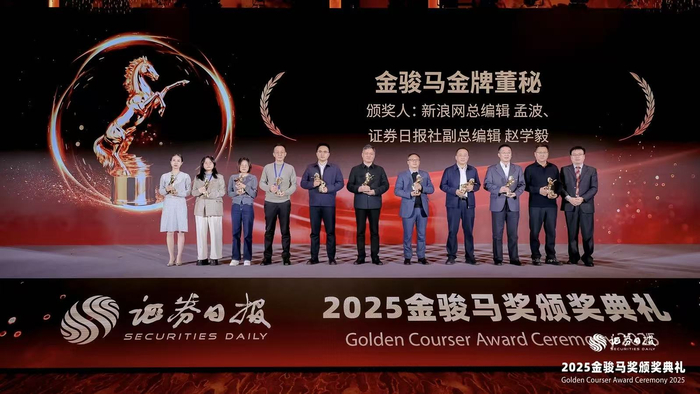
2025年度金骏马金牌董秘奖



Zheng Quan Ri Bao Zhi Sheng· 2025-12-26 14:43
Group 1 - Key point 1: The article lists various executives from different companies, indicating a focus on leadership within the industry [2][3] - Key point 2: The companies mentioned span multiple sectors, including transportation, energy, and technology, highlighting a diverse range of industries [2][3] - Key point 3: The presence of executives from both state-owned and private enterprises suggests a mixed economic landscape in China [2][3] Group 2 - Key point 1: The mention of specific individuals such as Wang Jian from CRRC and Li Yan from Fuanna indicates their significance in their respective companies [2] - Key point 2: The inclusion of companies like BYD and Tianqi Lithium reflects the growing importance of electric vehicles and battery materials in the current market [2] - Key point 3: The diversity of sectors represented, from environmental technology to traditional manufacturing, points to a broad spectrum of investment opportunities [2][3]

陕西打造新能源汽车产业集群 今年前11月新能源汽车产量近百万辆
Zhong Guo Xin Wen Wang· 2025-12-26 14:13
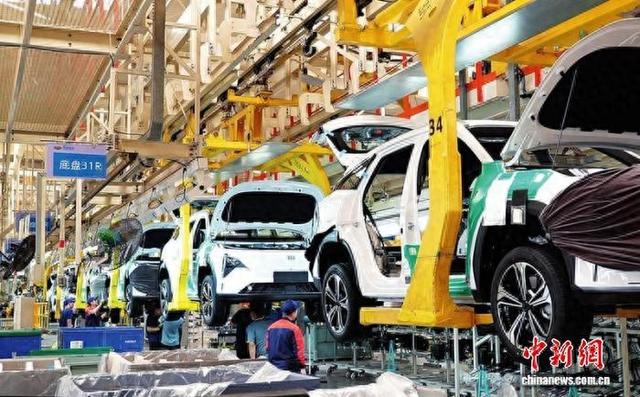
从2020年产量5.9万辆到2024年产量119.8万辆,陕西新能源汽车产量年均增速达112%,汽车产业已连续 多年保持全省非能工业第一支柱产业地位。 亮眼数据的背后,是陕西汽车产业向电动化、智能化加速转型的坚实步伐。在陕汽控股汽车总装配厂, 同一产线可实现柴油车与纯电车生产的快速切换,仅需30分钟即可完成工艺转换,新能源电车单班产能 提升达100%;吉利汽车西安制造基地的"黑灯工厂",实现冲压、焊接、喷涂全流程自动化;比亚迪"刀 片电池"、陕汽新能源重卡智能装配线、"天行健"车联网系统等创新成果不断涌现,推动生产提质增效 与产品迭代升级。 产业生态的持续优化,为高质量发展注入韧性。近年来,陕西坚持"链长"统筹、"链主"驱动、"链群"协 同,推动乘用车(新能源)产业集群化发展。 今年8月,陕西省乘用车(新能源)产业链推介招商签约互采对接会在西安举办,会议共征集招引落地、 互采对接、人才技术合作、金融合作项目46个,总金额达122.15亿元。 中新网西安12月26日电 (党田野 杨英琦)记者26日从陕西省汽车工业协会获悉,今年前11个月,陕西汽 车产量达157.6万辆,同比增长1.18%,其中新能源汽车产量99 ...

汽车行业双周报(20251208-20251221):26年汽车出口思考(1):分析中国车企对欧洲出口的可行性-20251226
Hua Yuan Zheng Quan· 2025-12-26 12:36
Investment Rating - The investment rating for the automotive industry is "Positive" (maintained) [1] Core Insights - The Western European passenger car market is large, with significant room for improvement in the penetration rate of new energy vehicles (NEVs). The annual sales of passenger cars in Western Europe exceed 10 million units, and the NEV penetration rate increased by 6 percentage points year-on-year to 29% in the first ten months of 2025. Countries with high passenger car sales, such as Germany, the UK, France, Spain, and Italy, have NEV penetration rates generally below 35% [3][6][12] - The growth of the European NEV market in 2026 is supported by policy foundations, including comprehensive EU regulations and incentives for NEV adoption. The EU aims for climate neutrality by 2050, and while there are adjustments to the 2035 "zero-emission" target, the overall goals remain intact [12][15] - With Chinese manufacturers accelerating their presence in Europe, it is expected that NEV exports from China to Europe will see rapid growth in 2026. Currently, major shares in the Western European NEV market are held by manufacturers like Volkswagen and BMW, but companies like BYD are increasing their market share [20][28] Summary by Sections 1. Western European Passenger Car Market - The market is characterized by a significant annual sales volume exceeding 10 million units, with a NEV penetration rate that has room for growth. The focus will be on B/SUV-B/C/SUV-C models to enhance NEV penetration [3][6][10] 2. Policy Support for NEV Growth in 2026 - The EU has established clear targets for NEV transition, with penalties and incentives for carbon emissions. The 2026 NEV market growth is expected to be bolstered by continued or new subsidies in key European countries [12][15] 3. Growth of Chinese Manufacturers in Europe - Chinese manufacturers are expected to see significant growth in NEV exports to Europe, with companies like BYD and Geely leading the charge. The expansion of sales networks and local production will contribute to this growth [20][28]

杜绝“赔本赚吆喝” 价格合规为汽车业反内卷再加码
Zhong Guo Qi Che Bao Wang· 2025-12-26 11:42
Core Viewpoint - The automotive industry is undergoing a regulatory shift to combat "involution" competition, with the release of the "Automotive Industry Price Behavior Compliance Guidelines (Draft for Public Comment)" aimed at standardizing pricing practices and promoting healthy market development [2][10]. Group 1: Industry Response and Impact - Major automotive companies such as BYD, Xpeng Motors, and BAIC Group have responded positively to the guidelines, committing to eliminate price fraud and unfair competition [2][13]. - The guidelines are expected to provide a foundation for the healthy development of the automotive market by addressing long-standing issues of price competition [2][11]. Group 2: Current Market Challenges - The automotive market has faced significant challenges, with 43.5% of dealers reporting losses in 2023, and this figure is projected to remain high in 2024 [3]. - Price undercutting has become a common issue, with 74.4% of dealers experiencing some level of price inversion, leading to financial strain and reduced service quality [3][4]. Group 3: Guidelines Specifics - The guidelines prohibit selling below cost and outline specific pricing behaviors that are deemed unacceptable, such as using discounts and subsidies to manipulate market conditions [5][7]. - The guidelines also emphasize the need for clear and transparent rebate policies from manufacturers to dealers, addressing concerns over complex and lengthy rebate processes [6][7]. Group 4: Regulatory and Compliance Measures - The guidelines call for the establishment of internal price compliance management mechanisms within automotive companies to prevent pricing violations and enhance brand integrity [9]. - There is a focus on ensuring that online automotive sales platforms adhere to pricing regulations to protect consumer rights and maintain fair competition [8][9]. Group 5: Future Outlook - The implementation of the guidelines is expected to lead to a more rational promotional environment, with a decrease in aggressive price-cutting strategies observed in the market [10][11]. - Analysts predict that the guidelines will help restore profitability in the automotive sector, with a potential recovery in dealer margins and overall industry health [11][12].


数据复盘丨锂矿、钛白粉等概念走强 90股获主力资金净流入超1亿元
Zheng Quan Shi Bao Wang· 2025-12-26 10:37
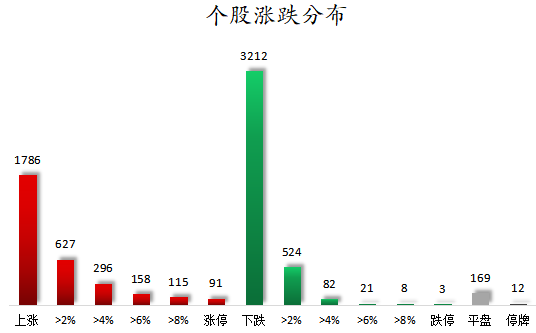
Market Overview - The Shanghai Composite Index closed at 3963.68 points, up 0.1%, with a trading volume of 893.6 billion yuan [1] - The Shenzhen Component Index closed at 13603.89 points, up 0.54%, with a trading volume of 1266.55 billion yuan [1] - The ChiNext Index closed at 3243.88 points, up 0.14%, with a trading volume of 578.73 billion yuan [1] - The STAR Market 50 Index closed at 1345.83 points, down 0.24%, with a trading volume of 45.2 billion yuan [1] - The total trading volume of both markets was 2160.15 billion yuan, an increase of 235.64 billion yuan compared to the previous trading day [1] Sector Performance - Strong performance was observed in sectors such as non-ferrous metals, steel, precious metals, electric equipment, retail, securities, chemicals, and oil and petrochemicals [2] - Active concepts included lithium mining, titanium dioxide, small metals, synchronous reluctance motors, phosphorus chemicals, gold, fluorine chemicals, satellite internet, and duty-free [2] - The electronic, communication, light manufacturing, food and beverage, and pharmaceutical sectors experienced declines [2] Individual Stock Performance - A total of 1786 stocks rose while 3212 stocks fell, with 169 stocks remaining flat and 12 stocks suspended [2] - Notable stocks with consecutive limit-up days included Victory Energy with 11 consecutive limit-ups, Jia Mei Packaging with 8, and Shen Jian Co. with 7 [4] - The stock with the highest net inflow was Sunshine Power, with a net inflow of 2.372 billion yuan, followed by Aerospace Development and BYD with net inflows of 2.072 billion yuan and 1.460 billion yuan respectively [8][9] Fund Flow Analysis - The net outflow of main funds in the Shanghai and Shenzhen markets was 24.243 billion yuan, with the ChiNext experiencing a net outflow of 13.396 billion yuan [5] - Six sectors saw net inflows, with the electric equipment sector leading at 7.752 billion yuan [5] - The electronic sector had the highest net outflow at 8.84 billion yuan, followed by communication and machinery sectors [5] Institutional Activity - Institutions had a net buy of approximately 434 million yuan, with Aerospace Development receiving the highest net buy of about 482 million yuan [14][15] - The stocks with the highest net sell by institutions included Shenghong Technology with a net outflow of 1.39 billion yuan [11][12]




全球第三的失守与进攻丨年度观察
起点锂电· 2025-12-26 10:05
Core Viewpoint - 2025 marks the beginning of a new growth cycle for lithium batteries and a global showdown, with Korean battery companies intensifying their counterattacks [3] Group 1: Market Dynamics - LG Energy Solution, once a leading competitor to CATL, is currently navigating between losing ground and making offensive moves [4] - The global demand for electric vehicles (EVs) is slowing down, impacting LG Energy's market position. For instance, LG Energy's battery installation volume from January to October 2025 was 86.5GWh, a year-on-year increase of only 12.8%, significantly lower than the industry average of 35% [8][9] - LG Energy's market share has dropped below 10%, now standing at 9.3%, while CATL and BYD hold 38.1% and 16.9% respectively [8][9] Group 2: Financial Performance - LG Energy's financial performance is under pressure, with revenue declining. In Q1 2025, revenue was 6.3 trillion KRW, down 2.9% quarter-on-quarter, while Q2 revenue fell to 5.6 trillion KRW, a decrease of 11.2% [11] - Despite a rise in profits, LG Energy's reliance on subsidies and tax credits is evident, with significant portions of profits attributed to these incentives [11][12] Group 3: Strategic Shifts - LG Energy is focusing on lithium iron phosphate (LFP) batteries, aiming to strengthen its position in the energy storage system (ESS) market. The company has secured over 300 billion KRW in LFP battery orders from Tesla, effective from August 2027 [15] - The company plans to increase its ESS battery production capacity from 30GWh this year to over 50GWh next year, reflecting a strategic pivot towards energy storage [15][16] - A recent organizational restructuring aims to unify production across different product lines, enhancing flexibility in response to market demands [16] Group 4: Future Outlook - The transition to energy storage may take 2-3 years to yield significant results for LG Energy, as the company faces challenges in balancing costs and profits within the LFP battery supply chain [18]

比亚迪李云飞:比亚迪是黑公关最大受害者,“王传福劝大家忍一忍”
Xin Lang Cai Jing· 2025-12-26 09:43
Core Viewpoint - BYD Group's response to issues of black public relations and online manipulation highlights the company's position as a leading enterprise in the industry, emphasizing that it does not engage in negative tactics against competitors but is often targeted by such actions [2][5]. Group 1 - BYD's General Manager of Brand and Public Relations, Li Yunfei, stated that the company has never engaged in undermining others, but many competitors have targeted BYD, which is reflected in the data related to black public relations [5]. - Li Yunfei quoted Wang Chuanfu, stating that BYD is currently a leading enterprise and must endure unfair treatment, suggesting that the company is willing to tolerate such challenges [5]. - Li Yunfei emphasized that BYD is a significant target for black public relations and online manipulation due to its large market presence, asserting that the company is the biggest victim of these tactics in the industry [5]. Group 2 - Li Yunfei pointed out that the attacks on BYD are not isolated incidents but rather a long-term campaign of defamation and insult through false information aimed at damaging the brand [5].
全员涨薪潮
投资界· 2025-12-26 09:41
Group 1 - JD announced that 92% of its employees will receive year-end bonuses, with total investment in bonuses increasing by over 70% year-on-year for 2025, marking the largest increase in the industry this year [2][3] - JD's retail group and functional systems will implement a two-year plan to achieve a 20-salary structure, with some departments already achieving a 19-salary structure this year [3][4] - ByteDance has also increased its bonus investment by 35% and salary adjustment investment by 1.5 times for 2025, aiming to attract and retain top talent [4][5] Group 2 - Ningde Times announced a salary adjustment for its first to sixth-level employees, increasing basic wages by 150 yuan starting January 1, 2026, along with a Spring Festival bonus plan [6][9] - In Q3 2025, Ningde Times reported revenue of 1,041.85 billion yuan, a year-on-year increase of 12.90%, and a net profit of 185.49 billion yuan, up 41.21% [7] - BYD is also implementing salary increases for its technical research and development personnel, with adjustments ranging from 500 yuan to 4,500 yuan [9] Group 3 - The central economic work conference emphasized the implementation of a plan to increase urban and rural residents' income, indicating a shift towards concrete actions to boost income across all demographics [10][12] - Since 2025, over 20 provinces have raised their minimum wage standards, with Shanghai leading at 2,740 yuan [11] - Major companies like JD, ByteDance, Ningde Times, and BYD are setting a precedent for salary increases, which is expected to enhance consumer spending power and stimulate domestic demand [12]


全民涨薪潮要来了?
商业洞察· 2025-12-26 09:23
Core Viewpoint - The recent salary increases by major companies like BYD, CATL, and ByteDance are not coincidental but a strategic response to government policies aimed at boosting income for all residents, indicating a shift towards a comprehensive income growth reform [10][12][15]. Group 1: Salary Increases and Economic Context - Major companies are responding to the central government's call for income growth, with a focus on all urban and rural residents rather than just low-income groups [12]. - The salary increases are part of a broader strategy to enhance labor compensation in the initial distribution of income, aiming to create a virtuous cycle of domestic demand, income growth, and industrial upgrading [17]. - The economic environment is challenging, with external uncertainties and internal structural adjustments, making income growth a strategic priority for economic recovery [16][18]. Group 2: Corporate Responses and Talent Acquisition - Large enterprises view salary increases as essential for attracting and retaining talent, especially in a competitive job market where demand for skilled workers is surging [20][21]. - BYD's overseas sales have significantly outperformed domestic sales, with profits from international sales being substantially higher, allowing the company to justify salary increases despite domestic challenges [26][28]. - The demand for talent in emerging sectors, particularly in AI, is driving companies to enhance their compensation packages to secure the best minds [23][24]. Group 3: Sources of Income Growth - The government is facilitating salary increases through direct interventions, such as raising minimum wage standards across over 20 provinces since 2025 [34]. - Support for small and micro enterprises through tax reductions and financing options is aimed at indirectly promoting salary growth by enhancing business profitability [38]. - Transfer income from social security measures, such as pensions and subsidies, is also contributing to overall income growth, providing a safety net for residents [39][40]. - Maintaining stability in real estate and capital markets is crucial for protecting household wealth, which can stimulate consumption and contribute to income growth [41].

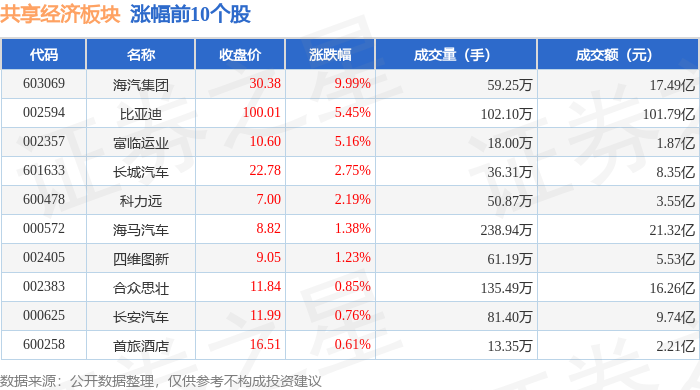
共享经济板块12月26日涨2.26%,海汽集团领涨,主力资金净流入13.03亿元




Sou Hu Cai Jing· 2025-12-26 09:22
Market Performance - The shared economy sector increased by 2.27% on December 26, with Haiqi Group leading the gains [1] - The Shanghai Composite Index closed at 3963.68, up 0.1%, while the Shenzhen Component Index closed at 13603.89, up 0.54% [1] Individual Stock Performance - Haiqi Group (603069) closed at 30.38, up 9.99% with a trading volume of 592,500 shares and a transaction value of 1.749 billion [1] - BYD (002594) closed at 100.01, up 5.45% with a trading volume of 1,021,000 shares and a transaction value of 10.179 billion [1] - Other notable performers include: - Fulin Yuan (002357) at 10.60, up 5.16% [1] - Great Wall Motors (601633) at 22.78, up 2.75% [1] - Keli Yuan (600478) at 7.00, up 2.19% [1] Capital Flow Analysis - The shared economy sector saw a net inflow of 1.303 billion from main funds, while retail funds experienced a net outflow of 306 million [2] - The main funds' net inflow for BYD was 1.473 billion, representing 14.48% of its trading volume, while retail funds had a net outflow of 683 million [3] - Haiqi Group had a main fund net inflow of 195 million, accounting for 11.13% of its trading volume, with retail funds showing a net outflow of 72.79 million [3]