Hongqi Chain(002697)

Search documents
奔向5000亿,便利店进入“新混战”
3 6 Ke· 2025-06-03 23:27
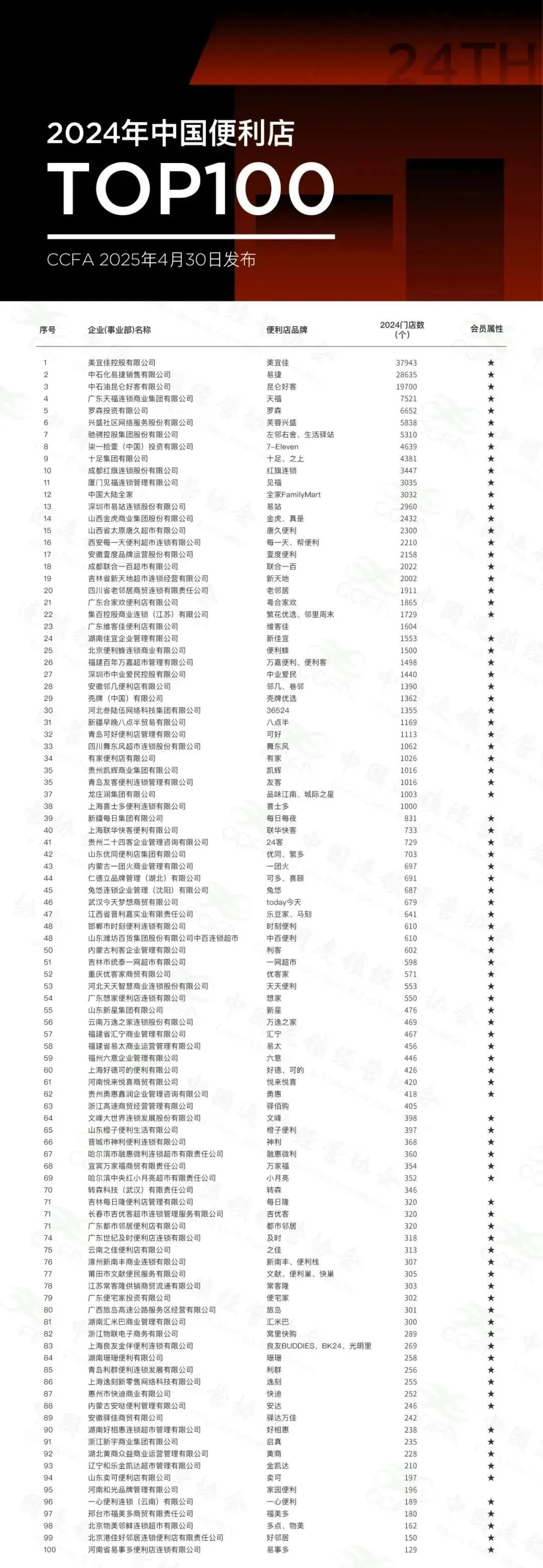
Group 1 - The convenience store sector is experiencing unprecedented growth, with a 9.1% year-on-year increase in retail sales, outperforming other retail formats [1] - The total number of convenience stores in China is projected to reach 196,000 by the end of 2024, reflecting a net increase of 14,000 stores, or 7.7% growth compared to 2023 [2] - The top three convenience store brands in terms of store count are Meiyijia (37,943 stores), Sinopec Easy Joy (28,635 stores), and PetroChina Kunlun (19,700 stores) [6][7] Group 2 - Meiyijia's aggressive expansion strategy has led to the opening of 4,095 new stores in one year, averaging 11.2 new stores per day [8] - The top 20 convenience store brands account for 75.57% of the total store count among the top 100, indicating a trend towards industry consolidation [6] - The convenience store market in China still has significant growth potential, with many cities having a low saturation rate of stores per capita compared to international standards [12] Group 3 - The competition in the convenience store sector is intensifying, with traditional players facing challenges from discount stores and online platforms [19] - The integration of online and offline sales channels is becoming essential, with nearly 40% of convenience store companies having adopted instant retail services by 2024 [20] - New entrants like Three Squirrels and Kudi Coffee are disrupting the market by leveraging their supply chain capabilities to offer competitive pricing [13][17] Group 4 - Convenience stores are evolving into "24-hour service stations," offering a wider range of products and services to enhance customer experience [25] - The trend of cross-industry collaboration is expected to grow, with convenience stores integrating offerings from food, fresh produce, and pharmacy sectors [26] - The focus on fresh food sales is increasing, with over 71% of surveyed companies prioritizing the optimization of fresh food categories to improve profit margins [25]



出去旅游,怎么感觉吃得都差不多?
吴晓波频道· 2025-05-31 16:41
Core Viewpoint - The article discusses the evolving landscape of the restaurant industry in China, highlighting the tension between consumer desire for unique dining experiences and the increasing prevalence of standardized chain restaurants. It suggests that as consumers become more discerning, there is a growing demand for quality and authenticity in dining options, which may lead to a resurgence of local, non-chain establishments [1][41][44]. Group 1: Consumer Behavior and Trends - During the recent Dragon Boat Festival and Children's Day, many restaurants, especially those near tourist attractions, saw high demand, with special "family packages" introduced to attract customers [2][4]. - A report from Deep Blue Think Tank revealed that 28.2% of consumers prioritize product quality over brand, while 20.6% prefer well-known brands, indicating a complex relationship with brand loyalty [5][7]. - Consumers exhibit a mix of loyalty and curiosity, with 32.2% often choosing familiar restaurants, while 29.6% are willing to try new places if the price is right [10][12]. Group 2: Market Dynamics and Competition - The share of chain restaurants in China has increased from 15% in 2019 to 22% in 2024, with projections suggesting it could reach 24% by 2025 [16]. - Major global brands like McDonald's and Starbucks dominate the market, with McDonald's alone purchasing 35 billion pounds of potatoes annually, showcasing the scale and purchasing power of these giants [21][22]. - Chinese brands like Mixue Ice City and Luckin Coffee are also expanding rapidly, with Mixue boasting 46,000 stores, primarily in Asia [20]. Group 3: Standardization vs. Local Flavor - The article notes that many traditional dishes are becoming standardized, with some brands achieving 60%-70% standardization in their offerings [32]. - The rise of "internet celebrity" restaurants, which create unique dining experiences, is highlighted as a response to consumer fatigue with uniformity [33][36]. - The future of the restaurant ecosystem in China may not mirror the U.S. model of dominance by a few giants, but rather a coexistence of large chains and small, unique establishments [49]. Group 4: Future Outlook - As consumer preferences shift towards quality and authenticity, the article suggests that brands must refine their offerings to meet these expectations, focusing on product quality, service, and brand culture [44][50]. - The article concludes that the competition will increasingly hinge on the ability to provide unique experiences and maintain a connection to local culture, as consumers seek out authenticity in their dining choices [52].




商超渠道财报透视:靠即时零售突围线上,“调改”热词继续提效存量
Cai Jing Wang· 2025-05-30 09:21
Group 1 - Traditional supermarkets are increasingly adopting an "online + offline" model to enhance revenue and improve customer engagement through instant retail and social e-commerce [1][2] - High Xin Retail reported a significant turnaround in profitability for the fiscal year ending March 31, 2025, with a profit of 386 million and a revenue of 71.552 billion, despite a slight revenue decline of 1.4% [2] - The same-store sales for High Xin Retail grew from 0.3% in the first half of the fiscal year to 0.6% for the full year, driven by improved pricing competitiveness and product optimization [2] Group 2 - The online business of Da Run Fa covers over 20,000 SKUs, offering delivery services within 5 kilometers, with innovations like satellite warehouses to meet consumer demand [3] - Yonghui Supermarket reported online revenue of 14.6 billion, accounting for 21.7% of total revenue, with a gross margin improvement attributed to better product structure [4] - Red Flag Chain has increased collaboration with social e-commerce platforms, achieving over 1 billion in sales through frequent operations on platforms like Douyin [5] Group 3 - The supermarket industry is undergoing a transformation, with 48.9% of supermarkets reporting online sales growth, particularly in second and third-tier markets [5] - Experts suggest that instant retail is a key area for supermarkets to focus on, emphasizing the importance of product and brand integration [5][8] - The trend of closing underperforming stores is prevalent, with High Xin Retail closing 8 large stores and Yonghui closing 232 stores in 2024 [7][8] Group 4 - The restructuring of store formats is gaining momentum, with 86% of categories seeing positive growth post-restructuring, and fresh produce playing a crucial role in driving sales [9] - Yonghui plans to expand its restructuring efforts, targeting 150 stores by the end of July 2025, while other companies like Wumart are also focusing on store upgrades [10] - The industry is seeing a diversification of store formats, with companies like High Xin Retail and Wumart exploring new community store models to cater to local needs [11][12]


21社论丨科技与文化正在让中国变得“更酷”
2 1 Shi Ji Jing Ji Bao Dao· 2025-05-29 18:15
Group 1 - The core viewpoint of the articles highlights the emergence of a new consumption era in China, characterized by a shift from functional needs to emotional value among young consumers, indicating a paradigm shift from material possession to meaningful consumption [1][4] - New consumption is marked by cultural significance, with young people's cultural confidence driving the recognition of Chinese aesthetics, evident in trends like Guochao and the success of cultural products such as the game "Black Myth: Wukong" and the film "Ne Zha" [1][3] - The internationalization of new consumption is a significant breakthrough, with brands like Pop Mart and Mixue Ice City becoming global chains, and Chinese mobile games achieving substantial international revenue [2][3] Group 2 - The success of new consumption is attributed to the integration of technology and culture, with leading brands like Huawei and DJI not only excelling in technology but also incorporating Chinese aesthetics into their product designs [3][4] - Chinese manufacturing and services are increasingly becoming cultural carriers, enhancing China's global image and soft power, as reflected in the rise of China's ranking in the Global Soft Power Index from eighth to second place by 2025 [3][4] - The interaction between technology, culture, and consumption is fostering new business models and products that cater to the demand for spiritual consumption, marking a significant transformation in global narratives [4]


消费者买奶茶时,有哪些习惯?
Hu Xiu· 2025-05-27 02:14
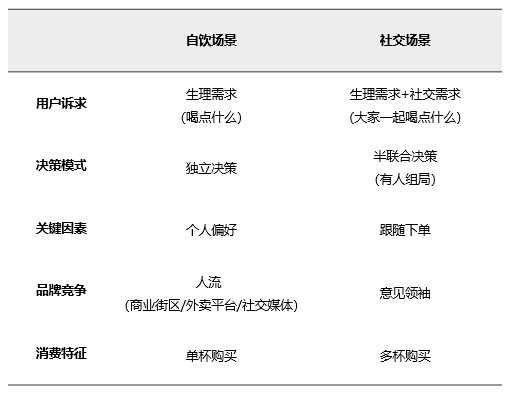
User Consumption Scenarios - The two classic consumption scenarios for milk tea are self-drinking and social drinking, with distinct user demands and decision-making processes [3][4][5] - In the self-drinking scenario, users make independent decisions based on personal preferences, while in the social scenario, group dynamics influence brand choices [6][10] - Peak ordering times for milk tea on delivery platforms occur between 14:00 and 16:00, indicating a strong social consumption trend during afternoon breaks [3][6] Competitive Analysis - In the self-drinking scenario, milk tea competes with ready-to-drink (RTD) beverages, with acceptable price ranges for milk tea being 10-15 yuan in urban areas [9][12] - The social scenario presents more complex competition, as users are willing to pay a premium (15-30 yuan) for products that fulfill both physiological and social needs [10][12] - The competition landscape includes not only direct milk tea brands but also RTD beverages and coffee, necessitating a broader analysis of pricing strategies [12][13] Product Structure - Milk tea products can be categorized into two main attributes: product attributes (easily replicable and deliverable) and service attributes (localized and dependent on human interaction) [14][18] - The trend indicates a shift towards product attributes in milk tea, with brands attempting to increase service attributes for higher pricing, though this may limit market reach [19][20] Cultural Context - The relationship between product and culture is complex, with tea and coffee cultures not significantly influencing the milk tea market in China [21][25][28] - Brands emphasizing cultural narratives may limit their appeal to broader consumer bases, as most users prioritize taste over cultural associations [29] Product Extension - Brands are encouraged to focus on internal product extensions (new flavors) rather than external (new product categories) to meet user demands effectively [33][34] - The rapid introduction of new products in the milk tea market reflects intense competition, with brands launching numerous new items to attract consumers [41] User Consumption Habits - Milk tea consumption is characterized by a tendency towards variety-seeking, with users willing to try new flavors and products [40][41] - The market is entering a phase of intense competition, leading to a rapid increase in new product launches as brands strive to maintain consumer interest [41] Brand Collaborations - The trend of frequent brand collaborations (149 instances in 2024) serves to enhance brand visibility and attract new consumer segments [42][43] - Collaborations can activate consumer interest in the milk tea category, particularly in the self-drinking scenario where impulsive purchases are common [49] Brand Case Study: Heytea - Heytea's fluctuating market position reflects challenges in maintaining user value amidst increasing competition and changing consumer preferences [50][53] - The brand's reliance on collaborations and pricing strategies indicates a need to clarify its market positioning to sustain growth [53] Membership and Loyalty Programs - The development of membership programs in the tea beverage market is still in its early stages, with many brands struggling to implement effective loyalty strategies [55][56] - A successful membership model requires a shift from customer acquisition to retention, emphasizing the importance of stable consumer relationships [56] Local Economic Model - The local economic model for milk tea shops focuses on meeting specific consumer needs within a defined area, with delivery services expanding market reach [57][58] - Brands are increasingly adopting strategies to enhance order efficiency and customer service capabilities to compete effectively in the market [58] Market Overlap Analysis - Analysis of store overlap among major brands reveals significant competition dynamics, particularly between brands like Luckin Coffee and Bawang Chaji [63][64] - Understanding the competitive landscape and store proximity can inform strategic decisions for market positioning and expansion [64][65]

柠檬水被6元倒卖,蜜雪冰城不如顺势在景区搞「雪王摊位」
36氪· 2025-05-26 13:39
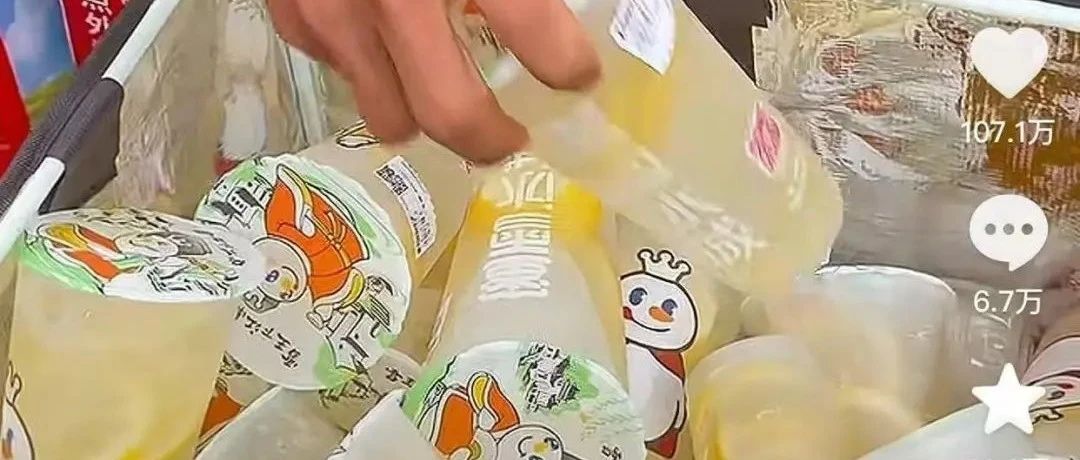
Core Viewpoint - The article discusses the unexpected entrepreneurial success of an individual who resells lemonade from a popular beverage brand, highlighting the dynamics of consumer behavior and market opportunities in the fast-moving consumer goods sector [4][20]. Group 1: Market Dynamics - The price increase of 1 yuan by the brand last year led to significant public backlash, yet the brand's lemonade is now perceived as a bargain at 6 yuan during peak summer heat [4][5]. - The individual, known as "Zhan Lingyun," capitalized on the high demand for refreshing beverages in tourist areas, selling the lemonade at a price lower than competing products, thus attracting customers [11][15]. - The strategy of sourcing products through delivery platforms allowed for cost savings and high profit margins, with a reported gross margin of 44% on each cup sold [19]. Group 2: Brand and Legal Considerations - The brand has a history of protecting its trademark rights vigorously, having recently won a case against a competitor for trademark infringement, resulting in a 5 million yuan penalty [21]. - Legal experts suggest that while reselling products purchased through legitimate channels may not constitute illegal activity, operating without proper business licenses poses significant risks [25][23]. - The brand's response to the situation remains ambiguous, indicating potential challenges in balancing support for entrepreneurship with protecting its market interests [26][28]. Group 3: Competitive Landscape - The article notes that other beverage brands have also explored street vending as a strategy, indicating a trend among established brands to engage directly with consumers outside traditional retail environments [36][39]. - The success of street vending by established brands can enhance brand visibility and consumer trust, as they offer standardized products in informal settings [45][46]. - The article suggests that the brand could benefit from establishing its own vending operations in tourist areas to directly meet consumer demand and counteract unauthorized resellers [49][52].
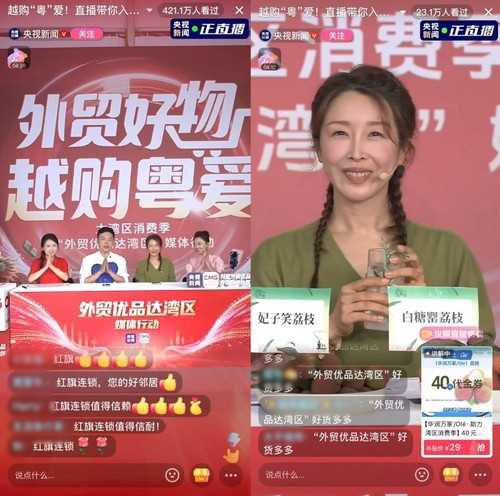
抖音生活服务联合央视新闻推外贸优品专场直播,四大商超总交易额超500万元
Xin Hua Wang· 2025-05-26 09:13
Core Insights - Douyin Life Services partnered with CCTV News to launch a live streaming event titled "Foreign Trade Goodies, Buy More, Love Guangdong," aimed at creating a new channel for foreign trade products in domestic sales [1][9] - The event featured major supermarket chains such as CR Vanguard, Yonghui Supermarket, RT-Mart, and Hongqi Chain, showcasing a variety of foreign trade goods and seasonal products from the Greater Bay Area [1][3] Summary by Sections Event Overview - The live streaming event lasted three hours, attracting over 66 million views and generating more than 1.4 million orders, with total transaction value exceeding 5.09 million yuan [1] - Consumers showed strong interest in discount vouchers offered by supermarkets, facilitating a convenient shopping model of "online coupon collection and offline redemption" [1] Product Highlights - The event showcased various foreign trade products, including food, electronics, and household items, with a special focus on seasonal fruits like lychee [1][3] - CR Vanguard introduced a special coupon for lychee, allowing consumers to purchase fresh fruit at a discounted price [3] Supermarket Initiatives - CR Vanguard's Vice General Manager Xu Zhijiang outlined four key measures to support the transition of foreign trade products to domestic sales, including establishing a "direct access" for foreign goods and collaborating with unique foreign enterprises to develop private label products [3][4] - Yonghui Supermarket's representative Lai Shuzhen highlighted their commitment to supporting foreign trade products through expedited listing processes and brand promotion [4] Success Stories - A fish supply company from Zhongshan, Guangdong, successfully adapted its products for the domestic market after collaborating with CR Vanguard, leading to strong sales [4] - Yonghui Supermarket simplified the qualification review process, allowing a new tuna product to be listed in just 15 days, which garnered significant consumer interest during the live stream [4] Future Plans - Douyin Group initiated a "Douyin Foreign Trade Product Support Plan" to assist foreign trade enterprises in expanding their presence in the domestic market, aiming to invigorate offline consumption [8][9]
蜜雪冰城、芯片、飞机、蓝莓…你们的问题怎么这么会问|Knock Knock 世界
声动活泼· 2025-05-25 00:35
Group 1 - The podcast "Knock Knock World" is a collaboration between "Sound Alive" and "One Tenth," aimed at unlocking global fresh news for young audiences [6] - The first season of "Knock Knock World" is available on major audio platforms, with three free trial episodes offered [6] - The first season runs from March 25, 2025, to March 24, 2026, with a subscription price of 365 yuan [6] Group 2 - The podcast releases new episodes every Monday, Wednesday, and Friday at 6:00 AM, each lasting approximately 10 minutes [6] - The content includes discussions on various topics, such as consumer behavior and the impact of celebrity endorsements [4][5]

给「Knock Knock 世界」投稿会带来多巴胺吗?
声动活泼· 2025-05-23 17:29
Group 1 - The podcast "Knock Knock World" has reached its 23rd episode, with all three topics this week sourced from audience submissions, indicating strong engagement from young listeners [1] - The first "Little Genius" phone watch was launched in June 2015, two years later than its competitors, suggesting a strategic market entry [2] - The advertising strategy for "Little Genius" is notable, as it involves significant investment to ensure visibility across major media platforms, which is uncommon even for established companies [2][3] Group 2 - "Mixue Bingcheng" has become the most profitable bubble tea brand in China, with projected net profits in 2024 exceeding the combined profits of its four listed competitors [5] - The brand originated from a small ice shop in 1996 and has since expanded to a supply chain network covering 38 countries, leveraging bulk purchasing power for cost advantages [5][6] - The company has adopted a unique market strategy by targeting less economically developed regions, differentiating itself from competitors focused on major cities [6] Group 3 - The trend of replacing artificial colorants with natural ones in food products is gaining traction, driven by consumer health concerns and regulatory scrutiny [7][8] - Research indicates that artificial colorants can negatively impact children's behavior, raising questions about their safety and leading to a shift towards natural alternatives [8][10] - Despite the push for natural colorants, companies face challenges in consumer acceptance and market adaptation, highlighting the complexities of changing established practices [8][10]
3个半小时赚254块?“倒卖蜜雪冰城”的小伙发声:给我上了一课
新华网财经· 2025-05-23 13:24
Core Viewpoint - The article discusses a case of a blogger who resold lemonade in a scenic area, highlighting the entrepreneurial spirit and the legal implications of such activities [1][3]. Group 1: Entrepreneurial Activity - A blogger identified a business opportunity by reselling lemonade in a location with limited beverage options, selling 98 cups in three and a half hours and earning a profit of 254 yuan [3]. - The initial intent of the blogger was to demonstrate low-cost entrepreneurship to followers, rather than to profit [1]. Group 2: Legal Analysis - Legal experts indicated that the blogger's resale activity generally does not violate civil law, as ownership of the product transfers to the buyer upon purchase, allowing for resale [4][5]. - However, the blogger may face administrative penalties if operating without a business license or temporary stall permit, as per regulations on unlicensed operations [7]. - If the resold product has quality issues, the seller could be liable for consumer protection claims [7]. Group 3: Trademark and Competition Law - The use of the brand name in the resale is permissible if it does not mislead consumers or harm the brand's reputation; however, unauthorized use of logos could violate trademark laws [8]. - There are concerns regarding potential anti-competitive practices if the brand imposes fixed resale prices, but no evidence currently suggests such behavior from the lemonade brand [8].