NIO(NIO)

Search documents
12月24日隔夜要闻:美股收高科技股领涨 金银铜铂均创历史新高 原油五连涨 美经济第三季度增长4.3%
Xin Lang Cai Jing· 2025-12-23 22:56
Company - Castle Investment will return $5 billion in hedge fund profits to clients [9] - "Woodstock" sold Tesla shares on Monday, estimated to cash out $29.67 million [9] - Mercedes agreed to pay $150 million to settle emissions cheating issues [9] - Johnson & Johnson was ordered to pay $1.5 billion, with a 1.1% drop in stock price on Tuesday [9] - Google, initially lagging in the AI race, is projected to top the industry rankings by the end of 2025 [9] - Warren Buffett's Berkshire Hathaway sold $24 billion worth of stocks, clearing six positions in the third quarter of 2025 [9] - Elon Musk's wealth surged by $215 billion in 2025, nearing a net worth of $700 billion [9] - Bridgewater's core holdings include two tech giants and two ETFs [9] - Société Générale believes that the situation for yen intervention is "attractive" [9] - Broadcom insiders sold over $100 million in shares, with the CEO again reducing his stake [9] - Amazon's Zoox recalled 332 vehicles due to software errors [9] Industry - The global commodity review indicates that crude oil has risen for five consecutive days, with copper surpassing $12,000 for the first time, and gold and silver reaching new historical highs [4] - Gold and silver have set new historical highs for two consecutive days, driven by safe-haven demand [4] - The next round of AI transformation is expected to focus on efficiency improvements and cost reductions [4] - Major central banks worldwide are anticipated to implement the largest interest rate cuts in over a decade in 2025 [4] - Airfare prices are rising, yet U.S. airlines are expected to achieve record passenger volumes during the Christmas holiday [4]


美股、中概股下挫 小鹏跌超3% 蔚来、理想跌超2%
2 1 Shi Ji Jing Ji Bao Dao· 2025-12-23 16:15
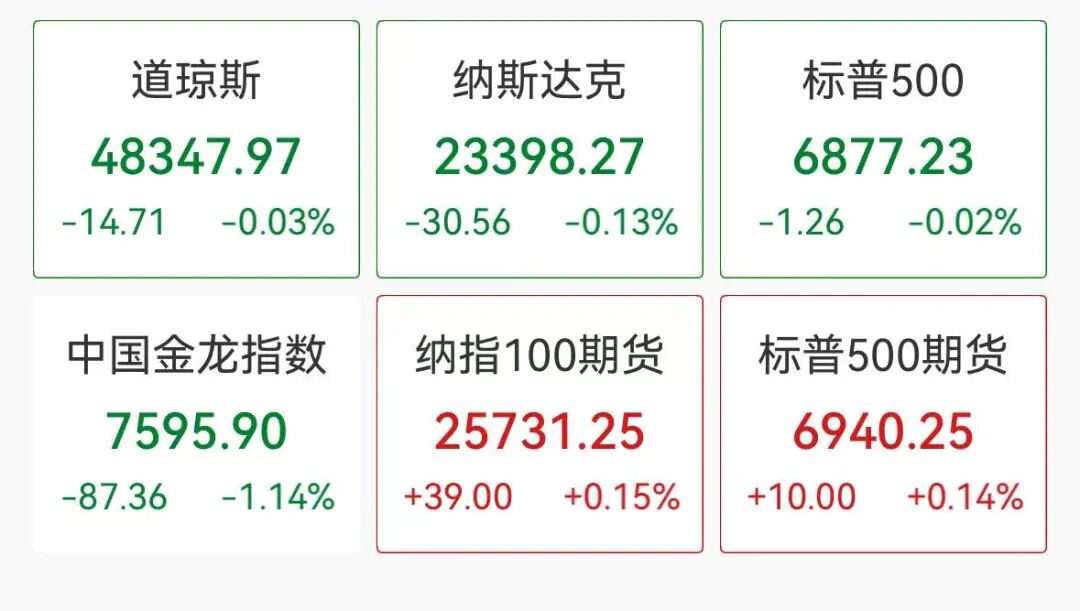
北京时间23日晚间,美股小幅低开,截至23时左右,道琼斯指数跌0.03%,标普500指数跌0.02%,纳斯达克综合指数跌0.13%。 | | BTC | 86790 | -3.91% | | --- | --- | --- | --- | | | $572.2亿 -3.7% | | | | | ETH | 2912 | -5.31% | | | $373.7亿 -3.8% | | | | | SOL | | | | 글 | $70.6亿 +3.0% | 122.4 | -4.44% | | | XRP | 1.869 | -3.86% | | | $33.5亿 -0.7% | | | | | DOGE | | | | | $14.2亿 -2.3% | 0.1288 | -4.2% | | | HYPE | 23.71 | -5.04% | | | $13.2亿 -6.1% | | | 瑞达期货研究院研究员廖宏斌认为,展望未来,考虑到白银年内累计涨幅已超130%,短期内投资者对消息面的敏感度可能显著上升。任何不及预期的数 据或政策,均可能放大贵金属市场的回调风险。不过,在白银库存持续处于低位以及工业需求保持韧性 ...
美股、中概股下挫,小鹏跌超3%,蔚来、理想跌超2%,黄金原油短线跳水
2 1 Shi Ji Jing Ji Bao Dao· 2025-12-23 15:34
Market Overview - US stock market opened slightly lower with the Dow Jones down 0.03%, S&P 500 down 0.02%, and Nasdaq down 0.13% [1] - The Philadelphia Semiconductor Index fell by 0.62%, while Nvidia saw a slight increase of 0.34% [3] Company Highlights - Novo Nordisk's GLP-1 drug, semaglutide oral version, received FDA approval, leading to a significant stock increase of 9.5%. The drug is set to launch in the US in early January [3] - The Nasdaq Golden Dragon China Index dropped by 1.2%, with major Chinese stocks under pressure, including XPeng down over 3.7% and others like NIO, Li Auto, and Bilibili down over 2% [3][4] Cryptocurrency Market - Multiple cryptocurrencies experienced a collective decline, with Bitcoin falling below $87,000, resulting in over 90,000 liquidations globally within 24 hours [9][10] Economic Indicators - The US Commerce Department reported a preliminary estimate showing a 4.3% annualized growth in GDP for Q3, with increases in exports and consumer spending, but declines in investment and imports [10]
【新能源周报】新能源汽车行业信息周报(2025年12月15日-12月21日)
乘联分会· 2025-12-23 08:40
Industry Information - China's first batch of L3 autonomous driving models has received approval for road testing in designated areas of Beijing and Chongqing, marking a significant step towards commercial application [9] - EVE Energy has achieved mass production of large cylindrical batteries, with over 60,000 units installed, showcasing high energy density and production efficiency [11] - CATL and Chuanhua Group have signed a strategic cooperation agreement to promote green transformation and intelligent upgrades in the industry [11] - The Central Economic Work Conference has outlined six key tasks related to the automotive industry for 2026, emphasizing domestic demand, innovation, and green transformation [12] - The report indicates that the Beijing-Tianjin-Hebei region has become a significant base for new energy and intelligent connected vehicles, with a projected production of 2.85 million vehicles in 2024, including 676,000 new energy vehicles [17] Policy Information - Jilin Province has announced the cessation of subsidies for charging infrastructure construction and operation, effective January 1, 2026 [28][29] - The Guangzhou government has launched a second round of automotive consumption promotion activities, allocating an additional 300 million yuan for subsidies [33] Company Information - BYD's sales of assisted driving models exceeded 310,000 units in November, covering various models equipped with advanced driving systems [39] - NIO has announced a battery doubling plan, with over 2,600 new battery packs already invested, aiming to meet the growing demand for battery swapping [38] - Changan Automobile's subsidiary, Deep Blue Automotive, plans to raise approximately 6.122 billion yuan through a capital increase [37] - Xiaomi has opened its MiMo-V2-Flash large model, which is designed for AI applications, showcasing significant advancements in performance [40] - China FAW is accelerating the mass production of solid-state batteries, expected to debut in high-end Hongqi models by the end of 2027 [41]




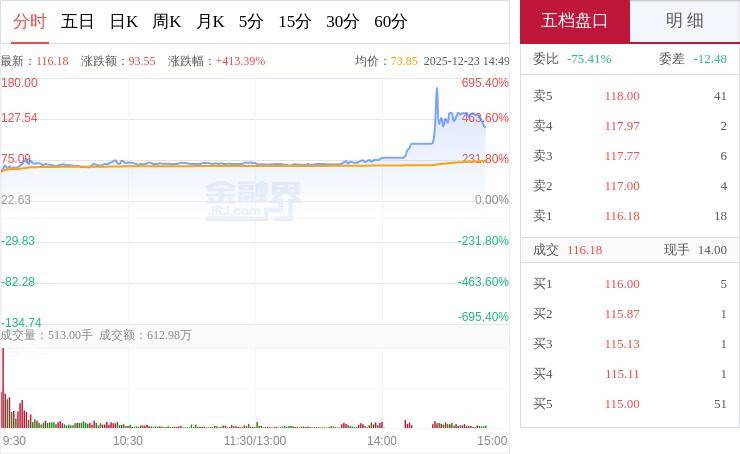
“妖股”直击:N纳百川首日振幅达530.31%,专注新能源汽车热管理,覆盖宁德时代与蔚来等头部客户
Sou Hu Cai Jing· 2025-12-23 08:29
Core Viewpoint - Nanbaichuan focuses on the development, production, and sales of thermal management products for new energy vehicle power batteries, fuel vehicle power systems, and energy storage batteries, with significant growth in revenue and net profit expected in the coming years [3]. Financial Performance - For the fiscal years 2022 to 2024, Nanbaichuan achieved operating revenues of 1.031 billion, 1.136 billion, and 1.437 billion yuan, with net profits attributable to the parent company of 113 million, 98 million, and 95 million yuan respectively [3]. - In the first three quarters of 2025, the company reported operating revenue of 1.208 billion yuan and a net profit of 58 million yuan [3]. - The company anticipates a 20.86% increase in operating revenue and a 9.72% increase in net profit for the full year of 2025 compared to the previous year [3]. Market Position - Nanbaichuan's client base includes major domestic and international manufacturers such as CATL, NIO, Li Auto, Geely, Dongfeng Nissan, Mercedes-Benz, Volkswagen, and Chery, as well as battery manufacturers [3]. - In the energy storage thermal management sector, Nanbaichuan has entered the supply chain systems of leading companies like CATL, Zhongchuang Innovation, and Sunshine Power [3]. Investment Projects - The funds raised will be invested in the first phase of a project to produce 3.6 million sets of water-cooled plates annually at Nanbaichuan (Chuzhou) New Energy Technology Co., Ltd., as well as to supplement working capital [3].


几家新势力都陷入了三万俱乐部的疲态......
自动驾驶之心· 2025-12-23 03:43
晚点LatePost . 晚一点,好一点 本文经授权转自《晚点LatePost》(ID:postlate) 作者:Evan 点击下方 卡片 ,关注" 自动驾驶之心 "公众号 戳我-> 领取 自动驾驶近30个 方向 学习 路线 以下文章来源于晚点LatePost ,作者晚点团队 >>自动驾驶前沿信息获取 → 自动驾驶之心知识星球 本文只做学术分享,如有侵权,联系删文 根据乘联会的初步统计,2025 年 11 月,全国乘用车新能源市场零售 135.4 万辆,同比去年同期增长 7%,较上月增长 6%。根据车企公开的数据,11 月,理想汽车交付 33181 辆;小鹏汽车交付 36728 辆(含海外);蔚来公司交付 36,275 辆,其中,蔚来品牌交付新车 18393 台,乐道品牌交付新车 11794 台,firefly 萤火虫品牌交付新车 6088 台。 | | | | | 小鹏 | | | | | | | | | | --- | --- | --- | --- | --- | --- | --- | --- | --- | --- | --- | --- | --- | | 车型 | M03 | P7+ | લ્હ ...

快手回应大量色情内容刷屏:遭到灰黑产攻击,已报警;字节大模型关键人物被曝加入腾讯;比亚迪回应技术研发人员涨薪丨邦早报
创业邦· 2025-12-23 00:24
Core Insights - The article discusses various significant events and trends in the technology and investment sectors, highlighting issues such as cybersecurity attacks, executive movements, and market performance in different industries. Group 1: Cybersecurity and Company Responses - Kuaishou experienced a severe cybersecurity incident on December 22, where explicit content flooded multiple live streams, causing user panic. The company reported that it was a result of a gray-black industry attack and has since taken measures to address the issue and reported it to the authorities [3][5]. Group 2: Executive Movements - Feng Jiashi, a key figure in ByteDance's AI model development, has joined Tencent as the head of the multimodal team at the AGI Research Center. His previous experience includes significant roles in academia and industry, indicating a strategic move for Tencent in AI development [5][6]. Group 3: Market Performance - Sanya's duty-free sales have seen remarkable growth, with daily sales exceeding 100 million yuan for three consecutive days, reaching 1.18 billion yuan on December 18, and showing a year-on-year increase of 45.8% and 47% on subsequent days [6][7]. - The number of billionaires in mainland China is projected to increase by 70 by 2025, with a total of 470 billionaires, second only to the United States. The total wealth of these billionaires is expected to reach 15.8 trillion USD, marking a 13% increase [6][7]. Group 4: Technology and Product Developments - Xiaomi's upcoming flagship model, the Xiaomi 17 Ultra, is set to increase in price due to rising memory costs, which have been exacerbated by the growing demand for high-performance computing [7]. - OpenAI has reportedly improved its profit margin for paid products, achieving a 70% computing profit margin by October, up from 52% at the end of 2024, indicating a strong financial performance in the AI sector [14]. Group 5: Investment and Financing Activities - Several companies have recently completed significant funding rounds, including Zhi Yuan Pharmaceutical with nearly 300 million yuan in Pre-IPO financing, and Shanghai Blueprint Aviation with 500 million yuan in A-round financing, reflecting a robust investment climate in the tech and healthcare sectors [20][20][20].



Nio stock price analysis as death cross chart pattern nears
Invezz· 2025-12-22 16:17
The Nio stock price has suffered a big reversal in the past few weeks as concerns about the Chinese electric vehicle (EV) industry continued. It dropped to the psychological level at $5, its lowest le... ...
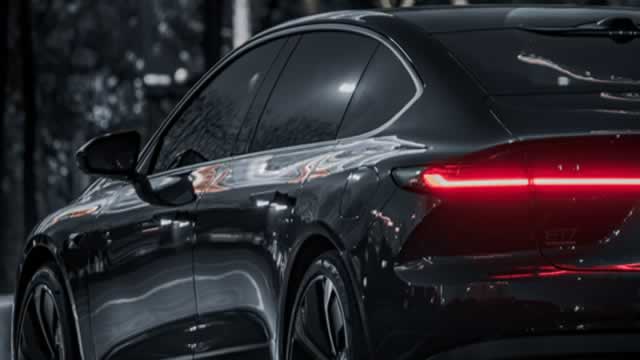
Should You Buy Nio Stock While It's Below $5 a Share?
The Motley Fool· 2025-12-22 09:30
Core Viewpoint - The share price of Nio has significantly declined, raising questions about its investment potential despite strong sales growth and delivery numbers [1] Group 1: Sales and Revenue Growth - Nio's vehicle deliveries reached 36,275 in November, marking a year-over-year increase of 76.3%, closely following record deliveries of 40,397 vehicles in October, which represented a 92.6% year-over-year increase [3][4] - Despite soaring revenue from $5.6 billion in 2021 to $9.1 billion in 2023, Nio has reported increasing net losses, with projections of $3 billion in losses for 2024 [4] Group 2: Profitability Challenges - Nio's profitability remains elusive, with net losses growing alongside sales, indicating that higher sales do not necessarily translate to improved profitability [4][5] - Management aims for the fourth quarter to be the first profitable quarter, which could positively impact share prices if achieved [5] Group 3: Market Incentives - The Chinese government is phasing out substantial purchase subsidies and tax exemptions for EVs, which could negatively affect Nio's sales starting in 2026 [7][8] - The reduction in tax incentives may impact overall purchases, although Nio's strategy of targeting the lower-end EV market could help mitigate some effects [10] Group 4: International Expansion and Trade Barriers - Nio is expanding internationally, having launched sales and service networks in five European countries, with plans for further expansion [11] - The European Union has imposed tariffs on Chinese EVs ranging from 17% to 35.3%, complicating Nio's European strategy and potentially affecting its affordability [12]
【联合发布】2025年11月OTA监测月报
乘联分会· 2025-12-22 08:37
Core Insights - The article discusses the monthly OTA (Over-The-Air) monitoring report released by the China Automobile Dealers Association and Guangzhou Weirui Information Technology Co., Ltd, focusing on the trends and updates in the automotive industry regarding OTA upgrades [1]. Industry Overview - In November 2025, the industry recorded a total of 936 OTA updates, showing a significant decrease compared to the previous month. The focus of these updates has shifted towards cabin domain optimizations, including enhancements in voice functionality, central control ecosystem, and map ecology [4]. New Forces - New force brands collectively updated 177 features in November 2025, marking a notable decline. Key players like Leap Motor and Tesla concentrated on refining the user experience of conventional vehicle settings and controls. NIO and Xiaomi were the main contributors to this month's updates, with NIO enhancing AI capabilities in NOMI and cabin experience, while Xiaomi made significant upgrades in driving assistance and smart cabin features [6]. Domestic Brands - Domestic brands accounted for 710 updates in November 2025, with a strong emphasis on map ecology. Brands like BYD, Haval, and Geely introduced features such as traffic light countdowns and proactive recommendations for destinations and parking information. Additionally, BYD optimized its automatic parking feature, while Geely and Xpeng introduced popular fingertip parking functionalities, enhancing the parking experience for domestic new energy vehicles [11]. Joint Venture & Luxury Brands - Joint venture and luxury brands collectively updated 49 features in November 2025, primarily focusing on experience optimization. Brands like Cadillac and Buick concentrated on enhancing vehicle settings and system configurations. Toyota launched a large-scale OTA for the Platinum 3X, which included two major feature upgrades and 26 new or optimized features, significantly improving the cabin's intelligence and parking experience [10]. NIO's OTA Operations - NIO launched the "User Navigation Team" 3.0 rules, encouraging users to participate in OTA testing through a structured task system. The tasks are categorized into basic, advanced, and direct access levels, aimed at engaging users in sharing experiences and preheating OTA updates [21]. User Engagement Activities - Following the OTA push, NIO initiated a reward activity on the owner app to encourage users to share their experiences with the Cedar S 1.3.0 upgrade. This included discussions around the unique features of the upgrade, maintaining the OTA's visibility and user engagement [29][30]. Upcoming Upgrades - Various brands have scheduled significant OTA updates for 2025 and 2026, including features like urban navigation assistance, intelligent parking, and advanced AI functionalities. For instance, BYD's models are set to receive updates that enhance their energy management and driving assistance capabilities [32][34].