NIO(NIO)

Search documents
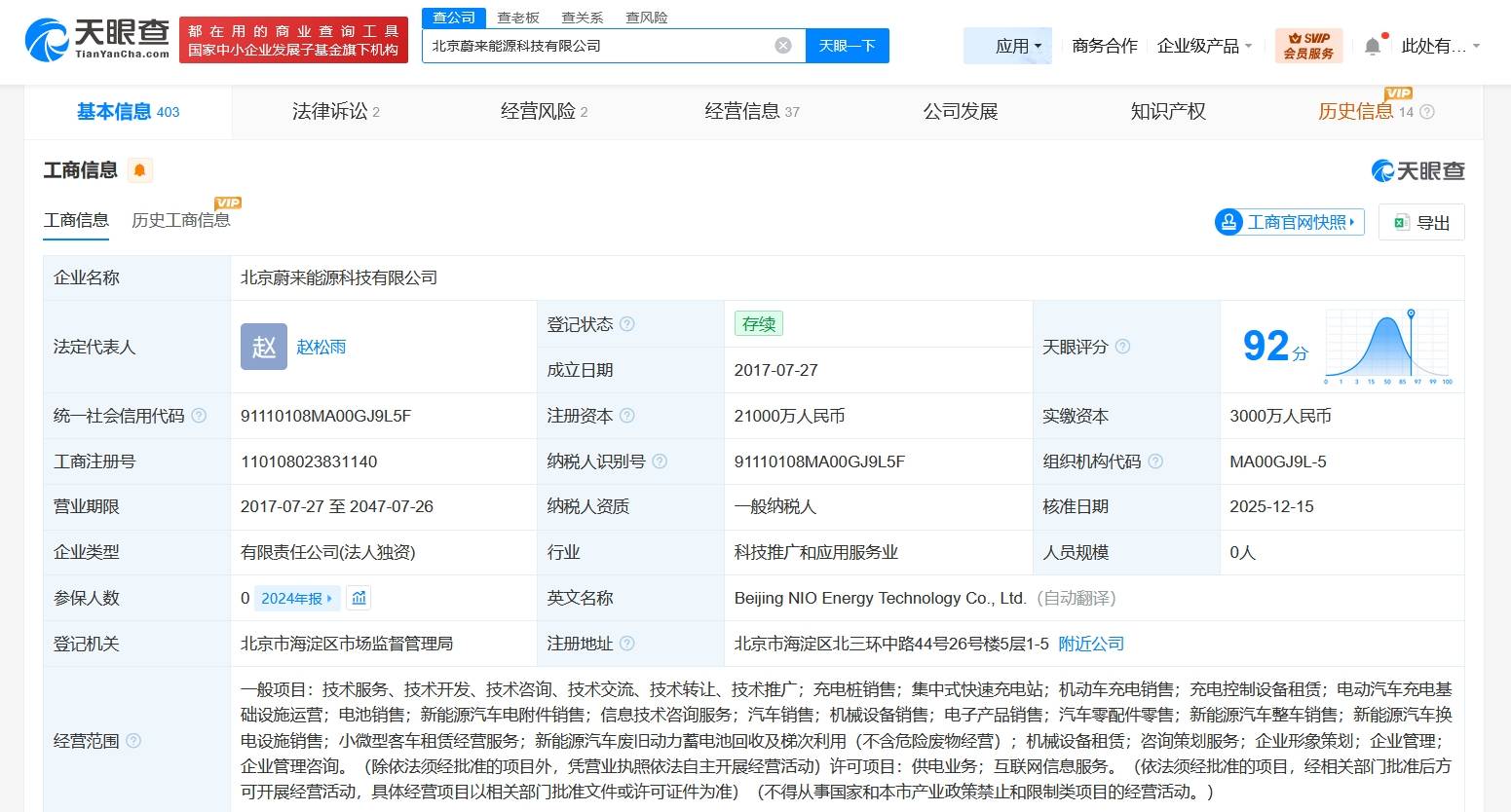
蔚来旗下北京能源科技公司增资至2.1亿元
Sou Hu Cai Jing· 2025-12-18 04:49
Core Viewpoint - Beijing NIO Energy Technology Co., Ltd. has increased its registered capital from 30 million RMB to 210 million RMB, representing a 600% increase, indicating significant growth and potential expansion in the electric vehicle infrastructure sector [1]. Company Information - The company was established in July 2017 and is wholly owned by Wuhan NIO Energy Co., Ltd. [1][2]. - The legal representative of the company is Zhao Songyu [1]. - The company operates in various sectors including the sale of charging piles, operation of electric vehicle charging infrastructure, battery sales, and recycling of used power batteries [1][2]. Business Scope - The business scope includes sales of charging piles, centralized fast charging stations, electric vehicle charging sales, leasing of charging control equipment, and sales of electric vehicle accessories [1][2]. - The company is also involved in the recycling and secondary utilization of used power batteries from electric vehicles [1][2].


蔚来能源与中安能源首批合作共建的50座充换电站在安徽省内投入运营
Mei Ri Jing Ji Xin Wen· 2025-12-18 04:48
Core Viewpoint - NIO Energy and Zhong'an Energy announced the operation of the first batch of 50 charging and battery swap stations in Anhui Province, marking a significant advancement in their strategic cooperation and an important milestone in NIO Energy's ecosystem openness and collaborative construction [1] Group 1 - The collaboration between NIO Energy and Zhong'an Energy represents a deepening of their strategic partnership [1] - The launch of the "Charging Partner" program in August 2024 has led to the establishment of nearly 200 charging and battery swap stations in collaboration with 35 partners across 25 provinces and regions [1] - The industry collaboration has entered a new phase of large-scale implementation [1]
蔚来能源与中安能源首批共建50座充换电站投入运营
Zheng Quan Shi Bao Wang· 2025-12-18 04:43
Core Viewpoint - NIO Energy and Zhong'an Energy have launched the first batch of 50 charging and battery swap stations in Anhui Province, marking a significant step in their collaboration [1] Group 1: Company Developments - NIO Energy has introduced the "Charging Partner" program in August 2024, collaborating with 35 partners across 25 provinces and regions to build nearly 200 charging and battery swap stations [1] - The company has invested approximately 18 billion yuan in charging and battery swap technology and infrastructure [1] Group 2: Industry Position - NIO has established a nationwide network of 8,466 charging and battery swap stations, leading the industry in the number of stations built [1]
蔚来旗下北京能源科技公司增资至2.1亿
Sou Hu Cai Jing· 2025-12-18 03:52
Core Viewpoint - Beijing NIO Energy Technology Co., Ltd. has increased its registered capital from 30 million RMB to 210 million RMB, marking a 600% increase [1] Company Overview - The company was established in July 2017 and is legally represented by Zhao Songyu [1] - Its business scope includes sales of charging piles, centralized fast charging stations, motor vehicle charging sales, leasing of charging control equipment, operation of electric vehicle charging infrastructure, battery sales, sales of electric vehicle accessories, sales of complete electric vehicles, and recycling and repurposing of used power batteries [1] - The company is wholly owned by Wuhan NIO Energy Co., Ltd. [1]
「二次创业」大戏拉开帷幕
3 6 Ke· 2025-12-18 03:31
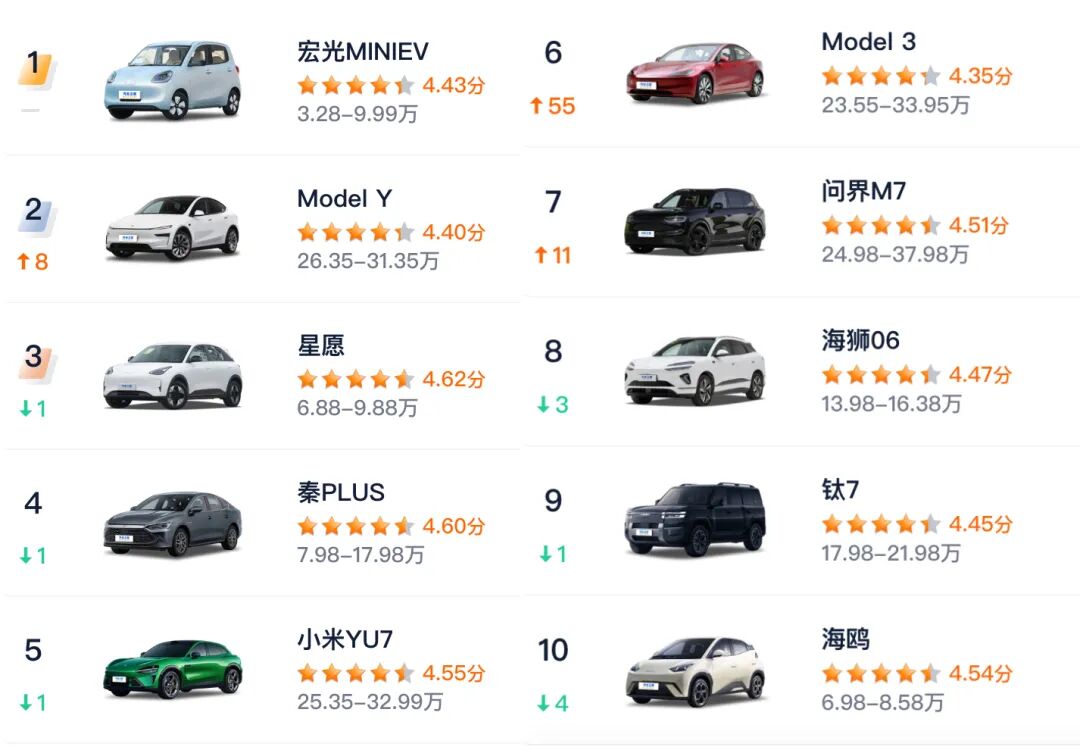
Core Insights - The rapid growth of the new energy vehicle market in China has led to a significant division in the automotive market, with distinct trends emerging in the price segments below and above 200,000 yuan [1][2][5] Market Trends - In November, vehicles priced above 200,000 yuan occupied four spots in the sales rankings, with the Model Y selling over 47,000 units and the AITO M7 selling over 25,000 units [1] - Conversely, vehicles priced below 100,000 yuan also claimed four spots, with the Hongguang MINIEV selling over 56,000 units and the BYD Seagull selling over 21,000 units [2] - The market has bifurcated into segments below 100,000 yuan and above 200,000 yuan, leaving the 100,000-200,000 yuan segment relatively quiet [2][5] Sales Performance - The top-selling models in the overall automotive market for November included the Hongguang MINIEV, Model Y, and others, with significant sales figures indicating a preference for lower-priced vehicles [4] - The sales figures for electric vehicles showed a notable increase, with pure electric vehicles selling 7,155 units and plug-in hybrids 28,213 units [4] Consumer Behavior - The shift in consumer behavior reflects a change from purchasing vehicles out of necessity to buying based on emotional appeal, particularly in the above 200,000 yuan market [7] - The lower-priced market is seeing a mix of consumption downgrade and upgrade, with traditional brands like Geely and BYD dominating this segment, while new entrants struggle to penetrate [7][8] Competitive Landscape - New energy vehicle brands such as Xiaomi and Hongmeng Zhixing are gaining traction, with Xiaomi achieving over 40,000 units sold in November, marking its entry into the top three for the first time [9][10] - Traditional automakers are facing challenges in the above 200,000 yuan market, where they need to enhance their overall offerings to regain competitive advantage [19][20] Industry Evolution - The automotive industry is undergoing a "second entrepreneurship," with traditional manufacturers transitioning from fuel vehicles to smart new energy vehicles, while new entrants are establishing themselves in the market [20]





AI加速“上车” 智能汽车操作系统迈向千亿级市场
Xin Hua Cai Jing· 2025-12-18 01:09
Core Insights - Major automotive companies are increasingly adopting AI as a core strategy for future development, with significant investments in AI technologies and models [1] - The automotive software industry is undergoing structural changes, shifting the value focus from traditional hardware manufacturing to software and services, with projections indicating a rise in software profit share from 6% in 2020 to 25% by 2030 [2][3] - The integration of software is fostering a new ecosystem that bridges various sectors, enhancing collaboration and resource efficiency across the automotive industry [3][4] Group 1: Industry Trends - The automotive software industry's value is transitioning from a "one-time sale" model to a "full-cycle service" model, with hardware profit share decreasing from 79% in 2020 to an expected 59% by 2030 [2] - The commercial value of in-vehicle operating systems is becoming increasingly significant, with the market projected to reach approximately 600 billion yuan by 2025 and exceed 1 trillion yuan by 2030 [3] - The future of automotive software development is expected to focus on integration, moving towards highly adaptive intelligent operating systems that support comprehensive resource management [4] Group 2: Challenges and Solutions - The automotive industry faces challenges in establishing a unified and open software and hardware ecosystem, with varying levels of openness and interface standards among chip manufacturers [7] - Collaboration between companies remains inefficient, often requiring extensive customization and debugging, which hampers the overall efficiency of solutions [7] - The industry is encouraged to adopt open-source models to build a unified technical foundation, reducing costs and fostering innovation through community collaboration [5][9] Group 3: Future Directions - The integration of advanced safety features and the expansion of collaborative boundaries are essential for building sustainable competitive advantages in the automotive sector [11] - The industry is exploring the incorporation of satellite technology into existing vehicle-road-cloud systems to enhance data and computational networks [12] - The relationship between AI and the automotive industry is expected to evolve, with AI becoming a critical component in the development of intelligent vehicles and applications [12]

L4级自动驾驶卡车龙头来了!蔚来参投!估值猛涨25倍!
IPO日报· 2025-12-18 00:33
Core Viewpoint - Mainline Technology (Beijing) Co., Ltd. is preparing for an IPO on the Hong Kong Stock Exchange, aiming to raise funds to further develop its autonomous truck solutions, with a current valuation of 3.86 billion yuan [1][12]. Company Overview - Founded in 2017, Mainline Technology is a leading provider of L4 autonomous trucks and solutions in China, focusing on a "vehicle-end-cloud" integrated product ecosystem for logistics transportation [4]. - The company has been recognized as a national-level "specialized and innovative" key "little giant" enterprise in the autonomous truck sector [5]. Product and Solutions - Mainline Technology's solutions include three core products: AiTruck (smart truck), AiBox (smart terminal), and AiCloud (smart cloud service) [5]. - The company strategically deploys its products across three main commercial scenarios: Trunk Port (logistics hub), Trunk Pilot (highway logistics), and Trunk City (urban traffic) [5]. Financial Performance - Revenue for the years 2022 to 2024 is projected at approximately 112 million yuan, 134 million yuan, and 254 million yuan, with a compound annual growth rate of 50.4% [6]. - The company reported net losses of approximately 278 million yuan, 212 million yuan, and 187 million yuan during the same period, with adjusted net losses showing a reduction [6][8]. - The gross margin has increased from 3.7% in 2022 to 30.3% in the first half of 2025 [8]. Revenue Sources - The primary revenue source is from the Trunk Pilot scenario, which accounted for 83.5% of the revenue in the first half of 2025 [7]. Investment and Valuation - The company has attracted significant investment from notable firms, including NIO and Bosch, with its valuation increasing from 150 million yuan at its angel round to 3.86 billion yuan in its latest funding round [10][12]. - The founder, Zhang Tianlei, holds approximately 49.12% of the shares, making him the controlling shareholder [14]. Leadership - Zhang Tianlei, the founder and CEO, has a strong background in artificial intelligence and autonomous driving, previously working at Microsoft and co-founding Baidu's autonomous vehicle team [12][13].

隔夜欧美·12月18日
Sou Hu Cai Jing· 2025-12-17 23:56
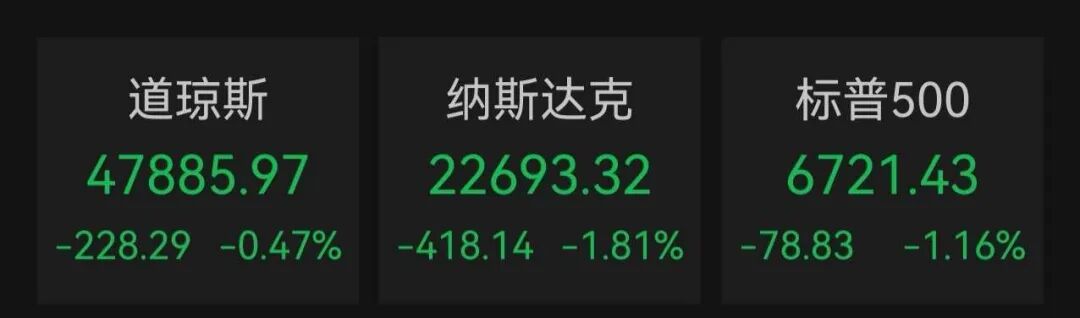
Market Performance - The three major US stock indices closed lower, with the Dow Jones down 0.47% at 47,885.97 points, the S&P 500 down 1.16% at 6,721.43 points, and the Nasdaq down 1.81% at 22,693.32 points [1] - Major tech stocks collectively declined, with Tesla down over 4%, Nvidia down nearly 4%, Google down over 3%, Apple and Facebook down over 1%, Amazon down 0.58%, and Microsoft down 0.06% [1] - Most Chinese concept stocks fell, with Century Internet down over 3%, NIO down over 3%, Li Auto down over 3%, Pony.ai down nearly 3%, and Global Data down over 3%. However, Wanwu Xingsheng rose nearly 3%, Zai Ding Pharmaceutical rose over 1%, and Yum China rose nearly 1% [1] - European stock indices had mixed results, with Germany's DAX down 0.02% at 24,072.25 points, France's CAC40 down 0.25% at 8,086.05 points, and the UK's FTSE 100 up 0.92% at 9,774.32 points [1] Commodity Prices - US oil futures rose by 2.92% to $56.74 per barrel, while Brent crude oil futures increased by 2.85% to $60.60 per barrel [1] - International precious metal futures generally rose, with COMEX gold futures up 0.90% at $4,371.40 per ounce and COMEX silver futures up 4.92% at $66.44 per ounce [1] - London base metals saw an overall increase, with LME tin up 3.05% at $42,275.00 per ton, LME copper up 1.30% at $11,742.50 per ton, LME aluminum up 1.03% at $2,906.00 per ton, LME zinc up 0.99% at $3,071.50 per ton, LME lead up 0.98% at $1,961.00 per ton, and LME nickel up 0.72% at $14,365.00 per ton [1] Bond Yields - US Treasury yields were mixed, with the 2-year yield up 0.43 basis points at 3.483%, the 3-year yield unchanged at 3.528%, the 5-year yield up 0.36 basis points at 3.698%, the 10-year yield up 1.36 basis points at 4.153%, and the 30-year yield up 1.72 basis points at 4.827% [1] - European bond yields mostly increased, with the UK 10-year yield down 4.4 basis points at 4.473%, France's 10-year yield up 2.4 basis points at 3.570%, Germany's 10-year yield up 1.9 basis points at 2.861%, Italy's 10-year yield up 2.4 basis points at 3.566%, and Spain's 10-year yield up 1.8 basis points at 3.296% [1]




美股全线下跌!特斯拉重挫超4%
Zhong Guo Zheng Quan Bao· 2025-12-17 23:37
Market Performance - The three major U.S. stock indices closed lower on December 17, with the Dow Jones down 0.47% at 47,885.97 points, the S&P 500 down 1.16% at 6,721.43 points, and the Nasdaq down 1.81% at 22,693.32 points [3]. - Major technology stocks collectively declined, with Tesla dropping over 4%, Nvidia nearly 4%, and Google over 3% [2][5]. Sector Performance - The Philadelphia Semiconductor Index fell by 3.78%, with significant declines in major chip stocks such as ASML, ARM, and AMD, each dropping over 5%, and Broadcom down over 4% [5]. - Chinese concept stocks mostly declined, with the Nasdaq Golden Dragon China Index down 0.73%. Notable declines included Century Internet and NIO, both down over 3%, while Dingdong Maicai surged over 22% [6]. Commodity Market - Precious metals futures saw a general increase, with COMEX gold futures rising by 0.9% to $4,371.40 per ounce and COMEX silver futures up 4.92% to $66.44 per ounce [6]. - Crude oil prices also increased, with light crude oil futures for January delivery rising by $0.67 to $55.94 per barrel (up 1.21%) and Brent crude for February delivery up $0.76 to $59.68 per barrel (up 1.29%) [8]. Monetary Policy - The Federal Reserve's monetary policy remains restrictive, with room for potential interest rate cuts in the future. Fed Governor Christopher Waller indicated that there is no urgency for rate cuts, suggesting a gradual approach towards neutral policy rates to address slowing inflation while maintaining economic resilience [9].


年末车市上演政策“窗口期”博弈:消费者持续观望,销售鼓励年前锁单,专家预判2026年车市将在压力中“企稳回升”
3 6 Ke· 2025-12-17 12:39
Core Insights - The central theme of the articles revolves around the impact of the "old-for-new" vehicle replacement subsidy policy and the upcoming changes in the new energy vehicle (NEV) purchase tax policy in China, particularly in 2026 [1][3][11]. Policy and Market Dynamics - The "old-for-new" subsidy policy in Beijing has been suspended, but the central government has indicated that the policy will continue in 2026 with further optimization [1][4][11]. - The NEV purchase tax exemption is set to expire soon, transitioning to a 50% reduction, which will increase the cost for consumers [3][9]. - The suspension of local subsidies has led to a decline in consumer enthusiasm, although interest has started to recover as the year-end approaches [4][6]. Consumer Behavior - Two main groups of consumers are currently in a state of "wait-and-see": those interested in locking in orders for models with tax guarantees and those waiting for the specifics of the new subsidy policy [7][12]. - The demand for vehicle replacements has diminished as many potential buyers have already made purchases during the subsidy period, leaving only those with less urgent needs [6][10]. Sales Performance - Recent data indicates a significant decline in vehicle sales, with a 32% year-on-year drop in retail sales during the first week of December [9][10]. - The overall market sentiment is cautious, with expectations that the upcoming policy changes may lead to further fluctuations in demand [11][13]. Future Outlook - Analysts predict that the subsidy levels for the "old-for-new" policy in 2026 will likely be reduced, which could impact market growth [11][12]. - Despite the anticipated challenges, the overall vehicle market is expected to maintain a positive growth trajectory due to ongoing improvements in NEV technology and competitive pricing [13].