PDD(PDD)

Search documents
即时零售混战,拼多多“借腹生子”
Sou Hu Cai Jing· 2026-01-24 13:25
Core Insights - The competition in instant retail is intensifying, with major platforms like JD and Meituan significantly increasing their daily order volumes, indicating a shift in consumer expectations towards faster delivery services [3][6] - Pinduoduo is exploring a middle ground in the instant retail space by offering next-day and day-after delivery services, rather than directly competing in the immediate delivery segment [2][10] - The evolving consumer behavior shows a growing reliance on online food delivery, with a notable increase in users browsing and ordering through delivery apps [5][8] Group 1: Market Dynamics - Instant retail is blurring the lines between near-field and far-field e-commerce, with platforms like Taobao and JD offering rapid delivery options that challenge traditional e-commerce models [6][14] - The rapid growth in order volumes for non-food items reflects a broader trend where consumers are increasingly willing to purchase a variety of products through instant retail channels [3][5] - The competitive landscape is shifting, with platforms emphasizing speed ("fast") as a differentiator over price ("cheap"), which has been the traditional narrative in e-commerce [6][13] Group 2: Pinduoduo's Strategy - Pinduoduo has not fully engaged in the instant retail battle but is adapting its strategy by enhancing its warehousing and logistics capabilities to offer next-day delivery [2][9] - The company is testing a new service called "Billion Supermarket," which aims to cover a wide range of daily necessities while still operating within its traditional online retail framework [9][10] - Pinduoduo's cautious approach to instant retail aligns with its core user base, which tends to prioritize cost over immediate delivery [8][16] Group 3: Consumer Behavior - A significant portion of users has reported increased frequency in using food delivery apps, indicating a shift in consumer habits towards online dining options [5][8] - The expectation for faster delivery is becoming a natural consideration for consumers, influencing their purchasing decisions across multiple platforms [18][19] - The balance between speed and cost remains critical, as consumers weigh their options based on various factors beyond just delivery time [13][17]



2026年中国先买后付(BNPL)行业概述、发展历程、市场现状及发展趋势研判:行业规模持续增长,年轻一代消费者为主要用户群体[图]
Chan Ye Xin Xi Wang· 2026-01-24 02:30
Core Insights - The Buy Now Pay Later (BNPL) service is entering a "2.0" phase, particularly in China, where the market is experiencing strong growth, with BNPL accounting for 2% of e-commerce transaction volume and projected to reach 928.2 billion yuan in 2024, a year-on-year increase of 2% [1][9]. Group 1: Industry Overview - BNPL, also known as "buy now, pay later," is a new payment method that allows consumers to receive products before making payment, essentially functioning as a short-term credit product [4]. - The BNPL service is primarily provided by local leading applications or well-known e-commerce platforms in China, such as Ant Group's Huabei, JD's Baitiao, and WeChat's Fenfu, which significantly promote its adoption and growth [1][9]. Group 2: Market Dynamics - The BNPL industry is characterized by a high concentration of major players, with e-commerce platforms like JD and Pinduoduo leading the market by integrating BNPL services into their shopping processes [11]. - The main user demographic for BNPL services is the younger generation, who prefer flexible payment options over traditional credit cards due to simpler application processes and lower barriers to entry [9]. Group 3: Competitive Landscape - The competitive landscape of the BNPL industry is defined by a dominance of e-commerce platforms, collaboration with payment networks, and the presence of niche vertical platforms that fill market gaps [11]. - JD Group has developed its BNPL product, JD Baitiao, which allows users to enjoy flexible payment options across various scenarios, including online and offline purchases [12]. Group 4: Future Trends - Future innovations in the BNPL industry will focus on smart, personalized, and secure solutions, leveraging big data and AI for better credit assessments and utilizing blockchain for transaction security [14]. - The market competition is expected to intensify, with smaller BNPL providers facing potential acquisitions or mergers, while innovative companies may emerge as industry leaders [15]. - Regulatory scrutiny is anticipated to increase, with governments likely to implement stricter regulations on BNPL services regarding fees, terms, and transparency to protect consumer rights [16].





商社行业2026年度策略:内需以新谋变,出海绽放全球
GOLDEN SUN SECURITIES· 2026-01-23 09:20
Core Insights - The report emphasizes the structural opportunities in both domestic demand and overseas expansion for 2026, particularly focusing on new services and new retail sectors [2][24] - It highlights the positive resonance between policy and fundamentals, suggesting that leading companies in the commercial sector are likely to benefit from policy stimuli and improve their fundamentals [2][4] Domestic Demand - The report identifies new services and new retail as the main lines for domestic demand, with a focus on the marginal changes in the fundamentals of related sub-sectors [2][5] - Specific sub-sectors showing price increase potential include: - **Hotels**: Strong leisure demand and optimized supply structure, with prices expected to remain stable or slightly increase. Recommended companies include Huazhu Group, Jinjiang Hotels, and Shoulv Hotels [2][3] - **Duty-Free**: With the opening of Hainan, the sector is stabilizing, and China Duty Free is highlighted as a key player [2][3] - **Gold and Jewelry**: The report notes a high volatility in gold prices but anticipates improved terminal sales. Recommended companies include Chow Tai Fook and Lao Puhuang [2][3] - **Mother and Baby**: Leading companies are expected to maintain steady growth, supported by favorable policies. Recommended companies include Kidswant and Aiyingshi [2][3] Sub-Sectors Driven by Volume Growth - The report suggests focusing on the Consumer Price Index (CPI) for sectors primarily driven by volume growth: - **Supermarkets**: CPI increases are beneficial for same-store sales, with a shift in focus from store adjustments to supply chain reforms. Recommended companies include Yonghui Superstores and Jiajiayue [3][5] - **Tourism**: The report highlights the potential for expansion and asset integration in the tourism sector, recommending companies like Jiuhua Tourism and Changbai Mountain [3][5] - **Dining**: Emphasizes refined operations and incentives for leading companies, with recommendations including Yum China and Haidilao [3][5] - **Tea Drinks**: The report notes that delivery subsidies may impact pricing, with store openings expected to drive growth. Recommended companies include Mixue and Gu Ming [3][5] Overseas Expansion - The report indicates that leading companies with high barriers to entry are expected to continue showing strong performance in overseas markets, with a focus on brand building and diversified destinations [4][24] - Recommended companies for overseas expansion include: - **Small Commodity City** and **Miniso**: Both are noted for their strong performance and brand development [4][24] - **Anker Innovations** and **Sumida**: Highlighted for their competitive advantages in specific segments [4][24] Investment Recommendations - The report suggests that for 2026, investors should focus on sectors benefiting from policy support and those with strong performance certainty in overseas markets [5][24] - It emphasizes the importance of monitoring the recovery of volume in certain sectors while maintaining a cautious approach to pricing stability [5][24]




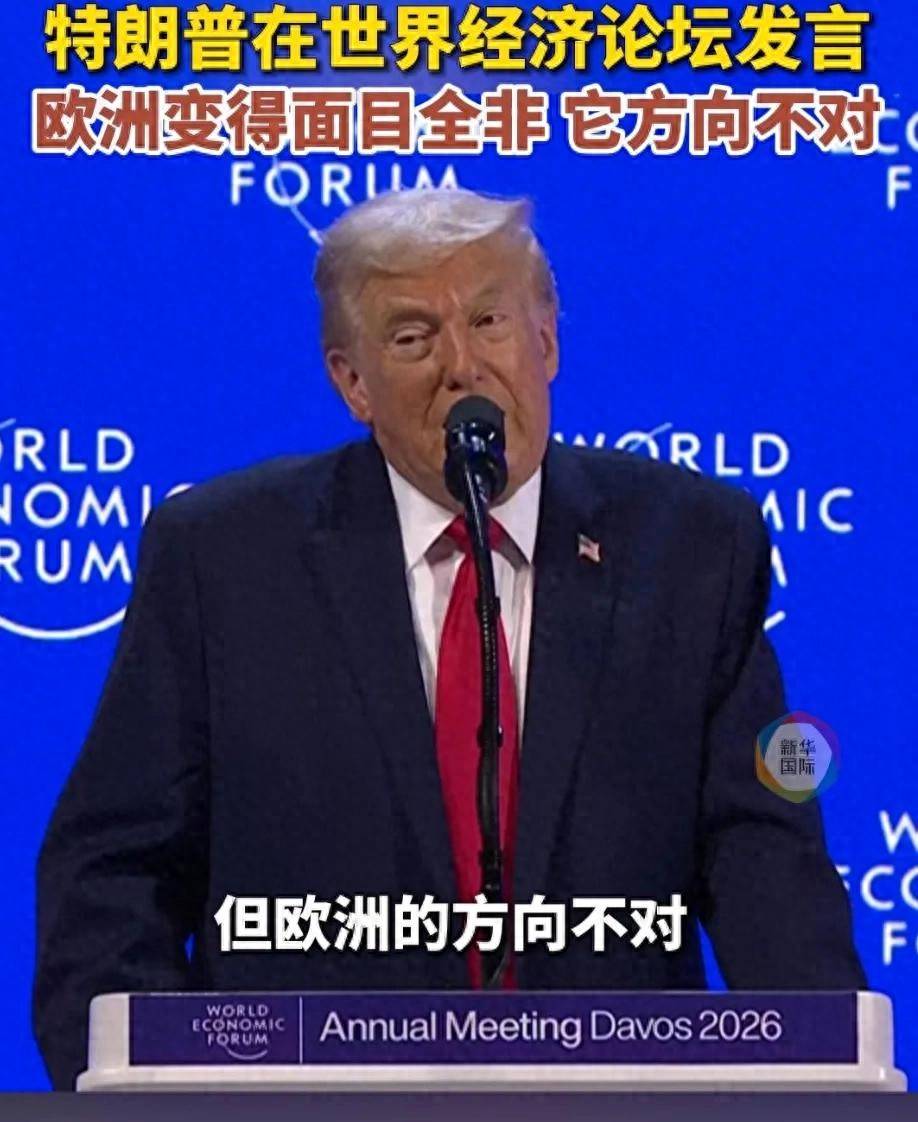
特朗普在欧洲抨击欧洲:你们方向不对,欧洲某些地方已变得面目全非;不会对格陵兰岛动武
Sou Hu Cai Jing· 2026-01-23 02:59
Group 1: U.S. and Greenland Island Dispute - The U.S. President Trump expressed intentions to negotiate the purchase of Greenland, emphasizing its strategic importance to U.S. national security [3][8] - Trump criticized Denmark for its perceived ingratitude regarding Greenland and stated that no other country could ensure its security [3] - The international response included strong opposition from European leaders, particularly the UK, asserting that the future of Greenland should be determined by its people and Denmark [8] Group 2: Market Reactions and Economic Indicators - U.S. stock indices saw significant gains, with the Dow Jones Industrial Average rising by 418 points and the Nasdaq index increasing by over 1% [5] - Notable increases in Chinese concept stocks were observed, with Baidu rising by 7.12% and iQIYI by 7.03% [5][8] - The market reacted to Trump's comments, with gold prices initially dropping by $40 before stabilizing at $4849.49 per ounce [3] Group 3: Federal Reserve and Monetary Policy - Trump announced plans to nominate a new Federal Reserve Chair, indicating dissatisfaction with current Chair Powell's timing on interest rate adjustments [7] - Economists predict that the Federal Reserve will maintain the benchmark interest rate unchanged during the January meeting, contrary to previous expectations of potential rate cuts [7] - Concerns regarding the independence of the Federal Reserve have increased, with Trump criticizing its failure to lower rates and the Justice Department threatening investigations into the Fed [7]




信达国际控股港股晨报-20260123
Xin Da Guo Ji Kong Gu· 2026-01-23 02:05
Market Overview - The Hang Seng Index faces short-term resistance at 27,188 points, with expectations of two interest rate cuts in 2026 following the Federal Reserve's recent rate reduction of 0.25% [2] - The market anticipates increased monetary policy easing in mainland China, particularly in the first quarter of 2026, focusing on expanding domestic demand and achieving technological self-reliance [2] - Recent adjustments in financing margin ratios by the Shanghai and Shenzhen stock exchanges may lead to short-term market pullbacks, affecting the momentum of Hong Kong stocks [2] Sector Outlook - The aviation sector is expected to benefit from a peak travel season during the extended Spring Festival holiday, alongside favorable conditions from the appreciation of the RMB and soft oil prices [3] - High-dividend stocks are likely to attract capital as market risk appetite decreases, leading to increased investment in defensive sectors [3] Economic Indicators - The U.S. core PCE inflation rose by 2.8% in November, aligning with expectations, while the GDP growth for Q3 2025 was revised to 4.4%, exceeding forecasts [3][6] - China is projected to set its economic growth target for 2026 between 4.5% and 5%, lower than the previous year's target of around 5% [6] - The People's Bank of China indicated room for further interest rate cuts and reserve requirement ratio reductions to maintain liquidity [6] Corporate News - Alibaba is preparing to list its semiconductor division, Pingtouge, to capitalize on investor interest in AI accelerator companies [9] - Baidu has launched the official version of its Wenxin large model 5.0, which supports various forms of information processing [9] - Pop Mart has restarted its share buyback program, with significant media coverage expected to boost its stock price [9] Investment Trends - KPMG's report on the Hong Kong banking sector indicates optimism for wealth management and IPO markets, suggesting growth opportunities for banks in 2026 [7] - The report highlights the importance of digital asset development and AI innovation in enhancing the competitive landscape of Hong Kong's banking industry [7]
PDD Holdings Unusual Options Activity For January 22 - PDD Holdings (NASDAQ:PDD)
Benzinga· 2026-01-22 19:01
Group 1: Market Sentiment and Trading Activity - Significant investors have taken a bullish stance on PDD Holdings, with 52% of trades reflecting bullish expectations and 47% bearish [1] - The total options trades detected for PDD Holdings include 7 puts amounting to $562,055 and 27 calls totaling $1,658,340 [1] - Projected price targets for PDD Holdings range from $60.0 to $130.0 based on recent trading activity [2] Group 2: Options Volume and Open Interest - The average open interest for options of PDD Holdings is 3,190.65, with a total volume of 20,993.00 [3] - A chart illustrates the progression of call and put option volume and open interest for high-value trades within the strike price corridor from $60.0 to $130.0 over the last 30 days [3] Group 3: Noteworthy Options Activity - A summary of notable options activity shows various trades, including bullish and bearish sentiments, with specific details on strike prices and total trade amounts [6] - For instance, a bearish put option trade was executed with a total trade amount of $268.3K at a strike price of $105.00 [6] Group 4: Company Overview - PDD Holdings operates commerce businesses in over 80 countries, primarily through its platforms Pinduoduo and Temu, along with a community group purchase business in China [7] - The company has developed a robust network of sourcing, logistics, and fulfillment capabilities to support its operations [7] Group 5: Current Market Standing - PDD Holdings has a current trading volume of 4,837,703, with the stock price up by 0.4% to $107.05 [9] - The consensus target price from market experts for PDD Holdings is $170.0, with a maintained Buy rating from Freedom Capital Markets [8]

上海市税务部门依法对“拼多多”进行处罚
Qi Lu Wan Bao· 2026-01-22 10:14
Core Viewpoint - Shanghai Xunmeng Information Technology Co., Ltd. (operator of the "Pinduoduo" platform) was fined 100,000 yuan for failing to report tax-related information as required by regulations [1] Group 1: Regulatory Compliance - The company did not comply with the "Internet Platform Enterprises Tax Information Reporting Regulations" [1] - The tax authority mandated the company to rectify the situation within a specified timeframe [1] - Although the company undertook corrective actions, it failed to complete them within the deadline [1] Group 2: Financial Penalty - The tax authority imposed a fine of 100,000 yuan on the company for its non-compliance [1]
异动盘点0122 | 香港地产股普涨,天数智芯涨超14%,再创上市新高;明星科技股多数上涨,存储板块持续走强
贝塔投资智库· 2026-01-22 04:03
Group 1 - Oil stocks generally rose, with CNOOC (02883) up 4.32%, PetroChina (00857) up 3.33%, CNOOC (00883) up 2.98%, and Sinopec (00386) up 3.01%. International oil prices saw a slight increase, with WTI crude oil futures for February closing at $60.62 per barrel, up 0.43%, and Brent crude oil futures for March at $65.24 per barrel, up 0.49% [1] - CATL (03750) fell over 4%, down 4.4% as of the report. A report from Citi raised concerns about CATL's growth prospects due to slowing EV sales in China, rising lithium prices, and reduced export VAT rebates [1] - Kintor Pharmaceutical (02171) rose nearly 4% after announcing a clinical collaboration with Dispatch Bio to initiate a Phase I clinical trial in China by 2026 for a treatment method targeting solid tumors [1] Group 2 - Guoxia Technology (02655) surged over 7% following a strategic cooperation agreement with Shuneng Electric to enhance collaboration in the energy storage sector [2] - Kingsoft Biotech (01548) dropped over 6% after its affiliate Legend Biotech's stock fell more than 11%. Kingsoft reported that Legend's CARVYKTI had a net sales of approximately $555 million for Q4 [2] - Hong Kong real estate stocks saw a general rise, with Hysan Development (00014) up 5.17%, Sun Hung Kai Properties (00016) up 3.36%, and Wharf Real Estate (01997) up 4.02%. A report from Citi indicated a recovery in Hong Kong property prices, predicting a continued upward trend, albeit at a moderate pace due to tempered interest rate cut expectations [2] Group 3 - Baidu Group (09888) rose nearly 5%, with a cumulative increase of over 40% in the past two months. The company launched the official version of its Wenxin large model 5.0, featuring 2.4 trillion parameters [3] - Pacific Basin Shipping (02343) increased over 9%, reaching a new high of HKD 2.96, benefiting from a rise in the Baltic Dry Index, which increased by 74 points or 4.3% to 1803 points [3] - GDS Holdings (09698) rose nearly 3% after announcing the sale of shares in DayOne for $385 million, recovering approximately 95% of its investment principal with a return rate close to 6.5 times [4] Group 4 - The US stock market saw an expansion in gains, with the Nasdaq up 1%. Notable tech stocks like Intel (INTC.US) rose 11.72%, reaching a market cap of over $250 billion, the highest in four years [5] - The storage sector continued to strengthen, with Micron Technology (MU.US) up 6.61% and Western Digital (WDC.US) up 8.49%. Counterpoint Research indicated that the storage market has entered a "super bull market" phase, surpassing previous highs due to increased demand from AI and server capacity [5] - The Nasdaq Golden Dragon China Index surged 2%, with popular Chinese stocks like Bilibili (BILI.US) up 5.65% and Baidu (BIDU.US) up 8.17% [6]




布局中国互联网・头部 AI 应用追踪:2026 年六大核心 AI 主题;聚焦 AI 技术、AI 助手与芯片供应-Navigating China Internet_ Top AI_apps tracker_ Laying out six key AI themes for 2026; focuses on AI adtech, AI assistants & chip supply
2026-01-22 02:44
Summary of Key Points from the Conference Call Industry Overview - The focus is on the **China Internet** sector, particularly regarding **AI applications** and **advertising technology** (adtech) as key themes for 2026 [1][2]. Core Themes for 2026 1. **AI/Adtech Evolution**: - Shift towards ROI-based advertising and new marketing strategies like Answer & Generative Engine Optimization (AEO/GEO) [1][19]. 2. **AI Model Breakthroughs**: - Focus on long-context, multi-modal models, and cost-efficient architectures [1][22]. 3. **Proliferation of To-C Assistants**: - Emergence of AI super entry-points, impacting traditional search markets and app user traffic [1][23]. 4. **Chip Supply Dynamics**: - Access to next-generation chips will determine the competitive gap between Chinese and US AI models [1][24]. 5. **Global Market Inroads**: - Increased monetization through a mix of open and closed-source models, with a focus on subscription and API revenue streams [1][26]. 6. **AI Inference Demand**: - Continued growth in AI inference demand will drive cloud revenue and data center demand [1][27]. Company Insights - **Alibaba** and **Tencent** are identified as the best-positioned mega-cap stocks in the China internet sector for the long term [2]. - **PDD** is highlighted as a Buy idea due to its valuation discount and strong user engagement [2]. Engagement Metrics - Overall time spent on the top 400 mobile apps increased by **7% YoY** in December 2025, with notable growth in **Douyin** (+19% YoY) and **eCommerce** engagement (+10% YoY) [3][8]. - **Weixin** and **Weibo** both saw a **5% YoY** increase in time spent [8]. Sector Performance - **Cloud & Data Centers** ranked as the top sub-sector, followed by **Games & Entertainment** and **AI Models** [2][14]. - **JD** and **Taobao** showed strong growth in eCommerce time spent, with increases of **38%** and **9% YoY**, respectively [8]. Notable Trends - **AI Engagement**: Domestic AIGC application engagement rose by **16% MoM**, driven by apps like **Doubao** and **Qwen** [8]. - **Recruitment Platforms**: **Boss Zhipin** maintained leadership in time spent share at **64%** in December [12]. - **Real Estate**: **Beike Zhaofang** saw a **9% YoY** increase in MAUs [12]. Challenges and Regulatory Environment - Cross-border eCommerce faces increasing regulatory pressure, with the EU imposing a **€3 customs duty** on low-value parcels starting July 2026 [8]. Conclusion - The China Internet sector is poised for significant transformation driven by AI advancements, with key players like Alibaba and Tencent leading the charge. The focus on ROI-based advertising, AI model breakthroughs, and global market expansion will shape the competitive landscape in the coming years.

拼多多因未按规定报送涉税信息 被上海税务部门罚款10万元
Sou Hu Cai Jing· 2026-01-22 01:35
Group 1 - Shanghai Xunmeng Information Technology Co., Ltd. (operating entity of Pinduoduo) was fined 100,000 yuan for failing to report tax-related information as required by the "Regulations on Reporting Tax-Related Information by Internet Platform Enterprises" [2] - The company did not comply with the reporting requirements for the third quarter of 2025, leading to a correction notice from the tax authority in November 2025, which was not addressed within the stipulated timeframe [2] - The penalties for non-compliance can range from 20,000 to 100,000 yuan, with severe cases potentially leading to business suspension and fines between 100,000 and 500,000 yuan [2] Group 2 - Experts emphasize the importance of compliance with tax reporting obligations for internet platform enterprises, warning that violations could lead to significant legal risks and heavier penalties [3] - The implementation of the "Regulations on Reporting Tax-Related Information by Internet Platform Enterprises" is part of a broader effort by the government to establish a regular regulatory framework for the platform economy [3] - The punishment of Pinduoduo serves as a significant warning to other leading platform enterprises, highlighting the need for adherence to laws and regulations to foster a fair competitive environment and promote long-term healthy industry development [3]