
XPENG(XPEV)

Search documents
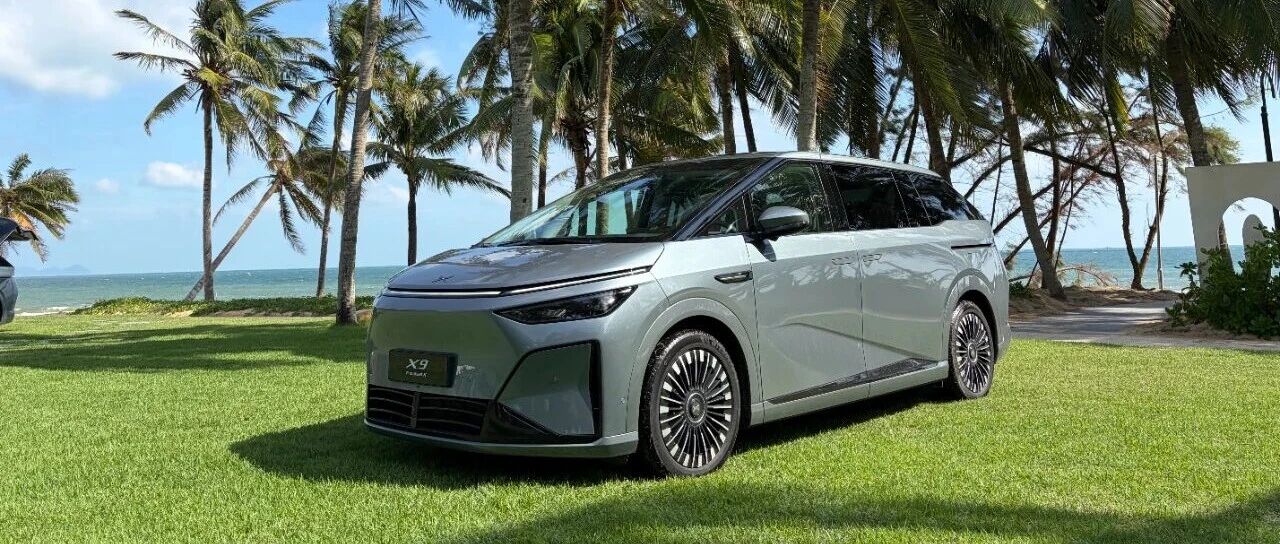
小鹏X9超级增程 上市72小时一线快报
车fans· 2025-11-26 00:30
Order Situation - Average new orders per store range from 20 to 25 units, with a store visit rate of 40 to 50% and an increase in store visits by 30 to 40% [1][3] - The arrival of display vehicles at the beginning of the month and test drive vehicles on the 14th led to quick order placements after the pricing exceeded expectations, particularly in northern regions where orders accounted for over half [1][3] Customer Profile - The typical customer is aged between 30 to 45 years, with an 80% male demographic [5][8] - Customers are primarily families, often with a second vehicle, and are concerned about range anxiety, indicating a need for long-distance travel solutions [8] Configuration Preferences - 70 to 75% of customers choose the Ultra version, while 25 to 30% opt for the Max version [7][10] - Popular exterior colors include New Moon Silver and Night Black, with Moon Shadow Coffee being the favored interior color [7][10] - Customers prioritize smart features, particularly the upgrade capability of the Turing chip, leading to a higher selection of the Ultra version [10] Competitive Comparison - The main competitors include two units of Lantu Dreamer, two units of Weipai Gaoshan 8, one unit of NIO ES8, one unit of Li Auto L8, and one unit of Tengshi D9 [9][12] - Customers show a preference for intelligent driving and rear-wheel steering in comparison to other MPVs, with higher test drive conversion rates [2][12]


从造车到造“人”车企发出人形机器人量产信号
Zheng Quan Shi Bao· 2025-11-25 23:44
Group 1 - The automotive industry is increasingly investing in humanoid robots, viewing them as a new growth engine and a strategic positioning battle in the smart technology sector [1][3][6] - Major companies like Xpeng Motors and GAC Group have announced plans for mass production of humanoid robots, with Xpeng aiming for 2026 and GAC for 2025 [2][3] - Analysts highlight the synergy between automotive technology and humanoid robotics, suggesting that the transition from automotive to robotics can be smoother due to shared technologies [2][4] Group 2 - Companies are adopting different strategies to enter the humanoid robot market, with self-research and investment partnerships being the most common approaches [4][5] - Tesla's Optimus robot utilizes technology from its Full Self-Driving (FSD) system, showcasing the reuse of existing technologies to expedite development [4] - The humanoid robot market is projected to reach a scale of 20 trillion USD, indicating significant future potential [3][6] Group 3 - Despite the promising outlook, many companies have yet to generate substantial revenue from humanoid robots, facing technical and commercialization challenges [6][7] - High costs associated with software training and integration pose a significant barrier to mass production, making it difficult for consumers to accept robots priced similarly to cars [7] - The industry is still in the exploratory phase, with a lack of mature supply chain systems for humanoid robots [6][7]



小鹏第100万辆整车下线;MG4固态电池版本首秀|一周车闻
Di Yi Cai Jing· 2025-11-25 14:53
Group 1 - Pony.ai reported a total revenue of 181 million yuan for Q3 2025, marking a 72% year-on-year increase and achieving revenue growth for three consecutive quarters [1] - The Robotaxi business generated 47.7 million yuan in revenue during Q3, a year-on-year increase of 89.5%, with passenger fare revenue rising over 200% [1] - The company has partnered with global ride-hailing firms like Uber and has expanded its Robotaxi operations to 8 countries, with a fleet of 961 vehicles, including 667 of the seventh-generation Robotaxi [1] Group 2 - XPeng Motors celebrated the production of its one-millionth vehicle, with Q3 2025 deliveries reaching approximately 116,000 units, a 149.3% increase year-on-year [2] - The company reported a significant reduction in net losses by 78.9% to 380 million yuan [2] - XPeng plans to launch 7 models with super-range configurations by 2026, targeting various market segments [2] Group 3 - MG showcased its first mass-produced model equipped with a semi-solid battery at the 2025 Guangzhou Auto Show, with deliveries set to begin in December at a promotional price of 99,800 yuan [3] - The semi-solid battery technology is seen as a transition from traditional liquid lithium batteries, offering higher safety but at a higher cost [3] - MG4 is the first model to bring this technology to the 100,000 yuan market segment [3] Group 4 - Chery held its third "WE Beautiful" ecological partner conference, introducing the 瑞享Life product series and user co-creation initiatives [4] - The company aims to build a new ecosystem through these initiatives, having surpassed 18 million global car users by October 2025 [4] - 瑞享生活 represents Chery's strategic shift from a traditional automaker to a "user + ecosystem" operator [4] Group 5 - Li Auto announced an upgrade to its third-generation driver assistance technology, VLA, which will include a new feature for automatic entry into charging stations [5] - The company plans to cover over 2,900 Li Auto charging stations by March 2026, enhancing user convenience [5] - The VLA model has accumulated over 312 million kilometers of driving distance, with significant increases in usage metrics [6] Group 6 - Avita and Huawei announced a deepened strategic partnership, expanding their collaboration to include user insights, product definition, and marketing [7] - The partnership aims to launch 17 products by 2030 across various vehicle segments [7] - Avita has achieved over 10,000 monthly sales for eight consecutive months, indicating strong market performance [7] Group 7 - Changan Automobile introduced a new "safety" value system, shifting from passive to proactive safety measures [8] - The new system encompasses driving safety, health safety, psychological safety, and privacy safety [8] - This initiative is part of Changan's strategy to build a differentiated advantage in the competitive landscape [8] Group 8 - Huqi Mobility presented its "Robotaxi+" strategy, aiming to operate in 100 core cities and build a fleet of over 10,000 Robotaxis within five years [9] - The company plans to invest 1 billion yuan to establish a comprehensive maintenance network for its Robotaxi operations [9] - The automatic driving taxi industry is entering a phase of accelerated commercialization and scaling [9] Group 9 - Dongchedi launched an AI virtual auto show at the Guangzhou Auto Show, featuring a 3D virtual exhibition of popular models [10] - The platform aims to digitize offline sales costs and enhance automotive marketing experiences [10] - The AI car selection product was also showcased, indicating a focus on integrating technology into the car buying process [10] Group 10 - Volcano Engine showcased its collaboration with various automotive brands at the Guangzhou Auto Show, highlighting AI upgrades in smart cockpits and driving [11][12] - The company is positioned to capitalize on the growing demand for AI solutions in the automotive sector [12] - The trend indicates a shift towards more personalized and interactive AI services in vehicles [12] Group 11 - GAC's new energy heavy truck T9 was officially launched, targeting short-distance transportation scenarios [13] - The new energy heavy truck market is experiencing significant growth, with a 184% year-on-year increase in sales [13] - The T9 is positioned to meet the demands of key industries such as ports and mining [13] Group 12 - GAC Toyota launched the new generation of the Venza, featuring a hybrid version and advanced driving assistance systems [14] - The new model reflects the ongoing evolution of traditional fuel vehicles towards more intelligent and connected features [14] - The introduction of the new generation Venza aligns with the increasing penetration of new energy vehicles in the market [14] Group 13 - The Haobo A800, a flagship sedan from GAC and Huawei, received an L3-level autonomous driving testing license, marking a significant milestone [15] - The vehicle is equipped with advanced driving and smart cockpit systems, enhancing its competitive edge [15] - The L3-level autonomous driving technology is a key focus for many automakers as they advance towards higher levels of automation [15] Group 14 - Lantu Motors launched its flagship SUV, the Lantu Taishan, and the Lantu Dreamer, targeting the high-end market [16][17] - The new models are equipped with advanced technology and aim to capture a share of the luxury vehicle segment [16][17] - The high-end SUV and MPV markets are experiencing growth, with significant sales increases reported [16][17] Group 15 - BYD's luxury brand Yangwang unveiled new color options for its U7 model at the Guangzhou Auto Show [18] - The brand has established a comprehensive product lineup, including supercars and luxury SUVs [18] - Yangwang aims to penetrate the luxury market, which has been traditionally dominated by foreign brands [18] Group 16 - Geely Galaxy introduced its first flagship MPV, the Galaxy V900, featuring range-extending technology and advanced driving assistance [19] - The MPV market is becoming increasingly competitive, with several new entrants showcasing their models [19] - The overall MPV market remains niche, with modest growth compared to the broader passenger vehicle market [19] Group 17 - Jietu Motors launched the 2026 Jietu Traveler and Traveler C-DM, expanding its product offerings in the travel segment [20] - The company has achieved significant sales milestones, indicating strong market positioning [20] - The dual fuel and hybrid strategy aims to enhance Jietu's competitive edge in the market [20] Group 18 - Leap Motor debuted its A10 model, a smart long-range SUV, at the Guangzhou Auto Show, set for delivery in mid-2026 [21] - The company has been leading sales among new energy vehicle manufacturers for several months [21] - The A10 is expected to play a crucial role in Leap Motor's global expansion strategy [21] Group 19 - Lido launched the L90 Black Knight special edition, offering limited availability and unique features [22] - The brand has achieved significant delivery milestones, indicating strong market acceptance [22] - Lido's strategy focuses on maintaining momentum in a competitive market landscape [22] Group 20 - Ora upgraded the pre-sale benefits for its Ora 5 model, enhancing incentives for potential buyers [24] - The new model is positioned as a compact electric SUV, aiming to revitalize the brand's market presence [24] - The competitive landscape for compact electric SUVs remains intense, with numerous players vying for market share [24] Group 21 - Tank brand launched the Tank 300 Polar Edition, emphasizing its capabilities in extreme conditions [25] - The brand aims to strengthen its market position in the off-road segment with new product offerings [25] - The introduction of new models is expected to boost sales and brand recognition [25] Group 22 - FAW Toyota introduced three new models, including the new intelligent hybrid Corolla and the bZ3 electric vehicle [26] - The company is adapting to the increasing penetration of new energy vehicles in the market [26] - The strategy focuses on enhancing competitiveness in the face of growing market challenges [26]


小鹏第100万辆整车下线,MG4固态电池版本首秀|一周车闻
Di Yi Cai Jing· 2025-11-25 14:47
Core Insights - The automotive industry is witnessing significant advancements in electric vehicles and autonomous driving technologies, with multiple companies showcasing new models and innovations at the 2025 Guangzhou Auto Show. Group 1: Financial Performance and Growth - Xiaoma Zhixing reported a total revenue of 181 million yuan for Q3 2025, marking a 72% year-on-year increase, with its Robotaxi business generating 47.7 million yuan, up 89.5% year-on-year [2] - XPeng Motors achieved a total delivery volume of approximately 116,000 vehicles in Q3 2025, a 149.3% increase year-on-year, with net losses narrowing by 78.9% to 38 million yuan [3] Group 2: New Product Launches - The MG brand unveiled its first mass-produced model equipped with a solid-liquid battery, set to be delivered in December at a promotional price of 99,800 yuan [4] - GAC's new energy heavy truck T9 was officially launched with a price of 439,900 yuan, targeting short-distance transportation scenarios [14] - The new generation Toyota Venza was launched with a starting price of 169,800 yuan, featuring a 2.0L hybrid version and advanced driving assistance systems [15] Group 3: Strategic Partnerships and Collaborations - Avita and Huawei announced a deepened strategic partnership, expanding their collaboration to include user insights, product development, and marketing, with plans to launch 17 products by 2030 [8] - Li Auto is enhancing its smart driving technology with the VLA driver model upgrade, which will include a new feature for automatic entry into charging stations [6][7] Group 4: Market Trends and Innovations - The "Robotaxi+" strategy was showcased by Huqi Chuxing, aiming to cover 100 core cities with a fleet of over 10,000 Robotaxis in the next five years [10] - Changan Automobile introduced a new safety value system, shifting from passive to proactive safety measures, encompassing various aspects of safety [9] - The introduction of AI virtual car exhibitions by Dongche Emperor aims to digitize offline sales costs and enhance automotive marketing experiences [11] Group 5: Competitive Landscape - The MPV market is seeing increased competition with multiple new entries, including the launch of the Galaxy V900 by Geely and the Lantu Dreamer [20][21] - The luxury segment is becoming more competitive, with brands like BYD's Yangwang and Lantu targeting high-end consumers with new models [19][18]
小鹏汽车-W(09868):三季报符合预期,全面转型AI企业
Shenwan Hongyuan Securities· 2025-11-25 14:14
Investment Rating - The report maintains a "Buy" rating for the company [2] Core Insights - The company reported a revenue of 54.5 billion RMB for the first three quarters of 2025, representing a year-on-year increase of 120%. The gross margin was 17.9%, up by 3.7 percentage points year-on-year. The net profit attributable to shareholders was -1.52 billion RMB, a reduction in losses by 2.94 billion RMB year-on-year [5] - In Q3 2025, the company achieved a revenue of 20.4 billion RMB, a year-on-year increase of 102% and a quarter-on-quarter increase of 12%. The gross margin was 20.1%, up by 4.9 percentage points year-on-year and 2.8 percentage points quarter-on-quarter. The net profit attributable to shareholders was -380 million RMB, a reduction in losses by 1.43 billion RMB year-on-year and 100 million RMB quarter-on-quarter [5] - The company is undergoing a transformation into an AI enterprise, focusing on physical AI, embodied intelligence, and Robotaxi services, which are expected to enhance its monetization potential [7] Financial Data and Profit Forecast - Revenue projections for the company are as follows: - 2023: 30.68 billion RMB - 2024: 40.87 billion RMB - 2025E: 76.20 billion RMB - 2026E: 125.67 billion RMB - 2027E: 173.02 billion RMB - The net profit attributable to shareholders is projected to improve from -10.38 billion RMB in 2023 to 6.52 billion RMB in 2027 [6][8] - The company expects to achieve a quarterly delivery guidance of 125,000 to 132,000 vehicles in Q4 2025, which would mark a new high [7] Market Position and Competitive Landscape - The company is expected to benefit from the launch of new models and partnerships, which will enhance its market position and sales volume. The introduction of the G7 model and the expansion of the range of vehicles with extended range capabilities are anticipated to drive sales growth [7] - The report highlights the competitive landscape in the new energy vehicle sector, indicating that while competition is intensifying, the company's strategic initiatives may provide a competitive edge [7]
国泰海通|汽车:广州国际车展召开,机器人成“新主角”
国泰海通证券研究· 2025-11-25 13:04
Core Insights - The 2025 Guangzhou International Auto Show opened on November 21, focusing on the latest achievements in electrification and intelligence, showcasing 1,085 vehicles, of which 629 are new energy vehicles, accounting for 58% of the total [2][4] - The event highlighted the emergence of humanoid robots as a new focal point, with companies like Xpeng, Changan, and GAC demonstrating their latest advancements in embodied intelligence [2][4] Group 1: Electric and Intelligent Vehicles - The auto show featured multiple new energy models, including Xpeng's first super-range model X9, which was launched on November 20, priced between 309,800 and 329,800 yuan, equipped with a 1.5T range extender system and a 63.3 kWh battery, offering a pure electric range of 452 km and a comprehensive range exceeding 1,600 km [3][4] - Leap Motor showcased its ABCD series, with the A10 model making its debut, designed with a focus on "technological natural aesthetics 2.0," featuring a body length exceeding 4,200 mm and a wheelbase over 2,600 mm, with a space utilization rate of 88.1% [3][4] Group 2: Robotics and Future Technologies - Xpeng introduced the humanoid robot IRON, designed with a "skeleton-muscle-skin" structure, featuring an AI chip with a computing power of 2,250 TOPS and a solid-state battery, with plans for mass production by the end of 2026 [2][4] - Changan plans to release its first vehicle-mounted robot by 2026, focusing on four scenarios: factory, store, home, and special applications, while GAC Group unveiled its fourth-generation GoMate Mini humanoid robot, expected to be mass-produced by 2027 [2][4] Group 3: Industry Trends - The concentration of new energy vehicles and cutting-edge technologies like humanoid robots and flying cars at the auto show reflects the ongoing commitment of automakers to electrification and intelligence [4] - As the industry moves towards standardization and high-quality development, the competitive focus is shifting towards product definition, technological self-research, and systematic capabilities [4]


何小鹏:车企都战战兢兢,明年车市竞争更加残酷和血腥
Xin Jing Bao· 2025-11-25 11:51
Core Insights - Xiaopeng Motors is transitioning towards becoming a global embodied intelligence company, showcasing multiple models including the Xiaopeng X9 Super Extended Range and the new Xiaopeng P7 at the 2025 Guangzhou Auto Show, alongside the new generation IRON humanoid robot and self-developed Turing chip [1][2] - The CEO, He Xiaopeng, anticipates entering mass production of humanoid robots soon, aiming to align their pricing closely with that of automobiles, while also launching their first extended range model [1][3] - He Xiaopeng predicts that the automotive market will face increasingly fierce competition by 2026, with significant changes expected in the market landscape [1][6] Product Strategy - The pricing for the Xiaopeng X9 Super Extended Range is set at 309,800 and 329,800 yuan, a challenging decision influenced by the current market trends where hybrid vehicles are declining while pure electric vehicles are on the rise [3] - The decision to pursue extended range technology stems from observations in various countries where electric infrastructure remains inadequate, leading to a belief that a combination of "pure electric + hybrid" will dominate the energy structure for a considerable time [4][5] Humanoid Robot Development - Xiaopeng Motors is focusing on a humanoid robot design that incorporates human-like features to enhance user acceptance and interaction, particularly among children and adults [7] - The company aims to ensure that the humanoid robots are approachable and friendly, avoiding the "uncanny valley" effect by prioritizing children's perceptions in the design process [7]
美股中概股盘前涨跌互现,哔哩哔哩涨3%
Mei Ri Jing Ji Xin Wen· 2025-11-25 09:16
Group 1 - U.S. Chinese stocks showed mixed performance in pre-market trading on November 25 [1] - Bilibili increased by 3%, NIO rose by 2%, Alibaba gained 1%, Baidu was up by 0.6%, while Xpeng Motors declined by 0.2% [1]


【新能源周报】新能源汽车行业信息周报(2025年11月17日-11月23日)
乘联分会· 2025-11-25 09:01
Industry Information - CATL and Haibosich signed a 10-year strategic cooperation agreement to enhance their advantages in energy storage technology and smart manufacturing [9] - The price of lithium iron phosphate has rebounded by approximately 10% since October, driven by strong demand from automakers and battery manufacturers [9] - A breakthrough in the certification and review technology system for domestic automotive chips has been achieved, addressing the challenges of "dare not use, cannot use" [9][10] - As of the end of October, China's electric vehicle charging infrastructure reached 18.645 million units, a year-on-year increase of 54% [11] - A total investment of nearly 10 billion yuan has been signed for 16 key projects in the new energy industry in Changzhou [12] - In the first ten months, Beijing's new energy vehicle production increased by 150% year-on-year [12] - The new AITO M7 has surpassed 30,000 deliveries within 57 days of its launch [12] - Guoxuan High-Tech has officially started mass production of standard battery cells [12] - Huawei's advanced driving solution for L3 level is set to launch commercially, marking a significant step in autonomous driving technology [12][14] - In Liuzhou, the total vehicle sales reached 1.265 million units in the first three quarters, a year-on-year increase of 33.7% [15] Policy Information - Hebei Province has adjusted its time-of-use electricity pricing policy, optimizing charging costs for electric vehicles with a peak-to-valley price difference of 70% [16][18] - Chengdu plans to build over 500,000 electric vehicle charging piles and more than 200 battery swap stations by 2030 [21] - New regulations for electric vehicle charging infrastructure in Guangxi have been proposed to clarify responsibilities among stakeholders [21] - Beijing is increasing financial support for the purchase of new energy vehicles [21] - Shenzhen is providing subsidies of up to 5 million yuan for the construction of solar-storage charging and battery swap projects [21] - The Ministry of Industry and Information Technology has announced mandatory national standards for intelligent connected vehicle safety, marking a key step in autonomous driving regulation [21][25] - The Ministry of Finance and the Ministry of Industry and Information Technology are seeking public opinions on government procurement standards for new energy vehicles [21][26] Company Information - Leap Motor reported a total revenue of 31.562 billion yuan in Q3, a year-on-year increase of 9.1% [32] - Leap Motor achieved a net profit of 150 million yuan in Q3, delivering 173,900 vehicles [32] - Xiaomi's Ultra Club racing service has expanded to its 13th city, adding the Guangdong International Circuit [32] - Xiaomi's HAD autonomous driving system is set to upgrade to a new generation XLA architecture in Q4 [32] - Avita Technology signed a business cooperation framework agreement with the Chongqing branch of the Industrial and Commercial Bank of China [32] - NIO's Firefly right-hand drive model has entered mass production, with the first batch shipping to Singapore [34] - NIO has completed the battery swap route in the western Sichuan region, covering popular tourist areas [34] - BYD's sales in the UK have surpassed 50,000 units [34] - Leap Motor's first overseas model cooperation project with FAW has been launched, expected to go into production next year [34] - Xiaopeng Motors plans to launch seven new models next year, including three super electric range-extended products in Q1 [34] - Seres is actively expanding into overseas markets, focusing on high-end smart electric vehicles [34] - Xiaomi's third-quarter profit from electric vehicles and AI reached 700 million yuan [34] - GAC Aion has become the first company in the country to obtain a high-speed L3 testing license for vehicles in collaboration with Huawei [34] - NIO's ES6 model has reached a cumulative delivery of 300,000 units [34] - Geely and Renault have officially launched their strategic cooperation in Brazil, investing 3.8 billion reais (approximately 5.1 billion yuan) [34] - Xiaomi is expected to complete its annual delivery target of 350,000 vehicles ahead of schedule [34] - Tesla's global supercharging stations have exceeded 75,000 [34] - Xiaomi's 500,000th vehicle has officially rolled off the production line, marking a significant milestone [34] - Li Auto is accelerating product iteration and global expansion, moving away from a "cookie-cutter" design approach [34]




“阿里系企业家”:500个好公司,200个CEO来自阿里?
Sou Hu Cai Jing· 2025-11-25 07:37
Group 1 - The core point of the news is the closure of multiple stores by "Paitexiansheng," a pet fresh food brand founded by Hou Yi, the founder of Hema, due to significant operational pressure, with plans to close all physical stores by mid-December while continuing online operations [1] - Hou Yi's entrepreneurial journey with "Paitexiansheng" has faced challenges just a year after its establishment, highlighting the difficulties faced by entrepreneurs from Alibaba [2] - The trend of Alibaba alumni starting their own businesses has seen mixed success, with notable figures achieving significant accomplishments, while others, like Hou Yi, are facing setbacks [2] Group 2 - Alibaba's founder, Jack Ma, expressed a vision in 2018 that a significant portion of China's top companies would have CEOs from Alibaba, indicating the potential for successful entrepreneurship among its alumni [3] - The corporate culture at Alibaba has played a crucial role in shaping the behaviors and decision-making processes of its employees, with Ma emphasizing the importance of values in guiding the company [5][6] - Alibaba's value system has evolved through different phases, from "Dugu Nine Swords" to "New Six Pulses," reflecting the company's growth and the need for a more adaptable framework as it expanded [7][8] Group 3 - The "New Six Pulses" value system introduced by Alibaba emphasizes customer focus, employee welfare, and adaptability, which are critical for navigating the fast-changing business landscape [8] - The emphasis on values and culture at Alibaba is so strong that performance evaluations heavily weigh adherence to these values, indicating a unique organizational approach that alumni carry into their ventures [9] - The entrepreneurial landscape for Alibaba alumni is characterized by a high survival rate compared to the general market, although the success of individual ventures varies significantly [39]
