
华菱钢铁

Search documents
6月13日华商信用增强债券A净值下跌0.79%,近1个月累计下跌0.67%
Sou Hu Cai Jing· 2025-06-14 14:44
Core Points - The latest net value of Huashang Credit Enhanced Bond A (001751) is 1.6270 yuan, down by 0.79% [1] - The fund's performance over the past month shows a return of -0.67%, ranking 1186 out of 1229 in its category; over the past six months, it has a return of 5.99%, ranking 23 out of 1151; and year-to-date, it has a return of 7.25%, ranking 27 out of 1160 [1] - As of March 31, 2025, the fund has a total size of 4.134 billion yuan, with the fund manager being Li Qian [1] Fund Holdings - The top ten stock holdings of Huashang Credit Enhanced Bond A account for a total of 8.59%, including: - Hualing Steel (1.01%) - Hongyuan Electronics (0.98%) - Haili Wind Power (0.97%) - New Steel Co. (0.94%) - Fudan Microelectronics (0.91%) - Torch Electronics (0.82%) - Sansteel Minguang (0.81%) - Shenzhen South Circuit (0.81%) - Xingsen Technology (0.67%) - Zhongke Feimeasure (0.67%) [1] Fund Manager Profile - Li Qian holds a PhD and joined Huashang Fund Management Co., Ltd. in April 2016, initially as a researcher [2] - He has served as the fund manager for multiple funds, including Huashang Credit Enhanced Bond Fund since July 16, 2020, and currently holds the position of Deputy Director of Fixed Income Investment in the Multi-Asset Investment Department [2]
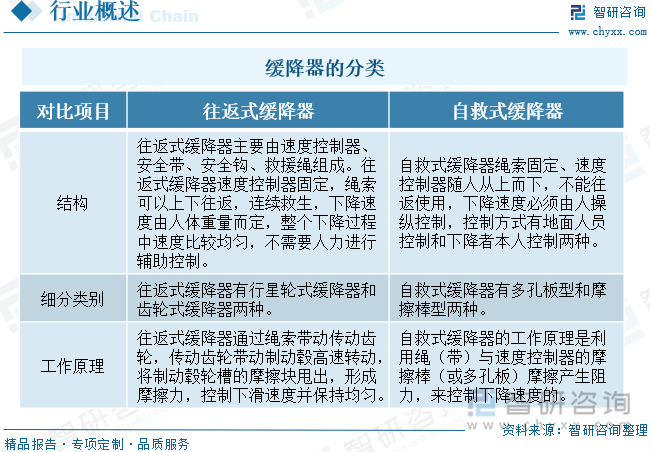
2025年中国缓降器行业发展历程、产业链、发展现状、重点企业及未来展望:缓降器技术智能化加速,高层逃生需求驱动行业升级[图]
Chan Ye Xin Xi Wang· 2025-06-12 01:31
Industry Overview - The descender is an important emergency rescue equipment that has seen widespread application due to changes in safety technology and market demand. Recent advancements have significantly improved its safety and reliability, with a focus on smart and environmentally friendly designs [1][15] - The market size of China's descender industry is projected to grow from 1.096 billion yuan in 2018 to 2.507 billion yuan in 2024, representing a compound annual growth rate (CAGR) of 14.79% [1][15] - Future developments will emphasize enhancing intelligence and environmental performance, including the integration of advanced smart control technologies and materials to improve safety and reliability [1][15] Industry Development History - The descender industry in China has evolved through three stages: the origin stage in the 1980s, the development stage from 1980 to 2005, and the rapid development stage from 2006 to the present. The first descender was developed in Japan to address high-rise fire escape challenges [7] - The introduction of industry standards in 2003 marked the beginning of standardized applications for descenders in China, leading to the development of various escape equipment [7] Industry Chain - The upstream of the descender industry chain includes raw material suppliers, core component manufacturers, and production equipment providers. Key materials include steel, aluminum alloy, copper, rubber, polyester fiber, and nylon [9] - The midstream focuses on the research, design, and manufacturing of descenders, ensuring product quality through precision processing and rigorous testing [9] Key Companies - Major players in the descender industry include Shanghai Kaiyue Safety Fire Equipment Co., Ltd., Zhejiang Nuodun Fire Safety Co., Ltd., and Zhejiang Weinen Fire Equipment Co., Ltd. These companies have developed new products and hold various patents [17][20] - Companies like Shandong Yongji An Fire Technology and Hebei Maipudun Electromechanical focus on niche markets within the descender sector, producing various types of escape descenders [17][21][24] Market Trends - The industry is expected to accelerate technological innovation, focusing on breakthroughs in material science and smart control, with new composite fiber materials enhancing strength and durability [27] - The application scenarios for descenders are diversifying, expanding beyond traditional building fire safety to include urban high-altitude work, large infrastructure maintenance, and extreme environment applications [28] - The industry chain is likely to see deeper specialization and collaboration, with potential for regional industrial clusters and a shift towards a "device as a service" model for maintenance and emergency training [30]

金属行业周报:淡季影响逐渐深入,关注中美贸易谈判-20250610
BOHAI SECURITIES· 2025-06-10 09:34
Investment Ratings - The steel industry is rated as "Neutral" while the non-ferrous metals industry is rated as "Positive" [3] - Specific companies such as Luoyang Molybdenum (603993), Zhongjin Gold (600489), Shandong Gold (600547), Zijin Mining (601899), and China Aluminum (601600) are rated as "Buy" [3] Core Insights - The steel market is experiencing a seasonal downturn, with expectations of declining demand for construction materials and sheet steel, leading to a potential inventory accumulation cycle [1][18] - Copper prices are supported by tight supply at the mine level, but the overall demand remains weak during the off-season [1][41] - Aluminum prices are expected to fluctuate in the short term due to domestic low inventory supporting prices, despite some downstream sectors showing signs of weakness [1][50] - Gold prices are bolstered by international trade tensions, expectations of U.S. interest rate cuts, and geopolitical factors [2][54] - The lithium market faces oversupply pressures, with significant inventory levels expected to keep prices weak [2][57] Industry Summaries Steel Industry - Demand has weakened, with a notable decrease in terminal procurement volumes, down 14.62% week-on-week and 6.41% year-on-year as of June 6 [19] - Steel production from major varieties was 8.8038 million tons, a slight decrease of 0.05% from the previous week [21] - The total steel inventory increased by 0.26% week-on-week, but decreased by 20.97% year-on-year [27] Copper Industry - The copper market is influenced by U.S.-China trade tensions, with the first meeting of trade negotiations expected to impact copper prices significantly [41] - As of June 6, LME copper prices were $9,800 per ton, reflecting a 1.79% increase from the previous week [48] Aluminum Industry - The aluminum sector is facing pressure from rising costs due to higher alumina prices, while some downstream demand is weakening [50] - As of June 6, LME aluminum prices were $2,400 per ton, down 0.55% from the previous week [51] Gold Industry - Gold prices are supported by various macroeconomic factors, including rising U.S. debt and geopolitical tensions [2][54] - As of June 6, COMEX gold closed at $3,331 per ounce, up 0.54% from the previous week [54] Lithium Industry - The lithium market is characterized by significant inventory pressure, with prices expected to remain weak due to oversupply [57] - As of June 6, battery-grade lithium carbonate prices were 60,700 yuan per ton, down 1.30% from the previous week [58] Rare Earth and Minor Metals - Prices for light rare earths have shown an increase, with praseodymium-neodymium oxide priced at 449,000 yuan per ton as of June 6, up 2.51% [68]





周期论剑|下半年逻辑再梳理
2025-06-09 15:30
Summary of Key Points from Conference Call Records Industry Overview - The conference call discusses the outlook for the Chinese stock market and various industries, particularly focusing on economic trends, capital expenditure, and investment opportunities in 2025 [1][11]. Core Insights and Arguments 1. **Market Expectations**: The market's economic expectations are at a low point, with zero returns in economically related sectors, indicating that market momentum is not driven by economic growth improvement [1][3]. 2. **Capital Expenditure Trends**: There is a divergence in capital expenditure between new and old economies, with increased spending in emerging economic structures and a decline in traditional sectors, suggesting a correction in long-term pessimistic investor expectations [1][4]. 3. **Discount Rate Impact**: The anticipated rise in the stock market in 2025 is attributed to a decrease in the discount rate, including lower risk-free rates and risk premiums, which will attract more capital into the market [1][5]. 4. **Asset Management Demand**: Economic pressures are creating a demand for asset management, particularly among young individuals seeking to grow their funds, highlighting the importance of long-term investment logic in the current market structure [1][6]. 5. **Long-term Investment Logic**: Industries and sectors that can articulate a long-term investment narrative are expected to attract more investment, as the impact of discount rate reductions is more significant on long-term asset pricing [1][7]. 6. **China's Risk Premium**: The reduction in China's risk premium is attributed to sound economic policies and capital market reforms, which are attracting both industrial and financial capital [1][9]. 7. **2025 Market Outlook**: The outlook for the Chinese securities market in 2025 is positive, with emerging technology as a key focus, while cyclical finance may emerge as a dark horse [1][11]. 8. **Steel Industry Dynamics**: The steel industry is expected to see demand bottoming out, with exports and manufacturing offsetting real estate downturns, leading to a potential rebound in steel prices after a short-term decline [1][28]. Additional Important Insights 1. **Real Estate Sales Policy**: Developers prefer a gradual approach to implementing current housing sales policies, indicating a cautious outlook on sales recovery [1][13]. 2. **Building Materials Sector**: The building materials sector is experiencing a decline in demand due to high base effects from the previous year, but overall stability is expected [1][16]. 3. **Chemical Industry Challenges**: The chemical industry faces challenges due to reduced export volumes and a lack of domestic demand catalysts, although long-term prospects remain attractive [1][19]. 4. **Construction Industry Sentiment**: The construction industry is under pressure, with cautious sentiment regarding future improvements and a focus on policy catalysts [1][21][22]. 5. **Energy and Metal Markets**: The energy metals market is influenced by geopolitical factors, while lithium prices are expected to remain under pressure in the near term [1][31][32]. This summary encapsulates the key points discussed in the conference call, providing insights into market expectations, industry dynamics, and investment opportunities for 2025.
钢铁周报:需求季节性走弱,限产预期托底
ZHESHANG SECURITIES· 2025-06-09 01:13
Investment Rating - The industry investment rating is "Positive" [1] Core Viewpoints - Seasonal demand is weakening, but production restrictions are expected to provide support [1] - The report highlights that the overall inventory of five major steel products is 9.3 million tons, with a year-to-date increase of 22.7% [5] - The total inventory at steel mills is 4.33 million tons, reflecting a year-to-date increase of 23.6% [5] - Iron ore port inventory stands at 13.83 million tons, with a year-to-date increase of 6.9% [5] Price Trends - The SW Steel Index is at 2,119, with a weekly change of -0.2% and a year-to-date change of 0.8% [3] - Rebar (HRB400 20mm) price is 3,140 CNY/ton, with a weekly increase of 0.3% and a year-to-date increase of 7.9% [3] - Hot-rolled coil price is 3,097 CNY/ton, with a weekly increase of 0.1% and a year-to-date decrease of 9.5% [3] - Cold-rolled steel price is 3,640 CNY/ton, with a weekly increase of 2.8% and a year-to-date increase of 11.4% [3] Supply and Demand - The average daily pig iron output is projected to be around 230,000 tons [9] - The report indicates that the steel mills' operating rate is fluctuating, impacting overall production [12] - The apparent demand for rebar is noted to be significant, with ongoing monitoring of market conditions [14]
钢铁周报:需求季节性走弱,限产预期托底-20250608
ZHESHANG SECURITIES· 2025-06-08 13:04
Investment Rating - The industry investment rating is "Positive" [1] Core Viewpoints - Seasonal demand is weakening, but production restrictions are expected to provide support [1] - The report highlights that the overall inventory of five major steel products is 930 thousand tons, with a year-to-date increase of 22.7% [5] - The total inventory at steel mills is 433 thousand tons, reflecting a year-to-date increase of 23.6% [5] - Iron ore port inventory stands at 13.83 million tons, with a year-to-date increase of 6.9% [5] Price Data Summary - The SW Steel Index is at 2,119, with a weekly change of -0.2% and a year-to-date change of 0.8% [3] - Rebar (HRB400 20mm) price is 3,140 CNY/ton, with a weekly change of 0.3% and a year-to-date change of 7.9% [3] - Hot-rolled coil price is 3,230 CNY/ton, with a weekly change of 0.3% and a year-to-date change of 5.6% [3] - Cold-rolled steel price is 3,640 CNY/ton, with a weekly change of 2.8% and a year-to-date change of -11.4% [3] Supply and Demand Summary - The average daily pig iron output is projected to be around 230 thousand tons [9] - The report indicates that the apparent demand for rebar is measured in ten thousand tons [14]
钢铁行业周报(20250602-20250606):供给持续回落,关注淡季需求韧性-20250608
Huachuang Securities· 2025-06-08 12:18
Investment Rating - The report maintains a recommendation for the steel industry [4]. Core Viewpoints - The steel industry is experiencing a dual weakness in supply and demand, leading to a bottoming out of steel prices [2][3]. - The current demand situation suggests that inventory may soon reach a turning point, despite the ongoing weak demand [2]. - The industry is expected to maintain a bottoming and fluctuating price trend in the short term due to increased maintenance in steel mills, which may lead to supply contraction [2]. Summary by Sections 1. Market Review - As of June 6, the prices for five major steel products are reported as follows: rebar at 3,218 CNY/ton, wire rod at 3,558 CNY/ton, hot-rolled coil at 3,224 CNY/ton, cold-rolled coil at 3,646 CNY/ton, and medium plate at 3,451 CNY/ton, with weekly changes of +0.05%, +0.08%, +0.10%, -0.12%, and -0.64% respectively [1][15]. - The total production of the five major products is 8.8038 million tons, a decrease of 0.47 thousand tons week-on-week [1]. - The average daily molten iron output from 247 steel enterprises is 2.418 million tons, down 0.11 thousand tons week-on-week [1]. 2. Key Industry Data Tracking (a) Production Data - The capacity utilization rate for blast furnaces is 90.65%, down 0.04 percentage points week-on-week [1]. - The operating rate for electric arc furnaces is 76.69%, down 1.09 percentage points week-on-week [1]. (b) Consumption Data - The total consumption of the five major steel products is 8.8217 million tons, a decrease of 316.2 thousand tons week-on-week [1]. - The apparent consumption of rebar, wire rod, hot-rolled, cold-rolled, and medium plate shows week-on-week changes of -196.5 thousand tons, -2.6 thousand tons, -60.1 thousand tons, +13.8 thousand tons, and -70.9 thousand tons respectively [1]. (c) Inventory Situation - The total steel inventory is 13.6381 million tons, a decrease of 17.9 thousand tons week-on-week [1]. - Social inventory decreased by 15.3 thousand tons to 9.3101 million tons, while steel mill inventory decreased by 2.6 thousand tons to 4.3280 million tons [1]. (d) Profitability - The average cost of molten iron for 114 steel mills is 2,362 CNY/ton, down 37 CNY/ton week-on-week [1]. - The gross profit per ton for rebar, hot-rolled coil, and cold-rolled coil is +99 CNY/ton, +33 CNY/ton, and -62 CNY/ton respectively, with week-on-week changes of +9 CNY/ton, 0 CNY/ton, and +62 CNY/ton [1]. 3. Industry Policy and Outlook - The report highlights ongoing government efforts to optimize industrial layout and promote the exit of inefficient production capacity while increasing high-end capacity supply [3][4]. - The steel industry is expected to continue its profit recovery, with potential for greater elasticity in profits if supply-side adjustments are effectively implemented [9][10].
金融属性驱动部分金属价格补涨
GOLDEN SUN SECURITIES· 2025-06-08 10:57
Investment Rating - The industry is rated as "Buy" for several key companies, including Xining Special Steel, Nanjing Steel, Hualing Steel, and Baosteel [8]. Core Viewpoints - The market remains in a state of fluctuation, with the non-ferrous sector outperforming the black metal sector. Financial attributes of metals like gold, silver, and copper are expected to benefit from the current economic conditions [2]. - The macroeconomic policies are showing effectiveness, with the manufacturing PMI rising to 49.5% in May, indicating an overall expansion in economic output [4][12]. - The steel industry is experiencing a divergence in profitability across the black metal supply chain, with some companies undervalued and presenting good strategic investment opportunities [2][4]. Supply Analysis - Daily molten iron production has slightly decreased to 2.417 million tons, with a minor decline in the utilization rate of blast furnaces to 90.6% [3][11]. - The total inventory of steel has decreased by 0.1%, with a narrowing decline rate of 2.2 percentage points [23][25]. Demand Analysis - Apparent consumption of the five major steel products has weakened, with rebar consumption dropping by 7.9% week-on-week [38][49]. - The average weekly transaction volume for construction steel has increased by 2.0% [40]. Raw Material Analysis - Iron ore prices have declined, with the Platts 62% iron ore price index at $96.1 per ton, down 0.7% week-on-week [57]. - The average daily iron ore import volume at 45 ports has increased by 17.9% week-on-week [57]. Price and Profit Analysis - Steel prices are showing a slight improvement, with the current spot price for rebar in Beijing at 3,170 RMB per ton, up 1.9% week-on-week [73]. - The immediate gross profit for long-process rebar is reported at -134 RMB per ton, indicating a slight improvement in margins [72][73].


钢铁周报20250608:焦煤价格反弹,关注淡季需求韧性-20250608
Minsheng Securities· 2025-06-08 03:31
Investment Rating - The report maintains a "Buy" recommendation for several steel companies, including Baosteel, Hualing Steel, and Nanjing Steel, among others [3][4]. Core Insights - The rebound in coking coal prices is noteworthy, with a focus on the resilience of demand during the off-season. The report indicates that domestic steel demand is gradually entering a seasonal decline, while external demand remains uncertain due to tariff adjustments by the U.S. government [3][4]. - The report highlights that the profitability of long-process steel production has increased, with specific profit margins for rebar, hot-rolled, and cold-rolled steel showing positive changes compared to the previous week [2][3]. - The overall steel production has decreased, with a total output of 8.8 million tons for major steel varieties, reflecting a slight decline from the previous week [2][3]. Summary by Sections Price Trends - As of June 6, 2025, steel prices in Shanghai showed mixed trends, with rebar prices at 3,140 CNY/ton (up 10 CNY), hot-rolled steel at 3,260 CNY/ton (up 60 CNY), and cold-rolled steel remaining stable at 3,580 CNY/ton [1][10]. Production and Inventory - The total production of major steel varieties was 8.8 million tons, with a week-on-week decrease of 0.47 million tons. Rebar production specifically decreased by 70,500 tons to 2,184,600 tons [2][3]. - Total social inventory of major steel varieties decreased by 16,100 tons to 9,298,600 tons, with rebar inventory dropping by 89,700 tons [2][3]. Investment Recommendations - The report recommends focusing on the following companies: 1. Baosteel, Hualing Steel, Nanjing Steel in the general steel sector 2. CITIC Special Steel, Yongjin Co., and Xianglou New Materials in the special steel sector 3. Jiuli Special Materials, Wujin Stainless Steel, and Youfa Group in the pipe materials sector [3][4].


炉料成本延续下降,钢材价格环比下跌钢铁
Xinda Securities· 2025-06-07 14:23
Investment Rating - The investment rating for the steel industry is "Positive" [2] Core Viewpoints - The steel sector has faced a decline of 0.18% this week, underperforming the broader market, with specific segments showing varied performance [3][11] - The report indicates a decrease in iron and steel production, with a notable drop in the utilization rates of both blast furnaces and electric arc furnaces [3][25] - Steel consumption has also decreased, with a significant drop in the five major steel products [3][30] - Inventory levels for steel products have declined, both in social and factory inventories, indicating a tightening supply [3][43] - Steel prices have shown a downward trend, with both common and special steel price indices decreasing [3][50] Summary by Sections 1. Market Performance - The steel sector's performance this week was a decline of 0.18%, while the broader market (CSI 300) increased by 0.88% [11] - Specific segments such as special steel and plate steel saw declines of 0.28% and 0.77%, respectively, while long products increased by 0.14% [3][13] 2. Supply Data - As of June 6, the average daily molten iron production was 2.418 million tons, a decrease of 0.11 thousand tons week-on-week [25] - The capacity utilization rate for blast furnaces was 90.7%, down by 0.04 percentage points, while electric arc furnaces were at 58.7%, down by 0.33 percentage points [25] - The total production of the five major steel products was 7.711 million tons, a decrease of 0.49% week-on-week [25] 3. Demand Data - The consumption of the five major steel products was 8.822 million tons, down by 3.46% week-on-week [30] - The transaction volume of construction steel by mainstream traders was 106,000 tons, showing a slight increase of 4.33% week-on-week [35] 4. Inventory Levels - Social inventory of the five major steel products was 9.31 million tons, down by 0.16% week-on-week [43] - Factory inventory was 4.328 million tons, also down by 0.06% week-on-week [43] 5. Price Trends - The common steel price index was 3,384.0 CNY/ton, down by 0.33% week-on-week [50] - The special steel price index was 6,624.5 CNY/ton, down by 0.16% week-on-week [50] 6. Profitability - The average molten iron cost was 2,201 CNY/ton, a decrease of 37.0 CNY/ton week-on-week [57] - The profit for rebar produced in blast furnaces was 99 CNY/ton, an increase of 11.24% week-on-week [57] 7. Investment Recommendations - The report suggests that despite current challenges, the steel industry may see a recovery due to government policies aimed at stabilizing growth, particularly in real estate and infrastructure [4] - Companies with strong cost control and high gross margins, such as Shandong Steel and Hualing Steel, are highlighted as potential investment opportunities [4]