英维克

Search documents
液冷技术崛起,芯片厂商入局竞逐千亿市场丨ToB产业观察
Tai Mei Ti A P P· 2025-09-01 04:20
Omdia Research数据显示,到2028年,全球数据中心液冷市场将达到168亿美元,年复合增长率为25%。 而在中国,据科智咨询预计,到2027年,随着Al系列应用的规模化落地以及液冷生态的日趋成熟,市场 规模有望突破千亿大关。 此外,中信证券研报中曾提到,在数据中心算力提升和能耗降低推动下,液冷技术将加速替代风冷技 术,成为新的技术发展方向。 伴随着液冷在数据中心中的发展,液冷产业也逐渐趋于细分化,产业链逐渐得以完善。最明显的一个变 化就是,原先各类数据中心大会上,很少有出现液冷技术的身影,即便有出现,也大多存在于演讲PPT 之中,以及一些整机柜的展示环节中。 但从去年开始,各类数据中心相关的大会上,除了液冷机柜的展示之外,越来越多产业上下游的零部件 厂商开始活跃起来,冷却液、UQD接头、水凝管等液冷下游的零部件厂商也在不断的更新迭代自己的 产品。 数据中心步入液冷时代 液冷在数据中心开始大范围应用的起点,可以追溯到2020年前后。在ChatGPT尚未问世之前,数据中心 还是以通用的CPU服务器为主,功率基本集中在3kW左右。 彼时的数据中心在刚刚起步的"双碳"战略的推动下,刚刚开始绿色化技术,而供 ...



液冷行业深度报告:千亿液冷元年已至,汽零协同加速布局
2025-09-09 14:53
Summary of Liquid Cooling Industry Report Industry Overview - The liquid cooling industry is experiencing significant growth, driven by the increasing demand for data centers and the limitations of traditional air cooling systems. The global liquid cooling market is expected to exceed 150 billion RMB in 2026, representing a tenfold increase from 2025's 15 billion RMB [1][4]. Key Points Market Growth and Projections - The liquid cooling market is projected to reach over 150 billion RMB by 2026, with a domestic market penetration rate expected to reach 30%-40% between 2027 and 2029 [1][4]. - The industry is currently in an explosive growth phase, with the application of liquid cooling technology in data centers anticipated to accelerate significantly by 2025 [2][4]. Technology and Types - Liquid cooling technology is categorized into three main types: spray cooling, cold plate cooling, and immersion cooling, with cold plate cooling currently being the dominant method [1][5]. - The NVIDIA MBR72 cabinet serves as a benchmark, with a total cabinet value of approximately 800,000 RMB, including components such as the cold plate (250,000 RMB) and CDU (300,000 RMB) [1][5]. Competitive Landscape - In the CDU (Coolant Distribution Unit) sector, domestic companies like NVIDIA, China Sunway, and Silver Wheel dominate, while international competitors include Vertiv, Gucci, and Schneider [1][6]. - Domestic brands are expected to enter overseas markets quickly due to the high barriers in business relationships and consistency control required for components like cold plates and quick connectors [6]. Key Components and Suppliers - Cold plates are critical components in liquid cooling systems, directly attached to the back of chips, with leakage being a key concern for manufacturers and end-users [1][8]. - Major suppliers for quick connectors include both international (CBC, Pico) and domestic companies (Invec, Chuanhuan, Suliang) [3][9]. - The manifold component is simpler and has a higher presence of domestic companies, including Zhongguangdian, Shenling, Invec, and Silver Wheel [10]. Development Trends - The liquid cooling technology has gained attention since 2023, with companies like Feilong Co. having a first-mover advantage in the automotive thermal management sector, supplying Huawei and covering the NVIDIA supply chain [1][11]. - Companies like Silver Wheel and Topu are noted for their integrated capabilities across multiple liquid cooling components and their entry into the NVIDIA supply chain through Taiwanese manufacturers [11]. Additional Insights - The increasing power consumption of chips and the need for effective temperature control are driving the adoption of liquid cooling solutions, as chip lifespan can decrease by 50% with every 10-degree increase in operating temperature [2]. - The precision requirements for quick connectors in servers are stringent, with leakage limits set at no more than 0.25 drops over five consecutive insertions [3][9].

液冷已来,产业变革加速
2025-09-01 02:01
Summary of Conference Call on Liquid Cooling Technology Industry Overview - The liquid cooling technology is emerging as a key driver in the energy sector, following light modules and PCBs, with a consensus that the liquid cooling segment is about to explode, presenting a vast market opportunity [1][2][3] Key Insights and Arguments - The liquid cooling market is expected to reach a scale of hundreds of billions by 2026, with the energy market potentially expanding to thousands of billions by 2027, indicating significant investment opportunities [2][4] - Taiwanese companies currently hold a competitive advantage in the liquid cooling product segment, particularly in the cold plate area, capturing 30%-40% of the value. However, A-share listed companies have opportunities in the remaining 60%-70% of the market, including CPU connectors and piping [1][5] - Domestic companies like Alibaba and ByteDance are actively investing in liquid cooling technology, with Invec being highlighted as a leading player with a comprehensive product range and significant market share in GPU and Ethereum sectors [1][6][7] Market Dynamics - The main market debate centers around the competitive landscape of the energy sector and whether A-share companies can secure a significant market share. As the liquid cooling industry continues to evolve, A-share companies are expected to gain competitive advantages [3][4] - The demand for liquid cooling technology is driven by the increasing power consumption of new generation chips, such as the GB300, which has a power consumption close to 2000 watts, necessitating advanced cooling solutions [9][10] Technological Developments - Current liquid cooling solutions primarily utilize water-based solutions, but future applications may shift towards fluorinated liquids due to their higher boiling points and stability compared to flammable organic silicone oils [10] - The development of the Robin chip and its associated equipment is underway, with production ramping up for related devices, indicating a growing need for advanced cooling technologies [8] Future Trends - The liquid cooling market is projected to grow rapidly, with estimates suggesting it could reach several hundred million RMB this year, close to a thousand billion next year, and potentially several thousand billion in the following years [4][13] - Domestic manufacturers across various segments, including cold plates, CDU piping, quick connectors, and data center operators, are expected to benefit from this growth trend, making them attractive investment targets [13] Additional Insights - The domestic computing power industry is undergoing rapid iteration, with significant capital expenditures reported by major players like Alibaba, which saw a 219% year-on-year increase in Q2 capital expenditures to 38.676 billion RMB [4][11] - The introduction of protocols like OSI2.0 by China Mobile is expected to accelerate the development of domestic super node clusters, further enhancing the liquid cooling market's potential [11][12]

龙头单月翻倍,又一AI金矿爆发
3 6 Ke· 2025-09-01 01:19
Core Viewpoint - The liquid cooling sector is poised to become a key investment direction in the AI computing revolution, with expectations of rapid growth in penetration rates and market demand [2][9][33]. Group 1: Market Dynamics - In August, the AI market sentiment expanded from optical modules and PCBs to include server power supplies and liquid cooling, with stocks like Invec and others reaching historical highs [1][14]. - The liquid cooling segment, previously seen as a laggard in AI trends, is now gaining fundamental support, indicating a shift from mere thematic speculation to a more robust market presence [1][33]. - The anticipated release of NVIDIA's GB200 and GB300 series chips is expected to drive the adoption of liquid cooling solutions, marking 2025 as a pivotal year for the sector [9][24]. Group 2: Technological Advancements - Liquid cooling technology is becoming a standard for next-generation computing products, with significant improvements in performance and efficiency compared to traditional air cooling [2][5]. - The transition from air cooling to liquid cooling is driven by the increasing power requirements of GPUs, with the B200 and B300 chips necessitating liquid cooling solutions due to their high power outputs [5][6]. - The introduction of new products supporting liquid cooling, such as AMD's MI350 series and Broadcom's Ethernet switches, signifies a broader acceptance and integration of liquid cooling technologies [7][9]. Group 3: Industry Growth Projections - TrendForce projects that the penetration rate of liquid cooling in AI data centers will increase from 14% in 2024 to 33% in 2025, driven by the mass production of NVIDIA's new server models [8][9]. - The market for liquid cooling components, including cold plates and heat exchange systems, is expected to expand significantly, with estimates suggesting a potential market size of 100 billion RMB by 2026 [12][9]. - The liquid cooling industry is anticipated to mirror the growth trajectories of optical modules and PCBs, with a strong likelihood of emerging leaders in the market [33][24]. Group 4: Competitive Landscape - Companies like Invec are positioned as key players in the liquid cooling supply chain, with significant stock price increases reflecting market confidence in their growth potential [14][17]. - The competitive landscape is characterized by two types of companies: system integrators like Invec and manufacturers focusing on individual components, each following distinct growth paths [25][26]. - The entry of domestic manufacturers into the global liquid cooling market is expected to follow the patterns seen in the PCB industry, with potential for substantial market share gains [19][24].
中原证券晨会聚焦-20250901
Zhongyuan Securities· 2025-09-01 00:49
Core Insights - The report highlights a positive trend in the A-share market, with overall corporate earnings expected to turn positive after four consecutive years of decline, particularly in the technology innovation sector [8][9][12] - The manufacturing Purchasing Managers' Index (PMI) and non-manufacturing business activity index showed slight increases, indicating a modest recovery in economic activity [4][8] - The report emphasizes the importance of policy support and liquidity in sustaining market momentum, with the central bank maintaining ample liquidity through MLF operations [9][12] Domestic Market Performance - The Shanghai Composite Index closed at 3,857.93, with a slight increase of 0.37%, while the Shenzhen Component Index rose by 0.99% to 12,696.15 [3] - The average price-to-earnings (P/E) ratios for the Shanghai Composite and ChiNext indices are 15.66 and 47.21, respectively, indicating a favorable long-term investment environment [9][12] Industry Analysis - The new materials sector outperformed the broader market, with a 12.30% increase in the new materials index compared to a 7.62% rise in the CSI 300 index [14] - The semiconductor industry continues to show robust growth, with global semiconductor sales reaching $59.91 billion in June 2025, a year-on-year increase of 19.6% [15] - The photovoltaic industry is experiencing a significant increase in the index, up 12.14%, driven by strong performance in sub-sectors like photovoltaic equipment and inverters [18] Economic Indicators - In July 2025, the total electricity consumption reached 10,226 billion kilowatt-hours, reflecting an 8.6% year-on-year increase [28] - The report notes a decline in coal production and imports, with a 3.8% decrease in coal output in July 2025 compared to the previous year [29] Investment Recommendations - The report suggests focusing on sectors such as semiconductors, new materials, and photovoltaic industries for potential investment opportunities, given their strong growth prospects [9][12][18] - It also recommends monitoring the performance of leading companies in the photovoltaic sector, particularly those involved in polysilicon and solar glass production [20][38]

液冷近期观点更新及浸没式方案展望 - 能源革命
2025-08-31 16:21
Summary of Liquid Cooling Market Insights and Immersion Solutions Outlook Industry Overview - The report focuses on the liquid cooling market, particularly in data centers, highlighting the transition from air cooling to liquid cooling due to increasing power density and energy efficiency needs [1][4]. Key Insights and Arguments - **NVIDIA's GB300 Cabinet**: The acceleration in the deployment of NVIDIA's GB300 cabinets is a significant driver for the liquid cooling market, with each cabinet's cold plate value exceeding 250,000 RMB due to enhanced cooling efficiency [1][2]. - **Market Growth**: The global liquid cooling market is projected to reach 80 billion RMB in 2026 and 140 billion RMB in 2027, with cold plate solutions currently dominating the market [1][6]. - **Cooling System Architecture**: Liquid cooling systems are divided into primary and secondary sides, with key components including cooling towers, chillers (40%-45% of primary side costs), CDU, and cold plates [1][5]. - **Power Density and PUE**: The transition to liquid cooling is driven by the need to reduce Power Usage Effectiveness (PUE), as 43% of data center energy is used for cooling [4]. Emerging Trends - **Shift to Immersion Cooling**: The introduction of NVIDIA's RUC series cabinets is expected to expand the market for immersion cooling solutions, which offer better heat dissipation but come with risks such as liquid leakage and environmental concerns [3][11]. - **Domestic Companies' Performance**: Domestic liquid cooling companies like Shunling Environment and Tongfei Co. are transitioning from other temperature control industries and are showing strong performance in the CDU sector [3][9]. Market Dynamics - **Catalysts for Growth**: The recent surge in market sentiment for liquid cooling is attributed to clearer capital expenditure guidance from major cloud providers like Google, Microsoft, and Meta, alongside the rapid growth in global liquid cooling material demand [2][10]. - **Competitive Landscape**: Taiwanese companies have advantages due to established relationships with top overseas chip clients, but domestic companies are poised to expand internationally, leveraging their technological strengths [10]. Cost Considerations - **Cooling Liquid Costs**: Each cabinet requires approximately 1,000 liters of cooling liquid, costing around 400 to 500 RMB per liter, leading to significant overall costs for liquid cooling systems [8]. Environmental Considerations - **Cooling Liquid Types**: The report discusses various types of cooling liquids, including hydrocarbon, organosilicon, and fluorocarbon compounds, highlighting the environmental challenges associated with fluorinated compounds [12][13]. Future Outlook - **Investment Opportunities**: The liquid cooling sector is expected to present long-term investment opportunities due to evolving supplier dynamics, new project increments, and technological advancements [14][15].
聊一聊液冷
傅里叶的猫· 2025-08-31 15:18
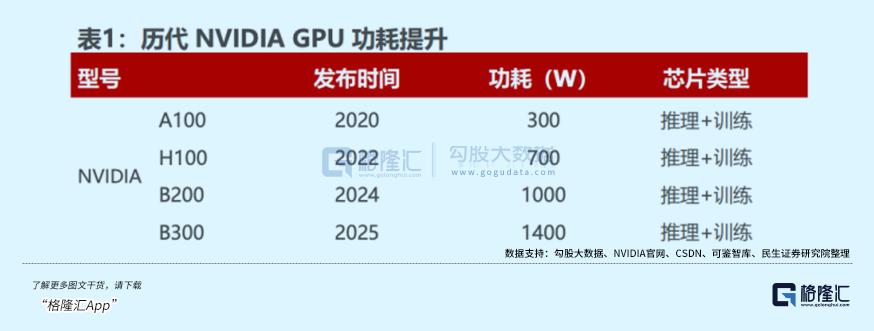
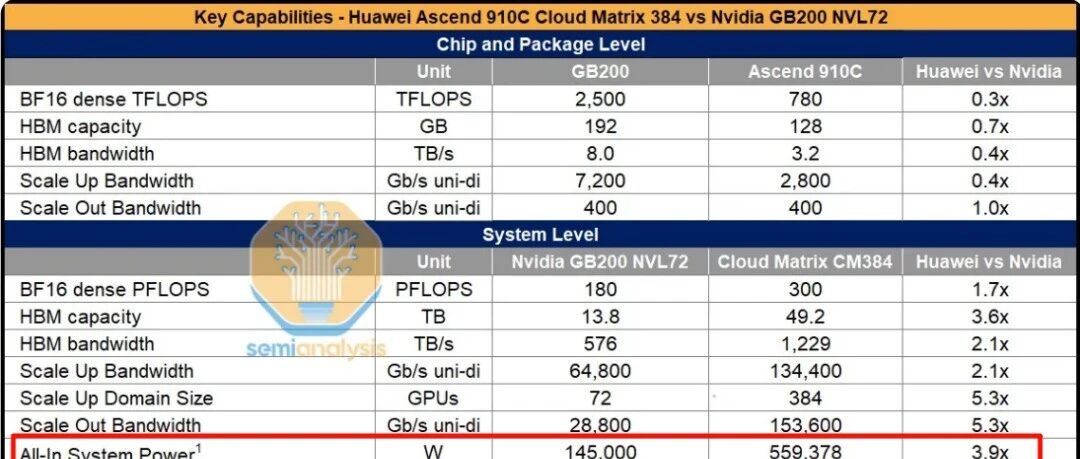
Core Viewpoint - The article discusses the rapid advancements in liquid cooling technology within the semiconductor industry, highlighting the significant power consumption increases of GPUs from Nvidia and AMD, and the evolving design and cost dynamics of liquid cooling systems. Group 1: Liquid Cooling Technology Overview - Nvidia and AMD are leading the application of liquid cooling technology, with Nvidia's B200 chip consuming 1200 watts and the latest B300 chip reaching 1400 watts, while future chips like Rubin are expected to consume up to 3600 watts [2][3] - AMD's GPU power consumption has also surged, with the MI300 series at 700-750 watts, MI325 at 1000 watts, and MI355 at 1400 watts, with the MI375 series projected to reach 1600 watts [2][3] Group 2: Core Component Upgrades - The core components of liquid cooling systems, such as cold plates, quick connectors, and piping, are evolving. The GB200 platform features 45 cold plates at a cost of $600-700 each, while the GB300 has 117 cold plates with a reduced cost of $200-300 each, leading to an overall value increase from $780,000 to $900,000 [4] - The quick connector used in GB200 is the OCP standard UQD04, while GB300 has upgraded to Nvidia's NVQD03, nearly doubling the quantity and increasing the total value to about twice that of GB200 [4] Group 3: Cooling Distribution Units (CDUs) - CDUs are moving towards standardization, with types including embedded, cabinet, and distribution types. The domestic market favors high-power CDUs (1500-2000 watts), while North America and Europe prefer distribution types with capacities of 70 kW and 150 kW, priced around $30,000 to $40,000 [5] - The unique "density stacking" strategy in the domestic GPU market has led to increased demand for liquid cooling solutions, as seen with Huawei's CloudMatrix384 cabinet having a power consumption four times that of Nvidia's NVL72 cabinet [5] Group 4: Market Dynamics and Competition - Domestic data centers are expected to adopt domestic GPU cards extensively, making liquid cooling systems a standard feature. Customization of cold plates and quick connectors is particularly pronounced in the domestic market [7] - Taiwanese manufacturers hold a leading position in the liquid cooling market due to their first-mover advantage, while domestic manufacturers like Invec offer competitive pricing and customization capabilities, with costs for CDU and internal components being 20-30% lower than their Taiwanese counterparts [8] Group 5: Challenges and Future Directions - Current challenges in liquid cooling include issues with dual-sided cold plates, such as increased pressure and deformation, as well as the high cost and environmental concerns associated with immersion cooling fluids [9] - The market is shifting focus towards new mineral oils to optimize flow rates and heat dissipation capabilities, aiming to balance cost and performance [9]

国金证券:液冷时代来临 有哪些受益环节值得关注?
智通财经网· 2025-08-31 00:33
Core Viewpoint - NVIDIA is set to launch its AI server, the DGX GB300 NVL72, designed specifically for the AI inference era, featuring high chip computing power and a fully liquid-cooled rack design to meet the increased thermal design power (TDP) requirements [1] Group 1: Liquid Cooling Technology Development - Traditional air cooling solutions are inadequate for AI clusters with cabinet power densities exceeding 20 kW, leading to the adoption of fully liquid-cooled architectures by NVIDIA's OEM/ODM manufacturers [2] - Various liquid cooling solutions exist, including cold plate, immersion, and spray cooling, with cold plate technology being the most mature but having lower cooling efficiency compared to immersion and spray cooling [2] Group 2: Cold Plate Liquid Cooling Components - Cold plate liquid cooling is a mainstream solution for large-scale data center retrofitting, involving components such as the cooling distribution unit (CDU), cold plates, circulation pipelines, quick connectors, and manifolds [3] - The CDU acts as the "heart" of the system, relying on the performance of circulation pumps and heat exchangers [3] - Cold plates capture heat from high-heat components like GPUs, with performance metrics including pressure drop and thermal resistance being critical [3] Group 3: Immersion Liquid Cooling Components - Immersion cooling involves submerging electronic components in an insulating cooling liquid, utilizing the liquid's high heat capacity for efficient heat transfer [5] - Compared to cold plate systems, immersion cooling has a simpler secondary structure and requires careful selection of cooling liquid materials to prevent evaporation and ensure compatibility with data center equipment [6] Group 4: Spray Liquid Cooling Components - Spray cooling utilizes gravity or system pressure to directly spray cooling liquid onto high-heat components, achieving efficient heat capture [7] - Unlike cold plate systems, spray cooling operates without phase change and requires high-boiling, insulating, and oxidation-resistant cooling fluids [8] Group 5: Upstream Directions Worth Noting - Electronic fluorinated liquids are essential for immersion and spray cooling due to their high insulation and stability properties [9] - High-efficiency thermal interface materials (TIM) such as liquid metals are predicted to become mainstream, enhancing cooling performance for high-power CPUs while being compatible with both immersion and cold plate cooling systems [9] Group 6: Relevant Investment Targets in Liquid Cooling - Key players in the liquid cooling supply chain include companies like Invec (002837.SZ), Shenling Environment (301018.SZ), and others [10] - Component suppliers with low domestic production rates, such as Kexin New Source (300731.SZ) and Chuanhuan Technology (300547.SZ), are also noteworthy [10] - Upstream material suppliers like Juhua Co. (600160.SH) and Xinjubang (300037.SZ) are significant in the liquid cooling market [10]

A股英伟达产业链狂奔,大牛股飙升5倍
2 1 Shi Ji Jing Ji Bao Dao· 2025-08-30 13:59
Core Insights - The AI computing power competition is reshaping the global technology industry, with AI computing power becoming a crucial infrastructure asset [2] - The market has seen significant growth in AI-related sectors, particularly in AI servers, optical modules, and high-end PCBs, with leading companies reporting strong earnings [2][6] - Nvidia's shift towards AI infrastructure has amplified the resonance effect between capital and industry, making the computing power sector a hot investment theme [2] Industry Performance - Major companies like Industrial Fulian and Xin Yi Sheng have seen their market values soar, with Xin Yi Sheng's stock price increasing over 28 times in three years and Sheng Hong Technology's stock rising over 500% this year [2] - Industrial Fulian reported a revenue of CNY 360.76 billion, with a year-on-year growth of 135.58%, and a net profit of CNY 121.13 billion, up 138.61% [6] - Xin Yi Sheng achieved a revenue of CNY 104.37 billion, a staggering growth of 282.64%, and a net profit of CNY 39.42 billion, up 355.68% [6][8] Market Trends - The demand for AI servers is a core revenue driver, with significant growth in the AI server segment, particularly for Industrial Fulian, which saw a revenue increase of over 60% year-on-year [6] - The optical module market is driven by AI investments, with companies like Zhongji Xuchuang and Tianfu Communication showing strong growth in revenue and net profit [7][8] - The liquid cooling market is expected to grow significantly, with predictions of a 33% penetration rate in AI data centers by 2025 [8] Future Outlook - The overall capital expenditure for AI infrastructure is projected to reach USD 3 trillion to 4 trillion by the end of the decade, with Nvidia leading the charge [14] - Domestic internet companies in China are increasing their capital expenditures on AI-related businesses, with a reported growth of 99.38% year-on-year [13] - The market for optical modules is expected to see continued high growth, particularly with the demand for 800G and 1.6T modules [8]




A股英伟达产业链狂奔,大牛股飙升5倍
21世纪经济报道· 2025-08-30 13:55
Core Viewpoint - The AI wave is driving a competition in computing power, transforming the global technology industry, with AI computing power becoming a crucial infrastructure asset as demand for large model inference and training surges [1] Group 1: Industry Trends - The market has experienced multiple rounds of capital chasing across various segments, including storage, packaging, and communication connections, with the Nvidia industry chain heat continuing to rise in A-shares as of 2025 [1] - Major companies like Industrial Fulian and Xinyi Sheng have seen significant stock price increases, with Xinyi Sheng's stock rising over 28 times in three years and Shenghong Technology's stock increasing over 500% this year [1] - The capital and industry resonance effect is amplifying as Nvidia transitions to an AI infrastructure company, making the computing power sector one of the hottest investment themes in the capital market [1] Group 2: Company Performance - Industrial Fulian reported a market capitalization exceeding 1 trillion CNY, with its revenue and profit reaching record highs in the first half of 2025, driven by AI server sales [6] - Shenghong Technology's revenue for the first half of 2025 was 90.31 billion CNY, an increase of 86%, with net profit soaring by 366% [6][9] - New Yi Sheng's revenue reached 104.37 billion CNY, a staggering growth of 282.64%, with net profit increasing by 355.68% [6][7] Group 3: Specific Segments - AI servers are identified as the core revenue segment, with Industrial Fulian's AI server revenue growing over 60% year-on-year [6] - The optical module market is driven by AI investments, with companies like Zhongji Xuchuang and Tianfu Communication showing strong growth in revenue and net profit [7] - The PCB industry is also experiencing growth, with Shenghong Technology's revenue increasing significantly, although there are concerns about rising raw material costs impacting competition [9] Group 4: Future Outlook - The demand for computing power is expected to continue growing, with major cloud service providers increasing capital expenditures significantly [12] - Nvidia's projected capital expenditures and the anticipated growth in AI infrastructure spending highlight the ongoing investment opportunities in the sector [12][13]