蔚来

Search documents
汽车生产,谁在领跑?
Xin Hua Wang· 2026-01-12 23:38
在全国各大城市中,汽车产量如何?2025年前11个月,重庆汽车产量近250万辆。北京和上海的汽 车产量超过了百万辆,郑州、青岛等城市的产量也接近百万辆。新能源汽车方面,2025年前11个月,合 肥新能源汽车产量超120万辆,居全国城市第一。 多个城市产量超百万辆 重庆汽车产量持续增长。2025年前11个月,重庆汽车产量为249.81万辆,同比增长12.1%。近年 来,重庆汽车产业转型成效显著。2024年重庆汽车产量达254万辆,创近7年新高;其中新能源汽车产量 95万辆,是2021年的6倍多。 北京、上海、柳州等城市也在百万级别。2025年前11个月,上海整车产量为160.11万辆,其中新能 源汽车产量104.2万辆。北京2025年前11个月全市生产汽车133.5万辆,比上年同期增长27.6%。值得关 注的是,柳州2025年前9个月的整车产量已经完成133.1万辆,同比增长37.8%,全年"成绩单"可期。 郑州、青岛、长沙、武汉等城市正稳步接近"百万辆"门槛。2025年前10个月,郑州全市整车产量 95.63万辆,同比增长16.52%,年产量突破百万大关几无悬念。青岛2025年前11个月汽车产量为91.17万 ...
美股V型反弹 谷歌市值破4万亿 中国资产大涨 金山云飙升21% 阿里涨超10% 黄金白银创新高
2 1 Shi Ji Jing Ji Bao Dao· 2026-01-12 23:35
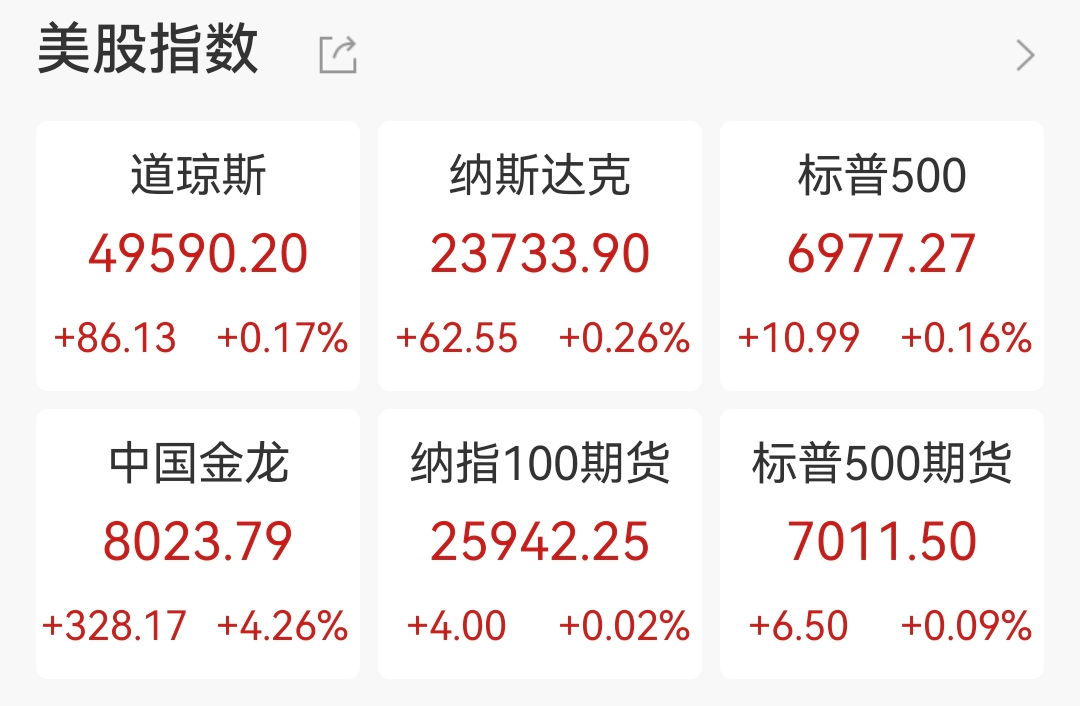
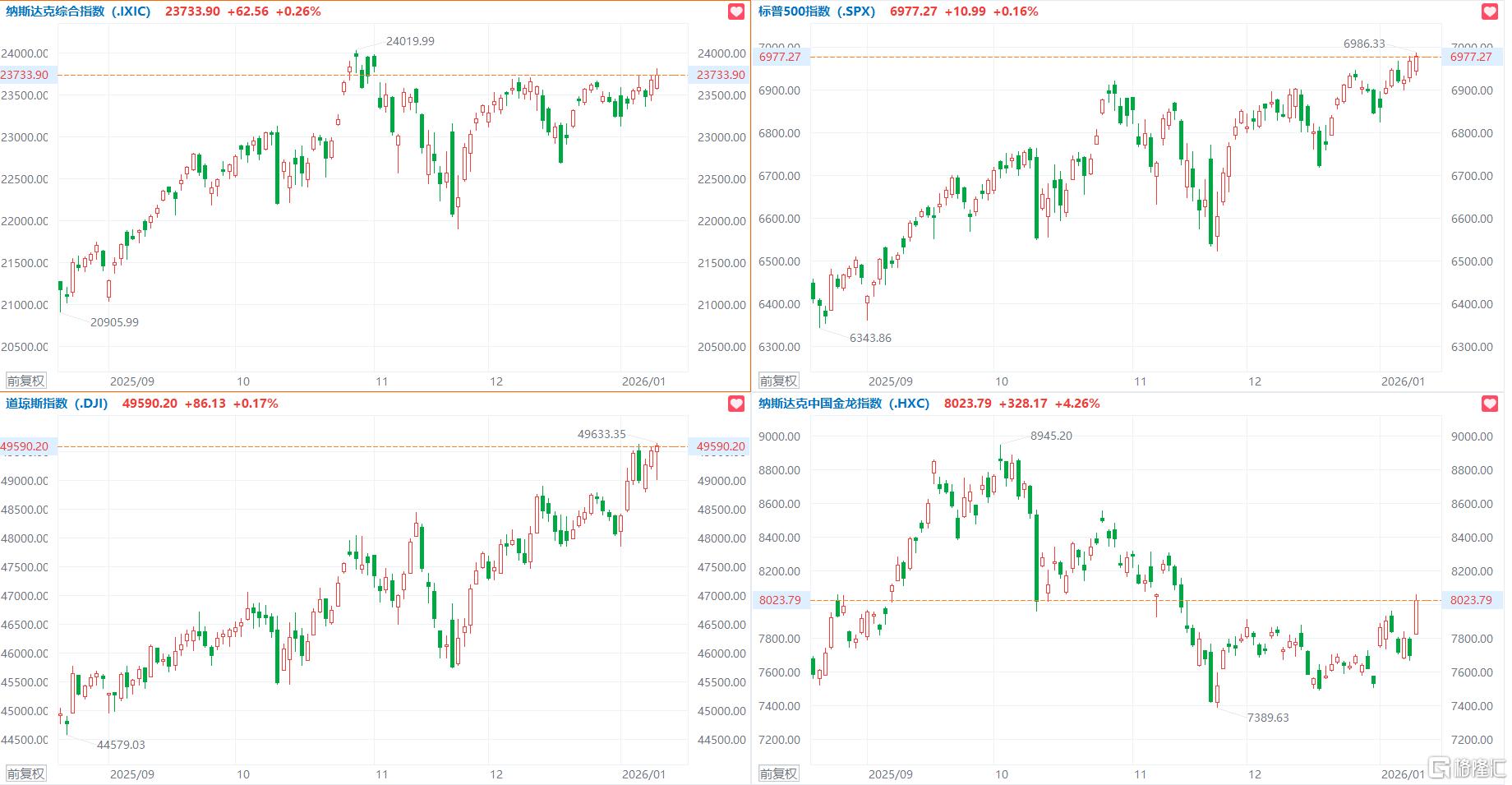
Market Performance - The three major US stock indices closed higher, with the Dow Jones up 0.17%, the S&P 500 up 0.16%, both reaching historical highs, and the Nasdaq Composite up 0.26% [1] - The Nasdaq Golden Dragon China Index rose by 4.26%, with significant gains in popular Chinese stocks such as Kingsoft Cloud up over 21% and Alibaba up over 10%, marking its largest increase since August 29 [3] Company Highlights - Major tech stocks saw an upward trend, with Google A rising by 1% and surpassing a market capitalization of $4 trillion, while Apple increased by 0.34% due to a partnership with Google for AI technology support [2] - Walmart's stock rose by 3%, reaching a historical high with a market value exceeding $940 billion [2] Commodity Market - Gold prices surged, with spot gold increasing by 1.84% to $4,592.13 per ounce, and hitting a record high of $4,630.21 during the session [4] - Crude oil prices also saw gains, with WTI crude up 1.22% to $59.84 per barrel and Brent crude up 1.41% to $64.23 per barrel [5] Economic Indicators - The US 10-year Treasury yield slightly increased by 1 basis point, while the dollar index ended its consecutive rise, dropping nearly 0.6% from its daily high [3] - Investors are awaiting the upcoming US Consumer Price Index (CPI) report, which may influence market expectations regarding potential Federal Reserve interest rate cuts [6]

道指、标普500指数创新高,沃尔玛涨3%创历史新高,中概指数飙升4.26%
Ge Long Hui· 2026-01-12 23:14
Core Viewpoint - The U.S. stock market saw all three major indices close higher, with the Dow Jones reaching a record high, indicating positive investor sentiment and market performance [1] Group 1: Major Indices Performance - The Dow Jones Industrial Average rose by 0.17%, achieving a new closing high [1] - The S&P 500 increased by 0.16%, also marking a new closing high [1] - The Nasdaq Composite gained 0.26%, contributing to the overall positive market trend [1] Group 2: Company Performances - Google shares increased by 1.09% following the announcement of a long-term AI collaboration [1] - Apple shares rose by 0.34%, also related to the AI partnership with Google [1] - Meta Platforms experienced a decline of 1.7% as it launched a new strategic initiative called "Meta Compute" [1] - Walmart's stock surged by 3%, reaching a historical high with a market capitalization exceeding $940 billion [1] Group 3: Chinese Stocks Performance - The Nasdaq Golden Dragon China Index rose by 4.26%, reflecting strong performance among Chinese stocks [1] - Notable gains included Kingsoft Cloud up by 21%, Zhihu up by 16%, and Alibaba up by over 10% [1] - Other significant increases were seen in Century Internet (9%), Xpeng (8.2%), GDS Holdings (7.4%), Baidu (6%), NIO (5%), NetEase (4.7%), and Canadian Solar (4.5%) [1]


李宁同仁堂万达蔚来大疆,为何都要抢“一杯咖啡”?
Sou Hu Cai Jing· 2026-01-12 23:09
Core Insights - The emergence of Ning Coffee, an independent coffee brand incubated by Li Ning, marks a strategic shift from being a supplementary service to an independent brand, creating a composite space that integrates coffee, sports, and social interaction [2] - The rapid growth of the coffee market in China reflects a structural change in consumer behavior, particularly among younger demographics, with coffee becoming a social currency and lifestyle symbol [3][11] Group 1: Market Trends - The Chinese coffee consumer base is projected to exceed 500 million by 2024, with individuals aged 18-35 making up over 68% of this demographic [3] - Coffee consumption is increasingly viewed as a lifestyle choice, with factors such as aesthetic spaces and social sharing driving demand among younger consumers [3][11] Group 2: Strategic Moves by Traditional Brands - Various traditional companies, including China Post and Tongrentang, are entering the coffee market to connect with younger consumers and reshape their brand identities [2][5] - The strategy of integrating coffee into their offerings allows these companies to extend their brand influence beyond their core products, creating a lifestyle brand image [7][9] Group 3: Business Model and Profitability - Coffee serves as a low-cost entry point for traditional businesses to enhance user engagement and increase customer lifetime value (LTV) [6][7] - The cost of producing a cup of coffee is typically under 10 yuan, while selling prices range from 25 to 40 yuan, resulting in high profit margins of 60%-70% [6] Group 4: Consumer Engagement and Brand Experience - The introduction of coffee in retail spaces aims to extend customer dwell time and create opportunities for secondary purchases, enhancing overall customer experience [6][9] - Companies like Li Ning and Huawei are leveraging coffee to foster community engagement and enhance brand loyalty, transforming their retail environments into immersive lifestyle spaces [7][9] Group 5: Challenges and Considerations - Despite the apparent opportunities, not all companies possess the operational capabilities required for the food and beverage sector, leading to potential pitfalls in execution [10] - The coffee market is becoming increasingly competitive, with over 250,000 coffee shops projected in China by the end of 2024, necessitating a unique value proposition for traditional brands to avoid becoming mere background players [10]



宝马为什么降价?
汽车商业评论· 2026-01-12 23:06
Core Viewpoint - The article discusses the significant price reductions by BMW in the Chinese luxury car market, highlighting the competitive pressures from domestic brands and the changing consumer preferences in China [4][5][7]. Group 1: Price Reduction Impact - BMW will implement price cuts on January 1, 2026, affecting 31 models, with 24 models seeing reductions over 10% and 5 models over 20%, the largest being a reduction of 301,000 yuan for the i7 M70L [4]. - Following the price cuts, the number of BMW models priced below 300,000 yuan will increase from 3 to 10 [4]. - The price threshold for main models has dropped to the 200,000-250,000 yuan range, aligning with the entry-level pricing of Chinese high-end brands [5]. Group 2: Market Dynamics - Over the past three years, the exit of government subsidies for electric vehicles led to price wars initiated by Tesla and BYD, resulting in a continuous decline in prices within the 300,000 yuan segment [7]. - BMW's sales in China reached 825,000 units in 2023, a 4.2% increase, while global sales were 2.555 million units, up 6.5% [7]. - The luxury segment above 300,000 yuan is facing challenges as new models from domestic brands like Hongmeng Zhixing, NIO, and Li Auto are rapidly gaining market share [7]. Group 3: Consumer Behavior and Sales Data - A study of foot traffic in 10 cities showed that in 7 cities, the number of visitors to BMW dealerships did not significantly increase post-price cut, while 3 cities (Guangzhou, Nanjing, and Shenyang) saw a notable rise [11][13]. - Despite the official price reductions, actual transaction prices for models like the BMW X3 remain lower than the new official prices, indicating that consumers are not perceiving the price cuts as substantial [13][14]. - Dealers express that the price cuts primarily benefit them by reducing procurement costs, but they are concerned about the long-term impact on brand perception [14]. Group 4: Future Challenges - The article suggests that the announcement of price cuts will attract consumer interest, but the luxury automotive market may face increasing challenges ahead [15]. - The need for traditional luxury brands to reduce costs is emphasized, with potential difficulties in managing expenses related to safety testing, materials, and supply chains [15]. - The article raises the question of whether BMW's price cuts will trigger a domino effect among other luxury brands in the market [15].

汽车生产,谁在领跑?(锐财经)
Ren Min Ri Bao· 2026-01-12 20:23
Core Insights - The automotive production landscape in China is evolving, with cities like Chongqing, Beijing, and Shanghai showing significant output figures, particularly in the electric vehicle (EV) sector [2][3][4] - Technological innovation and resilient supply chains are key competitive factors driving the growth of automotive production in various cities [3][5] Production Highlights - Chongqing produced approximately 2.5 million vehicles in the first 11 months of 2025, marking a 12.1% year-on-year increase, with a notable rise in EV production reaching 950,000 units, over six times that of 2021 [3] - Shanghai's vehicle production reached 1.6 million units, with 1.04 million being EVs, while Beijing's output was 1.34 million units, reflecting a 27.6% increase year-on-year [3] - Other cities like Zhengzhou and Qingdao are approaching the million-unit mark, with Zhengzhou's production at 956,300 units, a 16.52% increase [3] Electric Vehicle Leadership - Hefei leads the nation in EV production with 1.25 million units produced in the first 11 months of 2025, supported by a strong industrial base including major brands like NIO and BYD [4] - Hefei's rapid growth in the EV sector is attributed to strategic industry planning and the establishment of production bases for various automotive brands [4] Industry Support and Innovation - The automotive industry in cities like Liuzhou and Qingdao benefits from comprehensive supply chains, with Liuzhou being home to five major vehicle manufacturers [5] - Innovations in autonomous driving and vehicle networking are being spearheaded in Chongqing, with the first L3-level autonomous driving license plate expected by the end of 2025 [5] Policy and Strategic Initiatives - Local governments are implementing supportive policies, such as Chongqing's strategy to develop a world-class smart connected EV industry cluster [6] - Anhui province is also backing Hefei's ambition to become a globally influential EV hub [6] Statistical Changes Impacting Rankings - Changes in statistical methods for vehicle production reporting are reshaping the rankings of leading automotive cities, with a shift from "enterprise location" to "production location" affecting how output is measured [7] - In 2023, Guangzhou maintained the highest production at 3.18 million units, but projections for 2025 indicate shifts in rankings due to these new reporting standards [7] Overall Industry Performance - The Chinese automotive industry demonstrates strong resilience and vitality, with total production and sales reaching 31.23 million and 31.13 million units respectively in the first 11 months of 2025, both showing over 11% year-on-year growth [8] - Factors such as over 50% penetration of new energy passenger vehicles and advancements in L3 autonomous driving are propelling the industry into a new phase of high-quality development [8]
【整车主线周报】12月新能源批发符合预期,看好26年景气度向上
东吴汽车黄细里团队· 2026-01-12 15:53
Investment Highlights - The automotive industry is expected to see a recovery in passenger vehicle demand in Q1 2026 due to the implementation of subsidy policies, with a focus on high-end electric vehicles and resilient companies like Jianghuai Automobile, Geely, Great Wall, and others [3][8] - For heavy trucks, wholesale sales in 2025 are projected at 1.14 million units, a 26% year-on-year increase, with domestic sales expected to reach 800,000 units in 2026, reflecting a 3% growth [4][35] - The bus sector is anticipated to benefit from a new vehicle replacement policy in 2026, with expected sales of 40,000 units, a 5% increase year-on-year, driven by the need to replace aging buses [4][34] - The motorcycle market is projected to grow, with total industry sales expected to reach 19.38 million units in 2026, a 14% increase, and large-displacement motorcycles expected to see a 31% increase in sales [5][32] Passenger Vehicle Insights - The short-term outlook for the passenger vehicle sector is positive, with a recovery in demand expected in early 2026, supported by subsidy policies [3][8] - Key players in the domestic market include Jianghuai Automobile and high-end brands like Geely and Great Wall, while export strategies should focus on established companies like BYD and Changan [3][8] Heavy Truck Insights - In 2025, heavy truck wholesale sales are expected to reach 1.14 million units, with a significant increase in terminal sales and exports [4][35] - The market is expected to see a reduction in older trucks, with a projected elimination of 210,000 units by the end of 2025 [4][35] Bus Insights - The bus market is expected to see a slight increase in sales in 2026, with a focus on replacing older buses that have exceeded their replacement cycle [4][34] - The anticipated sales for 2025 are 38,000 units, with a 25% increase year-on-year, while 2026 is expected to see 40,000 units sold [4][34] Motorcycle Insights - The motorcycle industry is projected to grow significantly, with total sales expected to reach 19.38 million units in 2026, driven by both domestic and export markets [5][32] - Large-displacement motorcycles are expected to see a 31% increase in sales, with domestic sales projected at 430,000 units [5][32]

每两天就有一次关键岗位调整,2025年车圈人事密集调整背后:有人奔向芯片机器人 有人跨界入局
3 6 Ke· 2026-01-12 12:57
而当部分汽车人选择"下车"离场时,另一群跨界者正带着全新基因"上车"入局。一场双向的人才迁徙,正在汽车行业悄然上演。 当汽车产业加速穿越"电动化、智能化、全球化"三重变革周期,人才的流动与迭代也在快速进行。 从2025年初广汽集团"掌门人"更迭,到4月蔚来上演"人事地震";随后东风、长安、比亚迪等多家车企均出现高管变动;进入第四季度,宝马、保时捷、 通用中国变更CEO,直至长安汽车在12月正式任命公司总裁⋯⋯ 据不完全统计,2025年仅10月至12月,短短两个月内,就有约327位高管岗位发生变动。如果将时间线拉长至2025年全年,仅截至9月中旬的统计就显示, 汽车圈平均每两天就有一次关键岗位调整。 这些关键岗位的调整波及范围之广前所未有:从传统车企到造车新势力,从国内品牌到跨国巨头,从整车厂到供应链企业,整个汽车产业都在经历深刻的 人员重组。 图片来源:每经记者 张建 摄 资料图 《每日经济新闻》记者在采访中发现,越来越多的汽车人已经迈出转型脚步:手握资源的车企高管,放下多年积累投身AI(人工智能)赛道自主创业; 一线技术员工则转向汽车周边领域,寻求更稳定的工作节奏。曾经泾渭分明的行业边界,正随着这批人才的流 ...

联检科技:汽车检测资质持续拓展,积极提升经营业绩
2 1 Shi Ji Jing Ji Bao Dao· 2026-01-12 11:19
Core Viewpoint - The company, Lianjian Technology, has significantly expanded its third-party testing qualifications for major automotive manufacturers, enhancing its market penetration and operational performance in the automotive testing business [1] Group 1: Company Developments - The subsidiary, Guanbiao Testing, has obtained third-party testing qualifications from major automotive companies including Jianghuai Automobile, Geely Automobile, Leap Motor, and Chery Automobile [1] - The company has also expanded its recognition capabilities to include traditional and new energy vehicle manufacturers such as General Motors, Volkswagen, NIO, and Li Auto [1] Group 2: Market Impact - The newly acquired qualifications are expected to strengthen order conversion and market penetration for the company's automotive testing services [1] - The company aims to accelerate the release of qualification effectiveness to improve its operational performance in the automotive testing sector [1]
年终盘点2025汽车市场的“龙门一跃”:油退电进,全球登顶
3 6 Ke· 2026-01-12 10:37
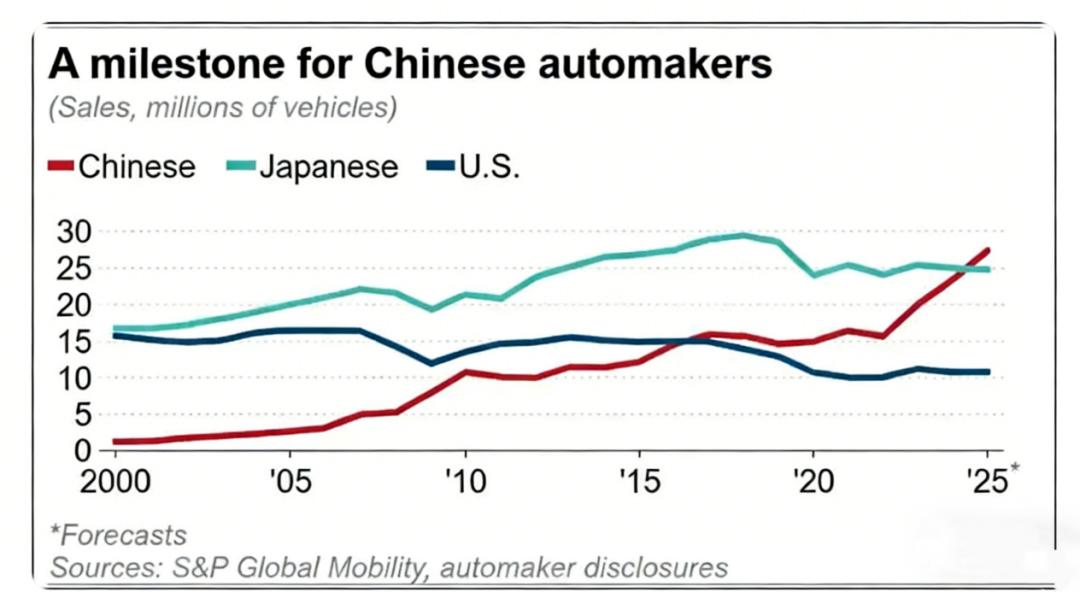
Core Insights - The penetration rate of new energy vehicles (NEVs) in China has surpassed 50%, marking a significant shift in the automotive market dynamics, transitioning from a "policy-driven" to a "product-driven" model [1][10] - The year 2025 is seen as a pivotal moment for the Chinese automotive industry, with the market experiencing a fundamental transformation akin to a "Nokia moment" [1] - The competition is evolving from price wars to value wars, emphasizing technology and product quality over mere volume [11] Industry Overview - In 2025, China's automotive manufacturers are projected to achieve global sales of 27 million vehicles, securing the top position in the global new car sales rankings for the first time [2] - China has overtaken Japan to become the world's largest automobile exporter, with NEVs accounting for a significant portion of this growth [4] - The domestic market's NEV sales are nearing 60%, reflecting a structural change in consumer preferences [4] Sales and Market Penetration - By November 2025, the retail penetration rate of NEVs reached 53.6%, with projections for the full year estimating a rate of 54.0% [6] - The rapid increase in NEV penetration is attributed to a combination of policy support, technological advancements, infrastructure development, and market demand [7] Policy and Technological Developments - The exit of purchase subsidies in 2023 has been offset by continued tax exemptions and various local incentives, which have helped maintain consumer interest in NEVs [7] - 2025 is expected to be a year of technological breakthroughs in NEVs, with advancements in high-voltage platforms, solid-state batteries, and smart driving technologies [8] Infrastructure and Consumer Experience - The expansion of charging infrastructure is crucial for alleviating consumer concerns about range anxiety, with projections of 20 million charging stations by the end of 2025 [9] - The cost advantages of NEVs are becoming increasingly apparent, with electric vehicles offering significantly lower operating costs compared to traditional fuel vehicles [9] Competitive Landscape - The shift from price competition to value competition is reshaping the industry, with companies focusing on technological innovation and profitability [11] - Some companies, like Leap Motor, have emerged as strong competitors, achieving significant sales growth and profitability [13] Global Expansion - In 2025, China's automotive exports are expected to exceed 7 million units, with NEV exports alone projected to reach 2.315 million units, marking a 102.9% increase [21] - Chinese automakers are transitioning to a "global + local" model, emphasizing localized production and R&D to better penetrate international markets [22] Challenges and Future Outlook - Despite rapid growth, challenges such as trade protectionism and compliance costs remain significant hurdles for Chinese automakers in global markets [24] - The automotive industry is expected to continue evolving, with a focus on sustainable growth and value creation as it navigates the transition from a subsidy-driven to a market-driven environment [25]