华锡有色

Search documents
钨稀土持续涨价,重视板块配置
Guotou Securities· 2026-02-08 06:13
Investment Rating - The industry is rated as "Outperforming the Market" with a target price set for leading stocks [4]. Core Views - The report highlights the continuous price increases in tantalum, rare earths, and tungsten, emphasizing the importance of sector allocation. The supply-demand imbalance for tantalum has been exacerbated by mining issues in the Democratic Republic of Congo, while tight supply for rare earths is driving prices up. Compliance in tungsten mining is becoming stricter, making price increases more likely. The long-term metal logic remains unchanged, with global new industrial chain development continuously driving metal demand, while supply constraints persist. A long-term weakening of the US dollar's credibility is anticipated [1]. - The report maintains a positive outlook on metals such as rare earths, copper, aluminum, tungsten, gold, silver, tin, lithium, tantalum, niobium, antimony, and uranium in the medium to long term [1]. Summary by Sections Precious Metals - Gold and silver prices experienced fluctuations, with COMEX gold closing at $4956.0 per ounce (+5.14%) and silver at $77.3 per ounce (-1.24%). China's gold reserves increased for the 15th consecutive month, reaching 7.419 million ounces, with a slight monthly increase of 40,000 ounces. The report suggests a continued bullish trend for gold prices in the medium to long term, driven by central bank and ETF purchases, despite short-term price corrections [2]. - Recommended stocks include Shandong Gold, Shandong International, Zhongjin Gold, Chifeng Gold, and Hunan Gold [2]. Industrial Metals - Copper prices saw a slight increase on the LME, closing at $13,060.0 per ton (+1.24%), while SHFE copper closed at 99,810 yuan per ton (-6.54%). Supply tightness continues, with a shift from discount to premium in spot copper prices. The report notes a stable demand from downstream enterprises, with copper rod and wire cable operating rates at 69.07% and 60.15%, respectively. The report remains optimistic about copper prices due to supply constraints [3]. - Recommended stocks include Luoyang Molybdenum, Jincheng Mining, Western Mining, Hebei Steel Resources, Jiangxi Copper, Tongling Nonferrous, and Yunnan Copper [3]. Aluminum - The report indicates that aluminum prices are expected to fluctuate due to increased supply from new projects and rising social inventory, which increased by 54,000 tons to 83,600 tons. The report anticipates that aluminum prices may stabilize in the short term due to the upcoming Spring Festival, but supply constraints will persist in the medium to long term [3]. Tin - As of February 6, the main contract for tin on SHFE was priced at 366,450 yuan per ton, reflecting an 11.1% decrease. The report notes a decline in Indonesian tin exports and anticipates a continued upward trend in tin prices driven by demand from the electronics sector [8]. Energy Metals - Nickel prices faced significant selling pressure, with a weekly decline exceeding 9%. The report attributes this to macroeconomic sentiment shifts and high inventory levels. However, expectations of tightened nickel ore quotas in Indonesia may provide medium to long-term support for nickel prices [9]. - Recommended stocks include Likin Resources, Huayou Cobalt, Greenmead, and Zhongwei New Materials [9]. Strategic Metals - Rare earth prices have been on the rise, with praseodymium-neodymium oxide priced at 770,000 yuan per ton (+4.1%). The report predicts stable demand growth and a potential new inventory replenishment cycle, supporting a bullish outlook for rare earth prices in 2026 [12]. - Recommended stocks include Shenghe Resources, Huahong Technology, Northern Rare Earth, and China Rare Earth [12].
——小金属双周报(2026/1/26-2026/2/6):供给紧缺格局加剧,钨&稀土价格持续新高-20260208
Hua Yuan Zheng Quan· 2026-02-08 02:50
Investment Rating - The industry investment rating is "Positive" (maintained) [4] Core Views - The supply tightness in the rare earth sector is increasing, with prices for praseodymium and neodymium oxide reaching new highs, up 12.64% to 757,500 CNY/ton [4] - Molybdenum prices have rebounded due to improved supply-demand dynamics, with molybdenum concentrate prices rising 2.48% to 4,135 CNY/ton [21] - Tungsten prices continue to hit historical highs, with black tungsten concentrate prices increasing 25.19% to 671,000 CNY/ton [27] - Tin prices have seen significant adjustments, with SHFE tin down 16.89% to 357,000 CNY/ton [30] - Antimony prices are experiencing a rebound, with antimony ingot prices up 2.49% to 164,500 CNY/ton [39] Summary by Category Rare Earth - Praseodymium and neodymium oxide prices increased by 12.64% to 757,500 CNY/ton, while dysprosium and terbium prices decreased by 1.41% to 140,000 CNY/ton and 2.37% to 617,500 CNY/ton respectively [9][4] Molybdenum - Molybdenum concentrate prices rose 2.48% to 4,135 CNY/ton, and molybdenum iron (Mo60) prices increased 3.48% to 267,500 CNY/ton [21][4] Tungsten - Black tungsten concentrate prices surged 25.19% to 671,000 CNY/ton, and ammonium paratungstate prices rose 24.68% to 985,000 CNY/ton [27][4] Tin - SHFE tin prices fell 16.89% to 357,000 CNY/ton, while LME tin prices decreased 15.42% to 45,845 USD/ton [30][4] Antimony - Antimony ingot prices increased by 2.49% to 164,500 CNY/ton, and antimony concentrate prices rose 1.40% to 144,500 CNY/ton [39][4]

围剿中国工厂
虎嗅APP· 2026-02-06 10:18
Core Viewpoint - The article discusses the significant pressure faced by Chinese manufacturing due to rising raw material prices, particularly in the context of the booming prices of copper and other industrial metals, which are squeezing profit margins for manufacturers while benefiting upstream resource companies [4][5]. Group 1: Raw Material Price Surge - The price of copper has seen a substantial increase, with a 34.34% rise in 2025, continuing into 2026 [4]. - Other metals such as aluminum, tin, zinc, and lead have also experienced significant price increases, with tin prices rising nearly 40% in 2025 [8]. - Lithium carbonate, essential for electric vehicle batteries, surged from 75,700 yuan per ton in January 2025 to 175,250 yuan per ton by January 2026, marking a 131.4% increase [9]. - Tungsten prices have also skyrocketed, with tungsten concentrate reaching 520,000 yuan per ton and carbide prices increasing from approximately 300,000 yuan per ton to 1,200,000 yuan per ton [9]. Group 2: Impact on Manufacturing Sector - The rising costs of raw materials have led to significant profit pressure on downstream manufacturing sectors, particularly in the home appliance industry, where copper constitutes over 20% of the total cost [12]. - The cost of air conditioning units has increased by 8.45% due to rising copper prices, which reached 105,020 yuan per ton in February 2026, a 42.25% increase from early 2025 [12]. - In the electric vehicle sector, the cost inflation for raw materials alone is estimated at 5,600 yuan per vehicle, primarily driven by lithium price increases [15]. Group 3: Broader Economic Context - Despite being the world's largest manufacturing nation, China's manufacturing sector is facing a dual squeeze from rising upstream costs and competitive pressures from downstream pricing [19][22]. - The profit margin for manufacturing has been declining, with the profit rate dropping to 4.7% in 2025, compared to higher rates in mining and energy sectors [23]. - The article highlights that marketing costs are also rising, with over 63% of surveyed e-commerce businesses spending more than 10% of their sales on paid traffic, further compressing profit margins [20]. Group 4: Strategies for Survival - Chinese manufacturers are exploring three main strategies to cope with these challenges: 1. Expanding business scope by increasing exports of high-value products, with a trade surplus of $1.19 trillion in 2025 [30]. 2. Extending the industrial chain by integrating vertically to reduce dependency on external raw materials [32]. 3. Innovating through technology to replace expensive raw materials, such as the development of sodium-ion batteries as an alternative to lithium-ion [33]. Group 5: Conclusion - The article concludes that the current challenges faced by Chinese manufacturing are indicative of a need for a strategic overhaul, requiring not only corporate efforts but also broader political and economic support to regain control over the industrial chain [28][34].

黄金白银,闪崩
Xin Lang Cai Jing· 2026-02-05 12:18
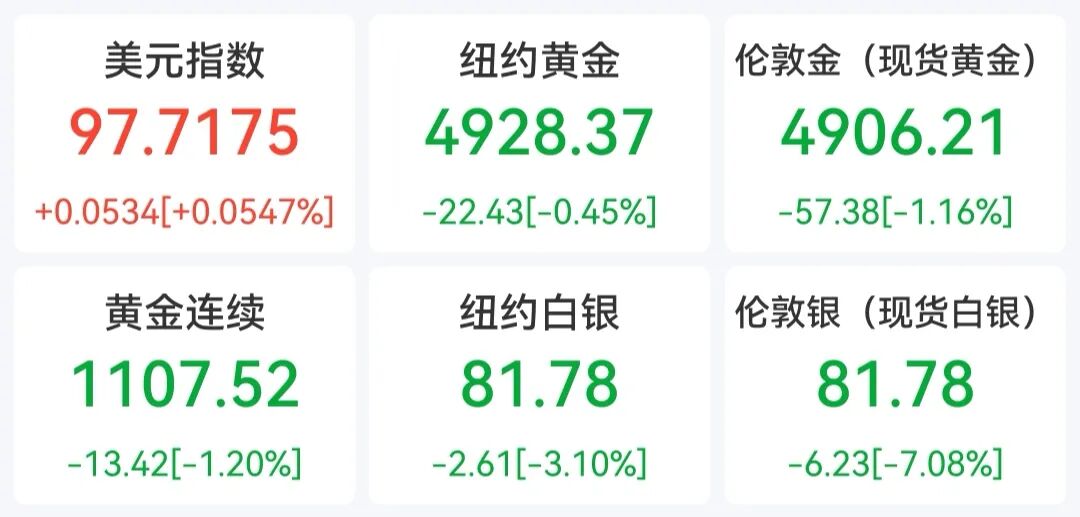
Group 1: Market Overview - Precious metals sector experiences significant adjustments, with Hunan Silver hitting the daily limit down and Xiaocheng Technology dropping over 10% [3][8] - Major declines observed in several gold and silver companies, including Sichuan Gold, Hunan Gold, and Zhaojin Mining [3][4] Group 2: Price Fluctuations - International gold and silver prices continue to fluctuate, with April gold futures trading between $4,800 and $5,000 per ounce, and March silver futures between $70 and $90 per ounce [4][6] - Following substantial sell-offs, precious metal prices remain volatile near key psychological levels, with analysts warning of ongoing selling pressure [5][10] Group 3: Analyst Insights - Analysts from various financial institutions express concerns about the short-term outlook for gold and silver prices, indicating that the market may not have reached a bottom yet [5][10] - The recent sell-off in precious metals is viewed as a market adjustment rather than a trend reversal, suggesting a more stable and non-linear price increase in the future [5][10]


金银突发暴跌,急速跳水!
Sou Hu Cai Jing· 2026-02-05 08:42
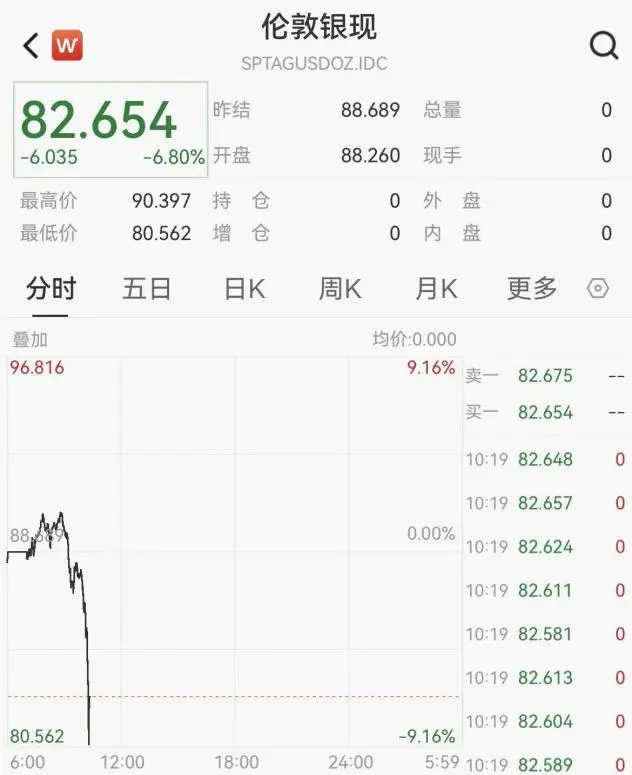
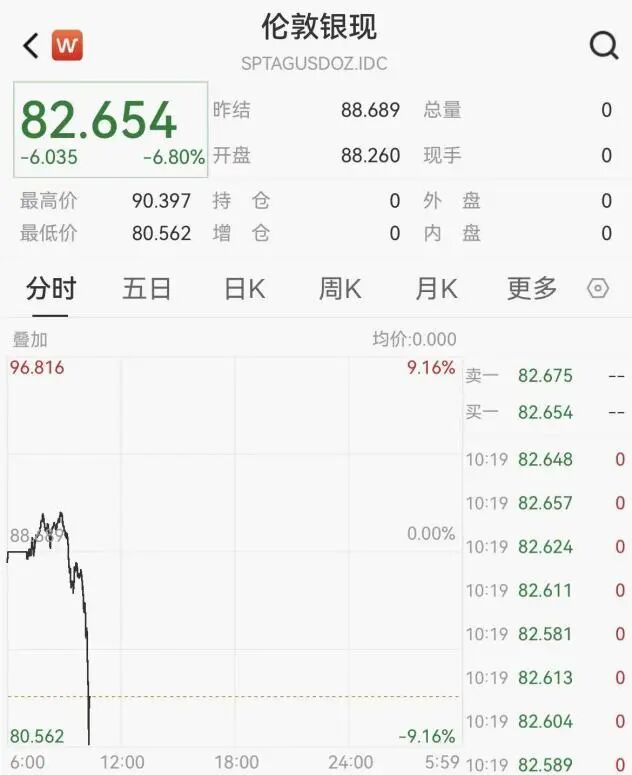
Group 1 - Spot gold prices experienced a significant drop, falling below $4900 per ounce, with a minimum price recorded at $4893.42 per ounce, reflecting a daily decline of over 1% [1][4] - Spot silver prices also plummeted, breaking the $81 per ounce mark, with a minimum price of $80.562 per ounce, resulting in a daily drop of more than 7% [2][4] - The overall precious metals market saw widespread declines, with various metals including platinum and palladium also experiencing significant price drops [5][6] Group 2 - In the A-share market, the precious metals sector opened with notable declines, with companies like Hunan Gold and Hunan Silver hitting the daily limit down of 10% [7][8] - Specific stock performances included: - Xiaocheng Technology down 10.20% with a market cap of 16.1 billion - Hunan Silver down 9.97% with a market cap of 39.2 billion - Hunan Gold down 9.60% with a market cap of 50.7 billion [8] - The Guotou Silver LOF fund hit the daily limit down for four consecutive days, with a premium rate dropping to 37.13% [8][9]
“围剿”中国工厂
3 6 Ke· 2026-02-05 05:27
Core Viewpoint - The surge in metal prices, particularly copper, is significantly impacting downstream manufacturing industries in China, leading to squeezed profit margins for manufacturers while upstream companies benefit from rising raw material prices [3][5][9]. Group 1: Price Surge in Raw Materials - In 2025, copper prices increased by 34.34%, and the upward trend continued into 2026 [2]. - The price of lithium carbonate, essential for electric vehicle batteries, skyrocketed from 75,700 yuan per ton in January 2025 to 175,250 yuan per ton by January 23, 2026, marking a 131.4% increase [7]. - Tungsten concentrate prices surged to 520,000 yuan per ton, while tungsten carbide prices rose from approximately 300,000 yuan per ton to 1,200,000 yuan per ton [7]. Group 2: Impact on Manufacturing Industries - The home appliance industry is heavily affected by rising copper prices, with copper accounting for over 20% of the total cost of air conditioners. The copper price reached 105,020 yuan per ton in February 2026, up 42.25% from early 2025, leading to an 8.45% increase in air conditioner costs [10]. - The electric vehicle industry faces significant cost inflation, with UBS reporting that the cost increase for pure electric vehicles (BEVs) due to metal prices alone is approximately 5,600 yuan per vehicle, primarily driven by lithium price increases [12]. - The automotive industry's single vehicle gross profit was only 13,000 yuan in 2025, making it challenging for manufacturers to pass on rising costs to consumers amid fierce competition [13]. Group 3: Upstream vs. Downstream Dynamics - Upstream mining companies are experiencing explosive profit growth due to rising raw material prices, with Zijin Mining forecasting a net profit of 51 to 52 billion yuan for 2025, a year-on-year increase of 59% to 62% [8]. - In contrast, manufacturing companies are facing unprecedented cost pressures, leading to a decline in profit margins. The manufacturing sector's profit margin was only 4.7% in 2025, compared to 15.9% for the mining sector [21][19]. - The overall revenue of China's industrial enterprises has been increasing, but profit margins have been declining, indicating a challenging environment for manufacturers [19][21]. Group 4: Strategies for Survival and Growth - Many Chinese manufacturing companies are exploring ways to extend their business scope internationally, moving beyond low-end products to high-value items like electric vehicles and industrial robots [24]. - Some companies are actively integrating vertically by acquiring upstream resources, such as copper mines, to mitigate the impact of rising raw material prices [24]. - Technological advancements are also being pursued, with companies investing in alternatives to reduce dependency on expensive raw materials, such as the development of sodium-ion batteries [26].






今日锡价大跌!美元走强刚果金停火、贸易商恐慌抛货 反弹机会在哪?
Xin Lang Cai Jing· 2026-02-05 04:48
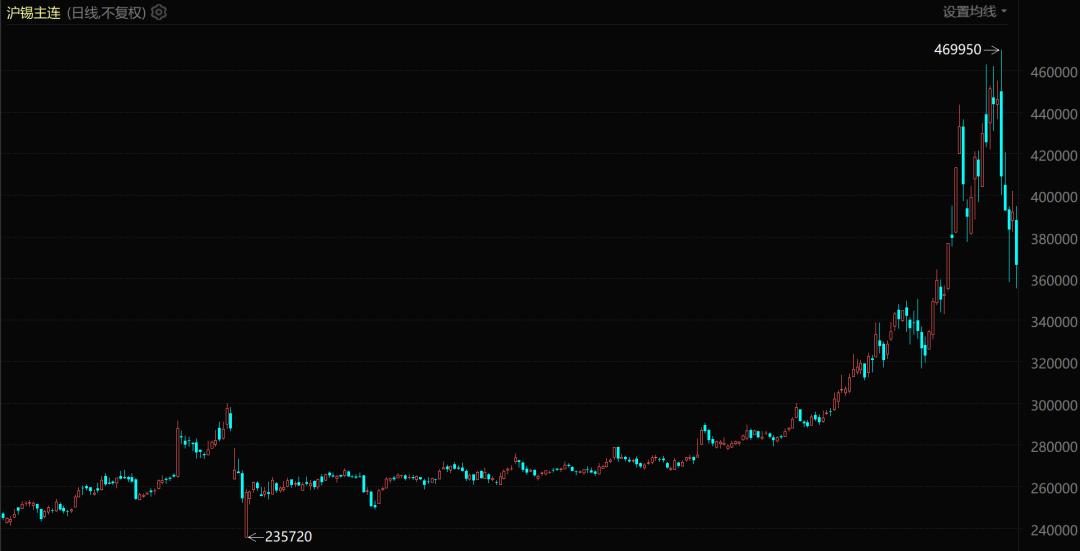
Core Viewpoint - The significant drop in tin prices is attributed to a combination of macroeconomic pressures, geopolitical risk easing in the Democratic Republic of Congo, and a reversal in supply-demand expectations, leading to a bearish market sentiment [1][2][6] Macroeconomic Factors - The strengthening of the US dollar and a sharp decline in US tech stocks have created a risk-off sentiment in industrial commodities, directly impacting tin prices [1] - The Federal Reserve's interest rate outlook has dampened expectations for a rate cut, further pressuring metal prices [1] Geopolitical Situation - A ceasefire agreement in the Democratic Republic of Congo has reduced concerns over supply disruptions from the Bisie mine, which accounts for 6% of global tin supply, leading to a rapid decline in tin price premiums previously driven by geopolitical tensions [2] Supply Side Dynamics - Global tin supply expectations for 2026 are improving, with increased export quotas from Indonesia and faster-than-expected resumption of mining in Myanmar, contributing to a narrowing supply gap compared to 2025 [2] - Domestic production of refined and recycled tin is stabilizing, while expansion projects in Australia and Peru are expected to add to global supply [2] Demand Side Dynamics - Short-term demand for tin is weak due to high prices and seasonal factors, with traditional sectors like electronics and real estate showing reduced orders [3] - Emerging sectors such as AI servers and renewable energy have long-term growth potential, but current demand has not yet materialized into actual orders [3] Industry Chain Status - The global tin industry is characterized by tight upstream raw material supply, stable midstream processing, and pressured downstream consumption, with rising costs due to declining ore grades [3] - Inventory accumulation is becoming a significant factor in price volatility, as downstream sectors face low operating rates and squeezed profits [3] Leading Companies - Major tin companies are experiencing significant revenue growth, with plans for green transformation and high-end product development to secure their market positions [4] - Companies are strategically positioning themselves for future demand in emerging sectors, enhancing their competitive edge [4] Current Market Activity - The recent price drop has led to a cautious trading atmosphere, with buyers adopting a wait-and-see approach and sellers reducing prices to stimulate sales [4] - Actual trading volumes have significantly decreased, with many downstream companies halting procurement plans amid expectations of further price declines [4] Short-term Price Forecast - Tin prices are expected to enter a phase of high volatility, with 360,000 yuan per ton identified as a critical support level [5] - In the short term, prices may face downward pressure, but medium to long-term fundamentals suggest potential for a rebound as supply-demand dynamics remain tight [5] Key Variables for Future Price Movements - Future tin price trends will depend on four key variables: US Federal Reserve policy, resumption of mining in Myanmar and the Democratic Republic of Congo, post-holiday recovery in domestic demand, and actual order fulfillment in emerging sectors [6]

懵了!金银突发暴跌,急速跳水
Zhong Guo Ji Jin Bao· 2026-02-05 03:33
Group 1 - Spot gold prices experienced a significant drop, falling below $4900 per ounce, with a minimum price recorded at $4893.42 per ounce, reflecting a daily decline of over 1% [1][4] - Spot silver prices also plummeted, breaking below $81 per ounce, with a minimum price of $80.562 per ounce, resulting in a daily drop of more than 7% [2][4] - The overall precious metals market saw widespread declines, with various metals such as platinum and palladium also experiencing significant price drops [5][6] Group 2 - In the A-share market, the precious metals sector opened with notable declines, with companies like Hunan Gold and Hunan Silver hitting the daily limit down of 10% [7][8] - Specific stock performances included: - Xiaocheng Technology down 10.20% with a market cap of 16.1 billion - Hunan Silver down 9.97% with a market cap of 39.2 billion - Hunan Gold down 9.60% with a market cap of 50.7 billion [8] - The Guotou Silver LOF fund hit the daily limit down for four consecutive days, with a premium rate dropping to 37.13% [9]
印尼资源民族主义之路-对煤炭-金属和农业的影响
2026-02-05 02:21
Summary of Key Points from the Conference Call Industry Overview - **Industry Focus**: The conference call discusses the impact of Indonesia's resource nationalism on coal, metals, and agriculture sectors, particularly focusing on aluminum, nickel, coal, and palm oil [1][2][4]. Core Insights and Arguments - **Resource Nationalism in Indonesia**: Indonesia is strengthening control over its resources through measures such as reducing export quotas and combating illegal mining to address economic pressures and enhance resource prices [1][2][4]. - **Coal Supply Impact**: Indonesia's reduction of coal export quotas is expected to significantly affect global coal supply, especially for China, potentially leading to tighter domestic supply and price fluctuations between 800 to 1,000 RMB [1][8][6]. - **Palm Oil Market Dynamics**: The acceleration of state control over the palm oil industry, combined with environmental sanctions and U.S. biofuel policies, is anticipated to drive a bull market in palm oil, with prices gradually increasing [1][10][11]. - **Nickel Price and Supply Adjustments**: A decline in nickel prices has led to losses in nickel smelting capacity, prompting the government to reduce nickel ore quotas by approximately 40% in 2026, which may reverse supply-demand dynamics and support price increases [1][13][14]. - **Tin Market Conditions**: The tin market is experiencing a supply-demand tightness, with significant contributions from China and Indonesia, and instability in regions like Myanmar and the Democratic Republic of Congo affecting prices [1][18][20]. Additional Important Content - **Government Policies**: Indonesia's government has implemented policies to combat illegal mining and reduce resource quotas, transitioning from multi-year to annual quota agreements, indicating a strong shift towards resource nationalism [4][5]. - **Investor Recommendations**: Investors are advised to focus on companies with high spot ratios that can benefit from price increases, such as Liu'an Huanneng and Jin Kong Coal, which are seen as having significant upside potential [9][17]. - **Long-term Nickel Supply Concerns**: The long-term outlook for high-grade nickel resources is challenging, with expectations of depletion by 2035, necessitating solutions to address the shortage [16]. - **Tin Demand Resilience**: Despite potential price increases, the demand for tin, primarily in the electronics sector, is expected to remain stable, indicating a positive outlook for price growth [21][22]. Company-Specific Insights - **Zanyu Technology**: The company has a competitive advantage due to its refinery in Indonesia, allowing it to produce refined products without export taxes, thus benefiting from rising palm oil prices [12]. - **Tin Industry Leaders**: Recommended stocks include Tin Industry Co. and Huaxi Nonferrous, both of which are positioned well in the current market environment and are expected to provide significant investment value [22][24].
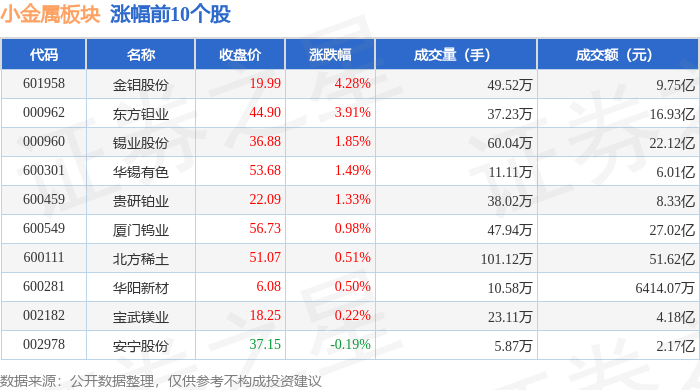
小金属板块2月4日涨0.25%,金钼股份领涨,主力资金净流出11.15亿元
Zheng Xing Xing Ye Ri Bao· 2026-02-04 08:49
证券之星消息,2月4日小金属板块较上一交易日上涨0.25%,金钼股份领涨。当日上证指数报收于 4102.2,上涨0.85%。深证成指报收于14156.27,上涨0.21%。小金属板块个股涨跌见下表: | 代码 | 名称 | 收盘价 | 涨跌幅 | 成交量(手) | 成交额(元) | | | --- | --- | --- | --- | --- | --- | --- | | 601958 | 金铝股份 | 19.99 | 4.28% | 49.52万 | | 9.75亿 | | 000962 | 东方银√ | 44.90 | 3.91% | 37.23万 | | 16.93亿 | | 000960 | 铝业股份 | 36.88 | 1.85% | C 60.04万 | | 22.12 乙 | | 600301 | 华锡有色 | 53.68 | 1.49% | 11.11万 | | 6.01亿 | | 600459 | 贵研铂业 | 22.09 | 1.33% | 38.02万 | | 8.33亿 | | 600549 | 厦门钨业 | 56.73 | 0.98% | 47.94万 | | 27.02亿 | ...