淘宝

Search documents
2025钱流向了哪?就藏在这十个消费关键词里
Sou Hu Cai Jing· 2026-01-07 04:47
Group 1 - The core viewpoint is that Chinese consumers are shifting from valuing simple affordability and high-end premiums to paying for tangible "value" [3] - The consumer mindset in China is characterized by ten key themes that reflect the emotional and practical needs of consumers [4] Group 2 - Emotional value is becoming a significant factor in purchasing decisions, with products like Labubu toys representing a desire for dopamine rather than just functionality [5] - By 2025, consumption is expected to transition from "functional attributes" to "emotional attributes," allowing products that provide emotional value to command higher prices [6] Group 3 - The focus is shifting from price-performance ratio to quality-price ratio, with consumers seeking "good products at low prices" rather than simply the cheapest options [9] - Brands like Luckin Coffee and Leifeng are successfully competing against established players by offering high-quality products at significantly lower prices [9] Group 4 - The demand for safety is increasing, with consumers purchasing gold as a reliable asset in uncertain times, reflecting a need for tangible security [11] - Health-conscious consumption is evolving from general wellness to more targeted, precise health products that cater to specific needs [12] Group 5 - AI is becoming integrated into everyday consumer products, transforming from a mere software concept to practical applications in various consumer scenarios [15] - Companies that can effectively incorporate AI into their products are likely to create the next big hit in the market [15] Group 6 - The emphasis on extreme experiences is growing, with companies like Pang Donglai and Hema redefining shopping as enjoyable experiences rather than mere transactions [16] - Businesses that prioritize customer experience and emotional connection are more likely to retain consumer loyalty [16] Group 7 - Instant retail is becoming a battleground for major players like JD, Meituan, and Taobao, who are investing heavily to dominate the "last mile" delivery [18] - The competition is focused on breaking down the barriers between online and offline shopping, making rapid delivery a standard expectation [19] Group 8 - Transparency in product ingredients is increasingly demanded by consumers, who are becoming more discerning about what they purchase [20] - Brands that fail to be transparent risk losing consumer trust and market share [21] Group 9 - Localization is key for brands looking to succeed in China, with a shift from imitating international brands to understanding and catering to local preferences [23] - The future of the Chinese consumer market is characterized by a "local dominance" era, where brands that resonate with local culture and needs will thrive [25] Group 10 - The collective themes indicate a consciousness awakening among Chinese consumers, who seek recognition and satisfaction of their emotional and practical needs [26] - Understanding these evolving consumer preferences is crucial for predicting future market trends [26]


美团新抢单模式运转情况如何?如何进一步优化规则,让其更加科学、合理?
Yang Guang Wang· 2026-01-05 08:29
Core Viewpoint - Meituan has introduced a new order distribution model for its delivery riders, shifting from a speed-based order grabbing mechanism to a system where orders are allocated by the platform based on various factors, aiming to enhance fairness and reduce cheating [1][3]. Summary by Sections New Order Distribution Model - The new model automatically assigns orders to riders based on multiple factors such as the rider's backlog, route efficiency, and restaurant preparation time, with a distribution time of approximately 3-5 seconds [1][2]. - Riders can still choose which orders to attempt to grab, but their success is now influenced by their compatibility with the order rather than just speed [2][3]. Rider Reactions - Many riders express a positive attitude towards the new model, believing it may lead to a more equitable distribution of orders, especially for part-time riders [2]. - Full-time riders, however, may experience a negative impact on their income as the best orders could become less accessible [2]. Impact on Fairness and Safety - The new model is designed to combat cheating software and ensure a fairer environment for all riders, allowing new riders to access better orders and reducing the pressure to constantly monitor their devices [3]. - Experts suggest that the algorithm's complexity and lack of transparency may lead to confusion among riders regarding the order allocation process [3][6]. Recommendations for Improvement - Experts recommend increasing transparency around the algorithm's logic and involving riders in discussions to clarify how the system works, potentially through regular forums [4][5]. - There is a call for the platform to ensure that the order allocation rules are designed with input from rider representatives to balance the interests of all stakeholders [5][6].

零售行业2025年年度总结及2026年展望(2025年12月)
Lian He Zi Xin· 2026-01-04 13:04
Investment Rating - The report indicates a cautious outlook for the retail industry, suggesting a "stable growth" scenario with potential for recovery driven by government policies aimed at boosting consumption [7][23][70]. Core Insights - The retail industry in China is experiencing a mixed recovery, characterized by steady growth in online retail while offline channels face challenges. The overall market is transitioning towards precision, differentiation, and digitization [7][33][70]. - Consumer confidence remains low due to slowing income growth and increased savings, which constrains spending and affects retail demand [7][18][70]. - Government initiatives, such as the "Consumption Promotion Special Action Plan," are expected to enhance market vitality and support the recovery of the retail sector [23][24][70]. Industry Overview 1. Industry Performance - Consumer spending has been crucial for GDP growth, but the retail sector's overall recovery is incomplete. Income growth is slowing, and consumer confidence is still low, leading to insufficient retail demand [8][9][18]. - In the first three quarters of 2025, the total retail sales of consumer goods reached 365,877 billion yuan, with a year-on-year growth of 4.5%, indicating a slight acceleration compared to previous years [9][70]. 2. Policy and Regulatory Environment - The government has introduced various measures to stimulate consumption, including financial support for upgrading consumer goods and optimizing the retail environment [23][24][26][28]. - The "14th Five-Year Plan" emphasizes consumption as a key driver of economic growth, with ongoing policy support expected to enhance market dynamics [23][28]. 3. Competitive Landscape of Sub-sectors - The retail sector is witnessing a shift towards online growth, with online retail and chain supermarkets facing different challenges and opportunities. The industry is moving towards more precise and differentiated offerings [33][41]. - In the first three quarters of 2025, various retail formats showed positive growth, with convenience stores and supermarkets experiencing increases in retail sales [33][34]. 4. Financial Performance - Retail sample companies have continued to see declines in total revenue and profit margins, with a median revenue drop of 28.83% and profit decline of 37.99% in the first three quarters of 2025 [50][52]. - The leverage levels of retail sample companies remain high, with limited improvement in debt servicing indicators, indicating a need for better financial management [57][62]. 5. Future Outlook - The retail industry is expected to maintain a "stable growth" trajectory, supported by government policies aimed at boosting consumption. However, challenges such as low consumer confidence and income growth may continue to impact demand [70].
喜茶掉队、DeepSeek被它打败,2025年好品牌之争谁赢了
3 6 Ke· 2026-01-04 02:24
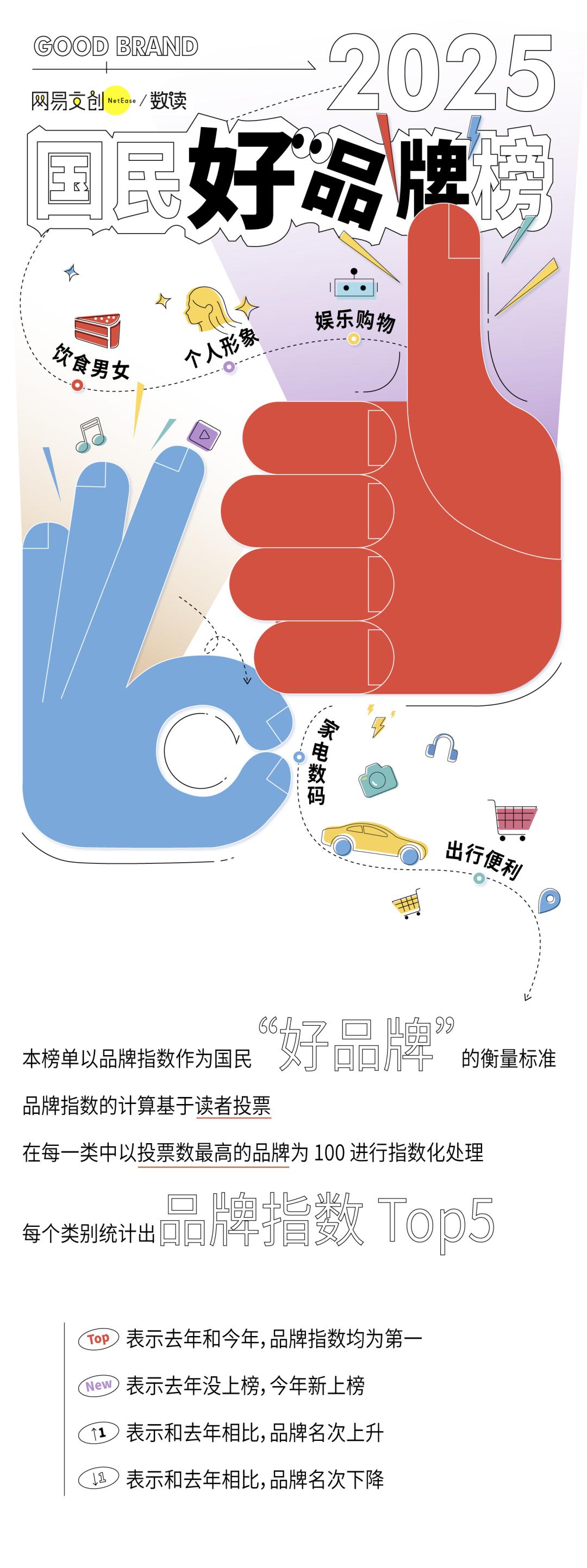
Group 1 - The brand index is used as a measurement standard for the public, calculated based on reader votes, with the highest voted brand in each category set to 100 for index processing [2] - The top five brands in various categories have been identified, with changes in rankings noted, including new entries and shifts in positions compared to the previous year [4][9] - The overall consumer sentiment indicates a cautious approach to spending, with a significant portion of respondents prioritizing product quality and reliability over brand loyalty [123][124] Group 2 - Heytea has fallen behind, with Guming Tea replacing it in the top five, and Guming Tea's store count reaching 11,179 with a net profit of 1.625 billion yuan, surpassing its total profit from the previous year [9] - Haidilao remains the top brand in the hot pot category, while KFC and McDonald's have swapped positions, with KFC slightly ahead [12] - The beverage market sees a return of Nongfu Spring to the top ranks, while Wahaha faces management turmoil, impacting its brand perception [15][17] Group 3 - In the beauty and personal care sector, Estee Lauder and L'Oreal dominate, with significant changes in rankings and the absence of local brands in the top positions [41] - Anta and Li Ning lead the sportswear category, with Li Ning rising to first place from fourth last year, while Adidas has returned to the rankings [45] - Douyin has surpassed Bilibili in the short video sector, with Douyin's daily active users reaching 600 million, while Bilibili has improved its profitability [55] Group 4 - The e-commerce landscape is evolving, with traditional platforms like JD, Meituan, and Taobao entering the instant retail competition, leading to significant financial investments in subsidies [73] - The AI app market is witnessing explosive growth, with ByteDance's products leading in active user numbers, indicating a shift towards AI-driven applications [80] - The adult product market is quietly rising, with brands like Durex and Okamoto leading the category [82] Group 5 - The home appliance market is characterized by intense competition, with Midea focusing on diversified business strategies, while Haier emphasizes high-end and localized operations [92] - Huawei continues to focus on the high-end market, with significant developments in its HarmonyOS ecosystem, while Apple faces challenges with its latest iPhone series [94][95] - The hotel industry is shifting towards new chain hotels, with traditional five-star hotels losing appeal as consumers seek more modern accommodations [116]

银行转账要3天,比特币10分钟到账,区块链如何解决信任难题?
Sou Hu Cai Jing· 2026-01-03 19:42
Core Viewpoint - The article discusses the evolution of trust in financial transactions, highlighting the shift from centralized systems to decentralized blockchain technology, exemplified by Bitcoin, which aims to establish trust through code rather than intermediaries [3][24]. Group 1: Blockchain Technology - Blockchain technology allows for a decentralized ledger where transactions are recorded transparently, making it difficult to alter past records, thus enhancing trust among users [5][7]. - The mechanism of "proof of work" incentivizes miners to validate transactions by solving complex mathematical problems, ensuring a fair and secure method of record-keeping [8][10]. - The UTXO model in Bitcoin tracks every unspent transaction output, providing clarity on the flow of funds, akin to physical cash management [10][12]. Group 2: Web3.0 and Digital Assets - Web3.0 aims to give users control over their data, utilizing blockchain as a "notary" to prevent arbitrary data manipulation by platforms [14][19]. - NFTs serve as digital certificates on the blockchain, ensuring ownership and provenance of digital assets, which remain secure even if the hosting platform fails [15][17]. - Decentralized finance (DeFi) eliminates the need for traditional banks by allowing users to lend and earn interest on cryptocurrencies through smart contracts, although this comes with significant risks [17][19]. Group 3: Challenges and Future Outlook - Current blockchain systems face scalability issues, with Bitcoin processing only seven transactions per second compared to traditional systems like Alipay, which can handle hundreds of thousands [21]. - Regulatory discrepancies across countries pose challenges for the global adoption of cryptocurrencies, potentially slowing the reformation of trust mechanisms [23]. - The article raises questions about the future of trust in a digital world, suggesting a shift from trusting individuals to trusting mathematics and code, with the reliability of this new trust model still uncertain [26].

当我们谈论2025年时,会回顾哪些瞬间?!
Sou Hu Cai Jing· 2026-01-02 07:06
Group 1: AI and Technology - The year 2025 saw significant advancements in AI, with models like DeepSeek R1 disrupting the closed-source model dominance and generating global impact [2] - Major tech companies are transitioning towards AI agents that can autonomously utilize external tools for complex tasks, marking a shift from traditional internet interactions [2] - Nvidia became the world's first $5 trillion company, positioning itself as a major winner in the AI era [4] Group 2: Robotics - 2025 was marked as the year of mass production for humanoid robots, with companies like Tesla and Yushutech gaining attention for their advancements [4][6] - Humanoid robots are moving beyond performance showcases to practical applications in factories and homes [6] Group 3: Automotive Industry - The introduction of Tesla's Full Self-Driving (FSD) in China initiated a competitive landscape for intelligent driving, with 2025 being labeled as the year of intelligent driving [6] - New national standards for electric vehicle batteries were implemented, emphasizing safety requirements to prevent fires and explosions [6] - The automotive industry faced increased scrutiny over misleading advertising, leading to a shift in focus towards safety in marketing materials [8] Group 4: Internet and E-commerce - The food delivery market saw intense competition with major players like JD.com entering the space, leading to significant financial losses across platforms [16][18] - The summer of 2025 was characterized as the most expensive in Chinese internet history, with platforms burning through billions in subsidies [16][18] Group 5: Social Media and Influencers - Influencers gained traction with authentic content, as seen with viral figures like "甲亢哥" and "无语哥," who achieved millions of views globally [19] - The rise of "土味扫腿舞" and the emergence of professional-level performances in live streaming indicate a shift towards quality content in social media [21] - Regulatory challenges emerged for influencers, highlighting the need for accountability and adherence to social norms [23] Group 6: Consumer Electronics - The smartphone market experienced a lack of innovation, with flagship models showing signs of homogenization, while the iPhone 17 series gained popularity for its value [25] - The surge in memory prices at the end of the year suggests a potentially dull future for smartphone innovation, as the industry awaits the next breakthrough [25]

经济大省挑大梁丨江苏南京:新年第一天 消费活力足
Nan Jing Ri Bao· 2026-01-02 03:18
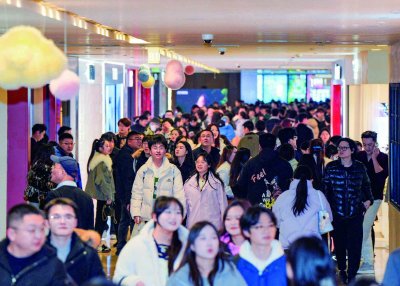
Core Insights - The consumer market in Nanjing is experiencing a vibrant start to the new year, driven by new commercial venues, immersive shopping experiences, and government subsidies aimed at boosting consumption [3][15]. Group 1: New Commercial Venues - The Nanjing shopping district is bustling with activity, particularly in the Deji Plaza, which features the national debut of the "YOMeeDoll" penguin exhibition, attracting a significant number of visitors [5][12]. - New shopping centers, such as Jiangning Baolong Plaza, have opened, providing diverse shopping options and catering to a population of approximately 400,000 residents, with over 200 brands, more than 70% of which are first-time stores [12][13]. - The "Peppa Pig Winter Adventure" exhibition at Yuhua Wanxiang Tiandi has also drawn considerable crowds, showcasing interactive experiences for families [10]. Group 2: Government Subsidies and Promotions - Starting January 1, Nanjing has launched subsidies for six categories of home appliances and four categories of digital products, alongside automotive consumption incentives [15]. - Major retailers like JD.com and Suning are actively promoting these subsidies, offering discounts ranging from 10% to 25% on selected products during the New Year sales [17]. - Various promotional activities, including the issuance of consumer vouchers and collaborative campaigns with e-commerce platforms, are designed to stimulate spending and enhance the shopping experience [18].
2025年十四大事件
Xin Lang Cai Jing· 2025-12-31 16:02
Core Insights - The year 2025 marks a significant "paradigm shift" in the global business landscape, transitioning from visions of AI, consumption, and geopolitics into practical industrial applications [1][40]. Group 1: AI and Technology Developments - DeepSeek's emergence and Manus's $1 billion sale to Meta signify a pivotal moment in China's AI technology sector, reducing reliance on foreign models and initiating a trend towards open-source large models [2][41]. - The rapid competition in the AI field has led to numerous emerging competitors for DeepSeek, including Doubao, Qianwen, Lingguang, and Antifufu, alongside established players like Baidu and Kimi [4][43]. - AI models have evolved from mere chat tools to autonomous decision-making agents, with companies shifting from "buying models" to "nurturing agents" for task execution [6][45]. Group 2: Economic and Market Trends - The low-altitude economy in China is projected to exceed 1.5 trillion yuan, with cities like Shenzhen and Guangzhou pioneering eVTOL urban routes and drone deliveries becoming standard for logistics giants [8][46]. - The year 2025 is recognized as the year of humanoid robots entering factories, with significant orders surpassing 10,000 units, indicating a shift from experimental technology to industrial-grade products [10][49]. - Global trade dynamics are shifting, with the normalization of tariff battles between the US and Europe against Chinese electric vehicles and solar industries, prompting a "global localization" strategy among Chinese firms [12][51]. - The introduction of solid-state batteries in China, including the first national standards, addresses electric vehicle charging anxieties and strengthens China's position in the global renewable energy value chain [13][52]. Group 3: Consumer Behavior and Cultural Shifts - The establishment of the Hainan Free Trade Port marks a critical step in China's institutional openness, attracting global capital and talent [15][54]. - The rise of the "silver economy" in response to China's aging population is expected to create a trillion-yuan market for elder care products and services [28][67]. - The backlash against high-priced pre-made dishes, highlighted by public figures like Luo Yonghao, reflects a growing consumer demand for transparency and value, signaling the end of the "arrogant brand era" [24][63]. - The decline of the Labubu toy series from a speculative investment to a more accessible product illustrates a shift in consumer sentiment towards value-driven purchases [29][72]. Group 4: Capital and Investment Trends - The focus of global capital is shifting from generic large models to investments in "sovereign AI" infrastructure, with data centers becoming strategic national assets [16][57]. - Starbucks' decision to sell part of its Chinese operations to local investors signifies the end of the era where foreign brands dominated the market solely through globalization [34][73].

2025:25个关键词里的中国与世界
第一财经· 2025-12-31 04:11
Core Insights - The article summarizes key developments in China and the world in 2025, focusing on economic policies, market trends, and significant events that shaped various industries. Group 1: Economic Policies and Reforms - The main theme of 2025's economic work is the comprehensive rectification of "involution" in competition, with government reports emphasizing the need to regulate low-price competition and improve product quality [4] - The year marks the conclusion of the deepening reform of state-owned enterprises, with significant progress in strategic restructuring and improved governance [6] - The implementation of the "Private Economy Promotion Law" aims to create a fair business environment and protect the rights of private enterprises [7] Group 2: Debt Management and Fiscal Policies - A plan to replace 10 trillion yuan of hidden local government debt over five years was launched, with nearly 6 trillion yuan replaced by the end of 2025, significantly reducing debt risks [8] - The issuance of ultra-long special government bonds reached 1.3 trillion yuan, supporting major projects and expanding policies to boost consumption [9] Group 3: Consumer and Market Trends - A special action plan to boost consumption was introduced, focusing on increasing residents' income and improving consumer confidence [10] - The A-share market saw the Shanghai Composite Index reach 4,000 points for the first time in ten years, with total trading volume exceeding 400 trillion yuan [13] Group 4: Industry Developments - The gold market experienced a historic surge, with prices rising from $2,625 to a peak of $4,550 per ounce, driven by macroeconomic factors and central bank purchases [14] - The introduction of the "Science and Technology Innovation Growth Layer" on the STAR Market accelerated the IPO process for unprofitable companies, marking a significant shift in capital market dynamics [19] Group 5: Corporate Events and Challenges - The external delivery market saw increased competition with new entrants like JD and Taobao, reshaping the landscape and enhancing consumer choices [22] - The controversy surrounding Wahaha highlighted family disputes and governance issues within the company, affecting its market position [23] - The restaurant industry faced challenges as the crisis at Xibei over pre-made dishes prompted a reevaluation of consumer trust and operational practices [29]



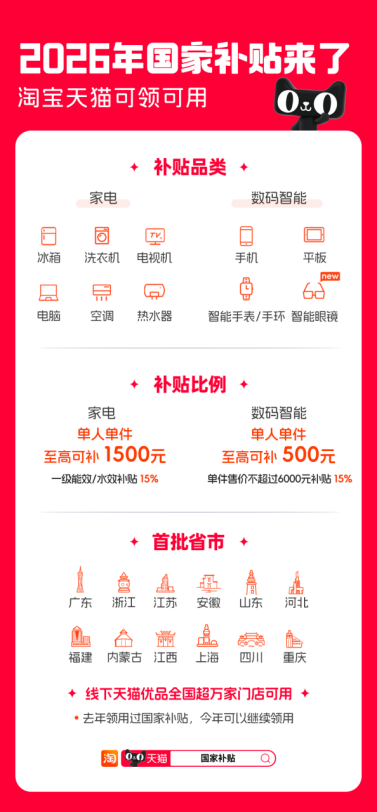
2026年国补来了 1月1日起上淘宝天猫领取,家电数码补贴15%
Jin Rong Jie Zi Xun· 2025-12-31 02:42
积极响应国补以旧换新增量政策,给消费者更大力度让利,1月1日至3日,天猫联合海尔、美的、华 为、西门子等上千个品牌,举办"国补焕新季"活动,超级立减9折起,在国家补贴基础上,消费者额外 可领950元国补焕新季消费券,多重优惠叠加,家电低至5折。 2026年第一个好消息来了,新一轮的国家补贴正式开启,1月1日起,上淘宝天猫领取马上可用。同时, 线下天猫优品全国超万家门店全面承接2026年国补。 最新政策显示,2026年国补覆盖品类为:冰箱、洗衣机、电视、空调、电脑、热水器、手机、平板、智 能手表手环、智能眼镜10大品类;其中,智能眼镜为2026年国补新增品类。国补力度上,统一调整为补 贴15%,一级能效/水效家电补贴上限1500元,数码和智能产品(单件销售价格不超过6000元)补贴上 限500元。 目前,广东、浙江、江苏、安徽、福建、内蒙古、江西、上海、四川、山东、河北、重庆等省市国补率 先上线淘宝天猫,消费者在淘宝首页「国补」频道或者搜索「国家补贴」即可领用。天猫线上线下全面 承接2026年国补,线下天猫优品全国超万家门店也支持领用国家补贴。 据悉,2025年超3000多个品类,1万多个品牌,50万款商品,在 ...