
三星

Search documents
从“猎奇”到“信赖”:折叠屏手机用户发展洞察报告
艾瑞咨询· 2026-01-14 00:06
Group 1 - The core viewpoint of the report highlights the continuous growth of the global foldable smartphone market, particularly in China, driven by technological advancements and an improved supply chain, leading to product diversification [1][4] - The report indicates that the global smartphone market has entered a phase of stock competition since 2017, with annual shipments declining by approximately 2.52%, projected to reach 1.22 billion units by 2024 [2] - Foldable smartphones are identified as a strategic direction to break through market growth bottlenecks, with expected high growth in shipments from 2022 to 2024 [5] Group 2 - The foldable smartphone industry chain encompasses upstream raw material supply, midstream design and manufacturing, and downstream sales, with companies like Huawei and Samsung leading the charge [7] - China's foldable smartphone industry has matured, achieving international advanced standards in technology, and creating a positive cycle of "technology-cost-market" [8][9] - The product forms of foldable smartphones are diverse, with Huawei leading in innovative designs such as tri-fold and wide-fold models [11] Group 3 - The report discusses the transition of foldable smartphones from niche devices to mainstream productivity tools, emphasizing the importance of hardware optimization, software ecosystem collaboration, and enhanced user experience [13][43] - By 2026, it is anticipated to be a critical year for the development of foldable smartphones, with a projected shipment of 6.6 million units in the first half of 2025 [15] - The competitive landscape in China's foldable smartphone market shows a "one strong, many strong" pattern, with Huawei's market share increasing significantly from 35% in Q1 2023 to 75% in Q1 2025 [17][18] Group 4 - User demographics indicate a strong preference for foldable smartphones among high-education users, with over 75% of users holding a bachelor's degree or higher [20] - The majority of users spend between 5,000 to 9,000 yuan on foldable smartphones, with Huawei being the most used brand at 62.3% [22] - Key reasons for purchasing foldable smartphones include a stronger sense of technology and future, with 44.7% of users citing this as a primary motivation [24] Group 5 - Brand recognition for Huawei in the foldable smartphone market is significantly higher than competitors, with strong perceptions of high-end quality and innovation [26][28] - User satisfaction is highest for Huawei, indicating strong brand loyalty and recommendation potential, with Huawei and Xiaomi leading in net promoter scores [30][31] - Consumers view foldable smartphones as carriers of innovation and multifunctional devices, with varying perceptions between genders regarding their roles [34] Group 6 - The primary use cases for foldable smartphones are social interaction and entertainment, with business applications still needing further exploration [36] - Users report pain points related to hardware durability and software experience, including screen wear and poor visual effects [39] - Over 90% of consumers are likely to consider purchasing a foldable smartphone for their next device, with a focus on reliability and battery life [41] Group 7 - The market for foldable smartphones is transitioning from "niche novelty" to "mainstream utility," driven by advancements in hardware and software [47] - The hardware is evolving from merely functional to providing a comprehensive user experience, with innovations in hinge and screen technology [45]


OpenAI新耳机 传立讯、鸿海代工
Jing Ji Ri Bao· 2026-01-14 00:04
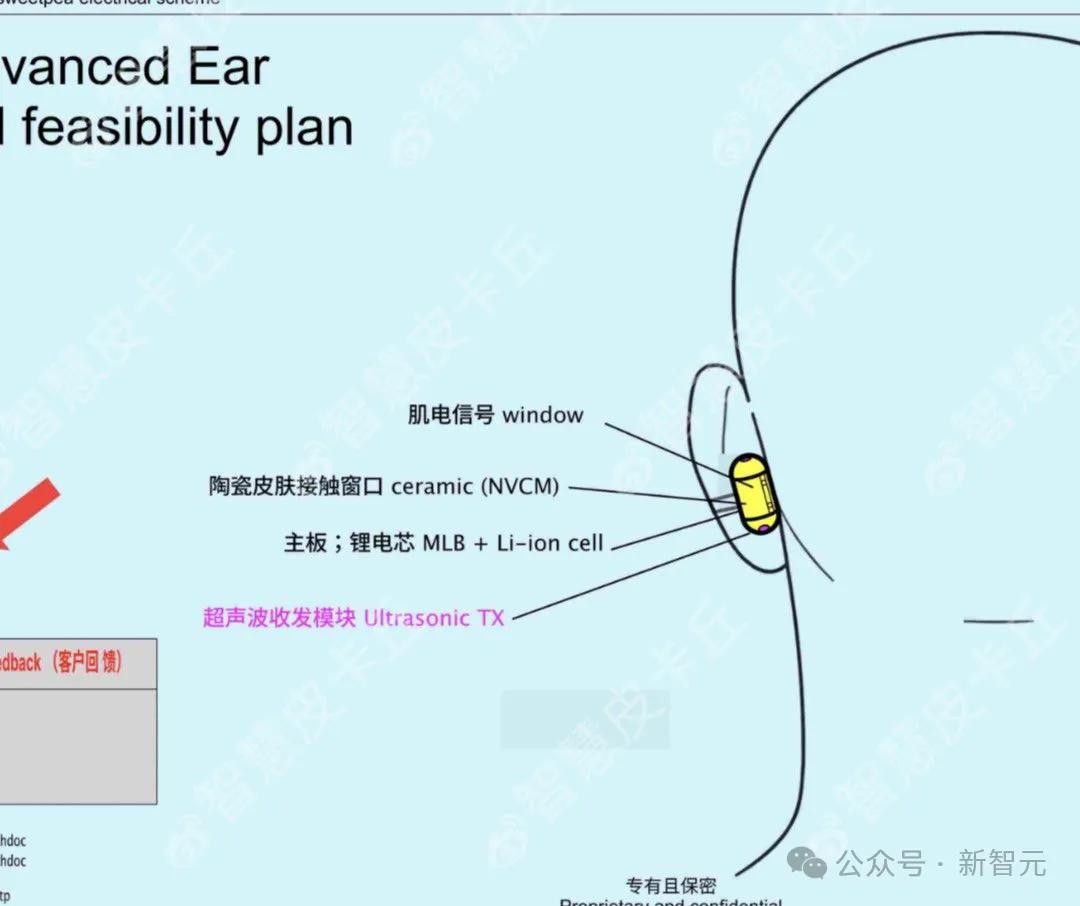
Group 1 - OpenAI is entering the hardware market with a new audio headset, codenamed "Sweetpea," expected to launch in September, aiming to compete with Apple's AirPods [1] - The headset will feature a unique design with a metal body and two capsule-shaped devices, and it is anticipated to use a 2nm smartphone-grade chip, likely from Samsung's Exynos series [1] - The expected first-year shipment volume for the headset is between 40 million to 50 million units [1] Group 2 - The headset is reportedly one of five hardware products being developed by OpenAI, with Foxconn (Hon Hai) as the manufacturing partner, aiming for mass production by Q4 2028 [2] - The project is prioritized by a team led by former Apple design chief Jony Ive, with other potential products including a "home device" and a "stylus" still under consideration [2] - The manufacturing location has shifted from Luxshare to Foxconn due to concerns about production in mainland China, with Vietnam confirmed as the primary site, and the possibility of production in the U.S. being discussed [2]
财信证券晨会纪要-20260114
Caixin Securities· 2026-01-13 23:30
Market Strategy - The market is experiencing a downward adjustment, with the commercial aerospace sector leading the decline [5] - The overall A-share market index fell by 1.18%, with the Shanghai Composite Index down 0.64% and the ChiNext Index down 1.96% [8] - The healthcare sector showed resilience, with notable performance from leading pharmaceutical companies [10] Industry Dynamics - The Ministry of Commerce announced anti-dumping duties on imported solar-grade polysilicon from the US and South Korea, effective January 14, 2026, for five years [27] - Star Ring Fusion completed a record A-round financing of 1 billion yuan, marking the largest financing in China's private fusion sector [29] - Omdia forecasts that global PC shipments will reach 279.5 million units in 2025, a 9.2% increase year-on-year [31] - Counterpoint reports a 2% year-on-year growth in global smartphone shipments for 2025, driven by high-end market trends and increased 5G device adoption in emerging markets [33] Company Tracking - Dize Pharmaceutical (688192.SH) expects a revenue of 800 million yuan in 2025, a 122.28% increase year-on-year, driven by the inclusion of two products in the national medical insurance directory [41] - JA Solar Technology (002459) anticipates a net loss of 4.5 to 4.8 billion yuan for 2025, attributed to intensified competition and price pressures in the solar industry [43] - Huitian Technology plans to establish a new technology incubation platform for advanced PCB processes, with a total investment of 300 million USD [46] - Huatai Securities (600909.SH) intends to increase its stake in Huafu Fund to 51%, enhancing its control over the fund [48]
DeepSeek论文披露全新模型机制,SSD等存储需求有望再进一步,龙头还发布炸裂业绩
Xuan Gu Bao· 2026-01-13 23:24
Group 1 - DeepSeek introduced a new paper proposing "conditional memory" as a new dimension of sparsity to optimize large language models through the Engram module [1] - The existing Transformer architecture lacks a native knowledge retrieval mechanism, leading to inefficient simulation of retrieval behavior [1] - Conditional memory complements the MoE (Mixture of Experts) approach and significantly enhances model performance in knowledge retrieval, reasoning, coding, and mathematical tasks under equal parameters and computational conditions [1] Group 2 - The Engram module is a large, scalable embedding table that acts as an external memory for Transformers, allowing for efficient retrieval of nearby content [2] - Engram caches frequently accessed embeddings in faster storage mediums while storing less frequently accessed data in larger, slower storage, maintaining low access latency [2] - The NAND industry is expected to have limited capital expenditure over the next two years, with leading manufacturers likely to focus on HBM rather than NAND, while AI applications are anticipated to drive SSD demand [2] Group 3 - Baiwei Storage forecasts a net profit of 850 million to 1 billion yuan for the year, representing a year-on-year growth of 427.19% to 520.22% [2] - Jiangbolong has launched several high-speed enterprise-level eSSD products, covering mainstream capacities from 480GB to 7.68TB [3]

智能手表市场反弹势头延续
Jing Ji Ri Bao· 2026-01-13 22:05
Core Insights - The global smartwatch market is expected to rebound with a 7% year-on-year growth in 2025 after experiencing a decline in 2024, marking the first downturn in the market's history [1] - The growth in 2025 is driven by strong performances from Chinese brands like Huawei, Xiaomi, and Little Genius, as well as Apple's expansion through new smartwatch models [1][2] - The market is witnessing a structural shift towards mid-to-high-end smartwatches, with a focus on health-related applications and advanced features such as AI integration and 5G support [2] Group 1: Market Performance - In Q3 2025, global smartwatch shipments are projected to increase by 9% year-on-year, reaching 41 million units, continuing the rebound from the previous quarter [1] - Apple's new smartwatch models are expected to see a 12% year-on-year increase in shipments for the entire year of 2025, helping the company recover from seven consecutive quarters of decline [1] - The global smartwatch market experienced its first decline in 2024, primarily due to Apple's performance drop and reduced demand for basic models [1] Group 2: Regional Insights - China has emerged as the most significant growth engine in the global smartwatch market, with three out of the top five brands being Chinese [3] - The market share of Chinese brands is projected to rise from 25% in 2024 to an estimated 31% in 2025, maintaining the largest shipment share globally [3] - Huawei's shipments are expected to surge by 42% year-on-year in 2025, increasing its market share from 13% to 18%, while Xiaomi is projected to grow by 22%, moving its share from 8% to 9% [3] Group 3: Future Projections - The shipment volume of HLOS (Host Operating System) smartwatches is expected to grow at a compound annual growth rate of 7% from 2025 to 2030, with a 14% year-on-year increase in 2025 [3] - Apple and Huawei are expected to perform well in the HLOS smartwatch segment, while Samsung's shipments are projected to decline by 5% [3] - The shipment volume of children's smartwatches is anticipated to grow by 4% year-on-year, with Little Genius maintaining its leading position [3]


内存、金属、电池涨价潮共振 车企打响供应链成本“防御战”
Zheng Quan Shi Bao· 2026-01-13 18:06
Core Insights - The automotive industry is facing unprecedented supply chain cost pressures driven by rising prices of memory chips, metals, and batteries, which are significantly impacting manufacturing costs [1][4] - The demand for storage chips in modern electric vehicles is growing exponentially, with high-end models requiring between 64GB to 256GB, potentially reaching terabyte levels by 2030 [3][8] - The competition for resources between the automotive sector and emerging industries like AI and energy storage is intensifying, leading to a supply-demand imbalance for critical components [5][10] Memory Chip Supply Crisis - By 2026, the automotive industry may face a memory chip supply crisis, with a predicted supply satisfaction rate of less than 50% [2] - The global DRAM market is experiencing its strongest price surge, with prices for DDR4 and DDR5 chips increasing by 200-300% over the past year [2][8] - The automotive sector's transition to smart vehicles has made storage chips essential, as they support various functions from infotainment to autonomous driving systems [2][3] Rising Material Costs - The prices of key metals such as copper, silver, and lithium have been on the rise, contributing to increased manufacturing costs for vehicles [3][4] - The cost increase for raw materials is being passed down to battery production, further straining automotive manufacturers [3][7] - The automotive industry is struggling to balance supply chain resilience with cost control amid these pressures [1][4] Competitive Resource Allocation - The automotive industry is in a "disproportionate competition" with AI companies for high-end memory resources, as AI applications are prioritizing these components [5][6] - Major memory manufacturers are focusing on fulfilling orders from AI clients, which are often more profitable than those from the automotive sector [5][6] - Predictions indicate that by 2027, approximately 70% of global DRAM capacity will be allocated to AI, significantly reducing availability for traditional industries like automotive [5][6] Supply Chain Adjustments - Automotive companies are actively seeking ways to mitigate cost pressures through supply chain optimization and technology transformation [10][11] - Some companies are exploring partnerships with local suppliers and signing long-term contracts to secure better pricing and availability [10][11] - The ongoing supply chain challenges may lead to a significant restructuring of the automotive industry, with a focus on building more resilient and self-sufficient supply systems [11][12]

五大电脑厂商集体涨价 专家称“现在是未来两年内的最低点”
Zhong Guo Jing Ying Bao· 2026-01-13 14:49
一份下午发出的电脑报价单,到了晚上就被上游供应商通知作废。这不是段子,而是2026年开年后中国 数码零售市场的一个侧面写照。 《中国经营报》记者注意到,目前,基于上游存储成本增加和公司利润考量等因素,联想、惠普、戴 尔、华硕、宏碁等全球五大PC(个人电脑)厂商均已启动调价机制。"昨天给客户报的联想拯救者 Y7000是6980元,今天一问已经变成7400元,上游说全面涨价,后面还要涨。"杭州百脑汇商户阿海对 记者表示。 阿海的遭遇并非个例。开年以来,一场席卷全球的硬件涨价风暴正从产业链上游传导至终端市场。多个 品牌的笔记本电脑和主流手机机型价格在短期内大幅上调,部分涨幅高达20%。即使叠加新一轮国家补 贴政策,许多产品的到手价仍高于此前原价。在这场由AI驱动的"涨价风暴"中,厂商、渠道商与消费者 正共同经历一场前所未有的成本压力测试。 一晚就涨了600多元 2026年第一个月,计划购买电脑的消费者感受到了明显的价格冲击。"下午报价,晚上调价"成为当下行 业的一个新常态,中高端笔记本普涨500—1500元。 在北京海淀区上地的一家数码门店,销售员屈先生告诉记者:"荣耀MagicBook Pro16涨了1100元, ...
CES 2026观察:软硬协同仍是业界的共同挑战
Mei Ri Jing Ji Xin Wen· 2026-01-13 12:55
Core Insights - The CES 2026 highlighted a significant focus on physical AI and robotics, showcasing advancements in various applications from home environments to industrial uses, with notable participation from both international and Chinese companies [1][3][7] - The competition in the robotics industry is shifting towards building reliable physical perception systems that can generate real-world data and translate it into scalable intelligent capabilities [2][4] Industry Focus on Robotics - Chinese companies occupied over half of the humanoid robot exhibition space at CES 2026, with both new entrants and established players showcasing their innovations [3] - The event emphasized the market's growing demand for robots capable of autonomously executing complex tasks, reflecting a shift towards practical applications of embodied intelligence [3][4] Technological Advancements - Key advancements in robotics are centered around enhancing the ability of robots to perform tasks autonomously, with a focus on deep interaction between AI and the physical world, particularly through tactile perception [5][6] - The industry is moving from showcasing capabilities to solving real-world problems, with an emphasis on robots operating reliably in complex environments [4][6] Competitive Landscape - Established companies like Boston Dynamics and LG demonstrated their latest robotic technologies, with Boston Dynamics showcasing its Atlas robot capable of various industrial tasks [7] - Chinese firms are gaining confidence, claiming significant advancements in motion control and cognitive decision-making, alongside a competitive edge in manufacturing costs and quality [8][9] Market Trends - The integration of AI with hardware and software is becoming a dominant theme, with a noticeable trend towards the consolidation of functionalities in smart devices [11][12] - Companies are increasingly focusing on creating multi-functional products that can serve various purposes, reflecting a shift in consumer expectations and technological capabilities [13]
比iPhone更疯狂,乔布斯去世15年后,「最像他的人」操刀首款AI硬件
3 6 Ke· 2026-01-13 12:50
Core Insights - Jony Ive, known as Steve Jobs' "soulmate," returns to the tech scene in 2026 with a new AI device called "Sweetpea," developed in partnership with OpenAI, marking a significant shift from his previous work at Apple [1][6][67] - The device is designed to replace traditional smartphones, focusing on audio interaction rather than visual screens, aiming to reduce digital anxiety associated with smartphones [14][50][78] Company Developments - OpenAI's first hardware, "Sweetpea," is set to launch in September 2026, featuring a unique design resembling a "eggrock" with two pill-shaped devices for behind-the-ear use [1][13] - The manufacturing goal for the first year is between 40 million to 50 million units, significantly higher than the initial sales of AirPods, which took five years to reach similar numbers [3][19] Design Philosophy - The design philosophy behind Sweetpea emphasizes "Calm Technology," which aims to minimize user attention demands, contrasting sharply with the intrusive nature of smartphones [42][46] - Jony Ive's approach seeks to create technology that blends seamlessly into daily life, allowing users to interact with AI without the distractions of screens and notifications [55][78] Technological Specifications - Sweetpea is equipped with a 2nm chip, making it one of the most advanced devices in terms of processing power, with production costs comparable to a smartphone [15][17] - The expected retail price is projected to be between $500 and $800, reflecting its high-end specifications and positioning in the market [17][19] Historical Context - The narrative draws parallels between the acquisition of io Products by OpenAI for $6.5 billion and past significant tech acquisitions, highlighting the importance of talent over products in the tech industry [7][8] - Jony Ive's return to the tech landscape is seen as a potential turning point, reminiscent of his earlier contributions to Apple's revival in the late 1990s [62][67]
美股盘前要点 | 美国12月CPI数据重磅来袭!“五角大楼披萨指数”再度狂飙
Ge Long Hui· 2026-01-13 12:35
Group 1 - US stock index futures showed slight declines, with Nasdaq futures down 0.17%, S&P 500 futures down 0.09%, and Dow futures down 0.12% [1] - European stock indices had mixed results, with Germany's DAX up 0.01%, UK's FTSE 100 down 0.06%, France's CAC down 0.44%, and the Euro Stoxx 50 up 0.06% [1] - Nvidia clarified tightened payment terms for chips, stating that H200 chips do not require prepayment [1] Group 2 - Nvidia and Eli Lilly announced a $1 billion investment over the next five years to accelerate AI applications in the pharmaceutical industry [2] - Meta plans to lay off at least 10% of its virtual reality R&D department as part of the launch of the Meta Compute top-level strategic plan [2] - Citigroup is reportedly set to lay off about 1,000 employees as part of a broader plan to cut 20,000 jobs [2]