
万辰集团

Search documents
由创新高个股看市场投资热点
量化藏经阁· 2025-06-13 09:46
Group 1 - The report tracks stocks, industries, and sectors that are reaching new highs, indicating market trends and hotspots [1][4] - As of June 13, 2025, the distance to the 250-day new high for major indices is as follows: Shanghai Composite Index 3.23%, Shenzhen Component Index 11.94%, CSI 300 9.21%, CSI 500 9.33%, CSI 1000 7.65%, CSI 2000 4.96%, ChiNext Index 19.86%, and STAR Market 13.66% [5][25] - The industry indices that are closest to their 250-day new highs include non-ferrous metals, banking, pharmaceuticals, agriculture, forestry, animal husbandry, fishery, and electric power and public utilities [8][25] Group 2 - A total of 838 stocks reached a 250-day new high in the past 20 trading days, with the most significant numbers in the pharmaceutical, basic chemicals, and machinery sectors [2][13] - The highest proportion of new high stocks is found in the banking, textile and apparel, and pharmaceutical industries, with respective proportions of 71.43%, 29.29%, and 24.95% [13][16] - The manufacturing and cyclical sectors had the most new high stocks this week, with 262 and 212 stocks respectively [16] Group 3 - The report identifies 42 stocks that have shown stable new highs, with the majority coming from the manufacturing and consumer sectors, each contributing 9 stocks [22][26] - The mechanical industry had the most new highs within the manufacturing sector, while the food and beverage industry led in the consumer sector [22][26] - The selection criteria for stable new high stocks include analyst attention, relative strength of stock prices, price path stability, and continuity of new highs [19][20]


主要宽基指数样本调整6月16日生效!中证A500ETF龙头(563800)、创业板ETF广发(159952)等一键追踪“指数调优”动态
Xin Lang Cai Jing· 2025-06-13 01:03
Group 1: Index Adjustments Overview - The adjustments to major indices such as CSI 300, CSI 500, CSI 1000, and CSI A500 are part of the capital market's response to the national "new quality productivity" strategy, focusing on incorporating leading companies in hard technology, digital economy, and high-end manufacturing while removing traditional firms with weak growth [1][6] - The CSI A500 index saw a significant change with 21 stocks replaced, including 12 traditional cyclical stocks removed due to poor growth, and 33% of the new additions coming from the Sci-Tech Innovation Board [1][6] - The adjustments resulted in an increase in the number of covered industries from 87 to 91, with emerging industries now representing 46.5% of the index [1] Group 2: Sector-Specific Changes - The ChiNext Index's adjustment included 8 stocks, with new generation information technology, new energy vehicles, and biomedicine sectors accounting for 34%, 24%, and 12% respectively, raising the strategic emerging industries' share to 92% [2] - The CSI 1000 index replaced 100 stocks, increasing the weight of industrial and consumer discretionary sectors by approximately 2%, with notable additions from leading companies in these fields [3][4] - The CSI 500 index saw a 1.82% increase in the weight of information technology, with 12 new stocks added, enhancing its focus on high-tech attributes [4] Group 3: Implications for Investment - The adjustments are expected to enhance the indices' representation of advanced manufacturing and consumption upgrades, reflecting China's economic transformation [3][4] - The introduction of ESG negative screening and individual stock weight limits in the ChiNext Index aims to stabilize the impact of major stocks, with 60% of the new samples rated A or above in ESG [2][6] - The new sample companies in the Deep Shenzhen 100 index are projected to contribute significantly to revenue and profits, with a total dividend payout exceeding 270 billion yuan in 2024 [5]

零食集合店零售模式分析:量贩式选品与会员体系构建
LINSHOU· 2025-06-10 03:35
Investment Rating - The report indicates a positive investment rating for the snack collection store industry, highlighting its rapid growth and market potential [26]. Core Insights - The snack collection store industry is characterized by a direct procurement model, offering a wide variety of products at competitive prices, with a significant market expansion projected [12][18]. - The industry has evolved through various phases, with notable growth in the number of stores and market size, particularly from 2019 to 2024 [22][26]. - The report emphasizes the importance of a well-structured membership system and effective product selection strategies to enhance customer loyalty and sales [54][135]. Summary by Sections 1. Industry Overview - Snack collection stores, also known as bulk snack stores, eliminate the distributor layer by sourcing directly from manufacturers, focusing on low prices and product diversity [12]. - The market size for snack collection stores in China is expected to grow from 4.08 billion yuan in 2019 to 104.59 billion yuan in 2024, capturing over 40% of the snack sales market [26]. 2. Bulk Selection Strategy - Effective product selection can attract more customers, with a mix of well-known brands and private label products to enhance store traffic and conversion rates [28][34]. - The strategy includes placing popular brands at prominent locations to draw customers while maintaining a higher margin on private label products [36][51]. 3. Membership System Construction - A robust membership system enhances customer loyalty by offering exclusive benefits such as discounts and priority access [54][57]. - The design of the membership system should be fair and incentivizing, with clear criteria for upgrading membership levels based on spending [60][61]. 4. Industry Competitive Landscape - The market is dominated by major players like Wanchen Group and Snack Very Busy, with significant store counts and market shares [82][84]. - Competitive strategies include aggressive market expansion and brand consolidation to enhance market presence [87][89]. 5. Consumer Demand Analysis - The primary consumer demographic includes younger generations (90s and 00s), with a strong preference for convenience and variety [90]. - Consumers are increasingly drawn to snack collection stores due to their competitive pricing and diverse product offerings, often perceiving them as more affordable than traditional supermarkets [92][102]. 6. Industry Development Trends - The industry is moving towards an integrated online and offline retail model, leveraging technology for personalized marketing and improved customer engagement [106][108]. - Future trends indicate a focus on quality, health, and personalized experiences, with an expected increase in market concentration [139].
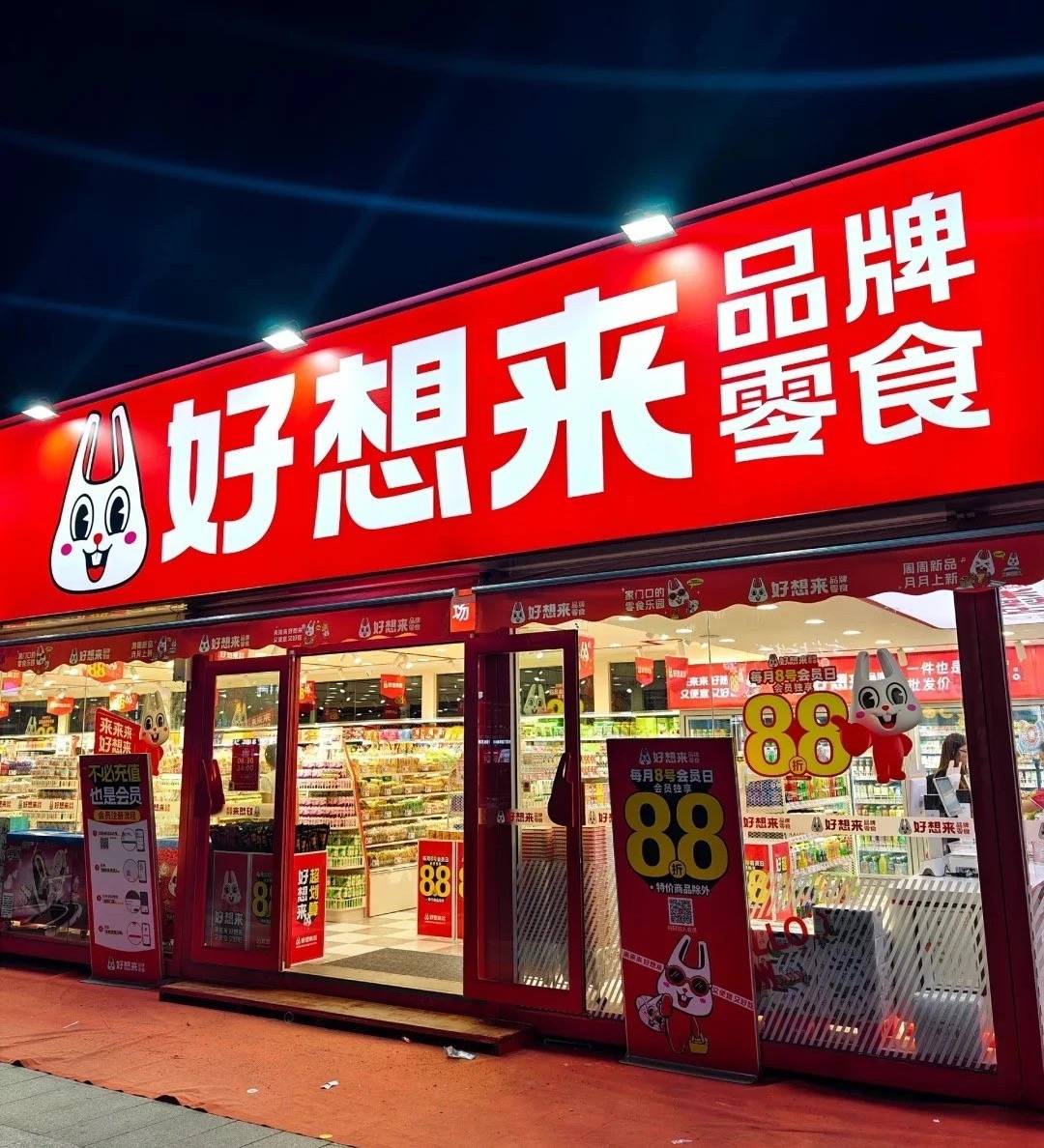
万辰集团股价飙升:一年暴涨10倍,净利润率不足1%;加盟好想来还是一门好生意吗?
Sou Hu Cai Jing· 2025-06-09 08:21
Company Overview - Wanchen Group, the parent company of Haoxianglai snack chain, has seen its stock price rise from 10 yuan to nearly 200 yuan, marking a significant increase [2][4] - The company operates 15,000 Haoxianglai stores and is projected to achieve revenue of 32.33 billion yuan and a net profit of 294 million yuan in 2024, with a net profit margin of approximately 0.9% [2][6] - As of June 7, Wanchen Group's stock closed at 184.34 yuan per share, with a total market capitalization of 33.18 billion yuan [2] Financial Performance - In 2024, Wanchen Group's total revenue reached 32.33 billion yuan, a year-on-year increase of 247.86%, and net profit of 294 million yuan, marking a turnaround from losses [6][12] - The snack retail segment generated 31.79 billion yuan in revenue, reflecting a year-on-year growth of 262.94% [7] - The company's first-quarter performance in 2023 showed a total revenue of 10.82 billion yuan, up 124.02%, and a net profit of 215 million yuan, a staggering increase of 3344.13% [15] Market Comparison - Compared to snack giants like Weilong, Three Squirrels, and Qiaqia Foods, which have net profit margins of 17.1%, 3.8%, and 11.9% respectively, Wanchen Group's net profit margin is significantly lower [2][15] - Wanchen Group's price-to-earnings (P/E) ratio stands at 38.61, which is comparable to Weilong's 32.24, while Three Squirrels and Qiaqia Foods have P/E ratios of 11.74 and 38.75 respectively [9][10] Industry Challenges - The snack retail industry is facing challenges such as declining store turnover rates, indicating a shift from rapid growth to a phase requiring refined operations [3][25] - The low-margin, high-turnover business model of snack retail demands high operational efficiency and cost control [21][23] - The competitive landscape has intensified, making it more challenging for franchisees to achieve profitability, with many reporting difficulties in covering fixed costs [22][23] Future Outlook - Despite current challenges, the snack retail sector is believed to have growth potential of 3 to 4 times its current market size [24] - Industry experts suggest that enhancing product quality and variety, as well as transitioning from snack stores to discount supermarkets, could be key strategies for future development [26][27]
农业周观点:多措引导猪企,利好产业高质量发展
AVIC Securities· 2025-06-09 02:13
Investment Rating - The industry investment rating is "Increase Holding," indicating that the industry's growth level is expected to exceed that of the CSI 300 index in the next six months [73]. Core Insights - The report emphasizes the importance of rational management in the pig farming industry, aiming to stabilize long-term pig prices and production capacity. New industry measures are expected to reduce speculative behavior and mitigate short-term price fluctuations, promoting long-term high-quality development [6]. - The pig farming sector is viewed as having long-term investment value, with stock prices currently at historical lows. The overall PB valuation of the pig industry index is at 2.55 times, which is favorable compared to the historical average [6]. - The report highlights the resilience of the pig farming industry, with expected support for pork consumption due to domestic economic stability, which may positively influence pig price expectations and sector performance [6]. Summary by Sections Livestock Industry - In April, pig sales from 12 companies totaled 7.77 million heads, a month-on-month increase of 21.38%. The average selling price for pigs was 14.82 yuan/kg, up 0.60% from the previous month [7][8]. - The average weight of pigs sold in April was 108.6 kg, a slight decrease of 0.23% month-on-month. Profit margins for self-bred and purchased pig farming were reported at 84.33 yuan/head and 58.46 yuan/head, respectively [7][8]. Market Performance - The report notes that the agricultural sector, particularly the livestock industry, has shown a mixed performance, with the animal health and poultry farming sectors experiencing a decline of 1.51% and 0.90% respectively in the recent week [17][18]. - Year-to-date performance shows the livestock sector has increased by 3.39%, while the overall agricultural sector has risen by 5.98% [18]. Company Insights - Major companies like Muyuan Foods and Wens Foodstuff Group are highlighted for their operational improvements and strategic expansions. Muyuan's slaughtering capacity utilization has improved to over 70% this year, with plans for further capacity increases [27][28]. - Wens Foodstuff Group has undergone a change in its actual controllers to ensure stable governance and adapt to new development conditions [26]. Animal Health and Feed Industry - The animal health sector is expected to recover alongside improvements in livestock management. The report suggests that leading domestic animal health companies are well-positioned to benefit from this recovery [10][11]. - The feed industry is anticipated to see increased demand as the livestock cycle recovers, with a focus on comprehensive services and extended farming trends [11].
新消费驱动板块上行,关注业绩可持续兑现品种——行业周报
KAIYUAN SECURITIES· 2025-06-08 13:35
Investment Rating - The industry investment rating is "Positive" (maintained) [2] Core Viewpoints - The new consumption concept is prominent, with incremental market and "self-satisfaction" consumption providing growth momentum. The food and beverage index fell by 1.1% from June 2 to June 6, ranking 27th among primary sub-industries, underperforming the CSI 300 by approximately 1.9 percentage points. Sub-industries such as snacks (+4.6%), health products (+1.7%), and meat products (+1.1%) performed relatively well. Companies with new consumption concepts in the food and beverage sector showed good growth, particularly those expanding into new channels, new product categories, or new markets [4][11][12]. Summary by Sections Weekly Viewpoints - The food and beverage index experienced a decline of 1.1%, ranking 27th out of 28 industries, and underperformed the CSI 300 by about 1.9 percentage points. The snack, health product, and meat product sectors showed relative strength [11][12]. Market Performance - The food and beverage sector's index fell by 1.1%, with snacks, health products, and meat products leading in performance. Individual stocks such as Junyao Health, *ST Spring, and Huabao shares saw significant gains, while companies like Kuaijishan, ST Jia Jia, and Lihai Food faced declines [12][16]. Upstream Data - Some upstream raw material prices have decreased. For instance, the price of whole milk powder was $4,173 per ton, down 3.7% month-on-month but up 20% year-on-year. The domestic fresh milk price was 3.1 yuan per kilogram, down 0.3% month-on-month and down 8.4% year-on-year [17][21]. Alcohol Industry News - Kuaijishan's "One Day One Smoke" sparkling yellow wine has begun its招商 (investment promotion). The beer production from large-scale enterprises in China for the first four months of 2025 was 11.44 million kiloliters, a year-on-year decrease of 0.6%. However, April's production showed a year-on-year increase of 4.8%, indicating a recovery trend in the sector [40][41]. Memorandum - Attention is drawn to the shareholder meeting of New Dairy Industry scheduled for June 10, 2025. Four companies will hold shareholder meetings, and two companies will have restricted shares released [42][43]. Recommended Portfolio - The recommended stocks include Shanxi Fenjiu, Guizhou Moutai, and Ximai Food. Shanxi Fenjiu faces short-term demand pressure but has high medium-term growth certainty. Guizhou Moutai is focusing on sustainable development and increasing dividend rates. Ximai Food is experiencing steady growth in its oatmeal business and is rapidly expanding new channels [5][44].


行业周报:新消费驱动板块上行,关注业绩可持续兑现品种-20250608
KAIYUAN SECURITIES· 2025-06-08 10:35
Investment Rating - The industry investment rating is "Positive" (maintained) [2] Core Viewpoints - The new consumption concept is prominent, with incremental market growth and "self-satisfaction consumption" providing growth momentum [4][12] - From June 2 to June 6, the food and beverage index declined by 1.1%, ranking 27th among primary sub-industries, underperforming the CSI 300 by approximately 1.9 percentage points [12][13] - Companies with new consumption concepts in the food and beverage sector showed good performance, particularly in snacks, health products, and meat products [12][13] Summary by Sections Weekly Viewpoints - The food and beverage sector is experiencing a decline, but companies with new consumption concepts are performing well, particularly in snacks and small food companies [12] - The expansion of new channels, new product categories, and new market entries is driving growth in the sector [12] Market Performance - The food and beverage index underperformed the market, with snacks (+4.6%), health products (+1.7%), and meat products (+1.1%) leading the sub-industry performance [13][16] - Individual stocks such as Junyao Health and Huasheng Group showed significant gains, while companies like Kuaijishan and ST Jiayi faced declines [13][17] Upstream Data - Some upstream raw material prices have decreased, with the price of whole milk powder at $4,173 per ton, down 3.7% month-on-month but up 20% year-on-year [18][22] - Domestic fresh milk prices are on a downward trend, currently at 3.1 yuan per kilogram, down 8.4% year-on-year [18][22] Alcohol Industry News - Kuaijishan's "One Day One Smoke" sparkling yellow wine has begun its marketing campaign, indicating a focus on enhancing brand recognition and expanding market reach [41] - The beer production volume for large-scale enterprises in China showed a slight decline of 0.6% year-on-year for the first four months of 2025, but April saw a 4.8% increase [41] Recommended Companies - Recommended companies include Shanxi Fenjiu, Guizhou Moutai, and Ximai Food, with a focus on their growth potential and market strategies [5][45]
投资的金典模式:在二级市场买一级资产
雪球· 2025-06-08 06:28
Core Viewpoint - The article emphasizes the investment strategy of "buying primary assets in the secondary market," which is a value investment approach that can yield excess returns by identifying undervalued stocks that exhibit characteristics of primary market investments [2][5]. Group 1: Concept of "Buying Primary Assets in the Secondary Market" - The primary market serves as a "incubation ground" for capital, where investors support companies' growth from inception, while the secondary market acts as a "trading venue" where stock prices can be distorted by emotions and external factors [4][5]. - This strategy involves identifying companies engaged in value-creating activities such as technological research, mergers and acquisitions, and market expansion, but whose stock prices do not yet reflect their long-term value [5][6]. Group 2: Identifying Investment Opportunities - Key indicators for identifying suitable investments include significant asset restructuring, major technological breakthroughs, and the exploration of new business avenues [7]. - Investors should be cautious of "hype-driven" stocks that lack substantial investment in genuine growth initiatives, distinguishing between companies with real financial commitments and those merely riding trends [7]. Group 3: Market Mispricing and Management Insight - Look for stocks with price-to-earnings (PE) ratios below 70% of the industry average or market capitalizations below their replacement costs, as these may indicate mispricing [8]. - Assess management's "primary market thinking" by examining their professional backgrounds and the proportion of shares they hold, with a higher ownership stake (over 30%) suggesting stronger alignment of interests [9]. Group 4: Conclusion and Investment Philosophy - The essence of the primary market is "value discovery," while the secondary market offers opportunities for "price negotiation." The intersection of these two aspects can lead to excess returns [11]. - When observing a company investing heavily in research and development or acquiring assets at low prices while its stock price declines, it may present an opportunity to "buy primary assets in the secondary market" [11].






热点追踪周报:由创新高个股看市场投资热点(第197期)-20250606
Guoxin Securities· 2025-06-06 11:26
- The report introduces a quantitative model called "250-day new high distance" to track market trends and identify investment hotspots. The model is based on the concept that stocks nearing their 52-week high tend to outperform those far from their 52-week high, as supported by research from [George@2004] and other notable investors like William O'Neil and Mark Minervini. The formula for calculating the 250-day new high distance is: $ 250 \text{ day new high distance} = 1 - \frac{\text{Close}_{t}}{\text{ts\_max(Close, 250)}} $ where $\text{Close}_{t}$ represents the latest closing price, and $\text{ts\_max(Close, 250)}$ is the maximum closing price over the past 250 trading days. If the latest closing price reaches a new high, the distance is 0; otherwise, it is a positive value indicating the percentage drop from the high. [11] - The report evaluates the "250-day new high distance" model as an effective tool for identifying market trends and leading stocks, emphasizing its ability to highlight momentum and trend-following strategies. [11][18] - The report also introduces a composite factor for selecting "stable new high stocks" from the pool of stocks that have reached a 250-day new high in the past 20 trading days. The selection criteria include: 1. Analyst attention: At least 5 buy or overweight ratings in the past 3 months 2. Relative stock strength: Top 20% of market-wide 250-day returns 3. Price stability: Evaluated using two metrics: - Price path smoothness: Stock price displacement ratio - Innovation high persistence: Time-series average of the 250-day new high distance over the past 120 days 4. Trend continuation: Time-series average of the 250-day new high distance over the past 5 days, selecting the top 50 stocks based on ranking. [23][26] Model Testing Results - The "250-day new high distance" model shows the following results for major indices as of June 6, 2025: - Shanghai Composite Index: 2.99% - Shenzhen Component Index: 11.41% - CSI 300 Index: 8.98% - CSI 500 Index: 8.98% - CSI 1000 Index: 6.94% - CSI 2000 Index: 4.25% - ChiNext Index: 20.03% - STAR 50 Index: 12.00% [2][12][31] - The "stable new high stocks" factor identified 38 stocks from the pool of 777 stocks that reached a 250-day new high in the past 20 trading days. These stocks were distributed across sectors as follows: - Manufacturing: 11 stocks - Consumer: 8 stocks - Other sectors include finance, technology, and healthcare [3][27][32]


减持速报 | 立方制药(003020.SZ)多高管拟集体减持,玉禾田(300815.SZ)两股东拟减持6%





Xin Lang Cai Jing· 2025-06-06 01:10
Group 1 - Aike Technology (688092.SH) shareholders plan to reduce their holdings by up to 826,906 shares, accounting for 1.00% of the total share capital within three months after 15 trading days from the announcement [1] - Aike Cyber (688719.SH) executives plan to reduce their holdings by up to 2.1927% of the total share capital, totaling 2,530,000 shares within three months after 15 trading days from the announcement [1] - Anpeilong (301413.SZ) shareholders plan to reduce their holdings by up to 2,952,058 shares, representing 3% of the total share capital [1] Group 2 - Chaohongji (002345.SZ) shareholders plan to reduce their holdings by up to 26,655,380 shares, accounting for 3% of the total share capital within three months after 15 trading days from the announcement [2] - Chunguang Technology (603657.SH) plans to reduce its holdings by up to 1,000,000 shares, representing 0.73% of the total share capital [2] - Dahongli (300865.SZ) controlling shareholder plans to reduce his holdings by 136,150 shares, accounting for 1.4230% of the total share capital [2] Group 3 - Electric Link Technology (300679.SZ) executives plan to reduce their holdings by specified amounts, with individual reductions not exceeding 15,000 to 78,000 shares [2] - Guangge Technology (688450.SH) shareholders plan to reduce their holdings by a total of 990,000 shares, representing 1.50% of the total share capital [2] - Guorui Technology (300600.SZ) shareholders plan to reduce their holdings by 8,827,034 shares, accounting for 3% of the total share capital [3] Group 4 - Hailier (603639.SH) shareholders plan to reduce their holdings by up to 1,200,000 shares, representing 1% of the total share capital [3] - Haotong Technology (301026.SZ) executives plan to reduce their holdings by specified amounts, with individual reductions not exceeding 20,965 to 47,250 shares [3] - Huamao Logistics (603128.SH) executives have reduced their holdings by 272,000 shares, while other executives did not reduce their holdings [3] Group 5 - Jiamei Packaging (002969.SZ) shareholders plan to reduce their holdings by a total of 9,483,239 shares, accounting for 1.00% of the total share capital [4] - Jiangsu Boyun (301003.SZ) shareholders plan to reduce their holdings by up to 971,333 shares through centralized bidding and 1,942,666 shares through block trading [4] - Jinchicken Co., Ltd. (300798.SZ) shareholders plan to reduce their holdings by 14,000,000 shares, representing 2.99% of the total share capital [4] Group 6 - Jingfang Technology (603005.SH) shareholders plan to reduce their holdings by up to 13,043,400 shares, accounting for 2% of the total share capital [5] - Jingjin Electric (688280.SH) shareholders plan to reduce their holdings through centralized bidding or block trading [5] - Kolon New Materials (920098) shareholders have not implemented reductions, while another shareholder reduced holdings by 651,667 shares, representing 0.8014% of the total share capital [5] Group 7 - Liangpinpuzi (603719.SH) shareholders plan to reduce their holdings by 4,010,000 shares, accounting for 1% of the total share capital [6] - Mike Audi (300341.SZ) executives plan to reduce their holdings by 546,350 shares, representing 0.11% of the total share capital [6] - Pinwa Food (300892.SZ) shareholders reduced their holdings by 711,300 shares, accounting for 0.72% of the total share capital [6] Group 8 - Qiu Le Seed Industry (831087.BJ) shareholders plan to reduce their holdings by up to 3,300,000 shares, representing no more than 1.9975% of the total share capital [6] - Qiu Tianwei (300939.SZ) shareholders reduced their holdings by 1,100,000 shares, accounting for 0.93% of the total share capital [6] - Rejing Bio (688068.SH) shareholders plan to reduce their holdings by 1,800,000 shares, representing 1.9416% of the total share capital [7] Group 9 - Saike Xide (688338.SH) executives plan to reduce their holdings by specified amounts, with individual reductions not exceeding 250,000 to 235,000 shares [7] - Wancheng Group (300972.SZ) executives plan to reduce their holdings through centralized bidding [7] - Wentai Technology (600745.SH) shareholders plan to reduce their holdings by up to 24,891,577 shares through block trading and 12,445,788 shares through centralized bidding [7] Group 10 - Xiechuang Data (300857.SZ) executives plan to reduce their holdings by specified amounts, with individual reductions not exceeding 10,500 to 18,900 shares [8] - Xinhongze (002836.SZ) controlling shareholder reduced holdings by 1,895,300 shares, decreasing ownership from 63.74% to 62.91% [8] - Panda Dairy (300898.SZ) shareholders reduced their holdings by 884,470 shares, accounting for 0.7133% of the total share capital [8] Group 11 - Oat Technology (688312.SH) controlling shareholder plans to reduce holdings by up to 2,912,000 shares, representing no more than 2% of the total share capital [9] - Youningwei (301166.SZ) shareholders plan to reduce their holdings by 1,208,500 shares, accounting for 1.41% of the total share capital [9] - Yuhua Tian (300815.SZ) shareholders plan to reduce their holdings by up to 23,915,520 shares, representing no more than 6.00% of the total share capital [9] Group 12 - Zhangzidao (002069.SZ) shareholders plan to reduce their holdings by up to 7,111,000 shares, accounting for no more than 1% of the total share capital [9] - Zhishang Technology (301486.SZ) shareholders reduced their holdings by 1,245,300 shares, accounting for 0.9677% of the total share capital [10] - Zhongjing Electronics (002579.SZ) shareholders plan to reduce their holdings by up to 6,000,000 shares through centralized bidding or block trading [10]