
奔驰

Search documents
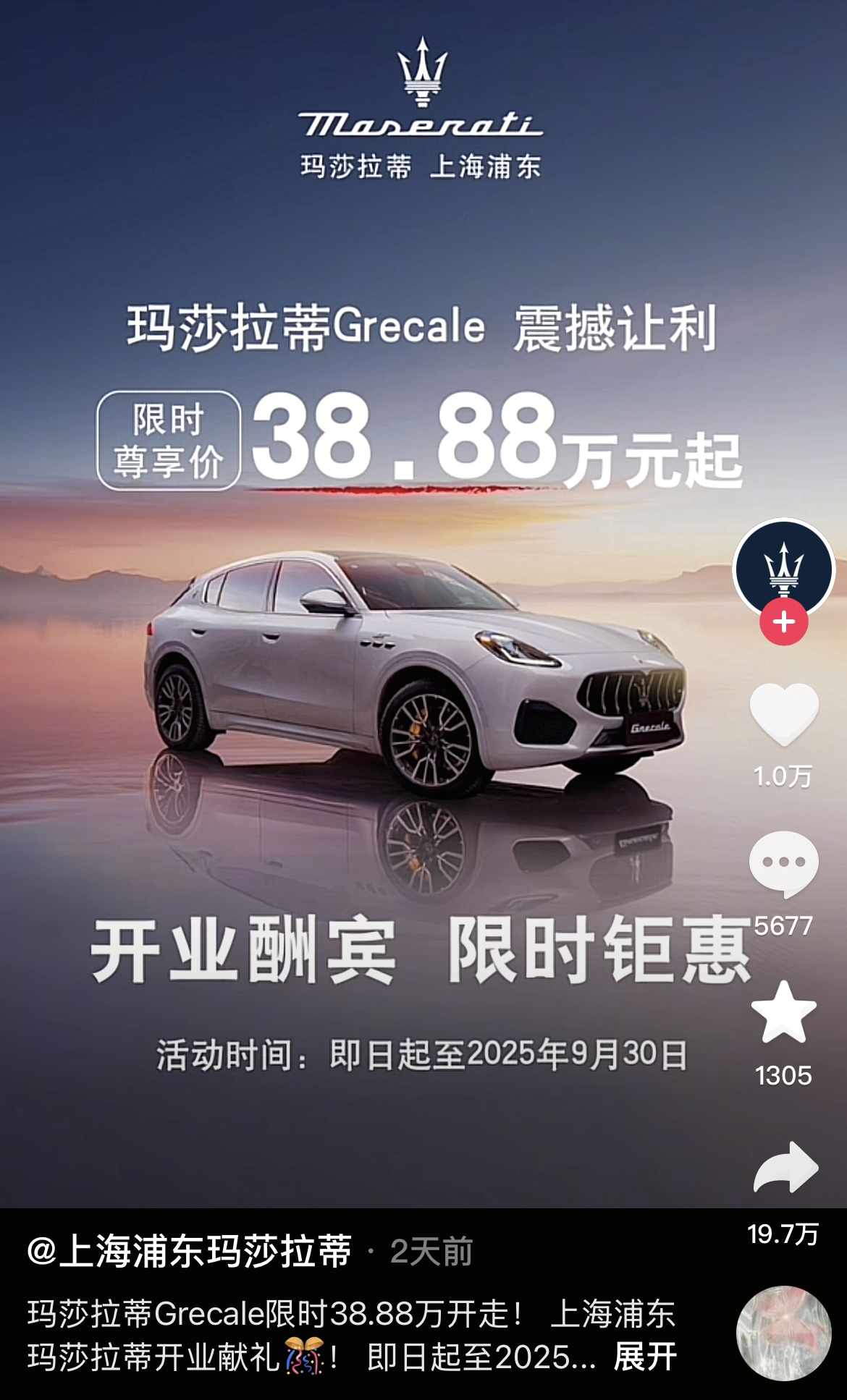
价格降幅超40%,玛莎拉蒂Grecale限时价38.88万元起引发热议
Cai Jing Wang· 2025-07-11 08:21
Core Viewpoint - Maserati is experiencing significant price reductions for its Grecale SUV model in China, reflecting broader challenges in the luxury automotive market due to changing consumer preferences and increased competition [1][4][5]. Group 1: Price Reduction and Sales Impact - Maserati's Grecale SUV is being offered at a promotional price of 388,800 yuan, a reduction of 262,000 yuan (over 40%) from the official starting price of 650,800 yuan [1]. - The promotional pricing is attributed to a drastic decline in sales, with the dealership reporting over 10 units sold within two days of the promotion [5]. - Maserati's sales in China have plummeted, with a forecasted total of 1,228 units for 2024, representing a 71% year-on-year decline [6]. Group 2: Market Dynamics and Competition - The decline in Maserati's sales is linked to several factors, including the rise of domestic electric vehicle brands and a slow transition to electric models by traditional luxury brands [4][6]. - The overall luxury car market in China is facing challenges, with a reported 33% drop in imported car sales in the first five months of 2025 [7]. - Maserati's performance is part of a broader trend affecting traditional luxury brands, as evidenced by declining sales figures across competitors like Bentley, Rolls-Royce, and Ferrari [10][12]. Group 3: Consumer Behavior and Market Trends - Changing consumer perceptions, particularly among younger buyers, are leading to a decreased willingness to pay a premium for luxury brands like Maserati [12]. - The luxury automotive market is undergoing structural changes, with a shift in demand towards electric vehicles and a growing preference for domestic brands [12].

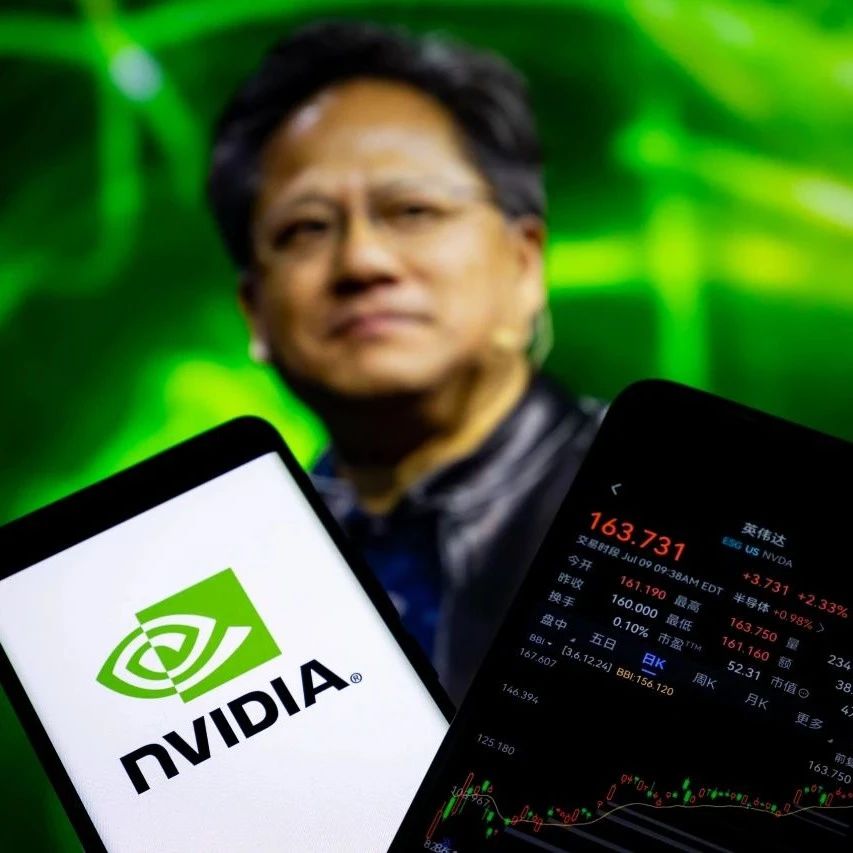
AI大于互联网,英伟达大于AI
36氪· 2025-07-11 07:35
Core Viewpoint - The article discusses the significant growth potential of AI and robotics, emphasizing that NVIDIA's market value has surpassed $4 trillion, indicating its dominance in the tech industry and the broader implications for future business models [4][23][30]. Group 1: AI and Market Dynamics - AI is perceived as a larger opportunity than mobile internet, but currently, companies like Apple, Google, and Meta remain more profitable than AI-focused firms, with NVIDIA being a notable exception [4][5]. - As of July 9, NVIDIA's market value reached $4 trillion, surpassing some forecasts for the global generative AI market by 2025 [4][23]. - NVIDIA's revenue from automotive and robotics has exceeded $560 million, with a growth rate of over 70% [12]. Group 2: NVIDIA's Business Model and Ecosystem - NVIDIA is not just an AI company; it is a general computing power company, with applications spanning from cryptocurrency mining to AI and robotics [18][30]. - The company's edge computing platform, which includes various hardware and software solutions, is crucial for its growth in robotics and AI [10][12]. - The Jetson platform, a product of NVIDIA's pivot from mobile chips, has become a key player in machine vision and robotics, with significant market adoption [10][12]. Group 3: Historical Context and Future Implications - The article highlights the evolution of market valuations, noting that it took over 20 years for companies to reach a $1 trillion valuation, while it took only 9 years for the leap from $1 trillion to $4 trillion [20][24]. - The rise of NVIDIA reflects a broader revolution in business models driven by technological innovation, which has allowed for unprecedented profit margins and market expansion [28][30]. - The article suggests that NVIDIA's innovative business model may lead to further breakthroughs in market valuation, indicating that the potential for growth is not yet exhausted [31].
魅族获奔驰订单,Flyme Auto将上车奔驰E|36氪独家
36氪· 2025-07-10 14:58
Core Viewpoint - Mercedes-Benz is actively working to enhance its smart technology capabilities by partnering with Geely's subsidiaries, Yika Tong and Meizu, to integrate the Flyme Auto system into its vehicles, starting with the long-wheelbase E-Class model set to launch in 2027 [3][4][10]. Group 1: Partnership and Product Development - Mercedes-Benz has collaborated with Yika Tong and Meizu to incorporate the Flyme Auto system into its vehicles, indicating a strategic move to address its shortcomings in smart technology [3][10]. - The first model to feature Flyme Auto will be the long-wheelbase E-Class, with expectations for its release in 2027 [4]. - Yika Tong, a subsidiary of Geely, focuses on creating a comprehensive automotive platform and has expanded its offerings to include smart driving and core components [6][7]. Group 2: Market Performance and Strategy - Mercedes-Benz's sales in China have been declining, with a nearly 7% drop in cumulative new car deliveries in 2024 and a 14% decline in the first half of the year [12]. - The partnership with Yika Tong and Meizu aims to halt this downward trend by enhancing the smart features of its vehicles [10][12]. - Flyme Auto has previously improved the user experience for Geely vehicles, suggesting potential benefits for Mercedes-Benz in terms of customer satisfaction and sales [13][14]. Group 3: Technological Advancements - Flyme Auto, launched in March 2023, features advanced capabilities such as a 7nm chip, seamless connectivity, and a user-friendly interface that integrates mobile and automotive functions [13][14]. - The upcoming Flyme Auto 2.0 version will further optimize AI and design aspects, enhancing the overall user experience [15]. - Mercedes-Benz's current vehicle lineup includes the third-generation MBUX system, which has been upgraded with new features to improve user interaction and navigation [18][19]. Group 4: Future Outlook - Mercedes-Benz plans to launch the new electric CLA in 2025, which will feature the new MB.OS operating system, aimed at improving update frequency and integrating advanced AI capabilities [21][22]. - The collaboration with local suppliers like Yika Tong and Meizu reflects Mercedes-Benz's strategy to adapt to the rapidly evolving smart technology landscape in China [26]. - The success of these partnerships will depend on the timely implementation of new technologies and meeting the high expectations of consumers accustomed to advanced smart features from domestic brands [27][28].


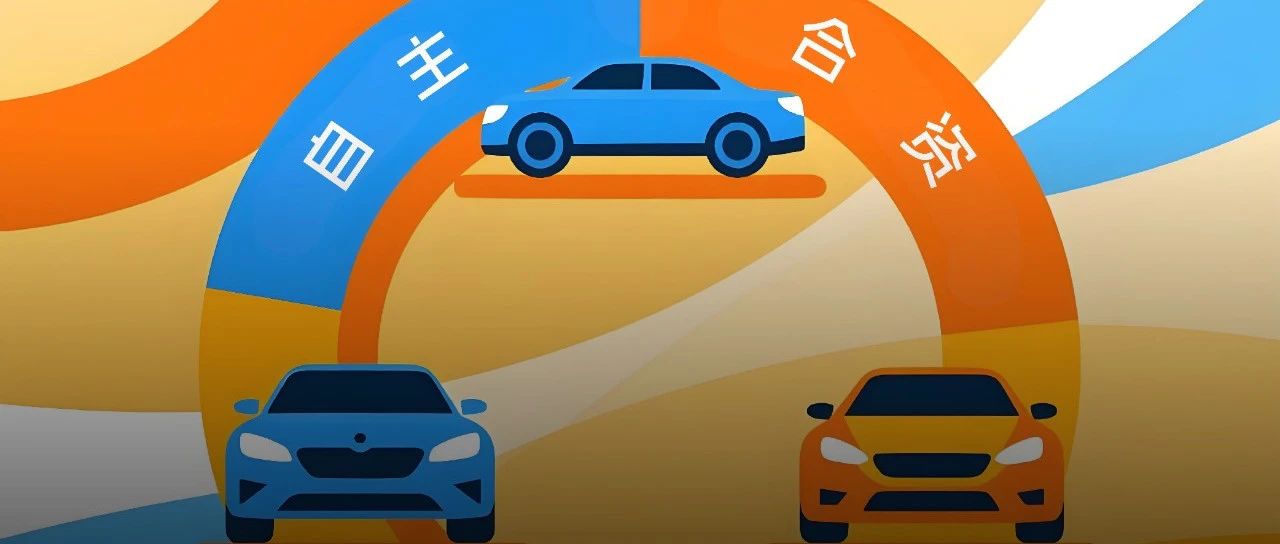
车市三极分化:自主内卷、合资反扑、豪华塌方
汽车商业评论· 2025-07-10 14:05
Core Viewpoint - The Chinese automotive market experienced record sales in June 2025, driven by government subsidies and aggressive pricing strategies from manufacturers, leading to significant shifts in market dynamics among domestic, joint venture, and luxury brands [2][3][4][11]. Group 1: Market Performance - In June 2025, retail sales of passenger vehicles reached 2.084 million units, a year-on-year increase of 18.1% and a month-on-month increase of 7.6% [3]. - The first half of 2025 saw cumulative retail sales of 10.901 million units, reflecting a year-on-year growth of 10.8% [3]. - Domestic brands achieved a retail volume of 1.34 million units in June, marking a year-on-year increase of 30% and a market share of 64.2% [8]. Group 2: Factors Driving Growth - The "two new" policy subsidies significantly reduced consumer costs, with 70% of private car buyers benefiting from the vehicle trade-in program [4][5]. - A surge in sales was also attributed to manufacturers lowering prices to boost sales as they approached mid-year targets, with over ten brands participating in price cuts [6][7]. Group 3: Competitive Landscape - The competitive landscape has shifted, with domestic brands gaining pricing power but facing challenges from aggressive price wars, leading to a breakdown of traditional pricing structures [11][12]. - Joint venture brands showed signs of recovery, with notable sales increases for major players like FAW-Volkswagen and SAIC-GM, indicating a stabilization of their market positions [22][23][25]. Group 4: Luxury Market Decline - The luxury vehicle segment is experiencing a downturn, with traditional luxury brands losing market share to both domestic and joint venture brands, marking a significant shift in consumer preferences [31][39]. - Despite the overall decline, Audi managed to achieve a year-on-year sales increase of 15.7% in the first half of 2025, highlighting potential opportunities for luxury brands that adapt to local market conditions [41][43].

AI大于互联网,英伟达大于AI
3 6 Ke· 2025-07-10 11:23
Core Viewpoint - Nvidia's market value has surpassed 4 trillion, marking a significant shift not only in technological innovation but also in business models, with AI being a major driver of this growth [1][15][22]. Group 1: Nvidia's Market Value and Growth - Nvidia became the first company in history to reach a market value of 4 trillion on July 9, 2023, surpassing some forecasts for the global generative AI market by 2025 [1][3]. - The company's profitability is significantly higher than the combined profits of leading large language models (LLMs), which are generally operating at a loss [1]. - Nvidia's stock surged following CEO Jensen Huang's comments about growth opportunities in AI and robotics, leading to a 4.3% increase in stock price on June 25, 2023, and setting the stage for the 4 trillion milestone [3][6]. Group 2: Business Model and Market Expansion - Nvidia's business scope extends beyond AI, with edge computing platforms for autonomous driving and robotics becoming key growth areas, contributing to its recent market valuation increase [2][9]. - The edge computing platform, including the Jetson and Drive platforms, is designed for various applications such as robotics and autonomous vehicles, showcasing Nvidia's comprehensive ecosystem [9][12]. - The revenue from Nvidia's automotive and robotics sectors reached 560 million, with a growth rate exceeding 70% [9]. Group 3: Comparison with Historical Market Trends - The transition from a market value of 1 trillion to 4 trillion for Nvidia occurred in just nine years, compared to over 20 years for previous market leaders, indicating a rapid evolution in business models driven by technology [15][17]. - The rise of mobile internet has broken previous market value ceilings, allowing companies like Nvidia to achieve unprecedented valuations [15][20]. - Nvidia's business model, characterized by high profit margins and a strong ecosystem, positions it as a leader in the computing power market, similar to how Apple transformed consumer goods [22][23].

7月10日国际白银晚盘行情预测
Jin Tou Wang· 2025-07-10 11:18
周四(7月10日)本交易日,美元下跌;国际银价上涨。由于市场波动、财政担忧以及美国赤字扩大的 背景下,投资者对白银的避险需求增加。 谈判的进展令人瞩目。消息人士透露,双方已就汽车关税税率和配额问题展开深入讨论,甚至提出了一 项创新机制:为在美国生产并出口的汽车制造商提供关税抵免。这一机制将惠及宝马和奔驰等企业,同 时也可能吸引大众汽车在美国追加投资。欧盟贸易执委谢夫乔维奇表示,未来几天内有望达成初步协 议。然而,特朗普政府对配额制持保留态度,这为谈判增添了不确定性。 【白银走势分析】 白银市场昨日开盘在36.758的位置后行情直接回落,日线最低给到了36.262的位置后行情整理,日线最 终收线在了36.381的位置后行情以一根下影线较长的光头大阴线收线,而这样的形态收尾后,今日先回 落给出36.1多止损35.95,目标看36.4和36.6-36.75 【要闻聚焦】 欧盟正在加速与美国达成贸易协议,以避免特朗普政府设定的8月1日关税上调期限进一步冲击其经济。 据路透社报道,欧盟执委会正与美国方面讨论多项措施,包括削减汽车进口关税、设定配额以及为欧盟 汽车制造商提供出口抵免。汽车产业作为欧盟经济的支柱之一,其重要 ...
中国品牌欧销大增85% 锂电本土布局见效
高工锂电· 2025-07-10 10:41
Core Insights - The European automotive market is experiencing a significant shift towards hybrid vehicles, with plug-in hybrid electric vehicles (PHEVs) leading the growth, marking 2025 as a pivotal year for the industry [1][2][3] Group 1: Market Trends - In May 2025, the market share of hybrid vehicles (including HEVs and PHEVs) reached 43.3%, surpassing traditional fuel vehicles for the first time [1] - PHEV sales saw a robust year-on-year growth of 46.9%, nearly double the growth rate of battery electric vehicles (BEVs) at 25% [1] - The market share of pure electric vehicles is slowly increasing to around 15%, indicating a preference for hybrid solutions among European consumers [1] Group 2: Chinese Automakers' Performance - Chinese automotive brands achieved total sales exceeding 60,000 units in Europe in May 2025, marking an 85% year-on-year increase and a market share rise to 5.4%-5.9% from 2.9% [2][3] - BYD's registrations in the EU and UK surged by 397% in May, leveraging a strategy that combines pure electric and hybrid models to navigate impending tariffs on pure electric vehicles [2] - The export volume of Chinese PHEVs grew by 240% year-on-year in May 2025, significantly outpacing pure electric vehicle exports [3] Group 3: Strategic Shifts - Leading Chinese automakers are shifting focus from product exports to local production and ecosystem development in Europe [4] - BYD announced the establishment of its European headquarters in Hungary, with plans for manufacturing facilities to be operational by 2026-2027 [4] - A collaborative ecosystem for lithium battery production is emerging in Hungary, with major players like CATL and others establishing operations [4] Group 4: Competitive Landscape - European automakers are responding to the rise of hybrids by launching new generations of hybrid models, intensifying competition in the hybrid technology market [3] - Local manufacturers are introducing affordable pure electric models, with new entries priced between €15,000 and €30,000, which could stimulate consumer demand [6] - The market is transitioning into a post-subsidy era, presenting challenges in balancing production costs, supply chain resilience, and stringent carbon emission regulations [6]

增程能再救一次合资和豪华品牌们么?
Hu Xiu· 2025-07-10 09:23
Core Insights - The article discusses the resurgence of range-extended electric vehicle (REEV) technology among joint venture and luxury brands, highlighting its potential to influence their future product strategies [1][8][39] - Companies like SAIC Volkswagen and GAC Toyota are set to introduce new vehicles utilizing REEV technology, while BMW and Mercedes-Benz are also considering entering this market [2][7][27] - The article reflects on the initial skepticism surrounding REEV technology, particularly during the early days of Li Auto, and contrasts it with the current renewed interest from established brands [6][22][39] Group 1: Industry Trends - The adoption of REEV technology is seen as a strategic pivot for traditional and luxury brands, which previously focused on pure electric and hydrogen technologies [8][22] - GAC Toyota's decision to implement REEV in models like the next-generation Highlander and Sienna indicates a shift towards more family-oriented vehicles [10][12] - The article notes that GAC Toyota's diverse powertrain options, including hybrid and hydrogen, make their move into REEV somewhat unexpected [9][10] Group 2: Company Strategies - SAIC Volkswagen's "Joint Venture 2.0" strategy emphasizes a collaborative approach, integrating local technology and consumer insights into product development [18][20] - The article highlights that the success of GAC Toyota's recent models is linked to their willingness to empower local teams, suggesting that this approach could enhance their competitiveness in the domestic market [17][21] - BMW's exploration of REEV technology for models like the sixth-generation X5 reflects a broader trend among luxury brands to reconsider their technological strategies in response to market demands [27][29] Group 3: Consumer Insights - The article emphasizes that consumer preferences in China are shifting towards vehicles that offer low energy consumption, convenient refueling options, and extended range, rather than a strict adherence to specific technologies [27][39] - Li Auto's focus on creating a "mobile home" experience for users illustrates the importance of addressing practical consumer needs in the design of electric vehicles [35][39] - The discussion around REEV technology serves as a litmus test for how well traditional brands can adapt to the evolving expectations of Chinese consumers [37][39]

初请数据前夜黄金突现异动!机构预警:3320美元或成多空决战点
Sou Hu Cai Jing· 2025-07-10 05:22
Group 1: Gold Price Dynamics - Gold prices showed a rebound after hitting a near two-week low of $3282.61 per ounce, closing at $3313.38 per ounce, indicating significant recovery momentum [1][3] - The increase in gold prices is driven by rising geopolitical risks, trade policy uncertainties, and U.S. fiscal expansion, leading to increased demand for gold as a safe-haven asset [3][4] - The U.S. dollar index remains near a two-week high, exerting short-term pressure on gold, but the decline in the 10-year U.S. Treasury yield to 4.34% partially offsets the impact of a stronger dollar [4][11] Group 2: U.S.-EU Trade Negotiations - The EU is accelerating trade negotiations with the U.S. to avoid tariff increases set by the Trump administration, focusing on reducing auto import tariffs and providing export credits for EU car manufacturers [5][6] - In-depth discussions on auto tariff rates and quotas have taken place, with proposals for providing tariff credits to manufacturers producing and exporting cars in the U.S., which could benefit companies like BMW and Mercedes [6] Group 3: Federal Reserve Policy and Inflation - The Federal Reserve's June meeting minutes indicate a cautious stance, with most policymakers focusing on potential inflation pressures from trade tariffs, maintaining the interest rate range at 4.25%-4.50% [8][9] - Market expectations for a rate cut in July are low, but there is an increasing probability of a first cut in September, with a cumulative cut of 50 basis points by year-end being likely [9] Group 4: U.S. Treasury Market Performance - The U.S. Treasury auction of $390 billion in 10-year notes saw a strong bid-to-cover ratio of 2.61, the highest since April, indicating reduced concerns about "selling U.S. assets" [10] - The decline in the 10-year Treasury yield to 4.34% reflects alleviated worries about fiscal outlook, creating a favorable environment for gold price rebound [11] Group 5: Market Sentiment and Future Outlook - Gold price fluctuations are influenced by trade negotiations, dollar movements, and Federal Reserve policies, with short-term pressures from a stronger dollar and Treasury yield volatility [12] - Investors are advised to monitor initial jobless claims data and Federal Reserve officials' speeches to gauge market sentiment changes [12]

“高息高返”或成历史 汽车金融迈入调整深水区
Zhong Guo Qing Nian Bao· 2025-07-10 00:58
Core Viewpoint - The "high interest high rebate" auto financing model, which was previously popular in the market, is gradually being phased out due to regulatory changes and market pressures, leading to increased loan rates and reduced incentives for consumers [1][3][5]. Group 1: Changes in Auto Financing - Many auto loan promotional offers, such as low interest rates and cash rebates, have been quietly removed from dealerships [1]. - In January, the National Financial Supervision Administration initiated a crackdown on "high interest high rebate" practices, which has led to a significant shift in the auto financing landscape [1][3]. - By June, various regional banking associations began implementing self-regulatory agreements to address the "high interest high rebate" issues in the auto market [4]. Group 2: Impact on Dealerships and Consumers - Dealerships are experiencing a decline in profitability as the "high interest high rebate" model, which previously accounted for a significant portion of their income, is being curtailed [2][8]. - Sales personnel are facing increased pressure to sell vehicles without the financial incentives previously provided by auto loans, which may lead to a reliance on other products for commissions [8][9]. - The shift away from "high interest high rebate" may lead to a more rational consumer market, where buyers focus on the intrinsic value of vehicles and the quality of dealership services [9]. Group 3: Regulatory Developments - The National Financial Supervision Administration has introduced strict regulations to prevent banks from using rebates to subsidize dealers, aiming to create a fairer competitive environment [3][4]. - In May, the Sichuan Banking Association established a self-regulatory agreement to prohibit unfair competition practices, emphasizing service quality over high rebates [4]. - In June, banks in Henan publicly set a cap on auto loan interest rates, marking a significant regulatory step in the industry [6]. Group 4: Future Outlook - The cessation of the "high interest high rebate" model is expected to create opportunities for non-bank financial institutions to capture market share through flexible approval processes and diverse product offerings [7]. - Banks are anticipated to innovate by enhancing service efficiency and developing differentiated products to maintain competitiveness in the evolving market [7][9]. - The transition away from the "high interest high rebate" model may lead to short-term challenges for dealerships, but could ultimately foster a healthier market environment focused on sustainable growth [8][9].