晶澳科技

Search documents
对话爱旭股份董事长陈刚:光伏行业已进入价值驱动阶段
2 1 Shi Ji Jing Ji Bao Dao· 2025-06-19 06:09
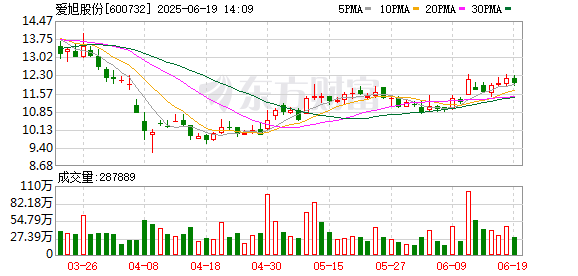
Industry Overview - The renewable energy industry is expected to enter a mature phase after 2024, maintaining steady growth annually [2] - The solar energy market is characterized as a value-driven market starting from this year and extending for decades [2] Company Performance - Aiko Solar has signed approximately 2GW of new orders for components, covering both centralized and distributed application scenarios [2] - The company has experienced a significant improvement in gross profit in April and May of this year [2] - Aiko Solar's overall order fulfillment rate is currently between 80% and 90% [2] Market Dynamics - The BC component technology is gaining recognition and expanding its market presence, with several manufacturers showcasing new products [3] - There is a shift in perception regarding BC technology, with increasing acknowledgment of its high value [3] - The competition among N-type battery technologies (TOPCon, BC, HJT) is seen as less meaningful, as all have their advantages in different scenarios [3] Strategic Focus - Aiko Solar aims to focus on product structure adjustments and transition towards high-value markets and products [4] - The company is working to improve operational efficiency, targeting an inventory turnover rate of less than 30 days, including shipping time [4] - Reducing the debt ratio is a key objective, with a target to lower it below 75% this year [5]


转债周周谈|估值蓄力,坚守主线
2025-06-18 00:54
Summary of Conference Call Records Industry Overview - The A-share market experienced a slight pullback after a rebound in April, influenced by accelerated theme rotation, the realization of expectations from China-US trade negotiations, and concerns over tariff uncertainties [1][2] - The Middle East conflict has a minimal substantive impact on the Chinese stock market, primarily causing emotional shocks, as China's diversified energy supply reduces reliance on Middle Eastern oil [1][4] Key Points on Market Dynamics - The current equity market lacks a clear main line, with innovative pharmaceuticals and new consumption sectors performing well, while technology sectors are experiencing frequent rotations [1][5] - The valuation levels are above the median of the past decade, indicating a need for market adjustments due to the crowded trades in previously high-performing stocks [1][5] - The convertible bond market has seen a slight decline in prices and valuations since early April, improving cost-effectiveness for investors [1][6] Future Market Outlook - The medium to long-term outlook for the equity market in 2025 remains positive, supported by capital market policies and monetary easing, which are expected to attract incremental funds [1][7] - Short-term adjustments are anticipated due to limited marginal benefits and the cautious sentiment of investors entering the earnings forecast window [1][7] Sector-Specific Insights - The recovery of military orders in 2025 is expected to significantly boost industry demand, with the banking sector showing strategic allocation value due to its high dividend and low volatility characteristics [3][8] - The banking convertible bond market is undergoing a large-scale exit, with a focus on short-term bonds with high yields as replacements [3][9] Investment Recommendations - In the new consumption sector, attention is drawn to relatively low-priced stocks with potential for price adjustments, such as Pop Mart and related trends [10] - Other sectors worth considering for stable cash flow and profitability include public utilities and agriculture, with specific recommendations for companies like Xinao and Sanxia Energy [11] - In the military sector, companies like Guokong and Ziguang Guomi are highlighted as having high investment potential due to the rapid growth of orders [12][14] Risk Considerations - The downgrade of Hengtai's credit rating is attributed to reduced asset scale and revenue, along with significant losses in the previous year, although no substantial risks are identified from a bond perspective [15]
固定收益专题报告:银行转债缩量后,转债底仓怎么配?
Guoxin Securities· 2025-06-16 11:41
Report Industry Investment Rating There is no information provided in the report regarding the industry investment rating. Core View The report analyzes the situation of bank convertible bonds shrinking in the convertible bond market and explores possible bottom - position allocation ideas for convertible bond funds and other types of funds after the reduction of bank convertible bonds as large - cap bottom - position varieties. It provides suggestions for investors on how to choose bottom - position varieties based on the characteristics of convertible bond bottom - position varieties and market conditions [13]. Summary by Relevant Catalogs 1. Convertible Bond Bottom - Position Variety Overview - Pan - fixed - income + funds have a certain demand for convertible bonds. Convertible bond funds have an average convertible bond position of about 78%, and the convertible bond positions of first/second - level bond funds, balanced hybrid, and partial - debt hybrid funds are mostly maintained above 10% [1][15]. - At the industry level, public funds generally use convertible bonds from industries such as banks and power equipment as bottom - position varieties. Bank convertible bonds account for a large proportion in the convertible bond bottom - position varieties of public funds at all times, but the bottom - position varieties change with factors such as bond balance and market conditions [19][21]. 2. Overview of Bank Convertible Bonds - the "Major Holders" of Convertible Bond Bottom - Positions - **Purpose of Issuance**: Issuing convertible bonds is an important way for commercial banks to supplement core tier - 1 capital, and they need to achieve this through continuous conversion. Some bank convertible bonds have seen large shareholders convert at a premium to seize the opportunity to supplement core tier - 1 capital [2][28]. - **Characteristics**: Bank convertible bonds have high safety, can be pledged, and have high dividend yields of underlying stocks, almost no default risk, and strong anti - risk ability. They are also an important income - enhancement channel for stable accounts [2][33]. - **Scale Trend**: In recent years, there have been few bank convertible bond issuances, but the delisting rhythm has accelerated significantly. There are currently no new bank convertible bond issuances in the short term, and there are no new bank convertible bond pre - plans after the refinancing regulations [40][43]. 3. How to Allocate Subsequent Bottom - Position Varieties? - **Characteristics of Convertible Bond Bottom - Position Varieties**: Most bottom - position varieties have high ratings (AA and above), large market values (nearly 90% have a convertible bond balance of over 2 billion), and good anti - decline performance [3][46]. - **Analysis of "Possible Bottom - Position Varieties"**: - **Substituting with Other High - Rating Large - Cap Varieties**: Such as photovoltaic convertible bonds. Although there are relatively limited eligible targets, and photovoltaic convertible bonds have been increasingly favored by funds in recent quarters, whether each high - rating large - cap bond can be used as a bottom - position still needs comprehensive consideration [52][56]. - **Comparing with Public Fund Benchmarks**: Considering currently under - allocated varieties. However, in practice, most public funds' performance benchmarks do not contain convertible bond - related indices, and the conversion premium rate may be a significant interference factor [57][62]. - **Idea for Bottom - Position Selection**: - **For Convertible Bond Funds**: Consider individual bonds with a positive YTM and good credit quality of underlying stocks. Also, construct a convertible bond portfolio with low or negative correlations among some individual bonds [66][67]. - **For Non - Convertible Bond Funds**: When it is difficult to find suitable bottom - position varieties in the convertible bond market, consider switching to other types of bonds [71][72].





港股破发的钧达股份:近两期业绩亏损均创新高,专业化路线难敌一体化冲击
Zheng Quan Zhi Xing· 2025-06-16 05:45
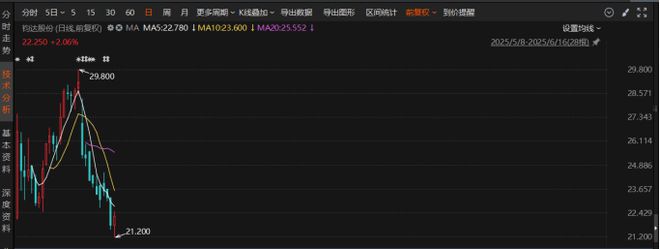
Core Viewpoint - JunDa Co., Ltd. (002865.SZ), the first domestic "A+H" listed photovoltaic cell company, is facing significant challenges in the Hong Kong stock market, with its stock price declining sharply after an initial high, leading to a historical loss in both 2024 and the first quarter of this year [1][2]. Financial Performance - The company experienced a revenue of 99.52 billion yuan in 2024, a year-on-year decline of 46.66%, and a net profit loss of 5.91 billion yuan, a decrease of 172.47% [4][5]. - In the first quarter of this year, JunDa reported a revenue of 18.75 billion yuan, down 49.52% year-on-year, with a net profit loss of 1.06 billion yuan, marking a 636.04% increase in losses compared to the previous year [5][6]. - The company's revenue from photovoltaic cells was 9.92 billion yuan, with a gross margin of only 0.48%, reflecting a 46.73% decline in revenue and a 14.21 percentage point drop in gross margin year-on-year [6][8]. Market Position and Challenges - JunDa's stock price fell below the initial public offering price of 22.15 HKD per share shortly after listing, with a significant drop of 12.86% on the day it was included in the Hong Kong Stock Connect [2][3]. - The company is heavily reliant on a single product line, with 99.72% of its revenue coming from battery cells, which limits its business diversification [9][10]. - The trend of industry integration is impacting JunDa's market position, as major integrated manufacturers are increasingly self-sufficient in battery production, reducing the demand for third-party battery suppliers [10][12]. Workforce and R&D - JunDa's workforce has seen a drastic reduction, with total employees dropping from 8,267 in 2023 to 3,163 in 2024, a decrease of nearly 62% [7][8]. - The number of R&D personnel plummeted by over 70%, from 1,348 in 2023 to 324 in 2024, which may weaken the company's technological leadership in the long term [7][8]. - The company has reduced its R&D investment by 34.58% to 199 million yuan, which could impact its ability to innovate and adapt to market changes [8][9]. Customer Dependency - JunDa's customer base is becoming less stable, with the revenue contribution from its top five customers dropping from 52.45% in 2023 to 41.3% in 2024, indicating a decline in customer loyalty [10][11]. - The largest customer’s revenue share decreased from 27.73% to 19.01%, reflecting a significant shift in the company's customer dynamics [11].

6.16犀牛财经早报:首批科创债ETF将上报 汽车金融“高息高返”模式被叫停
Xi Niu Cai Jing· 2025-06-16 02:27
Group 1 - The bond market is witnessing a significant acceleration towards index-based investment, with the first batch of Sci-Tech bond ETFs expected to be submitted for approval soon, potentially reaching 10 new products [1] - The total scale of bond ETFs has surpassed 300 billion yuan, indicating a growing interest and influx of funds into the bond market, which is expected to support the real economy [1] - In the second quarter, the ETF market has seen a net inflow of nearly 300 billion yuan, driven by the issuance of various thematic products, highlighting a trend of increasing capital allocation through ETFs [1][2] Group 2 - The standardization of ETF naming is being adopted, with 22 index funds under Harvest Fund set to collectively rename their products to a unified format, enhancing clarity and reducing information costs for investors [2] - A-share companies are accelerating their listings in Hong Kong, with several industry leaders preparing for dual financing platforms, attracting long-term international capital for quality IPO projects [2] Group 3 - The automotive finance sector is undergoing a deep adjustment as regulators have halted high-interest rebate schemes, which have been deemed harmful to consumer rights and market order [3] - ESG-themed financial products in bank wealth management are still in their infancy, with only about 1% market share, indicating a need for improved investor education and product innovation [3] Group 4 - Ant Group has entered the Hong Kong stablecoin market, applying for licenses to issue a stablecoin pegged to the Hong Kong dollar, joining other tech giants in the cryptocurrency space [4] - A new optical AI processor developed by MIT can classify wireless signals with 95% accuracy, showcasing advancements in AI hardware that could benefit high-performance computing [4] Group 5 - Apple has acknowledged quality issues with a small number of Mac Mini devices, which may fail to power on, and is offering free repair services for affected units [5] - Tianan Insurance and Tianan Life have had their business licenses revoked due to serious regulatory violations, marking the end of their operations [6] Group 6 - Haidilao has introduced a self-service lunch option priced at 22 yuan, reflecting a strategy to attract customers with lower-priced meal options [6] - San Yuan Foods has launched a new brand "Beijing Milk Company" and opened tea shops, aiming to combine historical elements with modern technology in its retail strategy [7] Group 7 - Transsion Holdings has established a new division to explore the electric two-wheeler market, focusing on rapid expansion in Africa and other developing countries [8] - Light Media's chairman has called for a reassessment of profit-sharing models in the Chinese film industry to ensure fairer compensation for producers [9] - ST Guangdao is facing potential forced delisting due to systemic financial fraud, highlighting significant regulatory scrutiny in the market [10]
终端消费回落,工业硅反弹乏力
Tong Guan Jin Yuan Qi Huo· 2025-06-16 02:26
工业硅周报 2025 年 6 月 16 日 终端消费回落,工业硅反弹乏力 核心观点及策略 投资咨询业务资格 沪证监许可【2015】84 号 李婷 021-68555105 li.t@jyqh.com.cn 从业资格号:F0297587 投资咨询号:Z0011509 黄蕾 huang.lei@jyqh.com.cn 从业资格号:F0307990 投资咨询号:Z0011692 高慧 gao.h@jyqh.com.cn 从业资格号:F03099478 投资咨询号:Z0017785 王工建 wang.gj@jyqh.com.cn 从业资格号:F03084165 投资咨询号:Z0016301 赵凯熙 zhao.kx@jyqh.com.cn 从业资格号:F03112296 投资咨询号:Z0021040 敬请参阅最后一页免责声明 1 / 8 二、市场分析及展望 上周工业硅反弹乏力,主因全球关税疑云未散,国内宏观政策进入真空期,光伏供给侧 改革进入实质性阶段对原料需求打击较大。供应来看,新疆地区开工率恢复至 65%,川滇地 区开炉数小幅回升,内蒙产量平稳,但供应端总体增长有限;从需求侧来看,多晶硅产量供 应不确定性较大,拉晶 ...
2025光伏SNEC:即使入不敷出,也要装得“很棒”
阿尔法工场研究院· 2025-06-15 11:39
Core Viewpoint - The photovoltaic industry is experiencing significant losses, with major companies like Longi, JA Solar, and Jinko facing drastic profit declines and negative cash flows, as component prices have fallen below production costs, leading to widespread financial distress [1][3][5]. Group 1: Industry Overview - The 2025 SNEC photovoltaic exhibition reflects a stark contrast to previous years, with a noticeable decline in attendance and empty exhibition spaces, indicating a downturn in the industry [2][3][5]. - Major industry leaders were absent from the event, highlighting the current struggles within the sector, as many companies are grappling with substantial losses and negative cash flows [5][6]. - The average gross margin in the photovoltaic industry has turned negative, with cash outflows exceeding 10 billion yuan, and over 50% of companies are reducing capital expenditures and workforce to mitigate losses [10][11]. Group 2: Financial Performance - In Q1 2025, several key companies reported significant revenue declines and losses, with TCL Zhonghuan facing a nearly 10 billion yuan loss, while Longi, JA Solar, and Jinko also reported steep profit drops [6][10]. - The average revenue for 18 photovoltaic companies showed a mixed performance, with some companies like Sunshine Power and Jiejia Weichuang reporting growth, while others like Tongwei and Jinko faced severe losses [6]. Group 3: Industry Challenges and Strategies - The industry is facing a "cold winter," with prices for components, silicon materials, and battery cells all declining, leading to a competitive environment characterized by price wars and reduced demand [10][11]. - Industry leaders are recognizing the need for self-reliance and have proposed strategies such as limiting production, prices, and investments to stabilize the market [13][14]. - There is a call for higher technical and environmental standards to phase out outdated capacities and promote industry consolidation rather than bankruptcy [15][16]. Group 4: Future Outlook - The current financial strain and cash flow issues have led to discussions about redirecting funds towards more effective investments, such as technology breakthroughs and integrated solutions for green electricity [20][21]. - The 2025 SNEC is seen as a turning point for the industry, marking the end of an old cycle and potentially signaling the beginning of a new one, where companies must focus on internal capabilities rather than external appearances [22][23][24].



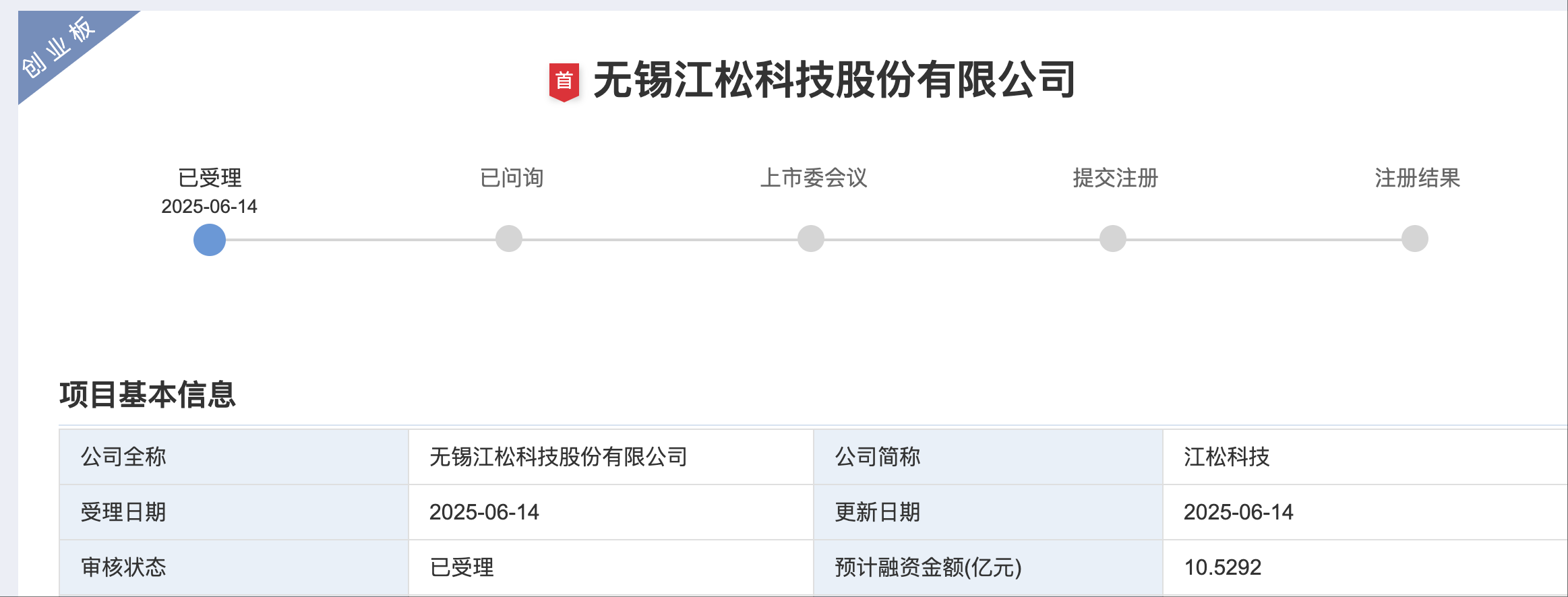
江松科技闯关创业板IPO 拟募资10.53亿元
Zheng Quan Shi Bao Wang· 2025-06-15 10:18
Group 1 - Jiangsong Technology has been accepted for IPO on June 14, 2025, aiming to raise 1.053 billion yuan [1][2] - The company is a leading manufacturer of intelligent automation equipment for high-efficiency photovoltaic cells, providing comprehensive solutions for the entire production process [2][3] - Jiangsong Technology has achieved a market share ranking first in both domestic and global markets for photovoltaic cell automation equipment in 2022 [2][3] Group 2 - The company has established partnerships with major clients, including Tongwei Co., Longi Green Energy, and Trina Solar, covering top photovoltaic manufacturers in China [3] - Revenue figures for Jiangsong Technology show growth from 807 million yuan in 2022 to 2.019 billion yuan in 2024, with net profits increasing from 88.35 million yuan to 187 million yuan over the same period [3] - The funds raised from the IPO will be allocated to projects such as the construction of a photovoltaic intelligent equipment production base and a research and development center, aimed at enhancing production capacity and competitiveness [4]

电力设备及新能源周报20250615:全球动力电池装车量同比增长,SNEC展多厂商发布高效率组件产品-20250615
Minsheng Securities· 2025-06-15 07:12
Investment Rating - The report maintains a "Buy" rating for key companies in the electric equipment and new energy sector, including CATL, Keda, and others [4]. Core Insights - The global power battery installation volume increased by 40.2% year-on-year in the first four months of 2025, reaching 308.5 GWh, with CATL leading the market with a share of 38.1% [2][9]. - The SNEC PV&ES International Photovoltaic and Energy Storage Exhibition showcased a shift towards high-efficiency N-type components, indicating a significant technological evolution in the solar industry [3][26]. - The Hami-Chongqing ±800 kV UHVDC project has been commissioned, marking a significant advancement in China's energy transmission capabilities, with a total investment of 28.6 billion yuan [4][47]. Summary by Sections 1. New Energy Vehicles - In the first four months of 2025, global power battery installation reached 308.5 GWh, a 40.2% increase year-on-year, with CATL and BYD holding a combined market share of 55.4% [2][9]. - CATL's market share rose to 38.1%, while BYD's increased to 17.3%, reflecting a strong competitive landscape [13][14]. 2. Photovoltaics - The SNEC exhibition highlighted the transition to N-type technology, with major manufacturers launching high-power components exceeding 800W [3][26]. - The industry is witnessing a shift towards perovskite technology, which is expected to drive future developments in solar cell technology [28][29]. 3. Electric Equipment and Industrial Control - The Hami-Chongqing UHVDC project, with a total investment of 28.6 billion yuan, is the first to transmit power from the desert renewable energy base, significantly enhancing energy supply security in the region [4][47]. - The project is expected to deliver over 36 billion kWh annually, replacing approximately 6 million tons of coal and reducing CO2 emissions by about 16 million tons [47].


江西首富,财富大缩水
盐财经· 2025-06-14 09:35
Core Viewpoint - The photovoltaic industry is experiencing significant differentiation, with JinkoSolar's performance in Q1 2025 being particularly surprising as it reported a substantial increase in losses compared to its peers [3][4][14]. Financial Performance - JinkoSolar reported Q1 2025 revenue of 13.84 billion RMB, a year-on-year decline of 40.03% and a quarter-on-quarter decline of 33.13%. The net profit was -1.39 billion RMB, a year-on-year decrease of 218.2% [5][6][14]. - In comparison, Longi Green Energy reported revenue of 13.65 billion RMB and a net profit of -1.44 billion RMB, with revenue and net profit growth rates of -22.75% and 38.89%, respectively [5][14]. - JinkoSolar's cash flow from operating activities was -2.62 billion RMB, a decline of 323.43% year-on-year [6]. Market Position and Stock Performance - JinkoSolar's stock price has dropped over 70% since its peak in 2022, with a market value loss exceeding 138 billion RMB. In 2025 alone, the stock fell over 27%, marking a historical low [7][14]. - The actual controller of JinkoSolar, Li Xiande, has seen his wealth decrease significantly, dropping to 11.5 billion RMB, a decline of over 23.5 billion RMB [8]. Industry Trends and Challenges - The competitive advantage of JinkoSolar in TOPCon technology is diminishing as other companies rapidly adopt similar technologies, leading to oversupply in the market [15][16]. - The industry has seen an increase in effective TOPCon capacity of approximately 700 GW over the past two years, far exceeding global demand [16]. - JinkoSolar's gross profit margin for photovoltaic modules fell to 7.79% in 2024, down from 14.43% the previous year, indicating a significant decline in profitability [16]. Future Outlook - JinkoSolar is facing a challenging future due to the oversupply of TOPCon technology and the need for technological upgrades to remain competitive [18][25]. - The company is under pressure to transition to more advanced technologies like TBC or perovskite tandem cells, but the latter's stability issues may take over three years to resolve [22][24]. - JinkoSolar's financial situation is precarious, with a debt ratio of 72.72% and total liabilities of 86.56 billion RMB, indicating significant financial strain [24][25].