蔚来

Search documents
L3级自动驾驶迈向商业化阶段 浙江世宝股价 走出强势行情
Zhong Guo Zheng Quan Bao· 2025-12-25 21:09
Core Viewpoint - The rapid development and commercialization of L3-level autonomous driving technology have attracted institutional investment towards related concept stocks, particularly Zhejiang Shibao, which has experienced a strong market performance with "5 limit-up in 8 days" [1]. Group 1: Company Performance - Zhejiang Shibao's stock price has shown a significant increase, with four consecutive limit-up days starting from December 16, reaching a closing price of 21.22 yuan per share by December 25 [2]. - In the 2024 annual report, Zhejiang Shibao reported a revenue of 2.693 billion yuan, representing a year-on-year growth of 48.04%, and a net profit attributable to shareholders of 149 million yuan, up 93.15% year-on-year [2]. - The revenue from steering systems and components accounted for 94.18% of the total revenue in 2024, indicating a strong focus on this segment [2]. Group 2: Industry Context - The automotive steering system industry has a relatively high entry barrier, requiring manufacturers to pass multiple standards and trials before becoming qualified suppliers for automakers [2]. - Zhejiang Shibao maintains close relationships with major automakers, with its top five customers, including Chery, Geely, NIO, and Li Auto, contributing a total sales amount of 1.778 billion yuan, which accounts for 66.01% of total sales [2]. - The company is actively advancing its development of steer-by-wire technology, with plans to achieve mass production conditions by the second half of 2026, aligning with the push for higher-level autonomous driving [1]. Group 3: Financial Challenges - Despite its strong performance, Zhejiang Shibao faces challenges such as high accounts receivable, which amounted to 1.181 billion yuan as of September 30 [3].

中方已经忍无可忍,对欧盟发出2道制裁,英国还想对中企下黑手
Sou Hu Cai Jing· 2025-12-25 16:16
Core Viewpoint - Since December, China has implemented two trade countermeasures against the EU, targeting dairy products and pork, indicating a serious retaliation rather than a mere warning [1][3]. Group 1: Trade Measures - Starting December 23, China will impose countervailing duties ranging from 21.9% to 42.7% on various dairy products originating from the EU [1]. - On December 16, China decided to levy anti-dumping duties of 4.9% to 19.8% on pork imported from the EU [1][7]. - The countermeasures are partly aimed at maintaining industrial safety and partly as a proportional response to EU actions [7]. Group 2: Background and Motivations - The trigger for these retaliatory measures was French President Macron's comments regarding trade imbalances between China and the EU, suggesting potential tariffs on Chinese goods if issues were not resolved [3]. - France is particularly affected, with 12 out of 15 surveyed companies involved in the dairy sector being French, highlighting the direct impact of China's measures on French businesses [3][5]. Group 3: Market Dynamics - China's dairy industry has been suffering losses due to low-priced EU products, with French cheese, yogurt, and cream benefiting from substantial agricultural subsidies, often priced lower than local brands [5]. - An 18-month investigation concluded that EU products were being sold at unfairly low prices, adversely affecting China's pig farming industry [8]. Group 4: Future Implications - China is considering further assessments on other European products such as brandy and wine, indicating that more European goods could be targeted in future retaliatory actions [8]. - If the EU continues its hardline stance, China may expand countermeasures to include wine, luxury goods, and even aerospace components, which could significantly impact the market share of French products in China [15]. Group 5: Broader Context - The ongoing tensions are not limited to trade, as the UK has also imposed sanctions on Chinese companies over alleged cyberattacks, indicating a broader geopolitical struggle that extends beyond trade issues [16][20]. - China's response to the UK's actions emphasizes the need for cooperation in cybersecurity, while also highlighting the multifaceted nature of the current international competition [20].

【限时优惠】FINE展报名火热!产业终端+半导体+热管理+先进电池+轻量化与可持续+科技创新成果.....
DT新材料· 2025-12-25 16:05
2026未来产业新材料博览会 中国未来产业崛起引领全球新材料创新发展 2026年6月10-12日 上海新国际博览中心 新材料是未来高新技术产业发展的基石和先导,新材料的突破将加速未来产业变革! 2026未来产业新材料博览会(上海) (Future Industries New Materials Expo 2026,简称" FINE 2026 "),由 「 DT新材料 」 主办的 第十届国际碳材料产业博览 会 (Carbontech 2026)、 第七届热管理产业博览会 (iTherM 2026)和 新材料科技创新博览会 (AMTE 2026)三大展重磅升级而来,旨在打造一个以未来产业终端为 引领、立足国际视野的新材料领域标杆展会。 FINE 2026 , 以 50,000平 展区 与 超过 300场 战 略与前沿科技报告,全景呈现应用于人工智能、智算/数据中心、具身智能、低空经济、航空航天、智能汽车、 AI消费电子、量子科技、6G、脑机接口、新能源、生物制造等产业的热门创新成果, 并重点聚焦 未来产业五大共性需求(先进半导体、先进电池、轻量化、 低碳可持续、热管理) , 呈现从终端、部件、材料、技术装备到前 ...
2025 EDGE AWARDS 年度汽车科技榜单正式揭晓
Tai Mei Ti A P P· 2025-12-25 11:31
Core Insights - The automotive industry is shifting focus from mere electrification to a comprehensive system capability centered around "intelligence" [2][3] - The 2025 EDGE AWARDS emphasizes "implementation capability" as a core criterion, recognizing smart automotive products and technologies that have been validated in real user scenarios [3][4] Industry Trends - The competition in the automotive sector has entered a new phase, with rapid technological iterations and a shift in user focus from short-term concept chasing to long-term stability and experience [3][4] - Key areas of innovation include advanced intelligent driving, smart cockpit experiences, and the integration of hardware and software for overall vehicle intelligence [3][4] Award Categories - The awards are categorized into four main directions: Best Intelligent Driving, Best Intelligent Cockpit, Best Intelligent Model, and Innovative Dark Horse Product [4] - Evaluation criteria include technological maturity, scene coverage, user experience, and industry demonstration significance [4] Best Intelligent Driving - The award recognizes models or technologies with leading algorithm capabilities and real-world performance in intelligent driving [5][7] - Notable winners include: - Horizon's Journey series chips for enabling large-scale production of advanced intelligent driving [7] - Huawei's Kunlun ADS for its scalable and replicable industrial system [8] - Momenta for its data-driven approach and international expansion [9] Best Intelligent Cockpit - This category highlights innovative user experiences and the deep application of AI in cockpit technology [10][11] - Key models include: - The ZunJie S800, which integrates intelligent driving and cockpit capabilities for a refined user experience [11] - The Li Auto i6, focusing on reliable daily capabilities for family users [12] Innovative Dark Horse Products - This category celebrates products that achieve success through atypical paths, emphasizing innovation in design, technology, or business models [16] - Notable mentions include: - The Equation Leopard Ti7, which achieved significant sales shortly after launch [17] - The Galaxy V900, a flagship MPV with unique seating configurations and advanced energy management [18] - The Deep Blue L06, featuring advanced suspension technology for enhanced driving comfort [19] Market Impact - The launch of the Leap Lafa5 and the LeDao L90 signifies a trend towards high-quality, high-configuration electric vehicles, addressing market pain points and achieving rapid sales [20][22] - The LeDao L90 has set a record for the fastest delivery of large electric SUVs, indicating a strong market demand for this segment [22]
一周一刻钟,大事快评(W137):二手车出海——日本经验;零部件观点更新;岱美股份重申-20251225
Shenwan Hongyuan Securities· 2025-12-25 10:24
Investment Rating - The report maintains a positive investment rating for the automotive industry, specifically recommending companies with strong alpha potential and growth prospects [2][4][5]. Core Insights - The report highlights the challenges faced by the used car export market, particularly from Japan, emphasizing the need for standardized rating systems and trust-building measures between buyers and sellers [3]. - It suggests that companies with strong operational capabilities, such as large dealership groups and platforms like Uxin, are well-positioned to capitalize on the growth of used car exports [3]. - The report notes that the automotive parts sector is currently facing headwinds due to high inventory levels and the exhaustion of trade-in subsidies, but there is a cautious optimism for market recovery in the coming year [4]. - Companies like Daimay and Fuda are highlighted for their stable performance and growth potential, particularly in the robotics sector and their international market presence [5][6]. Summary by Sections Used Car Export Insights - The used car export market is hindered by trust issues and a complex transaction chain, with Japan's stringent vehicle inspection policies serving as a potential model for improvement [3]. - Uxin is identified as a key player with a growing inventory of nearly 7,000 used cars, making it a recommended investment for the next two to three years [3]. Automotive Parts Sector Update - The automotive industry did not experience the anticipated year-end surge, primarily due to the depletion of trade-in subsidies and consumer hesitance [4]. - Recommendations include companies with strong alpha characteristics such as Shuanghuan Transmission and Yinlun, which are expected to benefit from stable growth and high market ceilings [4]. Daimay and Robotics Sector - Daimay is recognized for its stable earnings, low valuation, and significant growth potential, particularly in automotive interior components and robotics [5][6]. - The company has made significant strides in expanding its client base, including partnerships with major electric vehicle manufacturers, and is positioned to support Tesla's localization efforts in North America [6].






亏超20亿,“玩具大王”跨界豪赌
创业家· 2025-12-25 10:15
Core Viewpoint - Aodong New Energy, a leading company in battery swapping solutions, has submitted its IPO application to the Hong Kong Stock Exchange, aiming to establish a comprehensive product and service ecosystem for battery swapping despite facing significant losses and intense competition in the industry [5][10]. Financial Performance - Aodong New Energy has incurred cumulative losses exceeding 2 billion RMB over the past three and a half years, with net losses reported as follows: 785 million RMB in 2022, 655 million RMB in 2023, 419 million RMB in 2024, and 157 million RMB in the first half of 2025 [15][17]. - The company's revenue for the first half of 2025 was 324 million RMB, a 31.7% decline compared to 474 million RMB in the same period of 2024, raising concerns about its financial stability [15][17]. Business Model and Technology - Aodong's competitive advantage lies in its innovative battery swapping technology, which includes a quick-release mechanism that allows for battery swaps in as little as 20 seconds for passenger cars and 40 seconds for heavy trucks [11]. - The company operates 267 self-owned battery swapping stations and provides services to 62 third-party stations, indicating a growing operational scale [12]. Market Competition - The battery swapping market is becoming increasingly competitive, with major players like CATL and NIO entering the space, necessitating Aodong to solidify its foundation and expand its business [19][20]. - Aodong plans to broaden its battery swapping solutions to include ride-hailing and commercial vehicles, while also collaborating with additional vehicle operators and OEM partners [19]. Future Outlook - The success of Aodong's IPO is critical for its future in the competitive battery swapping market, as the raised funds will focus on expanding its network, enhancing core technology, and optimizing financial structure [20].

逃离商场的“特斯拉们”,为何撑不下去了?
商业洞察· 2025-12-25 09:26
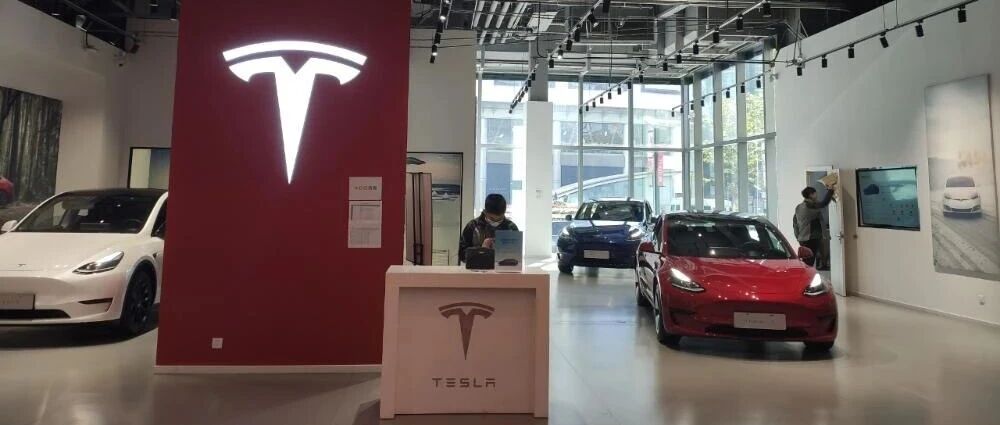
Core Viewpoint - The article discusses the decline of automotive stores in shopping malls, which were once a popular trend initiated by Tesla, highlighting the shift in strategy among electric vehicle manufacturers as they face increasing competition and changing market dynamics [4][6][12]. Group 1: Rise of Automotive Stores in Malls - Tesla pioneered the concept of selling electric vehicles in shopping malls, opening its first store in Beijing in 2013, which led to a nationwide trend [8][16]. - By August 2023, there were over 5,000 automotive stores in malls across 247 cities in China, indicating a significant expansion of this retail model [18]. - The initial appeal of automotive stores was their proximity to younger consumers and women, who are key demographics in the electric vehicle market [24][25]. Group 2: Shift in Strategy and Decline - Since 2024, the number of automotive stores in shopping malls has decreased by 37%, with major brands like Tesla and Xpeng retreating from this model [12][35]. - The shift is attributed to the need for car manufacturers to focus on core competencies and reduce costs amid fierce competition, leading to a reassessment of the effectiveness of mall locations [38][46]. - High operational costs and low sales conversion rates have made mall stores less viable, with some stores reporting monthly sales of fewer than five vehicles [47][49]. Group 3: Future of Automotive Stores - The article suggests that while the mall store model may not be entirely abandoned, it requires a more strategic approach, focusing on location and consumer engagement [56][68]. - Companies are encouraged to explore alternative retail formats, such as pop-up stores and targeted marketing strategies, to better connect with potential customers [64][66]. - The emphasis is on rational decision-making regarding retail presence, prioritizing sustainability and profitability over mere visibility [69][70].


日本经验,零部件观点更新,岱美股份重申-20251225
Shenwan Hongyuan Securities· 2025-12-25 09:14
Investment Rating - The report maintains a positive outlook on the automotive industry, specifically recommending companies like Uxin and Daimay as strong investment opportunities [2][5]. Core Insights - The second-hand car export market faces significant challenges, including the non-standard nature of vehicles and a complex transaction chain. Japan's experience in this sector offers valuable lessons, such as stringent vehicle inspection policies and the establishment of standardized auction platforms [3][4]. - The automotive parts sector has not seen the anticipated year-end surge due to exhausted subsidies and consumer hesitance. The report suggests focusing on companies with strong alpha, such as Shuanghuan Transmission and Yinlun, which have stable growth and high market ceilings [4]. - Daimay is highlighted as a stable, undervalued company with significant growth potential, particularly in the automotive interior and robotics sectors. The company has made substantial progress in expanding its client base, including partnerships with major players like Tesla [5][7]. Summary by Sections Second-Hand Car Export - The second-hand car export market is hindered by trust issues and a lack of standardized practices. Japan's strict vehicle inspection policies and auction platforms provide a model for improvement. Uxin, with a current inventory of nearly 7,000 vehicles, is positioned for growth in this market [2][3]. Automotive Parts Sector - The automotive industry did not experience the expected late-year demand surge due to depleted subsidies and cautious consumer behavior. The report emphasizes the need to monitor the continuation of trade-in policies and suggests focusing on companies with strong alpha characteristics, such as Shuanghuan Transmission and Yinlun [4]. Daimay - Daimay is recognized for its stable performance and low valuation, with 80% of its revenue coming from overseas markets. The company is well-positioned to withstand domestic market pressures and has made significant strides in the robotics field, particularly in electronic skin technology [5][7].

小米陈光:我们不想制造技术焦虑了
2 1 Shi Ji Jing Ji Bao Dao· 2025-12-25 08:24
Core Viewpoint - The smart driving industry is experiencing a "term overload" phenomenon, with various factions emerging around different models such as VLA (Vision Language Action), VA (Vision Action), and WA (World Action) [2] Group 1: Industry Trends - The industry is divided between proponents of VLA, like Li Auto and Yuanrong Qixing, and opponents like Huawei and Xiaopeng, who prefer WA [2] - Xiaomi is focusing on end-to-end development, showcasing significant potential in this area, despite starting later than competitors like Li Auto and NIO [3][6] - Xiaomi's end-to-end algorithm has evolved rapidly, with multiple versions released within a year, indicating a fast-paced development cycle [6] Group 2: Technological Development - Xiaomi's latest version of its HAD (Highly Automated Driving) system incorporates world models and reinforcement learning, enhancing its cognitive capabilities [3][4] - The introduction of world models and reinforcement learning is seen as a necessary evolution from simple data-driven approaches to more complex cognitive-driven methodologies [9][10] - Xiaomi's approach emphasizes maximizing the model's intelligence density within limited computational resources [8][15] Group 3: Team Structure and Strategy - Xiaomi's smart driving team has grown to over 1,800 members, reflecting a rapid scaling compared to competitors [6][12] - The team is divided into three groups focusing on different technological routes, including end-to-end, VLA, and other exploratory research [4][13] - Xiaomi's strategy is characterized by a gradual introduction of new technologies, prioritizing user experience over merely adopting the latest advancements [5][10] Group 4: Challenges and Responses - The integration of reinforcement learning faces challenges, such as ensuring the fidelity of world models and managing computational efficiency [4][33] - Xiaomi's team has encountered external criticism, which they view as a necessary part of their growth and development process [25][26] - The company aims to balance the introduction of new technologies with the need for practical, user-friendly solutions [10][11]

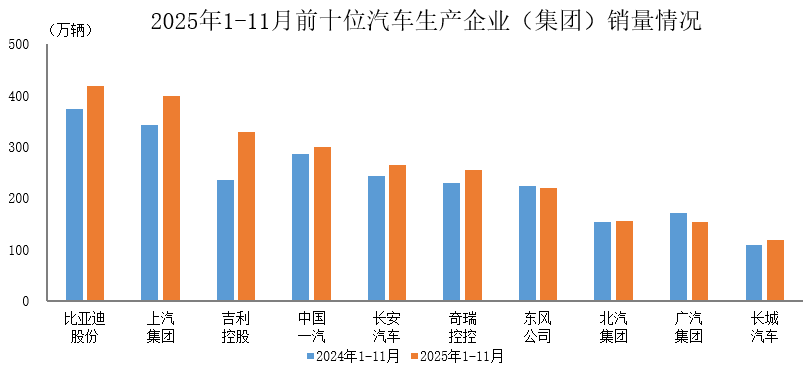
风停帆转:车市告别“顺风时代”,打响技术与出海“体系战”
2 1 Shi Ji Jing Ji Bao Dao· 2025-12-25 08:24
Core Insights - The Chinese automotive market is at a historic crossroads, transitioning from a growth phase to a competitive landscape characterized by technology, ecology, and globalization [1] - The penetration rate of new energy vehicles (NEVs) has reached 62.3%, marking a significant shift in market dominance [3] - The competition has intensified, moving from volume-driven growth to a focus on technology iteration, ecological construction, and organizational efficiency [5] Market Performance - In November 2025, retail sales of passenger vehicles in China were 2.225 million units, a year-on-year decline of 8.1% and a month-on-month decline of 1.1% [2] - Retail sales of fuel vehicles fell by 22% year-on-year, while pure electric models grew by 9.2%, pushing the NEV retail penetration rate to 59.3% [3] Competitive Landscape - BYD's domestic sales in November 2025 were 348,300 units, down 26.81% year-on-year, indicating increased competitive pressure [5] - Geely's NEV sales exceeded 1.5 million units in the first 11 months of 2025, achieving a penetration rate of 60.5% [6] - Chery's NEV sales reached 116,800 units in November, a year-on-year increase of 50.1%, marking a historical high [6] Export Dynamics - China's automotive exports surpassed 700,000 units in November 2025, with NEV exports doubling year-on-year [9] - BYD's overseas sales in November were 132,000 units, a 297% increase, with a target of over 1.6 million overseas sales in 2026 [10] - Chery's exports in November were 136,700 units, a year-on-year increase of 30.3%, indicating strong international demand [11] Strategic Shifts - The automotive industry is transitioning from a trade-oriented export model to a more integrated approach involving localized production and ecosystem collaboration [9] - Companies like NIO and Leap Motor are adopting unique strategies for international expansion, focusing on user-centric models and cost control [12][9] Policy Implications - The adjustment of the new energy vehicle purchase tax in 2026 will require companies to enhance cost control and supply chain optimization [14] - The new regulatory guidelines aim to address excessive competition and promote a shift towards high-quality development in the industry [14] Future Outlook - The market is expected to see a modest growth of around 3% in 2026, with NEV penetration continuing to rise but at a slower pace [15] - Companies are focusing on product iteration, technological implementation, and cost optimization to prepare for intensified competition [16][17]