联发科

Search documents
CoWoS产能支撑,摩根大通再次上调TPU预期:今明两年出货量有望达370、500万颗
美股IPO· 2026-01-07 16:20
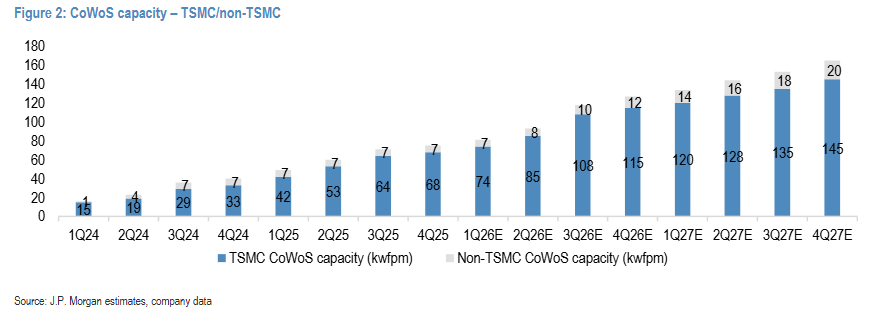
Core Viewpoint - Morgan Stanley has raised its CoWoS capacity forecasts for 2026 and 2027 by 8% and 13% respectively, driven by TSMC's capacity expansion and strong demand for TPUs [1][2]. Group 1: CoWoS Capacity Forecasts - TSMC's CoWoS capacity is expected to reach 115,000 wafers per month by the end of 2026, with additional capacity from external suppliers (mainly ASE and Amkor) contributing 12,000 to 15,000 wafers per month [2]. - The capacity increase is primarily due to rising demand from the ASIC supply chain, with TSMC focusing on CoWoS-L technology while CoWoS-S supply remains stable [2]. Group 2: TPU Demand and Shipments - Morgan Stanley has raised its TPU shipment forecasts for 2026 and 2027 to 3.7 million and 5 million units respectively, reflecting strong market demand and TSMC's ongoing capacity expansion [3][4]. - To meet TPU demand, Broadcom's CoWoS wafer allocation has been increased to 230,000 wafers in 2026 and 350,000 wafers in 2027, while MediaTek is expected to receive 18,000 and 55,000 wafers in the same years [5]. Group 3: Key Players and Projects - NVIDIA's CoWoS allocation for 2026 remains at 700,000 wafers, with slight adjustments in product mix due to HBM4 readiness issues [6]. - AMD's CoWoS forecasts remain unchanged at 90,000 and 120,000 wafers for 2026 and 2027, with potential delays in the MI450 project [6]. - AWS's Trainium project has seen a slight reduction in 2026 shipment expectations to 2.1 million units, with lifecycle totals unchanged [7]. Group 4: Outsourcing and Equipment Suppliers - Due to TSMC's capacity constraints, smaller projects are being outsourced to packaging factories, with ASE expected to benefit from various CPU and TPU projects [8]. - Equipment suppliers are projected to see a 20% to 30% increase in equipment shipments in 2026, driven by strong demand for CoWoS, WMCM, and FOCoS technologies [9].





CoWoS产能支撑,摩根大通再次上调TPU预期:今明两年出货量有望达370、500万颗
Hua Er Jie Jian Wen· 2026-01-07 12:50
Core Viewpoint - Morgan Stanley has raised its forecast for Google's TPU chip shipments for 2026 and 2027, expecting shipments to reach 3.7 million and 5 million units respectively, driven by TSMC's expanding CoWoS packaging capacity and strong market demand [1][3]. Group 1: Capacity Forecast Adjustments - Morgan Stanley has increased its CoWoS capacity forecasts for 2026 and 2027 by 8% and 13% respectively, reflecting TSMC's new capacity construction in the second half of 2026 and 2027 [1][3]. - TSMC's CoWoS capacity is expected to reach 115,000 wafers per month by the end of 2026, with external suppliers providing an additional 12,000 to 15,000 wafers per month [1][3]. Group 2: Demand Drivers - The increase in capacity is primarily driven by rising demand from the ASIC supply chain [1][3]. - The main shipments for 2026-2027 will come from TPU v7 (Ironwood) and v8 series (Broadcom's AX version and MediaTek's X version) [3]. Group 3: Company-Specific Insights - NVIDIA's CoWoS allocation for 2026 remains at 700,000 wafers, with slight adjustments in product mix due to HBM4 readiness issues [4]. - AMD's CoWoS forecast remains unchanged at 90,000 and 120,000 wafers for 2026 and 2027, respectively, with potential delays in the MI450 project [4]. - AWS's Trainium project has seen a slight reduction in expected shipments for 2026, now projected at 2.1 million units [5]. Group 4: Outsourcing Trends - The outsourcing ratio for packaging has increased, benefiting equipment suppliers [6][7]. - TSMC will focus on key GPU and AI ASIC projects, leaving smaller projects to packaging houses like ASE and Amkor [7]. - Equipment suppliers are expected to see a year-on-year increase in demand for CoWoS, with new capacity projected to grow by 40,000 to 50,000 wafers per month [7].
全球存储,飞奔去月球?
Xin Lang Cai Jing· 2026-01-07 11:39
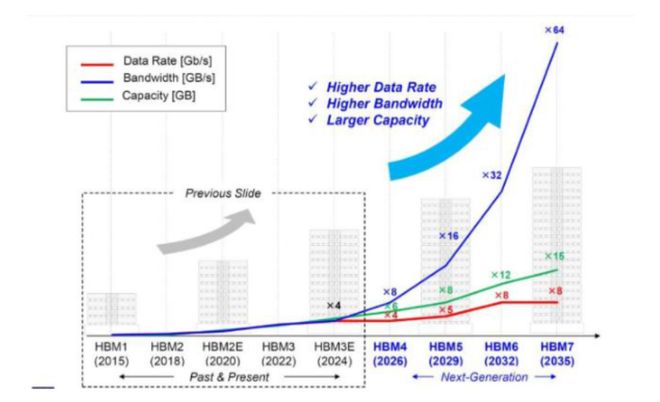
Group 1 - The core viewpoint of the article highlights the booming demand in the storage market, driven by advancements in technology and increasing needs for high-performance storage solutions [2][5][9] - The CES conference showcased significant developments in storage technology, particularly with SK Hynix unveiling its next-generation HBM4 chip, which is expected to dominate the market by 2026 [5][8] - Major storage stocks in the U.S. saw substantial gains following positive market sentiment, with SanDisk rising by 28%, Western Digital by 17%, Micron by 10%, and Seagate Technology by 14% [3][4] Group 2 - SK Hynix and Samsung Electronics are planning to increase server DRAM prices by 60% to 70% in Q1 2026, indicating strong market dynamics and potential price hikes across the board [8][9] - The competition between SK Hynix and Samsung Electronics is intensifying, with Samsung projected to surpass SK Hynix in storage chip revenue by Q3 2025, achieving $19.4 billion [9] - The Asia-Pacific Select ETF has significant holdings in both Samsung Electronics and SK Hynix, with recent performance showing a 145% return for Samsung and a 300% return for SK Hynix over the past year [11][12]
小米发布处罚声明;芯片巨头齐聚CES丨科技风向标
2 1 Shi Ji Jing Ji Bao Dao· 2026-01-07 02:28
Group 1: Technology Developments - Amazon launched a new AI chatbot website, Alexa.com, available to all Alexa+ early experience users, allowing online use similar to other AI chatbots like ChatGPT and Google's Gemini [2] - ZhiYuan introduced the SOP (Scalable Online Post-training) system aimed at achieving scalable deployment and intelligent operation of general-purpose robots in real-world environments [4] - iFlytek reported that its Starfire model training efficiency has been optimized to 85%-95% compared to NVIDIA's A100, following significant investments in domestic computing power solutions [5] Group 2: Corporate Actions and Partnerships - RoboTech's subsidiary ficonTEC signed a significant contract worth approximately €770,000 (about 63.08 million RMB) with a Swiss client for an automated optical switch packaging line, which will positively impact the company's operations [6] - Blue Glass Technology confirmed its strategic investment in Strong Brain Technology, exclusively undertaking the mass production of core hardware modules [8] - Aihua Long signed a strategic cooperation framework agreement with Shenzhen Brain Machine Star Chain Technology, focusing on market expansion and sales of brain-machine interface products [10] Group 3: Product Launches and Innovations - Hisense unveiled its new RGB Mini LED display technology at CES 2026, featuring a four-color chip architecture to enhance color performance [9] - AMD introduced the MI455X GPU and a 72-card server named "Helios," anticipating a significant increase in active AI users from 1 billion to 5 billion by 2030 [12] - Intel launched its third-generation Core Ultra series processors, marking a new era for AI PCs with edge AI computing power reaching 180 TOPS [13][14] Group 4: Financing and Market Movements - MiniMax's IPO was oversubscribed by over 1,200 times, raising more than 253.3 billion HKD, indicating strong market interest [17] - Strong Brain Technology completed approximately 2 billion RMB in financing, becoming the second-largest financing in the brain-machine interface sector after Neuralink [18] - ZhiZhan Technology successfully raised nearly 300 million RMB in its C round of financing, focusing on silicon carbide power modules and advanced electric drive systems [18] Group 5: Mergers and Acquisitions - Guanshang Technology announced plans to acquire 100% of Liao Jing Electronics, a key player in the defense technology sector, aiming for complementary and synergistic effects [19]


台积电2nm量产在即:性能跃升成本翻倍,旗舰芯片迎分水岭
Xin Lang Cai Jing· 2026-01-07 01:45
Core Viewpoint - TSMC's 2nm process technology (N2) is set to enter mass production in Q4 2025, marking a significant advancement in semiconductor manufacturing technology [1][4] Group 1: Technology Advancements - The N2 process offers a performance improvement of 10% to 15% while maintaining the same power consumption levels compared to the previous N3E process [1][4] - Power consumption can be reduced by 25% to 30% at the same frequency, showcasing significant energy efficiency improvements [1][4] Group 2: Market Impact - Qualcomm's next-generation flagship mobile platform, Snapdragon 8 Elite Gen6, and MediaTek's Dimensity 9600 series will utilize TSMC's 2nm process [3][4] - The manufacturing cost for 2nm wafers is expected to exceed $30,000, nearly doubling the cost of 4nm products, which will directly affect the cost of end hardware [3][4][5] Group 3: Product Strategy - The rise in wafer prices will lead to structural adjustments in flagship smartphone product lines set to launch in the second half of 2026 [5] - Manufacturers are likely to implement differentiated strategies, with standard versions using existing 3nm platforms to control costs, while higher-end Pro and Ultra versions will adopt 2nm chips to create a performance gap [3][5] - This strategy will result in clearer tier distinctions for consumers, with standard versions offering mainstream performance at controlled prices, while high-end versions will leverage the latest technology for superior performance [4][5]
【钛晨报】证监会新年首会,重拳出击财务造假;2026存储涨价第一枪:三星、海力士DRAM报价上调70%;高盛:建议高配中国股票
Sou Hu Cai Jing· 2026-01-05 23:44
Group 1: Regulatory Actions and Market Oversight - The China Securities Regulatory Commission (CSRC) held a meeting to discuss the implementation of a comprehensive system to prevent financial fraud in the capital market, emphasizing the need for a problem-oriented and systematic approach [2] - In 2024, the CSRC has handled 159 financial fraud cases, with 111 administrative penalties amounting to 8.1 billion yuan, and has intensified accountability for major shareholders and third-party accomplices [3] - The CSRC aims to enhance the quality of listed companies and protect investors' rights, contributing to the high-quality development of the capital market [2][3] Group 2: Industry Developments and Trends - The humanoid robot industry has made significant progress, with expectations of 14,000 units shipped in China in 2024, potentially doubling annually and reaching over 1 million units by 2034 [4] - Alibaba is launching a service to help restaurants utilize AI for showcasing their environments, aiming to reduce marketing costs and compete with Meituan in the food service sector [5] - The semiconductor industry is experiencing shifts, with MediaTek prioritizing resources towards AI-specific integrated circuits and automotive chips, anticipating ASIC business revenue to reach $1 billion by 2026 [7] Group 3: Market Performance and Economic Outlook - The A-share market saw the Shanghai Composite Index rise from 3,351.76 points at the beginning of 2025 to 3,968.84 points by year-end, reflecting an 18.4% increase [13] - High-tech industries, particularly manufacturing and scientific research, showed significant market value growth, with total market values increasing by 33.3% and 32.1% respectively [13] - Goldman Sachs recommends overweighting Chinese stocks in 2026, citing structural growth in exports and a rebound in investments supported by policy [14]

联发科:转向蓝海市场,2026年ASIC收入预计达10亿美元
Sou Hu Cai Jing· 2026-01-05 11:51
Core Insights - MediaTek plans to deprioritize its mobile chip division and redirect resources towards blue ocean markets such as artificial intelligence-specific integrated circuits and automotive chips [1] - The company is deepening its collaboration with Google, with Google's TPU chip expected to enter mass production in the third quarter of this year, requiring MediaTek to allocate more resources [1] - MediaTek anticipates that its ASIC business revenue will reach $1 billion by 2026 [1]
Redmi Turbo 5 Max发布在即:性能续航全面升级,2.5K价位新标杆
Xin Lang Cai Jing· 2026-01-05 10:38
Core Viewpoint - The upcoming launch of the REDMI Turbo 5 Max is positioned as a high-performance representative in the 2.5K price segment, emphasizing improvements in performance, battery life, and overall quality, with the slogan "Starting is Ending" indicating its competitive edge in the market [1][4]. Group 1 - The design of the official poster includes a reflection of "WIN" beneath "MAX," symbolizing the brand's determination to succeed in market competition [3][4]. - The new model will feature a metal frame, large screen with rounded corners, and will be powered by MediaTek's new Dimensity 8 or 9 series chips, optimized for performance [5]. - High-end versions are testing ultrasonic fingerprint recognition technology and will include the largest battery capacity available in the brand's lineup [5]. Group 2 - Starting from January 2026, multiple manufacturers are expected to launch new mid-range models, initiating a wave of product competition, including a model with a large battery and screen [5]. - The product series will include several enhancements such as 3D ultrasonic fingerprint recognition, metal frames, glass backs, flagship processors, high-watt fast charging technology, and symmetrical dual speakers, while maintaining a standard X-axis vibration motor [5]. - The imaging system will primarily rely on a large main camera for basic photography functions, targeting a level suitable for scanning [5].
联发科,豪赌ASIC
半导体芯闻· 2026-01-05 10:13
Group 1 - The core viewpoint of the article highlights the growing demand for generative AI and large language models, leading to an intensified competition in cloud computing power, particularly with Google's strong momentum in its self-developed TPU chips [1] - Media reports indicate that both Broadcom and MediaTek are increasing their production capacity for 2026 in response to the strong demand for Google's TPU, which is expected to enter its eighth generation and achieve a production scale of 5 million units in 2027 and 7 million units in 2028, significantly revised upwards from previous estimates [1] - MediaTek is reallocating resources from its mobile chip division to focus on ASIC and automotive sectors, aiming to capture opportunities in data centers and customized chips for CSP [1] Group 2 - MediaTek's current 112Gb/s SerDes DSP utilizes PAM-4 receiving architecture, achieving over 52dB loss compensation capability at 4nm process, which is crucial for data centers and advanced packaging architectures [2] - Analysts suggest that MediaTek's strategic shift in resource allocation signifies a structural transformation in its growth engine, with cloud AI, data centers, and ASIC becoming the most explosive application scenarios in the medium to long term [2] - MediaTek's first ASIC project is progressing well, with expected revenue contributions of approximately $1 billion in 2026, increasing to several billion dollars in 2027, and a second project anticipated to contribute revenue starting in 2028 [2]

旗舰手机“芯”格局生变:联发科天玑上位 高通面临份额挤压
Ju Chao Zi Xun· 2026-01-05 08:43
Core Viewpoint - Major Chinese smartphone manufacturers, including Huawei, Xiaomi, OPPO, vivo, and Honor, are planning to adjust their chip strategies between 2026 and 2027 by gradually reducing or even stopping the use of Qualcomm Snapdragon platforms in favor of increasing the adoption of MediaTek Dimensity series processors [1][4]. Group 1: Chip Strategy Transition - Chinese smartphone manufacturers are shifting from reliance on a single supplier to a dual-track parallel chip strategy, driven by risk mitigation and cost control [4]. - Currently, Huawei has largely transitioned to its own Kirin chip solutions, while Xiaomi, OPPO, vivo, and Honor are adopting a "Qualcomm + MediaTek" dual-supplier strategy to effectively disperse supply chain risks [4]. - OPPO's Find X series flagship models are available with both Snapdragon and Dimensity chip versions, allowing market performance and user feedback to guide future product directions [4]. Group 2: Cost Pressures - The direct driver for smartphone manufacturers adjusting their chip strategies is the ongoing rise in costs, particularly the increasing prices of Qualcomm's flagship chips [5]. - The latest Snapdragon 8 Gen 2 chip has a procurement cost of $280, accounting for 25% to 35% of the material costs of high-end smartphones, significantly squeezing overall profit margins [6]. - Storage chip prices are also rising, with industry analysts estimating that the material costs for high-end smartphones could increase by over 40% by 2026 compared to three years ago, while terminal prices may not rise correspondingly [7]. Group 3: MediaTek's Competitive Position - MediaTek's ability to gain favor among manufacturers is primarily due to its significant improvement in technical capabilities, with the Dimensity series now competing directly with Qualcomm's flagship chips in terms of performance and power consumption [8]. - Since the launch of the Dimensity 9000 series, MediaTek's sustained investment in high-end chip development has begun to yield results, with the latest Dimensity 9500 mobile platform receiving market recognition [9]. - OPPO Find X9, Find X9 Pro, and vivo X300, X300 Pro flagship models are now equipped with the Dimensity 9500 platform, indicating that MediaTek chips are no longer exclusive to mid-range models [9]. Group 4: Market Restructuring - The competitive landscape of the smartphone chip market is undergoing structural changes, with MediaTek's increasing market share in the high-end segment redefining the market dynamics [10]. - Industry forecasts suggest that by 2026, MediaTek's share in the global high-end smartphone chip market could rise from less than 20% to over 30%, posing more challenges to Qualcomm's market dominance [11]. - The dual-platform strategy is expected to become a standard configuration for mainstream smartphone manufacturers, allowing for flexible chip platform allocation across different product series and price points, maximizing market coverage while reducing supply chain risks [12]. Group 5: Consumer Impact - For consumers, this shift means a wider range of product choices, with smartphones featuring different chip platforms offering differentiated performance, pricing, and unique features, thereby driving technological innovation across the industry [13]. - As Huawei returns to self-developed chips and other manufacturers seek a balance between price and technology, flagship smartphones will increasingly feature MediaTek Dimensity chips, changing consumer selection criteria [13].