
东鹏饮料

Search documents
东鹏饮料:2025年上半年净利润23.75亿元,同比增长37.22%
news flash· 2025-07-25 13:12
东鹏饮料(605499)公告,2025年上半年营业收入107.37亿元,同比增长36.37%。净利润23.75亿元, 同比增长37.22%。拟以公司2025年半年度股本总数5.2亿股为基数,向全体股东每10股派25元(含税),共 计分派现金红利13亿元。 ...

食品饮料行业7月25日资金流向日报
Zheng Quan Shi Bao Wang· 2025-07-25 08:43
Market Overview - The Shanghai Composite Index fell by 0.33% on July 25, with 9 out of the 28 sectors rising, led by the electronics and computer sectors, which increased by 1.37% and 1.26% respectively [1] - The construction decoration and building materials sectors experienced the largest declines, with drops of 2.06% and 1.69% respectively [1] Capital Flow Analysis - The main capital outflow from the two markets totaled 49.376 billion yuan, with only 4 sectors seeing net inflows [1] - The computer sector had the highest net inflow of 2.924 billion yuan, followed by the electronics sector with a net inflow of 2.348 billion yuan [1] Food and Beverage Sector Performance - The food and beverage sector declined by 1.65%, with a total net capital outflow of 2.546 billion yuan [2] - Out of 124 stocks in this sector, 32 rose while 90 fell, including 1 stock that hit the daily limit down [2] - The top net inflow stocks in the food and beverage sector included Dongpeng Beverage with a net inflow of 44.8841 million yuan, followed by Wancheng Group and Huangshanghuang with inflows of 20.8926 million yuan and 16.2819 million yuan respectively [2] Major Outflows in Food and Beverage Sector - The top stocks with significant capital outflows included Kweichow Moutai with an outflow of 800.4285 million yuan, Wuliangye with 351.9915 million yuan, and Shanxi Fenjiu with 152.6090 million yuan [4] - Other notable outflow stocks included Beiningmei, Luzhou Laojiao, and Yili with outflows of 147.0460 million yuan, 143.9668 million yuan, and 123.4453 million yuan respectively [4]
2022Q2基金持仓:食饮持仓环比减少,白酒环比减仓较多
Minsheng Securities· 2025-07-25 06:51
Investment Rating - The investment recommendation for the food and beverage industry is "Outperform the Market" [10][16] Core Insights - The heavy holding ratio for the food and beverage industry decreased by 2.13 percentage points to 6.62% in Q2 2025, with the white liquor heavy holding ratio dropping by 2.34 percentage points to 4.96% [5][19] - The top five holdings in the food and beverage sector are Kweichow Moutai (0.98%), Wuliangye (0.43%), Shanxi Fenjiu (0.38%), Luzhou Laojiao (0.26%), and Dongpeng Beverage (0.18%) [5][14] - The report highlights a shift in fund allocations, with non-dairy beverages seeing an increase in holdings while white liquor experienced significant reductions [12][27] Summary by Sections 1. Q2 2025 Fund Holdings: Decrease in Food and Beverage Holdings, Significant Reduction in White Liquor - The heavy holding ratio for the food and beverage industry is 6.62%, with an overweight ratio of 1.63%, both showing a decrease [11][19] - The heavy holding ratio for white liquor is 4.96%, with an overweight ratio of 1.63%, also reflecting a decline [11][19] 1.1 Food and Beverage Industry Public Fund Holding Ratio - The public fund heavy holding ratio for the food and beverage industry is 6.62%, down 2.13 percentage points, ranking fourth among sectors [19][20] - The standard allocation ratio is 4.99%, with an overweight ratio of 1.63%, down 1.55 percentage points [19][20] 1.2 Excluding Heavy White Liquor Funds - The concentration of white liquor holdings is high, with eight funds holding over 1 billion yuan in white liquor, accounting for 52.91% of the total white liquor holding value [12][24] - Excluding these funds, the remaining funds show a white liquor holding ratio of 2.34%, down 1.79 percentage points [12][24] 1.3 Non-Dairy Beverages Increased Holdings - In Q2 2025, the holding ratios for various sub-sectors are as follows: white liquor (4.96%), beer (0.35%), non-dairy beverages (0.40%), and others, with non-dairy beverages seeing a 0.15 percentage point increase [13][27] 1.4 Non-Dairy Beverages and Snack Foods Increased Holdings - The top five holdings in the food and beverage sector are Kweichow Moutai, Wuliangye, Shanxi Fenjiu, Luzhou Laojiao, and Gujing Gongjiu [41][44] - The report notes that Dongpeng Beverage, Yanjing Beer, and Salted Fish saw the largest increases in holdings [14][44] 1.5 Net Outflow of Northbound Capital from the Food and Beverage Industry - As of June 2025, northbound capital holdings in the food and beverage sector totaled 177 billion yuan, with a holding ratio of 3.75%, down 0.40 percentage points [15][22] 2. Investment Recommendations - The report suggests focusing on structural growth opportunities in new channels and products, while also considering traditional cyclical stocks that are currently undervalued [16][19]




消费行业2025年中期策略解读
2025-07-25 00:52
Summary of Key Points from Conference Call Records Industry Overview: Home Appliances - Emerging markets have a low penetration rate in home appliances, driving demand growth due to economic development. These markets account for 32% of global home appliance sales and 67% of the population, indicating significant future growth potential [1][2][4] - The export growth rate for white goods is notably high, with Southeast Asia and Latin America experiencing compound annual growth rates of over 13% and 20%, respectively, over the past five years [1][2] Core Insights and Arguments - Short-term fluctuations in exports to the U.S. are influenced by tariff policies, but stable end-user demand is expected to lead to a gradual recovery in exports in the third and fourth quarters once tariff policies are clarified [1][5] - Domestic market growth has been stimulated by national subsidy policies, with air conditioner, refrigerator, and washing machine sales increasing in the first half of the year. However, the sustainability of these subsidy policies is uncertain, and their potential cessation could disrupt the industry, though the impact is expected to be less than anticipated [1][6][7] - The national subsidy policy has significantly boosted sales of emerging appliance categories like robotic vacuum cleaners, which saw sales growth exceeding 40%. Even if subsidies are withdrawn in the future, these categories are expected to maintain high growth potential due to short replacement cycles [1][8] Investment Opportunities - The white goods industry primarily relies on replacement demand, with limited oversupply. Companies with high dividend yields and payout ratios above 50%, such as Gree Electric, Midea Group, Haier, and Hisense, are recommended for investment [1][9][10] - Companies with strong overseas advantages and notable performance reversals, such as Ecovacs, Roborock, Anker Innovations, TCL Electronics, and Hisense Visual, are also highlighted as worthy of attention [1][10] Additional Important Insights - The national subsidy policy has had a limited impact on overall market sales, primarily affecting pricing and product structure rather than significantly increasing total sales volumes [1][7] - Emerging markets, particularly in Asia, are expected to see rapid increases in penetration rates as GDP per capita rises, further driving industry growth [4] - The home appliance sector is characterized by a focus on replacement demand domestically, with emerging categories showing significant growth potential even in the absence of subsidies [1][9]
食品饮料行业报告(2025.07.14-2025.07.18):白酒迎来情绪修复,大众品关注个股机会
China Post Securities· 2025-07-24 03:22
Industry Investment Rating - The investment rating for the food and beverage industry is "Outperform the Market" and is maintained [1] Core Insights - The report highlights that the liquor sector has faced challenges due to the implementation of the "Regulations on Strict Economy and Opposition to Waste" by the central government, leading to a decline in revenue and profits for most liquor companies in Q2 2025. However, recent media corrections have stabilized the sector, and a gradual recovery is expected [3][20] - The report emphasizes the importance of individual stock opportunities within the consumer goods sector, particularly in the context of the liquor market's recovery and the introduction of innovative products [4][21] Summary by Sections Industry Overview - The closing index for the food and beverage sector is 17226.07, with a 52-week high of 19809.29 [1] - The sector has shown a relative performance decline compared to the CSI 300 index, with a year-on-year retail sales growth of 4.8% in June 2025 [14] Liquor Sector Analysis - The report notes that major liquor companies like Moutai, Wuliangye, and Luzhou Laojiao have varying price-to-earnings ratios, indicating a mixed valuation landscape [20] - The introduction of new products, such as the "Jiu Gui Free Love" by Jiu Gui Jiu and its collaboration with the retail channel "Pang Dong Lai," is expected to drive sales and innovate marketing strategies [5][18] Fund Holdings and Market Sentiment - As of Q2 2025, the food and beverage sector's fund holding ratio is 6.75%, reflecting a decrease of 2.12 percentage points, indicating cautious sentiment among investors [4][20] - The liquor segment's fund holding ratio is 4.98%, also down by 2.42 percentage points, suggesting a trend of risk aversion in the market [20] Company Performance Highlights - Dongpeng Beverage reported stable revenue growth, with significant increases in electrolyte water and fruit tea segments [22] - The report mentions that companies like Youfei Foods and Guoquan are focusing on channel optimization and product innovation to drive growth [23] - The performance of companies such as Zhou Hei Ya and Jiahe Foods is noted, with both showing signs of recovery despite facing challenges [23] Market Trends and Price Movements - The food and beverage sector index increased by 0.68% in the latest week, ranking 13th among 30 sectors, while the dynamic PE ratio stands at 21.26 [24] - The report highlights that soft drinks and dairy products have shown the highest growth rates among sub-sectors [24]


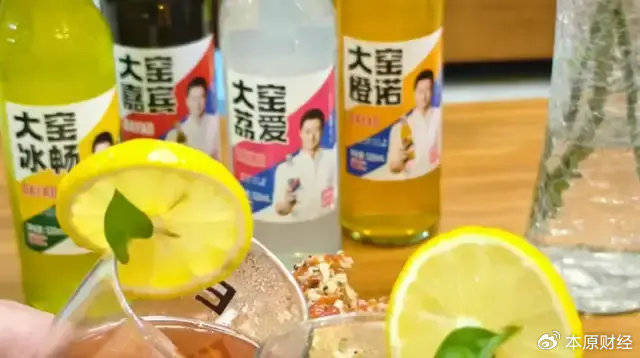
汽水之王大窑,被美国KKR啃下85%
Sou Hu Cai Jing· 2025-07-24 03:05
Core Viewpoint - The company "Dai Yao" has chosen to sell itself to KKR, a prominent American private equity firm, rather than pursuing an IPO in Hong Kong, marking a significant shift from its previous stance against foreign acquisitions [1][8]. Group 1: Company Overview - "Dai Yao" is recognized as a leading domestic beverage brand in China, with a market share of 2.64% in the carbonated drink sector as of the first half of 2023, positioning it as the third-largest player in the market [7]. - The company achieved a revenue of over 3.2 billion yuan in 2023, indicating strong growth and market presence [7]. - The founder, Wang Qingdong, initially rejected acquisition offers and expressed a commitment to maintaining the brand's independence [1][8]. Group 2: Market Context - The Chinese beverage industry has a history of local brands being acquired by foreign companies, often leading to their decline or disappearance from the market [2][5]. - Major players like Coca-Cola and PepsiCo dominate the carbonated beverage market, controlling approximately 90% of the market share [7]. - The competitive landscape has intensified, with many domestic brands facing challenges in differentiation and market expansion [17]. Group 3: Acquisition Details - KKR is set to acquire an 85% controlling stake in "Dai Yao," while the founder will retain a 15% minority stake [8]. - The decision to sell comes after unsuccessful attempts to secure funding or pursue an IPO, with previous valuation discussions indicating a high asking price that deterred potential investors [7][19]. - The acquisition by KKR is seen as a strategic move that could either enhance "Dai Yao's" market position or lead to challenges regarding control and market dynamics [21].

食品饮料行业2025年二季度基金持仓分析:白酒板块基金持仓比例环比下降,大众品板块略有增持
Guoxin Securities· 2025-07-23 05:17
Investment Rating - The food and beverage industry maintains an "Outperform the Market" rating [4][5][37] Core Viewpoints - The food and beverage industry has a fund holding ratio of 6.2%, which is a decrease of 1.86 percentage points from the previous quarter, ranking fifth among Shenwan's primary industries. The overall overweight ratio for the industry is 1.37%, which has decreased by 1.34 percentage points [1][12] - The liquor sector remains the most heavily weighted, but its overweight ratio has declined, while the consumer goods sector has seen an increase in fund holdings [2][17] Summary by Sections Fund Holdings Analysis - In Q2 2025, the liquor sector's fund holding ratio decreased by 2.07 percentage points to 4.5%, with an overweight ratio down by 1.52 percentage points to 1.35%. Excluding Moutai, the liquor sector's fund holding ratio fell by 1.61 percentage points to 2.61% [2][17] - The consumer goods sector saw increases in fund holdings for soft drinks, snacks, and condiments, with the soft drink sector's fund holding ratio rising by 0.15 percentage points to 0.41% [2][18] Individual Stock Performance - Major liquor stocks such as Kweichow Moutai and Wuliangye saw a decrease in the number of funds holding their shares, with Moutai's holding ratio dropping to 1.88% and Wuliangye's to 0.89% [29][30] - In contrast, stocks like Dongpeng Beverage and Yanjing Beer received increased allocations, with Dongpeng's holding ratio rising to 0.35% [29][30]
6月全社会用电增5.4%
GOLDEN SUN SECURITIES· 2025-07-22 23:58
Group 1: Market Overview - In June, the national electricity consumption increased by 5.4%, with thermal power continuing to show positive growth [15] - The packaging water industry in 2025 is expected to maintain intense competition, with leading companies like Nongfu Spring and China Resources Beverages likely to gain market share [17][19] Group 2: Financial Engineering Insights - In Q2 2025, the average return of active equity funds decreased compared to the previous quarter, but over 60% of these funds still achieved positive returns, with a median quarterly return of 1.95% [3] - The scale gap between active and passive funds has widened, with active equity fund size at 3.28 trillion yuan, smaller than the passive index fund size of 3.60 trillion yuan [3] Group 3: Chemical Industry Analysis - The chemical sector has shown continuous strength, driven by government policies aimed at reducing low-price competition and promoting the exit of outdated production capacity [8] - The basic chemical index has risen by 5.2% since July 17, 2025, indicating a positive market sentiment [9] Group 4: Electricity Sector Insights - The electricity supply side has seen a slowdown in growth for thermal and wind power, while nuclear and solar power generation have accelerated [15] - Recommendations include increasing allocation to the electricity sector, particularly focusing on companies with resilient quarterly performance in thermal power [15] Group 5: Beverage Industry Dynamics - Nongfu Spring is expected to see steady growth in its packaging water business, with strong brand and channel capabilities [18] - China Resources Beverages is positioned to benefit from improved profit margins due to increased self-production and reduced outsourcing costs [19]
天风证券晨会集萃-20250723
Tianfeng Securities· 2025-07-22 23:47
Group 1 - The report highlights the top five actively increased sectors in public funds for Q2 2025, which are communication, pharmaceutical biology, non-bank financials, banking, and military industry, indicating a shift in investment logic towards these sectors [2] - The absolute allocation of active equity funds shows a significant drop in midstream manufacturing and an increase in downstream consumption, with midstream manufacturing at 41.86% and downstream consumption at 34% [2] - The report notes that electronic, pharmaceutical biology, and power equipment sectors have the highest overweight ratios in the industry, while the overweight ratios for power equipment, automotive, and food and beverage sectors have decreased [2] Group 2 - The banking sector has experienced a notable price correction since July 11, with the banking index down 3.41% as of July 18, primarily due to profit-taking and shareholder sell-offs [6] - Despite the recent correction, the long-term positive trend for bank valuations remains intact, supported by stable net interest margins and improving non-interest income [9] - The report recommends focusing on quality regional small and medium banks such as Chengdu Bank and Changshu Bank, as well as major state-owned banks like ICBC, Agricultural Bank of China, Bank of China, and Postal Savings Bank of China [9] Group 3 - The report discusses the expected policy measures from the upcoming Political Bureau meeting, which may further promote domestic circulation and economic stability [4] - It notes that the A-share market has shown slight increases due to better-than-expected economic growth and policies encouraging long-term capital inflow [4] - The report emphasizes the importance of monitoring the performance of various asset classes, including equities and fixed income, in light of ongoing economic adjustments [4][27]
食品饮料行业跟踪报告:6月餐饮增速放缓,白酒有望筑底企稳
Shanghai Aijian Securities· 2025-07-22 13:00
Investment Rating - The report rates the food and beverage industry as "stronger than the market" [2][47]. Core Insights - The food and beverage sector has shown a slight increase of 0.68% in the week from July 14 to July 18, underperforming slightly compared to the Shanghai Composite Index, which rose by 0.69% [2][6]. - The white liquor segment is expected to stabilize after a period of decline, with major brands maintaining stable prices [3][21]. - The soft drink sector is entering a peak season, with expectations of continued growth driven by new product launches [3][34]. - The snack food segment has shown mixed performance, with some companies experiencing significant profit declines due to rising costs and increased marketing expenses [3][36]. Summary by Sections 1. Market Performance - The food and beverage sector's performance ranked 14th among 31 sub-industries, with soft drinks leading the gains at +2.02% [2][9]. - The overall valuation of the food and beverage sector is at a historical low, with a PE-TTM of 21.26x, placing it in the 16th percentile over the past 15 years [4][13]. 2. White Liquor - The white liquor industry has seen collective declines in performance, but signs of stabilization are emerging [3][21]. - Major brands like Moutai and Wuliangye have maintained stable pricing, with Moutai's price at 1930 RMB per bottle [21][22]. 3. Beer - Beer production in June 2025 was 4.12 million kiloliters, a slight decrease of 0.2% year-on-year, attributed to weak restaurant consumption [3][26]. 4. Dairy Products - Dairy production in June 2025 reached 254.6 thousand tons, up 4.1% year-on-year, but the industry is experiencing mixed performance among companies [3][28]. 5. Soft Drinks - The soft drink sector is expected to maintain high growth rates, with a production increase of 3.2% in June 2025 [3][34]. 6. Snacks - The snack food sector has shown varied results, with some companies like Ganyuan Foods reporting significant profit declines due to rising costs [3][36].