老板电器

Search documents
国联民生证券:家电板块2026年行情或值得期待 估值向上有空间
智通财经网· 2026-02-11 06:21
Group 1 - The core viewpoint of the report indicates that the home appliance sector is expected to experience a stable performance in 2026, with domestic demand stabilizing and external demand showing signs of improvement, despite the transitional year of national subsidy policies [1][2] - The report highlights that the home appliance sector's performance in 2026 may be promising due to upward expectations in fundamentals, easing trade tensions, and anticipated overseas interest rate cuts, which could lead to surprising performances from home appliance companies venturing abroad [1] - The report notes that the home appliance sector's relative valuation remains at historically low levels, with expectations for gradual improvement in fundamentals and upward potential in valuations as the value style warms up at the end of the year [2] Group 2 - The report recommends several leading companies in the home appliance sector, including Midea Group, Haier Smart Home, Hisense Home Appliances, and Gree Electric for their cost-performance advantages in white goods [2] - It also suggests focusing on Hisense Visual Technology for its comprehensive strength and steady improvement in market share and profitability in the color TV segment, while keeping an eye on TCL Electronics [2] - Additionally, the report recommends leading companies in the cleaning appliance sector, such as Roborock and Ecovacs, and kitchen appliance leaders like Boss Electric, Supor, and Bear Electric for their international expansion and product innovation strategies [2]





家用电器行业投资策略周报:索尼FY2025Q3季报梳理:06W2026周报-20260210
CAITONG SECURITIES· 2026-02-10 12:40
Core Insights - The report focuses on Sony's FY2025 Q3 earnings, highlighting a slight increase in sales and a significant 22% year-on-year growth in operating profit, driven by its gaming, music, and image sensor segments, all achieving record performance for the third quarter [4][8] - The gaming segment's profit growth is attributed to favorable exchange rates, strong performance in network services, and game software sales, with a strategic shift towards monetizing existing users and new game releases planned for future growth [4][9] - The music segment saw robust growth in sales and operating profit, primarily from streaming revenues, live performances, and popular works from SMG artists, with notable successes in global music charts [4][13] - The film segment experienced a decline in performance, prompting Sony to sign a groundbreaking global exclusive premiere agreement with Netflix to stabilize long-term revenue [4][18] - The electronics segment faced a decline in sales and operating profit, mainly due to weak performance in the Chinese market, but global demand for interchangeable lens cameras remains strong [4][20] - The image sensor segment achieved record sales and operating profit, benefiting from a recovery in the smartphone market and an increase in the proportion of high-end sensors [4][24] - Sony raised its full-year forecasts for FY2025, increasing sales, operating profit, and cash flow expectations, while also announcing a significant increase in its stock buyback program to enhance shareholder returns [4][26][27] Segment Summaries Gaming and Network Services (G&NS) - G&NS reported sales of 1,613.6 billion yen, a 4% year-on-year decline, but operating profit reached 140.8 billion yen, a 19% increase, driven by favorable exchange rates and growth in network services and first-party game software sales [9][10] - PlayStation's monthly active users reached 132 million, a 2% increase year-on-year, with record software revenue driven by major third-party IPs and new blockbuster games [9][10] Music Segment - The music segment achieved sales of 542.4 billion yen, a 13% year-on-year increase, with operating profit of 106.4 billion yen, a 9% increase, driven by growth in streaming revenues and successful releases from SMG artists [13][14] - Notable successes included Rosalía's album topping global charts and multiple Grammy nominations for SMG artists [13] Film Segment - The film segment reported sales of 353.3 billion yen, an 11% year-on-year decline, with operating profit of approximately 30.9 billion yen, a 9% decrease, primarily due to high comparative figures from the previous year [18][19] - A new agreement with Netflix aims to provide a stable revenue base for future film releases [18] Electronics Segment - The electronics segment saw sales and operating profit decline, with significant pressure from the Chinese market, but strong global demand for interchangeable lens cameras was noted [20][22] - A joint venture with TCL aims to enhance competitiveness in the home entertainment sector [22] Image and Sensor Solutions (I&SS) - I&SS achieved sales of 604.3 billion yen, a 21% year-on-year increase, with operating profit of 132 billion yen, a 35% increase, driven by mobile image sensor sales and higher unit prices [24][25] Full-Year Outlook - Sony raised its FY2025 sales forecast to approximately 12.3 trillion yen, an increase of 3%, and operating profit to 1.54 trillion yen, an 8% increase [26][27]

家电行业2025年报业绩前瞻:以旧换新催化延续,海外产能陆续达产出口链盈利改善
Shenwan Hongyuan Securities· 2026-02-10 09:31
Investment Rating - The report maintains a positive outlook on the home appliance industry, particularly for major players in the white goods sector, indicating a favorable investment environment for 2025 [3][5][6]. Core Insights - The home appliance sector is expected to benefit from the continuation of the "trade-in" policy and improvements in overseas production capacity, leading to enhanced profitability in the supply chain [2][5]. - The report highlights three main investment themes: 1. **Dividend**: Major white and black appliance companies are characterized by low valuations, high dividends, and stable growth, providing a high margin of safety and significant elasticity in stock prices [6][7]. 2. **Technology**: Core component manufacturers are transitioning into emerging tech fields such as robotics and semiconductor cooling, seeking cross-industry growth [7]. 3. **Export**: Recovery in export demand and sustained domestic sales of new products, particularly in the small appliance sector, are expected to drive growth [7]. Summary by Sections 1. White Goods and Components - In 2025, the air conditioning sector is projected to produce 195.37 million units, a 3% year-on-year decline, while sales are expected to reach 198.39 million units, down 1% year-on-year, with domestic sales increasing by 1% [5][13]. - The average price of white goods is declining due to high base effects from the trade-in policy, with air conditioning prices dropping by 13% year-on-year [23][24]. 2. Kitchen Appliances - The kitchen appliance sector is experiencing a recovery driven by real estate and trade-in policies, with online sales of range hoods and gas stoves increasing by 7.9% and 1.7% respectively in 2025 [33][34]. - Major companies like Boss Electric and Vatti are leveraging trade-in policies to boost sales, with Boss Electric maintaining a leading market share in range hoods [35][36]. 3. Small Appliances - The small appliance sector is seeing a revival due to the trade-in policy, with significant growth in cleaning appliances, although overall market consumption remains subdued [6][7]. - Companies like Roborock and Ecovacs are expected to benefit from high demand for new products, with projected revenue growth of 34% and 12% respectively in Q4 2025 [5][7]. 4. New Displays and Lighting - The emerging display sector is at a turning point, while the lighting industry is anticipated to see growth as it awaits market recovery [6][7]. - Companies like Hisense and OP Lighting are expected to experience revenue declines in Q4 2025, with projections of -10% and -2% respectively [6][7]. 5. Investment Highlights - The report recommends a combination of leading white goods companies such as Haier, Midea, and Gree, along with Hisense, as they are currently undervalued and offer stable growth prospects [6][7]. - The report also emphasizes the importance of component manufacturers adapting to new technologies and markets, with companies like Huaxiang and Sanhua expected to see significant growth in their respective sectors [7][29][30].



增长51%!苏宁零售云新智家电下乡迎“开门红”
Sou Hu Cai Jing· 2026-02-09 07:39
Core Insights - The 2026 Central Document emphasizes the modernization of agriculture and rural areas, supporting rural consumption upgrades and the recycling of old appliances [1] Group 1: Company Initiatives - Suning Retail Cloud plans to leverage the upcoming New Year Festival to launch the "Subsidy for Rural Areas" initiative across over 10,000 stores, enhancing rural consumer access to smart appliances [1][4] - The company is focusing on a "walk into villages" service model to facilitate the exchange of old appliances and promote consumption policies [1][4] Group 2: Market Trends - The county market is experiencing a generational shift in consumer demographics, with younger consumers prioritizing quality and digital experiences [3] - There is a transition in household consumption from basic appliances to a demand for smart, healthy, and comfortable home experiences [3] Group 3: Sales Performance - In January 2026, Suning Retail Cloud reported a 51% year-on-year increase in sales, with significant growth in "burden-reducing" and "atmospheric" appliances [6] - Specific product sales saw remarkable increases: robotic vacuum sales up 147%, dishwashers up 83%, and large-screen TVs up 75% [6] Group 4: Strategic Developments - Suning Retail Cloud is enhancing its large store strategy, with 24.10% of new franchise stores being large format, providing ample space for experiential retail [3] - The integration of local cultural elements into the "Subsidy for Rural Areas" initiative aims to create a festive atmosphere while facilitating consumer engagement [4][8] Group 5: Future Outlook - The comprehensive rollout of the "Subsidy for Rural Areas" initiative is expected to amplify the synergy between policy and market, invigorating the New Year consumption market [8] - The deep service model being explored by Suning Retail Cloud is anticipated to unlock further potential in rural consumption and improve residents' quality of life through smart appliance adoption [8]



从功能消费到情绪消费:2026,人们把家“买”成了什么样?
第一财经· 2026-02-09 06:00
Core Insights - The article emphasizes the transformation in consumer behavior from merely purchasing products to seeking comprehensive "home living solutions" that cater to emotional and experiential needs [1][3][60] Group 1: Consumer Trends - The demand for "ceremony" is shifting inward, focusing on self-care rather than social display, with 40.2% of individuals preferring to spend personal time at home and 77.8% willing to pay a premium for home products that provide emotional value [4][10] - The concept of "meta-scenes" is introduced, breaking down the abstract notion of home rituals into four actionable categories: "reset," "link," "light up," and "renew," which brands can leverage to connect with consumers [6][12] - The trend of "AI personalization" indicates that consumers are willing to invest in smart appliances that understand and meet their needs, moving away from cold, technical specifications to more human-like interactions [14][17] Group 2: Marketing Trends - The integration of online and offline channels is crucial, as consumers prefer immersive experiences in physical stores while valuing the convenience of online shopping [34][35] - Emotional resonance is becoming a key marketing strategy, with brands creating "emotional events" that connect with consumers' feelings rather than relying on traditional advertising methods [40][42] - Products must be contextualized within familiar life scenarios, allowing their functional value to naturally integrate into consumers' daily lives [48][49] Group 3: Future Predictions - The future of smart home technology will focus on "emotional alignment," where devices not only respond to commands but also anticipate user emotions and needs [55][56] - Brands will need to cater to specific consumer segments, offering tailored products that meet the unique demands of different demographics [57] - A shift towards providing "holistic value" will be essential, where brands offer comprehensive solutions that encompass functionality, emotional connection, and service throughout the product lifecycle [58][59]


家电行业周报(2026/2/2-2026/2/6):地产有望逐步企稳,关注地产后周期估值修复-20260208
Hua Yuan Zheng Quan· 2026-02-08 06:47
Investment Rating - The industry investment rating is "Positive" (maintained) [3] Core Views - The real estate sector is expected to gradually stabilize, which may lead to a recovery in valuations for the home appliance industry. Current stock prices may have fully reflected short-term risks due to factors such as demand being pulled forward by national subsidies, upstream price increases, and currency appreciation [3][4] - The core pressure on domestic demand is likely to ease as signs of stabilization in the real estate market emerge. After a deep correction from 2022 to 2025, domestic housing inventory is gradually being reduced, with recent increases in second-hand housing transaction volumes in Shanghai and narrowing price declines in first-tier cities [4][8] - The leading companies in the white goods sector are currently valued at historically low levels, with projected P/E ratios for 2026 being 12 for Midea Group, 7 for Gree Electric Appliances, and 10 for Haier Smart Home. If the real estate market stabilizes, these companies may see a valuation recovery [14] Summary by Sections 1. Signs of Stabilization in Real Estate - Signs of stabilization in the real estate market are emerging, with domestic housing inventory gradually decreasing and recent increases in second-hand housing transactions in Shanghai. The drag effect of real estate on domestic demand is expected to gradually diminish [4][8] 2. Company Performance Forecasts - Ninebot Company is expected to achieve a net profit of 1.67-1.85 billion yuan in 2025, a year-on-year increase of 54.0%-70.6%. However, Q4 2025 may see a net loss of 120 million yuan to a profit of 60 million yuan due to factors like exchange losses [5][16] - Huabao New Energy is projected to have a net profit of 15.5-23 million yuan in 2025, a year-on-year decline of 90.4%-93.5%, with Q4 2025 expected to incur a net loss of 120-130 million yuan [5][16] - Ecovacs is expected to achieve a net profit of 1.7-1.8 billion yuan in 2025, a year-on-year increase of 110.9%-123.3%, with Q4 2025 projected to yield a net profit of 280-380 million yuan [5][16] 3. Market Review - The home appliance sector saw a weekly increase of 1.3% from February 2 to February 6, outperforming the CSI 300 index by 2.6 percentage points. The white goods segment increased by 1.7%, while black goods decreased by 1.9% [17][19] 4. Key Data Tracking - As of February 6, 2026, the RMB appreciated by 88 basis points against the USD, continuing its upward trend. This short-term fluctuation is not expected to affect the core competitiveness of export companies [21] - The LME copper spot price was $12,840 per ton, down 4.0% week-on-week, indicating a slight decline in raw material prices [21][22]
家电行业专题:汇率升值,出海后势如何?
Guolian Minsheng Securities· 2026-02-06 11:37
Investment Rating - The report maintains a "Recommended" rating for the home appliance industry [1] Core Insights - The report highlights that the nominal appreciation of the RMB is expected to have limited impact on export recovery and external sales profitability, as leading brands have strong pricing power, overseas production capacity, and effective foreign exchange hedging [8][11] - The report emphasizes that the home appliance sector is likely to benefit from increased foreign capital inflow due to RMB appreciation, with the sector's valuation and holdings at historical lows, indicating significant upside potential [7][8] Summary by Sections 1. Industry: Nominal Appreciation and Dollar Price Elasticity - Since Q2 2025, the RMB has appreciated approximately 5% due to the easing of trade tensions and economic recovery expectations, with the CFETS index remaining close to its 3-5 year average [11][12] - The report discusses the impact of exchange rates on export volume and pricing, noting that during appreciation phases, exporters may adjust dollar prices or lower RMB prices to mitigate the effects of appreciation [12][22] 2. Financial Statements: External Sales Profitability and Hedging - External sales gross margins have been under pressure, with historical data showing that external sales margins are generally weaker than domestic sales margins [4][6] - The report indicates that major companies have high foreign exchange hedging ratios, which effectively mitigate the impact of exchange rate fluctuations on their financials [4][6] 3. Capital: High Foreign Ownership Proportion - The report notes a strong correlation between RMB appreciation and net inflows of foreign capital, with the home appliance sector consistently attracting significant foreign investment [7][8] - The sector's Northbound trading and public fund holdings are at historical lows, suggesting ample room for upward movement [7] 4. Industry Perspective and Investment Recommendations - The report suggests that under the expectation of moderate appreciation, the competitive edge of leading companies backed by domestic supply chain advantages and proactive overseas capacity expansion will remain intact [8] - Recommended stocks include high-quality white goods leaders such as Midea Group, Haier Smart Home, Gree Electric Appliances, and Hisense Home Appliances, as well as TV leader Hisense Visual and global leaders in robotic vacuum cleaners like Roborock and Ecovacs [8]
家电行业2026年度信用风险展望(2026年1月)
Lian He Zi Xin· 2026-02-05 11:01
Investment Rating - The report indicates a stable outlook for the home appliance industry, with a focus on credit risk assessment for 2026 [7] Core Insights - The home appliance industry in China experienced a historical high in domestic sales in 2025, driven by government policies and consumer demand, although growth is expected to slow down due to high base effects and market saturation [10][20] - The export of home appliances faced challenges in 2025, with total export value and quantity declining compared to the previous year, influenced by high base effects and uncertain trade environments [10][22] - The industry is undergoing structural changes, with growth driven by smart, green, and high-end product upgrades, as well as deeper market penetration [10][11] Industry Overview - In 2025, China's GDP reached 140.19 trillion yuan, growing by 5.0% year-on-year, supported by domestic demand and government policies [11] - The retail sales of home appliances and audio-visual equipment reached 1.16949 trillion yuan, a year-on-year increase of 11.0% [20] - The home appliance market is characterized by a shift from policy-driven growth to market-driven dynamics, with a notable impact from the "old-for-new" subsidy policies [10][20] Policy and Regulatory Environment - The government continued to enhance the "old-for-new" subsidy policy in 2025, expanding the scope and funding to stimulate home appliance consumption [15][16] - The 2026 policy will maintain support for the "old-for-new" program, focusing on energy-efficient products and expanding the range of supported items [17] Industry Performance - The home appliance sector showed resilience in 2025, with sample companies reporting revenue growth of 7.35% and profit growth of 10.42% in the first three quarters [44] - The industry is experiencing a structural differentiation in performance, with leading brands benefiting from government policies and market dynamics [38] Competitive Landscape - The home appliance industry is highly competitive, with leading companies like Midea, Haier, and Gree dominating the market, accounting for a significant share of total revenue [38][41] - The market is increasingly concentrated, with the top ten companies accounting for approximately 82.38% of the industry's revenue [38] Financial Condition - The sample companies in the home appliance industry maintain a low leverage level, with a median debt-to-asset ratio of 43.29% as of September 2025 [49] - Profitability indicators show a decline in gross margin to 21.61% in the first three quarters of 2025, compared to 23.15% for the previous year [45]
8个地址都是假的!上海90岁老伯深陷连环套,4600元打水漂!类似套路专门针对老年人
Huan Qiu Wang· 2026-02-05 05:35
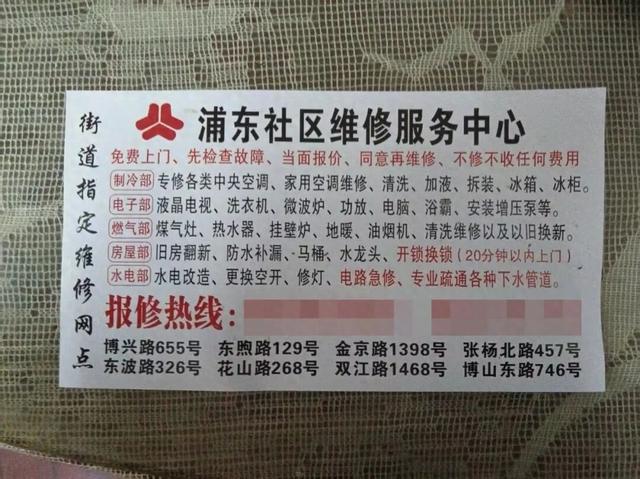
来源:新民晚报 上海市民曹老伯向"新民帮侬忙"反映,自己家的燃气灶突然打不着火,拨打"街道指定维修网点"卡片上 的电话联系报修,换燃气灶、洗油烟机,总计花费了4600元。新民晚报记者实地走访小卡片上的8个维 修网点,均为虚假地址。而"维修工人"与曹老伯是"现金结算"且不给收据,这也堵住了曹老伯和家人追 查此事的可能。相关方面提醒市民,警惕不请自来的小卡片,背后暗藏着"天价维修陷阱"。 上门维修 开出天价 曹老伯今年90岁,和80多岁的老伴居住在浦东新区云山路金杨路一小区。 曹老伯告诉新民晚报记者,1月21日,他发现燃气灶无法正常点燃,便找出信箱里收到的一张"街道指定 维修网点"的小卡片,根据报修热线拨打了电话。 "当天下午,一工人上门检查,说燃气灶坏了,要换一台新的。" 小卡片 老伯更换的燃气灶 对方在没有出具任何报价单,也没有经曹老伯明确同意的情况下,竟然直接动手砸毁了旧灶具。势成骑 虎,曹老伯只得无奈接受了对方推荐的一台"蓝宝石"燃气灶。 "他们一开始报价3900元,最终收取了3700元现金,没有给我任何收据与发票。" 随后,这名"工人"又指出,脱排油烟机"太脏",主动提出可以帮忙联系专人清洗。"原本15 ...
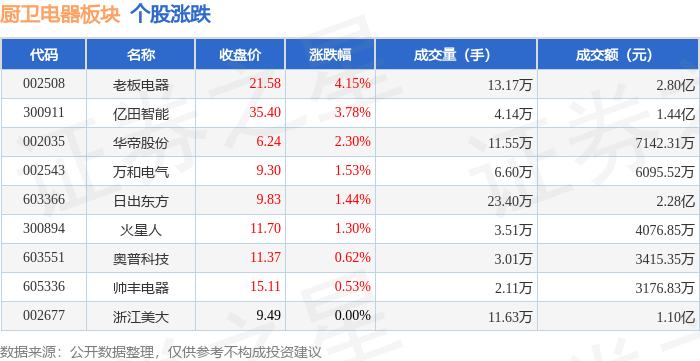
厨卫电器板块2月4日涨2.26%,老板电器领涨,主力资金净流入379.77万元
Zheng Xing Xing Ye Ri Bao· 2026-02-04 08:56
Group 1 - The kitchen and bathroom appliance sector increased by 2.26% on February 4, with Boss Electric leading the gains [1] - The Shanghai Composite Index closed at 4102.2, up 0.85%, while the Shenzhen Component Index closed at 14156.27, up 0.21% [1] - Key stocks in the kitchen and bathroom appliance sector showed various performance metrics, with Boss Electric closing at 21.58, up 4.15% [1] Group 2 - The main capital flow into the kitchen and bathroom appliance sector was a net inflow of 3.7977 million yuan, while retail investors saw a net inflow of 75,000 yuan [1] - Detailed capital flow data indicates that Boss Electric had a main net inflow of 8.0368 million yuan, with retail investors experiencing a net outflow of 1.52652 million yuan [2] - Other companies like Sunrise Oriental and Vatti Holdings also showed varied capital flows, with significant net outflows from retail investors [2]