
华创证券

Search documents
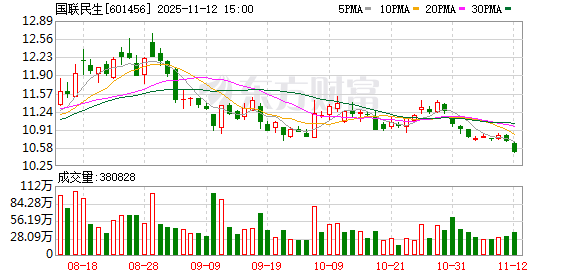
持股近100%!国联民生1.71亿元拿下民生证券0.72%股权
Shang Hai Zheng Quan Bao· 2025-11-12 12:57
Core Viewpoint - Guolian Minsheng successfully acquired 81.543 million shares of Minsheng Securities, increasing its stake from 99.26% to 99.98%, nearing full ownership [2][5] Group 1: Acquisition Details - The shares were acquired through judicial auction for approximately 171 million yuan [2] - The shares are currently under a court seal and pledge by the Beijing Second Intermediate People's Court [5] Group 2: Business Integration - The integration of core businesses between Guolian Minsheng and Minsheng Securities has progressed significantly this year, with a focus on achieving synergistic effects [5] - As of September 23, Minsheng Securities' investment banking projects have been merged into Guolian Minsheng Securities [6] - A successful transition of the brokerage business's trading system was completed in early October, allowing seamless access for 1.92 million clients and processing 640,000 transactions worth 9.476 billion yuan on the first day [6] Group 3: Financial Performance - Guolian Minsheng reported a third-quarter revenue of 2.027 billion yuan, a year-on-year increase of 120.55%, and a net profit of 636 million yuan, up 106.24% [6] - For the first three quarters, the company achieved a revenue of 6.038 billion yuan, reflecting a growth of 201.17%, and a net profit of 1.763 billion yuan, a significant increase of 345.30% [6] Group 4: Market Outlook - Industry analysts are optimistic about the integration prospects of Guolian Minsheng, noting significant growth in brokerage revenue and orderly business integration [7] - The completion of the consolidation is expected to enhance scale and synergy effects, particularly in investment banking and wealth management, thereby strengthening the company's core competitiveness [7]


优彩资源:接受华创证券等投资者调研
Mei Ri Jing Ji Xin Wen· 2025-11-12 00:31
Company Overview - Youcai Resources (SZ 002998) announced an investor meeting scheduled for November 11, 2025, from 15:00 to 16:30, where company representatives will address investor inquiries [1] - The company reported that for the first half of 2025, its revenue composition was 99.22% from the textile chemical fiber industry and 0.78% from other businesses [1]
港股收盘 | 恒指收涨1.55% 消费股走势强劲 中国中免大涨超15%
Zhi Tong Cai Jing· 2025-11-10 09:06
Market Overview - The Hong Kong stock market experienced a significant upward trend, with all three major indices rising over 1%. The Hang Seng Index increased by 1.55% or 407.23 points, closing at 26,649.06 points, with a total trading volume of HKD 2,147.88 million [1] - The Hang Seng China Enterprises Index rose by 1.9%, closing at 9,443.24 points, while the Hang Seng Tech Index increased by 1.34%, closing at 5,915.56 points [1] Blue Chip Performance - Pop Mart (09992) led the blue-chip stocks, surging by 8.11% to HKD 221.4, contributing 19.35 points to the Hang Seng Index. The company's sales growth was driven by increased production capacity and consumer demand [2] - Other notable blue-chip performers included CNOOC (00883) up 5.95%, China Resources Mixc Lifestyle (01209) up 4.98%, and Haidilao (06862) up 4.9% [2] Sector Highlights - Major technology stocks showed positive performance, with Tencent rising by 2.44% and Alibaba by 2.06%. The consumer sector was boosted by multiple favorable factors, with China Duty Free (601888) soaring over 15% [3] - The cryptocurrency sector saw significant gains, with Bitcoin returning to USD 106,000, leading to a rise in related stocks [4][5] - Gold stocks continued their upward trend, supported by gold prices nearing USD 4,080 per ounce, with several gold companies reporting substantial gains [5][6] Consumer Sector Dynamics - The consumer sector experienced a strong rally, with China Duty Free (01880) rising 15.34% and other consumer stocks like Huasheng Group (01179) and China National Aviation (00753) also showing significant increases [4][9] - The Ministry of Finance's report on consumption policies and the rise in the Consumer Price Index (CPI) contributed to the positive sentiment in the consumer market [4] Lithium Industry Insights - Lithium stocks were active, with Tianqi Lithium (09696) rising by 3.04%. The price of lithium hexafluorophosphate increased by 13.02% compared to the end of October, indicating a potential price increase cycle [6][7] - Analysts predict strong battery demand growth, with expectations of a 31% increase by 2026, highlighting the positive outlook for companies like Ganfeng Lithium [7] Notable Stock Movements - LeShuShi (02698) debuted with a significant rise of 25.95%, reflecting strong market interest in its health products [8] - Longhua Automobile (02333) saw an increase of 8.19%, driven by a strong new car cycle and ongoing transformation towards new energy vehicles [10] - Cambridge Technology (06166) reported a 21.57% increase in revenue for the first three quarters, indicating robust growth in its core business segments [11]

2026出口初窥之三分法:量为核心,价随量动,份额风险降低:【宏观快评】10月进出口数据点评
Huachuang Securities· 2025-11-09 00:15
Export Data Overview - In October, China's exports in USD terms decreased by 1.1% year-on-year, significantly lower than the Bloomberg consensus expectation of 3% and down from 8.3% in September[2] - October's exports saw a month-on-month decline of 7.1%, approaching historical lows (2022's -7.7%) due to seasonal factors and a high base effect from the previous year[5] - The two-year average year-on-year growth for October was 5.5%, similar to September's 5.3%[3] Regional Analysis - Exports to the US showed marginal improvement, with a month-on-month increase of 1.8%, marking a significant recovery compared to historical lows in July and August[18] - Conversely, exports to the EU exhibited weakness, with a month-on-month decline of 8.6% in October, indicating potential risks in EU demand[18] - Exports to ASEAN countries improved slightly, with a month-on-month change of -0.7%, aligning closely with historical averages[19] Future Outlook - For Q4, the low base in November and slightly higher base in December suggest potential year-on-year growth of 1.2% for Q4, with an annual growth estimate of 4.8%[21] - The reduction of the fentanyl tariff by the US may further enhance export performance to the US, as it narrows the tax rate gap with other regions[21] - Leading indicators from G7 countries suggest a potential recovery in export growth for November and December[22] Price and Volume Dynamics - The average export price for 15 major products increased by 5.1% in October, driven by significant price rises in ships, while the export volume growth for these products fell to 5.2%[57] - The overall export price index showed a year-on-year decline of 2.5% for the first eight months of the year, lagging behind global trade price growth of 1%[31] Trade Balance - The trade surplus in October was reported at $901 billion, slightly down from $904 billion in September, indicating a narrowing trend[54]
10月物价前瞻:CPI同比或回升,核心通胀有望延续复苏态势
Sou Hu Cai Jing· 2025-11-07 23:57
Group 1: CPI Insights - The National Bureau of Statistics will release October's consumer price index (CPI) data on November 9 at 9:30 AM [1] - In September, the national CPI decreased by 0.3% year-on-year and increased by 0.1% month-on-month, while the core CPI rose by 1.0%, marking the first return to 1% in nearly 19 months [2] - Multiple institutions predict a rebound in October's CPI, with estimates ranging from -0.1% to 0.1% [2] - Pork prices continue to negatively impact the CPI, with wholesale prices declining year-on-year from -26.3% to -27.2% in October [2] - Prices for 28 monitored vegetables and 7 monitored fruits are expected to improve, with year-on-year declines narrowing from -18.7% and -5.3% to -10.0% and -2.7%, respectively [2] Group 2: PPI Insights - Institutions anticipate a slight increase in the year-on-year decline of the Producer Price Index (PPI) for October, reflecting weak short-term economic performance [4] - In September, the national PPI decreased by 2.3% year-on-year and remained flat month-on-month [4] - Forecasts for October's PPI year-on-year change range from -2.2% to -2.6% [4] - The PMI for major raw material purchase prices and factory prices fell by 0.7 percentage points compared to September, indicating a potential month-on-month PPI decline [5] - The fluctuation in PPI is influenced by international commodity prices and domestic industry competition, with expectations of a year-on-year PPI decline of -2.6% and a month-on-month decline of -0.6% [5]
“存款搬家”效应显现,10月银行理财规模创历史新高
Di Yi Cai Jing Zi Xun· 2025-11-06 01:28
Core Insights - The overall scale of bank wealth management products continues to grow, reaching a historical high of 33.18 trillion yuan by the end of October, despite experiencing two rounds of net value declines this year [1][2][4] - The shift from a "savings" to an "investment" mindset among residents is accelerating, driven by the "price comparison effect" as deposit rates decline and wealth management products offer relatively higher returns [1][2][3] Summary by Sections Market Scale and Growth - As of the end of October, the bank wealth management market reached 33.18 trillion yuan, an increase of 1.05 trillion yuan from the previous month and 3.23 trillion yuan since the beginning of the year, slightly above the average level of the past three years [2][4] - The growth in scale is attributed to the ongoing decline in deposit rates, prompting customers to seek alternative investment opportunities [3][5] Performance of Wealth Management Products - Wealth management product returns have been under pressure, showing a quarterly decline: 2,060 billion yuan in Q1, 1,836 billion yuan in Q2, and 1,792 billion yuan in Q3 [4] - The average annualized return for closed-end and open-end fixed-income products in Q3 was 2.73% and 2.54%, respectively, both below the average performance benchmark [4] Future Outlook - The wealth management scale is expected to continue growing, with projections of an increase of 300 to 400 billion yuan in November, supported by the release of funds from maturing fixed deposits and the relative return advantage of fixed-income products [6][7] - The monetary policy environment is favorable for growth, with the central bank's actions expected to enhance liquidity and improve the ability of wealth management companies to manage redemptions and volatility [7] - However, the long-term outlook suggests a downward trend in returns, with expectations of a gradual decline in the yield of fixed-income products due to a persistently accommodative monetary policy [8]
险资三季度“扫货”银行股!红利低波ETF(512890)流通规模近250亿,成资金“压舱石”
Xin Lang Ji Jin· 2025-11-04 09:05
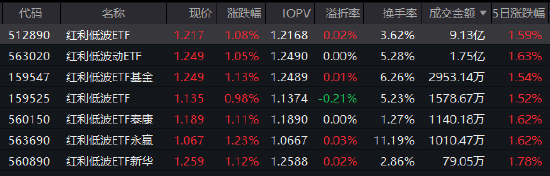
Market Overview - On November 4, the three major A-share indices collectively fell, with the ChiNext Index and Shenzhen Component Index both down nearly 2% [1] - In contrast, the Dividend Low Volatility ETF (512890) rose by 1.08%, closing at 1.217 yuan, with a turnover rate of 3.62% and a transaction volume of 9.13 billion yuan, leading among similar ETFs [1] Fund Performance - The Dividend Low Volatility ETF (512890) has seen significant net inflows, with 330 million yuan over the last 5 trading days, 410 million yuan over the last 10 days, and 3.51 billion yuan over the last 20 days, totaling 3 billion yuan over the last 60 days [2] - As of November 3, 2025, the ETF's circulating scale was 24.988 billion yuan [2] Holdings and Sector Trends - The top ten holdings of the Dividend Low Volatility ETF mostly saw price increases, including stocks like COFCO Sugar, Nanjing Bank, and Agricultural Bank, with a total market value of approximately 5.5 billion yuan [4] - Insurance capital has been increasing its holdings in bank stocks, with notable entries in major banks like Industrial and Agricultural Bank [4] Investment Insights - Analysts suggest that "insurance capital + industrial capital" may become a significant source of incremental funds for the banking sector, favoring stable, high-dividend bank stocks [5] - The banking sector is currently at a historical low in terms of holdings, indicating potential investment value, particularly in regional banks with high provisioning coverage [5] ETF Historical Performance - The Dividend Low Volatility ETF (512890) has achieved a cumulative return of 140.72% as of November 3, 2025, outperforming its benchmark and ranking 75th among 502 similar products [6] - The fund has consistently delivered positive returns for six consecutive years from 2019 to 2024, making it one of the few ETFs in the A-share market to achieve this feat [6]
债市日报:11月4日
Xin Hua Cai Jing· 2025-11-04 07:39
Core Viewpoint - The bond market continues to show weakness, with interbank bond yields slightly rising and a net withdrawal of 259 billion yuan in the open market, indicating a potential tightening of liquidity [1][5]. Market Performance - The majority of government bond futures closed lower, with the 30-year main contract up 0.03% at 116.52, while the 10-year main contract remained flat at 108.66 [2]. - Interbank bond yields mostly continued to rise, with the 10-year government bond yield increasing by 0.25 basis points to 1.7925% [2]. - The China Convertible Bond Index closed down 0.67% at 482.64 points, with significant declines in several convertible bonds [2]. Overseas Bond Market - In North America, U.S. Treasury yields rose across the board, with the 10-year yield increasing by 2.71 basis points to 4.110% [3]. - Asian markets saw Japanese bond yields rise, with the 10-year yield up 1.7 basis points to 1.697% [3]. - In the Eurozone, yields on 10-year bonds also increased, with French bonds rising by 2.3 basis points to 3.442% [3]. Primary Market - The China Development Bank's financial bonds had successful bids with yields of 1.5250%, 1.7027%, and 1.8779% for 2-year, 5-year, and 10-year bonds, respectively, showing strong demand [4]. - Local government bonds in Inner Mongolia and Shaanxi Province also saw high bid multiples, indicating robust investor interest [4]. Liquidity Conditions - The central bank conducted a 7-day reverse repurchase operation with a fixed rate of 1.40%, resulting in a net withdrawal of 259 billion yuan due to maturing reverse repos [5]. Funding Rates - The Shibor rates for most short-term products increased, with the overnight rate down slightly and the 7-day rate up by 0.3 basis points to 1.415% [6]. Institutional Perspectives - Citic Securities suggests that the expansion of the "Southbound Trading" program allows for the inclusion of dim sum bonds and Chinese dollar bonds to enhance returns [7]. - Huachuang Securities indicates that favorable factors in the bond market may lead to a decline in yields as year-end positioning begins [7]. - Huatai Fixed Income notes that the bond market may experience low rates and high volatility, with a projected range for 10-year government bonds between 1.6% and 2.1% [7].
高股息资产继续走强,银行股全线飘红!险资“扫货”股来了
Zhong Guo Zheng Quan Bao· 2025-11-04 05:47
Core Viewpoint - October is historically a strong month for listed companies' performance, leading to market corrections or realizations after sufficient pricing based on fundamentals. November's market characteristics are focused on "forward speculation" [1] Group 1: Market Performance - High dividend assets continue to strengthen, with notable gains in the banking sector, including Xiamen Bank rising over 6% [1][2] - The banking sector leads the market, with significant increases in stocks such as Xiamen Bank, Industrial Bank, and Shanghai Bank [2] Group 2: Institutional Investment Trends - Insurance capital continues to heavily invest in bank stocks, with China Life Insurance becoming a top ten shareholder in Industrial Bank, holding 757 million shares (0.21% stake) by the end of September [2] - Agricultural Bank of China reported that Ping An Life Insurance entered its top ten shareholders, holding 4.913 billion shares (1.4% stake) by the end of September [2] - Other banks like Wuxi Bank, Nanjing Bank, and Changshu Bank also saw new insurance capital entering their top ten shareholders [2] Group 3: Future Investment Strategies - Insurance capital combined with industrial capital is expected to be a significant incremental allocation for the banking sector, with a focus on banks with stable earnings and high dividend returns [3] - Asset management companies (AMCs) are increasing their stakes in several national banks, often with substantial amounts and common board involvement [3] - Insurance capital has shown a strong preference for dividend assets, with 34 instances of stake increases this year, primarily in the banking sector [3]

【资产配置快评】2025年第49期:Riders on the Charts:每周大类资产配置图表精粹-20251104
Huachuang Securities· 2025-11-04 04:41
Group 1: Inflation and Asset Performance - The total return ratio of gold to U.S. Treasuries has surged to 0.38 as of October 2025, indicating that high inflation risks may have been fully priced in[4] - The 10-year U.S. Treasury yield has risen to 4.1%, despite the Federal Reserve's 50 basis point rate cut, reflecting concerns over inflation rather than economic downturn[10] - The equity risk premium (ERP) for the CSI 300 index is at 4.4%, which is one standard deviation below the 16-year average, suggesting potential for valuation uplift[18] Group 2: Market Dynamics and Financing Pressures - The U.S. Treasury has increased debt issuance significantly, leading to a surge in the usage of the Standing Repo Facility (SRF), which reached over $50 billion, a five-year high[13] - Commercial bank reserves have dropped from $3.4 trillion to $2.9 trillion, resulting in increased short-term dollar financing pressures[16] - The 10-year Chinese government bond forward arbitrage return is at 27 basis points, which is 57 basis points higher than the level in December 2016[22] Group 3: Currency and Commodity Indicators - The 3-month USD/JPY basis swap is at -24.6 basis points, indicating higher offshore dollar financing costs, while the Libor-OIS spread is at 106.3 basis points, reflecting eased offshore dollar financing pressures[25] - The copper-to-gold price ratio has fallen to 2.7, while the offshore RMB exchange rate has risen to 7.1, indicating diverging signals between the two metrics[27] - The total return ratio of domestic stocks to bonds is at 28.6, above the average level of the past 16 years, enhancing the attractiveness of equity assets relative to fixed income[29]