应流股份

Search documents
一月策略及十大金股:新的主线浮出水面
SINOLINK SECURITIES· 2025-12-31 00:55
Group 1: Strategy Overview - The report indicates that the market is gradually shifting focus from a single narrative around AI to a broader range of sectors, suggesting that a new investment theme for 2026 is emerging as the market stabilizes and industry rotation accelerates [5][12][15] - The report highlights that the recent rally in the market is driven by a recovery in global risk assets, with expectations of a cross-year market trend starting to take shape [5][12] Group 2: Metal Industry Insights - The report notes that the sharp rise in non-ferrous metals is likely driven by increased demand from high-margin and growth-oriented sectors, which are more tolerant of price increases [5][13] - It emphasizes that the relationship between metal prices and AI investments is similar to the past dynamics between coal/power and new energy sectors, indicating a potential for significant price movements in metals due to AI-related consumption [5][13] Group 3: Currency and Trade Dynamics - The report discusses a new cycle of RMB appreciation, driven by changes in export structure and settlement methods, suggesting that the impact of RMB appreciation on export competitiveness may be less severe than previously thought [6][14] - It highlights that the current high-value export sectors in China possess significant market share and production capacity, which enhances their resilience against trade protectionism [6][14] Group 4: Investment Recommendations - The report recommends focusing on industrial resource products that resonate with AI investments and global manufacturing recovery, including copper, aluminum, tin, lithium, crude oil, and oil transportation [7][15] - It also suggests investing in Chinese equipment export chains that have confirmed cyclical bottoms, such as power grid equipment, energy storage, lithium batteries, photovoltaics, and engineering machinery [7][15] Group 5: Company-Specific Insights - For Yun Aluminum Co. (000807.SZ), the report recommends a long-term investment due to favorable conditions for aluminum exports and potential price increases driven by supply-side reforms and low inventory levels [17] - For Hengli Hydraulic (601100.SH), the report highlights the company's growth potential due to rising global market share and collaboration with leading companies in robotics [18] - For China Southern Airlines (1055.HK), the report notes the expected improvement in industry supply-demand dynamics and the company's large fleet size as key growth drivers [21] - For Li Ning (2331.HK), the report points to management improvements and the upcoming Olympic cycle as catalysts for growth [24] - For Blue Special Optics (688127.SH) and Shengyi Technology (600183.SH), the report emphasizes strong demand in downstream sectors and the potential for price increases due to supply constraints [26][27] - For Te Bao Biological (688278.SH), the report highlights the expected commercial success of its growth hormone product and the potential for new indications to drive revenue growth [28]





机械设备行业制造成长周报(第40期):工信部人形机器人与具身智能标准化技术委员会成立,字节计划2026年斥资230亿美元投资人工智能-20251230
Guoxin Securities· 2025-12-30 11:32
Investment Rating - The report maintains an "Outperform" rating for the machinery equipment sector [5][11]. Core Views - The establishment of the humanoid robot and embodied intelligence standardization technical committee by the Ministry of Industry and Information Technology (MIIT) is expected to promote standardized development in the humanoid robot industry [2][19]. - ByteDance plans to invest $23 billion in artificial intelligence in 2026, indicating a strong commitment to AI infrastructure investment [3][20]. Summary by Relevant Sections Humanoid Robots - The MIIT's new committee will focus on developing industry standards across various areas, which is anticipated to enhance the industry's structured growth [2][19]. - Long-term investment opportunities in humanoid robots are viewed positively, with recommendations to focus on companies with strong positions in the supply chain, such as Feirongda, Longxi Co., Weiman Sealing, Hengli Hydraulic, and others [2][8]. AI Infrastructure - ByteDance's significant capital expenditure plan for AI infrastructure highlights ongoing investment trends among major companies, with a focus on expanding related supply chains [3][20]. - Key areas of interest include gas turbines and liquid cooling solutions, with specific companies recommended for investment, such as Yingliu Co., Wanze Co., and others involved in energy supply for AI data centers [3][8]. Key Company Earnings Forecasts and Investment Ratings - Several companies are rated as "Outperform," including: - Green's Harmonics (688017.SH) with a target price of 169.48 CNY and a market cap of 31.1 billion CNY [11][27]. - Huichuan Technology (300124.SZ) with a target price of 73.30 CNY and a market cap of 198.4 billion CNY [11][27]. - Hengli Hydraulic (601100.SH) with a target price of 108.61 CNY and a market cap of 145.6 billion CNY [11][27]. - The report emphasizes the importance of identifying companies with strong market positions and growth potential in both humanoid robotics and AI infrastructure sectors [8][11].


工信部人形机器人与具身智能标准化技术委员会成立,字节计划 2026 年斥资 230 亿美元投资人工智能
Guoxin Securities· 2025-12-30 07:04
Investment Rating - The report maintains an "Outperform" rating for the machinery equipment sector [5][11]. Core Insights - The establishment of the humanoid robot and embodied intelligence standardization technical committee by the Ministry of Industry and Information Technology (MIIT) is expected to promote standardized development in the humanoid robot industry [2][19]. - ByteDance plans to invest $23 billion (160 billion RMB) in artificial intelligence in 2026, indicating a strong commitment to AI infrastructure investment [3][20]. Summary by Relevant Sections Humanoid Robots - The MIIT's new committee will focus on developing industry standards in key areas such as common technologies, components, systems, applications, and safety, which will help regulate the industry's growth [2][19]. - Long-term investment opportunities in humanoid robots are promising, with a focus on companies that are core suppliers to Tesla or have strong market positions, such as Feirongda, Longxi Co., Weiman Sealing, Hengli Hydraulic, and others [2][8]. AI Infrastructure - ByteDance's significant investment in AI infrastructure reflects ongoing commitment from major companies to expand in this area, with related industries expected to benefit [3][20]. - The report highlights the importance of gas turbines and liquid cooling technologies in AI data centers, suggesting that companies like Yingliu Co., Wanze Co., and others in the gas turbine supply chain should be closely monitored [3][8]. Key Company Earnings Forecasts and Investment Ratings - Several companies are rated as "Outperform," including: - Green Harmony (688017.SH) with a target price of 169.48 RMB and a market cap of 31.1 billion RMB [11][27]. - Huichuan Technology (300124.SZ) with a target price of 73.30 RMB and a market cap of 198.4 billion RMB [11][27]. - Hengli Hydraulic (601100.SH) with a target price of 108.61 RMB and a market cap of 145.6 billion RMB [11][27]. - The report emphasizes the importance of identifying companies with strong positions in the humanoid robot and AI infrastructure sectors for potential investment opportunities [8][11].
燃气轮机需求复苏 A股产业链公司有望迎来订单与业绩双重爆发
Xin Lang Cai Jing· 2025-12-29 23:27
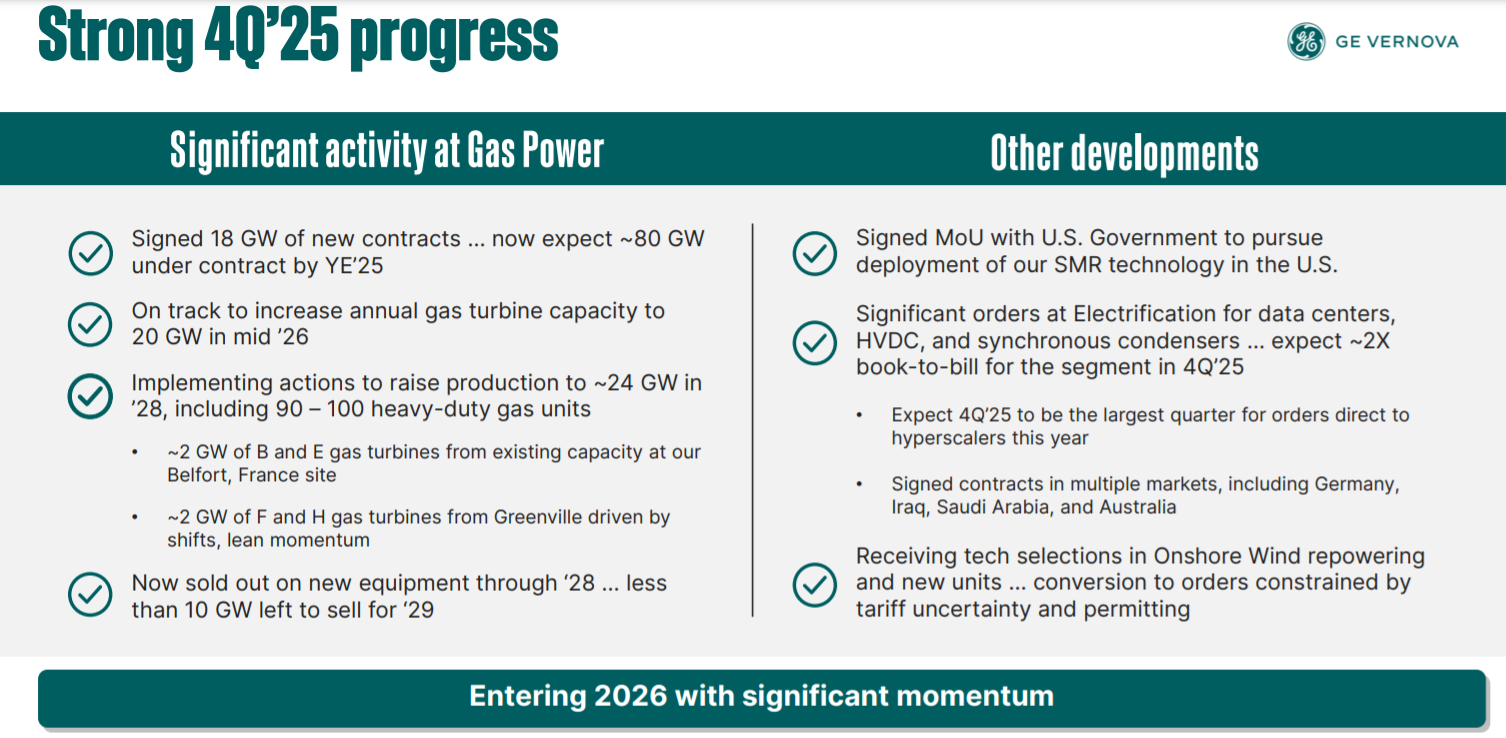
Core Insights - The increasing contradiction between "U.S. power shortages" and explosive growth in computing power demand is driving a rigid demand for electricity from high-energy-consuming facilities like data centers, creating a historic opportunity for gas turbines as a rapid response and efficient power supply solution [1][19] - Major international gas turbine companies like General Electric (GE Vernova) and Siemens Energy are experiencing strong stock performance, reflecting market expectations for future growth, with GE Vernova's stock up over 115% this year and over 430% since its spin-off [20][1] - The strong demand wave from overseas is transmitting through the supply chain, providing unprecedented development opportunities for related A-share listed companies deeply integrated into the overseas power generation equipment supply chain, with expectations for a dual explosion in orders and performance by 2026 [20][1] Electricity Demand and Supply Gap - The electricity gap in the U.S. is continuously expanding, with the U.S. Energy Information Administration (EIA) predicting that electricity consumption will reach 4,267 billion kilowatt-hours by 2026, driven primarily by AI data centers and cryptocurrency mining [2][20] - Morgan Stanley estimates that the cumulative electricity gap for U.S. data centers from 2025 to 2028 will reach 47 gigawatts, equivalent to the total electricity consumption of nine Miami areas, with a shortfall of 6-16 gigawatts expected even after accounting for rapid power supply solutions [2][20] Gas Turbines as a Core Solution - In the context of electricity shortages, gas turbines are becoming the core choice for addressing the U.S. power gap due to their quick startup speed, strong peak-shaving capabilities, and low carbon emissions [21][20] - Compared to traditional coal power, gas turbines can start within hours and respond quickly to the intermittent power demands of data centers, while also providing stable power supply as a baseload source, unaffected by weather conditions [21][20] Global Energy Transition and Gas Turbines - The global energy transition is accelerating under the "dual carbon" goals, with gas turbines serving as a core equipment for transitional energy due to their lower carbon emissions compared to coal power [3][21] - Policies like the U.S. Inflation Reduction Act (IRA) support clean energy projects, including gas power generation, particularly for low-carbon modifications like hydrogen combustion in gas turbines [3][21] Performance and Capacity Expansion of Major Players - GE Vernova and Siemens Energy have provided strong performance guidance and capacity expansion plans, indicating high industry prosperity, with GE Vernova expecting revenues of $41-42 billion in 2026 and a significant increase in gas turbine orders [4][22] - GE Vernova's new gas turbine orders reached 18 gigawatts in Q4 2025, tripling year-on-year, with total orders expected to exceed 80 gigawatts, reflecting a doubling from the beginning of the year [22][25] - Siemens Energy's gas turbine orders reached 26 gigawatts, with a 94% year-on-year increase, and an order value of €23 billion, indicating strong demand from data centers [25][29] Supply Chain Opportunities for A-Share Companies - A-share gas turbine supply companies have achieved technological breakthroughs in various segments, with some becoming core suppliers to overseas giants [34][36] - Companies like Yingliu Technology and Zhenjiang Co. are positioned to benefit from the expansion of GE Vernova and Siemens Energy in North America, with substantial orders and production capacity [35][36] - The demand for key materials and components, such as high-temperature alloy materials and precision parts, is expected to grow significantly, with domestic companies like Sry New Materials leading in the production of high-purity chromium powder [36][34]


解读此轮PCB钻针-液冷-发电行情及后市展望
2025-12-29 01:04
Summary of Key Points from Conference Call Records Industry Overview: PCB and Liquid Cooling PCB Industry Insights - The PCB drill needle market is experiencing strong demand and stable prices, driven by technological innovations and the application of new materials like Q fabric [1][2] - Companies like DingTai High-Tech are actively expanding production capacity, planning to increase monthly output from 120 million to 200 million units by the end of 2026 [2] - The industry is characterized by an oligopoly, primarily led by DingTai and Jingzhou, with price strategies focusing on product structure upgrades rather than uniform price increases [5] - Tungsten prices have surged by 147% from the beginning of the year to mid-December, impacting the cost structure of PCB manufacturers [5] - DingTai has begun negotiations for price increases of 10% to 15% with small and medium-sized clients due to rising tungsten costs [5][6] Liquid Cooling Market Developments - The liquid cooling sector is witnessing a second wave of growth, with the GB300 full liquid cooling solution expected to expand market space fivefold compared to this year [8][10] - Major tech companies like Google are adopting full liquid cooling solutions, increasing demand significantly [8] - The Pearl River Delta manufacturing sector is transitioning towards AI, with several companies acquiring assets to integrate the liquid cooling supply chain [9] - Companies such as Siquan New Materials are positioned to benefit from the growth in the testing cold plate market, with expected revenues in the range of 2 to 3 billion yuan in 2026 [12] Key Companies and Their Strategies - **DingTai High-Tech**: Plans to double production capacity and has initiated price negotiations due to rising material costs [2][5] - **Siquan New Materials**: Expected to see significant revenue growth due to its unique position in the testing equipment sector and partnerships with major clients like Alibaba [12] - **Hongfu Han**: Anticipates receiving approximately 600 million yuan in liquid cooling orders from Alibaba in 2026, with ongoing engagements with major clients like Meta and Amazon [13] - **Yidong Electronics**: Recently expanded capabilities through acquisitions, maintaining optimistic revenue forecasts for the upcoming year [15] Market Trends and Future Outlook - The PCB industry is expected to continue its growth trajectory, with a focus on technological advancements and capacity expansion [2][4] - The liquid cooling market is projected to grow significantly, driven by increasing demand from major tech companies and ongoing industry consolidation [10][11] - Investment opportunities are highlighted in Tier one companies directly linked to major clients, as they are expected to achieve rapid growth [11][20] Additional Insights - The domestic PCB manufacturers are adopting a conservative approach to new materials while accelerating capacity expansion to meet market demands [4] - The competitive landscape in the PCB industry is tightening, with companies closely monitoring each other's pricing strategies and production plans [5] - The liquid cooling market is becoming increasingly competitive, with domestic companies poised to capture more market share as they integrate and expand [9][10] This summary encapsulates the critical insights and developments within the PCB and liquid cooling industries, highlighting key players, market trends, and future growth opportunities.
燃机品种近期市场汇报
2025-12-29 01:04
Summary of Key Points from Conference Call Records Industry Overview - The gas turbine market is expected to remain tight until 2029, with the order-to-supply ratio projected to increase from 5.15 in 2025 to 5.9 by 2027, indicating strong demand [1][2] - Major players like Siemens and GE are expected to sign a combined 74 GW of new orders in 2025, accounting for 60% of the global gas turbine market [1][2] - The total global order backlog is estimated to reach approximately 230 GW, significantly exceeding the 2025 production capacity of 45 GW [1][2] Demand Drivers - Demand in 2025 is primarily driven by AI data centers, non-AI replacements in the U.S., and global non-U.S. demand, totaling around 80 GW, with expectations to rise to 150 GW in 2026 [1][4] - The U.S. accounts for less than 40% of global demand, while regions like the Middle East, Central Asia, Russia, and Africa represent over 60% [1][4] Future Projections - By 2028, the global order backlog could reach 500 GW, with demand increasing to 190 GW, although production capacity is limited to 80-90 GW due to constraints in key components like turbine disks and high-temperature blades [1][4] Company Insights Jereh Corporation - Expected profit for 2025 is approximately 3 billion CNY, increasing to at least 3.3 billion CNY in 2026, corresponding to a market value of 60-70 billion CNY [1][9] - The gas turbine business is projected to be revised upwards to 400 MW, contributing 3.5 billion CNY in revenue and 700 million CNY in profit, potentially adding 20-30 billion CNY in market value [1][9] - The liquid cooling business may contribute an additional 10 billion CNY in market value, leading to an overall market value expectation of 100-110 billion CNY [1][9] Binlun Environment - Positioned among the top three in North America for liquid cooling equipment, with new orders expected to reach 1.6 billion CNY in 2025, a year-on-year increase of over 300% [3][10] - HRSG business revenue is projected at 1 billion CNY for 2025, with a target of 1.5 billion CNY for the following year [3][10] - Collaboration with Hyundai Heavy Industries to expand overseas markets indicates strong growth potential [3][10] Market Trends - The gas turbine market is anticipated to grow significantly due to increasing electricity demand, particularly driven by AI [6][7] - By 2030, AI is expected to contribute an additional 200 GW to U.S. electricity demand, a figure significantly higher than some reports suggest [7] Investment Opportunities - Companies such as Jereh, Haomai, Yingliu, Liande, Boyin, Wande, and Changbao are highlighted as potential investment opportunities due to their growth prospects [8] - Jereh and Binlun are expected to outperform market expectations, with Jereh's market value potentially reaching 100 billion CNY and Binlun at 30 billion CNY based on their business development and market conditions [5][15] Conclusion - The gas turbine market is poised for significant growth driven by technological advancements and increasing demand, particularly from AI applications. Companies like Jereh and Binlun are well-positioned to capitalize on these trends, presenting attractive investment opportunities.


商业航天2025:拐点前夜的助攻、躁动与可回收验证冲刺
Tai Mei Ti A P P· 2025-12-29 00:08
Core Insights - The article discusses the rapid development and transformation of China's commercial space industry, highlighting the significant policy support and market dynamics that are shaping its future [2][4][6]. Policy Support - The Chinese government has introduced a series of "nuclear bomb" level policies to support the commercial space sector, marking 2025 as a pivotal year for the industry [4][6]. - The 14th Five-Year Plan identifies commercial space as a key strategic emerging industry, with the establishment of a 20 billion yuan national fund to support its development [6][9]. - Various local governments have also implemented targeted measures to promote the growth of the commercial space industry [10]. Market Dynamics - The commercial space sector is experiencing unprecedented capital market activity, with significant stock price increases and a surge in IPO applications from leading companies [11][12]. - The commercial space index has seen a remarkable increase of 60.12% in 2025, outperforming the Shanghai Composite Index [16][18]. - The number of registered commercial space-related companies in China has surged, with over 24,800 new registrations in 2025 alone, reflecting a 57.5% increase compared to the previous year [19]. Technological Challenges - Despite the excitement, the industry faces critical challenges, particularly in achieving cost reductions through rocket reuse, which remains a key hurdle [3][28]. - The successful implementation of reusable rocket technology is essential for reducing launch costs by approximately 38%-58% [28][44]. - The industry is also exploring advanced manufacturing techniques, such as 3D metal printing, to further reduce costs and improve production efficiency [31][32]. Competitive Landscape - The competition in the commercial space sector is intensifying, with a focus on low Earth orbit satellite constellations and space computing capabilities [37][45]. - The upcoming IPO of SpaceX, with a projected valuation of $1.5 trillion, is expected to set a new benchmark for the global commercial space industry, influencing domestic players [34][36]. - China's commercial space industry is characterized by a dual structure of state-owned and private enterprises, with private companies expected to fill the capacity gaps left by state-owned entities [42]. Future Outlook - The successful validation of reusable rocket technology and the establishment of a commercial closed-loop system are critical for the industry's long-term sustainability [44][46]. - The development of space computing capabilities is seen as a potential breakthrough for the commercial space sector, offering new revenue streams and competitive advantages [45][46].

华创交运|低空经济周报(第60期):海外观察:美国发布《先进空中交通国家战略2026-2036》-20251228
Huachuang Securities· 2025-12-28 08:16
Investment Rating - The report maintains a recommendation for the low-altitude economy sector [1] Core Insights - The U.S. Department of Transportation has released the "Advanced Air Mobility National Strategy 2026-2036" and the "Advanced Air Mobility Comprehensive Plan," aiming to position the U.S. as a leader in aviation by establishing a robust AAM system [4][5] - The report emphasizes that both Chinese and U.S. companies are highly competitive in the low-altitude economy, with Chinese firms leading in the eVTOL sector, and anticipates that both countries will dominate the global market [21][22] - The National Development and Reform Commission (NDRC) has established statistical classifications for the low-altitude economy, indicating a significant acceleration in its development [23][27] Industry Overview - The low-altitude economy encompasses four main categories: low-altitude manufacturing, low-altitude operations, low-altitude infrastructure and information services, and low-altitude supporting industries, with a total of 23 subcategories and 65 detailed classifications [23][24] - The "Low Altitude Economy and Its Core Industry Statistical Classification" aims to define the scope and scale of the low-altitude economy, fulfilling the statistical needs of various governmental and societal stakeholders [23][24] Performance Metrics - The Huachuang Transportation Low Altitude 60 Index rose by 4.6% in the week ending December 26, 2025, and increased by 20% over the year, outperforming the CSI 300 Index, which rose by 18.4% [32][33] - The report highlights significant individual stock performances, with notable increases in companies such as Guolian Aviation (32%), Xinjingang (23%), and Zhongfu Shenying (19%) [34] Investment Recommendations - The report suggests focusing on various segments of the low-altitude economy, including: 1. Manufacturing: Key players include Wan Feng Aowei (eVTOL and general aviation), Xirui (general aviation), and Yihang Intelligent (eVTOL) [41] 2. Supply Chain: Companies like Zongshen Power and Yingboer are highlighted for their roles in the aviation engine and electric control markets [41] 3. Low-altitude Digitalization: Companies such as Lais Information and Sichuan Jiuzhou are noted for their contributions to low-altitude digital infrastructure [41] 4. Operations: Companies like CITIC Haizhi and Xiangyuan Cultural Tourism are recognized for exploring commercial applications in low-altitude operations [42]
AIDC景气度带来燃机发展机遇,关注赛道竞争优势企业
Xinda Securities· 2025-12-27 15:23
Investment Rating - The industry investment rating is "Positive" [2][3] Core Insights - The report highlights the opportunity for gas turbine development driven by the demand for electricity, particularly due to AI data centers and recent power outages in California [2][3] - GE Vernova anticipates signing contracts for 80GW of combined cycle gas turbines by the end of 2025, with an upward revision of revenue expectations from $45 billion to $52 billion by 2028 [3] - The report emphasizes the supply-demand mismatch in electricity, indicating that gas turbine generators have significant growth potential in the short term [3][4] Summary by Sections Industry Overview - The report discusses the impact of recent power outages in California, affecting 130,000 households and businesses, and the increasing focus of AI companies on electricity supply [3] - The report identifies gas turbines as a stable and efficient power generation technology, suitable for meeting the short-term electricity demands of AI data centers [4] Supply Chain Analysis - The gas turbine supply chain includes upstream companies providing key components such as high-temperature alloys and turbine blades, with notable companies like Linde Co., Yingliu Co., and Haomai Technology [5][6] - Midstream companies responsible for gas turbine generator development include Jereh Group, Dongfang Electric, and Shanghai Electric [7] - Downstream applications involve companies like Jereh Group and Xizi Clean Energy, which provide essential components for gas turbine power generation [9] Company Focus - Jereh Group is highlighted as a leading company in oil service equipment, with significant growth potential in the AI data center electricity sector, supported by strategic partnerships and contracts exceeding $100 million [10][11] - Linde Co. is recognized for its precision casting capabilities in gas turbine components, with expected growth in orders due to increasing demand from AI data centers [13] - Yingliu Co. specializes in high-end castings for gas turbines, maintaining strong partnerships with major players like GE and Siemens, positioning itself well for future growth [14] - Haomai Technology benefits from the expansion of AI data centers and the resulting demand for gas turbine generators [15]
行业点评报告:AIDC设备:把握海外高景气和国内需求弹性双主线
ZHESHANG SECURITIES· 2025-12-26 07:24
Investment Rating - The industry investment rating is "Positive" (maintained) [6] Core Viewpoints - The overseas AIDC construction remains robust, while domestic demand is expected to rebound in 2026. In the second half of 2025, there is a clear divergence in AIDC construction between domestic and international markets. North America continues to experience high levels of capital expenditure, with the four major cloud providers' capital spending reaching $257.4 billion in the first three quarters of 2025, a 65% year-on-year increase. In contrast, domestic cloud providers are experiencing a temporary slowdown in capital expenditure growth due to restrictions on high-end computing card imports, which has delayed some AIDC project timelines. However, this impact is seen as a deferral of demand rather than a disappearance of demand. As overseas supply of computing cards improves and domestic alternatives continue to develop, a "pent-up rebound" in domestic AIDC construction is anticipated in 2026, indicating potential for demand release [1]. Summary by Sections AIDC Equipment - The report highlights the ongoing high demand for AIDC equipment in North America, driven by rapid growth in AI computing needs and delayed power grid construction, leading to increased orders for gas turbines for self-generation or distributed power supply [2]. Gas Turbines - The global gas turbine market is characterized by a significant supply-demand imbalance, with an expected increase of over 85 GW in global gas turbine orders in 2025, while existing effective capacity is around 50 GW. The market is dominated by GE, Siemens Energy, and Mitsubishi Heavy Industries, which together hold an 88% market share. The backlog of orders extends to 2028, creating opportunities for Chinese companies to enter the overseas market [2][3]. Diesel Generators - Diesel generators are essential backup power sources in AIDC construction, with a long-term market dominated by Cummins, MTU, and Caterpillar, which together hold about 85% of the market share in China. Current capacity bottlenecks faced by overseas manufacturers present a window of opportunity for domestic manufacturers like Weichai to replace foreign brands and expand internationally [4]. Cooling Equipment - The report notes that the rapid increase in AI chip power consumption is pushing the adoption of liquid cooling solutions, as traditional air cooling approaches reach their physical limits. This trend is expected to drive demand for related cooling equipment [5]. Emerging Technologies - Solid Oxide Fuel Cells (SOFC) are being explored as a solution to power shortages in North America, offering high modularity, short delivery cycles, and high efficiency. The report suggests that SOFC costs are approaching those of gas turbines, indicating a potential growth area [7]. Data Center Busbars - The traditional "rack and cable" approach in high-power density scenarios is being replaced by intelligent busbar solutions, which offer higher reliability and easier maintenance, marking a significant upgrade direction for data center power distribution systems [8]. Investment Recommendations - The report recommends focusing on several key areas: gas turbines, diesel generators, cooling equipment, and emerging technologies like SOFC and data center busbars, as these sectors are expected to benefit from structural opportunities driven by both domestic and international demand [8]. Key companies to watch include Yingliu, Ice Wheel Environment, Weichai Power, Haomai Technology, and Jerry [8].