蜜雪冰城

Search documents
郑州“场景焕新”激活消费新增长极 ——透视一座城的消费升级之路
He Nan Ri Bao· 2026-01-05 23:25
Core Insights - Zhengzhou's new commercial projects are moving beyond traditional shopping models to create complex consumption hubs that integrate culture, art, social interaction, and leisure, marking a clear sign of consumption upgrade in the city [2] Group 1: New Consumption Scenes - The "park park" district has quickly become a popular leisure destination for young people, featuring unique stores and a relaxed atmosphere that caters to the needs of the younger consumer demographic [1] - Other new consumption scenes are emerging in Zhengzhou, such as Zhengdong Wanda Plaza and Bo Du New Image Street, which incorporate local cultural elements and artistic designs to enhance the shopping experience [1] Group 2: Policy and Market Dynamics - Zhengzhou is accelerating its development as an international consumption center, supported by policies that promote new consumption formats and innovative market practices [2] - Since 2025, Zhengzhou has hosted over 1,100 consumption promotion events, stimulating market potential and driving significant sales, including 410 million units of products exchanged through trade-in programs, resulting in a consumption boost of 48.2 billion yuan [2] Group 3: Commercial Innovation - The emergence of first-store and first-launch economies is enhancing the city's commercial appeal, with both international and local brands establishing a presence in Zhengzhou [3] - New business models such as instant retail and live e-commerce are rapidly gaining traction, contributing to the dynamic commercial landscape [3] Group 4: Economic Growth - Zhengzhou's total retail sales of consumer goods reached 608.85 billion yuan in the first eleven months of 2025, reflecting a year-on-year growth of 5.2% [5] - The rise of new consumption scenes is attributed to the interplay of urban function updates, industrial upgrades, and demographic changes, indicating a shift in consumer focus from basic needs to quality and experience [5]


2025年茶饮行业数据总结及2026年展望
2026-01-05 15:42
Summary of the Conference Call on the Tea Beverage Industry and Companies Industry Overview - The tea beverage industry is experiencing growth, with significant developments expected in 2026, particularly in Southeast Asia, South America, and Japan/Korea markets, which are identified as key growth areas due to their market potential and increasing brand presence [25][21]. Company Insights Gu Ming - **2025 Performance**: Gu Ming's GMV (Gross Merchandise Volume) grew approximately 18% year-on-year, with December's takeaway orders dropping to 37% due to subsidy reductions and seasonal factors. The actual revenue rate for takeout was around 75%, down from nearly 70% during peak subsidy periods [1][3][5]. - **2026 Projections**: Gu Ming anticipates a total revenue (GMV) of 35 billion yuan in 2026, with company revenue expected to exceed 40% of GMV. Growth will primarily come from the addition of over 3,000 new stores, with daily average revenue per store projected to remain stable at around 7,500 to 8,000 yuan [1][7]. - **Sales Strategy**: The company plans to increase coffee product sales to 25% of total sales, promote breakfast and afternoon tea offerings, and introduce new products. The expected ROI for paid advertising is projected to be between 1:4 and 1:5 [1][9][10]. - **Store Performance**: In December, Gu Ming's average daily revenue per store was 209,000 yuan, with a stable average transaction value of 25.7 yuan [2]. Mi Xue Bing Cheng - **2025 Performance**: Mi Xue Bing Cheng reported a same-store sales growth of 3-4% in December, with a slight increase in actual revenue of about 1%. Online sales accounted for 36% of total sales, showing a year-on-year increase but a decline compared to the previous month [16][22]. - **2026 Expansion Plans**: The company plans to add 5,000 new stores in 2026, focusing on tourist attractions and transportation hubs, with a total of 8,000 new stores expected. The company aims to maintain its pricing strategy without increasing prices to achieve a 5% same-store growth [18][22]. - **Sales Strategy**: Mi Xue Bing Cheng is also looking to enhance its product offerings and has plans to open flagship stores to strengthen its brand presence in key locations [34]. Lucky Coffee - **2025 Performance**: Lucky Coffee's daily average sales reached approximately 3,300 yuan, with a significant increase in store numbers from 4,500 to 11,000 by the end of 2025. The company has focused on coffee products, which now account for 80% of its offerings, with 90% of sales coming from coffee-related products [26][27]. - **Future Growth**: The company expects a 10% growth in single-store performance for 2026, driven by increased foot traffic and optimized marketing strategies [28]. Key Challenges and Considerations - **Subsidy Reductions**: The reduction in takeout subsidies has led to a decline in revenue rates, which could impact overall sales performance across the industry [3][5]. - **Market Competition**: The potential for price wars due to reduced subsidies may affect consumer behavior and sales dynamics, particularly in the mid-tier beverage market [22]. - **Investment Models**: Different investment models among companies, such as Gu Ming's higher investment costs compared to Lucky Coffee's lower model, may influence their expansion strategies and franchisee recruitment [32]. Conclusion The tea beverage industry is poised for growth, with companies like Gu Ming, Mi Xue Bing Cheng, and Lucky Coffee implementing strategic plans to enhance their market presence and sales performance. However, challenges such as subsidy reductions and competitive pressures will require careful navigation to sustain growth trajectories in the coming years.
2026年投资策略-重视服务消费布局元年
2026-01-05 15:42
Summary of Key Points from Conference Call Records Industry Overview - The focus is on the service consumption sector, which is expected to be a key area for investment in 2026, driven by structural opportunities in the consumer market and the shift in consumer behavior from basic needs to entertainment and experience-based consumption [1][4]. Core Insights and Arguments - **Consumer Market Dynamics**: The total retail sales are projected to reach 50 trillion, primarily concentrated in goods and dining, showcasing strong resilience [1]. - **Service Consumption Potential**: There is significant potential in service consumption, supported by policies that increase holidays and enhance consumer capacity. The aging population, particularly the 60s demographic, is driving demand for healthcare and wellness services, making the silver economy a growth engine [1][5]. - **Travel Industry Opportunities**: Key areas in the travel industry include duty-free, hotels, scenic spots, and OTA (Online Travel Agency). The OTA sector has exceeded expectations due to supply chain recovery, while the duty-free sector benefits from a rebound in high-end consumption [1][6]. - **Population Dividend**: Four demographic groups (50s, 60s, 90s, and 10s) present new investment opportunities, corresponding to healthcare, silver economy, single economy, and parent-child education [1][7]. - **Technological Impact**: The application of technology is fostering a positive cycle of supply and demand for emerging products, with innovations attracting consumer interest [1][8]. Additional Important Insights - **Hainan Duty-Free Policy**: The ongoing duty-free policy in Hainan is expected to release significant consumption potential, particularly among local residents, and the introduction of domestic goods in duty-free stores is anticipated to drive growth [1][9][10]. - **Hotel Industry Outlook**: The hotel sector is expected to return to healthy growth in 2026, with leading companies likely to improve their valuations and performance due to supply-side improvements [1][11]. - **Tourism Sector Expectations**: The tourism industry is projected to thrive in 2026, supported by increased holiday days and potential service consumption subsidies, with a focus on the silver economy and pilgrimage tourism [1][12]. - **Restaurant Industry Trends**: The restaurant sector is expected to adapt well in a weak economic environment, with opportunities arising from new business lines and improved operational capabilities [1][14]. Investment Strategies - **Social Service Sector**: Investment strategies for 2026 focus on two main lines: incremental markets with marginal changes (duty-free, hotels, silver economy) and stable long-term opportunities in chain businesses and supply chains [2]. - **Education Sector**: The education sector is expected to see growth in vocational and AI education, with policies supporting resource allocation to match demographic structures [3][19]. Recommendations - **Key Companies to Watch**: - **Vocational Education**: Huatu Shanding, China Oriental Education, Action Education - **AI Education**: Duolingo, Kevin Education, TAL Education, New Oriental, Youdao, and Hong Kong-listed Fenbi [20]. This summary encapsulates the critical insights and strategic directions discussed in the conference call, highlighting the potential investment opportunities across various sectors.
回望新消费:风停了,猪会摔下来
虎嗅APP· 2026-01-05 13:28
Core Viewpoint - The article discusses the dramatic shift in the new consumption sector from a period of rapid growth and high valuations to a phase of significant decline and business failures, emphasizing that while some brands thrived, many others collapsed under unsustainable business models and market conditions [5][24]. Group 1: Market Trends and Brand Performance - In 2021, the new consumption sector experienced a frenzy with 842 financing events totaling over 900 billion yuan, leading to inflated valuations for brands with minimal sales [11]. - By 2025, many once-prominent brands like墨茉点心局 and 钟薛高 faced severe operational challenges, with墨茉点心局 reducing its stores from a nationwide presence to just 29, primarily in its home city of Changsha [6][8]. - The consumer market in 2025 is undergoing a harsh selection process, with a significant number of previously sought-after unicorns facing closure and valuation drops [8]. Group 2: Reasons for Business Failures - The rapid decline of brands can be attributed to several factors: high operational costs, severe product homogeneity, and a faster-than-expected consumer downgrade [19]. - The cost of maintaining storefronts in high-rent areas is unsustainable for low-margin products like 30 yuan noodles, leading to financial strain [19]. - The oversaturation of similar products in the market has made it difficult for brands to differentiate themselves, resulting in a loss of consumer interest [19]. Group 3: Survivors and Their Strategies - Brands like 蜜雪冰城 have emerged as winners by maintaining a cautious approach to capital and focusing on sustainable business practices, such as building their supply chains [21][23]. - Traditional brands like 泸溪河 have also thrived, with over 600 stores nationwide, demonstrating resilience against the backdrop of newer, capital-driven brands [21]. - The article highlights a shift in consumer behavior, where repeat purchases are essential for business sustainability, contrasting with brands that relied heavily on initial consumer interest without fostering loyalty [23][24].

消费者服务行业周报(20251229-20260104):元旦假期消费数据亮眼,看好2026服务消费-20260105
Huachuang Securities· 2026-01-05 11:26
Investment Rating - The report maintains a "Recommended" investment rating for the consumer services industry, indicating an expectation of exceeding the benchmark index by 10%-20% over the next six months [1]. Core Insights - The core focus of the report is on the strong performance of the travel market during the New Year holiday, with significant recovery in both domestic and international travel. The Ministry of Culture and Tourism estimates that 142 million domestic trips were made during the three-day holiday, with total spending reaching 84.789 billion yuan, reflecting a 19.4% increase compared to 2023 and a 1.1% increase compared to 2024 [4][5]. - The report highlights the dual advantages of time and space for travel during the 2026 New Year holiday, as some travelers could extend their holiday to eight days by taking three days off work. This has led to notable growth in outbound travel, nearby trips, winter sports tourism, duty-free shopping, and hotel bookings [4]. - The report expresses optimism for the performance of service consumption-related sectors in 2026, citing specific companies in various segments such as hotels, human resources services, duty-free shops, gaming, internet platforms, catering, tourism, and sports [4]. Summary by Sections Industry Basic Data - The consumer services industry comprises 55 listed companies with a total market capitalization of 498.804 billion yuan and a circulating market capitalization of 457.081 billion yuan [1]. Relative Index Performance - The consumer services sector experienced a decline of 0.72% this week, while the overall A-share market fell by 0.33%, and the CSI 300 index decreased by 0.59% [7]. Important Announcements - Key announcements include leadership changes at companies like 科锐国际 and 天立国际控股, as well as financial performance updates from various firms [32]. Upcoming Shareholder Meetings - Several companies, including 西安旅游 and 凯撒旅业, have scheduled shareholder meetings in January 2026 [34]. Industry News - The report covers various industry developments, including the surge in domestic travel bookings and the launch of new services by companies like 京东 and 拼多多, indicating a vibrant market environment [35][36].
喝古茗单加6份木薯堪比韩国国宴,这个容易吃中毒的奶茶小料咋被抢成断货王?
3 6 Ke· 2026-01-05 09:11
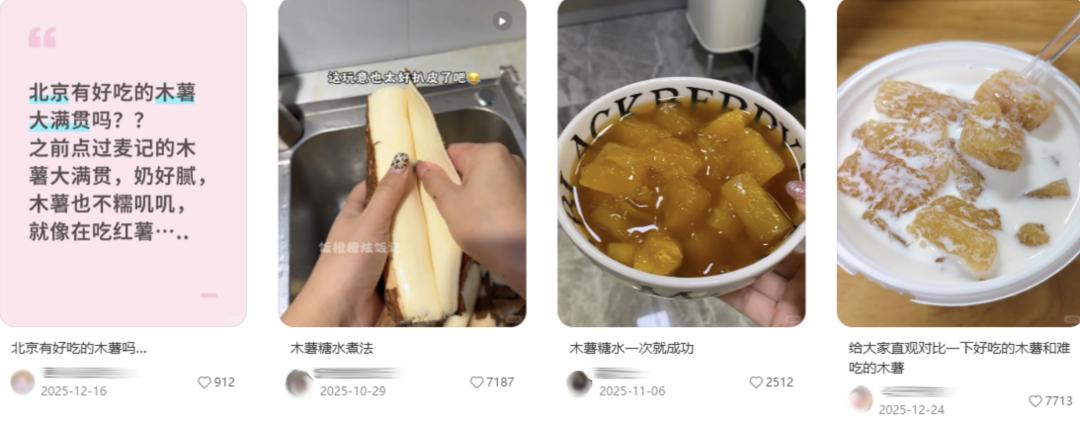
Core Viewpoint - The rising popularity of cassava as a trendy ingredient in winter beverages, particularly in milk tea, has led to significant social media engagement and consumer interest, despite potential health risks associated with its consumption [1][3][19]. Group 1: Popularity and Social Media Engagement - Cassava has become a viral sensation, with the hashtag CassavaSugarWater garnering 930 million views on Douyin and over 200 million views on Xiaohongshu [1][4]. - The unique texture of cassava, described as "geng jiu jiu," has captivated consumers, leading to its classification into three main types: "pulling cassava," "powdery cassava," and "geng jiu jiu cassava," with the latter being the most favored [1][5][7]. Group 2: Consumer Behavior and Product Development - Consumers are increasingly prioritizing cassava over traditional milk tea, with some opting to add multiple servings of cassava to their drinks, indicating a shift in consumption patterns [10][22]. - Brands like Gu Ming have introduced cassava products, such as a 19 yuan peach gum cassava dessert, which quickly gained popularity, leading to a surge in demand for cassava as a key ingredient [3][10]. Group 3: Health Concerns and Preparation Challenges - Despite its popularity, cassava poses health risks due to its natural toxins, which can lead to food poisoning if not properly prepared [19][21]. - The preparation of cassava requires careful handling, including peeling, soaking, and cooking to eliminate toxins, which adds complexity to its consumption [21][22]. Group 4: Market Dynamics and Supply Chain Issues - The cassava market is characterized by a fragmented supply chain, with production concentrated in specific regions, leading to challenges in standardization and quality control [27][30]. - The demand for cassava has prompted brands to explore sourcing from various production bases to ensure consistent quality, highlighting the need for a stable supply chain [28][30].
2026消费前瞻:为「活人感」买单
投中网· 2026-01-05 07:32
Core Insights - The consumption market in 2025 cannot be simply categorized as "recovery" or "weakness," as it reflects a shift in consumer behavior towards price sensitivity and rational consumption, emphasizing the importance of "human experience" [5][22][25] Group 1: Dining Industry - The offline dining sector is facing a decline in foot traffic, with average monthly customer visits dropping to 5,681, a decrease of 0.66% year-on-year, and a more significant decline of 4.1% after June 2025 [8] - To attract customers, many dining brands are adopting price reduction strategies, with self-service hot pot and street food becoming representative categories of this approach [8] - Innovative dining experiences, such as "dining + performance" concepts, are emerging to create new reasons for customers to visit, enhancing the atmosphere and encouraging social sharing [9] - Street food stalls have gained popularity, offering affordable home-style dishes priced between 10-30 yuan, effectively capturing additional customer flow and expanding revenue channels for restaurants [10] Group 2: New Tea Beverage Market - The new tea beverage market in 2025 is stabilizing, with a market size of 374.93 billion yuan, growing by 5.7% year-on-year, a slowdown from 6.4% in 2024 [12] - The total number of tea beverage stores has exceeded 415,000, but the net number of new openings is lower than closures, resulting in a decrease of 39,000 stores [12] - Major brands like Mixue Ice City and Bawang Tea Ji are expanding rapidly, while others like Heytea are experiencing significant store closures, with a reduction of 711 stores, or 15.41% year-on-year [13] - Consumer preferences are shifting towards fresh, health-oriented products, with a growing demand for fresh fruit and low-calorie options [14][15] Group 3: Cultural and Tourism Market - The cultural and tourism market is experiencing significant growth, with domestic travel reaching 4.998 billion trips in the first three quarters of 2025, an increase of 18% year-on-year [17] - Total spending on domestic travel reached 4.85 trillion yuan, reflecting a year-on-year increase of 11.5% [18] - Innovative experiences, such as city walks and rural tourism, are gaining traction, providing consumers with engaging and authentic experiences [20][19]

蜜雪冰城00后员工迟到,辱骂HR?企业辟谣
Nan Fang Du Shi Bao· 2026-01-05 07:24
Group 1 - The incident involving a supposed employee from the "Mixue Ice City Beijing Ruili Jinxihua Garden franchise" who was late and allegedly insulted HR has sparked significant online discussion [1][3] - The official customer service of Mixue Ice City stated that there is no record of the mentioned store in their system, indicating a lack of verification for the claims made [1][3] - A source revealed to reporters that the allegations were false and the original poster of the claims has since deleted the content [1][3]

国信证券晨会纪要-20260105
Guoxin Securities· 2026-01-05 01:16
宏观与策略 宏观快评:12 月 PMI 数据解读-年末脉冲,助力收官 固定收益专题研究:2026 年 1 月转债市场研判及"十强转债"组合 策略深度:资配跨年展望(三)-龙头科技,强者恒强 总量专题(首席经济学家团队):总量专题-26 年牛市的变与不变 行业与公司 证券研究报告 | 2026年01月05日 | 晨会纪要 | | --- | | 数据日期:2025-12-31 | 上证综指 | 深证成指沪深 | 300 指数 | 中小板综指 | 创业板综指 | 科创 50 | | --- | --- | --- | --- | --- | --- | --- | | 收盘指数(点) | 3968.84 | 13525.02 | 4629.93 | 14545.57 | 3911.49 | 1344.20 | | 涨跌幅度(%) | 0.09 | -0.58 | -0.45 | -0.30 | -0.51 | -1.15 | | 成交金额(亿元) | 8295.11 | 12156.30 | 4444.91 | 4402.74 | 5436.91 | 492.84 | $\frac{10}{100}$$\frac ...
河南商超到底有多“中”
He Nan Ri Bao· 2026-01-04 23:31
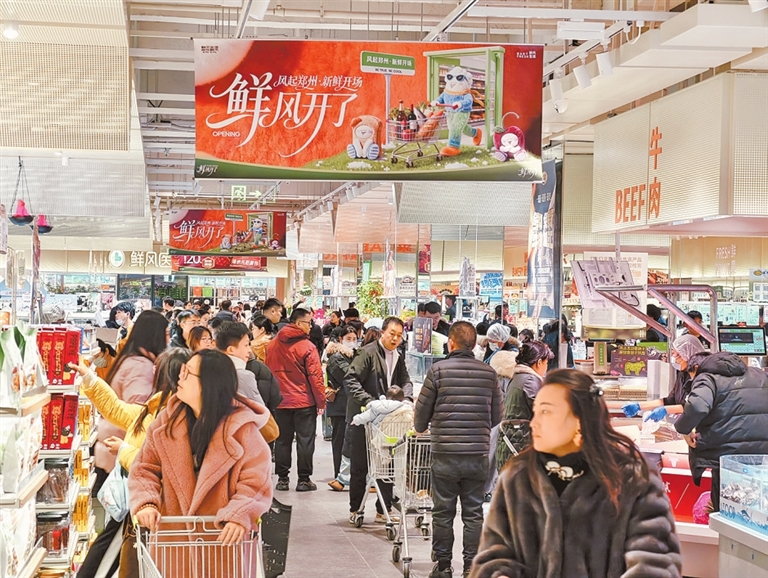
Core Viewpoint - The rise of local supermarket forces in Henan, such as Xianfeng Life, Taoxiaopang, Huayu Baijia, and Farmer Liu, is significantly influenced by the success of the leading supermarket chain, Pang Donglai, showcasing a vibrant retail landscape in the region [3][4][6]. Group 1: Local Supermarket Forces - The "Four Little Dragons" of Henan—Xianfeng Life, Huayu Baijia, Taoxiaopang, and Farmer Liu—are emerging as key players in the retail market, benefiting from a competitive ecosystem fostered by Pang Donglai [4][6]. - Huayu Baijia, the most established among the four, has been operating for 17 years and plans to expand rapidly, currently boasting 24 stores [4]. - Xianfeng Life, with 20 stores and an annual revenue of 3 billion yuan (approximately 30 million), is positioned as an industry leader [4][5]. Group 2: Business Strategies and Innovations - Taoxiaopang, the youngest of the four, aims for national expansion, having opened its first store in Chongqing in 2025 [5]. - Farmer Liu has opened 14 stores in three years, emphasizing employee profit-sharing and a unique business philosophy [5]. - Each of the four companies employs distinct supply chain strategies to differentiate themselves, such as self-branded products contributing significantly to sales [5][11]. Group 3: Regional Advantages and Market Dynamics - Henan's geographical position as a logistics hub, with extensive transportation networks, enhances the operational capabilities of local supermarkets [9][11]. - The region's strong supply chain infrastructure, including numerous wholesale markets, supports the growth of these retail brands [11][14]. - The local market's dynamism is reflected in the emergence of various new consumer brands, indicating a robust economic environment [8][9]. Group 4: Future Outlook - The ongoing development of Henan's retail sector is expected to continue, with local brands becoming influential players in the national market [14][15]. - The emphasis on quality and consumer experience is driving innovation and competitiveness among Henan's supermarkets [9][14].