农夫山泉

Search documents
看穿商标和营销的“文字游戏”丨2025消费问题高发区⑦
Xin Jing Bao· 2025-12-30 11:41
Core Viewpoint - The article highlights the misleading marketing practices in the food industry, where products are often misrepresented through names, concepts, and branding, leading to consumer confusion and potential health risks [1][2][4]. Misleading Product Names - Many food products are marketed under names that do not accurately reflect their content or quality, such as "edible raw eggs" which may not be safe for consumption as claimed [2][3]. - The term "cordyceps egg" is often misleading, as it refers to feed containing insects and grass rather than the well-known medicinal cordyceps [4]. Misleading Marketing Concepts - Products labeled with "new concepts" often do not deliver on their health claims, with many nutritional benefits being overstated or based on minimal ingredient presence [11][12]. - For example, some fish sausages marketed for their DHA content may actually contain little to no real fish, misleading consumers about their nutritional value [11][12]. Brand Confusion and Trademark Issues - Companies are using "near-brand" trademarks to confuse consumers, such as "Oriental Refreshing Tea" mimicking the branding of "Oriental Leaf," leading to potential legal disputes [14][15]. - The practice of "riding on the coattails" of established brands through similar names or packaging is prevalent, with companies facing legal challenges for trademark infringement [15][16]. Regulatory and Consumer Rights - Consumers have the right to know the true characteristics of the products they purchase, and misleading packaging can violate consumer protection laws [10]. - New regulations are being introduced to prevent misleading claims such as "zero additives," which have been misused in marketing [10]. Recommendations for Consumers - Consumers are advised to scrutinize ingredient lists and nutritional information rather than relying solely on product names and marketing claims [5]. - There is a call for the establishment of clearer national standards to regulate misleading marketing practices in the food industry [5].
行业洞察:全球益生菌果汁饮料市场生产商排名及市场占有率
QYResearch· 2025-12-30 09:59
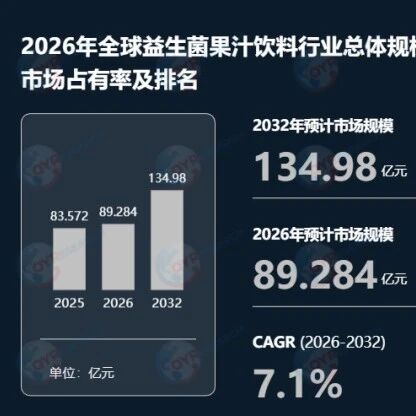
Core Viewpoint - The global probiotic juice beverage market is projected to reach $1.875 billion by 2031, with a compound annual growth rate (CAGR) of 7.3% over the coming years [2]. Market Overview - Major producers in the global probiotic juice beverage market include Yakult Honsha, Danone, PepsiCo, Suja Life, and GoodBelly, with the top four companies holding approximately 28% market share in 2024 [5]. Industry Chain Analysis - **Upstream**: The upstream segment focuses on probiotic strains, fruit raw materials, and production equipment, with key competitive points being technological barriers and supply stability. Research and development of high-activity strains and fresh juice processing are critical [7]. - **Midstream**: The midstream segment involves the transformation from raw materials to finished products, including formula development, fermentation production, and quality control. The production model and technology level significantly influence product competitiveness [7]. - **Downstream**: Traditional sales channels include supermarkets and convenience stores, while emerging channels like e-commerce and social commerce are growing rapidly. The main consumer groups are young professionals, mothers, and fitness enthusiasts [7]. Policy Analysis - **U.S. Policies**: Compliance with FD&C Act and FSMA is required, including registration and GMP adherence. Probiotic strains must be listed as "GRAS" or approved as food additives, and health claims must be clearly stated [9]. - **EU Policies**: The European Food Safety Authority (EFSA) mandates scientific evaluation for health claims, and new food ingredients must undergo safety assessments. Regulations require clear labeling of strain numbers and viable counts [9]. Industry Development Trends - **Technological Advancement**: The industry is moving towards high-end technology and product precision, with a focus on developing proprietary probiotic strains suited for local populations. Innovations like microencapsulation are enhancing product stability and shelf life [10]. - **Channel Integration**: There is a trend towards integrating online and offline channels, with e-commerce and instant retail gaining traction. Sustainable practices and regulatory compliance are becoming essential for brand value [10]. Development Opportunities - **Innovation and Product Precision**: The development of proprietary probiotics and the use of unique ingredients are creating differentiated products that cater to local health needs. Technologies that enhance probiotic survival rates are also expanding market potential [11]. - **Channel Expansion**: Online channels are rapidly growing, with a focus on reaching younger consumers. Offline penetration into niche markets like gyms and restaurants is also increasing, supported by policy initiatives for domestic strain development [11].

2026品牌营销:不投“广告”,投资“生活”
Sou Hu Cai Jing· 2025-12-30 05:59
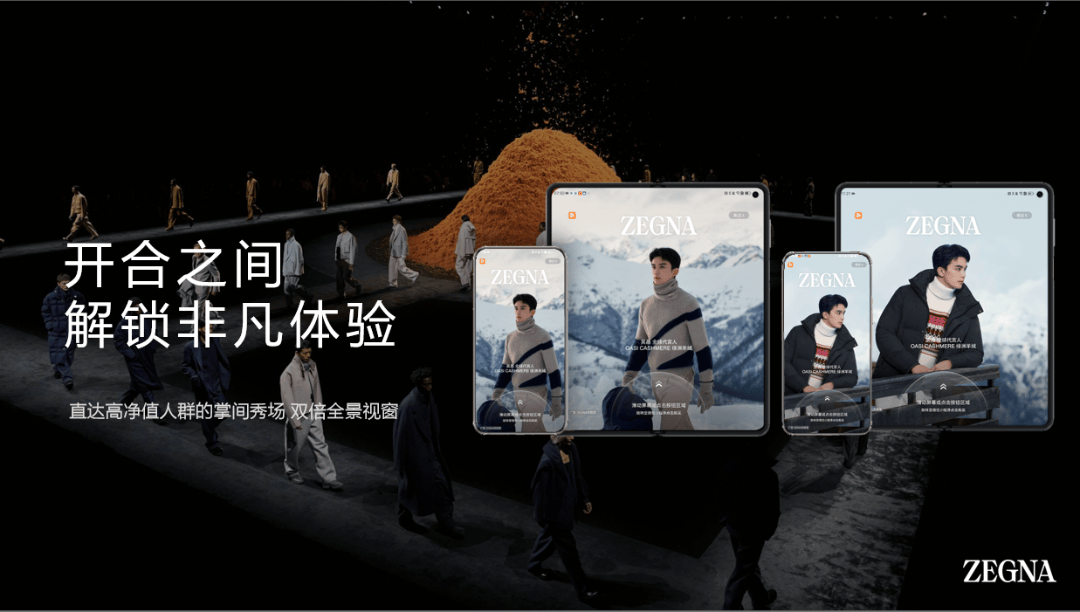
Core Insights - Marketing is undergoing a historic shift from chasing traffic to integrating into consumers' daily lives, as brands face growth anxiety amid a saturated market and changing consumer values [1] Group 1: Trends in Scene Revolution - Trend 1: Multi-Screen Interaction - Brands are creating continuous narratives across multiple screens to maintain user engagement, exemplified by ZEGNA's collaboration with Huawei to enhance user experience through immersive storytelling [2][3] - Trend 2: Content Customization - Brands are focusing on niche communities rather than broad audiences, using tailored content to build trust, as seen with Grab's travel show in China [9][11] - Trend 3: AI with Empathy - AI is being utilized to provide personalized and responsive services, transforming user interactions into meaningful experiences, demonstrated by Abu Dhabi Tourism's smart travel project [13][14] - Trend 4: Ecological Co-Creation - Brands are forming alliances to create a shared narrative ecosystem, as illustrated by the "Scar Advocacy" initiative involving multiple partners to address maternal health issues [17][19] Group 2: Marketing Evolution - The marketing landscape is shifting from disruptive advertising to seamless integration into daily life, emphasizing the importance of understanding consumer needs and emotions across various contexts [22][23] - Brands must enhance their internal value propositions while leveraging external partnerships to navigate the evolving marketing environment effectively [22][23]
国泰海通晨报-20251230
国泰海通· 2025-12-30 05:14
Group 1: Food and Beverage Industry - The report highlights that the liquor industry is accelerating its bottoming process, moving towards supply-demand balance, with leading brands like Moutai and Wuliangye expected to stimulate sales through price adjustments in 2026 [3] - The domestic dairy product sector is anticipated to see accelerated domestic substitution due to temporary anti-subsidy measures on EU dairy products, which may increase domestic milk consumption and reverse the industry cycle [3] - Key recommendations include focusing on companies with price elasticity such as Moutai, Wuliangye, and Luzhou Laojiao, as well as high-growth beverage companies like Dongpeng Beverage and Nongfu Spring [2][3] Group 2: Banking Sector - The report on Ningbo Bank indicates a strong growth trajectory in loans, with a year-on-year increase of 17.9% in the first three quarters of 2025, primarily driven by corporate clients [10] - The bank's net profit growth forecasts for 2025-2027 are set at 8.6%, 10.9%, and 12.4%, respectively, with a target price of 38.89 yuan per share [9] - The bank's asset quality is improving, with a decrease in non-performing loan generation rate from 1.23% in Q1 2024 to 0.92% in Q3 2025, indicating a positive trend in credit risk management [11] Group 3: Energy Sector - PX and PTA prices have been on the rise since October 2025, with PX futures increasing from 6296 yuan/ton to 7324 yuan/ton, a rise of 16.33% [13] - The polyester production in China showed strong performance, with a year-on-year increase of 7.7% in the first eleven months of 2025, indicating robust downstream demand [14] - The report anticipates a tight supply-demand balance for PX in the first half of 2026, with new capacity expected to come online in the second half of the year [14] Group 4: Brain-Computer Interface Industry - 2025 is projected to be a pivotal year for the development of brain-computer interfaces in China, with numerous policies being introduced to support the industry [6] - Clinical trials for invasive and semi-invasive brain-computer interfaces are expected to surge, with several companies like Borui Kang aiming for regulatory approval in 2026 [8] - The commercialization of non-invasive brain-computer interfaces is already underway in areas such as brain monitoring and rehabilitation, indicating early market entry [8]
金十数据全球财经早餐 | 2025年12月30日
Jin Shi Shu Ju· 2025-12-29 23:08
Group 1 - The U.S. stock market experienced declines, with the Dow Jones down 0.51%, S&P 500 down 0.35%, and Nasdaq down 0.5% [4] - Tesla shares fell by 3.2%, while Micron Technology rose by 3.4% and Nvidia dropped by 1% [4] - The Hong Kong stock market opened high but closed lower, with the Hang Seng Index down 0.71% and a trading volume of 224.5 billion HKD [5] Group 2 - The A-share market showed mixed results, with the Shanghai Composite Index up 0.04%, marking a nine-day winning streak, while the Shenzhen Component and ChiNext Index fell by 0.49% and 0.66% respectively [6] - The total trading volume in the A-share market was 2.14 trillion CNY, a decrease of 20.9 billion CNY from the previous trading day [6] - The commercial aerospace sector continued to perform strongly, with several stocks experiencing consecutive gains [6] Group 3 - Gold prices fell sharply by 4.43% to 4,331.98 USD/oz, while silver prices dropped by 8.87% to 72.14 USD/oz [7] - WTI crude oil rose by 1.55% to 57.75 USD/barrel, and Brent crude oil increased by 1.27% to 61.22 USD/barrel [7] - The U.S. dollar index decreased by 0.059% to 98.01 points [7]

食品饮料周报(25年第48周):贵州茅台召开全国经销商联谊会,全面推进营销市场化转型-20251229
Guoxin Securities· 2025-12-29 09:30
Investment Rating - The investment rating for the food and beverage sector is "Outperform the Market" [4][5][10]. Core Views - The food and beverage sector is expected to perform well in 2026, with four main investment themes: cost advantages, efficiency improvements, innovation-driven growth, and opportunities for recovery from difficulties [3][10]. - The report highlights a differentiation in the fundamentals of various categories, with beverages outperforming food and alcoholic beverages [2][10]. Summary by Relevant Sections Market Overview - The food and beverage sector (A-shares and H-shares) experienced a cumulative decline of 0.46% this week, with A-shares down 0.57%, underperforming the CSI 300 by approximately 2.52 percentage points [1]. - The top gainers in the food and beverage sector this week included Anji Food (29.65%), Richen Co. (9.00%), and Ximai Food (8.54%) [1]. Alcoholic Beverages - The demand for liquor remains weak, with premium liquor companies focusing on supply-side optimization. The report recommends companies like Luzhou Laojiao, Shanxi Fenjiu, and Guizhou Moutai for their growth potential [2][10]. - The report notes that the white liquor sector is in a left-side layout phase, with positive signals expected from both supply and demand sides [10]. Beer - The beer industry is in a healthy inventory position, awaiting demand recovery. The report suggests actively investing in the beer sector, particularly in leading brands like Yanjing Beer [2][11]. Dairy Products - The dairy sector is experiencing a steady recovery in demand, with supply gradually clearing. The report recommends focusing on leading dairy companies like Yili for their valuation safety margins [2][13]. Snacks - The report emphasizes selecting strong alpha stocks in the snack sector, particularly those benefiting from the growth of konjac snacks, with leading companies like Weilong and Yanjinpuzi showing strong competitive advantages [2][11]. Investment Recommendations - The recommended investment portfolio includes Baba Foods, Dongpeng Beverage, Weilong, and Shanxi Fenjiu, with an average decline of 0.27% this week, underperforming the food and beverage sector by 2.21 percentage points [15].

港股收评:恒生科技指数跌0.3%,恒生指数跌0.71%
Xin Lang Cai Jing· 2025-12-29 08:19
紫金矿业跌-3.013%,银河娱乐跌-3.027%,农夫山泉跌-3.044%,长和跌-3.165%,地平线机器人-W 跌-3.200%,京东健康跌-3.419%,金沙中国有限公司跌-4.271%。 ...
84%中国人误认的“国货”利润骤降,日本饮料巨头的中国光环正在褪色
3 6 Ke· 2025-12-29 03:25
Core Insights - Suntory, a Japanese beverage giant, is facing unprecedented challenges in the Chinese market, with a 9.2% year-on-year decline in operating profit for Q3 2025, despite revenue reaching 1,278.1 billion yen [1][2] - The company's market share in the sugar-free tea segment has been significantly eroded, with competitors like Nongfu Spring capturing over 70% of the market, while Suntory's share has dropped to 8.7% [1][3] Financial Performance - Suntory's operating profit for the first three quarters of 2025 was 126.5 billion yen, down 9.2% year-on-year, with Q3 profit at 91.7 billion yen, reflecting a 9.9% decline [2] - The only region showing growth in both revenue and profit is Europe, while the Asia-Pacific region, including China, has seen double-digit profit declines [2] Market Dynamics - The sugar-free tea market is experiencing a slowdown, with sales growth dropping from over 127% in early 2023 to just 8.09% by Q4 2024 [2][8] - Suntory's market share in the sugar-free tea segment fell from 21.12% in 2024 to 12.04% in 2025, indicating a continuous downward trend [2] Competitive Landscape - Nongfu Spring's market share in the sugar-free tea segment increased by 10.94 percentage points to 79.36% by June 2025, while Suntory's share decreased by 6.96 percentage points [3] - Local brands have established extensive distribution networks, posing challenges for Suntory, which relies heavily on convenience stores and large supermarkets [4] Channel Strategy - Suntory has recognized the need for channel adjustments and is restructuring its sales regions to better align with market characteristics [5] - The company is facing limitations in penetrating lower-tier cities, where local brands have a stronger presence [4] Product Innovation - Suntory has been slow in product innovation, focusing primarily on oolong tea, while competitors have diversified their offerings across various tea types [6] - In 2025, Suntory announced nearly 10 new products, including new flavors and a new brand focused on differentiated sugar-free tea [6][7] Consumer Trends - The sugar-free tea market is shifting from a growth phase to a competitive phase, with increasing market concentration among leading brands [8] - Consumer preferences are evolving, with a growing demand for products that provide emotional value rather than just hydration [8] Future Outlook - Suntory remains optimistic about the long-term potential of the sugar-free tea market in China, driven by a trend towards healthier lifestyles [9] - The company is aware that it needs to undergo significant transformation, not just in product innovation but also in channel penetration and brand communication [9]
中国人最爱喝的饮料,大多数都不及格
3 6 Ke· 2025-12-29 02:55
Core Viewpoint - Shanghai is implementing a beverage "nutritional choice" grading system, marking a nationwide first in China, aimed at reducing sugar consumption among residents [1][2]. Group 1: Grading System Overview - The grading system categorizes beverages into four levels: A, B, C, and D, with A being the healthiest and D the least healthy [1][2]. - Manufacturers are required to label C and D grade beverages, effectively informing consumers about their health risks [2][5]. - The grading is based on three main criteria: sugar content, saturated fat content, and the presence of non-sugar sweeteners [2][5]. Group 2: Specific Criteria for Grading - A grade beverages must have sugar content ≤ 1g/100ml and saturated fat ≤ 0.7g/100ml, with no added sweeteners [5]. - D grade beverages have sugar content > 10g/100ml and saturated fat > 2.8g/100ml, and face advertising bans with fines for violations [5][6]. - The grading applies broadly to packaged drinks, including water, milk, plant-based milk, meal replacements, and even some infant formulas [5][6]. Group 3: Comparison with Singapore - Singapore has already implemented a similar grading system, which has been described as the strictest in history, requiring manufacturers to label drinks based on sugar content [1][2]. - The Singaporean system has expanded to include freshly made drinks like milk tea and fruit juices, indicating a trend towards stricter regulations on sugary beverages [1][2]. Group 4: Health Implications - The average sugar intake in Singapore is significantly higher than recommended levels, with many residents consuming around 60g of sugar daily, primarily from sugary drinks [18]. - In China, the average daily sugar intake is lower at 21g, but there are concerns about the rising health issues related to sugary beverage consumption, including a 95% increase in deaths from related diseases from 1990 to 2019 [22][26]. - The grading system could serve as a model for China to address its own rising health concerns linked to sugar consumption [19][22].


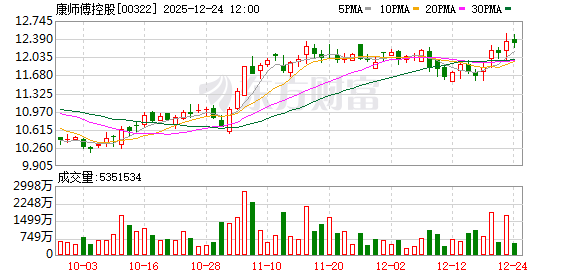
康师傅二代将接任CEO 亟须打破“增利不增收”局面
Zhong Guo Jing Ying Bao· 2025-12-28 04:52
Core Viewpoint - The transition of CEO position to Wei Hongcheng, a member of the founding family, indicates a complete control of ownership and management by the Wei family in Kang Shifu, amidst challenges in revenue growth despite profit increases [2][4][6]. Group 1: CEO Transition - Kang Shifu announced that Wei Hongcheng will become CEO starting in 2026, succeeding Chen Yingran, who is retiring [3]. - Wei Hongcheng, aged 43, has a strong educational background and has been leading Kang Shifu's beverage division since 2019, achieving steady revenue and profit growth [3][5]. - The change in leadership reflects a long-planned succession strategy within the Wei family, consolidating power in the hands of the second generation [4]. Group 2: Financial Performance - In the first half of 2025, Kang Shifu reported a revenue of 400.92 billion yuan, a decrease of 2.7% year-on-year, while net profit attributable to shareholders increased by 20.5% [6]. - The company's gross profit margin improved by 2.8% year-on-year, indicating effective cost management despite declining revenues [6]. - The convenience food and beverage segments are facing revenue declines, with instant noodle revenue dropping by 2.5% in the first half of 2025 [5][6]. Group 3: Market Challenges - Kang Shifu's market share in the instant noodle sector decreased from 36% in 2020 to 31% in 2024, while competitors like Nongfu Spring have seen significant growth [5]. - The beverage segment also faced challenges, with a decline in market share in the ready-to-drink tea category from 32% in 2022 to 29% in 2024 [5]. - The company is experiencing a reduction in the number of distributors, which fell from 76,875 in 2023 to 63,806 in the first half of 2025, indicating potential issues with its pricing strategy [6][7]. Group 4: Strategic Insights - Analysts suggest that Kang Shifu's pricing strategy, which involved significant price increases, may have contributed to the loss of distributors and could impact overall sales performance [6][7]. - The company is urged to focus on cost control, supply chain optimization, and product innovation to address market challenges and consumer demand [7]. - Future opportunities may lie in health-oriented products and understanding consumer trends better to drive innovation and growth [7].