
蜜雪集团

Search documents
幸运咖如何冲进平价咖啡的“万店俱乐部”?
3 6 Ke· 2025-12-03 10:56
Core Insights - Luckin Coffee, a brand under Mixue Group, has rapidly expanded its store count, surpassing 10,000 locations in just over 10 months, marking a significant milestone in its growth strategy [1][2] - The brand's aggressive expansion strategy has positioned it as a leading player in the affordable coffee segment, with a competitive pricing strategy that has attracted a large customer base [2][10] - The coffee market in China is experiencing a transformation, with increasing consumer demand and a shift towards affordable options, driven by price wars initiated by competitors [15][18] Expansion and Growth - Luckin Coffee was established in 2017 and began franchising in 2020, accumulating approximately 4,600 stores by 2024 before launching its "10,000 store plan" [1][5] - The brand's store count grew by over 164% year-on-year in the second quarter of 2025, with a significant increase in franchise inquiries, particularly from first-tier cities [7][10] - The company has implemented various support measures for franchisees, including fee waivers and incentives to encourage expansion in less saturated markets [6][7] Competitive Landscape - Luckin Coffee competes with other major brands like Luckin and Kudi, which have also achieved significant store counts, creating a highly competitive environment [2][3] - The brand's pricing strategy positions it as the most competitively priced option among its peers, with an average transaction value of 8.13 yuan [2][10] - The rapid expansion has raised concerns about market saturation and the sustainability of profitability amid intense competition [3][21] Supply Chain and Operational Efficiency - Luckin Coffee benefits from Mixue Group's established supply chain, which includes direct sourcing of coffee beans and a robust logistics network, enhancing its cost control capabilities [10][12] - The company has invested in production capacity, including a new roasting line with an annual capacity of over 20,000 tons, to support its expansion and maintain cost efficiency [12][19] - The operational model leverages standardized processes and experienced management from Mixue Group, which aids in maintaining quality and efficiency across its stores [13][10] Market Trends and Consumer Behavior - The Chinese coffee market is projected to exceed 1 trillion yuan by 2025, with a significant increase in per capita coffee consumption [15][18] - The price wars initiated by competitors have lowered consumer barriers to entry, leading to increased coffee consumption among previously non-coffee drinkers [15][18] - The rise of affordable coffee brands has contributed to a rapid increase in the number of coffee shops, surpassing the growth seen in the tea beverage sector [18][20] Challenges and Strategic Adjustments - Despite rapid growth, franchisees have reported mixed experiences, with increased competition leading to pressure on profitability in densely populated areas [8][21] - The company is tightening its franchisee selection criteria to ensure higher-quality locations and reduce the risk of underperforming stores [21] - Luckin Coffee is also exploring international expansion, having opened its first overseas store in Malaysia, which presents additional operational challenges [13][14]


港股投资价值深度解析:价值趋合理 稀缺资产成关注焦点
Zhong Guo Zheng Quan Bao· 2025-12-02 20:22
Market Overview - As of November 28, 2025, the Hong Kong Stock Exchange has 2,664 listed companies with a total market capitalization of approximately HKD 48 trillion [1] - The Hang Seng Index and the Hang Seng Tech Index have increased by 29% and 25% respectively this year, indicating significant market rotation [2][3] - The overall valuation of Hong Kong stocks is currently within a reasonable range, with a focus on scarce assets such as internet leaders and innovative pharmaceuticals [1][8] Market Structure - The market is characterized by a high concentration of value in large-cap companies, with 65% of companies having a market cap of HKD 0-20 billion, but only accounting for 1.80% of the total market capitalization [2] - Institutional investors dominate trading, contributing 85% of the transaction volume, with international investors making up 60% of the market [1][2] Valuation Insights - The AH premium index is currently at 121, which is historically low, indicating that Hong Kong stocks are not significantly overvalued nor is there substantial room for valuation recovery [3] - The valuation of the Hang Seng Index is at a historically high level compared to the CSI 300, while the Hang Seng Tech Index remains relatively low in absolute valuation terms [3] Asset Highlights - Key scarce assets in the Hong Kong market include internet leaders, innovative pharmaceuticals, new consumption, and dividend stocks, while high-end manufacturing is relatively weak [4][7] - Internet leaders like Tencent and Alibaba are seen as core highlights, with significant capital expenditures and a strong user ecosystem [4][5] - The innovative pharmaceutical sector is viewed as a "first-tier market" with a higher "innovation content" compared to A-shares, benefiting from favorable listing rules for biotech companies [5][6] Investment Dynamics - The investor structure is increasingly international, with a notable inflow of southbound funds, which have reached a cumulative net inflow of HKD 13,820 billion this year, a 90% increase year-on-year [7][8] - Despite the presence of quality assets, the market has passed the high-return investment phase, and the uncertainty of incremental capital inflows suggests a mixed outlook for future market performance [8]



1年倒闭4万家!它凭什么逆势拿下千万融资、剑指1000家店?
Sou Hu Cai Jing· 2025-12-02 06:18
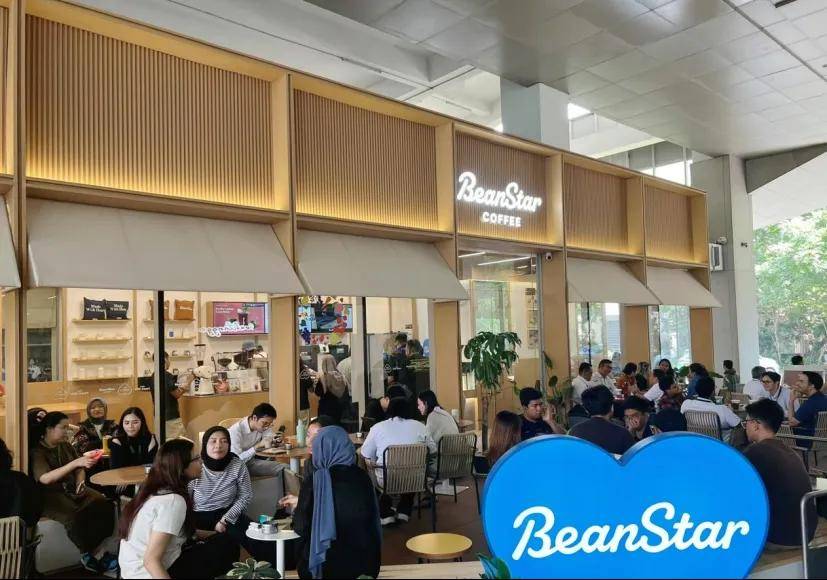
当9.9元价格战硝烟未散,一年超4万家咖啡门店黯然退场,整个行业都在谈论"拐点已至"时。 连锁精品加盟品牌"比星咖啡"却逆势拿下数千万元B轮融资,计划从300家门店向1000家的目标冲刺。 在这个竞争日益激烈的赛道,比星咖啡究竟做对了什么? 咖啡市场大败退 2025年的中国咖啡市场,已经进入了深度洗牌期。 壹览商业数据显示,2024年咖啡行业新开门店6.2万家,却有4.5万家门店倒闭,净增长率仅27.21%,较前一年的55%大幅下滑,超八成品牌扩张放缓。 曾经的行业标杆们,如今大多步履维艰。 太平洋咖啡的陨落最具代表性。这个1992年创立的品牌,巅峰时以458家门店成为内地第二大咖啡连锁,客单价与星巴克持平。 比星的差异化打法 在一片关店潮中,比星咖啡却逆势获得了资本青睐。 但从2023年8月到2025年10月,其内地门店从185家锐减至71家,广州等核心城市仅剩1家正常营业。 品牌老化、产品缺乏爆款、定价脱离市场,让它在平价咖啡冲击下彻底失势,即便曾传出被柠季收购的消息,最终也未能翻盘。 此外,曾经的明星品牌Seesaw咖啡陷入了严重的经营困境。 据媒体报道,Seesaw再被曝出拖欠员工工资,自去年以来关闭 ...
国家层面连续释放强力促消费信号,聚焦港股消费ETF(513230)布局机遇
Mei Ri Jing Ji Xin Wen· 2025-12-02 05:53
市场层面显现积极回暖信号,为板块注入动能。海南离岛免税新政首周销售额同比增长35%,显示高端 消费需求强劲。海通国际指出,自2025年第三季度起,中国及亚太市场复苏正从头部向更广范围扩散, 目前多数可选消费子板块的2025年预期市盈率(PE)低于过去五年平均水平,板块整体估值处于历史 相对低位。"需求回暖"与"低估值"并存,中长期配置价值凸显。 12月2日午盘,港股消费板块窄幅震荡,港股消费ETF(513230)现小幅微涨,持仓股中,巨子生物、 波司登、中国旺旺、百威亚太等涨幅居前,小鹏汽车-W、美团-W、同程旅行、中国儒意等跌幅靠前。 近期,国家层面连续释放强力促消费信号,支持方式与内涵显著升级。11月20日,财政部、商务部联合 推出消费新业态、新模式、新场景城市试点,中央财政提供约170亿元补助。核心思路从直接补贴需求 的"输血",转向承担优化供给结构的外部成本,鼓励地方与企业共同打造首发经济、多元消费场景及IP 跨界等新生态,推动消费向"质量跃升"转型。11月27日,在扩大免签、优化离境退税等政策助力 下,"中国游"、"中国购"热度不减。1-9月离境退税销售额同比翻倍。商务部明确将继续深化国际消费 中心 ...
消费蓝图已绘就,万亿消费赛道或迎爆发,聚焦港股消费ETF(513230)布局机遇
Mei Ri Jing Ji Xin Wen· 2025-12-02 03:27
Group 1 - The Hong Kong consumer sector showed a fluctuating upward trend, with the Hong Kong Consumer ETF (513230) rising nearly 1% at one point and currently up about 0.5% [1] - Key stocks in the ETF include BYD, Galaxy Entertainment, Sands China, and Anta Sports, which saw significant gains, while stocks like Xpeng Motors, Laopu Gold, Meituan, and Bilibili experienced declines [1] - A joint implementation plan was released by six departments, including the Ministry of Industry and Information Technology and the National Development and Reform Commission, aimed at enhancing the adaptability of supply and demand in the consumer sector [1] Group 2 - The plan outlines a target to cultivate three trillion-level consumption sectors and ten hundred-billion-level consumption hotspots by 2027, focusing on areas such as elderly products, smart connected vehicles, and consumer electronics [1] - The ten hundred-billion-level consumption hotspots include baby products, smart wearable devices, cosmetics, fitness equipment, outdoor products, pet food, civilian drones, trendy toys, jewelry, and domestic fashion [1] - Guojin Securities predicts that by 2030, a high-quality development pattern of positive interaction between supply and consumption will be established, with consumption's contribution to economic growth steadily increasing [2] Group 3 - The implementation plan emphasizes four main directions: promoting new technologies like AI in the consumer goods industry, accelerating the development of emerging consumption driven by emotional value, supporting domestic brands in international expansion, and encouraging new business models such as live e-commerce [2] - The consumer sector is evolving towards technological integration, emotional connection, global expansion, and channel innovation, presenting significant structural opportunities [2] - The Consumer ETF (513230) tracks the CSI Hong Kong Stock Connect Consumer Theme Index, encompassing a wide range of sectors in Hong Kong's consumer market, including leading new consumption companies and major internet e-commerce players [2]
餐饮会员流量跟踪系列:从美团与霸王茶姬财报再议外卖大战的得与失
Guoxin Securities· 2025-12-01 15:30
Investment Rating - The report maintains an "Outperform" rating for the industry [5][37]. Core Insights - The report analyzes the recent financial performance of major players in the food delivery sector, including Meituan, JD Group, Alibaba, and Bawang Chaji, highlighting the impact of the ongoing delivery battle on their operations and profitability [1][2][3]. - It emphasizes that the low-frequency, low-ticket order subsidies are the primary reason for the significant losses in the instant retail business, which includes food delivery [2][19]. - The report suggests that the platforms are likely to return to a more rational subsidy strategy, focusing on high-ticket orders to improve unit economics [2][19]. Summary by Sections Meituan - In Q3 2025, Meituan reported revenues of 954.9 billion yuan, a year-on-year increase of 2.0%, but faced an adjusted net loss of 160.1 billion yuan, shifting from profit to loss [1][6]. - The core local business revenue was 674.5 billion yuan, down 2.8%, with an operating loss of 140.7 billion yuan [8][10]. - The food delivery segment is expected to see a 15% increase in order volume, but a 13% decline in revenue due to a decrease in average order value (AOV) and lower monetization rates [8][10]. JD Group and Alibaba - JD Group's Q3 2025 new business losses reached 157 billion yuan, while Alibaba's instant retail business incurred losses of approximately 361 billion yuan, with a per-order loss of about 5.3 yuan [2][17]. - Both companies are experiencing significant pressure on their overall performance due to the losses in their instant retail segments [2][19]. Bawang Chaji - Bawang Chaji reported a revenue of 32.08 billion yuan in Q3 2025, a decrease of 9.4%, with an adjusted net profit of 5.03 billion yuan, down 22.2% [3][21]. - The company has chosen a cautious approach to the delivery battle, avoiding price wars to maintain brand integrity and product strategy [3][32]. - The report notes that Bawang Chaji's same-store GMV declined by 27.9% in the Greater China region, reflecting the competitive pressures in the market [21][32]. Recommendations - The report recommends focusing on leading restaurant brands that are likely to benefit from increased subsidy efforts and are in a strong operational season, such as Guoquan, Haidilao, Yum China, and Xiaocaiyuan [3][37]. - It also highlights the potential of tea brands like Guming and Mixue Group, which are actively expanding their product offerings and private traffic strategies [3][37].
蜜雪冰城杀进早餐界
Guo Ji Jin Rong Bao· 2025-12-01 13:04
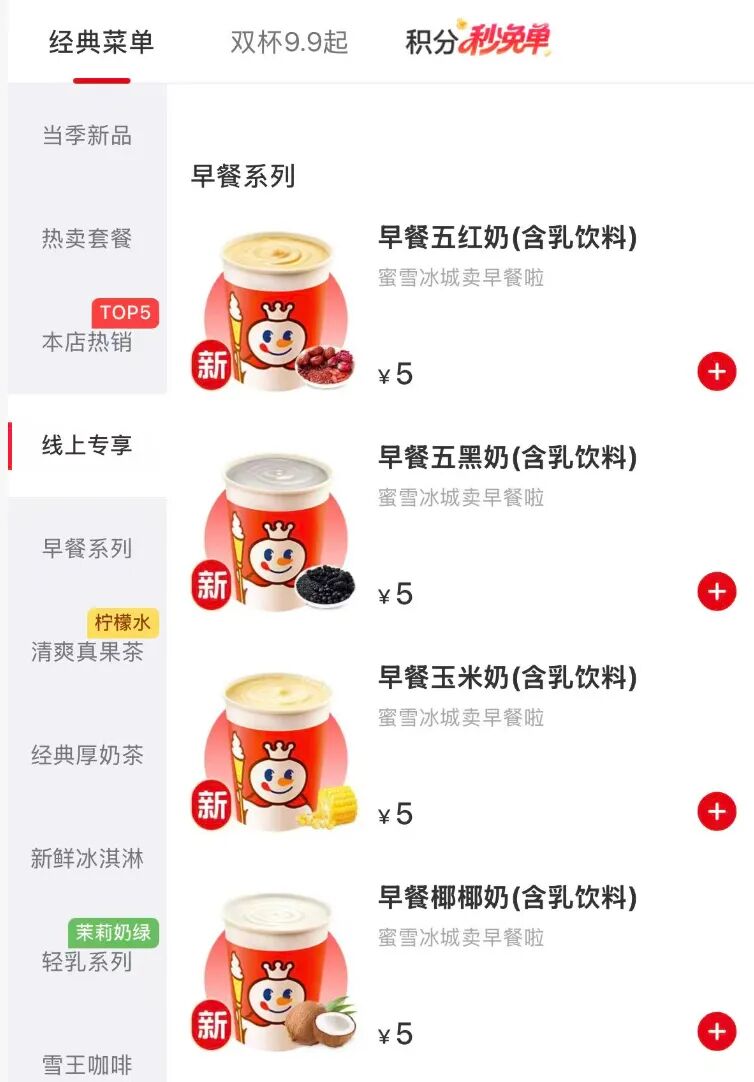
Core Insights - Mixue Ice City has launched a new breakfast product line, including four milk-based drinks priced at 5 yuan each, and is conducting consumer surveys to gather data for future product adjustments [1][2][6] Company Developments - The breakfast initiative is currently in a trial phase in cities like Dalian, Xi'an, Nanning, and Hangzhou, with no plans for large-scale rollout yet [2] - Mixue Ice City has a strong presence with nearly 42,000 operating stores in China, which allows for rapid consumer reach for new products [7] - The company has recently expanded its business scope by acquiring a majority stake in the parent company of "Fresh Beer Fu Lu Jia," diversifying its offerings beyond tea and coffee [9] Industry Trends - The breakfast market in China is projected to reach 1.35 trillion yuan by 2025, with an annual growth rate of 7%-8% [4] - The breakfast sector is currently fragmented, with the top five brands holding only 23.5% market share, indicating significant opportunities for new entrants [4] - Competitors like Tims and Starbucks have already established breakfast offerings, and other brands are also looking to enter this space to drive growth [5]
港股收评:恒指涨0.67%、科指涨0.82%,有色金融、航运股走高,加密货币及新消费概念股走低
Sou Hu Cai Jing· 2025-12-01 08:49
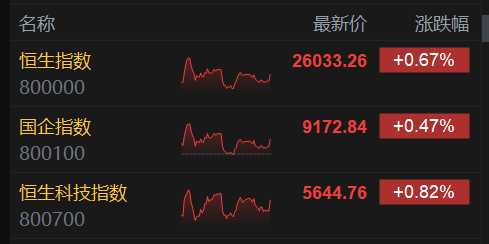
Market Overview - The Hong Kong stock market showed a slight upward trend, with the Hang Seng Index rising by 0.67% to close at 26,033.26 points, and the Hang Seng Tech Index increasing by 0.82% to 5,644.76 points [1] - Major technology stocks mostly rose, with Alibaba up 2.24%, Tencent up 1.31%, and JD Group up 0.52%. However, Xiaomi fell by 1.76% and Meituan dropped by 2.88% [1] - The metals sector saw significant gains, with China Nonferrous Mining rising over 13% [1] - Cryptocurrency-related stocks generally declined, with New Fire Technology Holdings down over 9% [1] Company News - Meituan reported Q3 revenue of 95.5 billion yuan, a year-on-year increase of 2%, but its core local business operating profit turned negative, resulting in a loss of 14.1 billion yuan [2] - China Gas reported revenue of 34.481 billion HKD and a profit of 1.334 billion HKD for the six months ending September 30, 2025 [3] - Yingtong Holdings reported a revenue of 1.028 billion RMB, a year-on-year decrease of 3.42%, but net profit increased by 15.4% to 133 million RMB [3] - Jihai Resources reported a revenue of 450 million RMB, a year-on-year increase of 23.41%, with a net profit of 88.127 million RMB, up 2.98% [3] - Yuhua Education reported annual revenue of 2.497 billion RMB, a year-on-year increase of 5.4%, and a net profit of 930 million RMB, up 133.2% [3] - Huitai Textile reported mid-term revenue of 2.524 billion HKD, a year-on-year decrease of 6.72%, and a net profit of 79.322 million HKD, down 25.77% [3] - Huaxin Handbag International reported revenue of 432 million HKD, a year-on-year increase of 22.55%, and a profit of 48.262 million HKD, up 78.88% [4] Institutional Insights - GF Securities noted that the foundation for a bull market in Hong Kong stocks remains intact, but the evolution may present a "volatile upward, gradually rising" characteristic rather than a rapid increase [12] - Dongwu Securities indicated that short-term risk factors in Hong Kong stocks are decreasing, but a catalyst is needed for confirmation of a rebound [12] - Everbright Securities suggested that compared to previous bull markets, there is still significant room for index growth, but the duration of the bull market may be more important than the magnitude of the increase [12] - CICC highlighted that dividends have become a preferred choice in the current market environment, with the banking sector rebounding nearly 10% since the end of September [13]
港股收评:12月开门红!恒指涨0.67%,有色板块大爆发新消费低迷,中国有色矿业涨超10%,阿里巴巴涨超2%,美团逆势跌3%
Ge Long Hui· 2025-12-01 08:38
Market Overview - The Hong Kong stock market opened positively on December 1, with the Hang Seng Index rising by 0.67% to surpass the 26,000-point mark, while the National Enterprises Index and Hang Seng Technology Index increased by 0.47% and 0.82% respectively, indicating overall stable market sentiment [1][3]. Sector Performance - Major technology stocks experienced upward trends, with NetEase rising nearly 4%, Alibaba increasing over 2%, and Baidu and Tencent both gaining over 1.3%. JD.com saw a slight increase of 0.52%, while Meituan fell nearly 3% [3]. - The commodities sector saw significant gains, driven by rising copper and silver prices, with China Silver Group surging by 14% and China Nonferrous Mining rising over 10%. China Gold International and Jiangxi Copper also showed strong performance [3]. - The Baltic Dry Index (BDI) reached a nearly two-year high, leading to expanded gains in port shipping stocks in the afternoon session [3]. Emerging Trends - The People's Bank of China made a significant move to stabilize digital currencies, which negatively impacted cryptocurrency-related stocks, while new consumption concepts, biomedicine stocks, and insurance stocks saw some declines. Notable stocks like Pop Mart and Mixue Group also experienced downturns [3].
港股收评:12月开门红!恒指涨0.67%,有色板块大爆发,新消费概念股多数低迷
Ge Long Hui· 2025-12-01 08:25
Market Overview - The Hong Kong stock market opened positively on December 1, with the Hang Seng Index rising by 0.67% to surpass the 26,000-point mark [1] - The Hang Seng China Enterprises Index and the Hang Seng Tech Index increased by 0.47% and 0.82%, respectively, indicating overall stable market sentiment [1] Sector Performance - Major technology stocks experienced upward trends, with NetEase rising nearly 4%, Alibaba increasing over 2%, and Baidu and Tencent both gaining over 1.3% [1] - JD.com saw a slight increase of 0.52%, while Meituan faced a decline of nearly 3% [1] - The commodities sector thrived, driven by rising copper and silver prices, with China Silver Group surging by 14% and China Nonferrous Mining rising over 10% [1] - Other strong performers included China Gold International and Jiangxi Copper, both showing robust gains [1] Shipping and Other Industries - The Baltic Dry Index (BDI) reached a nearly two-year high, leading to expanded gains in port shipping stocks [1] - Semiconductor, Apple-related, airline, lithium battery, and restaurant stocks were generally active in the market [1] Cryptocurrency and Other Sectors - The People's Bank of China made significant moves to stabilize the currency, resulting in declines in cryptocurrency-related stocks [1] - New consumption, biopharmaceutical, and insurance sectors saw some downturns, with notable declines in star stocks such as Pop Mart and Mixue Group [1]